

February 12, 2026
A team of researchers has biologically engineered T cells with currently available Alzheimer's drugs in order to directly attack the characteristic amyloid plaques of Alzheimer's disease. Building on the current paradigm Most Alzheimer's treatments used in the clinic are -mabs, monoclonal antibodies that are designed to attack the amyloid beta plaques that accumulate in the...
October 24, 2025
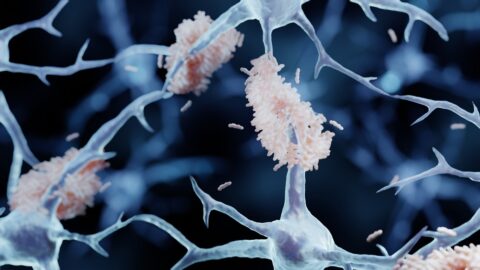
A study from Rockefeller University suggests that an unholy duo of two proteins causes harm in much lower concentrations than either of them alone. This points to a possible route for intervention [1]. When amyloid met fibrinogen Amyloid beta (Aβ) and tau proteins are the usual suspects in Alzheimer’s disease. However, focusing on either of...

August 20, 2025
In a recent study, researchers identified the critical role that lithium plays in brain health and the development of mild cognitive impairment and Alzheimer’s disease. Supplementing with a lithium salt called lithium orotate can reverse many of its cognitive decline-related changes on the molecular and cellular levels [1]. The road less traveled Understanding the underlying...
May 20, 2025
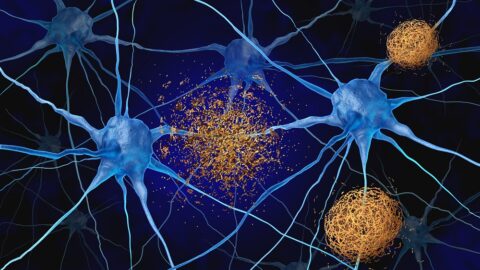
Scientists have created engineered nanostructures that bind monomers and oligomers of harmful amyloid beta (Aβ) protein, preventing them from entering neurons and drastically increasing the cells’ survival in vitro [1]. Don’t let them into cells! Misfolded proteins are thought to be behind diseases like Alzheimer’s and amyotrophic lateral sclerosis (ALS). The most recognizable hallmark of...
September 25, 2023
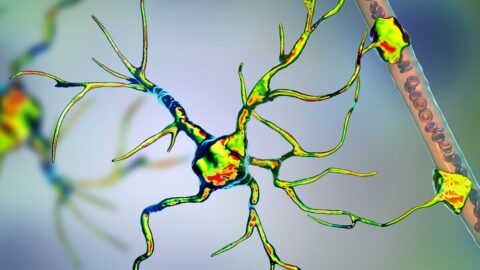
An article in GeroScience describes a previously unexplored relationship between FABP7, an inflammatory molecule that binds to fatty acids, and Alzheimer's disease. Not just a transporter Originally, as the authors explain, fatty acid binding proteins (FABPs) were considered to be simple biological chaperones that did not perform biological functions. Further research found that they play...
August 14, 2023
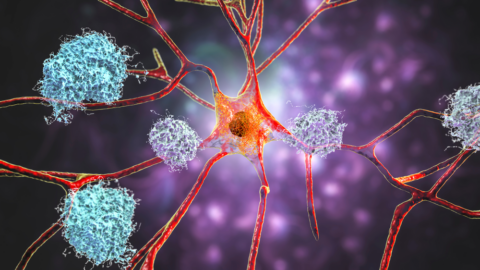
In a study published in Cell Stem Cell, researchers have investigated a way to repopulate the brain with functional cells in order to fight back against Alzheimer's disease. A gene with a microglial function Various allelles of the apolipoprotein E (APOE) genes are well-known for their contributions to, or defenses against, Alzheimer's, as they affect...