

Researchers publishing in Aging Cell have discovered that using FGF21 to upregulate the sirtuin SIRT1 delays spinal disc degeneration in a rat model.
A common cause of lower back problems
Intervertebral disc degeneration (IDD) is one of the core reasons for lower back pain in older people. This nearly ubiquitous problem is a frequent target of anti-aging interventions, and we have reported on previous work in this area, which focused on a specific, senescence-related signaling pathway.
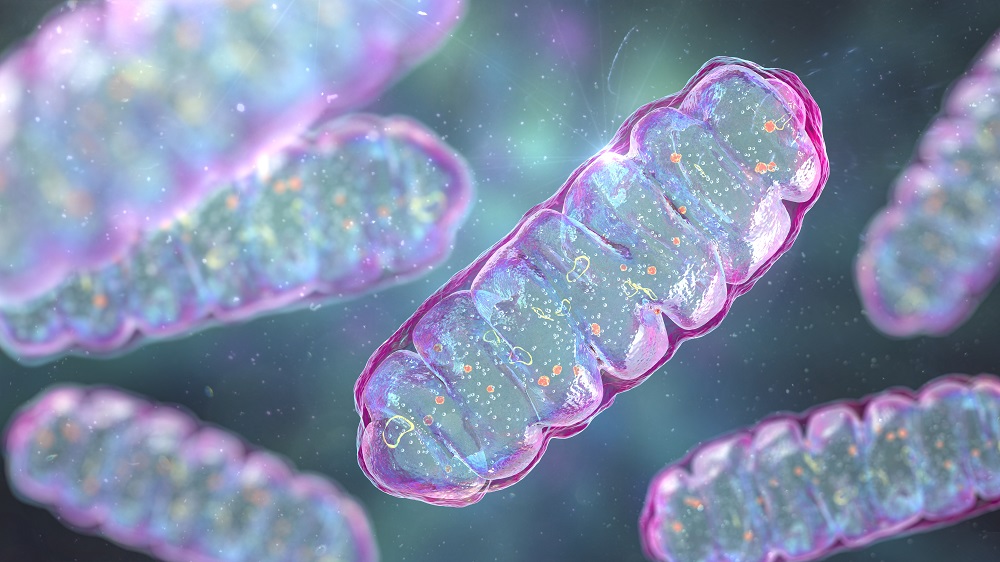
This paper, however, takes a different approach. While it also focuses on cellular senescence, it looks into the effects of FGF21, a growth factor that declines with aging and that has been reported to fight against sarcopenia. These researchers note that it has been found to have several other benefits, including slowing thymic involution [1] and, critically for this paper, improving mitophagy [2], a maintenance process that involves the consumption of damaged mitochondria.
Rather than using naturally aged rats, these researchers used a rat model of IDD, which was induced by puncturing their vertebrae under anaesthesia. Compared to a sham-operated group, the affected rats had considerable disorganization of the nucleus pulposus (NP) tissues that are vital for disc integrity along with significant fibrosis. Senescence biomarkers, including p16 and p21, were upregulated in this group, and FGF21 was significantly downregulated.
This matched data from NP tissues derived from human donors. The more degenerated samples had increased fibrosis, reduced cellular counts, increased cellular senescence markers, and fewer of the proteoglycans that are necessary for proper function of spinal discs. While FGF21 was not found to be an independent risk factor, which the researchers suggested was due to the small sample size (n = 26), it was strongly correlated with both age and symptom severity.
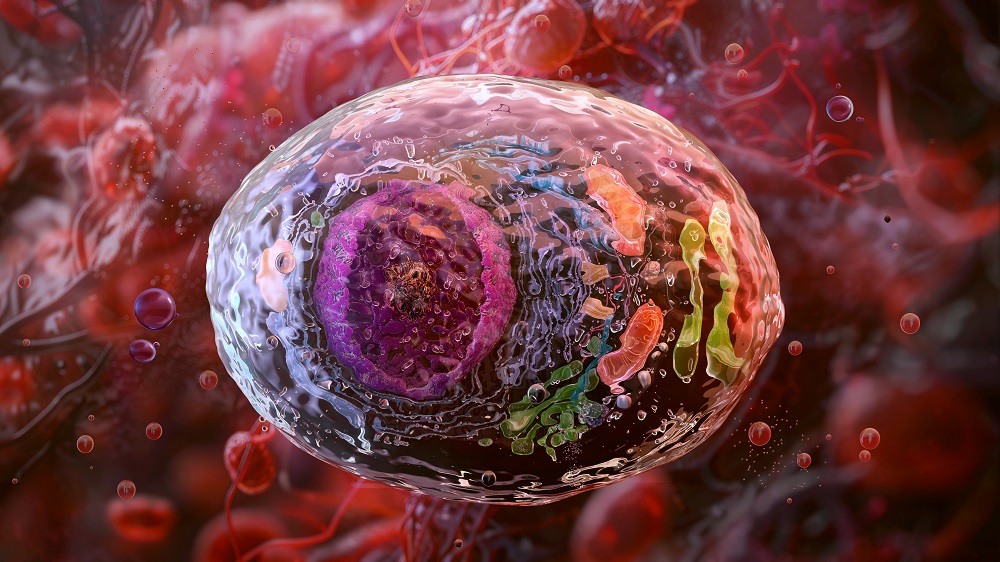
The researchers then looked into administering FGF21 directly into an NP cell culture. After the cells were stressed using TBHP, a low dose of FGF21 (50 ng/mL) was found to have modest benefits for cellular senescence markers, and a higher dose (200 ng/mL) was found to have more substantial benefits, reducing p16, p21, p53, and the key senescence marker SA-β-gal. This treatment also restored natural antioxidant production and the creation of ATP, which are both reduced in these cells under TBHP stress. The researchers found similar results when exposing the cells to the inflammatory factor IL-1β.
Finding the causal links
Compared to cells treated with TBHP alone, cells that were also treated with FGF21 were found to have substantial gene upregulations in autophagic maintenance processes, including mitophagy. In both humans with IDD and their rat model, the researchers noted that such autophagic markers were diminished. A closer look at the treated NP cells found that mitochondria in the TBHP-only cells are swollen and perform minimal mitophagy, while FGF21 restores some of this capacity.
The researchers hold that this process is specifically how FGF21 fights senescence in these cells. To confirm this finding, they administered a mitophagy inhibitor, Mdivi-1, alongside TBHP and FGF21, to NP cells. As they expected, suppressing mitophagy nullified the effects of FGF21, as did knocking down the mitophagy-related gene Drp-1.
Further experiments found that the PINK1-Parkin pathway was also necessary for FGF21 to upregulate mitophagy; when either of these factors was interfered with, the effects of FGF21 on both mitophagy and senescence were severely attenuated. The researchers also discovered that the sirtuin SIRT1, which is downregulated in both human IDD and this rat model, was also upregulated by FGF21. Another series of cellular experiments found the causal pathway: in these NP cells, FGF21 upregulates SIRT1, which then engages the PINK1-Parkin pathway to stimulate mitophagy and ameliorate cellular senescence.
With these results in hand, the researchers then returned to their rat model. While FGF21 did not fully ameliorate the symptoms of IDD, it substantially improved NP tissue morphology, partially restoring proteoglycans and restoring some of the discs’ size. Knocking down SIRT1 prevented these benefits from occurring.

These results are from an induced-IDD rat model, and naturally aged rats were not tested. However, the researchers have discovered a clear causal chain that occurs in NP cells. Further work will need to be done to determine if these results apply to naturally aged organisms and to human beings.
Literature
[1] Youm, Y. H., Gliniak, C., Zhang, Y., Dlugos, T., Scherer, P. E., & Dixit, V. D. (2025). Enhanced paracrine action of FGF21 in stromal cells delays thymic aging. Nature Aging, 5(4), 576-587.
[2] Ma, Y., Liu, Z., Deng, L., Du, J., Fan, Z., Ma, T., … & Zhang, Y. (2024). FGF21 attenuates neuroinflammation following subarachnoid hemorrhage through promoting mitophagy and inhibiting the cGAS-STING pathway. Journal of Translational Medicine, 22(1), 436.