

January 09, 2026
By inhibiting the aging-related enzyme 15-PGDH, scientists have shifted cartilage cells towards a healthier phenotype, leading to a significant improvement in a mouse model of osteoarthritis [1]. The hard-to-repair part Articular cartilage (the smooth, load-bearing cartilage on the ends of bones) doesn’t repair well with age or after injury [2], which is why osteoarthritis is...

December 19, 2025
Dr. Maximina Yun, principal investigator at Chinese Institutes for Medical Research in Beijing (CIMR), studies some of the most amazing animals in the world: salamanders, a group of amphibians that includes newts and species such as the universally loved axolotl. On top of being cute, salamanders possess unparalleled regeneration abilities for vertebrates, being able to...

July 02, 2025
Scientists have analyzed the differences between mammalian species that can regrow ear tissue after injury and those that cannot. Their findings can pave the way for novel regenerative therapies [1]. The lost art of regeneration Many animal species have amazing regenerative abilities. On the one side of the spectrum sit planarian worms: slice them up,...

May 08, 2025
Michael Levin, professor at Tufts University and director of Allen Discovery Center, has been working for years on how bioelectrical patterns affect development and aging. His research proves that this often-overlooked part of biology is immensely important and that mastering its mechanisms might one day do wonders for human health and longevity. By manipulating ion...
October 31, 2024
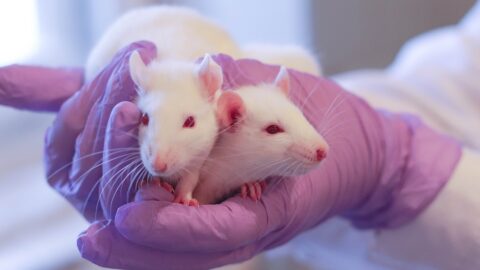
In a rat experiment, researchers publishing in Aging Cell have found that senescent cells and SASP factors are key in regenerating knee cartilage. Not always negative Cellular senescence is widely known to have negative effects, to the point that it is one of the hallmarks of aging. In fact, rather than protecting cartilage, cellular senescence...

March 18, 2024
In Cell, a team of researchers, including the founders of the biotech company HepaRegeniX, has published a paper on HRX215, a molecule that encourages liver regeneration. When the liver doesn't regenerate The researchers note that the liver has a "nearly unlimited regenerative potential" under healthy circumstances. However, when its microenvironment changes due to damage, this...