Plenty of crucial work has been done in the rejuvenation world over the past four weeks, and last month, we’ve spoken to several researchers about the progress being made.
Interviews
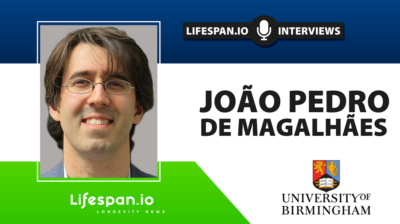
 João Pedro de Magalhães on the Ethics of Longevity: João Pedro de Magalhães, professor at the University of Birmingham, is a skilled longevity advocate who has long taken interest in the ethics of longevity, first offering his perspective as far back as 2003.
Advocacy and Analysis
First Human Cellular Reprogramming Trial Cleared by the FDA: Life Biosciences has announced that its trial of cellular reprogramming aimed at two age-related vision diseases has received a go-ahead from the FDA. We spoke with the company’s CSO to get more details.
 Cellular Reprogramming: The Expert Roundup: We asked four experts, all involved in reprogramming-related biotech companies, to talk about their companies’ approaches and the opportunities and bottlenecks that the field faces and to offer predictions for the near and not-so-near future.
Research Roundup
Weight Training Load Doesn’t Affect Muscle Mass or Strength: A new study suggests that, if sets are taken close to failure, the amount of weight on the bar does not determine muscle growth. However, individual differences in muscle-building ability appear to be real.
 Association Between Vitamins and Slower Biological Aging: A recent study analyzed data from over 15,000 participants and their intake of 11 vitamins, and the results suggested that higher vitamin intake, particularly of Vitamins C and B2, is associated with slower biological aging.
Increasing Senolytic Effectiveness by Stressing Mitochondria: Researchers publishing in Nature Aging have described how mitochondrial stress is a key part of why senolytics are effective.
 Restoring the Strength of Natural Killer Cells: In Aging Cell, researchers have described why older natural killer (NK) cells lose their ability to eliminate harmful cells and a potential treatment for this decline.
Sleep Deprivation Affects Cognition via Myelin Loss: A new study links sleep loss to the thinning of the myelin layer, which slows signal transmission in axons. Restoring cholesterol homeostasis reverses the damage.
 Young Microbes Rejuvenate Intestinal Function in Mice: Transferring microbiota from young to aged mice helped to restore molecular signaling necessary for proper intestinal function and improved the regenerative capacity of intestinal stem cells.

Creating CAR-T Cells Using Current Alzheimer’s Antibodies: A team of researchers has biologically engineered T cells with currently available Alzheimer’s drugs in order to directly attack the characteristic amyloid plaques of Alzheimer’s disease.
 Cellular Reprogramming Rescues Memory-Encoding Neurons: Scientists have applied partial reprogramming to memory-encoding neurons (engrams) and achieved memory improvements in Alzheimer’s models and wild-type mice.
Silencing Growth Hormone Has Strong Effects in Mouse Brains: Researchers have found that altering a growth hormone receptor in the brain adipose tissue of aged male mice slows their mental aging and allows them to perform far better on cognitive tests.
 New Study Calculates Lifespan Gains From Five Popular Diets: Scientists have pitted five diets against each other to see which one is associated with more years of life gained.
Lifetime Cognitive Enrichment Associated With Less Dementia: A recent study suggests that cognitive enrichment throughout life is associated with reduced dementia risk, and it has the potential to delay the onset of dementia and mild cognitive impairment by five to seven years.
 A Circulating Inflammation Suppressor Decreases Mortality: Researchers publishing in Aging have used Mendelian randomization to conclude that the inflammatory factor IL6 causes increased mortality and that its circulating receptor, IL6R, decreases it.
AI Tool Sets New Standard in Diagnosing Rare Diseases: A new system, which consists of a large LLM and a network of agentic tools, outperformed several other models and human physicians.
 How a Sirtuin Protects Against Brain Diseases: In Aging Cell, researchers have explained how the sirtuin SIRT6 protects against proteostasis-related brain disorders by maintaining the function of nucleoli and limiting protein production.
Thermogeneration by White Fat Could Be Used to Treat Obesity: Scientists have discovered that, like brown fat, white fat has a mechanism that burns fuel to produce heat. This effect could potentially be used to create weight loss drugs.
 Menopausal Hormone Therapy Does Not Increase Mortality: An analysis of over 800,000 women found no association between menopausal hormone therapy and increased mortality.
A Metabolic Shift Fuels Stem Cell Dysfunction: Researchers publishing in the Nature journal Cell Discovery have described how the age-related attenuation of a key metabolic axis causes human adipose-derived stem cells (hASCs) to lose functional capabilities.
Randomized controlled trial of resistance exercise and brain aging clocks: Resistance exercise training decelerates brain ageing, as indexed by brain clocks, reinforcing its role as a preventive strategy for brain health.
Creatine plus β-Hydroxy-β-Methylbutyrate supplementation is associated with preserved glutathione redox-balance and redox–function associations in older adults: Creatine plus HMB supplementation was associated with nominal modulation of glutathione-centered redox balance during training in active older adults.
A multicomponent intervention consisting of exercise, proteins and omega-3 supplementation to improve sarcopenia in community-dwelling older adults: Preliminary efficacy results showed that exercise with protein supplementation may improve physical function.
A Multidomain Lifestyle Intervention Is Associated With Improved Functional Trajectories and Favorable Changes in Epigenetic Aging Markers in Frail Older Adults: These findings suggest potential geroprotective effects of a multidomain intervention and indicate that DNAm PhenoAge and methylation-based telomere length may serve as complementary markers for assessing health span-related changes in frail older adults.
Imaging-based organ-specific aging clock predicts human diseases and mortality: The imaging-based aging clocks demonstrate organ-specificity at both macro and micro scales, which could promote personalized intervention and treatment of organ aging.
Dietary intake of live microbes is inversely associated with fatigue and modified by serum folate among adults aged 40 years or more: Intake of microbe-rich foods and higher levels of circulating 5-methyltetrahydrofolate are both associated with lower levels of fatigue in midlife and older adults.
Probiotic Lactiplantibacillus plantarum OL3246 supports healthy aging by enhancing quality of life, reducing inflammation, and modulating gut microbiota: Microbiome analyses showed greater diversity and enrichment of health-associated taxa. These findings indicate that Lactiplantibacillus plantarum OL3246 may support healthy aging.
No evidence for squaring the survival curve: lifespan-extending treatments increase variation in age- at-death: Any gains in mean age-at-death are matched by corresponding increases in variation.
Systems-level modelling of DNA damage, senescence, and stem cell dynamics in ageing: This model captures the long-lasting effects of interventions such as telomere lengthening and stem-cell therapy. It offers a quantitative, extendable platform that supports hypothesis testing and helps identify which ageing interventions warrant experimental validation.
Short-Term Rapamycin Mitigates the Senescence of Ovaries and Somatic Stem Cells in Multiple Organs in Reproductively Aged Mice: These results indicated the importance of intervention timing and suggest the therapeutic scope of rapamycin during female reproductive aging.
Randomized phase 2b dose-escalation trial of stem cell therapy with laromestrocel for aging frailty: These findings identify a stem cell therapy approach for the management of patients with hypomobility and other features of aging frailty.
News Nuggets
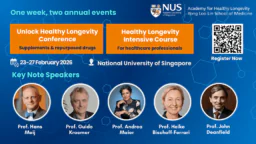 Global Conference to Tackle Longevity Clinical Translation: The Geromedicine Conference took place from February 26-27, 2026 at the National University of Singapore. This premier event gathered global experts in geroscience, researchers, clinicians and industry leaders to explore the translation of geroscience into real-world interventions aimed at optimizing health and extending healthspan.
Coming Up
Longevity Innovation Forum in San Diego: On March 11-12, Longevity Global will host the inaugural Longevity Innovation Forum, a two-day gathering bringing together leading scientists, clinicians, biotech founders, investors, and longevity enthusiasts advancing the science and translation of healthy aging