
Rejuvenation Biotechnology

Rejuvenation biotechnology is a field that seeks to add more healthy years to human life. There are quite a few misconceptions about our field, so we are going to explore them here.
What is rejuvenation biotechnology?
It is a field within biotechnology focused on aging and age-related diseases. It focuses on repairing or replacing damaged cells, tissues, and organs to restore youthful function.
It aims to reverse biological aging by addressing the underlying cellular and molecular damage and dysfunction that aging causes. In other words, it targets why we age, not the consequences.
The core idea behind it is that aging is the buildup of damage and dysfunction. To combat this, we must perform comprehensive repair to restore youthful biology. That repair should lead to the prevention and reversal of age-related decline/disease.
The goal is to move from simply managing age-related diseases to reversing them, making aging a treatable condition.
What are the main types of damage that rejuvenation biotechnology targets?
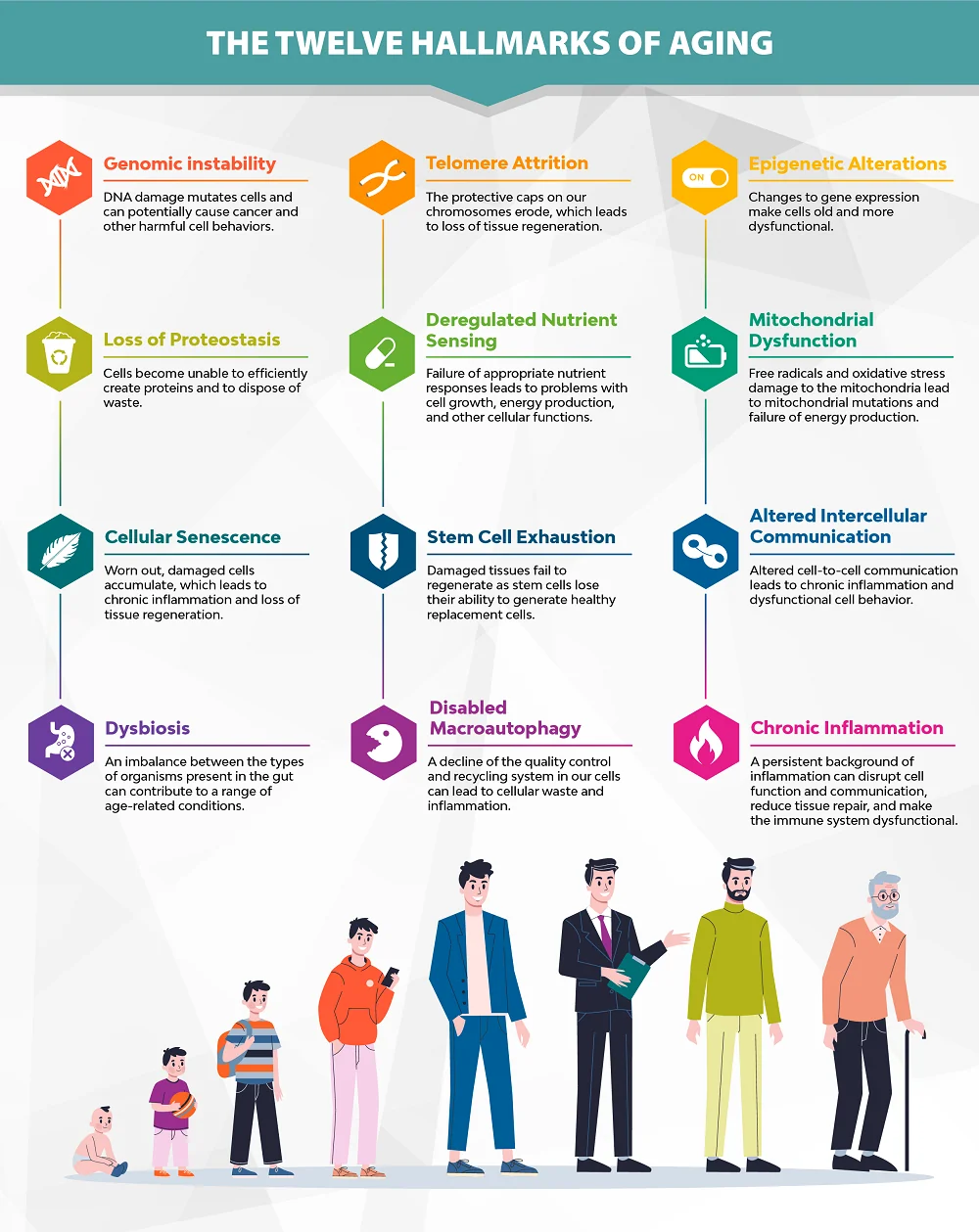
Scientists have classified aging into a set of underlying causes called hallmarks. These hallmarks of aging are the direct targets of rejuvenation biotechnology.
Why is rejuvenation biotechnology important?
Rejuvenation biotechnology aims to reverse aging, not just slow it down. Unlike traditional medicine, which treats age-related diseases after they appear, this approach targets the causes of aging. Essentially, it aims to prevent age-related diseases before they start.
With global populations aging rapidly, developing rejuvenation biotechnology is becoming an ever more urgent need. Addressing the root causes of aging could potentially reduce healthcare burdens and enhance quality of life for everyone.
How is rejuvenation biotechnology different from longevity research?
Conventional longevity research typically focuses on slowing down aging as a whole. It focuses on extending “healthspan”, the period of life spent in good health, rather than lifespan.
Key areas of longevity research focus include:
- Drug interventions: Researchers are testing drugs like rapamycin for anti-aging effects. They are also studying how suppressing PAI-1 may slow aging.
- Lifestyle and diet: Research highlights the role of plant-based diets and regular physical activity in increasing longevity.
- Other approaches: Studies are investigating the benefits of hyperbaric oxygen chambers and cryochambers. Researchers are also exploring how community, dance, and movement affect aging markers.
- Biology of aging: Researchers are studying key mechanisms that may slow cell aging through improving metabolism and stress reduction.
These areas of research are promising and may help people stay healthier as they age. However, they mainly aim to improve health during our current lifespans. This is a worthy cause, but rejuvenation biotechnology seeks to go beyond this.
Rejuvenation biotechnology emphasizes repair and restoration. It is about actively removing, replacing, or neutralizing damage.
Key research areas of rejuvenation biotechnology include:
- DNA repair: Repairing damage to DNA and reducing risk of mutations.
- Partial cellular reprogramming: Reversing harmful age-related gene expression changes to restore youthful cell function.
- Restoring telomeres: Using gene therapies to restore lost telomeres.
- Repairing mitochondria: Making backup copies of mitochondrial genes in the cellular nucleus and restoring energy production.
- Thymus rejuvenation: Part of a wider effort to rejuvenate the immune system.
- Senolytics: Clearing harmful senescent cells to reduce inflammation and improve tissue repair.
- Combination therapies: Projects like LEV Foundation’s Robust Mouse Rejuvenation aim to combine interventions for late-life lifespan extension.
Rejuvenation biotechnology seeks true reversal of biological age, not just slowing aging down. Its ultimate aim is both healthier and longer lives.
Is rejuvenation biotechnology safe?
All medical treatments carry risks, and the cutting-edge technologies that we are developing in our field are no exception. The potential benefits of rejuvenation are absolutely massive, but there are risks.
Most researchers emphasize the iterative and cautious development of therapies. This means starting with single interventions, then combining them with others to find what is most effective.
Regulatory bodies also require rigorous safety data, which provides a layer of protection. The clinical trial system, while it needs updating to cope with innovative new technologies, reduces risk as much as possible.
When might the first rejuvenation therapies reach humans?
The first true rejuvenation therapies are now entering or are already in clinical trials, and there is no doubt that there will be more to follow in the near future.
Life Biosciences’ ER-100 is a gene therapy for partial cellular reprogramming using Yamanaka factors, developed with Professor David Sinclair. In late January 2026, the FDA cleared it to begin a Phase 1 human trial aimed at age-related eye diseases. The trial included non-arteritic anterior ischemic optic neuropathy (NAION) and open-angle glaucoma.
This trial aims to restore damaged retinal cells. Enrollment begins in early 2026. Initial dosing follows, with about two months of safety monitoring per cohort. This marks the first human trial of a cellular “age reversal” technique.
Other approaches, like drugs that clear senescent cells (senolytics) from Rubedo Life Sciences, entered human trials in 2025: RLS-1496 has entered Phase 1 for actinic keratosis, with plans for broader age-related applications in 2026.
In Australia, the plaque-removing drug UDP-003 developed by Cyclarity is currently in clinical trials. This is a cyclodextrin drug that focuses on 7-ketocholesterol, a type of oxidized cholesterol that increases in cells and tissues as people age.
Heart disease occurs when plaque accumulates in the arteries, primarily due to this oxidized cholesterol buildup. Should the clinical trial succeed, it would mean that this major cause of heart disease is reversible.
These represent the earliest wave of rejuvenation-focused therapies and are organ- or disease-specific. Broad systemic rejuvenation remains further off due to safety, delivery, and regulatory hurdles.
Interest and funding in the field has grown significantly in the last few years. Companies like Jeff Bezos-backed Altos Labs and Sam Altman-backed Retro Biosciences have poured billions into the field. However, despite the increasing funding, age reversal in humans remains experimental.
This is a rough timeline of how things might play out in the coming years:
Short term: 2026-2030
We expect to see more Phase 1 and 2 clinical trials for targeted rejuvenation to start launching. These will likely be for cellular reprogramming, advanced senolytics, stem cell enhancements, or immune rejuvenation. These trials will focus on safety and functional improvements in specific organs and tissues, not full-body age reversal.
Medium term: late 2020s-2030s
If early trials succeed, approved therapies could emerge for specific age-related diseases. Off-label or medical tourism use will likely be an option for wealthier individuals. Combined rejuvenation therapies that address multiple aging hallmarks could become feasible.
Long term: 2040-2060
Conservative estimates push widely available comprehensive rejuvenation further out. These will need large-scale efficacy data and combined damage repair approaches to achieve. This is also assuming steady funding and no major setbacks.
Early human clinical trial data from 2026 onwards will be important in refining these timelines. Needless to say, predicting likely future trends becomes increasingly harder the further out they are.
Where are we now with rejuvenation?
In late 2025, we consulted various experts working in the field and asked them for their views on progress. We talked to researchers, company CEOs, and advocates to get their view on where things stand.
Geroscience in 2025: The Expert Roundup
 How far has science advanced towards longer healthier lives?
We spoke with researchers Steve Horvath, George Church, Andrea Maier, Matt Kaeberlein, and Oliver Medvedik. They shared their expert views on the current state of aging research.
Longevity Biotech in 2025: The Expert Roundup
 Good research also requires strong business leadership to transform discoveries into effective treatments. Guiding therapies through clinical trials is the last hurdle to making rejuvenation biotechnology widely available.
Kristen Fortney, Mehmood Khan, Jamie Justice, Nathan Cheng, Karl Pfleger waded in on the business side of the field, and we joined them to explore how the business of rejuvenation is progressing.
Longevity Advocacy in 2025: The Expert Roundup
 Developing rejuvenation technology is only part of the overall task; it must be paired with persuasive advocacy. Many people misunderstand or oppose viewing aging as a medical condition. Our field needs effective outreach to inform the public and increase broad social acceptance.
Andrew Steele, Melissa King, Bernard Siegel, Dylan Livingston, Adam Gries, and Anastasia Egorova shared their thoughts. Check out how longevity advocacy performed in 2025.
;)
;)