




Human Clinical Trials of NMN for Safety and Effectiveness
In a recent paper, researchers reviewed the literature for human clinical trials that address NMN’s safety and anti-aging effects [1]. The roles of NAD+ and NMN in aging NAD+ (nicotinamide
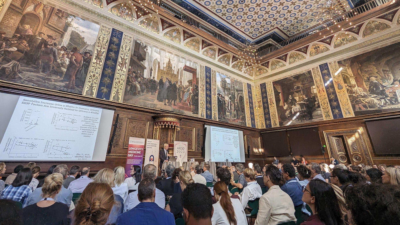
ARDD 2023: The Mother of All Longevity Conferences
Once a year, Copenhagen becomes a Mecca for the longevity community. Hundreds of people flock to the picturesque Danish capital to attend the Aging Research and Drug Discovery Meeting (ARDD)
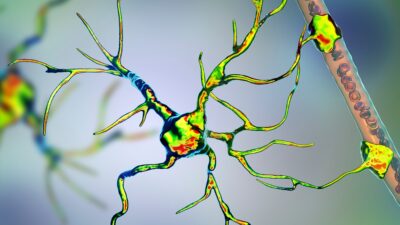
An Unexplored Link Between Inflammation and Alzheimer’s
An article in GeroScience describes a previously unexplored relationship between FABP7, an inflammatory molecule that binds to fatty acids, and Alzheimer’s disease. Not just a transporter Originally, as the authors

Developing a Treatment for Arthritis from Stem Cell Signals
Resarchers publishing in Aging have found that extracellular vesicles (EVs) derived from human umbilical cord mesenchymal stem cells (MSCs) reduce inflammatory markers in chondrocytes, which are responsible for building and
Creating a Noise Clock to Measure Biological Age
Publishing in Aging, the Conboy research lab has outlined the problems with existing machine learning-based clocks and created a new clock based on epigenetic noise. The problem with linear regression
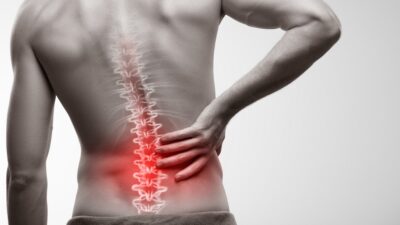
Senolytics as a Potential Back Pain Treatment
In a recent paper, researchers from McGill University in Canada have investigated how a combination of two senolytics, RG-7112 and o-Vanillin, influences the intervertebral disc cells of back pain patients

Exercise Mimetic Improves Memory In Old Mice
Researchers have identified a platelet-derived factor that improves cognition in mice and published their findings in Nature Communications. Finding the right molecules This paper begins with the same refrain common
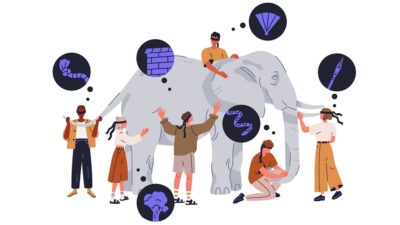
Is There a Single Essence of Aging?
In the Proceedings of the National Academy of Science, Dr. Jesse Poganik and Prof. Vadim Gladyshev of Harvard Medical School have presented an opinion proposing a consensus understanding of aging.

Stem Cell Signals Improve Cardiac Health in Old Rats
The Journal Club returns with Dr. Oliver Medvedik on September 29th at 12:00 Eastern time on our Facebook page. We take a look at a recent study published in Nature,
Journal Club September 2023
The Journal Club returns with Dr. Oliver Medvedik on September 29th at 12:00 Eastern time on our Facebook page. We take a look at a recent study published in Nature,

How Pollution Makes Aging Worse
A review paper published in GeroScience has detailed a substantial amount of research into the ways that environmental pollutants accelerate aging. A new model for an old problem This paper

Having a Hobby Might Lead to a Healthier Life
A new publication in Nature Medicine has provided evidence from multiple countries supporting the idea that older people who have hobbies are healthier and less likely to have depression. Loneliness,

Ending Age-Related Diseases 2023: Longevity/DeSci Success
The Ending Age-Related Diseases 2023 conference has ended, and it was a big success. Today, we are delighted to announce that the first of our conference videos is available: the
Jumping Genes Influence the Speed of Aging in Worms
According to a newly published paper in Nature Communications, transposable elements impact aging in C.elegans [1]. Transposable elements and aging Transposable elements are often referred to as mobile genetic elements

Taking Up Exercise Late in Life May Prevent Fitness Decline
According to a new study published in Aging Cell, previously sedentary old people who took up an exercise program were able to improve their fitness and maintain it for at

Human Clinical Trials of NMN for Safety and Effectiveness
In a recent paper, researchers reviewed the literature for human clinical trials that address NMN’s safety and anti-aging effects [1]. The roles of NAD+ and NMN in aging NAD+ (nicotinamide adenine dinucleotide) is a molecule essential in such processes as metabolism, cell death, aging, DNA repair,
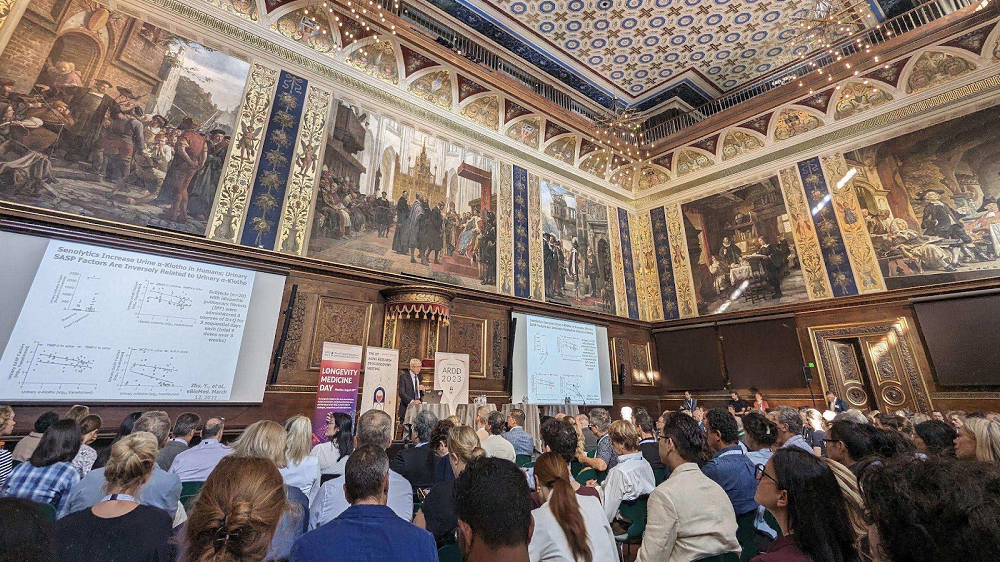
ARDD 2023: The Mother of All Longevity Conferences
Once a year, Copenhagen becomes a Mecca for the longevity community. Hundreds of people flock to the picturesque Danish capital to attend the Aging Research and Drug Discovery Meeting (ARDD) for five full days of talks by geroscientists and biotech leaders, mingling and networking with like-minded
An Unexplored Link Between Inflammation and Alzheimer’s
An article in GeroScience describes a previously unexplored relationship between FABP7, an inflammatory molecule that binds to fatty acids, and Alzheimer’s disease. Not just a transporter Originally, as the authors explain, fatty acid binding proteins (FABPs) were considered to be simple biological chaperones that did not

Developing a Treatment for Arthritis from Stem Cell Signals
Resarchers publishing in Aging have found that extracellular vesicles (EVs) derived from human umbilical cord mesenchymal stem cells (MSCs) reduce inflammatory markers in chondrocytes, which are responsible for building and maintaining human cartilage. An established approach This is far from the first attempt at treating osteoarthritis
Creating a Noise Clock to Measure Biological Age
Publishing in Aging, the Conboy research lab has outlined the problems with existing machine learning-based clocks and created a new clock based on epigenetic noise. The problem with linear regression This paper begins with a description of the elastic net, an artificial intelligence algorithm that powers

Senolytics as a Potential Back Pain Treatment
In a recent paper, researchers from McGill University in Canada have investigated how a combination of two senolytics, RG-7112 and o-Vanillin, influences the intervertebral disc cells of back pain patients [1]. Back pain is a widespread issue An overwhelming majority of people, a full 80%, have

Exercise Mimetic Improves Memory In Old Mice
Researchers have identified a platelet-derived factor that improves cognition in mice and published their findings in Nature Communications. Finding the right molecules This paper begins with the same refrain common in discussions about the biological effects of exercise: the inability of some older people to conduct

Is There a Single Essence of Aging?
In the Proceedings of the National Academy of Science, Dr. Jesse Poganik and Prof. Vadim Gladyshev of Harvard Medical School have presented an opinion proposing a consensus understanding of aging. A problem of focus and funding The authors lament a lack of focus and funding in

Stem Cell Signals Improve Cardiac Health in Old Rats
The Journal Club returns with Dr. Oliver Medvedik on September 29th at 12:00 Eastern time on our Facebook page. We take a look at a recent study published in Nature, in which extracellular vesicles derived from neonatal cardiac progenitors produced significant rejuvenation in old rats and
Journal Club September 2023
The Journal Club returns with Dr. Oliver Medvedik on September 29th at 12:00 Eastern time on our Facebook page. We take a look at a recent study published in Nature, in which extracellular vesicles derived from neonatal cardiac progenitors produced significant rejuvenation in old rats and

How Pollution Makes Aging Worse
A review paper published in GeroScience has detailed a substantial amount of research into the ways that environmental pollutants accelerate aging. A new model for an old problem This paper begins with the well-known fact that age-related diseases, defined here as age-related non-communicable diseases (NCDs), are

Having a Hobby Might Lead to a Healthier Life
A new publication in Nature Medicine has provided evidence from multiple countries supporting the idea that older people who have hobbies are healthier and less likely to have depression. Loneliness, social isolation, and hobbies This paper begins with an explanation of population aging and its downstream

Ending Age-Related Diseases 2023: Longevity/DeSci Success
The Ending Age-Related Diseases 2023 conference has ended, and it was a big success. Today, we are delighted to announce that the first of our conference videos is available: the opening talk from the event given by our President, Keith Comito. But before we get into

Jumping Genes Influence the Speed of Aging in Worms
According to a newly published paper in Nature Communications, transposable elements impact aging in C.elegans [1]. Transposable elements and aging Transposable elements are often referred to as mobile genetic elements or jumping genes, as these DNA pieces can change their position in the genome. Changing the

Taking Up Exercise Late in Life May Prevent Fitness Decline
According to a new study published in Aging Cell, previously sedentary old people who took up an exercise program were able to improve their fitness and maintain it for at least four years [1]. Better late than never When is it too late to engage in