






Our Organization Grows to Support Rejuvenation Research
Spring is not far away here in the Northern Hemisphere, and with it, the signs of life and new growth are appearing. Much like the change of seasons, our organization

Midday Exercise Might Be Better In Preventing Mortality
Scientists have found that the time of day when you exercise might be an important factor in lowering all-cause and cardiovascular mortality [1]. Exercise is good, but what about timing?

Journal Club February 2023
The Journal Club, hosted by Dr. Oliver Medvedik, returns to the lifespan.io Facebook page at 12:00 on Tuesday, February 28th. This month, we are covering a recent paper that showed

Reviewing David Sinclair’s First Lifespan Book
David Sinclair, PhD, esteemed molecular geneticist at Harvard, believes that aging is a disease that should be attacked at its roots. Furthermore, he believes if we are to make efficient

High Cholesterol Associated With Lower Bone Mineral Density
A team of researchers has described an association between reduced bone density in the lumbar spine and high total cholesterol in a paper published in Aging. Previous studies were conflicting

Nicotinamide Riboside Improves Muscle Energy in Trial
Scientists have shown that long-term treatment with a popular NAD+ precursor can raise NAD+ levels in blood and muscle and increase mitochondria content and function [1]. Twin-based design NAD+ is

Human Organoids for Brain Regeneration
Researchers publishing in Cell Stem Cell have used organoids derived from human cells to regrow the brain tissue of rats. The need to repair permanent damage While human beings do

Young Ovarian Tissue Rejuvenates Old Mice
In a paper published in Frontiers in Endocrinology, researchers have shown that transplanted young ovarian tissue improves the immune function of old recipient mice even if they are hormone-depleted [1].

Lithium Is Linked to Lower Mortality
In an epidemiological study published in Aging, scientists have shown that patients who take lithium have much lower all-cause mortality than patients on other psychotropic drugs [1]. Is lithium a

The Link Between NAD+ and Heart Failure
A paper published today in Nature Cardiovascular Research has explained a relationship between dilated cardiac myopathy (DCM), epigenetic dysregulation, NAD+, and the epigenetic regulatory molecule Kdm8. A gradual decline of

Meet hack-age, Winners of the January 2023 LongHack
On January 22nd, hack-age won the 2023 LongHack competition, which carried a grand prize of 5,500 VITA and 3,500 USD. lifespan.io caught up with the team behind the winning project

Extracellular Vesicles for Tendon Healing
Researchers publishing in Journal of Nanobiotechnology have found that extracellular vesicles derived from young cells are effective in treating a model of a common tendon disease. Tendinopathy and stem cells

Viral Exposure Might Increase the Risk of Neurodegeneration
In a paper published in Neuron, researchers have shown an association between exposure to various viruses and an increased risk of several neurodegenerative diseases, including Alzheimer’s and Parkinson’s diseases [1].

Retroviruses Contribute to the Spread of Cellular Senescence
Scientists have found that the remnants of the ancient retrovirus family HERVK, which reside in our genome, are transcribed more frequently in aged cells. This is caused by cellular senescence

Diagnosing Alzheimer’s in the Near Infrared
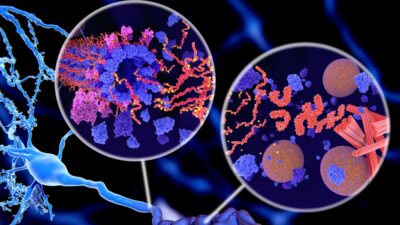
In Nature Biomedical Engineering, a team of researchers has published an innovative method of making tau tangles and amyloid beta visible in the near infrared, allowing doctors and researchers to

Our Organization Grows to Support Rejuvenation Research
Spring is not far away here in the Northern Hemisphere, and with it, the signs of life and new growth are appearing. Much like the change of seasons, our organization is also growing and preparing to continue the fight against age-related diseases. Matt Kaeberlein joins our

Midday Exercise Might Be Better In Preventing Mortality
Scientists have found that the time of day when you exercise might be an important factor in lowering all-cause and cardiovascular mortality [1]. Exercise is good, but what about timing? The value of physical activity for health and longevity is unquestionable [2], even if some doubts

Journal Club February 2023
The Journal Club, hosted by Dr. Oliver Medvedik, returns to the lifespan.io Facebook page at 12:00 on Tuesday, February 28th. This month, we are covering a recent paper that showed a method of restoring youthful collagen production in aged skin [1]. If you would like some

Reviewing David Sinclair’s First Lifespan Book
David Sinclair, PhD, esteemed molecular geneticist at Harvard, believes that aging is a disease that should be attacked at its roots. Furthermore, he believes if we are to make efficient and sensible use our medical resources, we must move away from the “whack-a-mole” approach to treating

High Cholesterol Associated With Lower Bone Mineral Density
A team of researchers has described an association between reduced bone density in the lumbar spine and high total cholesterol in a paper published in Aging. Previous studies were conflicting In various populations, conflicting evidence has been found regarding a relationship between cholesterol and bone density.

Nicotinamide Riboside Improves Muscle Energy in Trial
Scientists have shown that long-term treatment with a popular NAD+ precursor can raise NAD+ levels in blood and muscle and increase mitochondria content and function [1]. Twin-based design NAD+ is an important coenzyme that performs multiple functions, including mitochondrial energy production. NAD+ levels decrease with aging,

Human Organoids for Brain Regeneration
Researchers publishing in Cell Stem Cell have used organoids derived from human cells to regrow the brain tissue of rats. The need to repair permanent damage While human beings do generate new neurons (neurogenesis) [1], this ability is very limited, in both region and amount. Brain

Young Ovarian Tissue Rejuvenates Old Mice
In a paper published in Frontiers in Endocrinology, researchers have shown that transplanted young ovarian tissue improves the immune function of old recipient mice even if they are hormone-depleted [1]. Not just a reproductive matter Although women generally live longer than men, women spend almost half

Lithium Is Linked to Lower Mortality
In an epidemiological study published in Aging, scientists have shown that patients who take lithium have much lower all-cause mortality than patients on other psychotropic drugs [1]. Is lithium a longevity drug? Lithium has long been prescribed for certain psychiatric conditions, mainly bipolar disorder. With time,

The Link Between NAD+ and Heart Failure
A paper published today in Nature Cardiovascular Research has explained a relationship between dilated cardiac myopathy (DCM), epigenetic dysregulation, NAD+, and the epigenetic regulatory molecule Kdm8. A gradual decline of ability DCM occurs when the left ventricle of the heart becomes enlarged and loses its ability

Meet hack-age, Winners of the January 2023 LongHack
On January 22nd, hack-age won the 2023 LongHack competition, which carried a grand prize of 5,500 VITA and 3,500 USD. lifespan.io caught up with the team behind the winning project to learn more about their idea and their experience competing in the hackathon. What is LongHack?

Extracellular Vesicles for Tendon Healing
Researchers publishing in Journal of Nanobiotechnology have found that extracellular vesicles derived from young cells are effective in treating a model of a common tendon disease. Tendinopathy and stem cells Swelling, weakness, tenderness, and tendon pain during activities are the characteristic symptoms of chronic tendinopathy [1],

Viral Exposure Might Increase the Risk of Neurodegeneration
In a paper published in Neuron, researchers have shown an association between exposure to various viruses and an increased risk of several neurodegenerative diseases, including Alzheimer’s and Parkinson’s diseases [1]. Roots of neurodegeneration There are many causes underlying neurodegeneration, such as genetic predisposition, toxin exposure, poor

Retroviruses Contribute to the Spread of Cellular Senescence
Scientists have found that the remnants of the ancient retrovirus family HERVK, which reside in our genome, are transcribed more frequently in aged cells. This is caused by cellular senescence and accelerates it, including in the neighboring cells, when those are infected by retroviral particles [1].

Diagnosing Alzheimer’s in the Near Infrared
In Nature Biomedical Engineering, a team of researchers has published an innovative method of making tau tangles and amyloid beta visible in the near infrared, allowing doctors and researchers to see through bone with relatively simple equipment. Current methods are difficult There are three main approaches