Creating CAR-T Cells Using Current Alzheimer’s Antibodies
- These cells encourage other immune cells to participate.


- Engineering CAR T cells using an existing Alzheimer’s approach has demonstrated benefits in model mice.
- Using a transient approach prevents these cells from activating microglia in a harmful way.
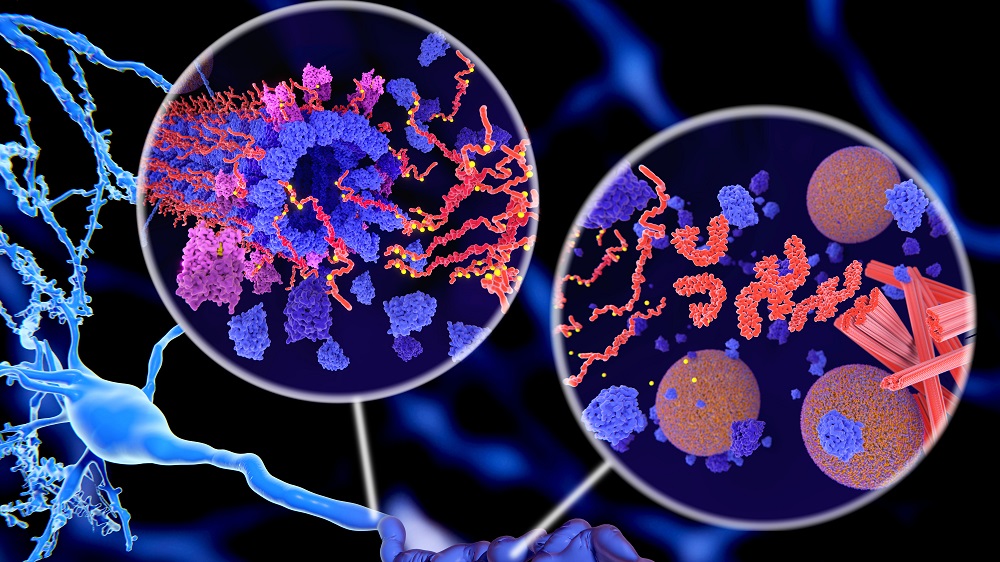
A team of researchers has biologically engineered T cells with currently available Alzheimer’s drugs in order to directly attack the characteristic amyloid plaques of Alzheimer’s disease.
Building on the current paradigm
Most Alzheimer’s treatments used in the clinic are -mabs, monoclonal antibodies that are designed to attack the amyloid beta plaques that accumulate in the brains of people with Alzheimer’s. However, while they have been found to have enough meaningful benefits in clinical trials to be approved by the FDA, they are not a cure, and some analyses question their effectiveness [1].
The immune system has been documented to play various roles in neurodegenerative diseases, although those roles can be both beneficial [2] and harmful [3]. CD4+ T cells, which were engineered in this study, naturally have beneficial effects against Alzheimer’s [4] and protect injured neurons [5].
The chimeric antigen receptor (CAR) approach also uses antibodies; however, these antibodies are attached to immune cells in an effort to encourage them to destroy pathologies. Most research in this area has focused on cancer; particularly leukemia [6], and we have written about this technology being used against a broad variety of cancers and senescent cells in the gut.
Instead of destroying cells, however, these researchers want their engineered cells to destroy the Alzheimer’s plaques themselves and to home in on damaged sites in the hope that their presence might protect the damaged area [5]. The CARs they used were built with two of the same -mabs currently used in the clinic: aducanumab and lecanemab.
Tentatively positive initial results
Testing against various forms of amyloid beta peptides, they found that the lecanemab-derived CAR (Lec28z) was significantly more responsive than the aducanumab-derived one (Adu28z). Only assembled fibrils were targeted; neither of the CARs was responsive to the monomer or oligomer forms of this amyloid. Lec28z was also more responsive to brain extracts derived from mice modified to get Alzheimer’s; therefore, the researchers continued using this version throughout the rest of their experiments.
The researchers injected a key vein of Alzheimer’s model mice with Lec28z-modified T cells derived from wild-type mice, and then delivered another injection three weeks later. After three more weeks, the brains of the injected mice were examined.
Compared to control groups injected with saline or unmodified T cells, the CAR-T-injected mice had significant increases of both CAR T cells and regular T cells at the sites of amyloid beta plaques. The overall amount of amyloid beta was reduced, both near the injection site and throughout the brain’s dura.
However, there was no decrease in amyloidosis throughout the bulk of the brain. While these cells were in fact dispersed throughout the brain and homing in on plaque sites, they also activated the local T cells and microglia, “raising concerns about prolonged T cell activation and the potential emergence of detrimental phenotypes including cytotoxicity.”
Transience is highly beneficial
Therefore, the researchers attempted a more transient approach. Three doses of CAR-T cells transfected with Lec28z mRNA were given ten days apart, with a brain examination conducted 10 days after the final dose. This approach was found to be more effective; the treated animals had less microglial activation and amyloid throughout the brain along with less overall pathology.
These findings, while positive and potentially groundbreaking, are very preliminary. The researchers did not conduct behavioral tests, and mice do not naturally get Alzheimer’s disease. Substantial further work, including a trial involving human beings, needs to be done to determine if -mab drugs can be replaced in the clinic with CAR-T versions.
Literature
[1] Knopman, D. S., Jones, D. T., & Greicius, M. D. (2021). Failure to demonstrate efficacy of aducanumab: An analysis of the EMERGE and ENGAGE trials as reported by Biogen, December 2019. Alzheimer’s & Dementia, 17(4), 696-701.
[2] Marsh, S. E., Abud, E. M., Lakatos, A., Karimzadeh, A., Yeung, S. T., Davtyan, H., … & Blurton-Jones, M. (2016). The adaptive immune system restrains Alzheimer’s disease pathogenesis by modulating microglial function. Proceedings of the National Academy of Sciences, 113(9), E1316-E1325.
[3] Chen, X., Firulyova, M., Manis, M., Herz, J., Smirnov, I., Aladyeva, E., … & Holtzman, D. M. (2023). Microglia-mediated T cell infiltration drives neurodegeneration in tauopathy. Nature, 615(7953), 668-677.
[4] Mittal, K., Eremenko, E., Berner, O., Elyahu, Y., Strominger, I., Apelblat, D., … & Monsonego, A. (2019). CD4 T cells induce a subset of MHCII-expressing microglia that attenuates Alzheimer pathology. Iscience, 16, 298-311.
[5] Walsh, J. T., Hendrix, S., Boato, F., Smirnov, I., Zheng, J., Lukens, J. R., … & Kipnis, J. (2015). MHCII-independent CD4+ T cells protect injured CNS neurons via IL-4. The Journal of clinical investigation, 125(2), 699-714.
[6] Grupp, S. A., Kalos, M., Barrett, D., Aplenc, R., Porter, D. L., Rheingold, S. R., … & June, C. H. (2013). Chimeric antigen receptor–modified T cells for acute lymphoid leukemia. New England Journal of Medicine, 368(16), 1509-1518.
About the author

Josh Conway