The Blog

Building a Future Free of Age-Related Disease

NMN Improves Cognitive Function in Aged Mice

Researchers have tested nicotinamide mononucleotide on aged mice to see if it can help reverse age-related cognitive decline by improving blood flow in the brain.

The brain is a hungry organ

Healthy brain function relies on efficient cerebral blood flow (CBF) to wash away harmful waste products for disposal and supply the brain with an adequate supply of oxygen and sufficient nutrients.

The brain is a hungry organ and consumes around 20% of the resting total of oxygen, which is staggering given that it only accounts for about 2% of our total body mass. The demand for oxygen and energy also increases during times of high neuronal activity, which means that the brain needs to quickly adjust the incoming oxygen and glucose levels via CBF.

This rapid response to differing levels of demand by the brain is facilitated by a mechanism known as neurovascular coupling (NVC). NVC refers to the relationship between local neural activity and the subsequent changes in cerebral blood flow (CBF).

One way in which NVC adjusts CBF is via the release of nitric oxide from the cell walls of the microvascular endothelium, the tiny blood vessels that supply brain tissue. Nitric oxide is a vasodilator, meaning that it opens up the blood vessels upon exposure; this allows for a greater flow of blood, leading to more oxygen and nutrients reaching the brain.

As we age, the NVC response appears to decline just as it does in lab mice, and it is thought to contribute to cognitive decline and the ability to coordinate and walk properly.

NAD+ repletion with NMN restores neurovascular coupling

In a new study, a research team including Dr. David Sinclair tested the hypothesis that nicotinamide mononucleotide (NMN) supplementation could rescue NVC responses in aged mice by reducing mitochondrial oxidative stress in the microvascular endothelial cells of the brain [1].

The team’s previous studies had shown that NVC response could be restored in aged mice using mitochondrial antioxidant peptides and SIRT1-activating drugs. This laid the groundwork for suggesting that targeting the cellular mechanisms that contribute to age-related NVC dysfunction could be a potential way to treat cognitive decline in older people.

NAD+ plays a key role in mitochondrial function in all of our cells, which includes the endothelial cells in the brain. As we age, our available levels of NAD+ begin to fall, and with that comes reduced cellular function and critically poorer DNA repair, which NAD+ facilitates.

Some researchers suggest that the decline of NAD+ is one reason we age and that increasing NAD+ to more youthful levels may mitigate some of the negative effects of aging. Certainly, a number of studies support this, and NAD+ repletion therapies have increased healthspan in progeric mouse strains that are engineered to experience a form of accelerated aging.

In the case of NMN, there is good evidence that NAD+ repletion using this compound is able to reverse some aspects of aging in a number of organs, including the eyes, skeletal muscle, and arteries. One of the primary reasons NMN appears effective is due to its reversal of age-related mitochondrial dysfunction [2]. Given that NMN might improve mitochondrial function and have a protective effect on the brain, improving NVC response, the research team set out to test this hypothesis.

The mice were given NMN injections for a two-week period at a dosage of 500 mg NMN/kg body weight per day. The team used aged C57BL/6 mice, a popular strain of lab mouse that is not engineered to experience accelerated aging; this was important for the purposes of this study, as it would mean that any beneficial results would be affecting real aging and not an artificial form of aging, as is the case when using progeric mouse strains.

During the period of treatment, the mice were given cognition and motor coordination tests, both of which are linked to the NVC responses in the brain. They also tested NVC response and how well endothelial cells were performing in the brain’s microvascular system. During this time, the research team also measured biomarkers for oxidative stress, gene expression relating to NVC responses, antioxidant responses in cells, and mitochondrial function.

The researchers found that NMN treatment was able to improve the NVC response of aged mice via improving nitric oxide-mediated vasodilation of the microvasculature in the brain. The increased level of CBF significantly improved cognition and walking ability in aged mice. The researchers conclude that the age-related fall of NAD+ levels facilitates dysfunction in the microvasculature of the brain, leading to a poor NVC response and contributing to age-related cognitive decline.

Abstract

Adjustment of cerebral blood flow (CBF) to neuronal activity via neurovascular coupling (NVC) has an essential role in maintenance of healthy cognitive function. In aging increased oxidative stress and cerebromicrovascular endothelial dysfunction impair NVC, contributing to cognitive decline. There is increasing evidence showing that a decrease in NAD+ availability with age plays a critical role in a range of age-related cellular impairments but its role in impaired NVC responses remains unexplored. The present study was designed to test the hypothesis that restoring NAD+ concentration may exert beneficial effects on NVC responses in aging. To test this hypothesis 24-month-old C57BL/6 mice were treated with nicotinamide mononucleotide (NMN), a key NAD+ intermediate, for 2 weeks. NVC was assessed by measuring CBF responses (laser Doppler flowmetry) evoked by contralateral whisker stimulation. We found that NVC responses were significantly impaired in aged mice. NMN supplementation rescued NVC responses by increasing endothelial NO-mediated vasodilation, which was associated with significantly improved spatial working memory and gait coordination. These findings are paralleled by the sirtuin-dependent protective effects of NMN on mitochondrial production of reactive oxygen species and mitochondrial bioenergetics in cultured cerebromicrovascular endothelial cells derived from aged animals. Thus, a decrease in NAD+ availability contributes to age-related cerebromicrovascular dysfunction, exacerbating cognitive decline. The cerebromicrovascular protective effects of NMN highlight the preventive and therapeutic potential of NAD+ intermediates as effective interventions in patients at risk for vascular cognitive impairment (VCI).

Conclusion

NMN therapy appears to have a protective effect on brain microvasculature and improves the production of nitric oxide, which improves blood flow in the brains of aged mice. This opens the door for testing NMN therapy in humans as a potential treatment for age-related cognitive decline.

We would like to ask you a small favor. We are a non-profit foundation, and unlike some other organizations, we have no shareholders and no products to sell you. All our news and educational content is free for everyone to read, but it does mean that we rely on the help of people like you. Every contribution, no matter if it’s big or small, supports independent journalism and sustains our future.

Literature

[1] Tarantini, S., Valcarcel-Ares, M. N., Toth, P., Yabluchanskiy, A., Tucsek, Z., Kiss, T., … & Farkas, E. (2019). Nicotinamide mononucleotide (NMN) supplementation rescues cerebromicrovascular endothelial function and neurovascular coupling responses and improves cognitive function in aged mice. Redox Biology, 101192.

[2] Mills, K. F., Yoshida, S., Stein, L. R., Grozio, A., Kubota, S., Sasaki, Y., … & Yoshino, J. (2016). Long-term administration of nicotinamide mononucleotide mitigates age-associated physiological decline in mice. Cell metabolism, 24(6), 795-806.

One Step Closer to Artifical Lymph Nodes

Scientists from Johns Hopkins Medicine have reported the successful creation of a special type of gel that mimics the lymph nodes in our bodies. This gel recruits and multiplies T cells just like actual lymph nodes do, so it could help in the fight against cancer and immune system disorders.

The lymph nodes are the boot camps of the immune system

There has been a great deal of interest in immunotherapy in the last few years, particuarly in using the T cells, a type of white blood cell, to hunt down cancer and destroy it. Our own immune system is quite literally living medicine, and when it works properly, it can deal with invading pathogens and cancers with ease; this is one reason why the traditional small-molecule approach to cancer has started to fall by the wayside in favor of immune approaches.

Immunotherapy typically increases the amounts of immune cells available or even boosts how well the cells work in order to fight off disease. Cancer often hides in plain sight and uses various tricks to fool the immune system into ignoring it, so immunotherapy often focuses on improving how well our immune cells detect cancer or help it to see past the tricks it uses to hide.

In order to do this, the immune cells must first be trained to detect the key molecular markings on the surfaces of cancer cells. This normally happens in the lymph nodes, which function almost like army boot camps where the new T cell recruits are trained for battle; this follows their initial training in the thymus.

The lymph nodes are small, bead-like glands that are distributed around the body in order to provide a comprehensive network of defenses. In patients with immune system disorders or cancer, this training does not happen or is incomplete, so the resulting T cells cannot do their job properly. With aging, the lymph nodes become increasingly dysfunctional as they become fibrotic and deteriorate.

Currently, the solution to this lack of training is to take the T cells from the patient and activate them through genetic engineering or drugs that complete the training so that the cells can identify cancer cell surface markers properly. This is, by its nature, challenging and costly to undertake and only possible through specialized labs, and it can take several weeks to do. Furthermore, once the T cells are given back to the patient, they do not last long before more need to be processed in this way.

Moving towards an artificial lymph node

In the new study, researchers developed a type of hydrogel, a jelly-like polymer, to serve as a platform for T cell training and which mimics the lymph node environment [1]. The hydrogel contains two chemical signals that encourage T cells to locate and eliminate foreign targets, and it acts similarly to real lymph nodes in training these cells. Compared to the T cells activated in standard Petri dishes, the cells on the hydrogels produced an impressive 50 percent more activation cytokines.

The team also experimented with different grades of hydrogels, ranging from very soft consistency to harder more rigid ones. They found that the T cells favored a softer gel environment over the more tightly packed rigid gels. Over 80 percent of the T cells in the soft gel divided, while those in the rigid gel did not.

To put this into perspective, this translates to taking a handful of cells and having them multiply to around 150,000 cells in just a week. The team also compared this with the Petri dish method of activating and multiplying T cells, which only reached around 20,000 cells in the same period. This makes this gel approach much more efficient, and the potential price point of therapy could be considerably lower with this method.

Finally, the researchers studied mice with a lethal form of melanoma and injected them with T cells from both the hydrogel and the regular Petri dish cultures. The tumors in the mice given gel-derived T cells stabilized and did not grow in size, while an injection of regular Petri dish T cells led to continued tumor growth in most of the mice.

Abstract

T cell therapies require the removal and culture of T cells ex vivo to expand several thousand‐fold. However, these cells often lose the phenotype and cytotoxic functionality for mediating effective therapeutic responses. The extracellular matrix (ECM) has been used to preserve and augment cell phenotype; however, it has not been applied to cellular immunotherapies. Here, a hyaluronic acid (HA)‐based hydrogel is engineered to present the two stimulatory signals required for T‐cell activation—termed an artificial T‐cell stimulating matrix (aTM). It is found that biophysical properties of the aTM—stimulatory ligand density, stiffness, and ECM proteins—potentiate T cell signaling and skew phenotype of both murine and human T cells. Importantly, the combination of the ECM environment and mechanically sensitive TCR signaling from the aTM results in a rapid and robust expansion of rare, antigen‐specific CD8+ T cells. Adoptive transfer of these tumor‐specific cells significantly suppresses tumor growth and improves animal survival compared with T cells stimulated by traditional methods. Beyond immediate immunotherapeutic applications, demonstrating the environment influences the cellular therapeutic product delineates the importance of the ECM and provides a case study of how to engineer ECM‐mimetic materials for therapeutic immune stimulation in the future.

Conclusion

This early, proof-of-concept work is one step closer towards injecting these artificial gel lymph nodes into people who would benefit from an improved level of immune system response, and it opens the door to fighting cancer and other diseases. The study highlights the importance of the substrate on which cells are placed in influencing them and thus the importance of the extracellular matrix (ECM).

The researchers discuss how this study not only improves current immunotherapy cell expansion methods but also lays the groundwork for creating ECM-mimetic materials for therapeutic immune stimulation in the future. This is only an initial step towards creating lymph nodes, but studies like this demonstrate the concept’s plausibility and so bring such things closer to becoming a reality.

We would like to ask you a small favor. We are a non-profit foundation, and unlike some other organizations, we have no shareholders and no products to sell you. All our news and educational content is free for everyone to read, but it does mean that we rely on the help of people like you. Every contribution, no matter if it’s big or small, supports independent journalism and sustains our future.

Literature

[1] Hickey, J. W., Dong, Y., Chung, J. W., Salathe, S. F., Pruitt, H. C., Li, X., … & Gerecht, S. (2019). Engineering an Artificial T‐Cell Stimulating Matrix for Immunotherapy. Advanced Materials, 1807359.

Jerry Shay on Telomere Measurements

Professor Jerry Shay of the Shay/Wright lab is perhaps most well-known for his research on telomeres and telomerase and their relation to cancer and aging.

He has been instrumental in the development of telomerase inhibitors, which turn off the expression of telomerase in cancer cells; this expression is one way in which cancer cells become immortal and divide constantly. His team is also developing another treatment, a small molecule that can uncap the telomeres of cancer cells.

Telomeres are a proposed primary hallmark of aging, but their role in aging is often misunderstood as simply being a replicative clock. However, it seems that their role in regulating gene expression and their contribution to genomic and epigenomic stability is more important.

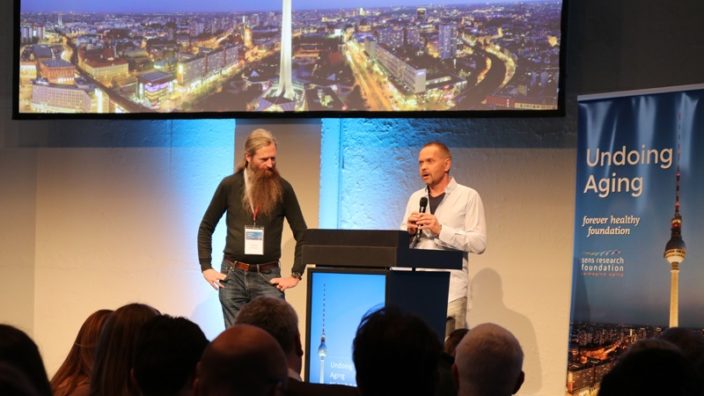
We had the opportunity to interview Professor Shay at the recent Undoing Aging conference in Berlin.

Can you explain how telomeres regulate gene expression via TPE and TPE-OLD?

TPE is a term that has been around for decades. It stands for telomere position effect. This concept is that the chromatin near telomeres is different from the rest of the genome and generally involves silencing of genes. In yeast, if one moves an actively expressed gene near a telomere, then it becomes silenced. We reasoned that in humans, telomere length changes could also change gene expression so that when telomeres are long (early in human life), certain genes are repressed, and with increased age and progressive telomere shortening, then certain genes (perhaps near telomeres) could become active. We call this TPE-OLD (over long distances) or telomere looping.

We have shown that the gene regulating the protein (catalytic) component of telomerase is very close to a telomere in humans and all large long-lived mammals. Using a variety of cell and molecular techniques, we published in PloS Biology a few years ago that the TERT (telomerase) gene was regulated by TPE-OLD [1].

This has great explanatory values for an aging concept called antagonistic pleiotropy. This means that things that could be beneficial early in life may have unexpected harmful consequences late in life. Thus, we need telomerase during early development when there is rapid tissue growth, and when telomeres reach human typical size, the telomere loops over and silences the TERT genes. As we age and telomeres shorten, then the telomere can no longer influence the repression of telomerase, and thus telomerase may become reactivated in mostly older individuals as part of cancer progression.

What do you think is the best method of measuring telomeres?

We call the most sensitive assay TeSLA, for telomere shortest length assay. Most scientists use a Q-PCR assay that is not very reliable but easy to use. It is well established that it is the shortest telomeres that leads to replicative senescence. There are thousands of published papers using the Q-PCR making extraordinary claims based on very small differences in average telomere length. Other methods include TRF and Q-FISH, and these are intermediate in their ability to see some but not all the shortest telomeres.

Leukocytes are often the cells of choice to measure telomeres with, but telomeres appear to be highly dynamic in these cell types so may not be ideal for rejuvenation studies. For the purposes of aging biomarkers, what would be the ideal cell type to test the telomeres of?

There is nothing wrong with looking at peripheral blood leukocytes. The telomeres in leukocytes reflect the divisions that have occurred in the bone marrow. Many years ago, we demonstrated that the bone marrow stem cells also shortened during human lifespan, and this is reflective in the peripheral blood. Thus if your telomeres are longer in your leukocytes, it is probably better than if they are shorter. Depending on the reason they are shorter in the peripheral blood, it is possible this can be reversed from a stem cell that has somewhat longer telomeres. Thus, someone who smokes may have shorter telomeres in the peripheral leukocytes, and if this person stopped smoking the telomere may appear to be elongating.

A more complicated question is “Does this have anything to do with overall human longevity?” I am cautious and say first that telomeres cannot explain everything about human aging. If telomeres represent let’s say 10% of what causes tissues to decline with age, and if we understand them and can manipulate them, this may result in some improved healthspan or, potentially, lifespan. This is currently where we are today, and the experiments that need to be done are currently in progress.

However, we published in Aging Cell last year that high-performing centenarians have longer telomeres compared to more frail or low-performing centenarians and believe that this may be biologically meaningful. Others have published that the telomere lengths in leukocytes are similar to other tissues, such as skin and muscle.

What are your thoughts on restoring telomere length using transient telomerase induction as a therapeutic approach to aging?

It is a reasonable idea, and we are currently doing such experiments. Initially, it will be done ex vivo, e.g. in the cell culture lab, to prove it works and does no harm. We can then give individuals back their own cells, potentially with slightly elongated telomeres.

We have recently seen some researchers testing in vivo partial cellular reprogramming using OSKM induction, which appears to reset telomere length as it resets epigenetic markers. Are you optimistic about this approach to resetting cellular aging?

Not at all. This approach may reset a lot of things we do not want to reset. Super-elongating telomeres via reprogramming and having high levels of telomerase could have unexpected consequences. It has been shown that many epigenetic changes are also altered that may not be desirable using this approach. It is a good basic biology approach to study specific diseases but is unlikely to be used in a practical sense at least for now.

It seems that telomeres and epigenetic alterations are linked via an axis and that adjusting one appears to influence the other. So, if partial cellular reprogramming resets telomeres, might we expect that resetting telomeres may reset epigenetic markers?

That is correct.

There is often a concern about cancer whenever inducing telomerase is mentioned; however, some studies support that longer telomeres mean a more stable genome and epigenome, which would help to prevent cancer. Do you expect cancer to be a concern with telomerase therapies?

That is why introducing telomerase transiently and in a tissue or cell-specific manner will be safer.

It appears that cancer uses TERT and ALT in order to spread without control and that blocking these pathways may be a way to halt most if not all cancers. How are things progressing with developing such inhibitors?

We have now published at least five recent papers using a compound called 6-thio-deoxyguanosine (6-tho-dG), a nucleoside that uses telomerase to incorporate an alter G into the telomeres, leading to immediate toxicity to cells expressing telomerase but not normal cells. I am very optimistic that this approach will have utility in treating cancer patients (especially those that have failed other therapies), and we are moving forward with preclinical studies to get this into human trials in the near future.

We would like to ask you a small favor. We are a non-profit foundation, and unlike some other organizations, we have no shareholders and no products to sell you. All our news and educational content is free for everyone to read, but it does mean that we rely on the help of people like you. Every contribution, no matter if it’s big or small, supports independent journalism and sustains our future.

Literature

[1] Kim, W., Ludlow, A. T., Min, J., Robin, J. D., Stadler, G., Mender, I., … & Shay, J. W. (2016). Regulation of the human telomerase gene TERT by telomere position effect—over long distances (TPE-OLD): implications for aging and cancer. PLoS biology, 14(12), e2000016.

Joan Mannick of resTORbio Discusses Rapalogs

Rapamycin is a promising anti-aging therapeutic derived from a bacterium that was first found on Easter Island (it’s named for Rapa Nui, the official name of Easter Island). It inhibits mTOR (mechanistic target of rapamycin), thus inhibiting the immune system response that would, in some cases, lead to organ rejection. This is the on-label, FDA-approved use for rapamycin. It also has off-label uses, such as a coating on cardiac stents, and is being explored for its effects on aging.

It mimics the very positive life extension and health extension effects of caloric restriction (eating much less than normal over extended periods) and intermittent fasting (eating only during a few hours each day) [1]. These types of dietary restriction are some of the most reliable ways to extend life and healthspan in various organisms, including humans and other mammals.

Aging researcher and evolutionary biologist Josh Mitteldorf, in a 2016 blog post, stated, “Rapamycin is the best anti-aging treatment yet discovered.” Kaeberlein et al, in a 2016 study, agreed with this conclusion, stating: “Rapamycin is currently the most effective pharmacological intervention for extending lifespan and delaying a broad range of age-related functional declines in rodents.” [2] This study also showed that rapamycin had consistently extended lifespan in lab mice by 20% and up to 60%, and it works even when administered late in life. These are pretty remarkable results, and the biotech giant Novartis intends to commercialize rapamycin as its first effective anti-aging treatment.

Mikhail Blagoskonny is another researcher who has focused on rapamycin’s effects on lab animals for many years. He, Mitteldorf, and a number of other researchers are bullish on rapamycin’s potential to seriously inhibit age-related diseases. In 2018, Blagoskonny offered a good summary. He concluded: “Rapamycin causes cell type-specific arrest but slows geroconversion universally.” [3]

While rapamycin itself cannot be patented, as it is a naturally occurring compund, rapalogs (compounds similar to rapamycin) can. A number of companies are studying and commercializing rapamycin and rapalogs, including resTORbio, a Boston-based company. I heard Joan Mannick speak at the Longevity Therapeutics conference earlier this year and was intrigued by her company’s results so far.

We conducted this interview by email in early 2019.

As your company’s name suggests, resTORbio is currently focused on target of rapamycin (TOR) receptor pathways, more specifically TORC1. Why did you choose this focus out of all the many options for developing longevity therapeutics? 

The activity of the TORC1 protein complex is one of the best-validated mechanisms that underlie aging. Data from multiple laboratories have shown that inhibition of TORC1 extends lifespan and healthspan in every species studied to date, from yeast to worms to flies to mice. Since TORC1 activity is an evolutionarily conserved mechanism that regulates aging, it is likely that TORC1 inhibition will also be of therapeutic benefit in human aging.

Why use rapalogs rather than just rapamycin? Is there actually good data showing that rapamycin in moderate doses is harmful to humans?

Our lead program is determining if TORC1 inhibition improves the function of the aging immune system and thereby decreases the incidence of respiratory tract infections (RTIs) in elderly humans. In a Phase 2a clinical trial, we found that RTB101, a catalytic site mTOR inhibitor (not a rapalog), led to a greater reduction in infection rates than the rapalog everolimus. We used very low doses of both RTB101 and everolimus in this trial, and both drugs were safe and well tolerated at these low doses.

Your early results show the most effect with your proprietary therapeutic RTB101 and more commonly available rapalogs such as everolimus (the combination of these therapeutics led to a 38% reduction in reported RTIs for the year following treatment in your elderly trial participants). Do you have any hypotheses as to why this combination seems to work better than individual drug therapies?

Rapalogs are allosteric inhibitors of mTOR (i.e. they change the shape of the protein), whereas RTB101 is an ATP-competitive inhibitor of the catalytic site of mTOR (i.e. inhibits the active site of the protein). RTB101 inhibits more TORC1 targets than do rapalogs, and the combination of RTB101 and everolimus inhibits more targets downstream of TORC1 than either drug alone. Therefore, more and more broad TORC1 inhibition is achieved when moving from everolimus (and other rapalogs) to RTB101 to the combination of everolimus+RTB101.

You suggest that these effects are most likely caused by the upregulation of gene expression, and you measured various blood biomarkers in making this assessment. Such a strong reduction in RTIs suggests that there may also be major improvements to other aspects of the immune system. Might there be a thymus restoration effect going on here? Did you measure thymus gland size before and after treatment?

We did not measure thymus gland size before and after treatment. However, we agree that the improvement in immune function seen after TORC1 inhibitor therapy may be multifactorial. In future studies, we plan to investigate additional mechanisms that may contribute to the improved immune function observed in older people treated with TORC1 inhibitors.

Since inhibition of TORC1 can improve the function of so many bodily systems, do you believe that this pathway may be one of the pathways by which we are effectively programmed to die, by unfortunate quirks of the evolutionary process, as researchers such as Josh Mitteldorf have argued for some time?

There is evidence in old mice that TORC1 activity becomes dysregulated with age, and this may contribute to why the functions of aging organ systems decline and ultimately contribute to death. Normally, TORC1 is activated by nutrients when we eat, and it stimulates protein and lipid synthesis needed for cell growth. During fasting, TORC1 is inhibited, and this leads to upregulation of protective pathways. However, in older mice, TORC1 is persistently activated and is not inhibited by fasting. Therefore, protective pathways that are normally upregulated during fasting do not get upregulated, and this may contribute to the decline in the function of aging organ systems.

When do you anticipate finishing clinical trials and being able to offer commercially available therapies for RTIs and other diseases that resTORbio is targeting?

We anticipate finishing two Phase 3 clinical trials, which will determine if RTB101 decreases the incidence of respiratory illness in people age 65 and older, in 2020. If the Phase 3 trials are successful, we anticipate submitting a New Drug Application.

Are you optimistic that the commercial therapies that you eventually offer will have as significant an impact on RTIs as the six-week trial data showed (38% RTI reduction)?

We now have completed two Phase 2 clinical trials in over 900 people age 65 and over in which RTB101 10 mg once daily was observed to reduce the incidence of respiratory tract infections. In the first Phase 2a clinical trial in mainly healthy elderly, RTB101 10 mg once daily decreased the incidence of RTIs by 42%. In the second Phase 2b trial in a sicker elderly population at increased risk of RTIs, RTB101 10 mg once daily was observed to decrease the incidence of RTIs by 30.6% in all subjects and by 56.9% in the proposed Phase 3 population (people 65 and over who are not current smokers and do not have chronic obstructive pulmonary disease). Therefore, we are optimistic that RTB101 10 mg once daily will continue to have a significant impact on RTIs in our Phase 3 pivotal clinical trials.

Blagoskonny ([3], [4]) has suggested that rapamycin and rapalogs are effective anti-aging therapies today for humans as well as other animals because they arrest “quasi-programmed hypertrophy.” What are your thoughts on Blagoskonny’s theory?

I think Blagoskonny’s theory is very interesting. mTOR stimulates cell growth, and there is data that mTOR becomes hyperactive in some aging tissues. This may explain why TORC1 inhibitors have benefit in aging-related diseases.

Disclosure: I own some resTORbio shares.
We would like to ask you a small favor. We are a non-profit foundation, and unlike some other organizations, we have no shareholders and no products to sell you. All our news and educational content is free for everyone to read, but it does mean that we rely on the help of people like you. Every contribution, no matter if it’s big or small, supports independent journalism and sustains our future.

[1] Kaeberlein, M. (2014). Rapamycin and aging: When, for how long, and how much?. Journal of genetics and genomics= Yi chuan xue bao, 41(9), 459.

[2] Bitto, A., Ito, T. K., Pineda, V. V., LeTexier, N. J., Huang, H. Z., Sutlief, E., … & Meza, D. (2016). Transient rapamycin treatment can increase lifespan and healthspan in middle-aged mice. elife, 5, e16351.

[3] Blagosklonny, M. V. (2018). Rapamycin, proliferation and geroconversion to senescence. cell cycle, 17(24), 2655-2665.

[4] Blagosklonny, M. V. (2012). Answering the ultimate question “what is the proximal cause of aging?”. Aging (Albany NY), 4(12), 861.

Kelsey Moody & Huda Suliman On Rejuvenation

At Undoing Aging 2019, we interviewed some of the best researchers who are involved in discovering therapies for the root causes of aging. Their research aims to ameliorate the damages of aging and may one day lead to a future without the diseases of aging.

We were glad to have the opportunity to conduct a joint interview with Dr. Kelsey Moody and Dr. Huda Suliman. They offered several keen insights on the future of Ichor Therapeutics and the nature of the rejuvenation biotechnology industry.

So could you both tell us a little about yourselves?

K: I’m Dr. Kelsey Moody. I’m the Chief Executive Officer of Ichor Therapeutics and its portfolio of companies. Ichor itself is a biopharmaceutical company that does drug discovery in the aging space, and we have a variety of portfolio companies, each of which is designed to target a different type of age-associated damage. Through these companies, we’re developing classes of different drugs to move into the clinic for conventional therapeutic applications as well as, hopefully, more anti-aging targeted therapies as well.

H: I’m Dr. Huda Suliman, I am the president of Icaria Life Sciences, one of the portfolio companies of Ichor, which is a dedicated contract research organization that uses the technologies developed by Ichor to help others advance the aging space.

We talked not so long ago in London about how it helps forward the rest of the company’s aims. Can you tell us what kind of things Ichor is going to be doing?

K: One of the challenges in the aging space is that the kind of underlying discovery work that usually drives translational pipelines is really lacking, because the space is just so new. If you’re looking at molecular targets of cardiovascular disease, cancer, or things like that, a lot of these targets have been thoroughly vetted by academic institutions in the peer-reviewed literature, and you have some level of confidence that the thing that you’re going after is actually an appropriate target. But, because the aging space is so new, there’s lots of new targets that are being discovered, but there hasn’t really been enough time for academia to properly vet those targets. Some of them are very good real targets that we should be going after, and others are artifacts and might not actually be real or as impactful as we think. And so, at Ichor, we started doing, a while ago, a lot of contract work to try to help other companies that need to bring industrial-grade rigor to basic science and to early discovery and then move from that early-stage discovery work into full-on development programs, which are more akin to a traditional pharmaceutical pipeline. That contract work has grown; we’ve helped a lot of companies and worked with a lot of clients, and we’ve kind of run into a need to have dedicated teams for project management and really making sure that all of the client projects get plugged into the pipeline to get our best efforts and everything else, and that’s where Huda’s coming in and spinning out all of our contract research into Icaria Life Sciences.

It sounds like there’s a distinct lack of off-the-shelf solutions for aging research applications because it’s all so new, so you essentially set the infrastructure up to do that. The other groups can come to you and go “Hey, look, we’ve got this idea, and you’ve already got the setup.” Is that the general idea?

H: We have the setup, but we also have the expertise, so we can help those that are not familiar with the types of research that we do, help them design their studies and also give them the resources to get the data that they’re looking for.

I also have a locational question; I’m going to assume it’s probably yes. Is it in a favorite place in the US; is it in Lafayette?

H: Yes, it is in Lafayette.

It is, and for all the reasons that we talked about in our last interview: it’s a good place to buy the actual real estate, due to the economic situation there. You’ve got lots of intellectual resources nearby with the universities and things like that. You’re basically taking over the entire state by the sounds of it; everybody seems to be moving to Lafayette. Isn’t Repair Biotechnologies there as well?

We were very excited to be an early investor in Repair Biotechnologies there; they’re based in the Syracuse area as well, and I think they’ve recognized, as we have, that it’s a very ideal location to get work done because of its affordability but also access to infrastructure like airports, intellectual capital, and hard assets through the local universities. It’s kind of a perfect storm of a location, and it seems that others are recognizing that value as well.

Your background, I’m reliably informed, is that you were part of the defense industry.

H: Yes, I was part of a chem/bio defense group at a defense contractor, developing technologies to detect biothreat agents.

Interesting. It’s almost a complete opposite in many ways, I suppose. Kelsey’s managed to persuade you. He can be so persuasive.

H: Very persuasive, yes.

Everybody is super impressed with what Ichor and Kelsey have been doing; how he has managed to find time to do a Ph.D. is beyond me. It’s beyond everybody. Congratulations on that as well, Kelsey. It’s just staggering how fast you seem to be progressing and becoming a major force. And on that note, what’s the first step for Icaria? Is the facility up and running?

Especially initially, Ichor’s going to be doing all of the backend work for Icaria, so even though Icaria will be managing client relations and helping to do study design and things like that, the technicians that are actually doing the work and all of the assays that are being performed, and so on, will Ichor staff. By separating the companies, though, this gives Icaria the ability to grow independently, particularly when it comes to project design: the needs for program directors and study directors to assist clients with designing their studies and making sure that they meet the appropriate endpoints and things like that. We have teams that do that for our own intramural work, and by splitting out Icaria, we can build teams that can do that in a way that is more catered to client work, the different kinds of things that clients require that perhaps our intramural programs don’t. Having that separation gives a lot of flexibility for Huda and her team to really provide what we hope will be a great client experience but with Ichor’s level of rigor on the back end.

I expect you’ve had to invest in a lot of new equipment as well recently to make that happen.

Yeah, so we recently scaled to about 50 employees, which are almost exclusively bench scientists or technicians of one flavor or another. In July, we’ll have completed construction on our new husbandry facility, which will allow us to do large animal everything, except non-human primate, we’ll be able to do in house. We’re also planning to offer GLP capabilities as well, which is essential for any translational program.

So there you go, guys, you heard it here first: if you need anything tested, especially in mice and whatnot for aging research, or related medical research in general, then it sounds like Icaria might be a great start. We wish you luck, and you guys are also sponsoring this conference as well in New York later this year, for which we’re extremely grateful. We’re looking forward to seeing you both there, hopefully.

K: Like every LEAF conference, we plan to attend en masse. We’re very much looking forward to the event. It was a great time last year, and we absolutely wouldn’t miss it. We’re pleased that we’re able to participate as a sponsor this year, as well.

We’ll have to see if we can organize an invasion of Lafayette at some point.

K: Absolutely. We’ve needed some human subjects for testing, so I appreciate you volunteering, Steve.

Well, I was going to ask you where are you keeping the zombies? Thank you both, and it’s great seeing you again in Berlin. We look forward to seeing you in New York.

K: Sounds great. Thank you.

H: Thank you.

We would like to ask you a small favor. We are a non-profit foundation, and unlike some other organizations, we have no shareholders and no products to sell you. All our news and educational content is free for everyone to read, but it does mean that we rely on the help of people like you. Every contribution, no matter if it’s big or small, supports independent journalism and sustains our future.

Reversing Cognitive Decline by Blocking a Single Protein

A team of Stanford researchers led by Professor Wyss-Coray set out to find out which genes were linked to age-related cognitive decline. Not only did the researchers find the culprit, they were able to reverse cognitive decline and rejuvenate aged mouse brains.

Searching for the cause of cognitive decline

Microglia are immune cells that reside in the brain and spinal cord. These cells mediate immune responses in the central nervous system and act like other macrophages, clearing cellular debris and dead neurons from nervous tissue through the process of phagocytosis (cell eating).

As we age, our microglia go into decline, and their ability to munch cellular garbage begins to fail. The researchers in this new study believed that this loss of microglial waste clearance was likely linked to the development of age-related cognitive decline and the development of various diseases, such as Alzheimer’s and Parkinson’s.

They looked at around 3,000 microglia-related genes, but they eventually discovered that only a single gene appeared to be responsible. To achieve this, they used cell cultures of mouse microglia and introduced a fluorescent latex for them to eat. Next, they used drugs to block each of the 3,000 target genes to determine which ones were influencing how well the microglia gobbled garbage.

The team also compared these same 3,000 genes and their expression in young and old animals to see if they could spot which genes significantly changed activity with age. They were expecting to see multiple genes implicated in the process; however, to their surprise, they found that just a single gene known as CD22, which is present in both mice and humans, was significantly different between young and old mice. Aged mice had triple the CD22 protein on the surfaces of their microglia as young mice had.

Reversing cognitive decline

Now that the team had a likely culprit, the next step was to inhibit the CD22 protein with antibodies that targeted the cell-surface proteins. The antibodies were injected into one side of the hippocampi of the mice; on the other side, the researchers injected a different kind of antibody that would not react to CD22.

The researchers used fluorescent myelin to determine how well each side of the brain was clearing garbage; microglia readily consume myelin, making it the ideal way to test how well these cells were cleaning house. In just 48 hours, it was apparent that on the side of the brain where the CD22-inhibiting antibody was being used, there was considerably less myelin present compared to the other side. They also tested to see if the waste cleanup would be as effective for Alzheimer’s-related beta-amyloid and Parkinson’s-related alpha-synuclein protein debris, and, indeed, it was.

There was now little doubt that CD22 was the protein regulating garbage disposal in the microglial cells and that inhibiting its activity could help clear accumulated waste, which is associated with neurodegenerative diseases and cognitive decline,  from the brains of aged mice.

A month after continuous CD22 antibody therapy, this time on both sides of the mouse brain, the researchers observed impressive results. In learning and memory tests, the treated mice performed significantly better than untreated control mice of the same age. In other words, the brains of treated mice have seen some level of rejuvenation, making them work like younger brains again.

Abstract

Microglia maintain homeostasis in the central nervous system through phagocytic clearance of protein aggregates and cellular debris. This function deteriorates during ageing and neurodegenerative disease, concomitant with cognitive decline. However, the mechanisms of impaired microglial homeostatic function and the cognitive effects of restoring this function remain unknown. We combined CRISPR–Cas9 knockout screens with RNA sequencing analysis to discover age-related genetic modifiers of microglial phagocytosis. These screens identified CD22, a canonical B cell receptor, as a negative regulator of phagocytosis that is upregulated on aged microglia. CD22 mediates the anti-phagocytic effect of α2,6-linked sialic acid, and inhibition of CD22 promotes the clearance of myelin debris, amyloid-β oligomers and α-synuclein fibrils in vivo. Long-term central nervous system delivery of an antibody that blocks CD22 function reprograms microglia towards a homeostatic transcriptional state and improves cognitive function in aged mice. These findings elucidate a mechanism of age-related microglial impairment and a strategy to restore homeostasis in the ageing brain.

Conclusion

CD22 is present in both mice and humans, and while this approach is still in its early days, it has potential. Improving how fast and how well our microglial cells clear accumulating waste could prove to be a viable therapeutic avenue for treating the devastating age-related neurodegenerative diseases that cause untold suffering for the elderly and their families. While it is a bit too soon to break out the champagne, there is reason for optimism here, and we will be keeping a close watch on this story as it develops further.

We would like to ask you a small favor. We are a non-profit foundation, and unlike some other organizations, we have no shareholders and no products to sell you. All our news and educational content is free for everyone to read, but it does mean that we rely on the help of people like you. Every contribution, no matter if it’s big or small, supports independent journalism and sustains our future.

Senolytics Improve Recovery Following a Heart Attack

In a new study, researchers show that the presence of senescent cells is an important contributor to aging of the cardiovascular system, particularly the heart [1].

Senescent cells and senolytics

As your body ages, increasing amounts of your cells enter into a state of senescence. Senescent cells do not divide or support the tissues of which they are part; instead, they emit a range of potentially harmful inflammatory chemical signals, which are known as the senescence associated secretory phenotype (SASP). The SASP can also encourage other nearby healthy cells to also enter the same senescent state.

Their presence causes many problems: they degrade tissue function, increase chronic inflammation, and can even eventually raise the risk of cancer. Senescent cells normally destroy themselves via a programmed process called apoptosis, and they are also removed by the immune system; however, the immune system weakens with age, and increasing numbers of these senescent cells escape this process and accumulate.

One possible solution to this problem is to remove senescent cells in order to improve tissue regeneration and health. A class of drugs called senolytics focuses on the destruction of these stubborn, “death-resistant” cells, thus reducing inflammation and improving tissue function.

Aiding recovery from heart attacks

Senescent cells are known to contribute to hypertrophy, in which the heart becomes enlarged and less able to pump blood. The presence of senescent cells is also linked to fibrosis in the heart tissue, which causes structural and functional failure.

The SASP increases systemic inflammation and creates a background of inflammaging, the chronic inflammation that is typically seen in older people. This chronic inflammation is harmful to all cells and tissues, and it impairs regeneration while contributing to vascular aging. Arterial stiffening via dysfunction of the smooth muscle cells and the development of atherosclerosis via macrophage dysfunction are two ways in which senescent cells promote vascular aging.

These researchers investigated if the senolytic clearance of senescent cells following a heart attack would improve survival odds in mice. They used the repurposed cancer drug navitoclax, a drug that targets the Bcl-2 family of proteins, a pro-survival pathway that has consistently turned up in the literature as one that many senescent cells use to avoid destruction. Various studies have shown that targeting this particular family of proteins allows the selective destruction of senescent cells.

This study showed that removal of senescent heart cells from mice reduced the development of fibrotic tissue and myocardial remodeling, improved diastolic function, and increased survival odds following a heart attack.

Abstract

Cardiovascular disease is the leading cause of death in individuals over 60 years old. Aging is associated with an increased prevalence of coronary artery disease and a poorer prognosis following acute myocardial infarction (MI). With age, senescent cells accumulate in tissues, including the heart, and contribute to age‐related pathologies. However, the role of senescence in recovery following MI has not been investigated. In this study, we demonstrate that treatment of aged mice with the senolytic drug, navitoclax, eliminates senescent cardiomyocytes and attenuates profibrotic protein expression in aged mice. Importantly, clearance of senescent cells improved myocardial remodelling and diastolic function as well as overall survival following MI. These data provide proof‐of‐concept evidence that senescent cells are major contributors to impaired function and increased mortality following MI and that senolytics are a potential new therapeutic avenue for MI.

Conclusion

Once again, the role of senescent cells in aging has been confirmed, as has the plausibility of clearing these problem cells from the body to improve tissue health and regeneration and to prevent disease progression. Senolytics are currently in human trials, and studies like this only serve to add to the ever-growing pool of data in support of senescent cell removal as a way to combat age-related diseases by targeting this underlying aging process itself.

We would like to ask you a small favor. We are a non-profit foundation, and unlike some other organizations, we have no shareholders and no products to sell you. All our news and educational content is free for everyone to read, but it does mean that we rely on the help of people like you. Every contribution, no matter if it’s big or small, supports independent journalism and sustains our future.

Literature

[1] Walaszczyk, A., Dookun, E., Redgrave, R., Tual‐Chalot, S., Victorelli, S., Spyridopoulos, I., … & Richardson, G. D. (2019). Pharmacological clearance of senescent cells improves survival and recovery in aged mice following acute myocardial infarction. Aging cell, e12945.

Yuri Deigin On Yamanaka Factors

At the Undoing Aging 2019 conference, we had the opportunity to interview Yuri Deigin, the CEO of Youthereum Genetics. His company is developing therapies that focus on OSKM, the Yamanaka factors known for turning cells back into a pluripotent state. By partially reprogramming cells using a single component of OSKM, Oct4, the company hopes to remove epigenetic aging from cells while still allowing them to retain their normal functions.

Do you think epigenetic alterations are a cause or a consequence of aging, and why?

Well, this question has so many different parts that need to be addressed. Of course, there are alterations that are consequences. Some of the epigenetics are consequences of aging, like epigenetic drift, with things that aren’t methylated in cells, as they divide throughout the lifetime, that methylation seems to get diluted away with subsequent divisions, but other parts of the genome, many of the epigenetic changes that happen that we can track throughout the aging of an organism are definitely not consequences of aging; they’re actually, from what I understand, causes of aging or causes in the change of metabolism and change of homeostasis, change how the organism behaves, essentially, that are driven by some high program in animal development, that basically silences some genes and activates other genes.

We see this not just in aging but in many changes throughout the ontogenesis or an organism, from embryogenesis to childhood to sexual maturation, and then on, the changes seem to keep going. That’s why we can have a methylation clock, where we actually see that in people the same age, the same epigenetic pattern emerges, and we can actually say that probably all these genes that are in the clock are somehow causally related, or at least one step removed from causally related changes in the epigenetics. I’ve probably said way too much to the kiddie question, but hopefully this answer will be at least close enough to clarify what I think about how epigenetics is related to aging, But, in short, I think aging is an epigenetically controlled process. So, if you need a short definition, there’s a short answer.

It’s something that we get asked quite often. Some people would argue that it’s a consequence, and some others would suggest it is actually a cause. The jury’s still out, really. My personal view is that I don’t think we’re too far away from actually discovering which is which.

Of course, they’re both. It’s so hard to differentiate because they’re both aspects; some epigenetic changes that we see in animals are consequences, basically, the body’s response to external stimuli or just the internal clock running and saying, we need some genes to be active during the day and other genes to be active at night. The epigenetic expression, the gene expression changes, and the epigenetics of those genes change, on a daily basis. Same thing with external insults: something happens, and you need to upregulate, say, gene response to fix DNA breaks; maybe you’re in sunlight, and you have some sunburn, and there’s UV damage to the DNA, so, the genes that are responsible for fixing and tracking down DNA damage, they upregulate, and we see those epigenetic changes. Basically, those epigenetic changes are external to the organism, but there are certainly internal epigenetic changes that occur in the organism during its normal course of life.

It’s a fair answer. You’re using Oct4, which is one of the Yamanaka factors, when many others are using OSKM, which is all four of them. Some people are even using OSKMLN, believe it or not, to partially reprogram epigenetics in cells to reset their aging markers. Why did you choose to only use a single Yamanaka factor, in particular, Oct4; what is it about Oct4 that’s special?

Our main goal is to translate OSKM therapy because we know it works. It has been demonstrated in several animal studies that it successfully rewinds back epigenetics without causing cancer. This approach, we call it the bird in the hand. The problem with Yamanaka factors is, because the therapeutic window is so narrow, that you have to be very careful not to overstimulate their expression, because if you do so, you may end up with cancer, teratomas, or maybe other unwanted consequences. Basically, we know that mice who have overexpressed OSKM factors for longer than, say, three days start dying, and this is something that we urgently need to avoid if we want to have safe epigenetic rejuvenation therapies. One of the hypotheses was “let’s just try maybe just one of the four factors because what OSKM is used for is not really what we need it for.” We don’t need full reprogramming as originally Yamanaka tried to obtain; we actually need the cell to stay in its differentiated state. We don’t need it to lose differentiation and become pluripotent. We actually want it to stay the same differentiated cell, and that’s why we try to look for safer factors, and Oct4 is the prime candidate because when we look at the studies that people have published, what actually happens during the reprogramming process, which factors are upregulated first, which factors are upregulated later, we see that Oct4 is actually the factor that is active in the beginning. It’s the first one to be upregulated.

Then, once the reprogramming process takes hold, other factors kick in. Sox, Klf, c-Myc, they are actually further downstream in the reprogramming process, so, as we actually need to just give the cell a little epigenetic shake, so to speak, and return it back to a more youthful epigenetic state, we think Oct4 might be just the prime candidate to do so but without causing the cell to lose differentiation. This is just a hypothesis at this point that we want to verify. We’re starting just a very small-scale experiment in vitro to see if this hypothesis would hold, and if it does, then we’ll take further steps to work on it, translate it, then, hopefully, if it pans out, maybe just this one factor could be enough, and it opens up the door to so much wider application, because if it’s just one factor, and you know this quite well, maybe we could find small molecules that can upregulate it. Maybe we don’t need a gene therapy; maybe we can actually have one step removed like a small molecule that can upregulate it, either systemically in the whole organism or in just specific tissues that we want to target. But, again, let’s not get too far ahead of ourselves; first, we actually need to establish that the hypothesis is correct and that Oct4 is our guy.

Makes sense, one step at a time. If Oct4 does indeed activate early in the reprogramming process, there’s plenty of literature to support that. At least in fibroblasts, it certainly appears to reduce epigenetic age at a gradual rate as it’s exposed over a period of time. Do you plan to confirm that this happens in other cell types found in the body?

Note: We have seen groups like Belmonte et al. using transgenic mice designed to transiently induce OSKM when exposed to doxycycline (Dox) to reverse epigenetic aging in cells. However, this cannot be done in normal animals or humans that do not react to doxycycline.

Absolutely, but one step at a time. We’re starting to look at it, just in fibroblasts, to see if the short-term upregulation of Oct4 or short-term expression of Oct4 that might be essentially below the detectable expression in normal cells, if this partial Oct4 reprogramming reduces the cells’ epigenetic age, basically the Hovarth clock, then this is a first proof or first evidence that it can, alone, bring back the epigenetic profile of the cell to a younger state. It will be evidence to support this hypothesis, and then we’ll take further steps, look at other cell types, maybe find a different dosing regimen. OSKM factors, you can only dose for two days in vivo, at least in mice, but maybe Oct4, you can do for longer. This will reduce the epigenetic clock even further, but still, the cell will maintain its differentiation. It’s a miracle of nature that reprogramming is a gradual process, that we see the cell becoming epigenetically younger before it irreversibly loses its differentiation profile.

Maybe if we only use Oct4 in this therapeutic window of opportunity, the therapeutic window is actually expanded, and we have more leeway in how we can treat aged tissues and aged organisms; maybe for an older organism, we’ll need a longer therapeutic period of expression. With OSKM, this will probably be unavailable because you’re risking cancer; but Oct4, maybe, and, again, I’m very much in conjecture land here, but maybe, just maybe, it will be possible, whereas a younger organism is not that far removed from a young epigenetic state, so it wouldn’t need a prolonged expression of consecutive days of epigenetic partial reprogramming. Again, I’m giving you a long-winded answer to a very short, straightforward question, but definitely other cell types are on the radar if, provided, we get some good data to support that we’re not completely off our rocker here.

Well, yeah, that’s quite sensible. Makes sense. So you’re obviously on the caveat that it does pan out, and a lot of this is speculative and this conversation is fairly speculative at this point, but it’s still fun nonetheless to discuss it. You guys are proposing to deliver OSKM cassettes to target cells using a lentiviral carrier, so that the cells can then have Oct4, in particular, induced using doxycycline, which is an antibiotic often used in veterinary medicine. I’m sure I’ve given my guinea pigs doxycycline.

Humans too; the tetracycline family of antibiotics is used quite widely in humans for various indications. It’s just this cassette that was developed for essentially experiments that you can stick genes of interest into this cassette and have it only become active if you introduce doxycycline or tetracycline into the animal, only then will those genes be expressed. It’s a very useful cassette. In that sense, tetracycline or dox, they don’t have any biological role other than just to activate the cassette. This is something that we ideally would like to move away from and actually develop a different cassette that will be activated by a different, inert molecule, hopefully, a novel chemical entity that will be patentable. The primary concern is that it’d be safe and inert, because you don’t really want a healthy person to take an antibiotic on a regular basis, just because you’d mess up your gut microbiome and all other things.

There’s definitely strong data for antibiotics in the gut microbiome, which is a pet topic of mine, and it shows that the gut microbiome diversity in older people does reduce. Often, they’re highly medicated, of course. Antibiotics are taken by older people quite a lot, so there’s some correlation there.

There’s definitely a correlation here. At some point, I didn’t even think of the correlation that maybe older people take a lot of medicines.

Older people are dealing sometimes with various co-morbidities, and they could be on a number of antibiotics and different pills. As aging goes on and more conditions develop, we’re now starting to realize that it can have a devastating effect on the microbiome itself, which is thought to drive aging and inflammation in particular, so we’ve got to be careful. How practical would an approach of adding a cassette or effectively a switch be to every target cell in the body, as we’re talking about a huge amount of cells?

I think this is the Achilles heel of the whole concept, but it’s not just our Achilles heel; it’s for any gene therapy that needs to target multiple tissues. Delivery at this point is the biggest problem, but I don’t think it’s an insurmountable problem in principle, and I think a lot of companies and a lot of labs are working on the delivery problem, because many therapies will need to deliver their genes of interest to many tissues. There are companies like Oisin who do successfully deliver genetic payloads, not cassettes, not integrative cassettes, but some genetic payloads to multiple tissues because Oisin needs to clear senescent cells, and there are many different issue types that it has to be delivered to. I fully recognize that this is a tough challenge to deliver the necessary genes to all the tissues, compounded by the possibility that maybe some tissues will actually need a different dosing regimen than others; the cells, tissues with low cell turnover, maybe they don’t need to be targeted as frequently as other types of cells that divide much more often. Maybe there could be other approaches, maybe if it’s for the brain, we can use AAV, we can use non-integrative vehicles, gene delivery vehicles. Absolutely, there are still a lot of things to be worked out. The principle that we need new genes in our body that we can integrate and activate at will is a common principle of many gene therapies, and I think this issue will eventually be solved.

It’s challenging but not insurmountable.

Absolutely, but there’s a lot of challenges that seemed crazy to begin with, but then we as humanity conquered them. Getting to the moon or developing an iPhone; the computing power in your smartphone is millions of times greater than the computers that were initially housed in the size of this room. So there’s progress, and it’s quite fast within a lifetime, the technological progress can be mind-boggling. I think that within the next decade, these gene delivery issues will be worked out.

But in the meantime, and you did mention it earlier, a small molecule approach may, initially for the first pass, might be a more equitable solution, especially from the FDA’s and EMA’s point of view and the small molecule is something familiar to Big Pharma and is something that’s already deeply ingrained in the regulatory process. It might perhaps be the case that small molecules to activate Oct4 or whatever, come first, then refined with a gene therapy approach. Do you think that that may happen?

It’d be great if it was possible. Initially, I was more optimistic than I am right now, because there were some papers published many years ago; that said, there is a small molecule chemical cocktail that can essentially do the work of Yamanaka factors or essentially activate Yamanaka factors, essentially a small-molecule cocktail that can reprogram cells down to the fully pluripotent state. When I looked at those papers, my optimism started to wane a lot, because first of all, some scientists claim they couldn’t reproduce the results that were published in those papers. Also, it seemed that there’s a very low efficiency of reprogramming of those cells, so maybe it’s just that this cocktail is maybe just toxic to the cells and it’s making them dedifferentiate down to pluripotent cells in response to some kind of huge insult, toxic insult or another kind of insult, so it wouldn’t be, at least that kind of cocktail, really something that you can put, in vitro or in vivo, in a live animal and expect it to work efficiently without actually killing the animal. At least those cocktails, I’m quite certain that we couldn’t do anything with them to use them as small molecule activators of OSKM or just Oct4 by itself.

That said, if Oct4 by itself works, this narrows down our target space immensely, just because we don’t have the permutations that we actually need four genes to be activated by, I don’t know, one or several small molecules. That would make me more optimistic if Oct4 itself is enough, that maybe it’s possible to find or design a molecule that somehow will activate this pathway, but, there are so many layers of ifs here that we just have to try it out and see if it turns out. I certainly wouldn’t say that it’s impossible, because many small molecules activate many pathways. It’s completely not out of the question that there could be one for Oct4, but let’s just try it out. Science will give the answer to this question if it’s possible or not.

The great thing is even if there isn’t a small molecule in nature, that’s found as a metabolite in plants and herbs like many medicines have come from, it doesn’t necessarily preclude us designing one, because we’re at the point where we can synthetically create molecules to do specific things. Thanks to things like in silico medicine, we can decide that we want to create a small molecule that does this. I think there’s a lot of scope there, and as you say, it all hinges on that Oct4 hypothesis. Does it give a complete-enough partial reprogramming? Does it do the job properly? If it does, it does definitely make the proposition a lot more reasonable. We need to find a single molecule for a single target rather than four, five, six factors that you might need, so there is hope yet. I’m sure that people at home are really wanting to know this; this is a top question, I’m sure. You’re hoping to develop this therapy initially for pets, such as cats and dogs. What’s the rationale behind that? Why do our furry friends get to go first?

Well, the rationale is quite simple: it’s to get something quickly to the market, and from a business strategy standpoint, this was one of the important things because the horizon of this therapy’s so long for any investor to invest in this thing; he or she wants to have the biggest probability of returning their money quickly if there’s something that can generate revenue as soon as possible from this kind of therapy. Because we’re lucky that this approach is not exclusive to humans; if it works in one type of mammal, it will work in pretty much all others, maybe with the gene homologs for the appropriate species. If it works, we want to generate revenue as quickly as possible, and, from a regulatory standpoint, there’s a much lower barrier to market entry than humans. That was our thinking: get to the market as soon as possible, start generating revenue and financing further studies with this revenue rather than investments. Now, a lot of other companies also embrace this paradigm that we can start with pets, animals, competitive animals, maybe racehorses, because that’s also a very big market, and then move on to humans, because you kind of get the double-dip benefit of not only generating revenue but also generating data, useful data from those animals that you can then later apply to humans or maybe tailor the mechanism or the delivery, the dosing regimen to humans that we will learn from animal studies.

As a cherry on the proverbial cake here, because it would be pets, and a lot of people have got pets, that it’s going to be applicable to a lot of the general public. If they see that Woofie or Tibbles the cat, that their pet’s healthier and happier and seems to have de-aged, I think that will cause quite a phenomenon and a wave of support from the public point of view as well.

I totally agree that we seem to value the lives of others much greater than ourselves, and it seems that we seem to value the life of our pets even greater than some of our humans. People definitely already spend a lot of money to prolong the life of their pets, or just to give them better health or even just pamper them, and I’m sure if there is an available therapy for pets that successfully extend their lifespan, those people would then start thinking, well, why don’t I apply this to myself or my loved ones? If I’ve managed to extend the life of Tibbles by 25% or maybe greater, than why not for grandma or myself?

First for Poochie and then for grandma, but I think most people can agree that extra healthy, happy years for themselves as a desirable thing, but for their pets too. Where’s the joy if you can’t sort of enjoy a longer life with your best friend, which is obviously your dog or your cat? It sounds that you’re taking the right approach to win hearts and minds as well as being practical. Do you have anything else you’d like to tell people about your company or your work? Or just generally anything as a take-home?

Just be on the lookout for this approach, this epigenetic, partial reprogramming for rejuvenation is definitely taking off, and it’s not just us. There are other companies that are emerging, two very good companies emerging out of Stanford and Harvard, and it’s great to see this approach finally get the attention it deserves and get the big hitters behind it to propel it forward to success, provided the science holds up and we can actually tailor the partial reprogramming to our needs. I think the people who are now getting behind it will definitely make it work, provided the science is there. So I’m very excited for the industry in general, because we’re not really competitors; we might be in the business sense, but we all have the same goal, and many people in this industry would love to see their competitors succeed because it means that those therapies that will be successfully developed by the competitors will also be available to everybody. Our primary goal here is not to make money but to provide humanity with tools to extend lives and extend health as much as possible.

Definitely helps their happiness and healthiness; and the independence is, at the end of the day, what we’re all in this for, rather than just extended decrepitude, which absolutely nobody in the field is seriously for.

I know, it’s probably one of the biggest misconceptions.

It is. Just to assure folks at home, you know, we are definitely in this for happier, healthier years. That is what it’s all about really, and if we can do that for us and our pets, then all the better. Thank you very much, and hopefully our audience enjoyed it. We’ll be keeping an eye on you, young man; we’ll be checking in and seeing how old you look next time we see you, and if you look younger, because you look younger already, I’m going to be a bit suspicious that you’ve been using some of those lentiviruses.

All right, sounds good.

We would like to ask you a small favor. We are a non-profit foundation, and unlike some other organizations, we have no shareholders and no products to sell you. All our news and educational content is free for everyone to read, but it does mean that we rely on the help of people like you. Every contribution, no matter if it’s big or small, supports independent journalism and sustains our future.

Reversing Cellular Aging with Prof. Vittorio Sebastiano

We recently attended the Undoing Aging Conference in Berlin and had the opportunity to interview Professor Vittorio Sebastiano of Turn.Bio, a company developing partial cellular reprogramming techniques to reverse cellular aging.

As we age, our cells experience changes to their epigenetic markers, and this, in turn, changes gene expression, which is proposed to be a primary reason we age. Recently, there has been considerable interest in resetting these epigenetic markers to reverse cellular aging; induced pluripotent stem cell (iPSC) creation uses similar techniques.

However, unlike iPSCs, which are totally repro grammed back to a developmental state and can become any other cell type in the body, the goal of partial cellular reprogramming is to reset the epigenetic aging markers in the cells without erasing cell identity. Researchers believe that exposing aged cells to reprogramming factors only for a very short time may be enough to reset cellular aging without causing the cells to forget their current roles.

Earlier this year, the Turn.Bio team published a study showing the potential of using transient mRNAs to trigger partial cell reprogramming.

Some researchers suggest that epigenetic alterations are a primary reason why we age and others suggest that it’s a consequence of other processes. Which do you consider correct, and why?

My personal opinion is that I can’t really decide whether the epigenetic changes are the cause or the consequence. I cannot decide what theory is right in the sense that some people suggest it’s a developmental program of aging and some people say it’s a consequence of damage accumulating. What I really care about, at the end of the day, is that, regardless, epigenetic changes explain aging. The epigenetic changes are what, at the nuclear level, triggers this dysfunctionality of the cell.

What I also really care about is the fact that epigenetics is really the core of cell behaviors, cell physiology, and so by tackling that aspect, I think we can really tackle the vast majority of the hallmarks of aging.

We’ve already seen successful partial cellular reprogramming in living animals through traveling OSKM induction from Ocampo et al. over at the Salk Institute. How does your approach differ from the direct induction of OSKM using doxycycline that they used?

Well, I think that the Ocampo work is absolutely the first proof of principle that some kind of cellular rejuvenation is triggered by the expression of reprogramming factors. The only caveat is that our work is significantly different from their work, in the sense that our work really demonstrates for the first time that in the naturally aged context, that’s what we can also do. Because if you look at the paper, they use progeroid mice, which are a genetic model of aging, but such a model does not recapitulate the complexity of natural aging. That’s the first point.

The second point is that when they looked at naturally aged mice, the oldest that they looked at was 12 months, which is not a geriatric population but kind of middle-aged. In the context of humans, they used an in vitro tissue culture with induced aging, which, again, is by far not as complex as the aging that you see in vivo over the course of 70 to 80 years.

Our work is fundamentally different; we really looked at human samples all the way from 50 to 95 years old. We have shown this across multiple cell types; we have looked holistically and comprehensively at all the hallmarks of aging, including transcriptomic, methylation clock, physiology of aging, and stem cell homeostasis.

Another fundamental difference is the fact that we’re using mRNAs. Now, mRNAs are non-integrative, they are clinically translatable, and so they huge potential to bring this to the clinic.

You are using Oct4, Sox2, Klf4, and c-Myc (OSKM) but also LIN28 and Nanog to make OSKMLN; what are these two additional factors doing to facilitate cellular reprogramming?

This is the cocktail that we routinely use in my lab for IPS creation, and we have seen that this particular combination is particularly potent and effective at promoting cellular rejuvenation. LIN28 is also linked to the down-regulation of Let-7, which is an mRNA, that promotes differentiation.

My belief is that we’re actually not only working on the epigenetic level but potentially also working on the post-transcriptional level, for example by making sure that the levels of Let-7 get down-regulated to the expression of LIN28, and this actually has an additional effect on the rejuvenation process.

Obviously, there’s still a lot to learn. We’re doing a lot of work in terms of understanding at the molecular level what’s going on. We really want to understand because it is really clear that, to some extent, we can really decouple with two processes of dedifferentiation and de-aging, if such a term exists.

There seems to be something going on in the early phases of reprogramming that actually is taking care of this epigenetic noise or the epigenetic dysregulation that occurs in the cells, particularly in aged cells. So there is really something going on that occurs way before the change in cell identity kicks in. I think that this is going to be really an amazing platform, not only from a therapeutic standpoint but really also in understanding the process of aging per se.

Very interesting, it really is. Cellular reprogramming is probably the approach that I’m most enthusiastic about out of all the approaches people are working on. I think it’s the most exciting for me personally.

I strongly agree with that statement.

Of course, we all have our pet theories and obviously, it’s early days, and only through rigorous testing will we prove or disprove if it will work. I think that the weight of evidence, certainly in the last few years, has moved in support of what Hallmarks of Aging suggested back in 2013, but they lacked the in vivo evidence at the time. That’s why the Ocampo paper for me was a victory moment because it filled in the blanks.

Absolutely. I mean, this was an absolutely pioneering work.

There’s a balance between reversing the epigenetic aging markers of a cell and the loss of cell identity, which would be very bad; we don’t want a brain cell to suddenly start thinking it wants to be a bone cell. In your experiment, you reach a four day transient expression period, using these factors. How did you reach that four-day figure?

It’s not four days for all cell types; it depends on the cell type. If we differentiate cells like fibroblasts and endothelial cells, we use four days, for chondrocytes, three days, and for muscle stem cells, we use two days. This is actually part of the secret of finding the sweet spot, the empirical moment in time just before the point of no return where the cell is becoming partially reprogrammed but has not yet lost its identity.

Now, how do we get there? That’s based on a lot of work that has been going in my lab. My lab is also really focused on iPSCs, and we generate them almost on a daily basis, because it’s an incredibly powerful technology for tissue regeneration and for setting that up for cell and gene therapy and so forth.

We really use the mRNA platform, which I think by far is the most powerful in terms of reprogramming and the safest because of non-integration. We know that during the process, it takes 12-15 days for cells to go all the way back to iPSCs. We know from previous studies that already, by day five, we can see early signs of the activation of genes that are pluripotency-associated very early, not late, in the process. For fibroblasts or endothelial cells, that’s the time when we see these early events, so we want to stop before that because that would potentially trigger or instigate a potential loss of cell identity.

That really leads onto the next question: you mentioned that it’s different for different cell types; how would we systemically treat a human in this manner if different cells need different reprogramming times?

Well, the short answer to that is that we don’t know that yet, and we need to figure that out. I can tell you the way we’re approaching this, particularly on the company side: there is a short-term application, which is most likely going to be the ex vivo approach. The stem cells are going to be isolated from the tissue, rejuvenated in vitro, and then transplanted back. In that type of scenario, we have a uniform population of cells for which we have found this sweet spot so that we can utilize them. Also, because it is done ex vivo, we can make sure the target cells have not changed their identity and are safe. That’s one approach.

The second approach, which is our aspirational approach, is of course in vivo delivery, and you are absolutely right, there is heterogeneity of cell types in vivo. We are partnering up with Oisin Biotechnologies, which is an in vivo delivery platform company, so they have figured out a smart way to actually deliver oligonucleotides including mRNAs in vivo, and, of course, we’re partnering with them in trying to develop a system that, by encoding nanoparticles with cell specific tags or cell specific molecules, we’re going to be able to deliver to different cell types different amounts of mRNAs or to deliver them in a cell-specific manner. Again, there’s still a lot of things to figure out, but we are working on the solution.

A concern that I would offer, based on speaking to a lot of stem cell researchers, is that the aged stem cell niche tends to resist the engraftment of freshly transplanted stem cells, which could be a real problem for your ex vivo approach.

That’s true, but on the other hand, if you are going to very effectively isolate stem cells, for example in the case of sarcopenia, our data strongly suggests that even with a small amount of stem cells rejuvenated, we can rejuvenate the entire tissue, the whole of the muscle. So, potentially, we could really think about isolating a few dozens of cells, rejuvenating them, and then putting them back into different muscles, and, with one treatment, could affect pretty much all the muscles in the body.

This could have a dramatic impact on the elderly population, as they suffer from frailty. Imagine if all of a sudden, the muscles in your body, which are also kind of metabolically active, start behaving in a more youthful fashion; just by transplanting a handful of stem cells, it could have a dramatic effect. So, I’m very optimistic.

An additional idea that I had is actually to start developing this technology first in animals, potentially in pets, and actually start figuring out safety and efficacy in these models. This could actually enable us to develop some important preclinical data that would actually speed up the process. That would allow us to figure out in vivo delivery, and it will also help us figure out what’s going on on the path to human therapy.

The ERA technology, which you use to partially reprogram cells, do you think it has the potential to make systemic rejuvenation in humans a plausible and available prospect in, say, the next 10 to 20 years?

Yes, I strongly believe so, even though at first glance it may seem really difficult, and maybe to some extent impossible, because we naively think about getting everywhere in the body. There is another possibility: what if we could, for example, as we said before for the muscle, what if we can actually target a tissue, or an organ, or a microniche, that actually has a very dramatic systemic effect on its own?

In other words, what if we could, for example, target the hypothalamus? The hypothalamus is one of the main systemic regulators of endocrine functions, and as we heard yesterday in the talk by Dr. Cai, it is shown that inflammation that is going on in the hypothalamus affects the entire body. So, what if we started with the hypothalamus, or what if we started at the endothelium in the body, which is pretty much everywhere in every single vessel? The endothelial cells secrete a lot of pro-inflammatory or anti-inflammatory cytokines, so just on its own, this one tissue could actually have a dramatic, systemic effect.

Again, that’s another way of looking at things; we are really open-minded, and we’re really thinking about different strategies. One day, I’m sure we can get everywhere, but before then, I think we can we can strategically think about how to get something very good without really targeting every single cell in the body.

Another possible top-down approach like this could be the bone marrow stem cell populations. If you could rejuvenate the bone marrow, your entire range of immune and blood cells may improve and could also have a knock-on effect with the thymus, with more thymic progenitors being produced.

Absolutely. I think about these amazing experiments like parabiosis, which, on its own, tells you that there’s something just in the serum that, on its own, is able to have the systemic effect of rejuvenation. You see effects in the brain, in the muscle, and on the skin, so this tells us that maybe there is a first target that we have to go for that could actually broadly affect the health of the entire system.

I think, broadly, it’s a good idea to help people stay healthier for longer, because quite aside from the actual human aspect of reducing suffering, there’s a huge cost savings in health care too. Rather than just keeping somebody alive but sick, there is the possibility of keeping them alive and healthy instead. There is everything to be gained here.

That’s actually one of the most important aspects that I wanted to highlight. In 30 years from now, there’s going to be probably 9 billion people on this planet, 20% of which, so we’re talking about 2 billion people, are going to be 60 or older. Aging is the number one risk factor for cardiovascular disease, cancer, Alzheimer’s disease and so forth. Now, in line with the geroscience hypothesis is that, if you target aging, then maybe you can hit all these diseases at once, because, again, aging is the number one risk factor.

I think we can really make a difference here, and I want to stress the fact that at Turn.Bio, we’re really, really, really mission-oriented. Our mission is to try to extend the lifespan of people but also to increase their healthspan along with that. I also want to acknowledge my partner Jay Sarkar, who is a PhD student in my lab and who is one of the co-founders of the company. Marco Quarta is also a co-founder of the company who helped us with the experimental work with muscle that we published. I really want to thank them, because it’s a group effort, and we are mission oriented.

Thank you very much for sharing your thoughts with us today, and we look forward to hearing more about your progress in the future.

We would like to ask you a small favor. We are a non-profit foundation, and unlike some other organizations, we have no shareholders and no products to sell you. All our news and educational content is free for everyone to read, but it does mean that we rely on the help of people like you. Every contribution, no matter if it’s big or small, supports independent journalism and sustains our future.

An Interview with Dr. Judith Campisi

At Undoing Aging 2019, we interviewed some of the best researchers who are involved in discovering therapies for the root causes of aging. Their research aims to ameliorate the damages of aging and may one day lead to a future without age-related diseases.

Dr. Judith Campisi, one of the speakers at this conference, is a professor at the Buck Institute for Research on Aging. We asked her about the capabilities and future of senolytic drugs, which remove senescent cells from the body, along with other, related topics.

There currently seems to be a growing sense of optimism among researchers regarding doing something about aging. What has changed in the last few years to encourage this?

The tools of cell and molecular biology. There are experiments that are being done now that, when I was a graduate student, and even a postdoc, were considered impossible. Now we have so many tools to explore our cells and their reactions and how they fit into tissues and organisms. It’s really made progress in aging research possible.

That’s fantastic. You are a renowned expert in the field of cellular senescence. Senolytic drugs are a proposed way to clear out senescent cells and seem to be beneficial in mice, but the question is, do senescent cells work the same way in humans as they do in mice?

It’s a good question. It’s an excellent question. I would say, chances are, the answer is yes, but we don’t know that definitively yet. For example, in my lab, we always start with human cells, and then we look at mouse cells. Then, if those two cell types behave the same way, we look at the mouse so we can hope to extrapolate to humans, but, in fact, it’s still very early days. As you know, the first senolytic drugs have just entered clinical trials for humans. We have a ways to go;

We will see, hopefully soon. What kinds of age-related diseases might be potentially addressed with senolytics?

Well, if you believe a mouse can predict what happens in a human, it’s an amazing array of age-related diseases: everything from neurodegeneration to cancer, late-life cancer. So, I think if we’re correct, and the mouse models are correct, they’re going to be a huge array of age-related diseases: everything from the brain, to kidneys, to your joints, to your heart, et cetera.

Speaking of senolytics, a lot of current-generation senolytics are repurposed cancer drugs, such as navitoclax and dasatinib. Why is it that cancer drugs have senolytic effects?

Well, think about what a cancer cell needs to do to survive. It needs to avoid death. We know that senescent cells are also somewhat stable; they usually use the same mechanisms to avoid cell death so that they’re stable in the body. Now, the difference between cancer and a senescent cell is if you want to cure cancer, you have to kill every cancer cell, because one cancer cell can go on and form a tumor. That’s not the case in the case of senescent cells. In the mouse models, we kill maybe between 60 and 80% of the senescent cells, and there’s already improvement in healthspan. It’s a different threshold between cancer and senescence, and those anti-cancer drugs failed because of the very, very high bar that’s needed to eradicate cancer.

Very fascinating. Some research also suggests that some naturally occurring plant flavonoids, such as quercetin, apigenin, piperlongumine, and fisetin, may also influence the SASP or are actually senolytics. What do you think of the potential of such compounds?

The data are mixed. For some of these compounds, the act of killing senescent cells looks pretty good. For others, it looks more like these compounds might suppress the SASP, the secretory phenotype; the advantage of killing a senescent cell is that it’s gone for some period of time until those senescent cells can build up again. Whereas if you suppress the SASP, as soon as you take away the compound, the cell starts secreting again.

Senescent cells use various pro-survival pathways to evade apoptosis, such as BCL2, p53, and FOXO4, which is why no single senolytic agent has yet been able to remove senescent cells across the board. What are your thoughts on a senolytic cocktail therapy that hits all these pathways at once?

It’s likely. I do want to point out, though, that I think where the research needs to go is to really understand the heterogeneity amongst senescent cells. It may be that we don’t need as much of a cocktail if the damaging senescent cells have something in common. As you know, there are good things that senescent cells do as well, and we don’t want to eliminate those good cells. Right now, there’s a big push in the field, certainly in my lab and many other labs, to understand the heterogeneity so that the drugs can be more specific. Eventually, there probably might be a cocktail. Even then, we’re going to have to exercise a little bit of caution. You don’t want to take a senolytic before you go to surgery.

Yes, I heard about that. That’s not a good idea. Senescent cells are not present in younger individuals for very long, so why does the immune system stop clearing out these problem cells beyond about age 50?

The short answer is we don’t know the answer to that. We don’t know whether senescent cells are made at a higher rate in older individuals, whether they’re cleared at a slower rate due to the immune system not catching up, or some combination of both, and it could easily be some combination of both. We’re also just beginning to understand how the immune system identifies and targets the cells and how those senescent cells can also evolve mechanisms, much like cancer cells, to avoid the immune system. These are very early days, and the whole immune component is something that we need to understand much better.

What do you think about the proposal of boosting or rejuvenating the immune system to help clear senescent cells?

Could work, but I will remind you that there are some anti-cancer therapies that have the same idea, and there have been some big surprises. For example, some patients on immunotherapy for cancer are developing Type 1 diabetes, Type 1 diabetes, autoimmune disease. The immune system is this very finely tuned system, and we don’t know as much about the immune system as we should. I would be very cautious about tweaking the immune system one way or the other.

You mentioned before that senolytics are currently in human trials; particularly, they are in human trials with Unity. Is there anything that you could tell us about how things are going with that?

I believe this is public knowledge; you can find it on your website. I believe they’re recruiting for phase 2. I think phase 1 went fine, meaning nobody dies, nobody’s leg fell off, so that’s good. As you know, phase 1 is more about safety. Phase 2, I think, will be starting soon.

I think that in the second quarter of 2019, they were hoping to release the information. As a last question, I would like to ask you if there is a question that you would like us to ask you, something that people never ask you, but you would really like to answer? Is there anything like that, and in that case, what is that question? We are happy to hear your answer to that.

Maybe the important question is, what is the distinction between aging and death? Because, as you know, there are some people who believe that aging is programmed, that it was selected to make room for the new generation. I think it’s definitely true that, in some cases, some species’ death is selected: salmon, they swim upstream, they spawn, they die, and that’s programmed. Aging is something else, and I cannot think of a way it could be programmed. For example, I can’t imagine how evolution would select for a deteriorating joint or a deteriorating brain or a deteriorating heart or whatever, that’s aging, and that’s what we’re hoping to avoid. Death, I think, is inevitable.

I have a hard time imagining that deterioration would be selected for as well. That’s about all I wanted to ask you. I’m very happy that you could find the time to talk to us.

It was great talking to you.

We would like to ask you a small favor. We are a non-profit foundation, and unlike some other organizations, we have no shareholders and no products to sell you. All our news and educational content is free for everyone to read, but it does mean that we rely on the help of people like you. Every contribution, no matter if it’s big or small, supports independent journalism and sustains our future.

Undoing Aging in the Viewfinder

The day after I got back from the Undoing Aging 2019 scientific conference, which was jointly organized by the SENS Research Foundation and Forever Healthy Foundation, Moscow greeted me with the first sunny days of the spring. Still tired and lacking sleep, but happy and inspired, I want to share my impressions of this year’s conference with you.

Actually, I began preparing for this event in the autumn of 2018, when it was first announced. I booked the hotel well in advance, including some spare rooms that could be transferred to our partners later on. B&B Alexanderplatz is located next to the conference venue Umspannwerk Alexanderplatz, literally next door, and it has a nice social space in the lobby, making it very handy for setting appointments with business partners, so we at LEAF decided to make it our headquarters once again. I arrived on March 26th, got some brief rest, and went downstairs to work while also keeping an eye on who was arriving.

Not long after I sat down, I saw some very familiar faces, as Maria Entraigues-Abramson and her husband Gary Abramson arrived. As part of the organizers’ team from the SRF, they came to Berlin early to help coordinate the preparation. Next, I saw our own VP Dr. Oliver Medvedik and his super-energetic friend, Jean Lam. Last but not least, I met Anna Dobryukha, the chief of the medical department at Komsomolskaya Pravda; she is one of the most famous Russian journalists writing about aging and longevity.

The next morning, more of my colleagues arrived – our President Keith Comito with his friend Christie Sacco, who is our brilliant task facilitator and video editor; Steve Hill, a fellow board member and our social media manager; his wife Fatima (who actually prefers to say that she is not his wife but he is her husband), who came armed with a camera; and our writer Nicola Bagalà, who was very excited by the fact that he was assigned to interview Dr. Judith Campisi herself. We had a team lunch at the Alexa mall nearby and discussed the general battle plan for the conference.

To ease our lives this year, LEAF acquired a set of walkie-talkies, and, on the 27th, the team had some practice with how the system works. The set was fairly nice, as the range allowed us to exchange messages between people at the conference venue and at the hotel. Compared to last year, I must say that the radio made it much better for us, as locating a specific researcher or coming together to create footage only required us to click a button and say a few words, such as “Keith, please identify your location” or “Guys, please help me find Nir Barzilai, I need to invite him to the press room for an interview in 10 minutes.” The response was very fast, something like “Steve here, I see Nir in the lunch area near the posters.” It felt a bit weird, as you normally see these kinds of coordination tricks in James Bond movies, but it turned out to be extremely productive in a space as big and crowded as this year’s conference venue. We will definitely be using this set for all future conferences.

On the evening of March 27th, LEAF organized a dinner for the members of our Longevity Investment Network (LIN) – a project of my colleague Javier Noris, who is running monthly pitch meetings to help young rejuvenation biotechnology companies find partners in the investment field. Many wonderful researchers were present, and I had an opportunity to talk to John Lewis from Oisin Biotechnologies, Reason, the co-founder of Repair Biotechnologies and owner of the research blog Fight Aging!, and Aaron Wolfe, COO of Ichor Therapeutics, among others. It was extremely interesting to talk about the filters and special educational stages that Ichor is using to pick the most promising students and help them begin their careers in rejuvenation biotechnology companies. I hope that Aaron will find a bit of time for LEAF to interview him later on, as it could help aspiring young scientists better understand the requirements of the industry.

On March 28th, first thing in the morning, I ran to the venue to get our lanyards in advance in order to avoid the crowd and not miss any important appointments with our interviewees.

This year, the B&B Alexanderplatz‘s hotel manager, Roy Sarucco, has been very generous, and, after a request from the venue, he has dedicated the breakfast area of the hotel to press needs. This nice gesture literally saved us (we have had around 20 interviews planned!) as well as all other press, including local TV channels, reporters from other countries, and longevity activists producing footage for their documentaries on aging and longevity research. From midday and until the late evening, on each day of the conference, the press room was packed with people talking about the science of living longer, healthier lives – a smaller version of Undoing Aging in plain language adapted for the general public.

Unfortunately, I cannot write much about the scientific content – alas, my roles as the press coordinator (I was making sure that Anna Dobryukha as well as the other reporter we’d invited, Sangeeta Singh-Kurtz from Quartz, successfully met all the researchers, longevity advocates, and biohackers who were meant to talk to them) and an extra photographer didn’t allow me to enjoy science as much as I would want to. I still managed to catch some insights of the brightest minds in longevity when I was present at the interviews, and I could sit and listen.

Technically, I fully attended the welcome talks by Dr. Aubrey de Grey and Michael Greve, the talk by Dr. Nir Barzilai, and the last session on day 3 dedicated to regulatory issues, featuring Sebastian C. Sethe, Dr. Richard Barker, and Dr. Daria Khaltourina. Sadly, during the talk by Daniil Polykovskiy from Insilico Medicine, I was at the B&B creating footage for the forthcoming MitoSENS 2 campaign with Nicola, Dr. Amutha Boominathan, and her colleague, Bhavna Dixit.

That is fine, as I will watch the talks later, when the organizers of the conference release the video recordings. Most importantly, our battle plan was fulfilled by 150%: the dinner went great, and we got all the planned interviews with the researchers and longevity activists, a lot of nice photos (~4000!), and, on top of that, lots of footage for our new edutainment project.

Somewhere in between the planned activities, Nicola and I managed to participate in a survey from XPrize, which was organized by Sam Blake from its Impact and Design department. It was very exciting to share our views on the bottlenecks in the longevity industry with a foundation that is willing to support positive changes in the world.

I also was lucky to briefly speak to Jim Mellon, the famous British philanthropist, investor and founder of Juvenescence Ltd., about our conference in NYC. I met Angela Tyrell, the organizer of the next Longevity Leaders conference in London, and we will be catching up later to see how we could collaborate. I spoke for a moment with Stefan Hascoet, who represents Deep Knowledge Ventures, an umbrella company of Dmitry Kaminskiy that is focused on developing various technologies related to rejuvenation and precision medicine. I also met James Strole and Bernadeane in person; they are the main figures behind RAADFest and probably the most long-term proponents of life extension in the community, with over 40 years of such experience! These are only a few names that come to mind, but there were many more wonderful people on site.

I should make a special note about the food. It is always a struggle to find longevity-promoting food at conferences, but, this time, the organizers did a great job: most of it was healthy, even the food at the farewell party, which actually had one more component of the healthy lifestyle, namely dancing!

Now, my colleagues and I are processing all the materials that we have, and we intend to release the articles as soon as possible; we are currently preparing a photo gallery from the conference for our community to enjoy. I am focused on a follow-up with the great people whom I spoke to at Undoing Aging.

Inspired by this amazing effort of the SENS Research Foundation and Forever Healthy Foundation, I return to the preparation of our own conference. Ending Age-Related Diseases: Investment Prospects and Advances in Research takes place on July 11-12, 2019 at Cooper Union in New York City. There are only 4 months left before the conference, and everyone on the team is working hard on making our own contributions to the development of rejuvenation therapies. I hope to see you there; stay tuned!

We would like to ask you a small favor. We are a non-profit foundation, and unlike some other organizations, we have no shareholders and no products to sell you. All our news and educational content is free for everyone to read, but it does mean that we rely on the help of people like you. Every contribution, no matter if it’s big or small, supports independent journalism and sustains our future.

My Experiences At Undoing Aging 2019

Last Wednesday, I landed in Berlin, Germany at around 12:30. About an hour later, I was briefly in Cafè Alex, right next to the tapering TV Tower, where I met some of my colleagues from LEAF—some of whom I had never seen in person before—as well as other volunteers and members of HEALES, our friend organization. We were all there to attend the Undoing Aging 2019 conference, which would take place over the course of the next three days, bringing together experts and researchers from all over the world to discuss the latest advances, network, and share views on the biology of aging.

Thanks to video calls, meeting people face-to-face whom you’d only known through the Internet isn’t all that strange, but meeting people whom you had only read about or seen on YouTube still feels a little unreal, especially if these people are celebrities in their own field. Shortly after leaving Cafè Alex, we headed to our hotel to check in; Steve Hill and his wife Fatima—whose help over the course of my stay has been invaluable—were talking to the receptionist while Elena Milova and I were waiting right behind them.

Elena and I were chatting about various things when a man who looked somewhat familiar walked through the doors; I wasn’t sure he was whom I thought he was, and as I glanced to Elena to ask for confirmation, I understood that he was indeed stem cell pioneer and AgeX CEO Mike West, who has been in the gerontology scene for quite a while now. We chatted for only a few minutes, and while I was initially a little nervous, I got over it quickly—he’s a giant of research, but a kind and amiable person like most people you meet, and the same is true of all the other researchers whom I had the pleasure to talk to during the last week.

After visiting our rooms and freshening up a little, we went to grab a bite, and at the restaurant, we ran into our president, Keith Comito, and Christie, another staff member, both of whom I’d never seen in person before. Back in the hotel, we started prepping up for the day ahead; Steve showed us the radios that we would use to keep in touch with each other in Umspannwerk Alexanderplatz, the large conference venue. Initially, I thought that going around with radios would be somewhat silly, as if we were pretending to be secret agents or something like that, but in retrospect, I don’t even want to know the amount of up-and-down and back-and-forth we’d have had to do without them, as the venue turned out to be absolutely packed.

In fact, the event was so popular that the organizers had to turn people down as they’d reached the maximum allowed capacity of the building—and even with the radios, chasing down people and finding interviewees was quite a challenge. (Another challenge was finding a quiet-enough place to interview people—there seems to be an undiscovered law of physics stating that, when you whip out a camera, an army of people will pop out of nowhere and march loudly across the room, no matter where you are.)

Other than the aforementioned Mike West, the lineup of speakers included many big names, including Judy Campisi, Vadim Gladyshev, Jerry Shay, Nir Barzilai, Kelsey Moody, Julie Andersen, and Ruby Yanru Chen-Tsai. Professor Campisi, an extremely gentle and friendly person, was my first interviewee, and I’m glad she was—starting with such a celebrity helped me get rid of all my fears and gain a lot more confidence in my (developing) interviewing skills.

As a matter of fact, interviewing kind of grew on me and became more enjoyable each time. (However, after the very last interview, I was very tired and happy to take a long break from it.) Everyone I asked said that the presentations were all top notch, but I can’t really say anything about them, given that I spent nearly every moment of my stay running after researchers who were being pulled left and right by people who needed to meet them for whatever reason—and even if I had had the time to sit down and listen to the talks, I’m still nowhere near knowledgeable enough to understand such advanced topics.

The atmosphere of the event was very much friendly and informal, with plenty of opportunities to join conversations with researchers and advocates during the breaks while having a bite or a drink; I met some of the amazing people whom I met back in November 2018 during EHA, and I was flattered to be recognized by some of them. To kick-start the last day, Aubrey de Grey showed a funny but painfully relevant clip featuring stand-up comedian Norm MacDonald, which you can find below, to remind us why it is important to pursue life extension, which are the very same reasons that justify the rest of medicine: to save lives and reduce suffering.

Even though I’d gotten used to asking people for interviews fairly quickly, it still felt funny to have breakfast every morning while Nir Barzilai was sitting with other researchers a few tables away, hearing the unmistakable voice of Aubrey de Grey as he entered the room, or knowing that I could easily bump into, say, MitoSENS lead Matthew O’Connor, as I walked around the hotel. (I actually didn’t bump into him, but I had more than one occasion to talk to him.) Speaking of MitoSENS, at the end of her talk, Dr. Amutha Boominathan mentioned the upcoming MitoSENS 2 campaign on lifespan.io, which will be aimed at testing allotopic expression in mice, providing proof of concept that the technique can work in mammals; in other SENS news, during the conference, Aubrey de Grey announced the tenth anniversary of the SENS Research Foundation, and a shiny new website was recently launched in celebration.

Personally, I think the best part of Undoing Aging 2019 was the feeling of being together with so many like-minded people who all agree that aging can and should be defeated; they may all have different reasons to want to see the end of aging, and they may even have different opinions on how and when this will be accomplished, but they’re all working together, each in his or her own way, to achieve this common goal. It was heartening to see that they all agree that aging can be brought to its knees, even if they might disagree on methodologies and timeframes; their optimism is what we need to convince the public that a life without aging isn’t a pipedream anymore.

We would like to ask you a small favor. We are a non-profit foundation, and unlike some other organizations, we have no shareholders and no products to sell you. All our news and educational content is free for everyone to read, but it does mean that we rely on the help of people like you. Every contribution, no matter if it’s big or small, supports independent journalism and sustains our future.
Cognitive biases often underpin objections to life extension.

The Life Extensionist’s Guide to Cognitive Biases

A cognitive bias is a systematic deviation from rational thought that can influence people’s reasoning without them even noticing. Several cognitive biases have been observed and studies over the past few decades, demonstrably influencing decision-making, self-perception, and preferences while affecting many human activities. Naturally, cognitive biases have a measurable effect on the field of life extension advocacy, which is why it’s probably worth your time to have a primer on them, whether you’re an advocate seeking to improve your advocacy skills or simply undecided about life extension and trying to expand your understanding before you make up your mind.

The list below contains biases that most frequently influence people in relation to life extension. This isn’t an exhaustive list of cognitive biases in general, and unmentioned biases may affect people’s thoughts on life extension.

Index

You can jump to specific biases by clicking any of these links; to jump back up here, click the “^ Back to index ^” link at the bottom of each bias.

Availability heuristicIdentifiable victim effect
Backfire effectIllusory truth effect
Bandwagon effectNegativity bias
Belief biasOptimism bias
Curse of knowledgeProjection bias
Diffusion of responsibilityStatus quo bias
End-of-history illusion

Availability heuristic

Aliases:

External sources: Wikipedia, The Learning Scientists

Related logical fallacies: Misleading vividness

Description

The availability heuristic is a cognitive bias by which the likelihood of a given event is evaluated in terms of how easily someone can recall examples of the event itself happening before. Events that happened more recently are more readily available in our minds, so we are more likely to judge them more likely to happen again, disregarding other factors that may play a crucial role in assessing this likelihood.

General examples

Suppose that your neighbor’s apartment was robbed last week; understandably, this would make you feel less safe for a while, and you might start thinking about getting safety locks and extra alarms. The event is fresh in your mind, and this may alter your perception of its likelihood, making you conclude that perhaps your neighborhood is not as safe as you thought it was. However, this robbery might well have been the first one in 10 years, which would suggest that your neighborhood is actually quite safe.

How often something is reported on can also influence our ability to judge its likelihood. For example, a terrorist attack is likely to be vividly discussed in the media for a very long time, which might skew your estimate as to how likely such an attack is to happen in the first place. It’s also important to keep in mind that more sensational events are more present in people’s minds; if a crazy shooter were to kill a single person in an attack, this would make the news and probably be on your mind for a while; on the other hand, a person dying of a common disease would not have such an impact on you, even though you are far more likely to die of diabetes than being assaulted with a gun, at least in the United States. As a side note, terrorist attacks are tragic and spectacular, but they rank fairly low in terms of victims compared to pretty much any other cause of death.

Occurrences in life extension

The world is a very big place; if we assumed for the sake of argument that only one bad thing happened today in each country of the world, we would still be talking about hundreds of bad things. This means that, when you listen to the news, you are bound to hear about at least a few bad things; on the other hand, you won’t hear many positive things unless they are unusual enough to be newsworthy. This means that there are plenty of recent examples of bad things in your mind that can skew your perception of how likely these things are to happen, which leads to an overly pessimistic view of the world. It is this false image of the world that leads some people to conclude that our society is headed for disaster and that extending lives for the sake of living in an ever-worsening world is simply not worth the trouble. This is generally known as the dystopian future objection.

^ Back to index ^

Backfire effect

Aliases:

External sources: Wikipedia, Effectiviology

Related logical fallacies:

Description

The backfire effect arises when presenting evidence that contradicts a pre-existing conviction not only fails to convince whoever holds the conviction but makes them even more entrenched in the belief that their conviction is correct, rejecting the evidence. While this is expected to be more frequent when the pre-existing conviction is ideological or emotional in nature, it has been observed that the backfire effect is in fact quite rare—nonetheless, it’s good for life extension advocates to know that it exists and that they might bump into it in their advocacy efforts.

General examples

The word “nuclear” can be so scary that people fear anything nuclear; for example, they might fear nuclear fusion—the holy grail of energy generation—even though it’s physically impossible for a fusion reaction to propagate outside of the reactor as a fission reaction might. The idea that “nuclear is bad” is so entrenched in some people that even explaining why fusion is so much safer than fission might make them reject it even more strongly rather than convince them.

The same is true of GMOs—in some cases, people who are convinced they’re bad for you by default will not be persuaded by contrary evidence, which they might well dismiss as flawed or biased, just because it denies what they believe in.

Occurrences in life extension

The examples above can easily end up being part of a discussion about life extension, though a more specific one is that of overpopulation: the truly dominating factor of population growth is the birth rate, not the death rate, so simply eliminating age-related deaths is unlikely to cause significant population increase. However, the intuitive conclusion that fewer deaths equals overpopulation is hard to dislodge, and even if you do the math, you might end up making people even more entrenched in their belief that rejuvenation will cause overpopulation.

^ Back to index ^

Bandwagon effect

Aliases:

External sources: Wikipedia, Effectiviology

Related logical fallacies:

Description

The bandwagon effect is the tendency to “follow the crowd” — the more that an idea, belief, or opinion is already popular, the more people are likely to “hop on the bandwagon” and embrace it themselves, regardless of any valid reasons for or against doing so. There is more than one possible reason for this phenomenon, including fear of being left out of the majority or simply wishing for a shortcut that spares ourselves the trouble of thinking for ourselves.

General examples

The bandwagon effect can be rather harmless; for example, people might start supporting a certain sports team just because it happens to be winning a lot, and as the team gains more and more supporters, others join in, following the crowd. This is not so strange, considering that humans are social animals, and especially during our evolutionary history, it was beneficial for individuals to do all they could to preserve their position within their group, and conforming to the opinion of the majority could be a way of doing exactly that.

A rather surprising manifestation of the bandwagon effect is given by the famous Ashc’s conformity experiments. In these experiments, a number of test subjects were shown a picture with several black lines on it and were asked to tell which one was the longest. All but one of the test subjects were actors who were supposed to indicate the wrong line, and surprisingly, a significant amount of real test subjects agreed with the majority, even though the line they were indicating was clearly not the longest. The test subjects conformed to the prevalent opinion and hopped on the bandwagon, mostly for no other reason than a deep-seated instinct to not contradict the majority.

Occurrences in life extension

If you are talking about life extension to a group of people who are new to the subject, if the majority is against the idea, anyone on the fence might follow the majority regardless of doubts, especially if the majority is mocking the idea of life extension as silly or selfish — no one wants to come across as somebody who believes in something silly or selfish, so social pressure might push people to follow the majority for the sake of avoiding this possibility.

Of course, it is also possible that the bandwagon effect might actually help the idea of life extension to gain acceptance once a sufficiently large critical mass of supporters of the idea has been reached; at that point, more and more people might join in simply for fear of being left out, regardless of any personal conviction. Of course, it would be preferable if people would realize why life extension is a good thing rather than just hop on the bandwagon when the time comes, but we could be happy about this particular instance of this cognitive bias.

^ Back to index ^

Belief bias

Aliases:

External sources: Wikipedia, APA

Related logical fallacies: Argument from incredulity, Selective attention

Description

If you’ve ever accepted or rejected an argument only on the grounds of how reasonable or unreasonable its conclusion sounded, then you have most likely been a victim of belief bias. Our preconceptions about a given claim can easily mislead us when we try to assess the validity of any arguments presented for or against the claim itself; in other words, if I believe X is true, I might be skeptical of any argument against X precisely because in my perspective, it isn’t plausible for X to be false; conversely, if I am convinced that Y is false, I might reject an argument for Y because it doesn’t align with my worldview, in which Y is just not a thing.

People can have any reason to be biased towards a certain belief, and they don’t really matter here; what matters is the fact that whether or not something sounds plausible isn’t enough to discard arguments in favor or against it; you can make a bad argument for a true conclusion (X is true, but not because of what you’re saying), and you can make a logically impeccable argument for a false conclusion (X is false, and the reason why you thought it followed from your correct reasoning is that one or more of your premises was false).

It’s worth noting that sometimes you can take a shortcut and dismiss an argument because of the conclusion it leads to; in mathematics, this is called a proof by contradiction. If an argument leads to a conclusion that is provably false, then the argument must be wrong somewhere. The difference from the belief bias lies in the fact that, in this case, we don’t just hold a belief that the conclusion is false; we know it is. For example, if I stormed into your living room and said, “Twenty-eight is an odd number, and here’s why,” you really wouldn’t need to listen to my argument to know it’s wrong, because given the definition of an even number, it’s elementary to see that 28 is even, not odd. If my argument were correct, then it would contradict this simple fact; since 28 can’t be both odd and even, my argument must be wrong somewhere—the error may lie in the reasoning itself or in one of my premises, but, either way, we know there is one, even without knowing where or what it is. (This is an example of where an old joke about mathematicians comes from—sometimes, they’re content to know something exists, even though they don’t have the foggiest clue what it looks like.)

At this point, belief perseverance (also here and here) is worth mentioning—this bias is somewhat related to belief bias, and the difference between them is subtle; while having a belief bias means that you accept an argument for something just because it validates your pre-existing worldview or reject an argument because it doesn’t, belief perseverance is the tendency to stick to your original belief despite the fact that it was proven to be groundless.

A related bias is the famous confirmation bias—the tendency to prefer information that confirms what we already believe is true, especially in the case of emotionally charged or deep-rooted beliefs. For example, if a person has spent his whole life believing that aging is a generally good thing and then comes across the idea that aging is a bad thing that may and should be defeated, this person is subsequently more likely to look for more information about why aging is a good thing rather than the opposite. This bias occurs because we like to be reassured about our own beliefs, regardless whether they’re actually true or not.

General examples

Current evidence shows that climate change exists, but like with most global issues, there are fervent supporters and stalwart skeptics. If I came along and said, “Climate change is real because it was unusually warm last week!” a fervent supporter might nod approvingly, because this claim favors a cause he strongly believe in, but he’d be wrong. Climate is a much more general, planetary phenomenon encompassing much more than just the weather last week in my corner of the world; if climate change is real, we can reasonably expect it to throw local weather out of whack everywhere sooner or later, but the fact the weather over here was out of whack last week does not prove climate change. This was an example of a true conclusion that does not follow from a true premise of out-of-whack weather, because the reasoning was out of whack too.

An example of logically correct reasoning leading to a false conclusion because of incorrect premises is the following syllogism:

If the Earth was spinning, a helicopter hovering motionless in midair would be able to travel from one place to another, because the Earth would move underneath it.

Experimentally, helicopters can do no such thing.

Therefore, the Earth is not spinning.

If the premise about the hovering helicopter was true, so would be the conclusion that the Earth isn’t spinning. Unfortunately for flat-earthers, the premise is false because of this little thing called inertia, which is the same reason why if you throw a ball at along the same direction of flight of an airliner traveling at cruising speed, you don’t end up being hit in the face by a ball at 800 km/h—sometimes, even the laws of physics can be kind on others. If one already holds the belief that the Earth is flat rather than a spinning geoid, she can easily buy into the false premise (though, in her defense, the hovering helicopter problem baffles many people); conversely, if the flat-Earth hypothesis is a pet peeve of yours, you might be tempted to say that the reasoning above is wrong—the reasoning is fine; what’s wrong is the premise.

Occurrences in life extension

Attaining eternal youth has been a dream of humanity since the dawn of time, but we’ve never quite got there thus far. While now it appears we’re getting closer, the history of rejuvenation is studded with frauds, quacks, and most of all, failures on top of failures. This explains reasonably well why most people believe that rejuvenation is simply not possible; this is why you can expect them to be extremely skeptical when you go about explaining to them about rejuvenation research and experimental treatments. They have an instinct that making people younger is not possible, and based on this, they may dismiss any evidence to the contrary.

Other instances of belief bias related to life extension concern tangential, hypothetical issues—such as overpopulation or dystopian futures. Many people believe, for whatever reason, that there are too many people on this planet already and that it can only get worse or that we’re headed for a disaster of some sort, whether it’s the rise of a dictatorship, rampaging poverty, or an ecological catastrophe. While nothing is certain, some people only lukewarmly consider evidence that the future may be better than how the mainstream perception depicts it—this evidence goes against their preconception that the world will end up in the gutter, and they won’t easily accept it.

^ Back to index ^

Curse of knowledge

Aliases:

External sources: Wikipedia, Harvard Business Review, Effectiviology

Related logical fallacies:

Description

The curse of knowledge is a bias briefly worth mentioning for the sake of life extension advocates’ efforts. If you’ve ever tried to explain life extension science, or rebut an objection to rejuvenation, to somebody who apparently just didn’t get it, the fault might have been yours. You might be a victim of the curse of knowledge—the unintentional assumption that someone else possesses the necessary background to understand what you’re saying. The more educated you are on a given subject, the more likely you’ll be to use obscure technical jargon and omit important information that you don’t realize that other people might not know. When you’re very familiar with a topic or a concept, it might feel so easy and intuitive to you that you expect it to be for others as well; this happens often with relatively simple mathematical ideas that confuse the heck out of people who’ve never heard of them before.

You don’t need to be a Professor Emeritus to suffer from the curse of knowledge; you just need to be more familiar with a subject than other people. Try to keep this mind if, during your personal advocacy efforts, the people you talk often fail to understand you.

^ Back to index ^

Diffusion of responsibility

Aliases:

External sources: Wikipedia, Psychology Today

Related logical fallacies:

Description

More than a cognitive bias, diffusion of responsibility is a sociopsychological phenomenon that lies at the core of some cognitive biases (such as the bystander effect). Simply put, individuals in a group tend to feel less responsible to take action for the pursuit of a goal, be it resolving an emergency or achieving a longer-term objective. If they know that there are more people involved than just themselves, individuals tend to assume that others already have taken action, will take action, and will know better what needs to be done, and, in general, they feel less responsible for the consequences of inaction—after all, if you’re the only one witnessing a request for help, you’re obviously the one accountable for a crime of omission if you do nothing and things go awry; if you’re in a group when a situation arises, why should you specifically be held accountable? There are others too. That’s more or less what goes through our heads.

General examples

In Nordic countries, it is anything but unusual to see drunk people sleeping on the streets, especially on weekends. This is why a lot of people, when they see somebody lying still in an unusual place, assume he is “just drunk” and walk away, concluding that there’s nothing to be done. Aside from the fact that being so intoxicated that you’ve passed out isn’t free of danger—for all you know, a drunk lying still on the floor could be already dead—it’s not always safe to assume that someone is “just drunk”; the reasons that a person is knocked out may range from a hit on the head to hyperglycemia. Yet, it’s very easy to just pass by, assuming that, if something wrong is going on, somebody else already did or will do something.

Diffusion of responsibility gets worse as the size of the group involved increases, so you can imagine what happens when the group is the whole world; global causes often become “not my problem” for a lot of people, though in their defense, not everybody is in a position to tackle large-scale problems—even though, in most cases, simple methods of helping, such as donations, are available.

Occurrences in life extension

By now, it should be clear that the reason we’re even discussing diffusion of responsibility is because of the effects it can have on the life extension community. People who don’t support life extension to begin with are not at issue here, because they don’t feel that there’s any action to be taken to begin with; however, among supporters of a cause, it is not uncommon to have a fair number of “inactivists”—people who are onboard but do nothing or next to nothing to achieve the goal because they feel that other people are doing or will do what is necessary. In the case of life extension, there are people who are thankfully pushing for it, but we’re nowhere near a sufficient number of people getting actively involved, and as they say—the more, the merrier. (Wink-wink.)

^ Back to index ^

End-of-history illusion

Aliases:

External sources: Original paper, Wikipedia

Related logical fallacies:

Description

The end-of-history illusion is a phenomenon described in a 2013 paper by Quoidbach, Gilbert, and Wilson; in their study, they observed how people of all ages predicted that they wouldn’t change significantly in the next decade, despite reporting that they did change significantly in the previous decade. However, the changes in their personas that the nearly 20,000 study subjects reported ten years after their own predictions were more significant that they had anticipated, which induced the authors of the study to hypothesize that people might tend to see their present selves as their “final form”, set in stone pretty much forever.

According to the results of the study, the effect seems to be more pronounced at younger ages—for example, people in their late 20s had changed a lot more than they had predicted when they were in their late teens, whereas people in old age had changed much less—although discrepancies between the predicted and observed magnitude of the changes were observed at all ages.

The reason why this bias is worth mentioning in this context is that it may explain why many people are concerned that much longer lifespans might lead to “eternal” boredom. If you think that your future self will basically be just an older version of your present self, with no new interests, passions, values, or ideas, it’s understandable if you’re concerned that, in a few decades’ time, you will be irremediably bored. The end-of-history illusion shows that this concern could be unwarranted, as the changes that you’ll undergo are probably more significant than you think.

As said, the illusion was less pronounced in older people, which might seem to suggest that indeed, as you get older, you change less and less and might thus end up being bored to death past, say, age 110, but the elderly people in this study did not undergo rejuvenative therapies—we have no idea what the results might be for rejuvenated elderly people with the same brain plasticity of young adults.

^ Back to index ^

Identifiable victim effect

Aliases:

External sources: Journal of Risk and Uncertainty, Wikipedia

Related logical fallacies:

Description

This is the tendency to care more for specific victims, who have faces, names, and relatable stories, than for large, vaguely defined groups, such as “children,” “the poor”, and “the elderly”. This may seem strange to you, given that children and the poor are guests of honor at the Worse Problems party that is often thrown whenever life extension is mentioned, but saying that worrying about the poor (or children) is more important than about life extension is one thing; actually helping the poor (or children) is another, and we are more likely to help a specific poor person or child in need than donate to charity because specific people are easier to empathize with.

General examples

Jessica McClure fell into a narrow well in 1987, when she was a little over a year old. The child ended up spending 58 hours trapped underground, and thankfully, she was eventually rescued and brought to safety, and she’s still alive and well. Even though she was just a single baby (whose life, make no mistake, was in no way less valuable than that of others), a monumental effort was put together to rescue her; she received the sympathy of the entire United States, and received donations for over $700,000 even months after being rescued, and a movie about her ordeal was produced. There’s absolutely nothing wrong with such a display of generosity and care, but as noted by the authors of the paper linked above, the same amount of resources devoted to a single person could be used to save hundreds—the authors of the paper make the example of preventative healthcare for children; if people are willing to do this much for a single life, you’d think they’d do much more for many lives, but as a matter of fact, raising money for the more abstract group of sick children is much harder than for a specific, unlucky girl who happened to go through such a terrible predicament.

Occurrences in life extension

“The elderly” are one of such unfortunate abstract groups which people tend not to relate to very much. If you hear on TV about a lone, elderly person who was robbed, abused, or abandoned, you are more likely to empathize and to feel compelled to do something to help if asked, but “the elderly” are an entirely different story; they are unidentifiable victims whom not many people feel compelled to help, whether in the traditional way or by supporting the development of rejuvenation therapies. (It’s also worth mentioning that inaction is often regarded as less morally despicable than harmful actions—which is known as the omission bias. This may be why some people don’t seem to see any moral issue with not developing rejuvenation, even if it’s feasible—allowing aging to cause the suffering and death of millions may appear less unethical than actively inflicting suffering and death.)

A bias similar to the the identifiable victim effect may also be at play when people nonchalantly say that “older generations need to make room for the new”, for example; it is cleverly masqueraded as a profound greater-good truth, but it’s basically a statement that old people must die. Many people have no problems agreeing with it when it’s the vaguely defined “older generations” that are supposed to check out, but they probably don’t feel that way about their beloved, dying grandmothers.

^ Back to index ^

Illusory truth effect

Aliases: reiteration effect

External sources: Wikipedia

Related logical fallacies: Alleged certainty

Description

This cognitive bias can be summarized as the well-known saying “Repeat a lie a million times and it’ll become true.” Because of the illusory truth effect, we are more likely to regard information as true after being exposed to it several times (a related effect, the mere-exposure effect, skews our preferences for things that we’ve seen more often), for essentially no other reason than the cognitive ease produced by the familiarity of the information.

General examples

“Everybody knows” that scientists can’t wrap their heads around how bumblebees can fly; unfortunately, that’s actually false. Still, it wouldn’t be surprising if you’d seen it on your Facebook feed so many times that you thought it was true.

Other common misconceptions that are often believed, by sheer force of repetition, are that evolution is a progression from inferior to superior species and that we evolved from chimps. Evolution is a process that favors features that are best suited to an individual’s environment, which has nothing to do with the individual being intrinsically superior; and we did not evolve from chimps—we share a common ancestor with them.

Occurrences in life extension

There is a number of false beliefs about aging and life extension that are repeated all the time, such as that aging also has good sides, that life extension is about prolonging decrepitude, that aging and age-related diseases are two different things—not to mention more general but still related beliefs, such as that natural is necessarily good or that we are not only already critically overpopulated but that saving lives will necessarily worsen the situation.

^ Back to index ^

Negativity bias

Aliases: Negativity effect

External sources: Wikipedia

Related logical fallacies: Worst-case scenario fallacy

Description

The negativity bias is the reason why bad news sticks with you longer than positive news; we all have a tendency to pay more attention and give more importance to negative things than to neutral or positive ones, even if their intensity is equal.

A possible explanation for this phenomenon might be evolutionary in nature. During the early days of human evolution, a negativity bias might have made the difference between life and death; for example, suppose you decided not to trust a member of the tribe and shunned him for a single act of disloyalty. Maybe an isolated incident could make you shun somebody who might have been helpful in the future, but this alone doesn’t endanger your own survival. On the other hand, if you did trust the disloyal member and then it turned out that he secretly sided with a rival tribe, this could spell the end of your own tribe—he could lure you all into an ambush.

Similarly, animals who take fewer risks may happen to pass up on a good chance to catch a nutritious meal, but this is not the immediate danger that taking more risks is. A flashy berry could be very good or very poisonous—if it’s the former and you pass up on it, you can still find other food; if it’s the latter and you eat it, that’s the end of the natural selection game for you.

General examples

If you hear on the news that a man was killed in your city, the news will likely remain vivid in your memory for a while, influencing your perception of how (un)safe your city is or, if you have a flair for the dramatic, how much in decline human society is. However, if you heard that the police managed to save a man from assault, you wouldn’t be likely to feel safer because your city has a good police force; you would probably be focusing on the fact that an assault took place. People usually notice that the glass is half empty rather than half full.

Another abstract example is that of the labeling of honest/dishonest people; a single criminal or dishonest act will be enough to label someone as “dishonest”, even for life, compromising this person’s chances to be trusted in the future. However, a single honest act by a known criminal isn’t going to be enough to change the perception that people have of him from “dishonest” to “honest”.

Occurrences in life extension

Given that risk avoidance can represent a survival advantage, it’s no surprise if the trait was mostly preserved in humans in the form of the negativity bias. Being skeptical about big changes and a preference for the familiar, well-tested status quo can save your life and your genes from oblivion, so an indiscriminate diffidence towards change is a safer bet than cost-benefit analysis skills—at least, it was a safer bet in our ancient history. Life extension is a big change—indefinite lifespans, or even just much longer lives, would require a rethinking of many aspects of our society, and the idea of such big changes pushes the buttons of our innate negative bias. The final product of this is the widespread belief that, ultimately, life extension might be more trouble than it’s worth, if not just an egotistical desire that will spell the end of humanity. Yes, some people are that dramatic about it, envisioning ecological catastrophes, gunfights between life extensionists and opponents, dystopian futures that make a long life pointless to live, and so on. Concerns that involve a dystopian future could be also due to a bias known as declinism—the feeling that a country, an institution, or, more generally, the world, is in decline and that things used to be better in the past. The existence of declinism doesn’t mean that the world can’t be in decline or that each time you find that a country is in decline, it’s because you’re affected by declinism, but the data shows that, in general, the world is doing better than in the past, not worse.

^ Back to index ^

Optimism bias

Aliases: Unrealistic optimism, comparative optimism

External sources: Wikipedia, ScienceDirect

Related logical fallacies:

Description

The optimism bias causes some people to underestimate their likelihood to experience a negative event. The reasons may be many, such as wishful thinking or the illusion of having more control over a given situation than other people, but the result is always the same: people believe they have better chances than other people to avoid the negative consequences of certain actions or that specific risks are lower in their case without valid supporting evidence.

General examples

If you have a friend who justifies his recklessness as a driver because of his supposedly superior driving skills, you’re probably dealing with a case of optimism bias. Similarly, obese people who persist in eating unhealthy diets, dismissing the possibility of developing diabetes because “they feel fine”, most likely represent a very dangerous case of optimism bias.

Another example, somewhat tragicomic in nature, is that of a friend of a friend of mine, a smoker who is apparently convinced that “his body can handle smoke.” This is total nonsense, as there is no way he can sense whether or not smoke is inducing oncogenic mutations in his genome. If it weren’t depressing, such a statement would be amusing.

Occurrences in life extension

Optimism bias can manifest in people who think that their own aging won’t be so bad—probably nobody is so silly to think that he won’t age, but wishful thinking can induce people to think that they will be “healthy” old people with no major pathologies, perhaps even in spite of a history of poor lifestyle choices. We all wish to be healthy and not to suffer from major problems, and it makes us feel good to think that we will be healthy, but it’s a serious mistake to think that aging should make an exception for you specifically. You might or might not be luckier than the average older adult, but that is not set in stone, and without rejuvenation biotechnologies, you are guaranteed to suffer from at least one age-related condition that will kill you, even the exhaustion of pacemaker cells that tell your heart to beat, unless something else kills you first.

Optimism bias might also be the reason why people so readily equate rejuvenation with immortality: while everybody is certain to die of aging if nothing else, in general, nobody is certain to die of other things than aging; since people tend to underestimate their likelihood of experiencing negative events, such as accidental or ill-health-related death at younger ages, they might conclude that, if aging is taken out of the equation, their chances of ever dying of something else are negligible. This might or might not be the case, but again, it cannot be assumed lightly; in any case, rejuvenation does not change your odds of dying of non-age-related diseases one bit; therefore, it certainly doesn’t make you immortal.

^ Back to index ^

Projection bias

Aliases:

External sources: Wikipedia

Related logical fallacies:

Description

Projection bias describes the tendency to let your current emotional states influence your estimates of future preferences; in other words, your present emotional state can and does interfere with how you think of something that might happen in the future.

General examples

A good example is that of a broken heart during adolescence. If you’ve had your heart broken by your high school crush, it wouldn’t be surprising in the least if, at that point, you thought that you’d never be able to fall in love again or that you’d never want to anymore, but that’s probably not what happened or even what your mood was like throughout the rest of your life.

Similarly, if you have an argument with somebody, sometimes you feel like you’ll wear a frown forever, and you might even end up carrying on the façade after you’re not angry anymore, just for the sake of not coming across as inconsistent. Immediately after a quarrel with someone, you might decide to cancel your participation in an event next week so that you won’t have to see that person, only to end up regretting the decision once your bad mood has subsided.

Occurrences in life extension

“Live longer and endure more misery? No, thank you!” You’re bound to bump into this kind of observation several times when discussing life extension (especially on social media), and this is pretty much a textbook example of the projection bias and a quite dangerous one at that. People who say this are letting their clearly negative present-day emotional state influence their estimate of whether they would like to be alive up to several decades in the future, when their general emotional state and perception of life are likely to have changed, and, more importantly, is a point in time about which they know nothing. Whatever the reasons that prevent them from appreciating life now might be, it is exceedingly unlikely that they will still hold true in the far future. To be fair, things could be worse and they could end up loving life even less, but this is not known, and they cannot reliably judge beforehand whether they would still like to be alive fifty years from now, especially if they’re in a bad mood.

^ Back to index ^

Status quo bias

Aliases:

External sources: Wikipedia, ThoughtCo.

Related logical fallacies: Appeal to normality

Description

As the name implies, the status quo bias is an irrational preference for the current state of affairs, in the absence of a valid reason and sometimes even when the status quo is measurably harmful to oneself or others.

Like with many other human psychological phenomena, there are different possible explanations and no universal consensus; however, the status quo bias can be better understood in the context of the negativity bias—the tendency to perceive negative things more vividly than neutral or positive ones; changing the status quo inevitably introduces the risk of losses and regrets, which we seek to avoid even at the cost of passing up on opportunities for improvement. It is also possible that, through mere exposure, people perceive the omnipresent status quo as fair and the way things ought to be, and they engage in rationalization of any negative sides of the status quo in order to minimize cognitive dissonance. It must be pointed out that the status quo isn’t bad by default, and there certainly can be instances when refusal to abandon it can be rationally justified and isn’t a product of this bias.

If you would like to dig deeper, you might be interested in the more general context of system justification theory.

General examples

A somewhat trivial example is sticking to your favorite ice cream flavor, never trying any new one when you have the chance; your favorite flavor (the status quo) comes with a certain benefit, while any new flavor (that is, an alternative to the status quo) comes with a risk of not only missing out on a chance to enjoy your favorite flavor but also a risk that you will not like it at all. In this rather simple situation, the status quo bias might push you to avoid risks and losses by simply picking the same old ice cream you’ve always had.

Another example is a company that never updates its business practices, such as by always targeting a particular audience and never investing resources in finding new markets for fear of taking a loss.

Occurences in life extension

Even though death by old age is far more common today than it was in the past, it has existed since the dawn of our species, and virtually everybody who ever lived knew that aging would end her days if nothing else did it first; arguably, this makes aging the most glaringly obvious status quo in history, one to which everyone has constantly been exposed to; our entire society, and the way all human societies have ever worked, revolves around the rise and fall of our health. It’s not surprising at all that most people are biased towards the status quo of aging and believe that our current life trajectory—infancy, school, work, family, retirement, death—is the way things ought to be; we’ve never seen another way of doing things, we have been largely incapable of modifying this trajectory (or at the very least its endpoint), and we’ve had plenty of reasons to rationalize its undeniable negative effects (i.e. the decline of our health).

At this point, it’s important to notice a nuance in the way the status quo can be preserved in general and in the case of aging. Depending on the circumstances, maintaining the status quo can be energetically inexpensive—in order to preserve the current state of affairs, sometimes it is enough to do nothing that would change it. This is called psychological inertia—the act of not changing a situation and simply letting it unfold unperturbed. In other circumstances, maintaining the status quo requires action to oppose external forces that seek to perturb it.

What people currently need to do in order to preserve the status quo of aging is absolutely nothing. Aging will happen on its own accord, it’s definitely not going to cure itself, and rejuvenation biotechnologies aren’t going to develop themselves either. Psychological inertia is more than enough in this case, and people who want to snuggle into the delusion that getting sick with age is the way that things ought to go only need to bury their heads in the sand to forward their cause. This will change when current research and advocacy efforts will have moved the needle forward enough that the idea of rejuvenation will have gained traction and more and more therapies are in the clinic or close to clinical translation; at that point, the last stronghold supporting the status quo of aging will have to actively oppose the change to prevent it from taking place, which we most definitely hope won’t happen—with some luck, psychological inertia will prevail once more, and they’ll just sit about and let rejuvenation happen, even if they don’t approve of it.

^ Back to index ^

We would like to ask you a small favor. We are a non-profit foundation, and unlike some other organizations, we have no shareholders and no products to sell you. All our news and educational content is free for everyone to read, but it does mean that we rely on the help of people like you. Every contribution, no matter if it’s big or small, supports independent journalism and sustains our future.


Chronic Inflammation Leads to Toxic NET Buildup

A new review discusses how neutrophils release toxic substances into the body under inflammatory conditions, detailing one of the ways in which chronic inflammation causes long-term damage.

Casting a deadly NET

As we age, we suffer from the ever-increasing chronic inflammation known as inflammaging. This persistent, smoldering background of low-grade inflammation harms wound healing and promotes multiple age-related diseases. Senescent cells, a weakened immune system, and chronic infections are all proposed to contribute to inflammaging.

This review focuses on neutrophils, which are immune cells that make up between 55-70 percent of our total white blood cells. Neutrophils are produced in the bone marrow and help prevent infections by inhibiting, crippling, and consuming invading pathogens and foreign particles. They also communicate with other types of cells to help them repair damage and mount a proper immune response.

When they detect inflammation, neutrophils engage in multiple forms of defense, and one of these mechanisms is the formation of neutrophil extracellular traps (NETs) to catch and kill invading bacteria; they do this either while still alive or through NETosis, which is a form of self-sacrifice [1]. Under the circumstances for which they evolved, this is beneficial; the NET catches the invader, the inflammation dies down, and the body heals from the infection.

However, in an environment of chronic inflammation, these cells extrude NETs for no good purpose, and the buildup of these traps potentially leads to lung fibrosis, arthritis, autoimmune disorders, and other conditions [2].

Abstract

Neutrophils are an absolutely essential part of the innate immune system, playing an essential role in the control of infectious diseases but more recently are also being viewed as important players in tissue repair. Neutrophils are able to counteract an infection through phagocytosis and/or the release of neutrophil extracellular traps (NETs). By contrast, neutrophils help repair damaged tissues limiting NET production but still phagocytosing debris. However, when inflammation is recurrent, or the inciting agent persists, neutrophils through a frustrated inability to resolve the problem can release NETs to exacerbate tissue damage during inappropriate inflammation. In this review, we will discuss the mechanisms of NET formation, as well as the apparent paradoxical role of neutrophils and NETs in host defense, chronic inflammation and tissue disrepair.

Conclusion

As the immune system declines and becomes more dysfunctional with age, immune responses are inappropriately activated, thus contributing to chronic inflammation. As this review shows, excessive NET formation is one of the ways in which this chronic inflammation leads to long-term damage.

Therapies that reduce chronic inflammation may be able to deal with this problem, and there are several approaches currently in development. The effective management of inflammaging has the potential to promote tissue repair and regeneration while ameliorating various age-related diseases.

We would like to ask you a small favor. We are a non-profit foundation, and unlike some other organizations, we have no shareholders and no products to sell you. All our news and educational content is free for everyone to read, but it does mean that we rely on the help of people like you. Every contribution, no matter if it’s big or small, supports independent journalism and sustains our future.
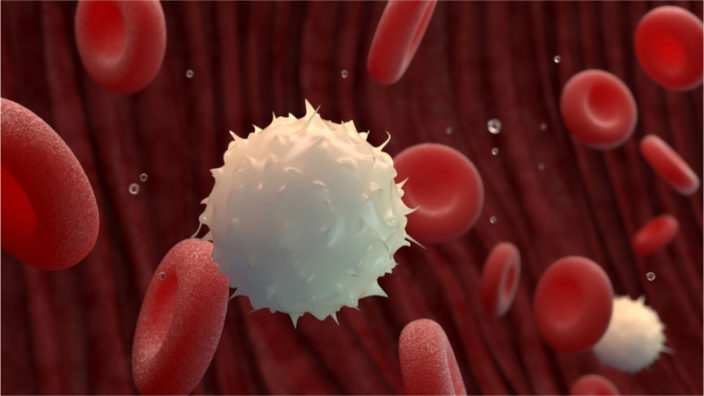
Literature

[1] Kaplan, M. J., & Radic, M. (2012). Neutrophil extracellular traps: double-edged swords of innate immunity. The Journal of Immunology, 189(6), 2689-2695.

[2] Castanheira, F. V., & Kubes, P. (2019). Neutrophils and NETS in modulating acute and chronic inflammation. Blood, (), blood-2018-11-844530. Accessed March 24, 2019. https://doi.org/10.1182/blood-2018-11-844530.

Clearing Senescent Cells Prevents T1 Diabetes in Mice

Scientists have shown that the removal of non-dividing senescent cells, which are normally associated with aging, also appears to prevent Type 1 diabetes in diabetic mouse strains.

Clearing senescent beta cells prevents T1 diabetes

Type 1 diabetes (T1D) is a chronic condition in which the pancreas produces little or no insulin. Insulin is a hormone that allows sugar (glucose) to enter cells in order to create energy, so it is critical to cellular function and life.

T1D is an autoimmune disease, which means that the immune system, instead of protecting the body from invading pathogens, identifies a part of the body as a threat and attacks it. In T1D, the immune system targets the insulin-producing beta cells in the pancreas and destroys them.

In a new study, researchers demonstrate that senescent cells play a key role in the development of type 1 diabetes and that clearing them using senolytic therapy is sufficient to prevent diabetes in T1D diabetic mouse strains [1].

The research team used Bcl-2 inhibitors to block the survival pathways that senescent beta cells use to evade apoptosis, a built-in self-destruct system that destroys damaged cells. We have seen previous senolytic research that uses the drug navitoclax, which also blocks the Bcl-2 protein family [2]. Bcl-2 is also the target of the senolytic drug candidate UBX1967, which is being developed by UNITY Biotechnology to treat ophthalmologic diseases.

The end result here was that blocking Bcl-2 allowed the selective destruction of senescent beta cells, which, in turn, appeared to prevent T1D.

Summary

Type 1 diabetes (T1D) is an organ-specific autoimmune disease characterized by hyperglycemia due to progressive loss of pancreatic beta cells. Immune-mediated beta cell destruction drives the disease, but whether beta cells actively participate in the pathogenesis remains unclear. Here, we show that during the natural history of T1D in humans and the non-obese diabetic (NOD) mouse model, a subset of beta cells acquires a senescence-associated secretory phenotype (SASP). Senescent beta cells upregulated pro-survival mediator Bcl-2, and treatment of NOD mice with Bcl-2 inhibitors selectively eliminated these cells without altering the abundance of the immune cell types involved in the disease. Significantly, elimination of senescent beta cells halted immune-mediated beta cell destruction and was sufficient to prevent diabetes. Our findings demonstrate that beta cell senescence is a significant component of the pathogenesis of T1D and indicate that clearance of senescent beta cells could be a new therapeutic approach for T1D.

Conclusion

The results of this new study are unusual given that type 1 diabetes is an autoimmune disease, not an age-related one, yet this data suggests that senescent cells play a role in its development. This previously unknown association has some interesting implications for autoimmune diseases. If the same association is found in human T1 diabetes, this opens the door for treating it with senolytic therapy in the same way.

The market for an effective T1 diabetes treatment is also considerably large, so it would not be a surprise to see senolytics being used in clinical trials for it in the near future.

We would like to ask you a small favor. We are a non-profit foundation, and unlike some other organizations, we have no shareholders and no products to sell you. All our news and educational content is free for everyone to read, but it does mean that we rely on the help of people like you. Every contribution, no matter if it’s big or small, supports independent journalism and sustains our future.

Literature

[1] Thompson, P. J., Shah, A., Ntranos, V., Van Gool, F., Atkinson, M., & Bhushan, A. (2019). Targeted Elimination of Senescent Beta Cells Prevents Type 1 Diabetes. Cell metabolism.

[2] Zhu, Y., Tchkonia, T., Fuhrmann‐Stroissnigg, H., Dai, H. M., Ling, Y. Y., Stout, M. B., … & Wren, J. D. (2016). Identification of a novel senolytic agent, navitoclax, targeting the Bcl‐2 family of anti‐apoptotic factors. Aging cell, 15(3), 428-435.