

September 17, 2025
[Mountain View, September 17, 2025] — Lifespan Research Institute (LRI) today announced the launch of the Public Longevity Group (PLG), a new initiative focused on bridging the cultural gap between scientific breakthroughs in aging and their public acceptance. To kickstart its work, PLG has opened a crowdfunding campaign to develop tools that measure and strengthen...
November 19, 2026
Researchers have discovered that Granzyme K, a compound predominantly emitted by older CD8+ T cells, accelerates aging in multiple organs. Immune cells can drive aging CD8+ T cells, cytotoxic cells that become primed to recognize and destroy threats, are particularly prone to rapid aging [1]. This leads to downstream aging in other organs and systems,...
November 17, 2026
A new preprint study of partial reprogramming in three human cell types has found that younger epigenetic ages and better function do not always go together [1]. Unanswered questions about reprogramming Cellular reprogramming uses four proteins that regulate gene activity – OCT4, SOX2, KLF4, and c-MYC, collectively called OSKM or the Yamanaka factors – to...
November 16, 2026
A team of researchers has linked asprosin, which is produced by aging fat cells, to mitochondrial dysfunction and cellular senescence in the cells that line blood vessels. Vulnerable vessels Cellular senescence and vascular aging are closely connected; the senescence-associated secretory phenotype (SASP) is emitted into the bloodstream, where it is easily taken up by the...
November 13, 2026
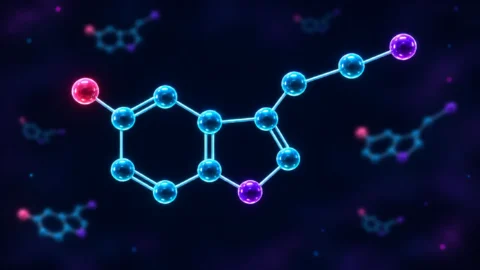
A new study has found that increased production of serotonin by neurons in a particular brain region inhibits dopamine production and willingness to move, causing loss of activity. Killing serotonin-producing neurons reversed the effect [1]. Can’t or won’t? Physical activity tends to decline with age. As with many manifestations of aging, we tend to think...

November 12, 2026
Researchers have found that HDAC7 bridges together GSK3β and hyperphosphorylated tau protein (hTau) in neurons, which may spur Alzheimer's disease. Getting rid of HDAC7 in hTau model mice ameliorated their cognitive decline. How proteins go wrong Loss of ProteostasisThe loss of proteostasis is the failure of the protein-building machinery of the cell and the accumulation...

November 11, 2026
A recent study showed that a treatment with the short peptide elamipretide reversed multiple signs of age-related decline in oocyte quality in mice and in human oocytes in vitro [1]. An early decline In females, the reproductive system ages relatively early in life, with fertility declining as early as the mid-thirties; combined with the recent...