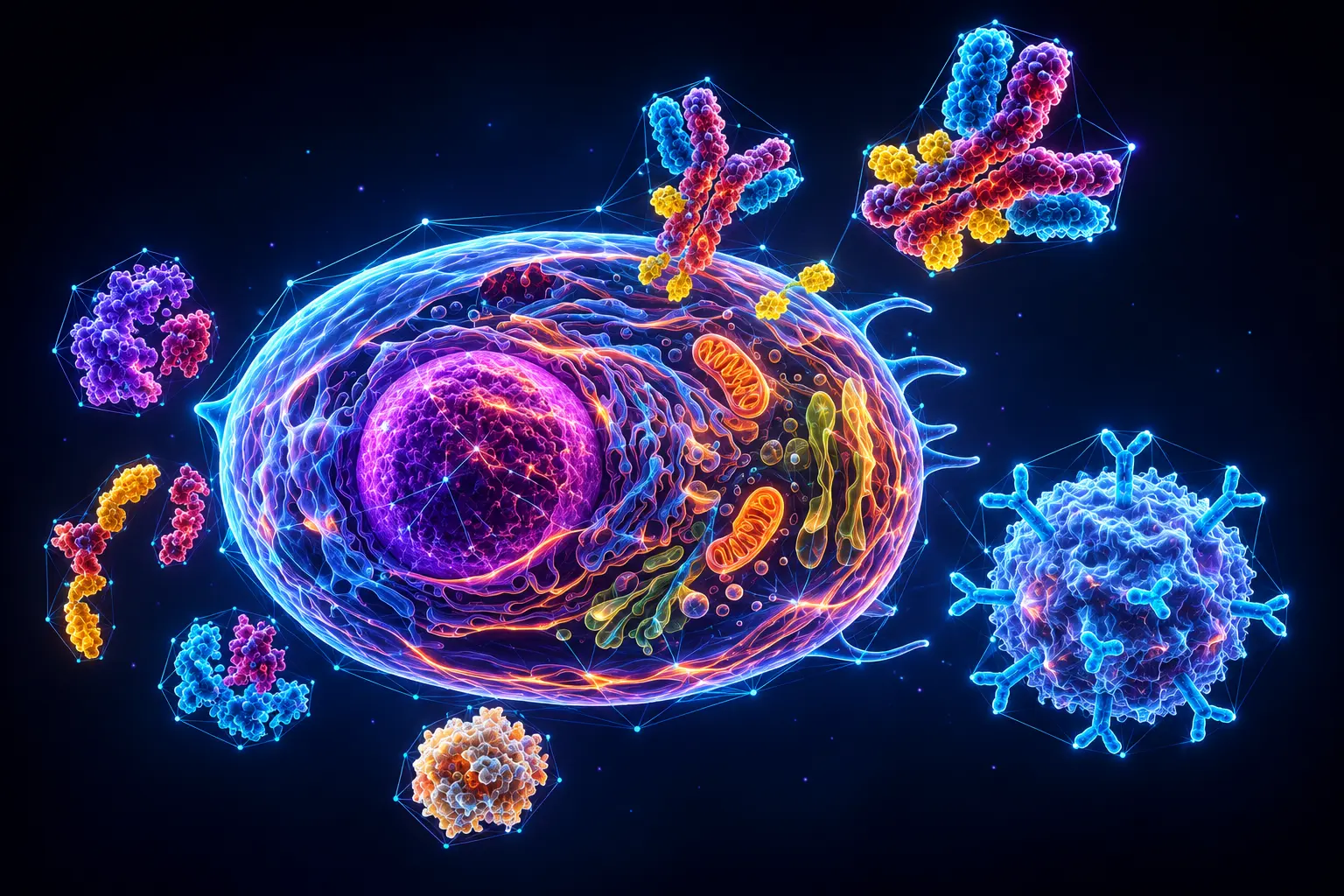
Partial Reprogramming’s Outcome Depends on Cell Type
- Inducement time, recovery, and behavior all differ.

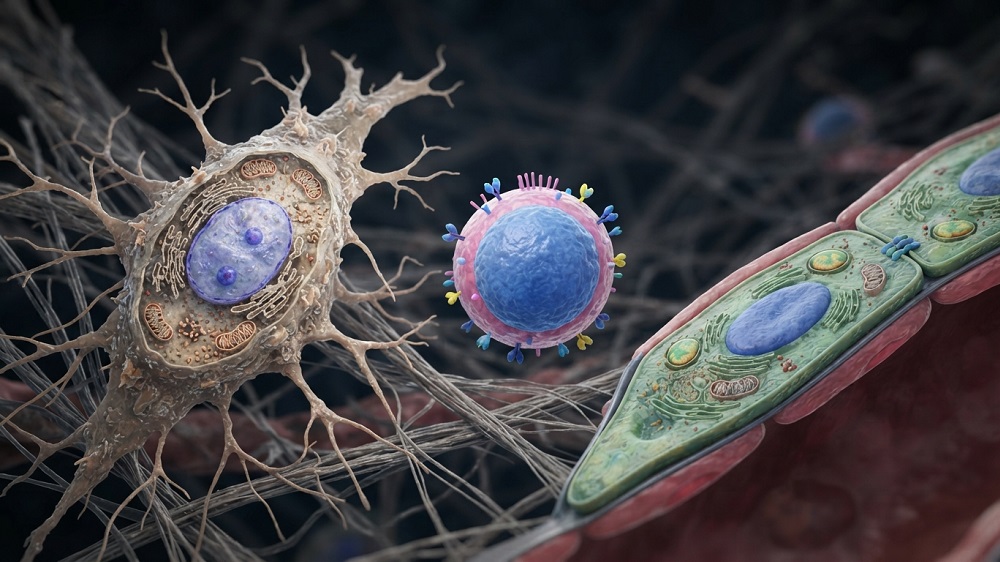
- When exposed to the full suite of OSKM reprogramming factors, fibroblasts, T cells, and endothelial cells react differently.
- Markers of function and markers of epigenetic aging were not always congruent after this exposure.
A new preprint study of partial reprogramming in three human cell types has found that younger epigenetic ages and better function do not always go together [1].
Unanswered questions about reprogramming
Cellular reprogramming uses four proteins that regulate gene activity – OCT4, SOX2, KLF4, and c-MYC, collectively called OSKM or the Yamanaka factors – to “erase” the identity programs of somatic cells, turning them into pluripotent stem cells. According to some metrics, this is accompanied by cellular rejuvenation [2].
However, full reprogramming all the way to pluripotency is not feasible in vivo because it strips the cell of its ability to perform its normal functions. Partial reprogramming – which usually means transient exposure of cells to reprogramming factors – allows rejuvenation without dedifferentiation, or so says conventional wisdom.
In this deep study, a team of researchers at Gladstone Institutes, which included reprogramming pioneer Shinya Yamanaka, put this assumption to a rigorous test. They wanted to understand how exactly cells of different types react to transient OSKM induction and whether partial reprogramming indeed induces rejuvenation or improves function.
Vastly different behaviors
The team used skin fibroblasts (probably the most popular cell type in reprogramming research), cytotoxic T cells, and aortic endothelial cells. The cells were harvested from four donors per cell type, with both sexes represented and ages ranging from 48 to 63 years.
Rather than treating exposure time as a reliable measure of reprogramming depth, the scientists traced markers of cellular identity and reprogramming in individual cells. Identity marker levels told them how much of its original identity the cell has lost, and reprogramming marker levels signified how close it got to pluripotency.
Accordingly, the researchers divided the cells into three states: Gr1, Gr2, and Gr3. Gr1 refers to “shallow” reprogramming, which occurs when the cell has retained much of its original identity and remains far from a stem-like pluripotent state. The intermediate Gr2 state means low levels of both markers: the cell has lost much of its original identity but without closely approaching pluripotency. Gr3 is the closest to full reprogramming.
The team tried to choose timepoints where for every cell type, there would be enough cells in all three states for further study. OSKM withdrawal came on day 7 for fibroblasts and endothelial cells, and on day 5 for T cells, which progressed more readily toward advanced states. However, endothelial cells mostly stopped short of Gr3.
Cellular rejuvenation according to methylation clocks differed by cellular type, too. Fibroblasts showed progressively lower estimated ages in deeper states. Endothelial cells already showed a substantial reduction in Gr1. T cells showed relatively limited reductions in Gr1 and Gr2, followed by a marked decline in Gr3.
The recovery patterns also diverged sharply. Fibroblasts generally regained their identity markers, but past-Gr1 reprogramming caused lasting growth deficits. Gr2 partly recovered the normal proliferation rate, while Gr3 showed impaired growth even 20 weeks after infection. Interestingly, despite incomplete recovery, fibroblasts retained lower epigenetic clock readings.
In T cells, Gr2 recovered some identity markers but failed to maintain growth. Gr3 failed to recover and were lost after day 11. Gr1, on the other hand, expanded better than controls and showed increased immune-associated activity even after their epigenetic age returned to the level of untreated controls around day 26 – a reversed behavior compared to fibroblasts.
Finally, endothelial cells were the most “well-behaved,” combining epigenetic age reduction with improved performance. They recovered rapidly from both Gr1 and Gr2 and proliferated well.
Having established these divergent outcomes, the researchers asked whether the three cell types nevertheless used some common molecular machinery during reprogramming. Measuring gene expression and chromatin accessibility in individual cell nuclei revealed substantial differences between cells of different types in how their genes react to OSKM treatment. The team identified the gene-regulating protein TOX as one of the few shared contributors to efficient reprogramming, although the gene programs associated with it differed substantially between cell types.
What it means for the field
Partial reprogramming has become one of the most popular approaches in longevity research and has attracted enormous investment. Some of the field’s best-funded companies are built around cellular rejuvenation, including Altos Labs, which launched with $3 billion in committed funding. This study suggests that turning this promise into treatments might require different approaches for different cell types, complicating efforts to rejuvenate entire organs or the whole body. It also remains to be seen whether cells from younger donors behave differently.
The results also raise a basic question: if some partially reprogrammed cells combine improved function with epigenetic age returning to baseline, while others show decreases in epigenetic age along with impaired function – what should count as rejuvenation? These findings do not undermine the promise of partial reprogramming, but they highlight the need to test whether cells actually function better once treatment ends.
On the other hand, numerous animal studies have already shown functional benefits of partial reprogramming [3]. Moreover, Life Biosciences has taken this approach into human trials for optic nerve disorders. The company, however, uses three factors instead of four (OSK), induced continuously for eight weeks [4]. Such differences in recipe, treatment schedule, and targeted cells could substantially affect the outcome.
Literature
[1] Washizu, K., Wang, X., Draper, J. M., Yamanaka, S., & Kunitomi, A. (2026). Partial reprogramming reveals lineage-specific uncoupling of rejuvenation, function, and recoverability in human cells. bioRxiv, 2026-11.
[2] Lapasset, L., Milhavet, O., Prieur, A., Besnard, E., Babled, A., Aït-Hamou, N., … & Lemaitre, J. M. (2011). Rejuvenating senescent and centenarian human cells by reprogramming through the pluripotent state. Genes & development, 25(21), 2248-2253.
[3] Yücel, A. D., & Gladyshev, V. N. (2024). The long and winding road of reprogramming-induced rejuvenation. Nature communications, 15(1), 1941.
[4] Lu, Y., Brommer, B., Tian, X., Krishnan, A., Meer, M., Wang, C., … & Sinclair, D. A. (2020). Reprogramming to recover youthful epigenetic information and restore vision. Nature, 588(7836), 124-129.
About the author
Arkadi Mazin