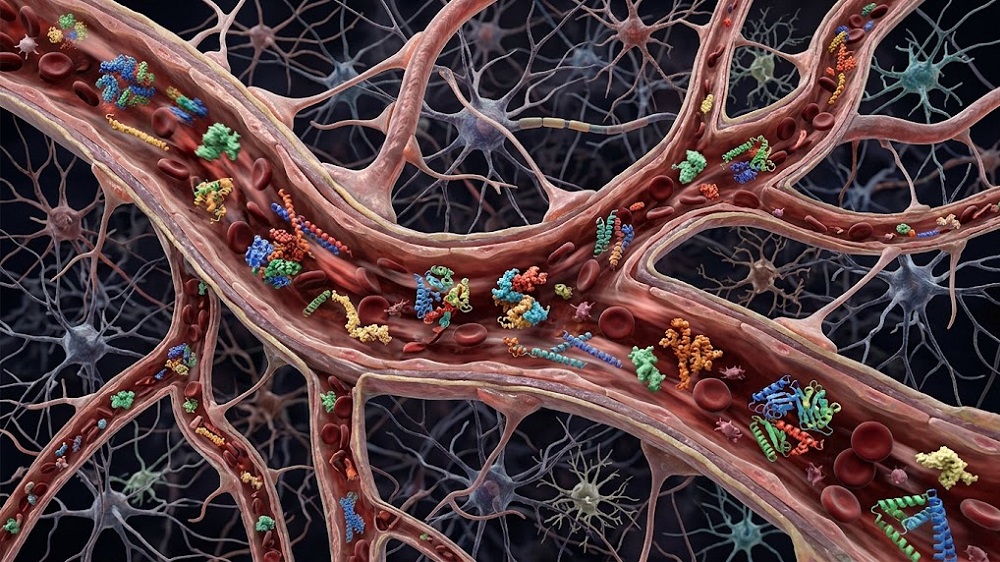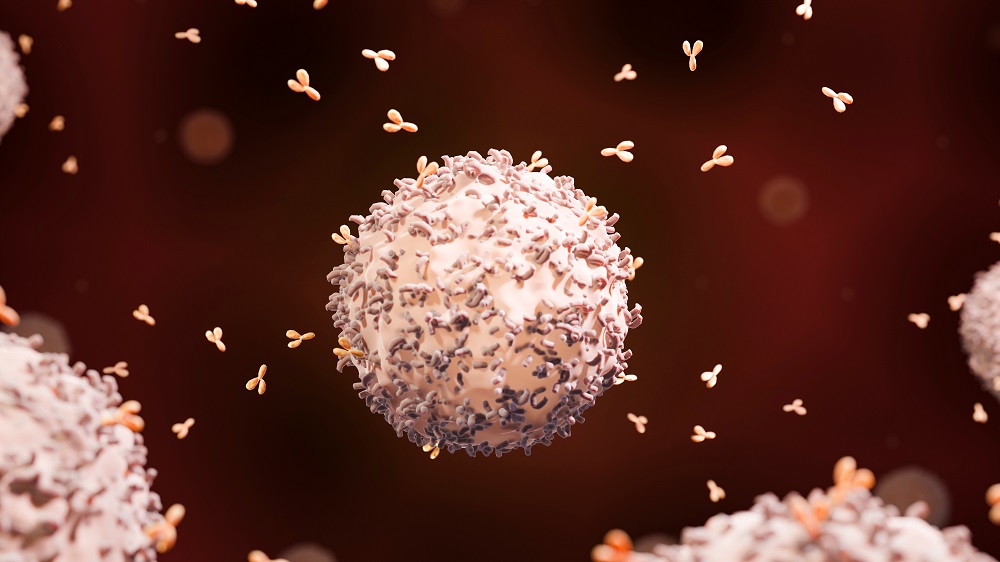
Researchers have genetically engineered blood stem cells to produce B cells that can churn out rare broad-action antibodies to fight HIV, malaria, and flu. This platform can also be used to produce other essential proteins [1].
The rare gems
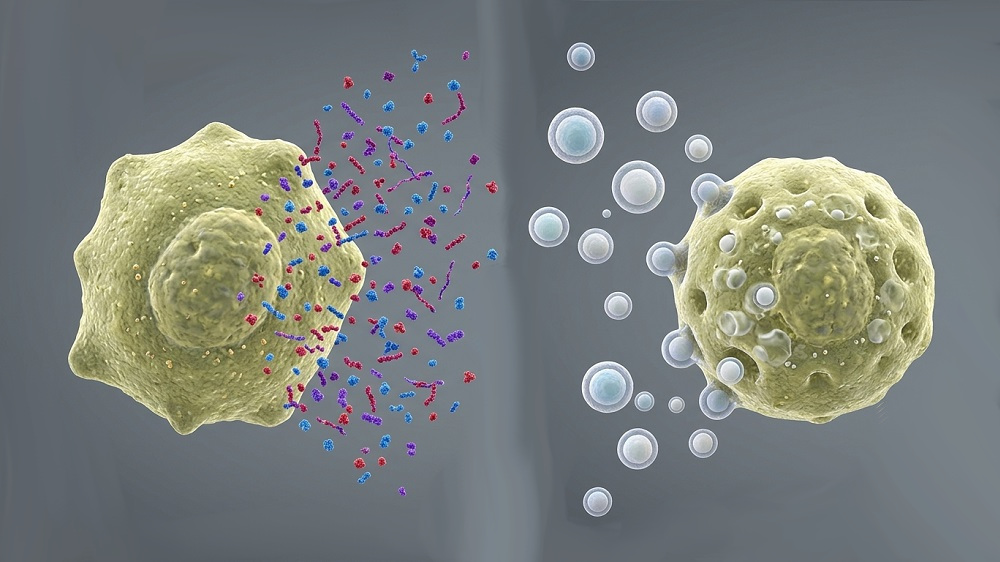
Vaccination works because a small number of B cells, which recognize the vaccine antigen upon encountering it, multiply enormously and mature into plasma cells that can each produce thousands of antibody molecules per second and survive in the bone marrow for years. This is why a childhood measles shot still protects you decades later.
Most antibodies produced during an infection or vaccination recognize only one version of a virus surface protein and stop working if the virus mutates. For instance, the flu virus mutates too fast for the immune system to keep up, so we need a flu shot every year [2]. A similar problem arises with HIV and many other infections.
However, very rarely – usually as a result of prolonged infection that drives extensive antibody mutation – a person’s immune system produces broadly neutralizing antibodies (bNAbs), which target regions of the pathogen that can’t easily mutate, mostly because those regions are essential for the pathogen’s function [3].
If you harvest these antibodies and transfer them to a different person, they protect that person from the disease, but their numbers wane quickly. Scientists have also tried genetically engineering B cells to produce those rare antibodies. While it’s doable in principle, engineered mature B cells don’t reliably generate the specific long-lived memory and plasma cell populations that confer prolonged immunity.
In a new study from the Rockefeller University, published in Science, the researchers attempted to solve this problem by moving one step upstream and genetically altering hematopoietic stem and progenitor cells (HSPC), which give rise to various blood cell types, including B cells.
Long-lasting immunity achieved
After creating an ingenious construct that silences the cell’s original antibody sequence and replaces it with a new one, which produces an anti-HIV bNAb, the researchers made sure that the resulting engineered HSPCs successfully differentiate into B cells in mice. Several weeks later, a small percentage of the recipients’ B cells were indeed producing the coveted bNAbs.
Given those small percentages of edited B cells, would it be enough to actually provide long-lasting immunity? The team immunized the mice with an HIV antigen designed to bind to this specific bNAb and tracked the antibody levels in blood over many months.
Despite the low fraction of edited B cells, vaccination produced high antibody levels in blood. They declined slowly over more than nine months, but a single booster shot amplified them again. Tests confirmed that the antibody could block HIV across multiple viral strains.
The team then wanted to know how few edited HSPCs are needed, since editing HSPCs is technically difficult. As few as about 370 cultured HSPCs, of which only 29 were actually edited, still produced measurable antibody levels.

HSPCs consist of two populations: long-term hematopoietic stem cells (LT-HSCs), which self-renew for life, and progenitors, which can produce blood cells for a while but eventually run out. For a lifelong therapy, the edits need to be in the LT-HSCs. The researchers confirmed that at least some of the edited cells were indeed LT-HSCs.
Protein production and protection
The team then created a construct that expresses an unrelated fluorescent protein alongside the antibody. This allowed them to track the edited B cells in a mouse’s body. The cells behaved exactly like normal antigen-responding B cells: they entered germinal centers in lymph nodes (sites where B cells mature) and expanded there, then they populated the spleen and bone marrow as plasma cells and so-called class-switched memory B cells – a signature of a mature immune response.
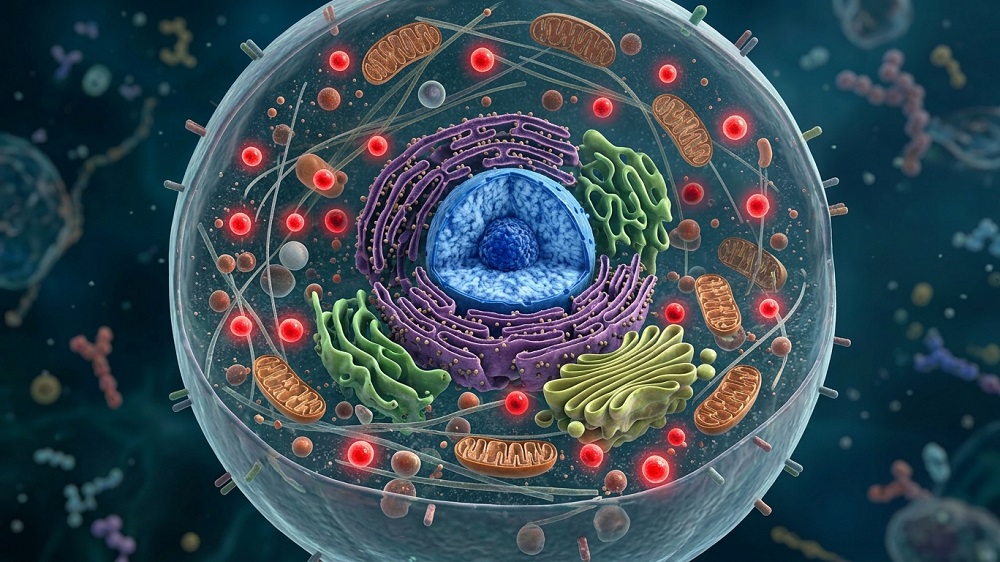
Importantly, this also provided a proof of concept for tailored protein production in vivo: theoretically, such cells can be used to produce various proteins the body needs, upon activation by a vaccine shot. Possible cargoes include enzymes, clotting factors for hemophilia, and so on. However, the system’s mechanics (such as rapid expansion) create dosing problems, so not every protein would be a good fit.
For pathogens like HIV, a single antibody isn’t enough, so the team also created a construct with two different anti-HIV bNAbs. Both antibodies were produced simultaneously at high levels, and the researchers were able to boost them selectively.
The team then switched to human HSPCs, which they injected into mice that were engineered to support human immune cell development (humanized mice). Editing efficiency in human cells was actually much higher than in mouse cells: an important translational milestone.
Finally, the researchers tested their platform against two other pathogens. Mice carrying engineered HSPCs with anti-malaria antibodies produced serum that stopped the parasite (Plasmodium falciparum) from crossing into human liver cells in culture, a key early step of malaria infection.
In the second experiment, they engineered HSPCs with a broadly neutralizing anti-influenza antibody. Mice were vaccinated against one flu strain and then challenged with totally different, highly lethal strains that the vaccine wouldn’t protect against on its own. Several-times-lethal doses of the virus killed most mice in the control group but none or few in the study groups.
“Our goal is to permanently impact the genome with a single injection, so that the body can make proteins of interest,” says Harald Hartweger, a research assistant professor in Michel Nussenzweig’s Laboratory of Molecular Immunology. “We want to find a way of making any protein – HIV antibodies, of course, but also solutions that address protein deficiencies and metabolic disease, as well as an antibody to treat inflammatory disease or the flu, or one for cancer. This is a step in that direction – showing the feasibility of making life-saving proteins.”
Literature
[1] Harald Hartweger et al. (2026). B lymphocyte protein factories produced by hematopoietic stem cell gene editing. Science, 392, eadz8994
[2] Treanor, J. (2004). Influenza vaccine—outmaneuvering antigenic shift and drift. New England Journal of Medicine, 350(3), 218-220.
[3] Landais, E., & Moore, P. L. (2018). Development of broadly neutralizing antibodies in HIV-1 infected elite neutralizers Retrovirology, 15(1), 61.