How Omega-3 Fatty Acids May Alleviate Kidney Disease
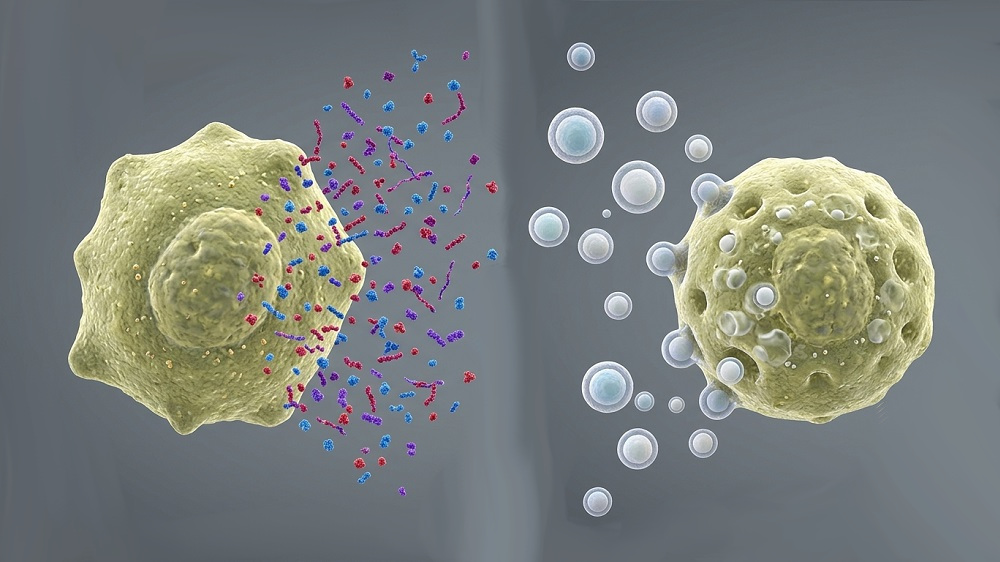
- Some senescent cells stimulate kidney fibrosis.


- In aged wild-type mice and in mouse models of kidney disease, administering omega-3 polyunsaturated fatty acids improved several markers of function.
- Directly activating the target of these fatty acids, FFAR4, reduced markers of senescence and decreased fibrosis in cells and mice.
Researchers have discovered the role of cellular senescence in the interaction between omega-3 polyunsaturated fatty acids (PUFAs) and chronic kidney disease (CKD).
Previous mixed results
Several clinical trials have found that taking omega-3 PUFAs has benefits for older people. One study found that it reduces the rate of aging according to epigenetic clocks [1], while another found that it lengthens telomeres in people with heart disease [2]. Further studies have found that it has benefits against sarcopenia [3] and cognitive impairment [4].
Studies on its kidney (renal) effects, however, have had mixed results; one study found that it did nothing against renal problems in Type 2 diabetes patients [5], while a meta-analysis found that only fish-derived rather than plant-derived omega-3 PUFAs had benefits against CKD [6]. The authors of this study also found contradictory information relating to the mechanism of action. Therefore, they put together a series of experiments to better determine its effects on senescence and fibrosis in renal cells.
Reduced senescence and better filtration
The researchers began by adminstering omega-3 PUFAs for seven months to wild-type mice beginning at 15 months of age. Compared to the control group, the treated mice had fewer markers of fibrosis and better structuring of tubular epithelial cells (TECs), which normally declines with age. The albumin/creatinine ratio of the treated mice was much more like that of the young mice, collagen deposition was heavily reduced, and the kidneys were better able to perform their basic filtration function. Biomarkers of cellular senescence, including SA-β-gal, were also heavily reduced, and markers of Klotho, which has been linked to aging resistance, were increased. While omega-3 PUFAs did not fully restore these mice’s kidney function to that of young mice, the improvements were broad and substantial.
Similar results were found in a model of CKD induced by alanine as well as in a unilateral ureteral obstruction-induced model of kidney disease.
Turning towards the target
The authors then turned towards FFAR4, the target of omega-3 PUFAs. In human renal samples derived from older people and people with a variety of kidney diseases, FFAR4 was markedly reduced compared to samples derived from younger people.
Another mouse experiment confirmed FFAR4’s effects. Compared to a control group, older mice that had FFAR4 deleted from their TECs had considerably worse outcomes: they excreted more protein in their urine and had more signs of pathological injury along with increased cellular senescence markers, including increases in lipofuscin and SA-β-gal. In the adenine-induced and obstruction-induced models of kidney disease, the FFAR4 TEC-knockout mice had even worse outcomes as well.
The researchers then linked FFAR4 in TECs to renal fibrosis. Previous work had found that senescent TECs secrete factors that cause renal fibrosis [7]. A single-cell RNA sequencing analysis found a population of fibroblasts that was particularly susceptible to this paracrine action in cases of CKD. A further in vitro experiment discovered the interaction pathway: TGF-β1, which induces senescence in TECs, caused them to secrete factors that led to increased fibrosis in fibroblasts. However, administering a FFAR4 agonist reversed the effects of TGF-β1. Using hydrogen peroxide instead of TGF-β1 as the senescence driver yielded similar results, and knocking down FFAR4 in senescent TECs made the paracrine effects worse.
FFAR4 was also found to have beneficial effects on PPARγ, which promotes Klotho expression. TGF-β1 also reduced PPARγ expression, which was similarly restored by an FFAR4 agonist. Older mice express less 15-d PGJ2, which activates PPARγ, than young mice, but administering omega-3 PUFAs substantially increased the expression of 15-d PGJ2 to levels far higher than those of young mice.
This research did not touch upon CKD in the context of diabetes, and it did not precisely outline the effects of omega-3 PUFAs on the kidneys of mice as they age. However, it provides a mechanistic explanation of how omega-3 PUFAs may improve kidney function in older people, and it paves the way for the potential development of future treatments that target FFAR4 in TECs in order to alleviate kidney disease in older people.
Literature
[1] Bischoff-Ferrari, H. A., Gängler, S., Wieczorek, M., Belsky, D. W., Ryan, J., Kressig, R. W., … & Horvath, S. (2025). Individual and additive effects of vitamin D, omega-3 and exercise on DNA methylation clocks of biological aging in older adults from the DO-HEALTH trial. Nature Aging, 5(3), 376-385.
[2] Farzaneh-Far, R., Lin, J., Epel, E. S., Harris, W. S., Blackburn, E. H., & Whooley, M. A. (2010). Association of marine omega-3 fatty acid levels with telomeric aging in patients with coronary heart disease. Jama, 303(3), 250-257.
[3] Pan, D., Yang, L., Yang, X., Xu, D., Wang, S., Gao, H., … & Sun, G. (2024). Potential nutritional strategies to prevent and reverse sarcopenia in aging process: Role of fish oil-derived ω-3 polyunsaturated fatty acids, wheat oligopeptide and their combined intervention. Journal of Advanced Research, 57, 77-91.
[4] Zhang, X., Yuan, T., Chen, X., Liu, X., Hu, J., & Liu, Z. (2024). Effects of DHA on cognitive dysfunction in aging and Alzheimer’s disease: The mediating roles of ApoE. Progress in Lipid Research, 93, 101256.
[5] de Boer, I. H., Zelnick, L. R., Ruzinski, J., Friedenberg, G., Duszlak, J., Bubes, V. Y., … & Manson, J. E. (2019). Effect of vitamin D and omega-3 fatty acid supplementation on kidney function in patients with type 2 diabetes: a randomized clinical trial. Jama, 322(19), 1899-1909.
[6] Ong, K. L., Marklund, M., Huang, L., Rye, K. A., Hui, N., Pan, X. F., … & Wu, J. H. (2023). Association of omega 3 polyunsaturated fatty acids with incident chronic kidney disease: pooled analysis of 19 cohorts. bmj, 380.
[7] Li, L., Fu, H., & Liu, Y. (2022). The fibrogenic niche in kidney fibrosis: components and mechanisms. Nature Reviews Nephrology, 18(9), 545-557.
About the author

Josh Conway