Tau Protein Is Crucial for Encoding Long-Term Memory
- Misfolded tau is dangerous, but properly folded tau is necessary.


- Tau protein must be phosphorylated on a specific site in order for a long-term memory to be properly stored.
- With aberrant or absent tau, short-term recall is possible but long-term memories are not normally retrievable.
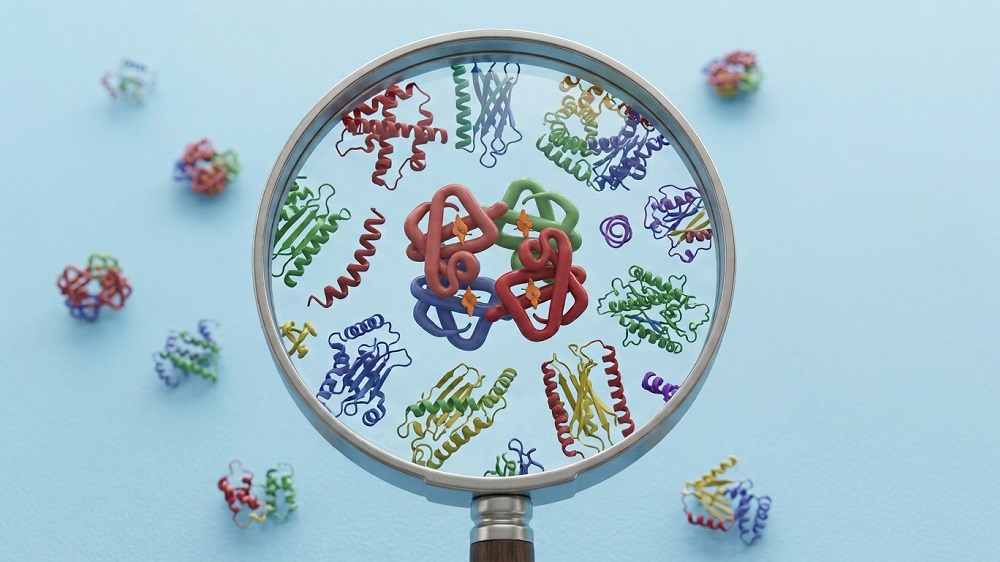
Scientists have uncovered an unexpected function of the tau protein, which is mostly known for its role in Alzheimer’s and related disorders: helping encode long-term memory. This can inform novel approaches that target tau [1].
In sickness and in health
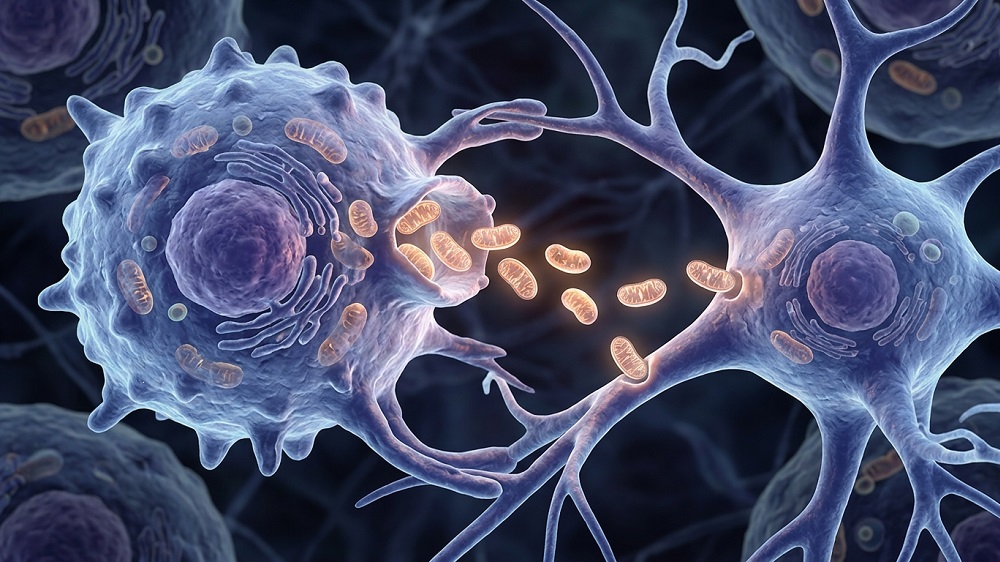
Tau is a protein found mainly in neurons, where its textbook job is to bind and stabilize microtubules, which provide structural rigidity and help carry cargo inside the axons. In Alzheimer’s disease, frontotemporal dementia, and related disorders collectively known as tauopathies, tau becomes abnormally phosphorylated, detaches from microtubules, and clumps into toxic aggregates. This tracks closely with memory loss.
Despite being central to memory failure in disease, whether tau also plays a role in healthy memory function has been unclear. Previous research seemed to suggest that it mostly does not. For instance, tau-deficient mice learn normally and demonstrate normal short-term recall [2]. Moreover, removing tau protects against cognitive deficits in mouse models of Alzheimer’s [3]. So, the assumption in the field was that tau is not required for memory and only matters for its loss.
A new study, led by Flinders University and published in Nature Communications, challenges this narrative with possible important therapeutic implications. The authors’ hypothesis was that previous studies looked in the wrong place, assessing only short-term memory (hours to days after learning) and ignoring a possible role of tau in long-term memory, which is formed and stored differently.
Thinking long-term
First, the researchers took tau-deficient mice and their tau-competent littermates and put them through three behaviorally distinct memory tasks, testing recall at both recent and remote timepoints. In all three tasks, tau-deficient mice showed normal recent recall but had impaired remote recall. By eliminating alternative explanations, the researchers demonstrated that the defect lies somewhere in the encoding-to-storage process, not in recall machinery or behavioral confounds.
In a switchable model, expressing tau only during the encoding window restored remote memory in tau-deficient mice, while expressing it only during habituation or remote recall did not. Crucially, tau could be completely silenced during the long latency period between learning and testing without harming remote recall, as long as it had been present at encoding. So, tau is required for encoding long-term memories rather than protecting or recalling them.
Tau has numerous phosphorylation sites, and their status defines what the protein does. The team found that phosphorylation at threonine-205 (T205) was the most abundant site, and it was selectively increased by memory encoding.
However, correlation is not causation, so the team created tauT205A mice, in which the threonine at position 205 was swapped for another amino acid, alanine (A). Alanine is structurally similar to threonine but cannot be phosphorylated. These mice showed normal learning and recent recall but impaired remote recall, recapitulating the full tau-knockout phenotype.
Mice lacking p38γ (the kinase that phosphorylates tau at T205) showed the same remote-recall deficit. Effectively, three independent perturbations (no tau, no T205, no T205-kinase) all converged on the same phenotype.
You’ve got an engram!
The question then became “How exactly does T205 facilitate memory creation?” An engram is the physical trace of a specific memory: when you learn something, a subset of neurons, called an ensemble, undergoes lasting changes and becomes the “keeper” of that particular memory. Reactivating exactly those cells can trigger recall. Sparsity and precision are important: a good memory recruits a small, well-defined set of cells and keeps neighboring cells quiet. If unrelated neurons also fire during recall, retrieval fails.
The team labeled the learning ensemble with the fluorescent protein eGFP using an activity-dependent promoter so that only neurons active during encoding get tagged. They separately stained for c-Fos, a protein switched on whenever a neuron is strongly active. By comparing the c-Fos⁺ population to the eGFP-tagged engram, they could measure how precisely activity is confined to the intended ensemble.
Without tau or without T205, engram recruitment (eGFP tagging) was normal but precision collapsed. These mice had excess c-Fos⁺ cells and a lower fraction of double-positive (both belonging to the engram and active) cells, meaning many non-engram neighbors were firing inappropriately. This imprecision persisted at later timepoints and even at remote recall.
Re-expressing T205 tau (but not the T205A mutant) during the encoding window made activity sparser (normal) again, quashing the excessive activation. Importantly, overall network activity, as measured by electroencephalography (EEG), was unchanged, indicating that this is about local selectivity rather than global activity levels.
To prove the effect is cell-autonomous to the active ensemble (not a bystander effect), the team built a vector that expresses tau only in cells active during encoding. Wild-type tau placed specifically in engram cells rescued remote memory and restored sparse c-Fos activity, while the T205A version did neither. The researchers also modeled tauopathies, which are associated with aberrant, aggregation-prone tau [4], by using tauP301S, a disease mutation that causes memory issues when expressed in engram neurons during encoding or remote recall.
The memories are still there
In a crucial experiment, the researchers labeled a fear engram with a light-activated ion channel. This enabled them to trigger those exact cells with light, bypassing natural sensory cues entirely. With the natural cue, tau-deficient mice failed remote recall just like before. However, directly activating the engram with light retrieved the remote memory in both tau-competent and tau-deficient mice. The memory trace was retained in the latter all along; it just could not be reached via the normal activation route.
This work makes it clear that ordinary tau plays an active role in memory formation and cannot be safely depleted as part of therapies. Additionally, at least early in the disease, memories that appear to be lost might be simply inaccessible, and access can possibly be restored.
“Knowing how tau supports the formation and recall of memory could help us better understand what goes wrong in memory loss,” said Associate Professor Ittner, from Flinders’ College of Medicine and Public Health. “Future research will hopefully be able to confirm concepts developed in our study in human memory and show their implications in dementia.”
Literature
[1] Kosonen, R., Stefanoska, K., Lin, Y., Edwards, S., Prikas, E., Bertz, J., … & Ittner, A. (2026). Tau T205 phosphorylation modulates engram cell recruitment and remote memory in mice. Nature Communications.
[2] Morris, M., Hamto, P., Adame, A., Devidze, N., Masliah, E., & Mucke, L. (2013). Age-appropriate cognition and subtle dopamine-independent motor deficits in aged tau knockout mice. Neurobiology of Aging, 34(6), 1523–1529.
[3] Roberson, E. D., Scearce-Levie, K., Palop, J. J., Yan, F., Cheng, I. H., Wu, T., Gerstein, H., Yu, G.-Q., & Mucke, L. (2007). Reducing endogenous tau ameliorates amyloid beta-induced deficits in an Alzheimer’s disease mouse model. Science, 316(5825), 750–754.
[4] Iqbal, K., Liu, F., Gong, C.-X., & Grundke-Iqbal, I. (2010). Tau in Alzheimer disease and related tauopathies. Current Alzheimer Research, 7(8), 656–664.
About the author

Arkadi Mazin