A New Target Against High Blood Pressure
- A downstream protein is known to affect aging.

- Increasing AGGF1 mitigates age-related blood pressure increases in mice, while decreasing it worsens them.
- This is because of its effects on SESN2, a protein that has its own effects on aging and reactive oxygen species.
Researchers have discovered why the protein AGGF1 has significant effects on blood pressure and published their findings in Aging Cell.
Blood pressure is a condition of its own
The authors begin their paper by discussing high blood pressure (hypertension), one of the most commonly known medical issues and a significant contributor to both disability and mortality in older people [1]. Between normal blood pressure (normotension) and hypertension sits prehypertension, an intermediate state that signifies increased risks [2].
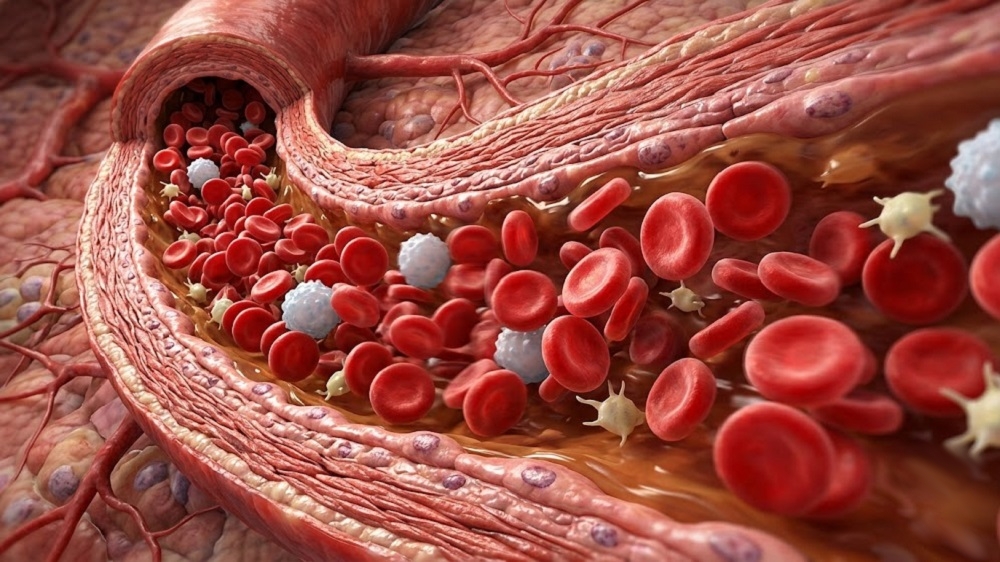
Prehypertension often begins when the endothelium, which lines the blood vessels, becomes dysfunctional with aging and various other medical issues [3]. Glucose, lipids, and physical stresses damage these cells [4], leading to senescence, the production of reactive oxygen species (ROS), and vascular aging [5].
Previous work has found that an factor involved in blood vessel creation, AGGF1, may help combat this chain of events by fighting inflammation related to TNF-α [6]. A study from earlier this year found that AGGF1 is repressed in hypertensive patients [7]. Therefore, this study aimed to discover its precise role in preserving the endothelium and determine whether or not it is a potentially valuable target.
AGGF1 has significant effects on blood pressure
This study began with a look at data derived from the Gene Expression Omnibus database, which is commonly used in analyses like this one. Unsurprisingly, AGGF1 was found to significantly decline with both hypertension and aging.
The researchers then turned to mice, which have age-related hypertension issues just like we do [8]. They employed two male mouse models: one that fails to express murine Aggf1, and one that overexpresses human AGGF1. A control group of wild-type Black 6 mice maintained normal blood pressure at 18 months; the underexpressing group developed high blood pressure at 11 months; and while overexpression did not stop blood pressure from rising completely, the overexpressing group had considerably less hypertension even at 25 months of age, a statistically significant improvement over the wild-type group.
A closer look revealed this to be entirely due to AGGF1’s effects on the endothelium. Endothelium-dependent forms of blood vessel relaxation were negatively impacted by underexpression and positively affected in older ages by overexpression. Forms of blood vessel relaxation that do not rely on the endothelium were unaffected. AGGF1 was also found to have benefits against ROS production, with overexpressing mice producing significantly less and underexpressing mice producing significantly more.
An analysis of human umbilical vein endothelial cells (HUVECs) found even more effects: endothelial cells that underexpress AGGF1 have more markers of senescence, higher expression of the DNA damage marker γH2AX, increased inflammation as measured by IL-6, and less cellular proliferation. Increasing AGGF1 expression reduced the effectiveness of doxorubicin, a toxin that causes cellular senescence.
An established downstream protein
These results were found to be due to AGGF1’s effects on the expression of SESN2, a protein that has been previously examined in other age-related contexts, including knee arthritis. A database analysis of human expression found that SESN2 and AGGF1 expression are related in older people, and this team found similar results in its mice.
Directly affecting SESN2 overrode the effects of AGGF1 in HUVECs; cells that were forced to express SESN2 without AGGF1 had decreased senescence, but cells that overexpressed AGGF1 without SESN2 had increased senescence. These results were confirmed in mice; administering a SESN2 adeno-associated virus (AAV) to Aggf1-underexpressing mice significantly reduced this group’s tendency to develop high blood pressure at an early age. Likewise, silencing SESN2 in AGGF1-overexpressing mice caused this group to develop high blood pressure earlier.
This study had a few notable limitations: this was murine and cellular work, and only male mice were utilized in this study. The reason why AGGF1 declines with age was not explored. However, this is further evidence of SESN2’s impact on aging tissues, and the researchers claim that these findings “identify the endothelial AGGF1/SESN2/p-eNOS axis as a novel and important signaling pathway in the maintenance of blood pressure.”
Literature
[1] Benetos, A., Petrovic, M., & Strandberg, T. (2019). Hypertension management in older and frail older patients. Circulation research, 124(7), 1045-1060.
[2] Egan, B. M., & Stevens-Fabry, S. (2015). Prehypertension—prevalence, health risks, and management strategies. Nature Reviews Cardiology, 12(5), 289-300.
[3] Zhao, L., Meng, X., Zhang, Q. Y., Dong, X. Q., & Zhou, X. L. (2021). A narrative review of prehypertension and the cardiovascular system: effects and potential pathogenic mechanisms. Annals of Translational Medicine, 9(2), 170.
[4] Zhang, Y., Yang, X., Lan, M., Yuan, Z., Li, S., Liu, Y., … & Li, B. (2025). Regulation of blood pressure by METTL3 via RUNX1b–eNOS pathway in endothelial cells in mice. Cardiovascular Research, 121(1), 205-217.
[5] Ungvari, Z., Tarantini, S., Donato, A. J., Galvan, V., & Csiszar, A. (2018). Mechanisms of vascular aging. Circulation research, 123(7), 849-867.
[6] Hu, F. Y., Wu, C., Li, Y., Xu, K., Wang, W. J., Cao, H., & Tian, X. L. (2013). AGGF1 is a novel anti-inflammatory factor associated with TNF-α-induced endothelial activation. Cellular signalling, 25(8), 1645-1653.
[7] Gao, D., Wu, Z., Zhou, Z., & Liang, J. (2026). BACH1-mediated transcriptional repression of pro-angiogenic factors drives angiogenic impairment in hypertension. Frontiers in Cardiovascular Medicine, 13, 1769747.
[8] Feng, R., Ullah, M., Chen, K., Ali, Q., Lin, Y., & Sun, Z. (2020). Stem cell‐derived extracellular vesicles mitigate ageing‐associated arterial stiffness and hypertension. Journal of extracellular vesicles, 9(1), 1783869.
About the author

Josh Conway