Serotonin Signals Suppress Physical Activity in Aging Mice
- The activity of some neurons leads to inactivity in the body.

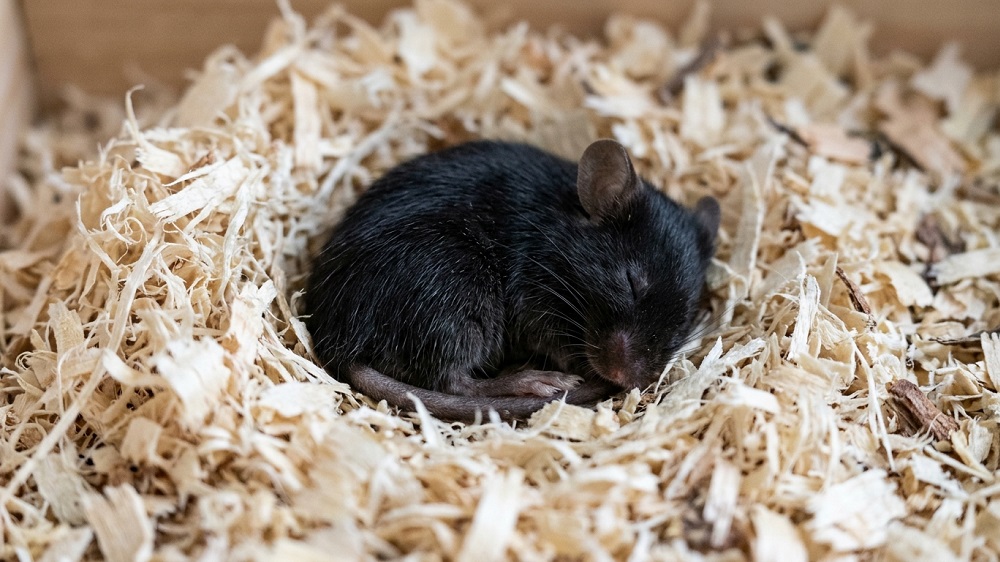
A new study has found that increased production of serotonin by neurons in a particular brain region inhibits dopamine production and willingness to move, causing loss of activity. Killing serotonin-producing neurons reversed the effect [1].
Can’t or won’t?
Physical activity tends to decline with age. As with many manifestations of aging, we tend to think of it as normal and inevitable. Part of this decline indeed involves muscles weakening and age-related diseases taking over. However, the brain itself might increasingly suppress our desire to move, even when the physical capacity is still there. This was the topic of a new study coming from the University of Aberdeen and published in Metabolism – Clinical and Experimental.
The authors focused on serotonin, a neurotransmitter that affects many brain functions, including movement. Widely known as a “happiness molecule,” serotonin’s effect actually depends on which cells and receptors it interacts with. Previous research suggested that increasing serotonin signaling can suppress movement [2], but how this contributes to age-related inactivity remained unclear.
Implicating serotonin signaling
First, the researchers compared younger and older humans. Scottish volunteers aged 17-30 or 50-70 wore hip accelerometers for a week. The team also assessed body composition and food intake. As expected, they found that older participants moved less and more slowly, while carrying more body fat.
However, the goal of this experiment was not to state the obvious. The researchers then compared younger and older mice using similar “scorecards,” and found that age-related differences in mice match those in humans closely enough to make mice a reasonable model for investigating the biology behind those differences.
The researchers then administered d-fenfluramine, which promotes serotonin release and inhibits its reuptake. The treatment reduced movement, distance, and speed during the dark phase (when mice are normally most active). It also briefly suppressed feeding, reduced energy expenditure, and shifted fuel use toward fat, recapitulating age-related changes.
Since the drug works broadly, the researchers had to identify the specific neuronal populations involved. They focused on two brain regions: the dorsal raphe, a brainstem region containing serotonin-producing neurons, and the ventral tegmental area (VTA), a region rich in dopamine-producing neurons, which are involved in motivation, reward, and movement.
The team examined dorsal raphe neurons in brain slices from younger and older mice and found no age-related difference in the number of serotonin neurons. However, the firing patterns were different: older animals’ neurons fired more during the dark phase, when mice are active, and less during the light phase relative to younger animals.
The researchers then selectively stimulated serotonin-producing neurons in the dorsal raphe to make them fire more frequently. In young mice, this reduced movement, distance traveled, and average speed while increasing inactivity. Interestingly, unlike broad serotonin elevation with d-fenfluramine, this targeted activation did not change food intake, fuel use, or energy expenditure, separating the effect from feeding and metabolism.
The dopamine connection
The researchers then knocked out 5-HT2C, one of the receptors through which serotonin acts, in 12- to 14-month-old mice. The knockout animals traveled farther, moved faster, and spent less time inactive – again, with no changes to food intake, fuel use, or energy expenditure.
Many VTA neurons carry this receptor, and they release GABA, a neurotransmitter that usually inhibits other neurons. The team injected a tracing virus into the VTA that travels backward along neuronal connections. This labeled serotonin neurons in the dorsal raphe region.
The researchers suspected that serotonin produced by neurons in dorsal raphe activates these inhibitory neurons, which would then suppress dopamine-producing neurons in the VTA. Since dopamine normally helps promote movement and motivation [3] inhibiting dopamine-producing neurons could produce the effects observed by the researchers in their experiments.
Electrical recordings supported this idea: serotonin increased the frequency of inhibitory signals received by dopamine neurons. Decreasing and increasing the receptors’ activity also produced results in support of the hypothesis.
In a crucial reversal experiment, the researchers treated mice aged 14-20 months with a targeted viral system expressing activated caspase-3, a protein that triggers cell death. Four weeks later, the treated animals moved more, traveled farther and faster, and spent less time inactive without a significant difference in food intake. Over eight weeks, the treated mice lost body fat and developed a stronger forelimb grip.
This study suggests an important role for serotonin signaling in age-related loss of physical activity. While killing neurons is probably not a way to go in humans, future studies might suggest milder alternatives.
Literature
[1] de Morentin, P. B. M., Leeson-Payne, A., Mu, S., Martynova, Y., Mohammadkhani, A., Neyens, D. M., … & Heisler, L. K. (2026). Brain serotonin circuit reverses decline in physical activity with age. Metabolism, 156823.
[2] Correia, P. A., Lottem, E., Banerjee, D., Machado, A. S., Carey, M. R., & Mainen, Z. F. (2017). Transient inhibition and long-term facilitation of locomotion by phasic optogenetic activation of serotonin neurons. elife, 6, e20975.
[3] Hughes, R. N., Bakhurin, K. I., Petter, E. A., Watson, G. D., Kim, N., Friedman, A. D., & Yin, H. H. (2020). Ventral tegmental dopamine neurons control the impulse vector during motivated behavior. Current Biology, 30(14), 2681-2694.
About the author

Arkadi Mazin