




New Small Molecule Alleviates Alzheimer’s in Mouse Model
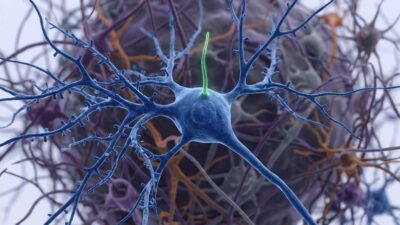
Scientists have developed a custom-made molecule that targets a post-translationally modified kinase linked to Alzheimer’s, improving symptoms in a murine model of the disease [1]. A novel approach to neutralizing

Extracellular Vesicles as a Hallmark of Aging
A review paper published in Cells has described multiple ways in which the secretion of extracellular vesicles (EVs) changes with aging, leading the authors to propose it as its own

How NAD+ Relates to Smell Loss with Age
Researchers publishing in Aging Cell have elucidated a relationship between aging, the loss of smell, and NAD+ in a mouse model. Olfactory ability declines with age Roughly half of people

Association Between BMI and Mortality Revisited
In a new paper, Ryan K. Masters, professor at CU Boulder, suggests that when adjusted for body shape and lifelong shifts, the relationship between BMI and mortality is more linear

Nonlinear Analysis for a Better Epigenetic Clock
A team publishing in Human Genomics has developed a new model for analyzing epigenetic changes that uses nonlinear analysis. Current clocks are linear Current epigenetic clocks, including the original Horvath

Senescent Cells Contribute to Brain Cancer
Combining results from human tumors and a mouse model, researchers publishing in Nature Communications have shown that senescent cells promote the growth of glioblastoma, a form of brain cancer. Deadly,

Removal of Neuronal APOE4 Alleviates Alzheimer’s in Mice
In a new study published in Nature Aging, scientists have shown that targeted ablation of neuronal APOE4, which produces the ApoE4 protein, significantly protects against Alzheimer’s disease in a mouse

The State of the Art in Immune Cell Therapy
A pair of researchers from Stanford University have published a detailed review of the current state of CAR T immune cell therapies in Nature. A new state of the art

Caloric Restriction Might Slow Down Human Aging
In a paper published in Nature Aging, researchers have shown that caloric restriction modestly slows down the pace of aging in healthy young people as measured by one of the

Reviewing David Sinclair’s First Lifespan Book
David Sinclair, PhD, esteemed molecular geneticist at Harvard, believes that aging is a disease that should be attacked at its roots. Furthermore, he believes if we are to make efficient

High Cholesterol Associated With Lower Bone Mineral Density
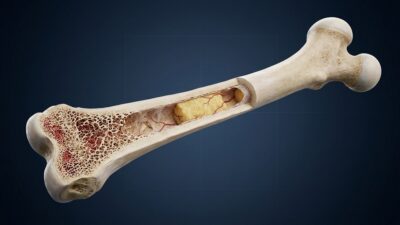
A team of researchers has described an association between reduced bone density in the lumbar spine and high total cholesterol in a paper published in Aging. Previous studies were conflicting

Nicotinamide Riboside Improves Muscle Energy in Trial
Scientists have shown that long-term treatment with a popular NAD+ precursor can raise NAD+ levels in blood and muscle and increase mitochondria content and function [1]. Twin-based design NAD+ is

Human Organoids for Brain Regeneration
Researchers publishing in Cell Stem Cell have used organoids derived from human cells to regrow the brain tissue of rats. The need to repair permanent damage While human beings do

Young Ovarian Tissue Rejuvenates Old Mice
In a paper published in Frontiers in Endocrinology, researchers have shown that transplanted young ovarian tissue improves the immune function of old recipient mice even if they are hormone-depleted [1].

Lithium Is Linked to Lower Mortality
In an epidemiological study published in Aging, scientists have shown that patients who take lithium have much lower all-cause mortality than patients on other psychotropic drugs [1]. Is lithium a

New Small Molecule Alleviates Alzheimer’s in Mouse Model
Scientists have developed a custom-made molecule that targets a post-translationally modified kinase linked to Alzheimer’s, improving symptoms in a murine model of the disease [1]. A novel approach to neutralizing proteins MAPK is a family of kinases involved in numerous cellular processes. One member of this

Extracellular Vesicles as a Hallmark of Aging
A review paper published in Cells has described multiple ways in which the secretion of extracellular vesicles (EVs) changes with aging, leading the authors to propose it as its own hallmark. Extracellular vesicles and their uses This review begins with an outline and explanation of extracellular

How NAD+ Relates to Smell Loss with Age
Researchers publishing in Aging Cell have elucidated a relationship between aging, the loss of smell, and NAD+ in a mouse model. Olfactory ability declines with age Roughly half of people over the age of 65 experience a decreased ability to smell [1], and research has shown

Association Between BMI and Mortality Revisited
In a new paper, Ryan K. Masters, professor at CU Boulder, suggests that when adjusted for body shape and lifelong shifts, the relationship between BMI and mortality is more linear and robust than previously thought, with normal BMI being the healthiest [1]. BMI’s many problems Most

Nonlinear Analysis for a Better Epigenetic Clock
A team publishing in Human Genomics has developed a new model for analyzing epigenetic changes that uses nonlinear analysis. Current clocks are linear Current epigenetic clocks, including the original Horvath clock and the death-predicting GrimAge, use linear analyses of methylation sites to estimate biological age. However,

Senescent Cells Contribute to Brain Cancer
Combining results from human tumors and a mouse model, researchers publishing in Nature Communications have shown that senescent cells promote the growth of glioblastoma, a form of brain cancer. Deadly, aggressive, and hard to treat Glioblastoma is one of the most dangerous forms of cancer. Even

Removal of Neuronal APOE4 Alleviates Alzheimer’s in Mice
In a new study published in Nature Aging, scientists have shown that targeted ablation of neuronal APOE4, which produces the ApoE4 protein, significantly protects against Alzheimer’s disease in a mouse model [1]. The dreadful allele An infamous variant of the APOE gene, APOE4, is the strongest

The State of the Art in Immune Cell Therapy
A pair of researchers from Stanford University have published a detailed review of the current state of CAR T immune cell therapies in Nature. A new state of the art in fighting cancer Chimeric antigen receptor (CAR) is a technology that allows researchers to alter T

Caloric Restriction Might Slow Down Human Aging
In a paper published in Nature Aging, researchers have shown that caloric restriction modestly slows down the pace of aging in healthy young people as measured by one of the DNA methylation clocks [1]. CALERIE design A plethora of animal data has shown beneficial effects of

Reviewing David Sinclair’s First Lifespan Book
David Sinclair, PhD, esteemed molecular geneticist at Harvard, believes that aging is a disease that should be attacked at its roots. Furthermore, he believes if we are to make efficient and sensible use our medical resources, we must move away from the “whack-a-mole” approach to treating

High Cholesterol Associated With Lower Bone Mineral Density
A team of researchers has described an association between reduced bone density in the lumbar spine and high total cholesterol in a paper published in Aging. Previous studies were conflicting In various populations, conflicting evidence has been found regarding a relationship between cholesterol and bone density.

Nicotinamide Riboside Improves Muscle Energy in Trial
Scientists have shown that long-term treatment with a popular NAD+ precursor can raise NAD+ levels in blood and muscle and increase mitochondria content and function [1]. Twin-based design NAD+ is an important coenzyme that performs multiple functions, including mitochondrial energy production. NAD+ levels decrease with aging,

Human Organoids for Brain Regeneration
Researchers publishing in Cell Stem Cell have used organoids derived from human cells to regrow the brain tissue of rats. The need to repair permanent damage While human beings do generate new neurons (neurogenesis) [1], this ability is very limited, in both region and amount. Brain

Young Ovarian Tissue Rejuvenates Old Mice
In a paper published in Frontiers in Endocrinology, researchers have shown that transplanted young ovarian tissue improves the immune function of old recipient mice even if they are hormone-depleted [1]. Not just a reproductive matter Although women generally live longer than men, women spend almost half

Lithium Is Linked to Lower Mortality
In an epidemiological study published in Aging, scientists have shown that patients who take lithium have much lower all-cause mortality than patients on other psychotropic drugs [1]. Is lithium a longevity drug? Lithium has long been prescribed for certain psychiatric conditions, mainly bipolar disorder. With time,