The Blog

Building a Future Free of Age-Related Disease

Staying up late

Educated ‘Night Owls’ Might Have More Cognitive Decline Risk

A recent analysis of over 20,000 middle-aged and older adults showed an association between a later chronotype (‘night owls’) and cognitive decline among highly educated people [1].

Early birds and night owls

One risk factor linked to dementia is a disrupted circadian rhythm, the natural 24-hour cycle of sleep and activity patterns. Common disruptions in that rhythm include shift work and frequent jet lag, which have been reported to contribute to neurodegeneration [2, 3].

Chronotype is a natural preference regarding when sleep and activity occur. For some people (‘early birds’), it is to wake up and go to sleep early. Others, ‘night owls’, experience more energy later in the day, which encourages them to stay up late.

In this study, the researchers aimed “to investigate the longitudinal association between chronotype and cognitive decline among adults of the general population.” It included data from 23,798 participants in the Lifelines population-based cohort study from the northern Netherlands; the participants were at least 40 years old with a median age of 49 years.

The researchers assessed the participants’ chronotypes and cognition, specifically non-verbal fluency and executive functioning, which were evaluated at the beginning of the study and again after a 10-year follow-up. Cognitive decline was calculated by subtracting the two values, resulting in a score between 0 and 175.

Bad news for ‘night owls’ with degrees

Based on previous research, the researchers hypothesized that the relationship between chronotype and cognitive health is U-shaped in nature; however, this was not the case, as the assessment revealed an association between a late chronotype and cognitive decline.

Such an association was not observed for the early birds. The authors explain that the lack of association between an early chronotype and cognitive decline may be due to the fact that individuals with extremely early chronotypes constituted only 0.11% of the study population. Future research would need to investigate it further.

Based on previously reported links between increased dementia risk and lower educational attainment, older age, and female sex, the researchers included these variables in the analysis of factors that moderate the association between chronotype and cognitive decline.

Among the tested variables, only educational attainment moderated the association between chronotype and cognitive decline. Therefore, the researchers divided the participants based on their education level and re-analyzed the data.

In the high educational attainment group, a negative association was found between chronotype and cognitive change. Specifically, “for every one-hour increase in chronotype, cognition declined by 0.80 points among the high-educational attainment group over a 10-year follow-up.”

In contrast, the middle-educational attainment group showed a borderline significant effect, and there was no association in the low-educational attainment group.

The study’s lead author, Ana Wenzler, thinks that this may be related to the types of work that people in those groups perform. When it comes to highly educated people, “that probably has to do with their sleep rhythm. They are often people who have to go back to work early in the morning and are therefore more likely to sleep too short, giving their brains too little rest.”

“We suspect that lower- or middle-educated people are more likely to have a job that allows them to take their sleep rhythm into account, such as a job in the hospitality industry or one with night shifts. If this is not possible, your brain does not get enough rest and you are more likely to adopt bad habits. It would be nice if more consideration was given to evening people who now have to work early: for example, by giving them the option of starting later, “ Wenzler continues.

There is also the possibility that this association was observed only in the highly educated group because more people in the low- and middle-educational attainment groups were lost to follow-up. As the researchers discuss, the baseline cognitive functions measured in the people who were lost to follow-up were lower, suggesting that they may not have continued participating due to cognitive difficulties. This would result in an underestimated cognitive decline in this group.

Better sleep, better brain

In further analysis, the researchers focused on highly educated people, aiming to understand the potential pathways linking chronotype to cognition. They focused their study on whether sleep quality and health behaviors such as alcohol intake, physical activity, and smoking mediate the association.

They learned that poorer sleep quality and current smoking status were partially mediating the association by 13.52% and 18.64%, respectively. Other lifestyle choices, such as physical activity, past smoking, and alcohol consumption, didn’t explain the association.

Those results go along with previous observations that linked a later chronotype to poorer sleep quality, including shorter sleep duration, which in itself is associated with a loss of brain volume [4] and disturbances in the various sleep phases [5], potentially disrupting the clearance of Aβ, which is associated with Alzheimer’s disease.

Late chronotype was also linked to increased smoking risk, and chronic smoking is linked to brain aging and white matter degeneration [6].

Social jetlag compared to chronotype

The researchers note that their study does not address whether the chronotype itself or social jetlag plays a role in cognitive decline. Social jetlag results from a misalignment between a person’s chronotype and daily activities, leading to a reduction in sleep duration and quality. For ‘night owls,’ it might mean needing to get up early to attend work in the morning, while ‘early birds’ might stay late due to social activities.

There are variations in the definition and measurement methods of social jetlag, making it more challenging to study and excluding it from this analysis. However, the study’s authors encourage future research to improve the standardization of social jetlag measurement methods and address the relationship between chronotype and cognitive decline, independent of social jetlag.

An open question

The authors summarize that current knowledge about the relationship between chronotype and cognition remains unsettled. They suggested that differences in study populations, chronotype definitions, cognitive measurements, and follow-up times, which vary across studies, contribute to the differences in results. Their study is a step towards a better understanding of this issue.

We would like to ask you a small favor. We are a non-profit foundation, and unlike some other organizations, we have no shareholders and no products to sell you. All our news and educational content is free for everyone to read, but it does mean that we rely on the help of people like you. Every contribution, no matter if it’s big or small, supports independent journalism and sustains our future.

Literature

[1] Wenzler, A. N., Liefbroer, A. C., Voshaar, R. C. O., & Smidt, N. (2025). Chronotype as a potential risk factor for cognitive decline: The mediating role of sleep quality and health behaviours in a 10-year follow-up study. The journal of prevention of Alzheimer’s disease, 100168. Advance online publication.

[2] Lee, K. W., Yang, C. C., Chen, C. H., Hung, C. H., & Chuang, H. Y. (2023). Shift work is significantly and positively associated with dementia: A meta-analysis study. Frontiers in public health, 11, 998464.

[3] Musiek E. S. (2015). Circadian clock disruption in neurodegenerative diseases: cause and effect?. Frontiers in pharmacology, 6, 29.

[4] Montaruli, A., Castelli, L., Mulè, A., Scurati, R., Esposito, F., Galasso, L., & Roveda, E. (2021). Biological Rhythm and Chronotype: New Perspectives in Health. Biomolecules, 11(4), 487.

[5] Di, T., Zhang, L., Meng, S., Liu, W., Guo, Y., Zheng, E., Xie, C., Xiang, S., Jia, T., Lu, L., Sun, Y., & Shi, J. (2024). The impact of REM sleep loss on human brain connectivity. Translational psychiatry, 14(1), 270.

[6] Yu, R., Deochand, C., Krotow, A., Leão, R., Tong, M., Agarwal, A. R., Cadenas, E., & de la Monte, S. M. (2016). Tobacco Smoke-Induced Brain White Matter Myelin Dysfunction: Potential Co-Factor Role of Smoking in Neurodegeneration. Journal of Alzheimer’s disease : JAD, 50(1), 133–148.


Disappearing brain

Blunting an Inflammatory Pathway Slows Alzheimer’s in Mice

Scientists have demonstrated that knocking out part of the cGAS-STING DNA-sensing pathway slows disease progression in a mouse model of Alzheimer’s, calming down microglia and protecting neurons [1].

STING operation

Inflammation is central to the pathogenesis of Alzheimer’s disease [2], which is accompanied by the accumulation of extracellular plaques of the misfolded protein amyloid beta (Aβ), soluble and insoluble Aβ oligomers (short chunks), and tangles of tau protein. Some oligomers and tau tangles accumulate inside cells, causing stress.

Chronic amyloid/tau stress is thought to damage nuclear DNA and mitochondria, causing DNA to spill into the cytosol. This, in turn, leads to the activation of a DNA-sensing inflammatory pathway with the protein STING as its major regulator. When activated, the brain’s resident immune cells (microglia) amplify inflammation, further damaging neurons and their surrounding environment.

Previous research has found that inhibiting STING with a small molecule, H-151, lowers amyloid burden but also hits multiple off-target receptors. In this new study published in Alzheimer’s & Dementia, a team at the University of Virginia has delivered the first clean genetic test of whether the cGAS-STING DNA-sensing pathway actively drives amyloid pathology in Alzheimer’s.

The researchers crossed a popular mouse model of Alzheimer’s (5xFAD), which exhibits early amyloid accumulation, with another strain in which STING was genetically knocked out. They then subjected the progeny to various tests. Unfortunately, the scientists only used female mice, which might impact the study’s generalizability.

Calmer microglia, healthier neurons

At four months old, a stage when soluble Aβ is high in this model but plaques have only begun to spread, these mice underwent the Morris water maze test. STING-deficient 5xFAD animals found the hidden platform faster and lingered longer in the target quadrant during the probe, pointing to an early cognitive rescue, even before the appearance of clear Alzheimer’s symptoms.

Further tests showed that soluble and insoluble Aβ42, a particularly harmful Aβ species, fell by roughly 30-40% in STING-deficient brains. Plaque counts and coverage dropped in three brain regions: cortex, hippocampus, and subiculum.

Activated microglia are linked to a stronger and neuron-damaging immune response. In mice lacking STING, microglia were more subdued, covering less tissue and clustering less tightly around plaques. Their morphology also suggested a “resting” rather than an “attack” phenotype. Single-nucleus RNA sequencing of about 6,000 cortical cells showed that STING-null microglia turned off some pro-inflammatory genes while boosting markers of homeostasis.

These results strongly suggest that STING deletion tones down microglial activation. The researchers note that “many of the top genetic risk factors linked to late-onset AD are immune genes and/or are expressed predominantly by microglia in the brain.”

Neurons, too, were in better shape in STING-deficient animals, showing healthier neurites, less oxidative stress, and less cell death at both five and nine months. That sustained drop means that removing STING not only cools inflammation but also protects neurons from structural and oxidative harm over time.

Relevant to other diseases

“Our findings demonstrate that the DNA damage that naturally accumulates during aging triggers STING-mediated brain inflammation and neuronal damage in Alzheimer’s disease,” said Dr. John Lukens, director of UVA’s Harrison Family Translational Research Center in Alzheimer’s and Neurodegenerative Diseases. “These results help to explain why aging is associated with increased Alzheimer’s risk and uncover a novel pathway to target in the treatment of neurodegenerative diseases.”

“We found that removing STING dampened microglial activation around amyloid plaques, protected nearby neurons from damage, and improved memory function in Alzheimer’s model mice,” said researcher Jessica Thanos, part of UVA’s Department of Neuroscience and Center for Brain Immunology and Glia (BIG Center). “Together, these findings suggest that STING drives detrimental immune responses in the brain that exacerbate neuronal damage and contribute to cognitive decline in Alzheimer’s disease.”

cGAS-STING pathway has been linked to other neurodegenerative diseases, such as amyotrophic lateral sclerosis [3] and Parkinson’s, as well as to many inflammatory diseases, making this study’s findings potentially even more important. However, more rigorous research will be needed. Along with numerous strengths, this study also had several limitations, apart from using only female mice. For instance, the researchers did not assess cognitive function later in life, possibly due to the technical difficulties of breeding an additional cohort.

“We are only beginning to understand the complex role of innate immune activation in the brain, and this is especially true in both normal and pathological aging,” Thanos said. “If we can pinpoint which cells and signals sustain that activation, we will be in a much better position to intervene effectively in disease.”

“Our hope is that this work moves us close to finding safer and more effective ways to protect the aging brain, as there is an urgent need for treatments that can slow or prevent neuronal damage in Alzheimer’s,” Lukens added. “Shedding light on how STING contributes to that damage may help us target similar molecules and ultimately develop effective disease-modifying treatments.”

We would like to ask you a small favor. We are a non-profit foundation, and unlike some other organizations, we have no shareholders and no products to sell you. All our news and educational content is free for everyone to read, but it does mean that we rely on the help of people like you. Every contribution, no matter if it’s big or small, supports independent journalism and sustains our future.

Literature

[1] Thanos, J. M., Campbell, O. C., Cowan, M. N., Bruch, K. R., Moore, K. A., Ennerfelt, H. E., … & Lukens, J. R. (2025). STING deletion protects against amyloid β–induced Alzheimer’s disease pathogenesis. Alzheimer’s & Dementia, 21(5), e70305.

[2] Kinney, J. W., Bemiller, S. M., Murtishaw, A. S., Leisgang, A. M., Salazar, A. M., & Lamb, B. T. (2018). Inflammation as a central mechanism in Alzheimer’s disease. Alzheimer’s & Dementia: Translational Research & Clinical Interventions, 4, 575-590.

[3] Yu, C. H., Davidson, S., Harapas, C. R., Hilton, J. B., Mlodzianoski, M. J., Laohamonthonkul, P., … & Masters, S. L. (2020). TDP-43 triggers mitochondrial DNA release via mPTP to activate cGAS/STING in ALS. Cell, 183(3), 636-649.

Rejuvenation Roundup May 2025

Rejuvenation Roundup May 2025

May was a substantial month in the rejuvenation biotechnology world, including nanomedical advancements, T cells to fight senescence, a transcription factor with multiple potential uses, and the Hallmarks of Aging lab discussing two more hallmarks.

LEAF News

LIN ReportLongevity Investor Network 2024 End of Year Update: Developing technologies to defeat age-related diseases by keeping people biologically younger is the goal of the rejuvenation biotechnology field. LRI created the Longevity Investor Network (LIN) to connect promising longevity tech companies with investors to get this technology to the clinic.

Interviews

Michael Levin on Bioelectricity in Development and Aging: Michael Levin, professor at Tufts University and director of Allen Discovery Center, has been working for years on how bioelectrical patterns affect development and aging. His research proves that this often-overlooked part of biology is immensely important and that mastering its mechanisms might one day do wonders for human health and longevity.

Advocacy and Analysis

Peter Fedichev Op-EdPlaying the Long Game Towards Radical Life Extension: As Peter Fedichev explains in this op-ed, current techniques can only extend life and health to a limited extent. Slightly more advanced therapies may lead to somewhat more healthspan. For radical life extension, entirely new approaches are needed.

Well-Known Researchers Discuss Personalized Aging Treatments: The Hallmarks of Aging team has returned to Cell, publishing a detailed review discussing how future methods of dealing with aging might be highly personalized and adding two more hallmarks in the process.

Peter Lidsky Op-EdIs Aging Part of the Immune System?: In this op-ed, Peter Lidsky suggests that aging evolved to stop the spread of chronic pathogens and that without aging, such pathogens would infect the whole population.

SENS vs. the hallmarks of aging: competing visions, shared challenges: The authors examine their definitions of aging, perspectives on health and disease, approaches to scientific evidence and causal interventions, and communications strategies.

Research Roundup

Protein foldingLimiting One Protein Maintenance Pathway Enhances Another: In one Aging Cell paper, researchers have explored how transcription factor EB (TFEB) promotes proteostasis in a common aging model.

TFEB Lets Cells Live Long Enough to Become Senescent: In a different Aging Cell paper, researchers have explained how TFEB is related to cellular senescence and keeps stressed cells alive.

IntestinesYoung Microbiota Transfer Reduces Aging Aspects in Mice: In a recent study, lifelong, repeated microbiota transfer from young mice to old mice improves intestinal permeability, coordinative ability, and metabolic profiles while reducing pro-inflammatory responses.

A New Approach to Treating Aging Skin: Researchers publishing in Aging Cell have found a biochemical pathway that leads skin cells to become senescent along with a potential target for future therapies.

T cellsGamma Delta T Cells Show Promise Against Cellular Senescence: Scientists from the Lifespan Research Institute have discovered that a subset of T cells effectively targets senescent cells and improves outcomes in a mouse model of idiopathic pulmonary fibrosis.

How Apigenin May Reduce Senescence and Cancer: Screening of a natural compounds library has revealed the senomorphic properties of apigenin. This natural flavonoid also demonstrated rejuvenating effects on many aging-associated molecular features as well as physical and cognitive performance, and it has a beneficial impact on cancer treatment in mice and cells.

Alzheimer's doctorResults of a Phase 1 Trial of Senolytics for Alzheimer’s: The results of a Phase 1 trial of the well-known senolytic combination of dasatinib and quercetin (D+Q) in patients with Alzheimer’s disease have been published in Neurotherapeutics.

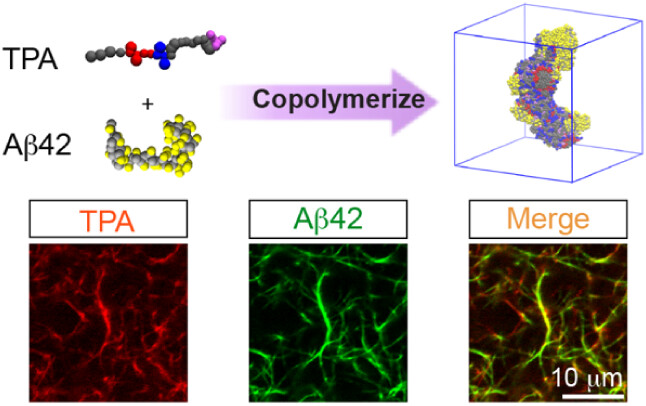
Nanostructures Trap Amyloid Beta, Rescuing Neurons: Scientists have created engineered nanostructures that bind monomers and oligomers of harmful amyloid beta protein, preventing them from entering neurons and drastically increasing the cells’ survival in vitro.

Mouse in handDietary Methionine Restriction Improves Healthspan in Mice: In a recent study, researchers investigated how restricting dietary methionine and inhibiting the tyrosine degradation pathway affects healthspan in aged mice. While affecting tyrosine didn’t show any benefits, methionine restriction improved many, but not all, measures of healthspan, including frailty, pathological disease burden, and neuromuscular function.

Common Laboratory Mice Age Faster in a Natural Environment: In Aging Cell, researchers have found that exposing ordinary Black 6 mice to a more natural environment accelerates rather than slows the aging of their livers.

SunlightVitamin D Rescues Telomere Attrition in Leukocytes: A sub-study, which was part of the large-scale VITAL trial, determined that vitamin D supplementation slows telomere attrition in leukocytes almost to a halt. This could have real-life clinical implications.

Caloric Restriction Slows Ovarian Aging in Monkeys: In Aging, researchers have published their discovery that three years of caloric restriction in rhesus macaques that are beginning to enter menopause slows their ovarian aging.

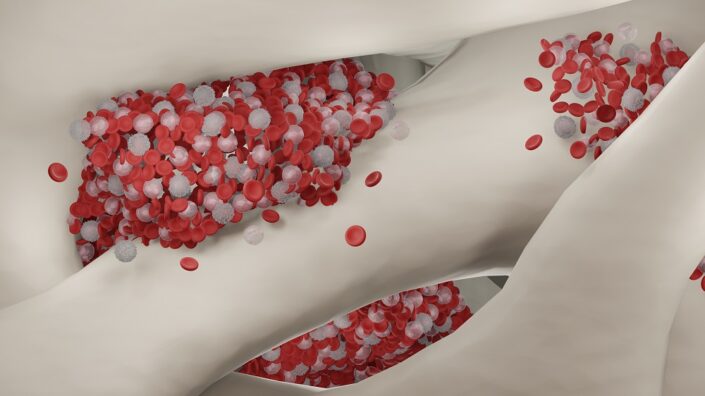
Bone marrow productionDNA Methylation Patterns Trace Blood Aging Dynamics: Scientists have created a new, highly effective method of tracing blood cells’ lineage. This can improve our understanding of clonal hematopoiesis and its impact on an aging organism.

Why Some Mammals Live Much Longer Than Others: A recent study investigated differences in maximum lifespan potential among different mammalian species. The researchers found associations between gene family size expansion, maximum lifespan potential, and relative brain size. They also studied genomic features linked to lifespan evolution.

Blood plasma tubesHow Plasma Exchange Affects Aging in Older People: A placebo-controlled clinical trial, with results published in Aging Cell, has determined that therapeutic plasma exchange has beneficial effects when combined with immunoglobulin, according to multiple epigenetic clocks and -omics biomarkers.

A Drug Combo Increases Lifespan in Mice by Over 30%: Combining rapamycin with the anti-cancer drug trametinib produced a synergistic effect and robust life extension in a new study. Rapamycin, which was first widely used as an immunosuppressant for transplant patients and is also used in oncology, is considered one of the most powerful geroprotectors.

Association between dietary diversity and healthy aging: a systematic review: Enhancing healthy dietary behaviors for older people is suggested to increase their awareness and, consequently, dietary diversity.

Spicy food consumption and biological aging across multiple organ systems: These findings highlight that spicy foods may slow comprehensive and organ-specific biological aging, especially metabolic and kidney biological aging.

Lifetime walking and Alzheimer’s pathology: A longitudinal study in older adults: Long-duration, high-intensity walking may reduce brain Aβ accumulation, potentially lowering AD risk, particularly when initiated before late life.

Effects of cannabidiol (CBD) treatment on age-related cognitive decline in C57 mice: The findings of this study indicate that CBD reduces inflammatory response in the brain and improves cognitive decline associated with aging.

Intermittent Supplementation With Fisetin Improves Physical Function and Decreases Cellular Senescence in Skeletal Muscle With Aging: Taken together, these findings provide proof-of-concept support for fisetin as a senolytic strategy to improve physical function with aging.

Quercetin Reduces Vascular Senescence and Inflammation in Symptomatic Male but Not Female Coronary Artery Disease Patients: Short-term quercetin treatment effectively targeted vascular senescence in male CAD patients, improving inflammatory and functional outcomes. However, these benefits were not observed in female patients.

Supplementation with Bioactive Compounds Improves Health and Rejuvenates Biological Age in Postmenopausal Women: The results suggest that these bioactive compounds may be a beneficial strategy for promoting healthier aging in postmenopausal women by enhancing immune function, reducing biological age, improving redox balance, and regulating stress hormones.

Co-administration of vitamin D and N-acetylcysteine to modulate immunosenescence in older adults with vitamin D deficiency: A high dose of vitamin D significantly attenuates senescence in some cells of older adults. However, co-administration of N-acetylcysteine with both the standard and high doses of Vitamin D further enhances these beneficial effects.

Systematic transcriptomics analysis of calorie restriction and rapamycin unveils their synergistic interaction in prolonging cellular lifespan: The transcriptional synergistic interaction of CR + RM is validated in extending the lifespan of both yeast and human cells.

Analysis of lifespan across diversity outbred mouse studies identifies multiple longevity-associated loci: Collectively, these loci explained over half of the estimated heritable variation in lifespan across these studies and provided insight into the genetic architecture of lifespan in DO mice.

ElixirSeeker: A Machine Learning Framework Utilizing Fusion Molecular Fingerprints for the Discovery of Lifespan-Extending Compounds: This study demonstrates that ElixirSeeker effectively accelerates the identification of viable anti-aging compounds, potentially reducing costs and increasing the success rate of drug development in this field.

Baricitinib and Lonafarnib Synergistically Target Progerin and Inflammation, Improving Lifespan and Health in Progeria Mice: This preclinical study demonstrates the synergistic potential of this combination therapy in addressing progeria-related systemic and tissue-specific pathologies, offering a promising strategy for enhancing both lifespan and health.

Unveiling the Anti-Aging Potential of 3HB: Lifespan Extension and Cellular Senescence Delay: These findings highlight the promising therapeutic potential of 3HB as an anti-aging intervention and provide novel insights into its underlying mechanisms.

Low-frequency ultrasound reverses insulin resistance and diabetes-induced changes in the muscle transcriptome in aged mice: LFU demonstrates potential as a noninvasive therapy for reducing inflammation and altering immune cell function in skeletal muscle in insulin-resistant and diabetic populations.

News Nuggets

2060 PR2060 Longevity Forum: Future Health Meets Smartest Capital: The south of France will host the first edition of the 2060 Longevity Forum, a groundbreaking event designed to position longevity as the greatest investment opportunity of our time.

Longevity Investment More Than Doubled to $8.5bn in 2024: Industry analysts at Longevity.Technology today published the 2024 Annual Longevity Investment Report, a full-year report on the state of investment in the longevity sector, with total financing reaching USD $8.49 billion across 331 deals.

LSF Grant Aging BrainGrant Award Announcement: Rejuvenating the Aging Brain Study: The Longevity Science Foundation (LSF), a nonprofit organization dedicated to funding research aimed at extending the healthy human lifespan, is proud to announce a grant award to the University of Copenhagen’s Center for Healthy Aging within the Department of Cellular and Molecular Medicine, for the study “Rejuvenating the Aging Brain.”

Circulate Health Publishes Results of Multiomics Study: Circulate Health, the company dedicated to harnessing the potential of therapeutic plasma exchange (TPE) to advance human healthspan and lifespan, today announces the publication of a single-blind, human clinical trial in Aging Cell.

Foundations and Strategic Vision of the Canadian Translational Geroscience Network: With a clear roadmap for future growth, the CTGN aims to position Canada at the forefront of geroscience, fostering evidence-based innovation that improves the health and quality of life for aging populations.

We would like to ask you a small favor. We are a non-profit foundation, and unlike some other organizations, we have no shareholders and no products to sell you. All our news and educational content is free for everyone to read, but it does mean that we rely on the help of people like you. Every contribution, no matter if it’s big or small, supports independent journalism and sustains our future.

Curious lab mouse

A Drug Combo Increases Lifespan in Mice by Over 30%

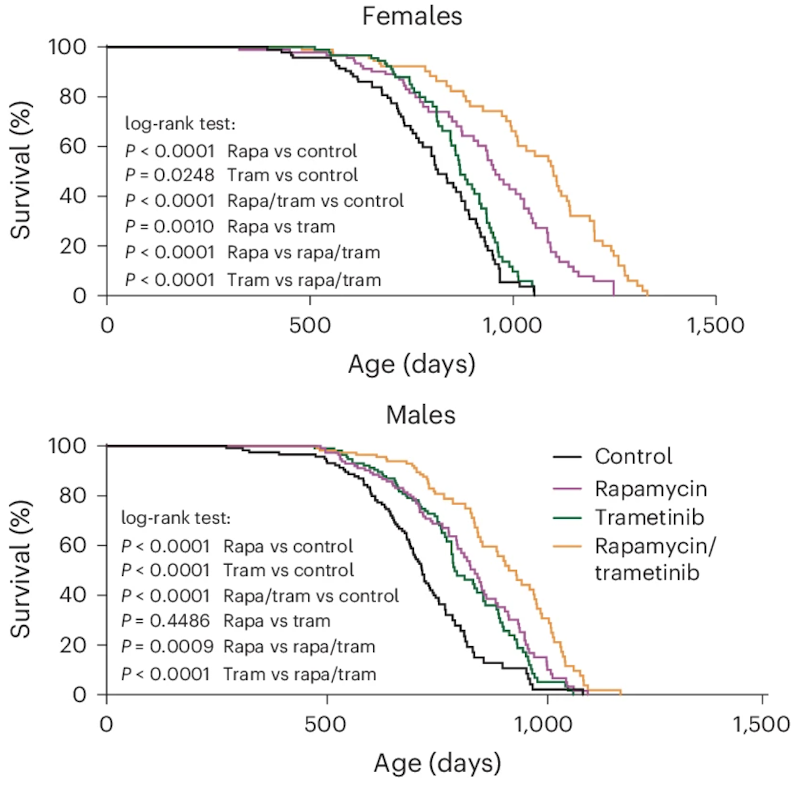
Combining rapamycin with the anti-cancer drug trametinib produced a synergistic effect and robust life extension in a new study [1].

A multi-node approach

Rapamycin, which was first widely used as an immunosuppressant for transplant patients and is also used in oncology, is considered one of the most powerful geroprotectors. In the “gold standard” Interventions Testing Program (ITP) trial, rapamycin increased median lifespan in mice by 23% for males and 26% for females [2].

Rapamycin works by inhibiting mTOR, a key regulator of nutrient sensing. Very broadly, rapamycin treatment reroutes the body’s resources from growth to maintenance, including by increasing autophagy, the process of intracellular junk disposal.

mTOR is part of a bigger nutrient sensing network, and a growing number of studies indicate that affecting other nodes in this network might create a synergistic effect with rapamycin. Previous successes include a combination of rapamycin and the anti-diabetes drug acarbose, which increased median lifespan by 28% for females and by 34% for males [2].

We reported on this study last year, when it was published as a preprint. Now, peer-reviewed and published in Nature Aging, it is worth revisiting. This study reports on a combination of rapamycin and trametinib, another oncology drug that inhibits the nutrient-sensing Ras/MEK/ERK pathway, which is upregulated in many cancers. Co-authored by the renowned geroscientist Linda Partridge of the UCL Institute of Healthy Aging and the Max Planck Institute for Biology of Aging, this study had a large sample size and included extensive phenotypic and histological testing.

The researchers had 100-120 mice of each sex in each one of the four arms (control, rapamycin only, trametinib only, and combination) for a total of 800+ animals. The treatment started at the age of 6 months. While trametinib treatment was continuous, the mice only received rapamycin every other week, as previous research indicates it’s safer and just as effective as continuous administration.

The combo reigns supreme

Trametinib treatment alone caused a mild but statistically significant increase in median lifespan of 7% for females and 10% for males. This is the first study to establish this drug as a lifespan extender in mice, although previous research showed effectiveness in other animal models such as Drosophila flies. Interestingly, the drug caused a massive 16% increase in maximal lifespan in male mice but not in females.

Rapamycin performed as expected, while the combination produced the biggest effect, increasing median lifespan by 35% in females and 27% in males along with maximal lifespan by 32% in females and 26% in males. Maximal lifespan was measured as the point in time when only 10% of the mice remain alive.

“While we do not expect a similar extension to human lifespans as we found in mice,” said Linda Partridge, “we hope that the drugs we’re investigating could help people to stay healthy and disease-free for longer late in life. Further research in humans in years to come will help us to elucidate how these drugs may be useful to people, and who might be able to benefit.”

Rapamycin trametinib mouse lifespan  

Improved healthspan and cancer burden

The combination treatment also improved various functional outcomes. Rapamycin alone, and even more so the combo, kept the heart’s electrical timing youthful by averting the usual QT-interval stretch in males, while trametinib helped slow the age-related drop in resting heart rate. All treatments nudged older male mice to burn a little more fat at night with an improved respiratory exchange ratio. The combination treatment had a considerable effect on inflammation by lowering the levels of pro-inflammatory cytokines and the number of activated microglia, pro-inflammatory immune cells, in the brain.

Cancer is a major cause of death in lab mice. Since both drugs are used in oncology, the researchers wanted to know whether the pro-longevity effect was mostly due to cancer reduction. Only the combination treatment significantly lowered liver and splenic tumor prevalence (35% to 45% compared to at least 60% in controls), suggesting that reduced cancer burden accounted for part of the added lifespan. Yet, most combo-treated mice still died of cancer and their survival advantage remained when cancer deaths were excluded from the analysis. This means that other benefits must also be at play.

Rapamycin has known side effects, which include increased blood glucose (hyperglycemia), increased liver fat (lipidosis), and gonadal pathology. The good news is that adding trametinib did not exacerbate those symptoms, but the bad news is that it did not fix them. Rapamycin also caused a significant shift toward fat mass at the expense of lean mass in females.

“Trametinib, especially in combination with rapamycin, is a good candidate to be tested in clinical trials as a geroprotector,” suggested Sebastian Grönke, another senior author. “We hope that our results will be taken up by others and tested in humans. Our focus is on optimizing the use of trametinib in animal models.”

We would like to ask you a small favor. We are a non-profit foundation, and unlike some other organizations, we have no shareholders and no products to sell you. All our news and educational content is free for everyone to read, but it does mean that we rely on the help of people like you. Every contribution, no matter if it’s big or small, supports independent journalism and sustains our future.

Literature

[1] Gkioni, L., Nespital, T., Baghdadi, M., Monzó, C., Bali, J., Nassr, T., Cremer, A. L., Beyer, A., Deelen, J., Backes, H., Grönke, S., & Partridge, L. (2025). The geroprotectors trametinib and rapamycin combine additively to extend mouse healthspan and lifespan. Nature aging, 10.1038/s43587-025-00876-4. Advance online publication.

[2] Strong, R., Miller, R. A., Cheng, C. J., Nelson, J. F., Gelfond, J., Allani, S. K., … & Harrison, D. E. (2022). Lifespan benefits for the combination of rapamycin plus acarbose and for captopril in genetically heterogeneous mice. Aging Cell, 21(12), e13724.

Blood plasma tubes

How Plasma Exchange Affects Aging in a Human Trial

A placebo-controlled clinical trial, with results published in Aging Cell, has determined that plasma replacement has beneficial effects when combined with immunoglobulin, according to multiple epigenetic clocks and -omics biomarkers.

Looking for a signal

Therapeutic plasma exchange (TPE), the practice of extracting and replacing a person’s blood plasma with a saline solution containing albumin [1], has been studied for over a hundred years. Alongside plenty of mouse studies that have yielded positive results, it has been found to be effective against certain medical conditions in humans, including the long-term ramifications of COVID-19 [2].

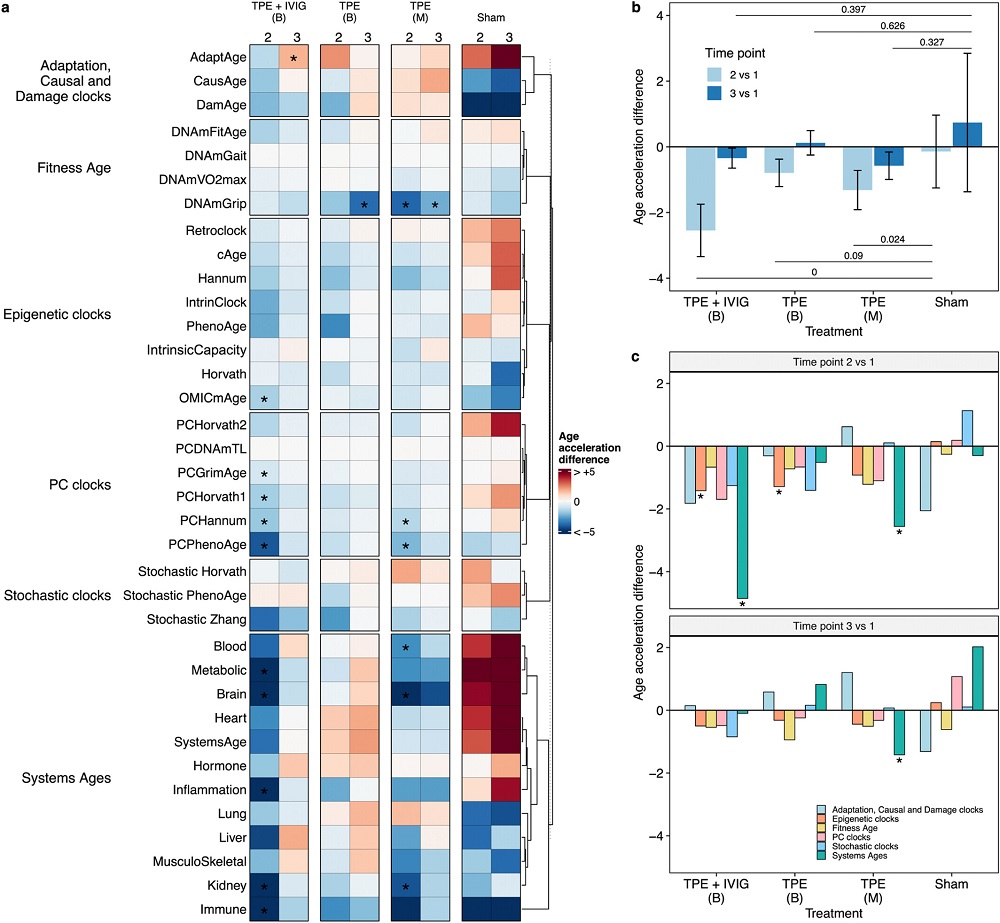
These researchers used a wide variety of clocks, 36 in total, in order to determine what effects TPE has on older people. These included most of the major and well-known clocks, including GrimAge along with the Hannum and Horvath clocks, in addition to more recent inventions such as DamAge and clocks that evaluate particular bodily systems.

Four groups and surprising results

The participants were divided into four groups: one receiving plasma once a week for six months, another receiving TPE twice a week for three months, one receiving TPE along with immunoglobulin (IVIG) twice a week for three months, and a placebo group receiving shams of either treatment. The average age of each group was in the 60s. A total of 44 people completed this study.

As expected, there were significant differences at baseline in biological clocks, and not all of them agreed with one another. For example, the sham group, before the experiment had begun, reported decelerated aging on the Horvath clock and very decelerated aging on a metabolic clock. However, they were relatively more age accelerated when measured by the mortality clock GrimAge.

This work used different time points for different groups. Time point 1 represented baseline for all groups, but for the biweekly groups, time point 2 was at one month and time point 3 was at two months. For the once-weekly group, time point 2 was at three months and time point 3 was at five months.

Due to the relatively low number of participants and the large number of clocks, the significance of the differences between baseline and the other time points within any group, within any individual clock, did not survive the statistical correction process. However, there were significant differences between groups even after this correction process.

TPE Results

Combining TPE with IVIG appeared to yield far stronger effects at time point 2 than time point 3, particularly in the clocks that evaluate particular organs and systems. Age acceleration, according to most of the clocks in this category, became much worse in the sham group.

Is immunoglobulin more effective than plasma?

The researchers also combined their clocks into a single metric of age acceleration, which yielded statistically significant results at time point 2. The TPE + IVIG group experienced a reduced average biological age of 2.61 years, while this number was 1.32 for the monthly TPE group. Unfortunately, this benefit did not carry over until time point 3; the researchers suggest that this is due to “potential compensatory mechanisms that mitigate the anti-aging effects after multiple sessions.”

A broader multi-omics examination revealed that the TPE+IVIG group received significant benefits, particularly in the immune system. This group’s proportions of T cells, along with natural killer (NK) cells and monocytes, became more like those of younger people. Proteomics revealed similar correlations, with more proteomic changes in the TPE+IVIG group aligning with biological rejuvenation than in the other groups. These proteomic changes were also found to be related to other hallmarks of aging, such as loss of proteostasis, senescence, and inflammaging.

Interestingly, there appeared to be a correlation between response to this treatment and overall health, as measured by monocytes and platelets. People in poorer health were stronger responders; people in good health did not receive such a strong benefit.

This study had a few limitations. First, the clock differences between groups at baseline somewhat muddied the results, a problem exacerbated by the relatively low number of participants. Second, there was no IVIG-only group, which would have provided more evidence for or against the synergy of combining TPE and IVIG. As it stands, these results suggest that IVIG is possibly more potent than TPE in reducing biological age according to multiple established metrics.

We would like to ask you a small favor. We are a non-profit foundation, and unlike some other organizations, we have no shareholders and no products to sell you. All our news and educational content is free for everyone to read, but it does mean that we rely on the help of people like you. Every contribution, no matter if it’s big or small, supports independent journalism and sustains our future.

Literature

[1] Sviercovich, A., Mei, X., Xie, G., Conboy, M. J., & Conboy, I. M. (2024). The dominance of old blood, and age-related increase in protein production and noise. Ageing Research Reviews, 102641.

[2] Kiprov, D. D. (2023). A Paradigm Shift in the Utilization of Therapeutic Plasmapheresis in Clinical Practice. Ann Clin Med Case Rep, 12(5), 1-7.

Circulate

Circulate Health Publishes Results of Multiomics Study

Circulate Health, the company dedicated to harnessing the potential of therapeutic plasma exchange (TPE) to advance human healthspan and lifespan, today announces the publication of a single blind, human clinical trial in Aging Cell. This groundbreaking study, led by researchers from Circulate and the Buck Institute for Research on Aging provides promising early data on the impact of TPE on biological age, supporting its potential for new disease and longevity applications.

Therapeutic plasma exchange is a procedure that separates, removes, and replaces patient plasma to treat certain diseases. Multi-omics Analysis Reveals Biomarkers that Contribute to Biological Age Rejuvenation in Response to Therapeutic Plasma Exchange, investigated how TPE impacts biomarkers associated with biological age, including changes across the epigenome, proteome, metabolome, glycome, and immune system, alongside physical measures like balance and strength. Research participants were assigned one of four different treatment groups: 1) biweekly TPE, 2) biweekly TPE with intravenous immunoglobulin (IVIG) 3) monthly TPE or 4) a control group.

The study found:

  • All patients receiving TPE showed a reduction in biological age, as measured by multi-omics biomarkers, with the most significant reductions in those patients that received TPE with IVIG. Participants undergoing biweekly TPE-IVIG treatment exhibited an average biological age reduction of 2.61 years, compared to 1.32 years for those receiving TPE alone.
  • Patients receiving TPE with IVIG experienced changes in immune cells associated with reversed age-related immune decline. This intervention modulated cellular senescence-associated proteins and restored age-associated shifts in immune cell composition. This indicates that TPE with IVIG may improve the body’s ability to fight infections and other age-related diseases, particularly those related to inflammation.
  • Individuals with biomarkers associated with poorer baseline health status, including higher baseline levels of circulating bilirubin, glucose, and liver enzymes, saw the greatest reduction in biological age and improvement in biomarkers. The treatment also showed a benefit for healthy individuals, including in balance and strength.
  • While the observed treatment effects were strongest after the initial three sessions, subsequent treatments showed diminishing returns, suggesting that spacing out treatments or combining them with other interventions may enhance long-term benefits.

“This is the first interventional multi-omics study to examine the effectiveness of therapeutic plasma exchange modalities,” said Brad Younggren, MD, CEO and Co-founder of Circulate. “Our findings show that plasma exchange and intravenous immunoglobulin are a powerful tool for biological age rejuvenation and provide compelling evidence that targeted plasma interventions can impact age-related molecular changes.”

“In this study, we examined thousands of molecular signatures to pinpoint key drivers of rejuvenation. Our characterization builds a better understanding of which baseline biomarkers are predictive of treatment response and lays a foundation upon which we can build personalized intervention plans for patients in the future,” said Eric Verdin, MD, President and CEO of the Buck Institute and Co-founder of Circulate. “We are excited to expand our research to larger populations, increase access to these treatments for eligible patients, and continue to identify areas of unmet need where these therapies can make a meaningful difference.”

Clinicians can learn more about Circulate at www.circulate.health.

About Circulate Health

Backed by Khosla Ventures, Circulate Health is pioneering technologies to reverse aging and improve health outcomes.

Media Contact

Kristen Mondshein

press@circulate.health

Bowhead whales

Why Some Mammals Live Much Longer Than Others

A recent study investigated differences in maximum lifespan potential among different mammalian species. The researchers found associations between gene family size expansion, maximum lifespan potential, and relative brain size. They also studied genomic features linked to lifespan evolution [1].

Maximum lifespan potential

Maximum lifespan potential can be defined as “the age at death (longevity) of the longest-lived individual ever recorded in a species,” both in the wild and in captivity, where such risks of death from predation or limited resources are not present.

Intrinsic biological factors determine maximum lifespan potential, and it varies widely among mammals, from less than a year for some of the shrew species to even two hundred in bowhead whales. These species’ genetic differences have been studied in order to examine the underlying biological processes that lead to such differences in lifespan. Previous work has identified changes in genes related to DNA repair, cell-cycle regulation, cancer, and aging in bowhead whales [2] along with expansion in gene families associated with DNA repair and tumour suppression in elephants [3]. This study of genetic differences and related molecular processes may be useful for the development of longevity interventions.

Some studies have explored how maximum lifespan potential is impacted by gene expression differences, gene family size, and similar genomic measures [4, 5]. These studies have pointed to the evolution of gene family size as an essential player in maximum lifespan potential.

Gene families are created when a single gene is duplicated. In such an event, the extra copy has more freedom to evolve, as the original copy produces the protein needed for the organism. The second copy can become a pseudogene, one that has accumulated so many mutations that it ceases to work correctly. Alternatively, it can mutate into a protein similar to the original but with a slightly different function, giving an organism a potential evolutionary advantage. This process can be repeated multiple times, creating a gene family of similar, but somewhat different, genes. Studies of bowhead whales and naked mole rats suggest that some of these duplications are linked to the increased longevity of those animals [2, 6].

In this study, the researchers built on those observations and compared the impact of gene family size on maximum lifespan potential in multiple mammalian species.

Brain size matters

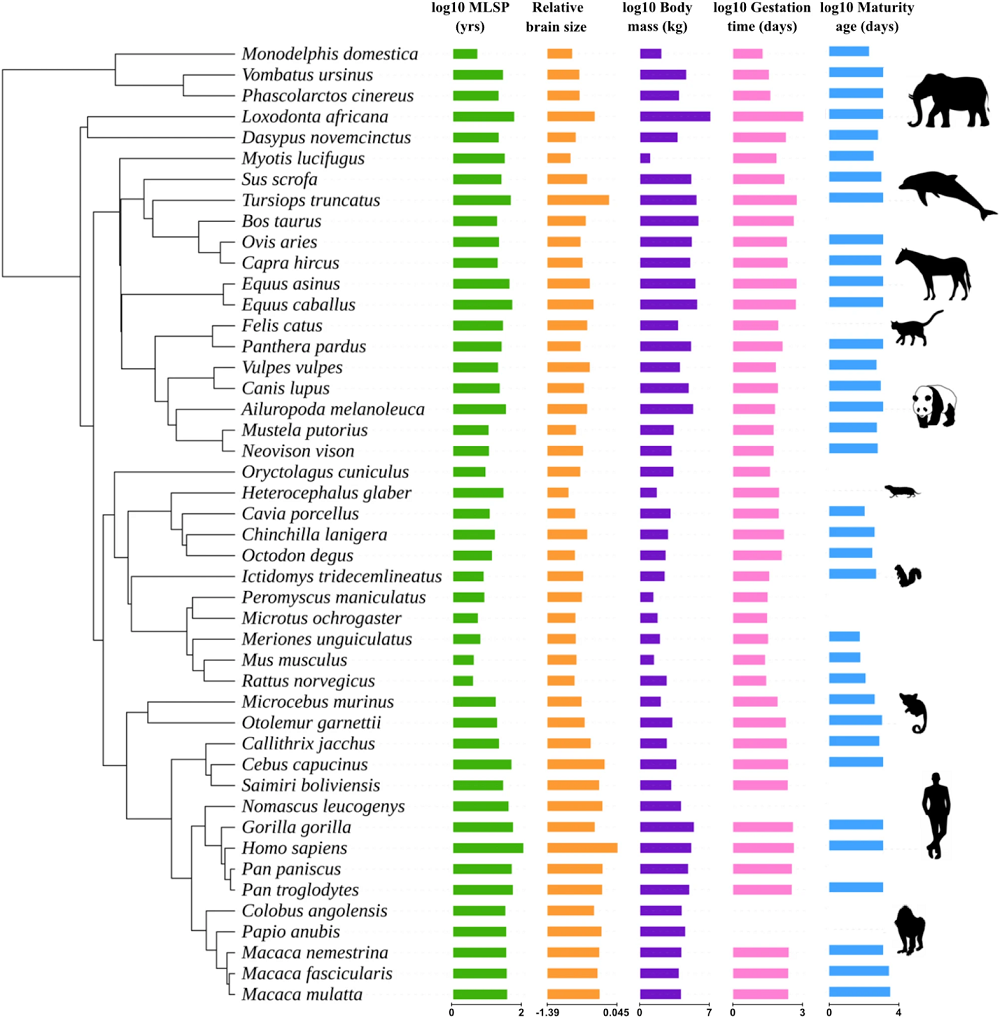
The researchers conducted the bioinformatics analysis of 4,136 gene families in 46 fully sequenced mammalian species. They found an association between maximum lifespan potential and the expansion of 236 gene families.

Species metrics

Next, they tested potential confounders, which can affect the results. They tested relative brain size, body mass, gestation time, and age at sexual maturity. Only relative brain size was found to influence the association of gene family expansion with maximum lifespan potential. These results are in line with previous research suggesting that the evolution of larger brains is related to maximum lifespan potential. The researchers also observed that gene groups related to maximum lifespan potential and gene groups related to brain size were also more likely to contain genes related to immune functions.

The researchers discuss that the immune system can positively impact a longer lifespan in multiple ways, such as through removing senescent cells, infectious agents, and potentially cancerous cells.

However, these results do not have a straightforward interpretation, as the researchers’ sensitivity analysis indicated that most species included in the study have a negligible effect on the results. Larger effects were observed for a few species, suggesting that while one species does not drive the results, they can be impacted by animal groups (taxa) that have extreme values.

More gene diversity

The researchers hypothesized that the expansion of gene families associated with the evolution of maximum lifespan potential might be related to the amount of gene product available in the cell (gene dosage) or the diversity of gene transcripts.

Transcript diversity is related to a process called alternative splicing. Mammalian genes are built from coding DNA sequences (exons) interspaced by non-coding DNA sequences (introns). When DNA is transcribed into RNA during protein production, introns are removed and exons are connected. However, exons are not always spliced in the same order, and, sometimes, some exons are skipped, creating alternative protein versions that originate from the same gene.

Comparing human maximum lifespan potential-associated genes with other background genes revealed higher gene expression levels and a higher number of unique transcripts among maximum lifespan potential-associated genes.

However, the authors warn that these results must also be interpreted with caution as they are only based on human data, and such observations might not be accurate for other species; future studies need to dive deeper into the evolutionary significance of this observation.

Functional, but not a single gene overlap

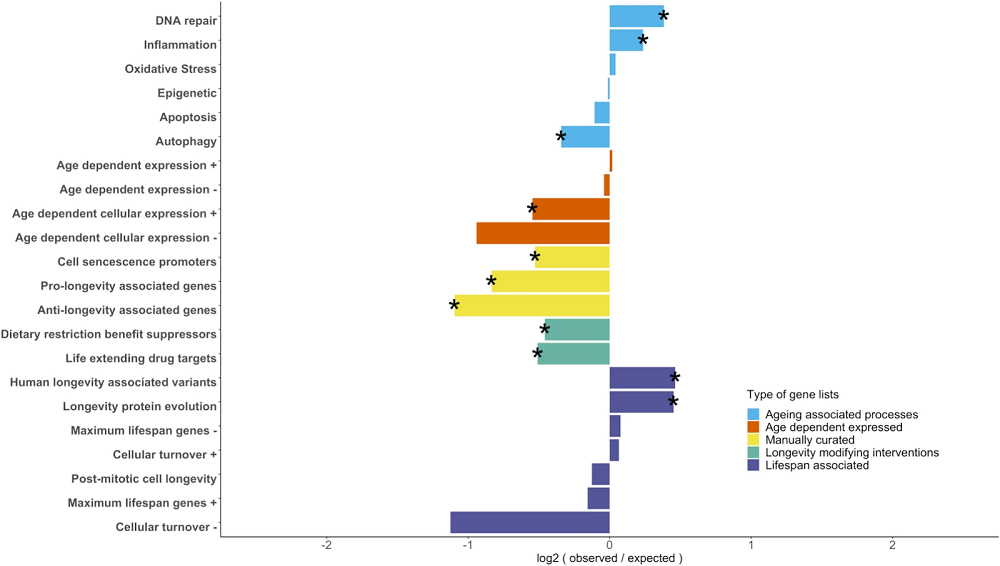
The researchers gathered data from previous studies that identified different aging-associated genes. They divided them into groups of genes related to aging-associated processes, genes whose expression is age-dependent, manually curated genes associated with ageing or longevity, targets of longevity-modifying interventions, and lifespan-associated genes.

Comparing age-related process genes with maximum lifespan potential-associated genes showed that the latter group is significantly enriched in genes related to DNA repair and inflammation; however, autophagy-associated genes were underrepresented.

Among the genes with age-dependent expression, researchers observed either underrepresentation among maximum lifespan potential-associated genes or didn’t find under- or over-representation, depending on the database and whether their activity increased or decreased with age.

The manually curated genes for cellular senescence and longevity, as well as genes that respond to longevity-modifying interventions such as caloric restriction and life-extending drugs, were significantly underrepresented among maximum lifespan potential-associated genes.

Only genes that have human centenarian-associated genetic variants and genes with faster protein evolution in species with higher maximum lifespan potential were over-represented among maximum lifespan potential-associated genes.

Gene relationships

In general, there was a limited overlap between single gene lists from this and previous studies. However, there is an overlap regarding the functions and processes in which those genes are involved. The researchers identified this overlap in immune system functions, DNA damage and repair, apoptosis, autophagy, senescence, and life-extending drug targets, They conclude that “while different studies may identify distinct gene sets, they often highlight the same biological pathways, reinforcing the importance of these processes in longevity.”

While this study does not allow for establishing causality but only associations, its results help in understanding the evolutionary basis of a longer lifespan and identify the genetic and molecular processes that increase maximum lifespan potential.

We would like to ask you a small favor. We are a non-profit foundation, and unlike some other organizations, we have no shareholders and no products to sell you. All our news and educational content is free for everyone to read, but it does mean that we rely on the help of people like you. Every contribution, no matter if it’s big or small, supports independent journalism and sustains our future.

Literature

[1] Kilili, H., Padilla-Morales, B., Castillo-Morales, A., Monzón-Sandoval, J., Díaz-Barba, K., Cornejo-Paramo, P., Vincze, O., Giraudeau, M., Bush, S. J., Li, Z., Chen, L., Mourkas, E., Ancona, S., Gonzalez-Voyer, A., Cortez, D., Gutierrez, H., Székely, T., Acuña-Alonzo, A. P., & Urrutia, A. O. (2025). Maximum lifespan and brain size in mammals are associated with gene family size expansion related to immune system functions. Scientific reports, 15(1), 15087.

[2] Keane, M., Semeiks, J., Webb, A. E., Li, Y. I., Quesada, V., Craig, T., Madsen, L. B., van Dam, S., Brawand, D., Marques, P. I., Michalak, P., Kang, L., Bhak, J., Yim, H. S., Grishin, N. V., Nielsen, N. H., Heide-Jørgensen, M. P., Oziolor, E. M., Matson, C. W., Church, G. M., … de Magalhães, J. P. (2015). Insights into the evolution of longevity from the bowhead whale genome. Cell reports, 10(1), 112–122.

[3] Chusyd, D. E., Ackermans, N. L., Austad, S. N., Hof, P. R., Mielke, M. M., Sherwood, C. C., & Allison, D. B. (2021). Aging: What We Can Learn From Elephants. Frontiers in aging, 2, 726714.

[4] de Magalhães, J. P., Curado, J., & Church, G. M. (2009). Meta-analysis of age-related gene expression profiles identifies common signatures of aging. Bioinformatics (Oxford, England), 25(7), 875–881.

[5] Fushan, A. A., Turanov, A. A., Lee, S. G., Kim, E. B., Lobanov, A. V., Yim, S. H., Buffenstein, R., Lee, S. R., Chang, K. T., Rhee, H., Kim, J. S., Yang, K. S., & Gladyshev, V. N. (2015). Gene expression defines natural changes in mammalian lifespan. Aging cell, 14(3), 352–365.

[6] Kim, E. B., Fang, X., Fushan, A. A., Huang, Z., Lobanov, A. V., Han, L., Marino, S. M., Sun, X., Turanov, A. A., Yang, P., Yim, S. H., Zhao, X., Kasaikina, M. V., Stoletzki, N., Peng, C., Polak, P., Xiong, Z., Kiezun, A., Zhu, Y., Chen, Y., … Gladyshev, V. N. (2011). Genome sequencing reveals insights into physiology and longevity of the naked mole rat. Nature, 479(7372), 223–227.

Bone marrow production

DNA Methylation Patterns Trace Blood Aging Dynamics

Scientists have created a new, highly effective method of tracing blood cells’ lineage. This can improve our understanding of clonal hematopoiesis and its impact on an aging organism [1].

Hostile takeover

In the human body, a relatively small pool of hematopoietic stem cells (HSCs) sustains a system that produces 100-200 billion mature blood cells each day. Tracing descendant cells back to their ancestral stem cells is key to understanding aging and some diseases. With age, some stem cells acquire traits, through mutations or other mechanisms, that give them a reproductive edge. Their progeny multiply faster and gradually take over the blood system.

Many of these dominant clones skew toward producing pro-inflammatory cells, which are often less immunocompetent. This process, called clonal hematopoiesis, may be an important contributor to chronic age-related inflammation (inflammaging) [2]. It has been linked to cancer, cardiovascular diseases, and increased mortality [3].

“Our blood stem cells compete for survival,” explained Dr. Lars Velten, Group Leader at the Center for Genomic Regulation (CRG) in Barcelona and co-corresponding author of this new study published in Nature. “In youth, this competition produces a rich, diverse ecosystem, while in old age, some drop out entirely. A few stem cells take over, and these work extra hard to compensate. This reduces diversity, which is bad for the blood system’s resilience. Diverse stem cells can respond to different stresses, so the dominance of a handful of clones makes the whole system more fragile.”

The new method

Current lineage-tracing methods, such as introducing artificial mutations that are inherited by cellular descendants, are time-consuming and have key limitations. They cannot be used in humans because they require genetic engineering, and they often fail to provide information about the cell’s functional state, such as when it has terminally differentiated. In model organisms, most clonal hematopoiesis experiments are done using transplantation, in which the animal’s blood system is wiped out by irradiation and artificially rebuilt so that researchers can observe clonal dynamics “from scratch.”

This creates the need for methods that rely on endogenous markers, such as naturally occurring mutations or epigenetic changes, and can perform high-throughput, single-cell analysis across large cell populations. The authors of this study propose using epigenetic changes, specifically somatic methylation patterns, as such a marker.

DNA methylation is the addition of a methyl group to a nucleotide in a DNA molecule. Multitudes of those markers create a unique epigenetic landscape that is inherited by the cell’s progeny. Crucially, the researchers showed that different methylation sites carry different types of information: some reflect a cell’s differentiation state, since methylation controls gene expression at various stages, while more static sites preserve inherited patterns that act as molecular tracers of clonal identity.

“Our cells carry genetic alterations which collectively make us unique individuals,” said Dr. Alejo Rodriguez-Fraticelli, co-corresponding author of the study and Group Leader at IRB Barcelona. “But we’re also a mosaic of epigenetic alterations. Groups of cells, even if they end up doing different jobs, carry shared methylation marks which tie them back to a common ancestor stem cell. We’ve been finally able to construct the epigenetic family tree by reading information written directly into the DNA of each cell.”

For this purpose, the researchers developed EPI-Clone, a high-throughput single-cell methylation analysis method. Their first test utilized HSCs that were labeled with traditional genetic barcodes and transplanted into irradiated mice. After five months, they profiled these cells with EPI-Clone. This method successfully reconstructed the known clonal structures, confirming that methylation patterns alone could trace lineages.

“DNA methylation works like a kind of binary code. At each position in the genome, a site is either methylated or not, like a 1 or a 0,” explained Dr. Michael Scherer, bioinformatician and co-first author of the study. “This simple on-off information can be transformed into a natural barcode. Five years ago, I wouldn’t have thought this possible at single-cell resolution, across tens of thousands of cells. It’s been a huge leap forward in technology.”

“After 60, it becomes almost inevitable”

Having validated the tool, the scientists turned to native, unmanipulated mouse hematopoiesis; this is a key step, since transplantation experiments impose artificial stress and regenerative demands that do not reflect normal aging. Analyzing young and old mice, they found that young bone marrow maintained a diverse clonal structure, with many small clones contributing to blood production. In contrast, old mice showed a shift toward oligoclonality, with a few expanded clones dominating the system.

Strikingly, some of the largest aged clones were filled with undifferentiated HSCs that appeared stuck in a self-renewing state, producing few mature progeny. The team transplanted aged bone marrow into new recipients and found that these dominant old clones engrafted poorly while smaller, non-expanded clones drove successful regeneration. This suggests a tradeoff: some clones gain a replicative edge at the price of reduced functional output, consistent with current understanding of clonal hematopoiesis and its harmful effects.

The researchers next applied EPI-Clone to human bone marrow samples from donors of different ages and observed a similar pattern: with age, larger clones begin to take over. “The change from diversity to dominance isn’t random but clock-like,” said Indranil Singh, co-first author of the study and a final-year PhD student at IRB Barcelona. “By age 50, you can already see it starting, and after 60, it becomes almost inevitable.”

While scientists have already identified several mutations that induce clonal hematopoiesis, EPI-Clone was able to detect both these known driver-driven expansions and large driver-negative clones, which are clonal expansions with no known genetic trigger. These novel clones shared features with known ones, such as a bias toward myeloid over lymphoid progeny. The findings suggest that age-driven clonal expansion is not just about known driver mutations in genes like DNMT3A or TET2 but is part of a broader, clock-like process of clonal selection and drift involving both genetic and non-genetic mechanisms.

“If we want to move beyond generic anti-aging treatments and into real precision medicine for aging, this is exactly the kind of tool we need,” says Dr. Velten. “We can’t fix what we can’t see and for the first time, EPI-Clone can facilitate this for humans.”

We would like to ask you a small favor. We are a non-profit foundation, and unlike some other organizations, we have no shareholders and no products to sell you. All our news and educational content is free for everyone to read, but it does mean that we rely on the help of people like you. Every contribution, no matter if it’s big or small, supports independent journalism and sustains our future.

Literature

[1] Scherer, M., Singh, I., Braun, M. M., Szu-Tu, C., Sanchez Sanchez, P., Lindenhofer, D., … & Velten, L. (2025). Clonal tracing with somatic epimutations reveals dynamics of blood ageing. Nature, 1-10.

[2] Winter, S., Götze, K. S., Hecker, J. S., Metzeler, K. H., Guezguez, B., Woods, K., … & Platzbecker, U. (2024). Clonal hematopoiesis and its impact on the aging osteo-hematopoietic niche. Leukemia, 38(5), 936-946.

[3] Zink, F., Stacey, S. N., Norddahl, G. L., Frigge, M. L., Magnusson, O. T., Jonsdottir, I., … & Stefansson, K. (2017). Clonal hematopoiesis, with and without candidate driver mutations, is common in the elderly. Blood, The Journal of the American Society of Hematology, 130(6), 742-752.

Rhesus macaques

Caloric Restriction Slows Ovarian Aging in Monkeys

In Aging, researchers have published their discovery that three years of caloric restriction in rhesus macaques that are beginning to enter menopause slows their ovarian aging.

Closer to people than mice

The ovary is one of the first human organs to be seriously affected by aging, with the follicles becoming depleted long before most causes of age-related mortality become common [1]. However, the associated loss of estrogen has downstream consequences on many other organs [2].

There are crucial caveats to studying ovarian health in mice, as their estrous cycle is different from that of women; mice do not menstruate. Rhesus macaques, on the other hand, are much closer to people; they live much longer, share 93% of our genome, and have a menstrual cycle that, while having a seasonal component [3], is broadly similar to that of women. Previous work has found that caloric restriction improves the healthspan and lifespan of these monkeys [4], but that work did not investigate its effects on ovarian health.

Benefits just before menopause

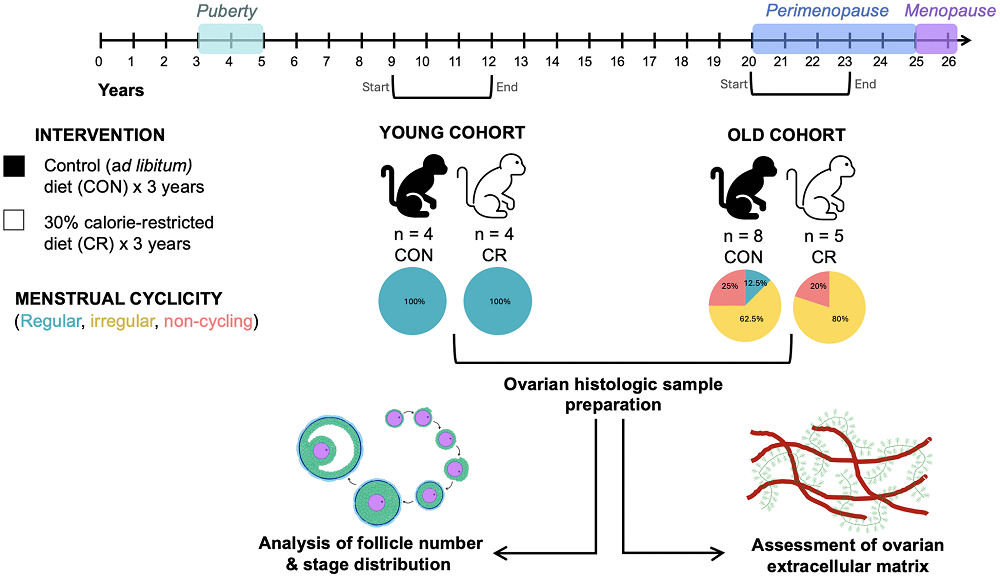
These researchers tested the effects of three years of 30% caloric restriction on female rhesus macaques. The young group began the study at 7-10 years old (a few years after puberty), and the old group began the study at ages 16-23. All of the young animals began this study with regular menstrual cycles, while only one old monkey in the control group and none in the caloric restriction group had regular cycles. This was not a lifespan or healthspan study; the monkeys’ organs were harvested after completion.

Ovarian CR study macaques

The comparisons between young and old animals were entirely as expected: older animals had significantly fewer follicles of every type than their younger counterparts, and menopause visibly shrank the ovaries. Unsurprisingly, there was an extremely strong correlation between follicle count and menstruation status.

In irregularly cycling (perimenopausal) animals, the number of quiescent (primordial) and multilayer follicles was greater in monkeys on caloric restriction than in the control group, with positive trends in many other follicle groups, leading to an increase in overall follicle density and suggesting a general increase in ovarian activity. Additionally, the proportion of follicle classes in the caloric restriction group was more like that of young animals. However, no benefit to follicle density was found in menopausal monkeys.

The ovaries normally become more fibrotic with age, which was found to occur in the control group but not in the caloric restriction group, as measured by tissue staining. Similarly, there is a loss of hyaluronic acid with age, which was only significant in the control group. These results suggest that caloric restriction delays age-related ovarian fibrosis.

A small study that confirms existing knowledge

This was a relatively small study, and the researchers note that their three years of caloric restriction are, in the research world, considered short term, as other studies on lifespan and healthspan have involved lifelong dietary restrictions. They acknowledge that it is difficult to impossible for human beings to stay on such a restrictive diet, and they suggest that such techniques as intermittent fasting may be more practical and that caloric restriction mimetic drugs may be of use, although further study is required in both of these areas.

Furthermore, most of this study’s results were based on computer analysis of histological slides; there was no investigation into the biochemistry behind the effects of caloric restriction on ovarian function. The researchers hypothesize that the effects are similar between people, monkeys, and mice, such as the sirtuin pathway [5].

The researchers hold that the timing of caloric restriction may be crucial. The significant effects were seen in monkeys whose ovaries were beginning to experience age-related decline. Caloric restriction to this degree did not restore the function of fully menopausal monkeys, and it did not seem to have any significant effects on the ovaries of younger monkeys; it is likely that these results are also true for humans. Therefore, for comparable interventions to be appropriate for the maintenance of ovarian health, they would need to be administered at a very specific time in a woman’s life.

We would like to ask you a small favor. We are a non-profit foundation, and unlike some other organizations, we have no shareholders and no products to sell you. All our news and educational content is free for everyone to read, but it does mean that we rely on the help of people like you. Every contribution, no matter if it’s big or small, supports independent journalism and sustains our future.

Literature

[1] Hansen, K. R., Knowlton, N. S., Thyer, A. C., Charleston, J. S., Soules, M. R., & Klein, N. A. (2008). A new model of reproductive aging: the decline in ovarian non-growing follicle number from birth to menopause. Human reproduction, 23(3), 699-708.

[2] Cui, J., Shen, Y., & Li, R. (2013). Estrogen synthesis and signaling pathways during aging: from periphery to brain. Trends in molecular medicine, 19(3), 197-209.

[3] Beltran-Frutos, E., Casarini, L., Santi, D., & Brigante, G. (2022). Seasonal reproduction and gonadal function: A focus on humans starting from animal studies. Biology of Reproduction, 106(1), 47-57.

[4] Mattison, J. A., Colman, R. J., Beasley, T. M., Allison, D. B., Kemnitz, J. W., Roth, G. S., … & Anderson, R. M. (2017). Caloric restriction improves health and survival of rhesus monkeys. Nature communications, 8(1), 14063.

[5] Long, G. Y., Yang, J. Y., Xu, J. J., Ni, Y. H., Zhou, X. L., Ma, J. Y., … & Luo, L. L. (2019). SIRT1 knock-in mice preserve ovarian reserve resembling caloric restriction. Gene, 686, 194-202.

Sunlight

Vitamin D Rescues Telomere Attrition in Leukocytes

A sub-study, which was part of the large-scale VITAL trial, determined that vitamin D supplementation slows telomere attrition in leukocytes almost to a halt. This could have real-life clinical implications [1].

The chromosome guardians

Attrition of telomeres, repetitive sequences that cap chromosomes, is one of the original hallmarks of aging. Our cells’ replication machinery does not copy the last few base pairs at chromosomes’ ends. These telomeres act as “surplus” DNA that does not contain valuable information and can be sacrificed. This also means that with each division, telomeres become shorter, which can eventually trigger cellular senescence. Previous research has found that telomere attrition in leukocytes, such as T cells, can predict chronic disease and mortality [2].

The attrition of attrition

A new study co-led by researchers at Mass General Brigham and the Medical College of Georgia has its roots in the VITAL trial, a large, nationwide, randomized, double-blind, placebo-controlled study that tested daily supplementation with vitamin D₃ (2 000 IU) and/or marine omega-3 fatty acids (1 g fish oil) for primary prevention of cancer and cardiovascular disease. VITAL lasted for five years and enrolled almost 26,000 US females and males aged at least 50 years.

VITAL already yielded some impressive results, showing statistically significant reductions in cancer mortality, the incidence of autoimmune decease, and circulating C-reactive protein levels (a marker of inflammation) in people who took vitamin D.

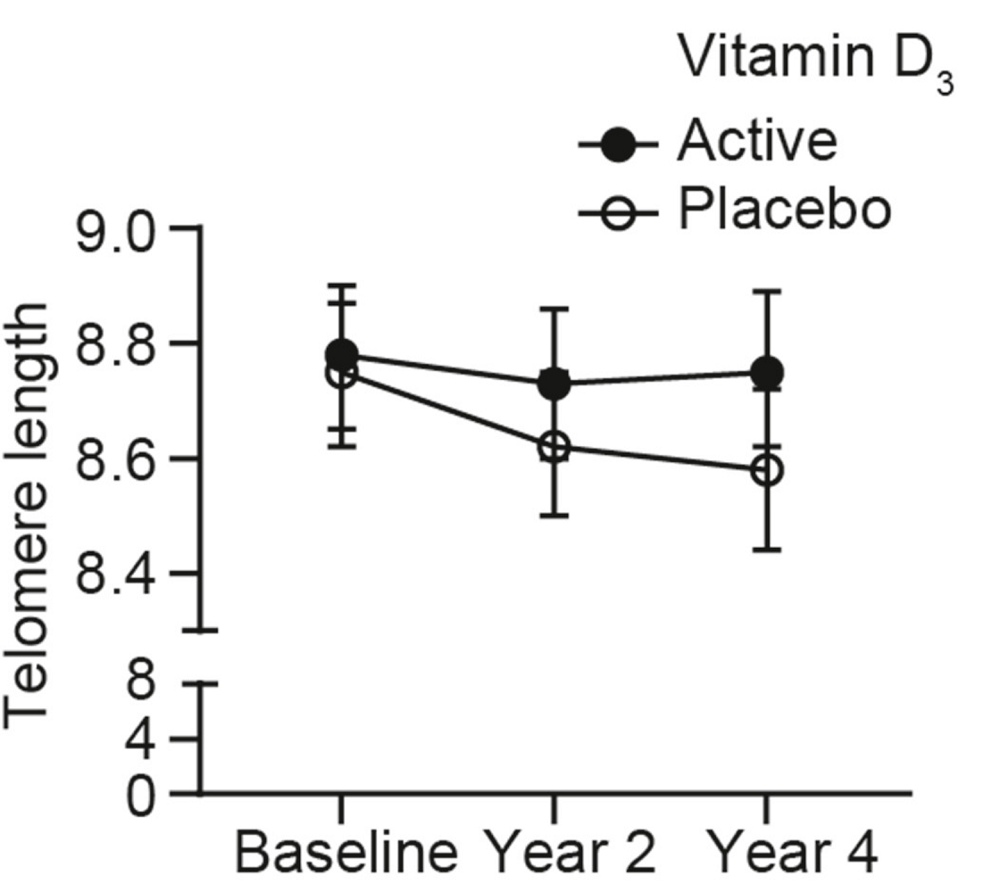
This new sub-study included slightly more than one thousand VITAL participants who had had their leukocyte telomere length measured at least twice during the study. At baseline, the mean leukocyte telomere length (LTL) was 8,700 base pairs, and the mean LTL loss in the placebo group was 160 base pairs over four years.

Vitamin D abrogated LTL loss almost completely, bringing it down to just about 20 base pairs over four years on average. Omega-3 supplementation did not significantly affect any outcome. While impressive, these results were just barely statistically significant because of the overall slow LTL loss and the limitations of current methods of measuring telomere length. No clinical outcomes were measured.

The association remained robust even after accounting for key demographic, behavioral, and cardiometabolic treatment variables. Those included age, sex, race, body-mass index (BMI), smoking status, hypertension medication use, diabetes, and high cholesterol.

“VITAL is the first large-scale and long-term randomized trial to show that vitamin D supplements protect telomeres and preserve telomere length,” said co-author JoAnn Manson, MD, principal investigator of VITAL and chief of the Division of Preventive Medicine at Brigham and Women’s Hospital. “This is of particular interest because VITAL had also shown the benefits of vitamin D in reducing inflammation and lowering risks of selected chronic diseases of aging, such as advanced cancer and autoimmune disease.”

Vitamin D Leukocytes

It’s the shortest telomere that counts

These results require some unpacking. While the average annual LTL loss of 40 base pairs seems minuscule compared to a baseline LTL of 8,700, it might still be clinically significant because of the way cellular senescence works.

It’s the single most-eroded telomere in a cell that triggers the DNA damage response and pushes the cell into senescence. Once that “sentinel” telomere falls below a critical length, the cell stops dividing, regardless of how long all the others are [3]. A small shift in the mean LTL of about 40 base pairs per year might be a sign of a steady increase in the fraction of critically short telomeres across the cell population, increasing the probability that any given cell will cross that threshold.

Faster rates of LTL attrition in adults predict higher risks of adverse events even after adjusting for lifestyle and inflammation markers. Those epidemiological associations indicate that even small differences in attrition rate carry real-world health implications.

“Our findings suggest that targeted vitamin D supplementation may be a promising strategy to counter a biological aging process, although further research is warranted,” said Haidong Zhu, Ph.D., first author of the report and a molecular geneticist at the Medical College of Georgia, Augusta University.

We would like to ask you a small favor. We are a non-profit foundation, and unlike some other organizations, we have no shareholders and no products to sell you. All our news and educational content is free for everyone to read, but it does mean that we rely on the help of people like you. Every contribution, no matter if it’s big or small, supports independent journalism and sustains our future.

Literature

[1] Zhu, H., et al. (2025). Vitamin D₃ and marine omega-3 fatty acids supplementation and leukocyte telomere length: 4-year findings from the VITAL randomized controlled trial. The American Journal of Clinical Nutrition, 0(0), 000–000.

[2] Epel, E. S., Merkin, S. S., Cawthon, R., Blackburn, E. H., Adler, N. E., Pletcher, M. J., & Seeman, T. E. (2008). The rate of leukocyte telomere shortening predicts mortality from cardiovascular disease in elderly men. Aging (Albany NY), 1(1), 81.

[3] Berardi, P., Martinez-Fernandez, V., Rat, A., Rosas Bringas, F. R., Jolivet, P., Langston, R., … & Teixeira, M. T. (2025). The shortest telomere in telomerase-negative cells triggers replicative senescence at a critical threshold length and also fuels genomic instability. bioRxiv, 2025-01.

Outdoor mouse

Common Laboratory Mice Age Faster in a Natural Environment

In Aging Cell, researchers have found that exposing ordinary Black 6 mice to a more natural environment accelerates rather than slows the aging of their livers.

When natural doesn’t mean better

It is a well-known fact that laboratory animals live in controlled conditions beyond that of wild animals or even most pets. Temperature and food are regulated, and social interactions between animals are limited [1]. The lack of predation and competition means that captive animals, such as in zoos, often live far longer [2].

It has been suggested that these conditions have an effect on aging as well. In Wales, a population of house mice, which are similar to the standardized Black 6, were captured and epigenetically analyzed through their feces; these mice were found to age more rapidly than laboratory mice in a handful of ways [3]. Of course, these mice are still not quite the same at the genetic level, so the results of such a comparison will always be murky.

For a cleaner look at environmental effects, the same mice must be exposed to different environments, which is exactly what these researchers did. At two weeks of age, a population of mice was taken into a field enclosure that protected them from predators but not the elements or other environmental effects. The livers of these mice were compared to those of a standard, laboratory-raised control group.

Faster aging in nearly every way

Animals reared in the laboratory, as expected, mostly age in similar ways to animals in a less controlled environment; nearly all of the changes occur in the same way, with slightly over 11% of age-related epigenetic changes occurring in opposite directions; nearly all of these were epigenetic sites becoming hypermethylated in field animals but hypomethylated in lab animals. Fewer than 1% of the total sites were hypomethylated in the field while being hypermethylated in the lab.

However, for nearly all of the sites that were methylated in the same way, the animals in the field were found to age faster; in some ways, much faster. For hypermethylations, 96% of the sites aged nearly twice as rapidly; every single analyzed site aged more rapidly in the field than the lab. For hypomethylations, 66% of the sites aged an average of 28% more quickly, with 94% of these sites aging more rapidly in the field than the lab.

The researchers took a close look at the specific sites involved. Hypermethylated sites were largely related to epigenetic changes with replication [4] along with stem cell proliferation, and these data suggested an increased risk of cancer [5, 6]. Hypomethylated sites were related to transcription factors that govern the function of liver cells.

More stress on the liver

In mice that were introduced into the field during adulthood rather than infancy, the results were largely similar but with crucial differences. Specifically, these mice were suspected of having more rapid DNA damage, as determined by epigenetic methylation happening more rapidly in sites bound by two DNA repair genes [7]. There was also hypermethylation of sites related to the binding ISL1, an insulin regulator, in a way that suggests that the mice were burning more fat [8].

Re-wilding animals exposes them to many different sources of stress. This work focused specifically on the liver, which the researchers recognize as being central in processing environmental toxins. However, it is also possible that inter-social stresses in mice helped to bring about the overall outcome, and the mice also faced challenges related to natural weather.

For the public, the most crucial revelation about this study may be the confirmation that rather than living a supposedly high-stress life, normal laboratory mice live in an environment with some of the least stress possible and exposure to stress ages them more rapidly, at least in the liver. The researchers expressed their intention to do future work on other tissues, some of which are less environmentally sensitive. Future work that focuses on toxin processing or repairing environmental-related damage may find a more promising start in outdoor-raised mice rather than mice raised in strict laboratory conditions.

We would like to ask you a small favor. We are a non-profit foundation, and unlike some other organizations, we have no shareholders and no products to sell you. All our news and educational content is free for everyone to read, but it does mean that we rely on the help of people like you. Every contribution, no matter if it’s big or small, supports independent journalism and sustains our future.

Literature

[1] Zipple, M. N., Vogt, C. C., & Sheehan, M. J. (2023). Re-wilding model organisms: opportunities to test causal mechanisms in social determinants of health and aging. Neuroscience & Biobehavioral Reviews, 152, 105238.

[2] Tidière, M., Gaillard, J. M., Berger, V., Müller, D. W., Bingaman Lackey, L., Gimenez, O., … & Lemaître, J. F. (2016). Comparative analyses of longevity and senescence reveal variable survival benefits of living in zoos across mammals. Scientific reports, 6(1), 36361.

[3] Hanski, E., Joseph, S., Raulo, A., Wanelik, K. M., O’Toole, Á., Knowles, S. C., & Little, T. J. (2024). Epigenetic age estimation of wild mice using faecal samples. Molecular ecology, 33(8), e17330.

[4] Zhou, W., & Reizel, Y. (2024). On correlative and causal links of replicative epimutations. Trends in Genetics.

[5] Teschendorff, A. E., Menon, U., Gentry-Maharaj, A., Ramus, S. J., Weisenberger, D. J., Shen, H., … & Widschwendter, M. (2010). Age-dependent DNA methylation of genes that are suppressed in stem cells is a hallmark of cancer. Genome research, 20(4), 440-446.

[6] Schlesinger, Y., Straussman, R., Keshet, I., Farkash, S., Hecht, M., Zimmerman, J., … & Cedar, H. (2007). Polycomb-mediated methylation on Lys27 of histone H3 pre-marks genes for de novo methylation in cancer. Nature genetics, 39(2), 232-236.

[7] Schumacher, B., Pothof, J., Vijg, J., & Hoeijmakers, J. H. (2021). The central role of DNA damage in the ageing process. Nature, 592(7856), 695-703.

[8] Zhao, F., Ke, J., Pan, W., Pan, H., & Shen, M. (2022). Synergistic effects of ISL1 and KDM6B on non-alcoholic fatty liver disease through the regulation of SNAI1. Molecular Medicine, 28(1), 12.

LSF Grant Aging Brain

Grant Award Announcement: Rejuvenating the Aging Brain Study

The Longevity Science Foundation (LSF), a nonprofit organization dedicated to funding research aimed at extending the healthy human lifespan, is proud to announce a grant award to the University of Copenhagen’s Center for Healthy Aging within the Department of Cellular and Molecular Medicine, for the study “Rejuvenating the Aging Brain.” The research is led by Dr. Morten Scheibye-Knudsen, a globally recognized expert in aging and neurodegeneration. The Foundation’s grant will fund a key project component over three years beginning in 2025.

The research aims to reverse brain aging by developing compounds that selectively eliminate senescent astrocytes, which are damaged brain cells that accumulate with age while preserving healthy neurons. These senescent cells are believed to contribute to cognitive decline and neurodegenerative diseases. Combining AI-driven screening with high-throughput compound testing, the research team will identify promising molecules, refine their specificity and pharmacokinetics, and validate their therapeutic potential through rigorous in vitro and in vivo testing.

The LSF’s support is essential in enabling this groundbreaking work, which could lead to the development of entirely new classes of treatments for age-related brain conditions. The project also reinforces the Foundation’s commitment to funding translational science that bridges the gap between laboratory discovery and real-world medical application.

“We are thrilled to support Dr. Morten Scheibye-Knudsen and his team at the University of Copenhagen,” said Joshua C. Herring, President and CEO of the Longevity Science Foundation. “This project reflects our belief that targeted, innovative research can lead to meaningful interventions in aging and neurodegeneration. We are committed to enabling discoveries that extend life and enhance its quality.”

This partnership is a step in achieving the Foundation’s broader mission of democratizing access to cutting-edge longevity research and ensuring that the most promising science receives the resources it needs to thrive.

If you are interested in supporting the groundbreaking research conducted by the Scheibye-Knudsen Lab, donating to the LSF, or supporting our other research initiatives, please reach out to our COO, Lev Dvornik, and our CEO, Joshua Herring. All donations are tax-deductible up to IRS limits and directly fund research, dollar for dollar.

About the Longevity Science Foundation

The Longevity Science Foundation (LSF) is a nonprofit organization advancing human longevity by funding research and development of medical technologies to extend the healthy human lifespan. The long-term mission of the Foundation is to prevent all chronic and age-related diseases and to help make longevity-focused care accessible to everyone, no matter their background, by bringing cutting-edge science on aging out of the laboratory and into the mainstream. Our work is made possible by our generous donors. You can donate to the Longevity Science Foundation to show your support.

Department of Cellular and Molecular Medicine, University of Copenhagen

The focus of the department is the functional cell, its genetic components and molecular cellular mechanisms in a medical context. With a firm foundation in the basic function of the normal and differentiating cell an understanding of the molecular, cellular and genetic mechanisms behind disease and aging is sought. Visit the Department of Cellular and Molecular Medicine to learn more.

We would like to ask you a small favor. We are a non-profit foundation, and unlike some other organizations, we have no shareholders and no products to sell you. All our news and educational content is free for everyone to read, but it does mean that we rely on the help of people like you. Every contribution, no matter if it’s big or small, supports independent journalism and sustains our future.
Mouse in hand

Dietary Methionine Restriction Improves Healthspan in Mice

In a recent study, researchers investigated how restricting dietary methionine and inhibiting the tyrosine degradation pathway affects healthspan in aged mice. While affecting tyrosine didn’t show any benefits, methionine restriction improved many, but not all, measures of healthspan, including frailty, pathological disease burden, and neuromuscular function [1].

Aging of metabolism

Changes in metabolism accompany aging and are associated with many age-related diseases. Reprogramming metabolism to its youthful state could help to alleviate the signs and symptoms of aging or even reverse some aspects of it.

The authors of this study focus on two metabolic pathways that are dysregulated in aging: methionine metabolism and the tyrosine degradation pathway.

Methionine is an important metabolite, as it is the initiating amino acid during protein synthesis. Improving methionine metabolism has shown positive effects on healthspan and lifespan in model organisms, such as fruit flies, rodents, and human cell lines [2-4]. Still, the role of methionine restriction started late in life hasn’t been sufficiently explored.

Similarly, previous research in fruit flies indicated increased levels of enzymes in the tyrosine degradation pathway during aging, but the levels of tyrosine and tyrosine-derived neurotransmitters decrease. Reducing the levels of those enzymes leads to positive effects on healthspan and lifespan in fruit flies and worms [5, 6]. However, there is a lack of similar research in aged mice.

Metabolic interventions

In a population of aged (18-month-old) mice, the researchers either restricted methionine by decreasing the concentration of methionine in the diet from 0.86% (as a proportion of protein) to 0.17% or inhibited the tyrosine degradation pathway using nitisinone, a compound that elevates circulating tyrosine levels. This 6-month intervention was intended to test healthspan.

Unsurprisingly, a control group of young mice gained weight throughout the experiment, while aged mice with restricted methionine lost weight to levels similar to young mice at the start of the experiment, with a stronger effect observed in males. The weight loss of aged mice was caused by a loss of fat mass, but their lean mass was increased. No impact of nitisinone was observed.

After two weeks of treatment, the researchers tested blood plasma to determine whether these treatments were indeed impacting the levels of methionine and tyrosine. Compared to young mice, methionine levels were increased in aged mice, but only in males, which might suggest why males experienced a stronger effect of methionine restriction on weight loss. Dietary methionine restriction led to decreased plasma methionine levels in males and females, compared to aged animals of the same sex. Additionally, dietary methionine restriction improved hormonal markers of metabolic health in male mice.

Tyrosine levels were not significantly different between young and old mice. Inhibiting the tyrosine degradation pathway increased plasma tyrosine levels but didn’t affect hormonal markers.

Improved physical health

While testing molecular markers is important to understand effects, a successful treatment must improve the quality of life in an aged organism. To assess that, the resarchers conducted several tests on these mice at baseline and after 6 months of the treatment.

For a broad look at healthspan, the researchers assessed pathological disease burden scores of organs along with a frailty index that encompasses 26 different assessments and can address “the effect of treatment on different aspects of healthspan and predict life expectancy and the efficacy of lifespan–extending interventions up to a year in advance.”

The researchers reported more frailty and higher pathological disease burden scores in older animals. Frailty was significantly decreased in aged animals whose methionine was restricted, while a methionine-restricted diet reversed disease burden in female mice to that of young (10-month-old) mice.

Compared to old, normally-fed mice, methionine restriction improved neuromuscular function in aged mice, as measured by coordination, balance, grip strength, and time spent on exploratory activity.

Aged animals on a methionine-restricted diet also had improved lung functions compared to their aged, normally fed counterparts. However, clarity of vision, short-term spatial working memory, cardiovascular function, age-related hearing loss, or enlarged prostate were not improved in that group.

There were also no changes in any of those measures in the nitisinone-treated group, even though the researchers confirmed sufficient inhibition of the tyrosine degradation pathway. This is in contrast to previously observed lifespan extension in fruit flies upon inhibition of this pathway. In that study, the effect was even more substantial when tyrosine degradation pathway inhibition was neuron-specific [5]. For future studies, the researchers propose inhibiting the tyrosine degradation pathway in mouse neurons or using different drug concentrations.

Metabolism and cognition

Previous research had linked methionine to age-related changes in cognitive health. Therefore, these researchers aimed to determine whether dietary methionine restriction can reduce amyloid plaque deposition. They used aged genetically engineered mice that exhibit many features of human Alzheimer’s disease.

After measuring multiple biomarkers, the researchers noted improvements in renal and neuromuscular functions in aged mice that underwent methionine restriction for 6 months but didn’t observe a significant effect on plasma amyloid levels. Conversely, it increased the levels of insoluble (intracellular) amyloid brain deposits.

The study’s authors suggest that to obtain beneficial effects, methionine levels might need to be in a specific concentration range, and levels that are too high or too low would not have fully beneficial effects and might even cause more problems.

Still biologically aged

Since the researchers determined that there were improvements in healthspan, they used epigenetic clocks to determine if the animals were biologically younger. However, mice on a restricted methionine diet did not have significant epigenetic changes compared to aged controls.

These surprising results prompted the researchers to also analyze human blood samples from a clinical trial. During that double-blind 8-week study, participants received either low or high sulfur amino acids (methionine and cysteine). The results were similar to those obtained in mice, with no significant effects on biological age.

The researchers suggested a few reasons for this absence of epigenetic changes. First, epigenetic clocks may have higher sensitivity to lifespan extension than healthspan improvements. As this experiment began methionine restriction late in life, it might not lead to a lifespan increase, but lifespan was not measured in this study.

Second, since many epigenetic clocks are built from blood samples, they might not catch beneficial changes in single organs, such as muscle, as observed in this study.

Third, methionine is the essential building block of a metabolite that delivers methyl groups for methyltransferases, which can methylate DNA. It is possible that lower levels of dietary methionine can affect this process, thus disturbing the measurements of epigenetic clocks that rely on DNA methylation patterns.

Overall, this study found that dietary methionine restriction, even when started later in life, can benefit healthspan in mice. Clinical trials are necessary to test whether these benefits will translate to humans.

We would like to ask you a small favor. We are a non-profit foundation, and unlike some other organizations, we have no shareholders and no products to sell you. All our news and educational content is free for everyone to read, but it does mean that we rely on the help of people like you. Every contribution, no matter if it’s big or small, supports independent journalism and sustains our future.

Literature

[1] Hernández-Arciga, U., Stamenkovic, C., Yadav, S., Nicoletti, C., Albalawy, W. N., Al Hammood, F., Gonzalez, T. F., Naikwadi, M. U., Graham, A., Smarz, C., Little, G. J., Williams, S. G., McMahon, B., Sipula, I. J., Vandevender, A. M., Chuan, B., Cooke, D., Pinto, A. F. M., Flores, L. C., Hartman, H. L., … Parkhitko, A. A. (2025). Dietary methionine restriction started late in life promotes healthy aging in a sex-specific manner. Science advances, 11(16), eads1532.

[2] Parkhitko, A. A., Wang, L., Filine, E., Jouandin, P., Leshchiner, D., Binari, R., Asara, J. M., Rabinowitz, J. D., & Perrimon, N. (2021). A genetic model of methionine restriction extends Drosophila health- and lifespan. Proceedings of the National Academy of Sciences of the United States of America, 118(40), e2110387118.

[3] Kozieł, R., Ruckenstuhl, C., Albertini, E., Neuhaus, M., Netzberger, C., Bust, M., Madeo, F., Wiesner, R. J., & Jansen-Dürr, P. (2014). Methionine restriction slows down senescence in human diploid fibroblasts. Aging cell, 13(6), 1038–1048.

[4] Orentreich, N., Matias, J. R., DeFelice, A., & Zimmerman, J. A. (1993). Low methionine ingestion by rats extends life span. The Journal of nutrition, 123(2), 269–274.

[5] Parkhitko, A. A., Ramesh, D., Wang, L., Leshchiner, D., Filine, E., Binari, R., Olsen, A. L., Asara, J. M., Cracan, V., Rabinowitz, J. D., Brockmann, A., & Perrimon, N. (2020). Downregulation of the tyrosine degradation pathway extends Drosophila lifespan. eLife, 9, e58053.

[6] Ferguson, A. A., Roy, S., Kormanik, K. N., Kim, Y., Dumas, K. J., Ritov, V. B., Matern, D., Hu, P. J., & Fisher, A. L. (2013). TATN-1 mutations reveal a novel role for tyrosine as a metabolic signal that influences developmental decisions and longevity in Caenorhabditis elegans. PLoS genetics, 9(12), e1004020.

Amyloids between neurons

Nanostructures Trap Amyloid Beta, Rescuing Neurons

Scientists have created engineered nanostructures that bind monomers and oligomers of harmful amyloid beta (Aβ) protein, preventing them from entering neurons and drastically increasing the cells’ survival in vitro [1].

Don’t let them into cells!

Misfolded proteins are thought to be behind diseases like Alzheimer’s and amyotrophic lateral sclerosis (ALS). The most recognizable hallmark of Alzheimer’s is the aggregation of amyloid plaques between brain cells. However, removing those plaques has only very limited impact on the disease.

Recently, evidence has been growing that soluble Aβ early-stage fibrils and oligomers, which can enter cells, are more damaging than plaques and more tightly linked to cognitive decline [2]. Moreover, plaques might act as a sink, pulling harmful oligomers out of circulation [3]. Scientists have tried targeting these harmful proteins using antibodies, but clearly, new, better chemical tools are needed.

A new study from Northwestern University, published in the Journal of the American Chemical Society (ACS), explores one such tool: engineered peptide amphiphiles (TPAs). These are molecules that can self-assemble into long nanofibers through a process called supramolecular polymerization. Some TPAs, such as semaglutide, are already used in therapies.

Neuronal death averted

The researchers ingeniously combined several building blocks to create custom fibers designed to bind to Aβ. Those included short chains of amino acids (peptides) and a natural sugar called trehalose.

“The advantage of peptide-based drugs is that they degrade into nutrients,” said Dr. Samuel I. Stupp, the study’s senior author. “The molecules in this novel therapeutic concept break down into harmless lipids, amino acids, and sugars. That means there are fewer adverse side effects.”

The researchers thought that trehalose might stabilize misfolded proteins, since it is known as a protein chaperone that can protect proteins from misfolding, denaturation, and aggregation [4].

“Trehalose is naturally occurring in plants, fungi, and insects,” said Zijun Gao, a Ph.D. candidate in Stupp’s laboratory and the paper’s first author. “It protects them from changing temperatures, especially dehydration and freezing. Others have discovered that trehalose can protect many biological macromolecules, including proteins. So, we wanted to see if we could use it to stabilize misfolded proteins.”

To the scientists’ surprise, trehalose actually destabilized the nanofibers, making them “metastable” and more prone to binding to surrounding molecules, specifically Aβ42 peptides, a particularly harmful subspecies. Instead of just blocking the process, the nanofibers physically trapped the Aβ42 peptides by incorporating them into their structure.

“Unstable assemblies of molecules are very reactive,” Stupp explained. “They want to interact with and bond to other molecules. If the nanofibers were stable, they would happily ignore everything around them.”

TPA Amyloid Beta

The researchers co-cultured Aβ42 with human neurons derived from induced pluripotent stem cells (iPSCs). Using fluorescence microscopy, they observed that in the presence of TPA, Aβ42 did not accumulate in neuronal lysosomes, directly correlating with dramatically improved survival of neurons and demonstrating that the entrapment blocked Aβ42 uptake into them. While co-culturing with Aβ42 but not TPA caused more than 60% of cells to die, the presence of TPA reduced cell death to that of healthy controls.

“Our study highlights the exciting potential of molecularly engineered nanomaterials to address the root causes of neurodegenerative diseases,” said Stupp. “By trapping the misfolded proteins, our treatment inhibits the formation of those fibers at an early stage. Early-stage, short amyloid fibers, which penetrate neurons, are believed to be the most toxic structures. With further work, we think this could significantly delay progression of the disease.”

Lots of further questions

While these results are encouraging, significant questions remain. First, is it possible to deliver TPA structures, which might be too big to cross the blood-brain barrier, into the central nervous system? The researchers suggest that one of Alzheimer’s symptoms, increased blood-brain barrier permeability, might help. Alternatively, delivery via the intranasal route, which forgoes the BBB entirely, might be used.

Whether clearance of TPA-Aβ42 conjugates from the brain would be required, and if so, how this can be achieved, is another potential issue. Finally, the study did not assess effects on the extracellular environment beyond blocking Aβ42 internalization by neurons. In particular, there was no measurement of inflammatory signaling, extracellular toxicity markers, membrane disruption, or interactions with non-neuronal glial cells.

The researchers note that their invention might revolutionize Alzheimer’s treatment, especially at an early stage before large amounts of Aβ42 have accumulated inside neurons. This highlights the need for early-stage Alzheimer’s screening, a hot research topic in which some recent advances have been made [5].

We would like to ask you a small favor. We are a non-profit foundation, and unlike some other organizations, we have no shareholders and no products to sell you. All our news and educational content is free for everyone to read, but it does mean that we rely on the help of people like you. Every contribution, no matter if it’s big or small, supports independent journalism and sustains our future.

Literature

[1] Gao, Z., Qiu, R., Dave, D. R., Chandravanshi, P., Soares, G. P., Smith, C. S., … & Stupp, S. I. (2025). Supramolecular Copolymerization of Glycopeptide Amphiphiles and Amyloid Peptides Improves Neuron Survival. Journal of the American Chemical Society.

[2] Hermann, D., Both, M., Ebert, U., Gross, G., Schoemaker, H., Draguhn, A., … & Nimmrich, V. (2009). Synaptic transmission is impaired prior to plaque formation in amyloid precursor protein–overexpressing mice without altering behaviorally-correlated sharp wave–ripple complexes. Neuroscience, 162(4), 1081-1090.

[3] Fagan, A. M., Mintun, M. A., Mach, R. H., Lee, S. Y., Dence, C. S., Shah, A. R., … & Holtzman, D. M. (2006). Inverse relation between in vivo amyloid imaging load and cerebrospinal fluid Aβ42 in humans. Annals of neurology, 59(3), 512-519.

[4] Vinciguerra, D., Gelb, M. B., & Maynard, H. D. (2022). Synthesis and application of trehalose materials. Jacs Au, 2(7), 1561-1587.

[5] Palmqvist, S., Warmenhoven, N., Anastasi, F., Pilotto, A., Janelidze, S., Tideman, P., … & Hansson, O. (2025). Plasma phospho-tau217 for Alzheimer’s disease diagnosis in primary and secondary care using a fully automated platform. Nature Medicine, 1-8.

Alzheimer's doctor

Results of a Phase 1 Trial of Senolytics for Alzheimer’s

The results of a Phase 1 trial of the well-known senolytic combination of dasatinib and quercetin (D+Q) in patients with Alzheimer’s disease have been published in Neurotherapeutics.

Building on substantial previous work

The researchers introduce this study by discussing the relationship of senescent cells to Alzheimer’s and its related pathologies; for example, senescent cells in the brain are associated with tau aggregation [1], and senescent astrocytes have been linked to Alzheimer’s [2]. Dasatinib and quercetin are very well-known to reduce cellular senescence, and they have been reported to reduce both tau [1] and amyloid beta plaques [3] in mouse models. However, mice don’t naturally get Alzheimer’s, and without human testing, it’s not clear how much good senolytics could do against this disease in people.

This group has previously conducted a feasibility trial using D+Q in people with Alzheimer’s, finding that the dasatinib had successfully infiltrated the brain and that it was well-tolerated [4]. Here, they build on that trial with more work, aiming to develop a standardized system of biomarker analysis in order to determine if senescent cells are actually being effectively cleared in this population, thus paving the way for Phase 2 studies.

Largely negative results

This trial utilized only five people, who were between the ages of 70 and 82, were in the early stage of clinical Alzheimer’s disease, and received 100 milligrams of dasatinib and 1 gram of quercetin on an intermittent schedule for three months.

Fractalkine, an inflammatory chemokine, appeared to be increased in plasma by the D+Q treatment, although this result was not considered statistically significant after multiple comparisons correction, nor were any others. Urinary analysis of metabolites also showed no statistically significant changes. This was likely due to the low number of participants involved in this study. The researchers estimated that, if only one SASP factor (such as the inflammatory biomarker IL-6) were considered, only 25 participants would need to be included in a future study in order to gain statistically significant results.

Unfortunately, this lack of statistical significance also applied to markers of AD pathology. The researchers examined a great many biomarkers relating to tau and amyloids, finding statistically significant changes to none of them. One person with more substantial neurodegeneration than the other four had more dasatinib uptaken into the brain, which may be due to reduced function of the blood-brain barrier.

The fat balance (lipidome) of the blood was somewhat affected by D+Q. Phosphatidylcholine, which makes up lipoprotein membranes and is usually tightly controlled, decreased by a sixth after treatment. Lysophosphatidylcholine, which is associated with inflammation and cellular death [5], decreased by 24%; this result was close to statistical significance. However, none of the lipid classes were significantly affected.

Overall cellular stress, as measured by transcriptomic analysis, was also somewhat affected. Of 19 inflammation-related genes in peripheral blood mononuclear cells (PBMCs), 7 of them were downregulated, including the SASP-related IL8 and IL1β.

This small study was meant to test safety and was never meant to show efficacy. It only lasted for 12 weeks, which is unlikely to be long enough for disease modification; however, the lack of any discernible signal in amyloid or tau biomarkers may suggest that this particular combination of senolytics, if not senolytics as a whole, may be the wrong approach in dealing with Alzheimer’s despite a documented link in mouse studies.

With some promising study results, a larger and longer study may be useful in verifying efficacy; here, with this lack of effect on crucial neurological amyloids, the opposite is likely to be true, and a Phase 2 study would probably yield the same largely negative results. Ultimately, the evidence suggests that Alzheimer’s is not a disease that relies on senescence to propagate, and entirely different methods are likely to be necessary for dealing with this proteostasis disorder.

We would like to ask you a small favor. We are a non-profit foundation, and unlike some other organizations, we have no shareholders and no products to sell you. All our news and educational content is free for everyone to read, but it does mean that we rely on the help of people like you. Every contribution, no matter if it’s big or small, supports independent journalism and sustains our future.

Literature

[1] Musi, N., Valentine, J. M., Sickora, K. R., Baeuerle, E., Thompson, C. S., Shen, Q., & Orr, M. E. (2018). Tau protein aggregation is associated with cellular senescence in the brain. Aging cell, 17(6), e12840.

[2] Bhat, R., Crowe, E. P., Bitto, A., Moh, M., Katsetos, C. D., Garcia, F. U., … & Torres, C. (2012). Astrocyte senescence as a component of Alzheimer’s disease.

[3] Zhang, P., Kishimoto, Y., Grammatikakis, I., Gottimukkala, K., Cutler, R. G., Zhang, S., … & Mattson, M. P. (2019). Senolytic therapy alleviates Aβ-associated oligodendrocyte progenitor cell senescence and cognitive deficits in an Alzheimer’s disease model. Nature neuroscience, 22(5), 719-728.

[4] Gonzales, M. M., Garbarino, V. R., Kautz, T. F., Palavicini, J. P., Lopez-Cruzan, M., Dehkordi, S. K., … & Orr, M. E. (2023). Senolytic therapy in mild Alzheimer’s disease: a phase 1 feasibility trial. Nature medicine, 29(10), 2481-2488.

[5] Chang, M. C., Lee, J. J., Chen, Y. J., Lin, S. I., Lin, L. D., Liou, E. J. W., … & Jeng, J. H. (2017). Lysophosphatidylcholine induces cytotoxicity/apoptosis and IL-8 production of human endothelial cells: Related mechanisms. Oncotarget, 8(63), 106177.