The Blog

Building a Future Free of Age-Related Disease

Michael Antonov Interview

Michael Antonov: from Oculus to Longevity Biotech

After Oculus was sold to Facebook for two billion dollars a decade ago, Michael Antonov, one of the founders, could have become a major tech investor, a popular podcaster with his own mega-theory of everything, a hedonist, or all of the above. Instead, he gravitated towards the emerging field of longevity biotech, where the uncertainties are as big as the potential.

Michael runs a sprawling investment fund, Formic Ventures, that focuses primarily on longevity biotech. He also co-founded his own company, Deep Origin, which has a soberingly realistic approach to foundation AI models in biology.

How did you end up in longevity?

I got into this space about 10 years ago. This was after I exited Oculus to Facebook, and I was still working at Oculus for a handful of years while looking for other interesting things to do.

Once, I was presenting at the same event as Aubrey de Grey. I was talking about virtual reality, and he was talking about longevity. To me, that sounded very interesting, so we ended up talking a bit afterwards. I realized there’s been a lot of progress in genomics and in biology in general.

So, I was looking for the most meaningful thing I could do in my life, and, at that point, it was clear where VR was going. Yes, it would take a lot of engineering, and many smart people were working on it, but I didn’t feel like it was critical for me to keep contributing there.

Aging, on the other hand, felt like the biggest challenge facing mankind. I had some resources for investing from the Oculus exit, and I felt I could learn things.

I got very curious about the science of aging, where it was at the moment, and what might be possible in the future. This led me to participate in the community. I was going to a lot of mixer events, conferences, and also started learning science. I ended up taking several years’ worth of biology, biochemistry, and related courses at the Berkeley Extension because I realized I wanted to know how we work internally.

Eventually, I decided that I wanted to invest in this space. I was looking at tools that speed up research and longevity-related therapeutic. One approach to improving healthspan is by developing drugs, and in the aging field, even though we want to target aging, we usually have to make a drug for a specific disease.

At some point, I met Alex Zhavoronkov, who was instrumental in helping me find my way in the ecosystem. We became good friends. I ended up investing in his InSilico Medicine, and we still connect a lot.

A few years later, I ended up starting Formic Ventures and looking at what companies I could invest in. Finally, I realized I wanted to get more into scientific tools, and that is what made me start Deep Origin.

So, the first thing you built in this space was an investment company. When I looked into it, I saw that you had invested in about 40 companies, which is an unusually wide net. Can you tell me more about the company and its philosophy?

Generally speaking, I looked at companies which could make an impact and took an approach that is different, let’s say, from the typical way of doing things. Fundamentally, that is because I want to make a difference rather than just money.

It’s not focused purely on profit, but, of course, the question of whether the company can be successful and profitable is an important one. Also, there were companies where I was willing to take larger risks because I really liked the team and the direction.

I’ll give you two examples. One of the companies I invested in is Turn Bio. They work on cellular reprogramming, and they were in this space significantly before Altos, and before this field became so hot. I still believe in their approach. At the point when I first invested, it was high risk, but it felt like there was meaningful data and direction.

If you believe that epigenetic reprogramming is possible, it seemed like a worthwhile goal to move forward. That’s one example of a company which is aligned with my vision – a unique approach (at that time) plus a meaningful impact. And when it succeeds, it certainly has a big potential.

Another good example is Nanotics. They use nanoparticles to take cytokines out of the circulation, which is very different from putting the drug in. So, it’s a different modality, high-risk novel approach, but it’s a kind of thinking that we need in this space.

Looking broadly at the Formic profolio, not all of my investments are in the longevity space, although about 70% of them are. I have also invested in some companies created by “the Oculus mafia,” meaning people who we started the company together with.

Do you think there’s any place for VR in the longevity field?

Not a lot, it’s mostly unrelated. However, VR is very good at training, and there have been some companies that utilize this in the medical space. As an example, Osso VR trains surgeons, and they have shown that the results of the training for the same time period were measurably better. VR can also be good for scientific visualization. But it’s not directly advancing science, it’s just a different way to interact with the world. For instance, you can look at the drug in 3D space and how it docks. Chemists may be seeing things a bit clearer by looking at them from different angles.

From your experience and the breadth of your investments, where do we stand now with longevity biotech? How optimistic are you? How do you judge the trends in the last couple of years?

I think the good part is that there has been progressively more capital in the space over the last five to six years. There are more funds, more people involved in it and believe in it, it’s a more active space. That’s a holistically good thing.

Specifically, biotech has been in a little bit of a trough. There was this market crash last year, and it hasn’t fully recovered. So, it’s still harder now to raise money. It certainly affects current longevity companies. Otherwise, I think it’s a positively developing industry.

Personally, I probably have grown less optimistic than I was eight years ago. That’s because we all know drug development takes a decade, but we don’t feel it in our bones. As we come into the industry, and look at the exciting research developments at conferences, the progress can feel quicker than it really is. We are making progress, just not as fast as I’d like.

I really want to think about how we as an industry find ways to speed it up. Is it scientific tooling, such as modeling of biology that will truly make a difference – which is why we created Deep Origin? Is it robotic automated labs? I don’t know.

Can we grow organs on chips and convince the FDA that those results are at least as compelling as long-term trials? We need some solution that would fundamentally speed up the progress.

I think the final wildcard is AI. There may not be quite enough data and proof for how much difference AI will make, but what is possible is also unknown, and there’s a lot of positive excitement. It may well be that with the help of AI we will make big leaps, but it’s unclear at the moment.

What do you think about AI’s role in drug discovery? How big of a gamechanger can it be?

AI is very helpful in drug discovery. It’s actually an area where we work. In Deep Origin, we have a very strong physics and AI team. We specifically work on physics-based technologies, on things like molecular dynamics, docking, energy fields, and AI training of custom models to do it even better and faster, or in broader sets of molecules.

AI helps a lot in structural biology. This is where you see that AlphaFold can predict some parts of protein interactions, there’s more and more structure. In general, AI is able to predict phenotypes and chemical outcomes, like drug properties, toxicity aspects, and what not.

To what level is that good is really a function of the data we have and, in some cases, of previous models we’re picking from. As a result, it’s a very powerful tool to speed everything up, but there are enough gaps in data and other technologies for it not to be completely lifechanging. That’s where we are today.

Everyone hopes that the next generation of AI will be just magical. At every step, something gets better, but it’s not magical. We still have lots of biological problems.

Zooming in on this data problem: specifically for big foundation models of biology, which is something Deep Origin is also working on, how serious is it, and what can we do to make things better?

It’s a significant problem. The amount of data you need is, in some sense, problem-specific. If you’re looking at a high-level patient phenotype, you need one kind of data, but when you’re looking at molecular structures, you might need biochemistry, crystallography, or other data. Those are different classes of data, and the volume of it that you will need will also be different.

We need a lot of lab automation at scale. That would be instrumental for insights into deep biology.

We also need better data integration. Often data is in different institutes, it’s siloed in, not accessible to researchers. You need to apply, maybe to form partnerships. By the nature of it, that means data is not as widely shared as we’d like it to be, which is one of the reasons the field is not moving as fast as we want it to.

We do need orders of magnitude more data to truly model biology. All kinds of data – molecular structure, tissue microscopy, multi-omics of different cell and tissue types taken from people of different ages. All those things, we don’t have enough of. We really need to build up the dataset, as a world community, and be able to share it. That would enable simulations and better predictions.

I understand that one of the things Deep Origin is trying to do is to automate the process of drug discovery.

Deep Origin’s vision is to enable finding cures faster through deeper understanding of biology. To put it in one line, our mission is to organize, model and simulate biology. That’s what we do.

The name Deep Origin speaks about going to the origins of life, which are atoms and molecules. You have to go up from atoms and molecules – how do they come together? Understanding the structure and so on.

We are building a platform that has two branches. On one hand, it supports data collection, management, and processing from the wet lab through analysis. That is, how do you record your experiment, how do you analyze it, how do you get data out of it?

The second one, beyond that, is simulation. Simulation is, basically, if we have this data, or if we have some knowledge, what would happen under certain conditions? How would proteins interact? How would physics work? How can you actually simulate a cell?

Ultimately, the way these two things are connected is that even if you have a good simulation stack, you need lots of data to validate it. Both are meaningful. So far, what we have built is a suite of tools which we provide to biotechs and license to pharma.

Right now, some of the tools we built solve very specific problems. For example, we have docking and virtual screening solutions. If you have a protein you want to drug, we can provide a state-of-the-art solution for that narrow problem.

But we’re actually looking at how multiple dimensions of research come together. If you’re going to design a novel drug molecule, you may also need to run biological screens. In which database will they be stored? How are they linked? How are aspects of biology represented? We want to support this whole process.

Yes, we also want to automate workflows for bioinformatics processes, and we will connect to labs, but before you can do advanced analysis or AI, you need to collect the data and the data needs to be in a certain understandable format.

We actually want to make parts of our platform open going further, so that users can have more standards and easier ways to access the data. The main question is how we get consistent quality data so that researchers can answer questions, and how do you run simulations that help them dig even deeper.

Tell me about your work on foundation models for biology.

We actually have foundation models for some of our docking and chemical properties predictions, for some structure work. That said, “foundation model” is a very overloaded term. Probably every time that someone tells me they’re starting a company or raising money to build a foundation model for biology, my question is, what does it do?

You can have an LLM model which is trained on text and works on text. Alternatively, you can train a model on structures, which is what AlphaFold 3 did.

I’m not an AI expert, we have really strong AI people on our team, like Garik Petrosyan, but you’re basically combining multiple training sets together for different purposes. You have a neural net to predict protein and maybe DNA structure, you have sequence, and you train them together in a way that some of the knowledge is transferable.

So, if you now want to predict something new, to adapt your model to a new domain, you do some extra training. You may not have had enough data to get a good output on this new dataset, but because you’re combining it with a bigger model, you’re now able to get high quality results, because some internal learning from these other learning modalities is being applied in your new case.

In my understanding, foundation models are a generalization of that. You’re picking a set of subdomains, and they are able to predict a set of other things. But I do not yet believe in a universal biological foundation model that will solve everything for you.

You can probably try to train it, and it will make a useful suggestion, or it will hallucinate. Imagine if you merge LLM and structural biology. Now, you can ask it questions about pathways, which is text, and you can also ask it, what would a protein look like in a given context? And it might be able to give you both a text and an image as an answer.

But the question is, will it be a good protein for the given task? Most likely, the answer is going to be “no” because the model didn’t have enough similar proteins or enough precision in training. It may be a good, smart guess but you will need to keep working on it. So, foundation models by themselves are not the complete answer.

Our approach is different. We have some foundation parts in AI, but we’re combining them with physics-based tools. If you look at molecular simulations that people have been doing for the last 20, 30 years, they use energy fields, and we’ve gotten better and better at it. But we are not perfect, it just takes too long to compute. That’s a big challenge.

But now, you can start combining it with AI. You can apply those coarse-grain approaches to it. You can train specific neural nets which will do a given task, like binding a molecule to a pocket, very well.

Your typical off-the-shelf foundation model that you find on the Internet will probably not do a good job at that because it hasn’t been trained specifically on that problem, but if you’re making a drug, you need a specific, high-quality answer.

We are combining those physics-based tools with AI, with generalized LLMs and other things, into a solution to a given problem set. It can’t answer every question in the world, but for a class of structural biology or drug discovery problems, it will use state-of-the-art tools to give you the world’s best answer (we believe) for a given set of narrow problems.

What do you think is the main bottleneck for this approach specifically and foundation models in general?

There are several. If we look at a general molecular interaction problem, such as folding, how things combine, how they bind, how reactions are happening, one problem is that we don’t always have data on energy fields.

For instance, we don’t have very good datasets of energy fields for RNA (we have much better ones for proteins). When we don’t have this, we can’t run simulations as well.

The second challenge is that some things are either too hard to compute or we simply lack knowledge. This applies, for instance, to some quantum effects. For example, if you want to break bonds, you need to do quantum chemistry, which is hard.

And the third class of problems is not having enough data – basically, how many outcomes of a given experiment have you measured? The way we approach it is, first, we try to collect the best data we can out of open or collaborative sources for our physics models. Like I said, we are trying to augment our physics with AI, so you can sometimes run simulations faster and get better data from those simulations.

So, not all the data needs to come from experiments, some of it can come from simulations, but we also try to collect data when we can. We have a small wet lab, which we do experiments in, but, in general, we are looking at a more hybrid approach. We’re not a brute force data company, we’re more “physics combined with AI” company.

Can you give me a specific example of how this hybrid physics/AI approach works?

Let’s take a look at a hard problem. There’s a technology called molecular dynamics. We have our own version of it which we think is particularly good but it’s a well-studied field. It models molecules and simulates them over time – for example, how a full protein folds and unfolds, what shapes it takes.

It’s a very useful technique. The problem is it takes too long, because you have to do computations of many atoms and all their relationships for each femtosecond, and then you need millions and millions of these time steps to get a picture of that millisecond where useful biological activity takes place.

The problem is that there’s just not enough computing power, but if you can get enough of it, you get very useful answers for some cases.

Imagine running this simulation a number of times, but instead of always trying to do big tasks, you train your neural net. Then, this neural net can give you suggested answers for certain problems faster than if you actually ran an expensive simulation each time.

So, now, for a set of problems, you’ve made it faster. We’re looking for these kinds of patterns. I’m simplifying a bit, but you can imagine doing it for every bit of biology.

You also have a foundation that funds academic research.

Yes, The Antonov Foundation makes grants in areas I care about. A meaningful part is supporting longevity research by good scientists. So, I have donated to Buck, to SENS, I’ve supported some of Vera Gorbunova’s projects. We’re talking about people whom I know who are doing interesting things.

We’ve looked at projects with promising outcomes and provided them with some capital. It’s really impact-focused.

When you are looking at the whole longevity field and your place in it, what are the main hurdles we will have to overcome? What needs to change ASAP?

More flexibility in regulation on the FDA side would help. That’s definitely a very expensive process, and it needs to be more streamlined. There have been some good steps already, for instance, with drugs for very specialized groups, which can be fast-tracked. But in my view, it’s not enough. As Milton Friedman suggested, we need to put in conscious effort to always fight the tendency to overregulate. Here, some political push is required.

In addition to that, I’d love to see more standardization and automation in biological data and processes. There are too many standards and vendors, which makes it harder to do reproducible experiments. We need a bigger push on the industry level to open data structures, representations, and protocols for experiments.

This brings me to the question I honestly forgot to ask: how does the reproducibility problem reflect on AI in biology in terms of data acquisition?

This is a big issue because, typically, models are trained on some external data sets, and those were possibly collected under heterogeneous conditions. This makes the whole thing less reliable; it needs to be somehow adjusted for. If we really want high-quality predictability, we need highly reproducible robotic labs with well-controlled conditions at scale.

Not a lot of companies today have it. Some pharma does. InSilico has an interesting new lab, but that’s not a universally adopted practice yet. We need much more coherent standardized protocols for really high-quality AI predictions.

You come from the tech industry. It seems that tech people’s interest in longevity is booming and that their outlook on longevity is more positive and optimistic than that of the general public. What do you think of this budding synergy?

I agree that the interest is growing and that tech investors, and maybe especially crypto investors, tend to be more optimistic. On the other hand, sometimes, they don’t realize what they’re getting into, but this is a good thing because often you have to believe that something is possible to keep pursuing it. In the end, because of their support, we are making more progress.

Look at Altos Labs as an example. A number of wealthy people came together to support this initiative. So, overall, more resources and optimism are going into longevity. It’s good, it’s happening, but it’s not a linear process, it feels very stochastic.

About them not realizing what they’re getting into – do you mean that people who made their money in tech industry, where timelines are different, might not have enough stamina to invest in longevity biotech and wait for a decade or more to see the return?

Some will have what it takes, and others won’t. Some people will get discouraged, maybe after a couple of bad bets, but many are on a mission, because this is something that matters. They see that having money doesn’t do that much for their lives, and they want to help the world. So, this is going to continue. As for me, I’m in for the long run.

I assume you don’t regret your decision to go into longevity head-first?

No, although I wish it was moving faster. I wish it was easier, but it is a fruitful and necessary endeavor, and, in general, the field is on an upswing. We’re growing.

We would like to ask you a small favor. We are a non-profit foundation, and unlike some other organizations, we have no shareholders and no products to sell you. All our news and educational content is free for everyone to read, but it does mean that we rely on the help of people like you. Every contribution, no matter if it’s big or small, supports independent journalism and sustains our future.
Flowing blood with white blood cells

Immune Peptide Might Keep White Blood Cells Contained

In npj Aging, researchers have described how immune cell infiltration in inflammaging can be reduced with an immune-related peptide in a mouse model.

Immune cell infiltration

In a previous paper, these researchers have reported that aging affects the movement of white blood cells (leukocytes) in a way that harms the immune system’s protective abilities [1]. That paper named cellular senescence and its secreted inflammatory molecules as causative factors that lead to more permeable vascular walls, thus causing white blood cells to more readily infiltrate into the peritoneal cavity of the abdomen.

While the dynamics of some white blood cells, such as neutrophils, have been better documented [2], the behavior of T cells and B cells has been less clear. Previous work has found that PEPITEM, a peptide related to immune system function, stimulates the production of spingosine-1-phosphate (S1P), which inhibits the transmission of white blood cells into tissues [3]. Therefore, these researchers employed a mouse model of peritonitis, the inflammation of the abdominal lining, in order to determine how PEPITEM influences white blood cells in differently aged animals.

Not all cells behave the same

The researchers administered zymosan to populations of 3-month-old and 21-month mice in order to induce peritoneal inflammation, and in some groups, they administered PEPITEM to combat it. As expected, in both young and old mice, the number of activated T cells, as measured by the CD45 marker, was increased with zymosan and decreased with PEPITEM. Naive and central memory T cells showed the same behaviors in young and old animals: greatly increased with zymosan and ameliorated with PEPITEM.

However, this did not occur among all cell populations. Cells that were positive for both KLRG1, which is a marker of terminal cell differentiation, and the T cell activator CD3 did not appear in the younger mice but appeared in the older ones. These cells were suppressed by PEPITEM.

Effector memory cells, on the other hand, were only suppressed by PEPITEM in younger mice, but not older mice. In younger mice, CD19+ B cells were increased with inflammation and suppressed by PEPITEM, but their levels were unaffected either way in older animals. Most critically, and perhaps most promising as a treatment, B cells that had markers specific to age were increased in both younger and older animals in response to zymosan and were suppressed by PEPITEM.

Taken together, these data suggest that PEPITEM can control the magnitude of an inflammatory response even in the ageing micro-environment, where low-grade chronic inflammatory phenotypes normally prevail and hinder efficient resolution.

Human cells

The researchers then tested two different groups of white blood cells: some were taken from donors under 40, while others were taken from donors over 65. Both of these populations adhered to endothelial cells that had been stimulated by cytokines, which is related to their migration and infiltration through the blood vessel walls. However, younger cells responded to adiponectin, and older cells did not; both populations, however, responded to PEPITEM.

The researchers note that due to differences in how males and females respond to inflammation, their research was exclusively on males. Further work, including both sexes and human trials, will need to be done to determine if PEPITEM can be used to combat the immune cell infiltration that accompanies inflammaging.

We would like to ask you a small favor. We are a non-profit foundation, and unlike some other organizations, we have no shareholders and no products to sell you. All our news and educational content is free for everyone to read, but it does mean that we rely on the help of people like you. Every contribution, no matter if it’s big or small, supports independent journalism and sustains our future.

Literature

[1] Hopkin, S., Lord, J. M., & Chimen, M. (2021). Dysregulation of leukocyte trafficking in ageing: Causal factors and possible corrective therapies. Pharmacological Research, 163, 105323.

[2] Arnardottir, H. H., Dalli, J., Colas, R. A., Shinohara, M., & Serhan, C. N. (2014). Aging delays resolution of acute inflammation in mice: reprogramming the host response with novel nano-proresolving medicines. The Journal of Immunology, 193(8), 4235-4244.

[3] Chimen, M., McGettrick, H. M., Apta, B., Kuravi, S. J., Yates, C. M., Kennedy, A., … & Rainger, G. E. (2015). Homeostatic regulation of T cell trafficking by a B cell–derived peptide is impaired in autoimmune and chronic inflammatory disease. Nature medicine, 21(5), 467-475.

Fatty15

Clinical Trial Reveals a Foe of Fatty Liver Disease

A highly anticipated clinical trial was just published by the prestigious Journal of Nutrition with a surprising finding: that C15:0, a trace dietary saturated fat present in butter, can lower liver enzymes in young adults susceptible to fatty liver disease.

Nonalcoholic fatty liver disease (NAFLD), also referred to as Metabolic Dysfunction-Associated Steatotic Liver Disease (MASLD), is a metabolic liver condition involving excess fat deposition in the liver that can progress to extensive liver inflammation, cell damage, and cirrhosis. While the first cases of advanced NAFLD were observed in 1980, today this condition affects 1 in 3 people globally, including 1 in 10 children. Fatty liver disease is a leading cause of liver cancer, liver transplants, and more recently, cardiovascular deaths.

A prior clinical trial had shown that supplementation with pure C15:0, the first essential fatty acid to be discovered in almost 100 years, supported healthy LDL cholesterol levels, improved the gut microbiome, and led to the best improvements in lowered body fat, liver fat, and liver enzymes – above and beyond the benefits of caloric restriction and the Mediterranean diet.

The latest clinical trial adds to mounting evidence that nutritional C15:0 deficiency, called Cellular Fragility Syndrome, accelerates cellular aging and contributes to the onset and progression of chronic conditions, including fatty liver disease. Unfortunately, the past 50 years’ avoidance of dairy fat has led to population-wide decreases in C15:0 levels.

“This study is an important step in confirming that C15:0 supplementation can effectively raise circulating C15:0 levels, potentially leading to improvements in metabolic health,” shared Dr. Jeffrey Schwimmer, senior author of the clinical trial and a global leader in pediatric fatty liver disease research. “While many questions remain, particularly regarding the optimal dosage and application in conditions like fatty liver disease, our findings indicate that C15:0 may have a role in managing the underlying metabolic dysfunction common among some patients with liver disease, diabetes, and cardiovascular disease.”

Previously, Dr. Schwimmer had published a study including 237 children that showed those with higher C15:0 levels had lower fat in their livers.

The most recent randomized, double-blinded and placebo controlled clinical trial included 30 young adults (18 to 24 years old) with overweight or obesity, who actively avoided whole dairy fat. This study population had average baseline liver enzyme levels (ALT and AST) that were elevated, indicative of impaired liver function.

Study participants took a pure C15:0 supplement (fatty15) for 12 weeks. The C15:0 supplemented group demonstrated a significant increase in C15:0 levels and lower gamma glutamyl transferase (GGT) levels, a liver enzyme. Further, study participants who were supplemented with C15:0 and achieved plasma C15:0 levels above the definition of nutritional C15:0 deficiency also had lowered liver enzyme levels (ALT and AST), indicative of improved liver health. These beneficial effects were not observed in the control group.

“Dr. Schwimmer’s clinical trial is an important milestone for the growing movement to fix C15:0 deficiencies and restore global health,” said Dr. Stephanie Venn-Watson, Seraphina Therapeutics’ co-founder and CEO. “There is an increasingly urgent need to revisit current nutritional guidelines around saturated fats, especially odd-chain saturated fats, to help people maintain healthy C15:0 levels and protect their long-term health.”

Dr. Venn-Watson’s initial discoveries on the importance of C15:0, which were made while helping to continually improve the health of aging dolphins with fatty liver disease, is a featured TEDx talk. Seraphina Therapeutics’ scientific advancement of C15:0 has been awarded the 2024 Overall Supplement of the Year by Mindful Awards, is a 2024 Fast Company World Changing Idea in Wellness, and a top 2024 Healthy Aging Ingredient by NutraIngredients.

Press inquiries: Press@fatty15.com

About Seraphina Therapeutics. Inc.

Seraphina Therapeutics, Inc. is a health and wellness company dedicated to advancing global health through the discovery of essential fatty acids and micronutrient therapeutics. Through rigorous breakthrough science, the company develops fatty acid supplements, food fortifiers, and nutritional interventions to strengthen cells, keep mitochondria working and advance cellular homeostasis to counter age-related breakdown. With its team of industry-leading scientists, Seraphina Therapeutics challenges long-held approaches to nutrition, enabling the creation of novel health products designed to support quality of life. For more information, please visit DiscoverC15.com and fatty15.com.

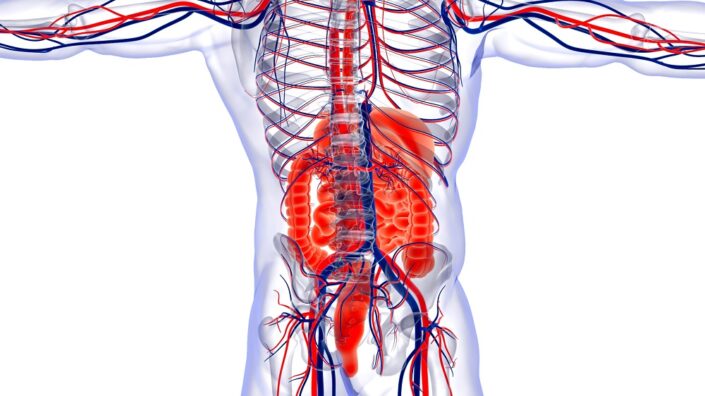
Intestines and blood vessels

Fecal Microbiota Transplants Reduce Vascular Aging in Mice

Fecal microbiota transplantation from young mice to older mice improved multiple metabolic parameters and some hallmarks of aging, such as inflammation and telomere shortening [1].

Bringing back the balance

Dysbiosis, an imbalance in the gut microbiome, is a newly recognized hallmark of aging [2]. Dysbiosis elevates the risk of many diseases, including cardiovascular diseases [3]. However, the mechanism behind this association is poorly understood.

The authors of this study discuss that vasculature can be especially susceptible to dysbiosis due to the proximity between the intestine and the blood circulation and reference previous research that, by altering gut microbes, such as through antibiotic treatment, influenced vascular function [4].

In this study, the researchers transplanted fecal microbiota from young to middle-aged and aged mice to test the effects of such intervention on vascular function and metabolism.

Metabolic and vascular improvements

The researchers started their investigation by comparing the microbial composition of young and aged mice. Unsurprisingly, they found age-dependent differences in mouse gut microbes. After confirming that gut microbes in the old and young mice differed, they performed fecal microbiota transplants from young (8 weeks old) mice to middle-aged (40-42 weeks old) and aged (over 75 weeks old) mice.

Humans and rodents normally lose weight in advanced age, but in aged mice, fecal microbiota transplantation slowed down this weight loss slightly. This happened despite no changes in food intake, suggesting that the treated mice were absorbing more nutrients from the food.

Fecal microbiota transplantation also altered glucose and lipid metabolism, impacting insulin resistance and cholesterol levels. In middle-aged mice, HDL, the “good” cholesterol, was significantly increased, but LDL, the ”bad” cholesterol, was decreased.

These results suggested the possibility that endothelial function might also be impacted. Previous research had shown that detrimental metabolic changes can damage the endothelium [5], the layer of cells that lines the blood vessels.

The researchers measured endothelium-dependent relaxations as a proxy for endothelial state. They noted that fecal microbiota transplants improved endothelium-dependent relaxations in the aortae and the mesenteric arteries, which distribute blood from the aorta to the gastrointestinal tract, of middle-aged mice.

Aging is associated not only with metabolic changes but also with changes to molecular signaling. In this paper, the researchers observed aging-related downregulation of endothelial nitric oxide synthase (eNOS), AMP-activated protein kinase (AMPK) phosphorylation, and sirtuin 1 (SIRT1) expression in mouse aortae.

Fecal microbiota transplants helped to alleviate those changes. In middle-aged mice following the procedure, the researchers observed increased levels of eNOS and eNOS upstream regulators, AMPK, and SIRT1, in the aorta. This observation suggested the activation of signaling pathways that can potentially improve endothelial function and reduce vascular aging. They also add that “receiving young microbiota at a younger age might be of higher therapeutic efficacy in vasculature.”

Reversing some hallmarks of aging

Aging is known to be associated with chronic inflammation, which can lead to endothelial dysfunction and vascular damage [6], and age-associated dysbiosis is one of the factors that promote inflammation [7]. A fecal microbiome transplant from young to middle-aged mice helped to alleviate this inflammation, as confirmed by the lower levels of pro-inflammatory cytokines in the serum and aortae of middle-aged mice following the transplant.

Researchers believe that the transplant’s anti-inflammatory effect was achieved by reducing leaky gut. This refers to the aging-associated increase in intestinal permeability, the ability of substances and molecules to get through the protective gut membrane. Following fecal microbiota transplantation, the researchers observed lower levels of fecal and serum endotoxins and intestinal fatty-acid binding protein, a biomarker of increased intestinal permeability, in middle-aged mice.

Fecal microbiome transplants were also successful in helping with telomere attrition. These researchers found that fecal microbiota transplantation in middle-aged mice led to the upregulation of telomerase reverse transcriptase, enhanced telomerase activity, and delayed the shortening of relative telomere length in the aorta.

The researchers note that the positive effect of fecal microbiota transplant on telomeres “was lower in aged mice when compared to middle-aged mice”, suggesting that optimizing the timing of this intervention can enhance its positive effects.

The authors performed similar testing on the intestine, which is in direct contact with the microbiota. They observed that this tissue and the vasculature received similar beneficial effects in middle-aged mice: decreased expression of pro-inflammatory genes, reduced telomere dysfunction, and increased expression of AMPK and SIRT1. Some of the improvements were better in the intestine than in vascular tissues.

Further optimization needed

The researchers believe that further research is needed to investigate the long-term effects, impacts on other organs and tissues, safety, and efficacy of fecal microbiota transplants and whether similar beneficial effects can be observed in humans. The authors believe that a better understanding of the gut-vascular connection can be an avenue for designing therapeutic strategies for age-associated cardiometabolic diseases.

They also point out that the timing of this intervention is essential for optimal results. They believe that since “the pace of aging becomes substantially higher after certain critical timepoints in life [7],” therapeutic effects might be greatly reduced after certain timepoints.

We would like to ask you a small favor. We are a non-profit foundation, and unlike some other organizations, we have no shareholders and no products to sell you. All our news and educational content is free for everyone to read, but it does mean that we rely on the help of people like you. Every contribution, no matter if it’s big or small, supports independent journalism and sustains our future.

Literature

[1] Cheng, C. K., Gao, J., Kang, L., & Huang, Y. (2024). Fecal Microbiota Transfer from Young Mice Reverts Vascular Aging Hallmarks and Metabolic Impairments in Aged Mice. Aging and disease, 10.14336/AD.2024.0384. Advance online publication.

[2] López-Otín, C., Blasco, M. A., Partridge, L., Serrano, M., & Kroemer, G. (2023). Hallmarks of aging: An expanding universe. Cell, 186(2), 243–278.

[3] Hou, K., Wu, Z. X., Chen, X. Y., Wang, J. Q., Zhang, D., Xiao, C., Zhu, D., Koya, J. B., Wei, L., Li, J., & Chen, Z. S. (2022). Microbiota in health and diseases. Signal transduction and targeted therapy, 7(1), 135.

[4] Brunt, V. E., Gioscia-Ryan, R. A., Richey, J. J., Zigler, M. C., Cuevas, L. M., Gonzalez, A., Vázquez-Baeza, Y., Battson, M. L., Smithson, A. T., Gilley, A. D., Ackermann, G., Neilson, A. P., Weir, T., Davy, K. P., Knight, R., & Seals, D. R. (2019). Suppression of the gut microbiome ameliorates age-related arterial dysfunction and oxidative stress in mice. The Journal of physiology, 597(9), 2361–2378.

[5] Bakker, W., Eringa, E. C., Sipkema, P., & van Hinsbergh, V. W. (2009). Endothelial dysfunction and diabetes: roles of hyperglycemia, impaired insulin signaling and obesity. Cell and tissue research, 335(1), 165–189.

[6] Donato, A. J., Machin, D. R., & Lesniewski, L. A. (2018). Mechanisms of Dysfunction in the Aging Vasculature and Role in Age-Related Disease. Circulation research, 123(7), 825–848.

[7] Thevaranjan, N., Puchta, A., Schulz, C., Naidoo, A., Szamosi, J. C., Verschoor, C. P., Loukov, D., Schenck, L. P., Jury, J., Foley, K. P., Schertzer, J. D., Larché, M. J., Davidson, D. J., Verdú, E. F., Surette, M. G., & Bowdish, D. M. E. (2017). Age-Associated Microbial Dysbiosis Promotes Intestinal Permeability, Systemic Inflammation, and Macrophage Dysfunction. Cell host & microbe, 21(4), 455–466.e4.

HBO chamber

Hyperbaric Oxygen Therapy Increases Fitness in Elderly

In a new study, a 12-week protocol of hyperbaric oxygen therapy (HBOT) resulted in marked increases in aerobic capacity and cardiac blood flow [1].

Building pressure

HBOT involves placing patients in a tightly sealed chamber where they breathe pure oxygen under higher-than-normal atmospheric pressure. This treatment has been approved for a small number of conditions, such as gas gangrene and thermal burns.

HBOT can reduce swelling and boost oxygenation in damaged tissues, which is likely to improve mitochondrial metabolism and reduce inflammation. As such, it has been touted as a potential anti-aging intervention. However, not all claims made by HBOT clinics have been confirmed by science.

Dr. Shai Efrati is an HBOT pioneer hellbent on scientifically proving its worth. Previous research by his group has suggested, among other things, that HBOT can alleviate vascular dysfunction and amyloid burden in an Alzheimer’s disease mouse model and in elderly patients and can improve cognition after a stroke [2]. There have also been findings of improved bone health and other benefits.

In this new study, Efrati and his colleagues focused on a different, although not unrelated, aspect of health. To investigate the effects of HBOT on cardiorespiratory fitness in a randomized controlled trial, the researchers recruited 63 elderly patients with a median age of 70 – a respectable sample size.

The primary endpoint of the study was VO2Max, or maximal oxygen uptake. VO2Max is an important marker of cardiorespiratory fitness that has shown strong correlation with all-cause mortality [3]. One study goes as far as to suggest that VO2Max is “a key predictor of longevity” [4]. VO2Max levels markedly decline with age.

Breathe deeper

The participants received 60 sessions of HBOT over a period of 12 weeks. Each session included breathing 100% oxygen at two times normal atmospheric pressure, and lasted 90 minutes, with periodic five-minute breaks. During the trial, no changes in lifestyle, physical training, diet, and medications were allowed for either group.

The treatment resulted in a significant increase in VO2Max and even more significant – in VO2Max/kg, that is, maximal oxygen uptake normalized for body weight. The effect size was moderate but noticeable.

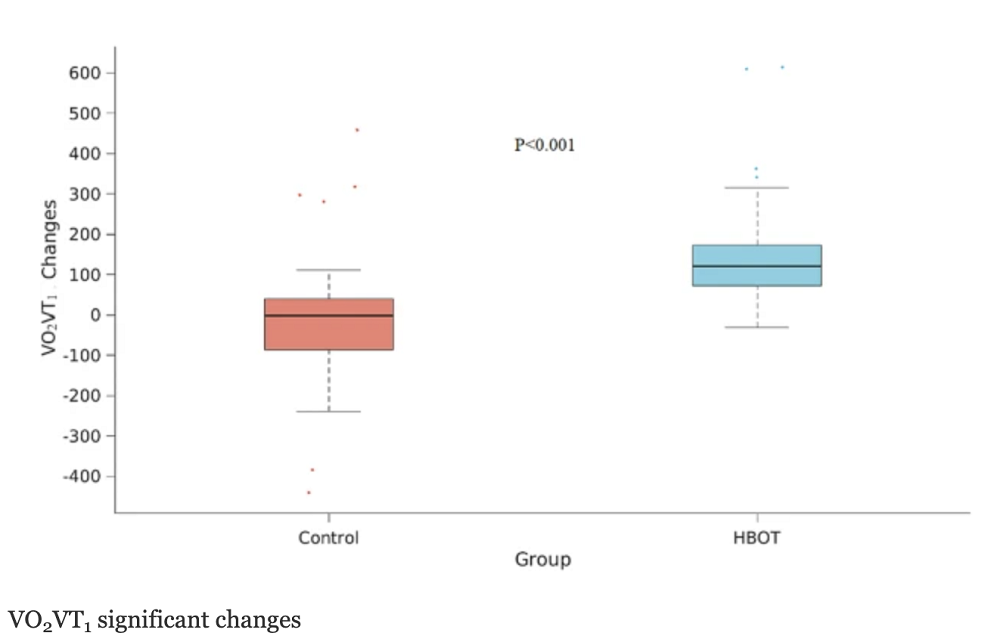
Yet an even more pronounced increase was detected in oxygen consumption measured at the first ventilatory threshold (VO2VT1). This important physiological marker is also called “the aerobic threshold”, because it represents the transition from predominantly aerobic energy production to a mix of aerobic and anaerobic energy production. Simply speaking, people with higher values start becoming out of breath later during exercise.

HBOT Effects

Let it flow

The researchers also measured cardiac perfusion: the amount of blood the heart receives. Both myocardial blood flow and myocardial blood volume (the total volume of blood within the myocardial tissue at a given moment) showed steep increases in the treatment group. Interestingly, no significant changes were observed in pulmonary function.

The importance of the study stems from the fact that, as the authors note, “while the impact of VO2Max on daily life is generally minimal for young individuals, elderly individuals heavily rely on their VO2Max to perform everyday tasks effectively.” Elevating VO2Max levels in the elderly can theoretically have a strong impact on mortality. People with conditions such as chronic fatigue could also benefit from this treatment. Finally, increased cardiac perfusion can boost brain health. On the downside, HBOT requires complex machinery and is costly, at least for now.

The study findings suggest that the newly used HBOT can enhance physical performance in aging adults. The key enhancements observed include improvements in maximal oxygen consumption, and the first ventilatory threshold. Moreover, the use of cardiac MRI demonstrated increased cardiac perfusion as a significant mechanism underlying the observed improvements induced by HBOT.

We would like to ask you a small favor. We are a non-profit foundation, and unlike some other organizations, we have no shareholders and no products to sell you. All our news and educational content is free for everyone to read, but it does mean that we rely on the help of people like you. Every contribution, no matter if it’s big or small, supports independent journalism and sustains our future.

Literature

[1] Hadanny, A., Sasson, E., Copel, L., Daniel-Kotovsky, M., Yaakobi, E., Lang, E., … & Efrati, S. (2024). Physical enhancement of older adults using hyperbaric oxygen: a randomized controlled trial. BMC geriatrics, 24(1), 572.

[2] Shapira, R., Gdalyahu, A., Gottfried, I., Sasson, E., Hadanny, A., Efrati, S., … & Ashery, U. (2021). Hyperbaric oxygen therapy alleviates vascular dysfunction and amyloid burden in an Alzheimer’s disease mouse model and in elderly patients. Aging (Albany NY), 13(17), 20935.

[3] Mandsager, K., Harb, S., Cremer, P., Phelan, D., Nissen, S. E., & Jaber, W. (2018). Association of cardiorespiratory fitness with long-term mortality among adults undergoing exercise treadmill testing. JAMA network open, 1(6), e183605-e183605.

[4] Strasser, B., & Burtscher, M. (2018). Survival of the fittest: VO2max, a key predictor of longevity. Front Biosci (Landmark Ed), 23(8), 1505-1516.

Hidden minefield

New Epigenetic Clock Built on Lurking DNA Fragments

In Aging Cell, a team of researchers has announced Retroelement-Age, a novel clock that focuses on the expression of buried pieces of DNA that are normally suppressed.

Corrupted but unexpressed

The natural human genome has a large number of artifacts left over from ancient viral infections along with pieces of DNA that transpose themselves into the genome. These human endogenous retroviruses (HERVs) and long interspersed nuclear elements (LINEs) make up a surprisingly large portion of the human genome [1].

Most of these retroelements are normally suppressed by epigenetics: the DNA is simply never translated into RNA, and so they lie dormant. However, epigenetic alterations can drive them out of dormancy, and this can have harmful consequences [2], some of which are related to further aging [3]. Because this epigenetic uncovering has harmful, age-related consequences, these researchers decided to build an epigenetic clock out of it.

A new model built on a new system

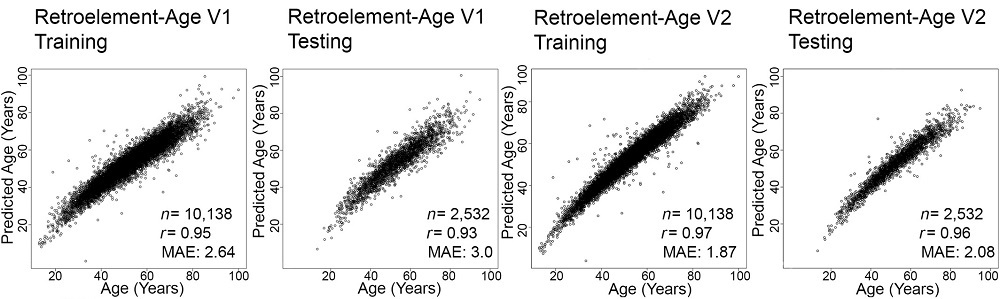
To begin building the first version of Retroelement-Age, the researchers used MethylationEPIC version 1.0, a standard methylation analysis platform, and then discovered that 10,917 epigenetic CpG sites were on HERVs and LINEs. Then, they pulled epigenetic data from a set of 12,670 people with ages ranging from 12 to 100. After cross-validation, the researchers’ elastic net algorithm determined that 1,317 of these CpG sites were useful in guessing chronological age with high accuracy.

However, with the development of MethylationEPIC version 2.0, the researchers sought to create a clock that used this latest version with updated methylation information. This clock, which considered 1,378 CpG sites to be of use, was even stronger than the first version, which the researchers ascribe to the newer version of MethylationEPIC having more reliable probes [4]. These findings were additionally confirmed by entirely separate datasets involving blood cells.

Retroelement-Age Strength

There was no overlap at all between the CpG sites of Retroelement-Age and most previous clocks, including first-generation clocks such as Horvath and Hannum along with the later PhenoAge and GrimAge and the Dunedin Pace of Aging clock. The only commonalities were found between the second version of Retroelement-Age and nine CpG sites used in AdaptAge, CausAge, and DamAge, a trio of clocks built around sites that were found to be causal in aging [5].

Antiretroviral therapies, which are used in the treatment of HIV, were able to significantly reduce the Retroelement-Age of the treated groups. The researchers suggest that this is because these therapies also suppress HERVs. However, there was no trial undertaken to determine if antiretroviral therapies reduce Retroelement-Age in the absence of HIV.

Epigenetic reprogramming, a known method of rejuvenating the epigenetics of cells, was found to successfully rejuvenate fibroblasts as measured by both versions of Retroelement-Age, but this did not work in endothelial cells. The researchers concluded that responses to this reprogramming are cell-type specific.

The researchers then concluded their paper with information on a multi-tissue version and a pan-mammalian version of their novel clock. Like with their original clock, the pan-mammalian version did not overlap with the sites used by any previous clocks.

Ultimately, this clock does more than just measure age: it identifies problems that are known to lead to age-related diseases. It is as of yet unclear whether it is feasible to develop approaches that can silence, or even permanently remove, dangerous elements in the genome.

Together, these findings support the hypothesis of dysregulation of endogenous retroelements as a potential contributor to the biological hallmarks of aging and suggest that therapeutic interventions modifying the epigenetic states of specific retroelements in the human genome could have beneficial effects against a root cause of aging and disease.

We would like to ask you a small favor. We are a non-profit foundation, and unlike some other organizations, we have no shareholders and no products to sell you. All our news and educational content is free for everyone to read, but it does mean that we rely on the help of people like you. Every contribution, no matter if it’s big or small, supports independent journalism and sustains our future.

Literature

[1] Nurk, S., Koren, S., Rhie, A., Rautiainen, M., Bzikadze, A. V., Mikheenko, A., … & Phillippy, A. M. (2022). The complete sequence of a human genome. Science, 376(6588), 44-53.

[2] Dopkins, N., & Nixon, D. F. (2024). Activation of human endogenous retroviruses and its physiological consequences. Nature Reviews Molecular Cell Biology, 25(3), 212-222.

[3] Zhang, H., Li, J., Yu, Y., Ren, J., Liu, Q., Bao, Z., … & Liu, G. H. (2023). Nuclear lamina erosion-induced resurrection of endogenous retroviruses underlies neuronal aging. Cell reports, 42(6).

[4] Noguera-Castells, A., García-Prieto, C. A., Álvarez-Errico, D., & Esteller, M. (2023). Validation of the new EPIC DNA methylation microarray (900K EPIC v2) for high-throughput profiling of the human DNA methylome. Epigenetics, 18(1), 2185742.

[5] Ying, K., Liu, H., Tarkhov, A. E., Sadler, M. C., Lu, A. T., Moqri, M., … & Gladyshev, V. N. (2024). Causality-enriched epigenetic age uncouples damage and adaptation. Nature aging, 4(2), 231-246.

Longevity Desci Recap July 2024

Longevity and DeSci Recap – July 2024

The Longevity and DeSci Recap is back, and our latest edition covers high-profile events including the Longevity Investors Conference in Gstaad, new innovations in AFib monitoring, and even some celebrity-related news. This month, we’ll continue to explore the latest events, current research, and investment news to give you a complete round-up of the current landscape of longevity and decentralized science (DeSci).

Upcoming conferences and events

11th session of the Aging Research and Drug Discovery Meeting

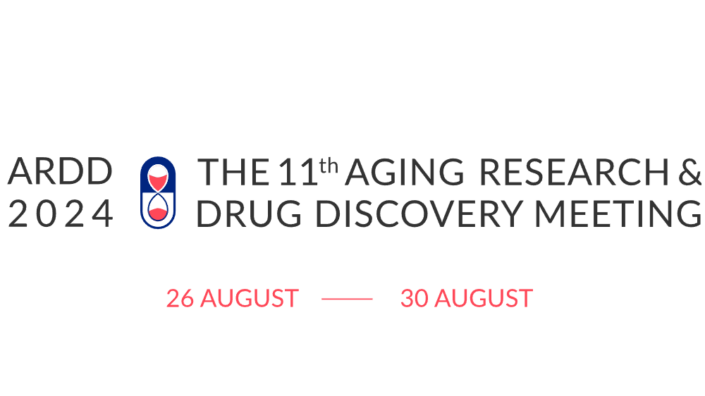
On the 26th and 30th of this month, you can join Nir Barzilai, Vera Gorbunova, Aubrey de Grey and a host of other industry names at the 11th edition of the Aging Research and Drug Discovery Meeting. In this long-awaited event, participants will discuss interventions for age-related diseases, longevity, and so much more.

Gstaad, Switzerland plays host to the most exclusive event of the year

Once a year, the world’s longevity elite, including top investors, meet in Switzerland to discuss market movements and pave the way for the industry’s future. This year’s event is no exception and is set to be a captivating networking experience. Attendees are carefully chosen, with all investors welcome to apply for tickets here.

HLTH 2024: health is back on stage in Vegas

It’s lights, cameras, action as the US edition of the HLTH 2024 conference hits the stage in Las Vegas. Like previous years, this is set to be one of the biggest events in healthcare and will cover topics such as AI in healthcare, longevity, and marketing. Speakers are set to include Johnson & Johnson CEO Joaquin Duato, Vice President of Healthcare and Life Sciences at NVIDIA Kimberly Powell, Cleveland Clinic CEO Tom Mihaljevic, and many more speakers combining healthcare with technology on a whole new level. Tickets for the event are still available online.

Tech breakthroughs & new research

Heart health could be just a ring away

Smart watches have long been upgraded to have new health-monitoring features, but this isn’t the only way to track vitals. Ultrahuman’s team has started designing a new wearable solution for heart monitoring: a simple ring. Now the company has secured a massive $35 million in funding to follow this project and have launched a solution called ‘PowerPlugs’. Among this batch is a plugin designed to catch atrial fibrillation, which occurs in 12.2 million people in the US.

TruDiagnostic turns reality TV

At lifespan.io, it’s not often we get to discuss the world of celebrity, but this month, two have caught our eye: Bryan Johnson and Kim Kardashian. However, it’s not all glamor. Kim and her reality-tv family took a longevity test to assess epigenetic markers related to aging. According to the results, TV’s most famous family ended up looking, feeling, and being younger than their biological age. This had sparked a renewed interest in the field and its future potential.

DAOs and communities

VitaDAO’s community joined in for a data drop by Artan Bio

As part of VitaDAO’s ongoing collaborations, the biotech DAO hosted an event to unveil data from VitaRNA by Artan Bio. This marks a major milestone in longevity research and offers a boost to the longevity community. At this event, participants were able to learn insights into gene therapies and discover ways to target aging while engaging directly with researchers.

$BIO tokens to drop on this August

Bio.xyz announced on its Twitter that on August 8th, the DAO’s signature $BIO token will launch live. This will mark the opportunity for the DAO’s supporters and token holders to exchange their bioDAO tokens, among others, for $BIO in a genesis swap.

VitaDAO celebrates its 3rd birthday, marking a new wave in DeSci

Three years ago, VitaDAO, one of the first longevity DAOs, was formed, marking a shift in the scientific world. As the community passes this significant milestone, it’s time to acknowledge its achievements, as this DAO has evaluated 200+ longevity projects, funded 23, and allocated over $4.5 million in funding, all while paving the way for those who come next. This biotech DAO is also noted as being the 2nd DAO most worth investing in on Tracxn.

Other DeSci and longevity news

$15 million for Oisín Biotechnologies’ longevity pharma project

Age-related fragility is said to affect as many as 17% of older adults in the US today. Oisín Biotechnologies is seeking out a solution. Having just acquired $15 million in Series A funding led by AbbVie Ventures, the biotech is developing pharmaceutical solutions for frailty by improving muscle mass and eliminating unwanted fat cells to improve human healthspan.

$400 million funding investment for the Hevolution Foundation

The longevity investment branch has just announced that it will invest over $400 million in healthcare. This move would make it one of the largest philanthropic contributors in geroscience, giving it the potential to impact the lives of others, including programs to support researchers’ interest in aging globally and particularly in Latin America.

Michael J. Fox Foundation awards $6 million grant to Lario Therapeutics

Biopharmaceutical company Lario Therapeutics has just secured a grant of $6 million to pursue precision medicines for neurological conditions. The company says that the latest funding will go towards preclinical research on Lario’s CaV2.3 calcium channel inhibitors and the protection that they could potentially offer against Parkinson’s disease, among others.

Social media pages to follow this month

Niklas Anzinger — CEO of Vitalia and founder of Infinita VC. Follow for longevity and investment-related posts.

Bryan Johnson — This month, our very own Arkadi Mazin gave his take on Bryan Johnson’s blueprint of longevity. Now it’s time to follow directly to learn the latest.

Foresight Institute — Offers some of the latest investment news in the longevity sector worldwide.

We would like to ask you a small favor. We are a non-profit foundation, and unlike some other organizations, we have no shareholders and no products to sell you. All our news and educational content is free for everyone to read, but it does mean that we rely on the help of people like you. Every contribution, no matter if it’s big or small, supports independent journalism and sustains our future.
Vegan foods

Vegan Diet Lowers Biological Age in a New Study

In a study that involved pairs of identical twins, Stanford scientists have shown that a healthy vegan diet leads to a decrease in biological age and possibly to other health benefits [1].

Do you really live longer if you eat well?

A good diet can do wonders for health, but it is still unclear if it actually promotes longevity. Populational studies have found that a healthy diet can decrease the risk of getting cancer, cardiovascular diseases, and type 2 diabetes, and it is associated with lower mortality [2]. However, this is not exactly the same. Proper lifespan studies in humans are complicated by us being an exceptionally long-lived species.

To overcome this limitation, scientists have come up with biological clocks: single or composite biomarkers that supposedly show the body’s physical rate of aging. The difference between a person’s chronological and biological age is that person’s age acceleration.

One of the most popular types of biological clocks uses DNA methylation, the addition of a methyl group to the nucleotides that compose DNA [3]. DNA methylation patterns correlate with chronological age and mortality amazingly well, although the mechanism behind this correlation is not fully understood.

This new study, led by researchers from Stanford University and the company TruDiagnostics, might be the first to compare the effects of a wholesome vegan diet to a wholesome omnivorous diet on age acceleration as measured by methylation clocks. Moreover, the researchers used pairs of twins, which allowed them to automatically control for genetic, age, and sex differences.

Vegans age slower

Generally healthy twins in 21 pairs were put on either a vegan or omnivorous diet for eight weeks. The researchers tried making the diets as healthy as possible, such as by avoiding ultraprocessed food.

For their analysis, the scientists used multiple well-established methylation clocks, such as the second-generation blood and skin Horvath clock, GrimAge, PhenoAge, and DunedinPACE. They also calculated the individual ages of 11 organs and systems (heart, lung, kidney, liver, brain, immune, inflammatory, blood, musculoskeletal, hormone, and metabolic) along with their composite: Systems Age.

At the end of the experiment, GrimAge, PhenoAge, and DunedinPACE showed a marked decrease in average age acceleration in the vegan cohort but not in the omnivorous cohort. Interestingly, the most significant decrease was clocked by DunedinPACE, which is specifically designed to measure epigenetic age acceleration. Significant biological age reductions were also observed exclusively in the vegan cohort for 5 out of these 11 systems (inflammation, heart, hormone, liver, and metabolic) as well as for System Age.

Telomeres and other metrics

Because of its status as a hallmark of aging, the researchers also measured telomere length. By the end of the eighth week, the vegan group had significantly longer telomeres than the omnivorous group.

The difference in diet did not induce profound changes in the relative abundance of various immune cells. Among 12 immune cell subtypes, only basophil levels increased slightly in the vegan group and dropped even more slightly in the omnivorous group. Basophil abundance is related to inflammation, and the researchers cautiously note that their finding “contrasts with studies emphasizing the immunomodulatory benefits of plant-based diets.”

While genetic differences are commonly associated with an increased or decreased risk of various conditions, certain methylation changes show similar correlations. The researchers analyzed two methylation loci associated with type 2 diabetes. The vegan diet produced pro-diabetes changes in methylation in one locus, and anti-diabetes changes in the other.

Another novel approach in this study was the use of epigenetic biomarker proxies (EBPs), epigenetic values that correlate with certain biomarkers instead of the biomarkers themselves. For example, the EBP for C-reactive protein, the most popular marker of inflammation, was significantly lower in the vegan group. This is consistent with previous research that has tied a vegan diet to lower inflammation.

This study had multiple limitations, most notably a small sample size and a short intervention duration. It would be interesting to see the effect of a vegan diet on the epigenome over a longer period. Yet, the results sit well with the growing evidence that vegan diet, when properly done, confers significant health benefits.

In this study, we sought to elucidate the impact of a “healthy vegan” or a “healthy omnivorous diet” on epigenetic age, telomere length, immune cell subsets, and type 2 diabetes (T2D) risk-associated CpGs, building on current knowledge of nutrition on both diets. Our findings reveal distinct responses to vegan and omnivore diets, aligning with existing literature on the subject. Notably, the vegan cohort exhibited a significant decrease in epigenetic age acceleration, as demonstrated by reductions in multiple epigenetic aging clocks.

We would like to ask you a small favor. We are a non-profit foundation, and unlike some other organizations, we have no shareholders and no products to sell you. All our news and educational content is free for everyone to read, but it does mean that we rely on the help of people like you. Every contribution, no matter if it’s big or small, supports independent journalism and sustains our future.

Literature

[1] Dwaraka, V. B., Aronica, L., Carreras-Gallo, N., Robinson, J. L., Hennings, T., Carter, M. M., … & Gardner, C. D. (2024). Unveiling the epigenetic impact of vegan vs. omnivorous diets on aging: insights from the Twins Nutrition Study (TwiNS). BMC medicine, 22(1), 301.

[2] Shan, Z., Wang, F., Li, Y., Baden, M. Y., Bhupathiraju, S. N., Wang, D. D., … & Hu, F. B. (2023). Healthy eating patterns and risk of total and cause-specific mortality. JAMA internal medicine, 183(2), 142-153.

[3] Bell, C. G., Lowe, R., Adams, P. D., Baccarelli, A. A., Beck, S., Bell, J. T., … & Rakyan, V. K. (2019). DNA methylation aging clocks: challenges and recommendations. Genome biology, 20, 1-24.

Black lab mice

Rapamycin + Trametinib Increase Mouse Lifespan by up to 35%

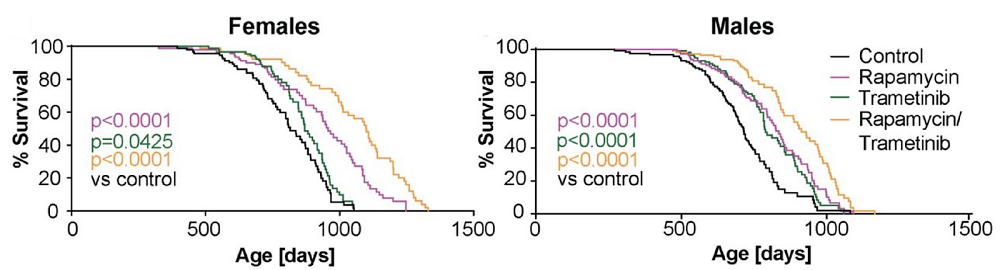
Combining rapamycin and trametinib seemed to have a cumulative effect in both sexes but mostly in females [1]. These results are probably due to a reduction in both cancer and inflammation.

A winning combo

The idea that combination treatments are the future of life extension is gaining traction. As aging is a complex phenomenon, a single treatment should not be expected to have a profound effect on it. While testing combinations is hard, there have been several successful attempts, and at least for small molecules, it seems like we have a new pair of champions.

A group of researchers, led by the renowned geroscientist Linda Partridge of Max Plank Institute for Biology of Aging in Cologne, started with rapamycin. This well-known compound inhibits the mechanistic target of rapamycin, complex 1 (mTORC1), a protein that serves as a master regulator of nutrient sensing and growth. Generally speaking, rapamycin shifts an organism’s focus from growth to repair.

In their paper, currently published as a pre-print, the researchers reasoned that the mTORC1 pathway is part of a wider nutrient-sensing network, which also includes proteins such as insulin, IGF (insulin-like growth factor) and Ras, a “molecular switch” that lies upstream of mTORC1 and participates in its activation. When one part of the network is inhibited, others might compensate for this by increasing their activity. Hence, inhibiting two or more links in this chain might work better.

“The insulin/IGF/mTORC1/Ras network is characterized by extensive crosstalk between its branches,” the paper explains. “It is therefore possible that simultaneous inhibition of different nodes within the network, by combined drug treatments, could be more effective than suppression of single nodes, by prevention of compensatory responses.”

The drug trametinib is an indirect Ras inhibitor. Trametinib is used in oncology to inhibit cellular growth in cancer cells. Previous research by the same group showed that a combination of rapamycin, trametinib, and lithium produces additive lifespan increases in drosophila flies [2]. However, this approach has not been tested in mammals until now.

Record-breaking increase in lifespan

Mice were fed either rapamycin or trametinib alone, or their combination, starting from the age of 6 months. Both rapamycin and trametinib alone produced sizeable increases in lifespan. However, their combination had a clear cumulative effect, increasing median and maximum lifespan in females by 34.9% and 32.4%, respectively, and in males by 27.4% and 26.1%, respectively.

Rapamycin and Trametinib Effectiveness

With rapamycin, the researchers replicated the highest and most effective dose from a previous study (42 mg/kg) [3]. In that study, rapamycin increased median lifespan by 23% in males and 26% in females, which is more than rapamycin alone accomplished in this new study. In most rapamycin studies, males receive slightly smaller longevity bumps. Finally, in these Black 6 mice, males tend to have shorter lifespans.

While these details might complicate analysis, the results still look impressive, especially in females, who were both naturally longer-lived and also enjoyed a bigger increase in lifespan. Importantly, the increase in maximum lifespan was only slightly smaller than in median lifespan, suggesting “true life extension” as opposed to morbidity compression.

Is it just less cancer?

The researchers also collected several health metrics. Overall, the treatment had little effect on them, either positive or negative. In both sexes, the combination treatment led to increased fat content. On the other hand, the treated mice appeared to have higher motivation to move at old age. The treatment slightly attenuated the age-related decline in heart function but did not improve cognitive function. It also reduced inflammation in peripheral tissues and in the brain.

Since lab mice die mostly of cancer, the researchers analyzed tumor burden at various points in time and after the mice had died. Interestingly, only the combination of rapamycin and trametinib significantly affected tumor growth. Rapamycin is used in oncology as an immunosuppressant, although it is also thought to slow tumor growth [4]. If the additional effect of the combination treatment was mostly due to slower cancer development, it raises questions about how effective it can be in humans, who do not have cancer as their main cause of death.

In this study, we establish the FDA-approved drug trametinib, an inhibitor of RAS-Mek-Erk signalling, as a gero-protective drug in mammals. We further show that the combination of trametinib and the mTOR inhibitor rapamycin produces an even greater lifespan extension compared to the single drug treatments in both female and male mice. The combination treatment attenuated the decline in heart function with age, delayed tumour growth and overall tumour load, and reduced brain and peripheral inflammation, suggesting improved health at old age. Several ongoing clinical trials address the potential of mTOR inhibitors as geroprotective drugs in humans. Our study suggests that simultaneous inhibition of the mTOR and Ras-Mek-ERK pathway provides additional benefits that are worth exploring in humans.

We would like to ask you a small favor. We are a non-profit foundation, and unlike some other organizations, we have no shareholders and no products to sell you. All our news and educational content is free for everyone to read, but it does mean that we rely on the help of people like you. Every contribution, no matter if it’s big or small, supports independent journalism and sustains our future.

Literature

[1] Gkioni, L., Nespital, T., Monzo, C., Bali, J., Nassr, T., Cremer, A. L., … & Partridge, L. (2024). A combination of the geroprotectors trametinib and rapamycin is more effective than either drug alone. bioRxiv, 2024-07.

[2] Castillo-Quan, J. I., Tain, L. S., Kinghorn, K. J., Li, L., Grönke, S., Hinze, Y., … & Partridge, L. (2019). A triple drug combination targeting components of the nutrient-sensing network maximizes longevity. Proceedings of the National Academy of Sciences, 116(42), 20817-20819.

[3] Miller, R. A., Harrison, D. E., Astle, C. M., Fernandez, E., Flurkey, K., Han, M., … & Strong, R. (2014). Rapamycin‐mediated lifespan increase in mice is dose and sex dependent and metabolically distinct from dietary restriction. Aging cell, 13(3), 468-477.

[4] Law, B. K. (2005). Rapamycin: an anti-cancer immunosuppressant?. Critical reviews in oncology/hematology, 56(1), 47-60.

Rejuvenation Roundup July 2024

Rejuvenation Roundup July 2024

Entirely new approaches with surprisingly good results have been recently discovered and published in July’s papers. Here’s what the research world has revealed this month.

LEAF News

Interviews

LBF InterviewLongevity Biotech Fellowship: Road To A Post-Aging Society: The Longevity Biotech Fellowship is one of the most interesting longevity-related initiatives in the last couple of years. Co-founded by Mark Hamalainen and Nathan Cheng, both well-known figures in the longevity field, LBF has been everywhere: presenting at conferences, participating in co-living projects such as Zuzalu and Vitalia, and generally connecting longevity people.

Advocacy and Analysis

Four Days of Longevity in Dublin: Conference Highlights: The annual Longevity Summit Dublin happened this June, and we are bringing you the highlights. Initiated by Aubrey de Grey and Martin O’Dea in 2022, this conference has earned a reputation for combining scientific depth with just the right amount of quirkiness over full four days of talks, panels, and late-night networking.

Research Roundup

Peripheral artery diseaseNicotinamide Riboside Improves Walking in Clinical Trial: Researchers publishing in Nature Communications have found that nicotinamide riboside (NR) improves walking distance for people who have peripheral artery disease in the legs. Ischemia, the failure of blood vessels to deliver sufficient oxygen and nutrients, is a key part of both fatal and disabling conditions.

Recurrent Pregnancy Loss Associated with Increased Dementia: A recent paper in the European Journal of Epidemiology reported that recurrent miscarriage and stillbirths are associated with the occurrence of dementia, but there was insufficient evidence to establish such a connection between infertility and dementia. Dementia affects women more frequently than men.

LungsA New Target for Chronic Lung Diseases: Revealing their findings in Aging Cell, researchers have found a new biochemical target for chronic obstructive pulmonary disease (COPD). Smoking is only one cause COPD, which is characterized by bouts of lung problems, has only limited treatments, is progressive and currently incurable, and often occurs in people over 60.

Novel Drug Suppresses Metastatic Cancer in Mice: Scientists have found a small molecule that turns an anti-apoptotic protein into a pro-apoptotic one, protecting against deadly metastases in a mouse model of human triple-negative breast cancer and, potentially, in other cancers.

Mouse on wheelA Molecular Reason Why Exercise Fights Senescence: Researchers publishing in Aging have found a molecule linking exercise to the inhibition of cellular senescence, one of the hallmarks of aging. PEDF’s molecular effects were found to be related to the interaction of the microRNA miR-127, which promotes senescence, and BCL-6, a protein that is negatively associated with senescence.

Scientists Eliminate Cancer Using Evolutionary Principles: A new study describes a method of genetically modifying a fraction of tumor cells, programming them to self-destruct and take therapy-resistant cells with them. Advanced solid tumors remain the main challenge for modern oncology.

Older person eating vegetablesPrecision Nutrition Improves Life Quality for Older People: Researchers compared general nutritional advice to individualized nutritional advice in addition to an app that encourages its users to follow a diet. Elderly overweight and obese people benefited more from the individualized approach.

Sex Differences in the Blood-Brain Barrier and Alzheimer’s: Researchers have found that men and women have significant differences in how their brains’ blood vessels change in Alzheimer’s disease. In older women, a decrease in estrogen causes vascular decline, making them more susceptible to Alzheimer’s.

White blood cellsModified Natural Killer Cells Effective Against Liver Cancer: By making NK cells insensitive to tumor-secreted TGF-β, scientists have improved their efficacy against this deadly hepatocellular carcinoma (HCC). Cancer cells, which are supposed to be vulnerable to the immune system, develop various defensive mechanisms to avoid detection and decrease immune cells’ fitness and viability, which this approach combats.

Mixed Results in Probiotic Trial Against Inflammaging: Researchers publishing in Probiotics and Antimicrobial Proteins have published the results of a clinical trial on the effects of a probiotic on inflammaging in older people.

Multiple types of gut bacteriaProbiotics Have Positive Cognitive Effects in Trial: A clinical trial has found that consuming a multi-species probiotic formulation positively impacts mental well-being and improves cognitive functions. The gut microbiome is a gathering of microorganisms in the human gut that plays multiple essential functions, from nutrient absorption to immune system modulation.

Discovering Why an Inflammatory Compound Inhibits Cancer: In Aging Cell, researchers have published their findings into why the inflammatory factor IL-6 inhibits cancerous tumors when generated inside the cell. IL-6 affects both senescence and cancer proliferation.

Mouse knitting DNALate-Life Treatment Increases Mouse Lifespan by 25%: A new mouse study has found that both germline knockout and late-life inhibition of the pro-inflammatory cytokine IL-11 lead to comparable and powerful healthspan and lifespan extension.

Exploring How Stiffness Promotes Osteoarthritis: In iScience, researchers have explained how physical mechanics can alter mitochondrial function in a way that leads to osteoarthritis. Abnormal mechanical loading, which occurs when joints are placed under excessive stresses in ways that they were not meant to handle, is a key driver of osteoarthritis.

Antibodies attacking tumorsAntinuclear Antibody Shows Promise Against Cancer: Scientists have developed a conjugate of a drug and a nucleus-targeting antibody that can attack multiple types of cancer cells without targeting a particular antigen. The researchers developed an antinuclear antibody-drug conjugate (ANADC) that targets tumor-specific “nucleoside junkyards” and hitches a ride into tumor cells with those same transporter proteins.

A Switch to Whole Food Diets Benefits Elderly People: New research demonstrated how transitioning from a typical Western diet composed of processed foods to a whole-food diet improved cardiometabolic health and body composition and impacted gut microbiome metabolites in elderly people.

Inflamed jointsExploring Senescence in Tendon Function: In Aging Cell, researchers have published new data on the relationship between senescence and the extracellular matrix in the tendons of older people. Injuries to the musculoskeletal system are responsible for over a quarter of the years that elderly people spend in disability, and they are progressively more difficult to heal with age.

Cellular Reprogramming Improves Cognition in Aged Rats: Scientists have shown that prolonged, continuous expression of reprogramming factors counters cognitive decline in old rats and probably decreases their epigenetic age. Cellular reprogramming, the act of bringing differentiated cells back to a stem-like pluripotent state by expressing certain genes, has been one of the hottest subfields in longevity.

C. Elegans NematodeSurprising Effects of Regular Fasting in Model Organisms: Research published in Aging Cell has revealed that a nematode species commonly used for aging research lives much longer on an alternate-day fasting regimen, but only when it is administered in middle age and only when the worms are consuming an animal-based protein source.

Senescence May Play a Significant Role in Parkinson’s: In Aging, a pair of researchers has published a perspective connecting fat (lipid) accumulation and cellular senescence in neurons to Parkinson’s disease. Parkinson’s disease is characterized by the loss of a specific population of neurons: the dopaminergic neurons in the substantia nigra, a part of the brain that governs movement.

FrailtyA Key Pathway for Sarcopenia Reversal: In Aging Cell, researchers have published a paper on a cellular energy source that appears to be a key signaling molecule in sarcopenia. Sarcopenia, a condition that increases with aging, reduces muscle mass in older people, and leads to a decreased quality of life, has been documented to have multiple root causes, and this appears to be a major one.

Very Old People Have Healthy Gut Bacteria: The authors of a recent review investigated what is known about gut microbiota in centenarians and how gut microbes can help people achieve extreme longevity. Microbes whose levels are decreased in centenarians were found to possess “antioxidant and anti-inflammatory effects.”

Extended lifespan in female Drosophila melanogaster through late-life calorie restriction: Late-life calorie restriction increases lifespan in female flies aged on a high-calorie diet.

Unveiling the epigenetic impact of vegan vs. omnivorous diets on aging: insights from the Twins Nutrition Study (TwiNS): This study suggests that a short-term vegan diet is associated with epigenetic age benefits and reduced calorie intake.

Long-Term Improvement in Hippocampal-Dependent Learning Ability in Healthy, Aged Individuals Following High Intensity Interval Training: Sustained improvement in hippocampal function to this extent confirms that such exercise-based interventions can provide significant protection against hippocampal cognitive decline in the aged population.

Oral Antioxidant and Lutein/Zeaxanthin Supplements Slow Geographic Atrophy Progression to the Fovea in Age-Related Macular Degeneration: Proximity-based progression towards the central macula was significantly slower with randomization to antioxidants versus none.

Discontinuation versus continuation of statins: A systematic review: Statin discontinuation does not appear to affect short-term mortality near end-of-life based on one trial. Outside of this population, findings from non-randomized studies consistently suggested statin discontinuation may be associated with worse outcomes, though this is uncertain.

Nicotinamide N-methyltransferase inhibition mimics and boosts exercise-mediated improvements in muscle function in aged mice: These studies suggest that NNMTi-based drugs, either alone or combined with exercise, will be beneficial in treating sarcopenia and a wide range of age-related myopathies.

Recombinant FOXN1 fusion protein increases T cell generation in old mice: These results suggest that the rFOXN1 fusion protein has the potential to be used in preventing and treating T cell immunodeficiency in older adults.

Discovery and characterization of a new class of NAD+-independent SIRT1 activators: These compounds could serve as candidate leads for a novel therapeutic strategy aimed at addressing a key metabolic deficiency that may contribute to metabolic and age-associated diseases.

Overexpression of mitochondrial fission or mitochondrial fusion genes enhances resilience and extends longevity: This work demonstrates that increasing the expression of these genes extends lifespan and improves biological resilience without promoting the maintenance of a youthful mitochondrial network morphology.

An expedited screening platform for the discovery of anti-ageing compounds in vitro and in vivo: This method expands the scope of CpG methylation profiling to accurately and rapidly detecting the anti-aging potential of drugs by using human cells.

Inhibitory immune checkpoints suppress the surveillance of senescent cells promoting their accumulation with aging and in age-related diseases: It seems plausible that enhanced inhibitory checkpoint signaling can prevent the elimination of senescent cells from tissues and thus promote aging.

Targeting senescence induced by age or chemotherapy with a polyphenol-rich natural extract improves longevity and healthspan in mice: This work demonstrates that administration of this compound promotes longevity in mice, possibly by modulating cellular senescence and by disrupting the p16–CDK6 interaction.

Rejuvenation of leukocyte trafficking in aged mice through PEPITEM intervention: PEPITEM supplementation may represent a potential pre-habilitation geroprotective agent to rejuvenate immune functions.

Fecal Microbiota Transfer from Young Mice Reverts Vascular Aging Hallmarks and Metabolic Impairments in Aged Mice: The findings imply that the gut-vascular connection is a potential target against age-associated cardiometabolic disorders

Physical enhancement of older adults using hyperbaric oxygen: a randomized controlled trial: The findings of the study indicate that hyperbaric oxygen therapy has the potential to improve physical performance in aging adults.

News Nuggets

20 Global Partners Pledge to Lengthen Human Lifespans: Rejuve.AI, the world’s first decentralized AI longevity research network, has announced four new partnerships, bringing the grand total to 20 organizations that have committed alongside Rejuve.AI to help humankind live longer. Rejuve.AI is working to lengthen lifespans by paying members in its RJV crypto token to share their own health data.

Aging Research & Drug Discovery Sold Out – What to Expect: On July 26, 2024, the 11th Aging Research and Drug Discovery meeting had to stop registrations after reaching full capacity. It sold out two weeks faster than in 2023, a month prior to the start of the conference. The conference is a non-profit volunteer-run event organized and hosted by the University of Copenhagen.

We would like to ask you a small favor. We are a non-profit foundation, and unlike some other organizations, we have no shareholders and no products to sell you. All our news and educational content is free for everyone to read, but it does mean that we rely on the help of people like you. Every contribution, no matter if it’s big or small, supports independent journalism and sustains our future.

ARDD2024

Aging Research & Drug Discovery Sold Out – What to Expect

On July 26, 2024, the 11th Aging Research and Drug Discovery meeting had to stop registrations after reaching full capacity. It sold out two weeks faster than in 2023, a month prior to the start of the conference.

The conference is a non-profit volunteer-run event organized and hosted by the University of Copenhagen. It brings together top academics in aging research, executives and scientists of big pharmaceutical and biotechnology companies, investors, media and startups. In 2024, over 40 startups sponsored the conference demonstrating rapid growth of the Longevity Biotechnology Industry.

11th ARDD will feature the first Healthspan XPrize Summit, the $101 million prize dedicated to teams conducting human healthspan clinical trials to accelerate aging research at scale.

“XPRIZE Healthspan is setting out to revolutionize the way we think about and treat aging through the development of therapeutics that target biological aging rather than disease,” said Jamie Justice, Ph.D., Executive Director of XPRIZE Healthspan, XPRIZE. “In order to accomplish this, we need partners like ARDD to help bring together global thought leaders that can create a future where healthy aging is made possible for everyone.”

“I’m extremely excited about this year’s ARDD. We have a stellar academic lineup and an incredibly strong presence from leading companies in the aging field. This year the presence of pharma companies including Lilly, Lundbeck, Novartis, Regeneron and many others have been strengthened and we are super excited that XPRIZE will host their XPRIZE Healthspan Team Summit at ARDD. We are continuing to offer 3 travel grants for young scholars to attend ARDD and give generous poster awards for the top poster presentations. This edition of ARDD is shaping up to be a fantastic conference. Tickets are limited so we encourage everyone to sign up early to secure a spot in Copenhagen. I very much look forward to seeing old and new friends here in Copenhagen.” said Morten Scheibye-Knudsen, MD, Ph.D., University of Copenhagen.

“I’m genuinely thrilled about the upcoming ARDD conference this year! Building on the incredible success and full bookings of last year’s event, this year promises again unique opportunities to connect with brilliant minds, fostering collaboration and showcasing groundbreaking research. What makes this year even more special is that we are eagerly welcoming even more pharmaceutical companies to join us on this journey. But that’s not all – we’re proud to announce our collaboration with XPRIZE. So, mark your calendar and join us at ARDD2024.” said Daniela Bakula, Ph.D., University of Copenhagen.

“Launched four years ago, Longevity Medicine Day, as an integral part at the ARDD Conference, has rapidly expanded from a workshop to a comprehensive Longevity Medicine Track. This track offers a dynamic forum for physicians, government officials, and key stakeholders to explore the latest advancements and set new standards in the evolving field of longevity medicine.” said Prof. Evelyne Bischof, organizer of ARDD Longevity Medicine Track.

“The ARDD conference was established to bring top academics with the highest-level of credibility together with the biopharmaceutical companies and investors. And for 11 years in a row the conference grew in size and in prominence. And now that big pharma companies realized the value of targeting chronic conditions like obesity and metabolic diseases and are going into muscle wasting and neurology, it became the most premium event in the field. I am happy to see that this year it sold out faster than last year and the number of sponsoring startups has increased. Tier 3 sponsorships sold out faster than registrations and next year, we expect even more startups joining the field”, said Alex Zhavoronkov, Ph.D., founder and CEO of Insilico Medicine.

About Aging Research and Drug Discovery Conference

At ARDD, leaders in the aging, longevity, and drug discovery field will describe the latest progress in the molecular, cellular and organismal basis of aging and the search for interventions. Furthermore, the meeting will include opinion leaders in AI to discuss the latest advances of this technology in the biopharmaceutical sector and how this can be applied to interventions. Notably, this year we will have a special day called Longevity Medicine Day, specifically for physicians where the leading-edge knowledge of clinical interventions for healthy longevity will be described. ARRD intends to bridge clinical, academic and commercial research and foster collaborations that will result in practical solutions to one of humanity’s most challenging problems: aging. Our quest? To extend the healthy lifespan of everyone on the planet.

We would like to ask you a small favor. We are a non-profit foundation, and unlike some other organizations, we have no shareholders and no products to sell you. All our news and educational content is free for everyone to read, but it does mean that we rely on the help of people like you. Every contribution, no matter if it’s big or small, supports independent journalism and sustains our future.
Lactobaccilus

Very Old People Have Healthy Gut Bacteria

The authors of a recent review investigated what is known about gut microbiota in centenarians and how gut microbes can help people achieve extreme longevity [1].

What makes centenarians special?

One way of investigating what gives people longevity and health in older ages is to study people who have achieved it, especially those who have lived for a hundred years: centenarians.

It is not yet completely understood how centenarians differ from people who were unable to live so long. Many factors, including lifestyle factors and genetics, can impact whether a person can live to old age in good health, but there is still not enough understanding of what makes centenarians so special.

The authors of this review looked into a potential factor with a tremendous impact on metabolism and health: gut microbiota, the microbes that live in the human gut. They collected scientific evidence regarding these microbioes’ impact “as a potential protective factor for achieving extreme longevity.”

Inflammation and microbiota

Inflammaging, the low-grade chronic inflammation that accompanies aging, and its negative impact on health are widely known. Inflammaging also disrupts gut microbes. This review’s authors explain that such chronic inflammation creates conditions in which certain species of microbes associated with better health have difficulty growing and reproducing. Simultaneously, those conditions are favorable to microbes associated with unhealthy aging, which are known as pathobionts. Therefore, studying centenarians’ microbiota can help to answer questions about how inflammaging-protective mechanisms can develop.

Centenarians’ microbial composition

The composition of microbiota changes with age. Some microbes are lost and replaced by new microbes, which can involve potential pathobionts. This transition is a possible target for interventions.

Research done in the Blue Zones, geographical areas with a high rate of long-lived populations, demonstrated that individuals living there have gut microbiomes enriched in microbes that are considered beneficial and are linked to healthier body mass index, immunomodulation, and homeostasis [2, 3].

The authors also gathered evidence from several studies that looked at how centenarians’ microbiota differ from non-centenarians’. They noted that the microbes that were increased in the centenarians were associated with protection against inflammatory bowel disease, metabolic syndromes, obesity, and diabetes [4] along with prevention of colitis [5], liver disease [6], psychiatric disorders [7], and anxiety and depressive disorders [8]. Additionally, they possess an antitumor effect [9].

On the other hand, microbes whose levels are decreased in the centenarians possess “antioxidant and anti-inflammatory effects,” and decreased levels of one of the groups “is associated with inflammatory bowel diseases, irritable bowel syndrome, obesity, liver disorders, metabolic conditions, cancer, neurological conditions, and dermatitis” [10].

Microbial metabolites and longevity

Changes in microbiota composition are related to changes in metabolites produced by microbes. Those have also been investigated. A study on Italian centenarians revealed changes in the modifications of some lipid groups. Researchers also observed “decreased circulating levels of lipid peroxidation markers,” that is, decreased lipid deterioration by reactive oxygen species [11].

On the other hand, research also identified that some metabolites produced by microbiota can be a marker of shorter life expectancy. For example, evidence from cohorts in the United States shows that the presence of metabolic products of citric acid and bile acid metabolism is associated with a lower likelihood of reaching the age of 80 [12]. However, there is contradictory evidence from cohorts located in Bama, China, which is one of the Blue Zones. Centenarians from that cohort have high fecal short-chain fatty acids and total bile acids [13]. Untangling these seemingly contradictory results would require further investigation.

The need to expand research

The authors point that there is still very limited evidence regarding centenarians’ microbiota, which is not surprising given the diversity of the microorganisms in the human gut, “which can vary based on geographic location, lifestyles, medication, or associated diseases.” Gaining more solid data in this area can lead to the identification of therapeutic targets, allow for designing interventions to change the composition of microbes, or serve as a biomarker.

The authors suggest that future studies should investigate in more depth how microbial composition evolves through life and how it impacts the lifespan of an individual. Based on previous data on this subject, they suggest that such variables as “mode of birth, type, and quality of postnatal breastfeeding, environmental exposure, and hygienic conditions” and their role in the connection between gut microbes, longevity, and healthy aging should be investigated.

We would like to ask you a small favor. We are a non-profit foundation, and unlike some other organizations, we have no shareholders and no products to sell you. All our news and educational content is free for everyone to read, but it does mean that we rely on the help of people like you. Every contribution, no matter if it’s big or small, supports independent journalism and sustains our future.

Literature

[1] Lozada-Martinez, I. D., Lozada-Martinez, L. M., & Anaya, J. M. (2024). Gut microbiota in centenarians: A potential metabolic and aging regulator in the study of extreme longevity. Aging medicine (Milton (N.S.W)), 7(3), 406–413.

[2] Wang, F., Yu, T., Huang, G., Cai, D., Liang, X., Su, H., Zhu, Z., Li, D., Yang, Y., Shen, P., Mao, R., Yu, L., Zhao, M., & Li, Q. (2015). Gut Microbiota Community and Its Assembly Associated with Age and Diet in Chinese Centenarians. Journal of microbiology and biotechnology, 25(8), 1195–1204.

[3] Kong, F., Hua, Y., Zeng, B., Ning, R., Li, Y., & Zhao, J. (2016). Gut microbiota signatures of longevity. Current biology : CB, 26(18), R832–R833.

[4] Rodrigues, V. F., Elias-Oliveira, J., Pereira, Í. S., Pereira, J. A., Barbosa, S. C., Machado, M. S. G., & Carlos, D. (2022). Akkermansia muciniphila and Gut Immune System: A Good Friendship That Attenuates Inflammatory Bowel Disease, Obesity, and Diabetes. Frontiers in immunology, 13, 934695.

[5] Jia, D. J., Wang, Q. W., Hu, Y. Y., He, J. M., Ge, Q. W., Qi, Y. D., Chen, L. Y., Zhang, Y., Fan, L. N., Lin, Y. F., Sun, Y., Jiang, Y., Wang, L., Fang, Y. F., He, H. Q., Pi, X. E., Liu, W., Chen, S. J., & Wang, L. J. (2022). Lactobacillus johnsonii alleviates colitis by TLR1/2-STAT3 mediated CD206+ macrophagesIL-10 activation. Gut microbes, 14(1), 2145843.

[6] Zhao, Y., Li, C., Luan, Z., Chen, J., Wang, C., Jing, Y., Qi, S., Zhao, Z., Zhang, H., Wu, J., Chen, Y., Li, Z., Zhao, B., Wang, S., Yang, Y., & Sun, G. (2023). Lactobacillus oris improves non-alcoholic fatty liver in mice and inhibits endogenous cholesterol biosynthesis. Scientific reports, 13(1), 12946.

[7] Yun, S., Park, H., Shin, Y., Ma, X., Han, M. J., & Kim, D. (2023). Lactobacillus gasseri NK109 and Its Supplement Alleviate Cognitive Impairment in Mice by Modulating NF-κB Activation, BDNF Expression, and Gut Microbiota Composition. Nutrients, 15(3), 790.

[8] Duranti, S., Ruiz, L., Lugli, G. A., Tames, H., Milani, C., Mancabelli, L., Mancino, W., Longhi, G., Carnevali, L., Sgoifo, A., Margolles, A., Ventura, M., Ruas-Madiedo, P., & Turroni, F. (2020). Bifidobacterium adolescentis as a key member of the human gut microbiota in the production of GABA. Scientific Reports, 10(1).

[9] Wu, L., Xie, X., Li, Y., Liang, T., Zhong, H., Yang, L., Xi, Y., Zhang, J., Ding, Y., & Wu, Q. (2022). Gut microbiota as an antioxidant system in centenarians associated with high antioxidant activities of gut-resident Lactobacillus. NPJ biofilms and microbiomes, 8(1), 102.

[10] Martín, R., Rios-Covian, D., Huillet, E., Auger, S., Khazaal, S., Bermúdez-Humarán, L. G., Sokol, H., Chatel, J. M., & Langella, P. (2023). Faecalibacterium: a bacterial genus with promising human health applications. FEMS microbiology reviews, 47(4), fuad039.

[11] Collino, S., Montoliu, I., Martin, F. P., Scherer, M., Mari, D., Salvioli, S., Bucci, L., Ostan, R., Monti, D., Biagi, E., Brigidi, P., Franceschi, C., & Rezzi, S. (2013). Metabolic signatures of extreme longevity in northern Italian centenarians reveal a complex remodeling of lipids, amino acids, and gut microbiota metabolism. PloS one, 8(3), e56564.

[12] Montoliu, I., Scherer, M., Beguelin, F., DaSilva, L., Mari, D., Salvioli, S., Martin, F. P., Capri, M., Bucci, L., Ostan, R., Garagnani, P., Monti, D., Biagi, E., Brigidi, P., Kussmann, M., Rezzi, S., Franceschi, C., & Collino, S. (2014). Serum profiling of healthy aging identifies phospho- and sphingolipid species as markers of human longevity. Aging, 6(1), 9–25.

[13] Cheng, S., Larson, M. G., McCabe, E. L., Murabito, J. M., Rhee, E. P., Ho, J. E., Jacques, P. F., Ghorbani, A., Magnusson, M., Souza, A. L., Deik, A. A., Pierce, K. A., Bullock, K., O’Donnell, C. J., Melander, O., Clish, C. B., Vasan, R. S., Gerszten, R. E., & Wang, T. J. (2015). Distinct metabolomic signatures are associated with longevity in humans. Nature communications, 6, 6791.

Frailty

A Key Pathway for Sarcopenia Reversal

In Aging Cell, researchers have published a paper on a cellular energy source that appears to be a key signaling molecule in sarcopenia.

A little-explored molecule

Sarcopenia, a condition that increases with aging, reduces muscle mass in older people, and leads to a decreased quality of life [1], has been documented to have multiple root causes. Among them are signaling pathways, whose dysregulation affects the number and function of energy-producing mitochondria [2]. There are no approved treatments that directly affect these pathways.

Much research has focused on overall approaches that have been documented to positively affect sarcopenia, such as caloric restriction [3] and other metabolic interventions [4]. In particular, some research has found that a diet that induces ketosis is beneficial in combating muscle loss [5] and causes an increase in β-hydroxybutyrate (β-HB), as does exercise [6].

However, despite its association with interventions that reduce sarcopenia, β-HB itself has been little studied in this respect. These researchers hypothesized that this particular ketone body, which is both a signaling molecule and an alternative energy source [7], is potentially effective as a treatment for sarcopenia.

A key enzyme and a key pathway

To test their hypothesis, the researchers first investigated genetically diverse mice. The natural synthesis of β-HB is governed by an enzyme, HMGCS2, and more HMGCS2 leads to more β-HB. The size of the gastrocnemius, a major leg muscle, was correlated with HMGCS2 mRNA in these mice, as were the mRNA levels of two related enzymes. All three of these enzymes were found to decrease with aging in these mice. These findings were confirmed in primates, and trends towards these findings were found in human data.

The researchers then studied the mouse myoblast cell line C2C12, which is commonly used as a model of sarcopenia. Myosin heavy chain, a crucial protein for muscle use, is decreased with the administration of TNF-α, an inflammatory cytokine that increases with aging. Administering β-HB counteracted this effect, and it did not seem to affect cells that had not been exposed to TNF-α.

These encouraging results led to further experiments with mice. 23-month-old mice, near the end of their lifespan, were given either β-HB or a control for one month. The mice that received β-HB were able to run for longer, had larger muscles, and trended towards having more grip strength than the control group. They also had increased myoglobin, a protein required for muscle function.

Such findings were also replicated in C. elegans, a common worm model of aging. Worms tend to bend and move less with aging, but administering sufficient β-HB to older worms restored their function and encouraged the maintenance of muscle fibers. Increasing the worms’ production of β-HB through the worm analog of HMGCS2 yielded similar benefits.

A gene expression analysis found that cells given β-HB had more functional mitochondria in multiple respects, including additional energy production, better organization, and better use of oxygen. These findings were corroborated with a pathway analysis, which found similar upregulation in similar areas. Specifically, histone Kbhb was found to be crucial in the effects of β-HB, as blocking this histone nullified its positive effects. This same histone is upregulated in caloric restriction.

These findings open up an entirely new line of inquiry for drug discovery and potential treatments. While off-target effects and potential dangers have yet to be discovered, if aging muscle cells can be encouraged to produce more β-HB or histone Kbhb, it may be possible to significantly attenuate the frailty that comes with this crippling and dangerous disorder.

We would like to ask you a small favor. We are a non-profit foundation, and unlike some other organizations, we have no shareholders and no products to sell you. All our news and educational content is free for everyone to read, but it does mean that we rely on the help of people like you. Every contribution, no matter if it’s big or small, supports independent journalism and sustains our future.

Literature

[1] ESPINOZA, B. S. M., RODRIGUEZ, A. S., CARRASCO, O. R., ROBLEDO, L. M. F. G., & FUNES, J. A. A. (2021). Sarcopenia Is Associated With Physical and Mental Components of Health-Related Quality of Life in Older Adults.

[2] Yin, L., Li, N., Jia, W., Wang, N., Liang, M., Yang, X., & Du, G. (2021). Skeletal muscle atrophy: From mechanisms to treatments. Pharmacological research, 172, 105807.

[3] Jang, Y. C., Liu, Y., Hayworth, C. R., Bhattacharya, A., Lustgarten, M. S., Muller, F. L., … & Van Remmen, H. (2012). Dietary restriction attenuates age‐associated muscle atrophy by lowering oxidative stress in mice even in complete absence of CuZnSOD. Aging cell, 11(5), 770-782.

[4] Hamrick, M. W., & Stranahan, A. M. (2020). Metabolic regulation of aging and age-related disease. Ageing research reviews, 64, 101175.

[5] Wallace, M. A., Aguirre, N. W., Marcotte, G. R., Marshall, A. G., Baehr, L. M., Hughes, D. C., … & Baar, K. (2021). The ketogenic diet preserves skeletal muscle with aging in mice. Aging cell, 20(4), e13322.

[6] Evans, M., Cogan, K. E., & Egan, B. (2017). Metabolism of ketone bodies during exercise and training: physiological basis for exogenous supplementation. The Journal of physiology, 595(9), 2857-2871.

[7] Puchalska, P., & Crawford, P. A. (2017). Multi-dimensional roles of ketone bodies in fuel metabolism, signaling, and therapeutics. Cell metabolism, 25(2), 262-284.

Parkinson's hand tremor

Senescence May Play a Significant Role in Parkinson’s

In Aging, a pair of researchers has published a perspective connecting fat (lipid) accumulation and cellular senescence in neurons to Parkinson’s disease.

α-syn, but not just α-syn

Parkinson’s disease is characterized by the loss of a specific population of neurons: the dopaminergic neurons in the substantia nigra, a part of the brain that governs movement [1]. The ensuing problems with basic movement are accompanied by cognitive decline and depression.

At the cellular level, a key hallmark is the accumulation of alpha-synuclein (α-syn) aggregates that lead to Lewy bodies. This is connected to lipid metabolism, and research has found that stressors that encourage Parkinson’s disease also encourage lipid accumulation [2]. Aging is, of course, the strongest risk factor for Parkinson’s, but genetic factors also play a role: the most well-documented of these is a mutation of GBA, a gene that encodes for β-glucocerebrosidase (GCase), an enzyme that breaks down glucosylceramides (GluCer), a class of lipids.

This relationship appears to be a strong one: increased amounts of GluCer are associated with sharp cognitive decline in Parkinson’s patients, and a lack of GCase appears to be the cause [3]. Dysfunction of the lysosomes [4], which break down protein, and reactions with dopamine itself [5] may also contribute to this increase in GluCer.

The genetic link

These researchers had found that this is also connected to cellular senescence [6]. SATB1, a gene that has also been found to be a risk factor for Parkinson’s, downregulates the microRNA miR-22-3p, which downregulates GBA. Therefore, a reduction in SATB1 leads to more GluCer and senescence in the neurons. In that paper, these researchers had treated human neurons with GluCer and found that it drove them senescent and encouraged α-syn aggregation. A previous paper had also found that lipid droplet accumulation and cellular senescence are connected [7].

GBA Senescence Parkinson's

This connection between lipid droplets and senescence also appears to involve α-syn. Lipid droplets themselves encourage its production, and α-syn by itself has been found to drive the relevant cells senescent [8]. The researchers note that this may be dependent on cell type: a reduction in SATB1 drives dopaminergic neurons, which are specifically harmed by Parkinson’s disease, senescent [9], while it does not drive other types of neurons senescent. These neurons, in particular, are dependent on the function of lysosomes.

This difference in specific cell type appears to be why Parkinson’s is limited to such a small and critical population of neurons. Most critically, it gives researchers a potential new target for Parkinson’s therapies. If GBA or lipid accumulation can be directly affected in addition to α-syn, it might be possible for Parkinson’s disease to be treated much more effectively.

We would like to ask you a small favor. We are a non-profit foundation, and unlike some other organizations, we have no shareholders and no products to sell you. All our news and educational content is free for everyone to read, but it does mean that we rely on the help of people like you. Every contribution, no matter if it’s big or small, supports independent journalism and sustains our future.

Literature

[1] Dauer, W., & Przedborski, S. (2003). Parkinson’s disease: mechanisms and models. Neuron, 39(6), 889-909.

[2] Alecu, I., & Bennett, S. A. (2019). Dysregulated lipid metabolism and its role in α-synucleinopathy in Parkinson’s disease. Frontiers in neuroscience, 13, 328.

[3] Huh, Y. E., Park, H., Chiang, M. S. R., Tuncali, I., Liu, G., Locascio, J. J., … & Scherzer, C. R. (2021). Glucosylceramide in cerebrospinal fluid of patients with GBA-associated and idiopathic Parkinson’s disease enrolled in PPMI. npj Parkinson’s Disease, 7(1), 102.

[4] Arévalo, N. B., Lamaizon, C. M., Cavieres, V. A., Burgos, P. V., Álvarez, A. R., Yañez, M. J., & Zanlungo, S. (2022). Neuronopathic Gaucher disease: Beyond lysosomal dysfunction. Frontiers in Molecular Neuroscience, 15, 934820.

[5] Riessland, M., Kolisnyk, B., & Greengard, P. (2017). Reactive dopamine leads to triple trouble in nigral neurons. Biochemistry, 56(49), 6409-6410.

[6] Russo, T., Kolisnyk, B., BS, A., Plessis‐Belair, J., Kim, T. W., Martin, J., … & Riessland, M. (2024). The SATB1‐MIR22‐GBA axis mediates glucocerebroside accumulation inducing a cellular senescence‐like phenotype in dopaminergic neurons. Aging cell, 23(4), e14077.

[7] Millner, A., & Atilla-Gokcumen, G. E. Lipid Players of Cellular Senescence. Metabolites 2020, 10, 339.

[8] Verma, D. K., Seo, B. A., Ghosh, A., Ma, S. X., Hernandez-Quijada, K., Andersen, J. K., … & Kim, Y. H. (2021). Alpha-synuclein preformed fibrils induce cellular senescence in Parkinson’s disease models. Cells, 10(7), 1694.

[9] Riessland, M., Kolisnyk, B., Kim, T. W., Cheng, J., Ni, J., Pearson, J. A., … & Greengard, P. (2019). Loss of SATB1 induces p21-dependent cellular senescence in post-mitotic dopaminergic neurons. Cell stem cell, 25(4), 514-530.

Rejuve.ai logo

20 Global Partners Pledge to Lengthen Human Lifespans

Today, Rejuve.AI, the world’s first decentralized AI longevity research network, has announced four new partnerships, bringing the grand total to 20 organizations that have committed alongside Rejuve.AI to help humankind live longer.

Rejuve.AI is working to lengthen lifespans by paying members in its RJV crypto token to share their own health data to help shed light on how we can help humanity live longer. This democratization of data allows scientists to make recommendations based on a wider set of information.

To further this, Rejuve.AI has now onboarded OpenCures, an organization that accelerates the development of health technologies through collaboration, alongside NoAGE, an innovative supplement helping people to reverse the effects of aging, plus DNA Longevity, a telehealth genetic counseling services and Erbology, a business that searches the world for the finest plant-based ingredients to create functional foods with that feel good factor. They join a number of existing, committed partners, including Purovitalis.

With partners now signed on in eight countries, Rejuve.AI is nearly ready to launch its Longevity App and start contributing to wider health research. These partnerships allow the organization to appeal to as wide an audience as possible to gather the data sets longevity scientists need for research, as well as give personalized insights to those who share data. This is because once health data has been gathered and shared with Rejuve.AI, the user will be paid in the organization’s RJV crypto token which can be used to buy products across a number of token partners, so the more partners, the larger the appeal to users.

CEO of OpenCures Dr. Kevin Perrott stated “Rejuve.AI not only has the models, but it also has the commitment over the years to the understanding of healthy longevity and the interest in increasing lifespan that most AI-based entities do not have. Having Rejuve.AI as a partner, one that understands that we are in it for the long haul, helps build the stable ecosystem that we need to co-create to minimize time to the development of interventions.”

Alongside onboarding more partners, Rejuve.AI, specifically the DataNFT contract, was also recently audited by HACKEN, an international cybersecurity company. This audit showed incredibly positive results ahead of the app launch. Only low-severity issues were identified which the team can now work to fix ahead of the formal launch later in the year.

The launch of this app, later in 2024, is set to be industry-changing, as there is nothing similar in either the health or crypto sectors. By harnessing the disruptive nature of crypto, Rejuve.AI is able to breathe new life into longevity.

Jasmine Smith, CEO of Rejuve.AI stated, “Our partners make what we do possible. It’s incredibly important we continue building a wide network of collaborators who are as passionate as us about longevity research. Bringing together our joint knowledge and utilizing one another where possible is key to building out longevity research. I look forward to the work we’ll do with these partners this year, and for years to come, as we all come together to help humanity live longer.”

If you are interested in learning more about Rejuve.AI’s Longevity App and how it will be used to contribute to health, longevity and wellbeing research, please see more here: https://www.rejuve.ai/longevity-app

About Rejuve.AI

Rejuve.AI, the world’s first decentralized AI longevity research network, brings together blockchain, artificial intelligence, and cutting-edge longevity research. With a firm belief that an enhanced, healthy lifespan shouldn’t be an elite privilege, Rejuve.AI promotes equitable access to longevity benefits.

Users contribute health data via the Longevity app on iOS and Android, earning RJV tokens in return. These tokens unlock a wealth of wellness products and personalized longevity insights.

Central to Rejuve.AI is its unique tokenomic model, encompassing both the RJV utility token and innovative non-fungible tokens (NFTs) – the Data NFT (dNFT) and the Product NFT (pNFT). This structure guarantees a fair reward system for all contributors.

Beyond its platform, Rejuve.AI is carving out strategic partnerships across the longevity ecosystem, from supplement providers to biopharma companies, amplifying its impact.

In essence, Rejuve.AI isn’t just a platform—it’s a movement. Merging the technological promise of Web3 with the age-old quest for longevity, Rejuve.AI envisions a world where healthy aging is democratically accessible to all.

We would like to ask you a small favor. We are a non-profit foundation, and unlike some other organizations, we have no shareholders and no products to sell you. All our news and educational content is free for everyone to read, but it does mean that we rely on the help of people like you. Every contribution, no matter if it’s big or small, supports independent journalism and sustains our future.