The Blog

Building a Future Free of Age-Related Disease

C. Elegans Nematode

Surprising Effects of Regular Fasting in Model Organisms

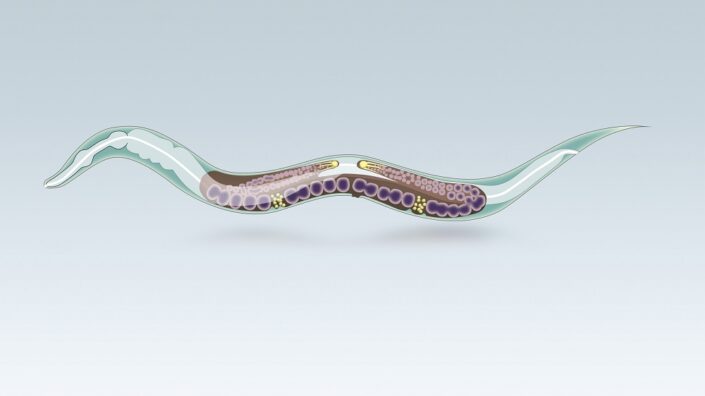
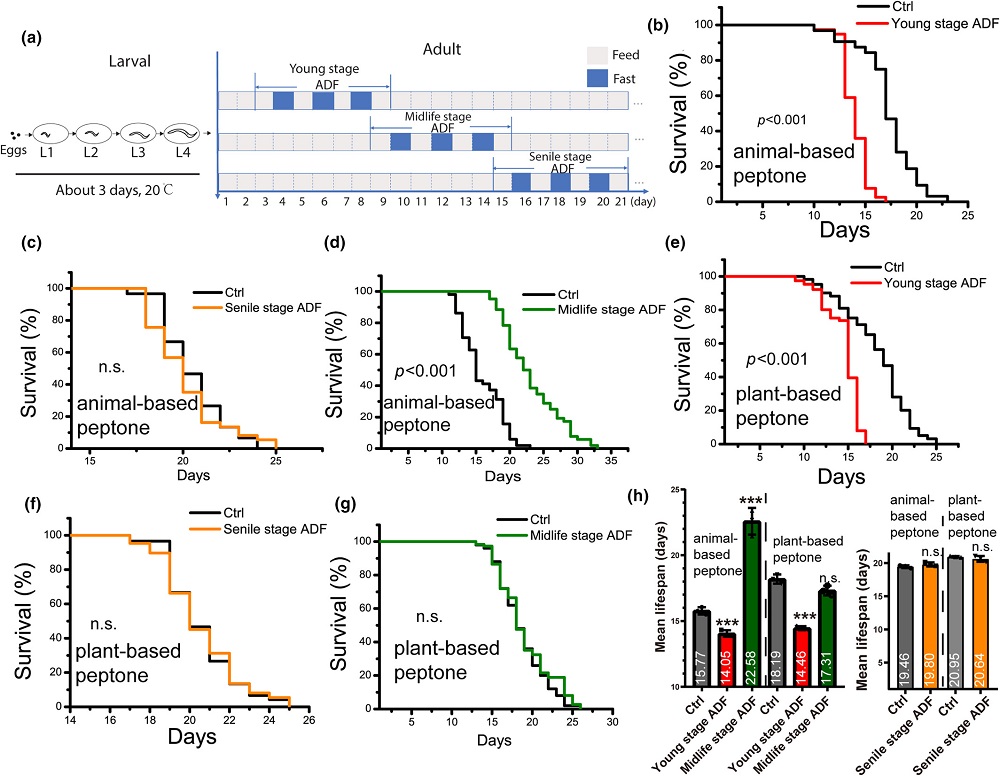
Research published in Aging Cell has revealed that a nematode species commonly used for aging research lives much longer on an alternate-day fasting regimen, but only when it is administered in middle age and only when the worms are consuming an animal-based protein source.

Deciding what to restrict and when

Dietary restriction practices have been broadly reported as being beneficial for health [1]. Some of these focus on restricting calories over time, while others restrict when food can be taken in at all. Alternative-day fasting, which limits food intake to every other day, is one of the most stark forms, and it has been previously reported to lengthen the lifespan of C.elegans, a roundworm that is commonly used in longevity experiments [2].

While the biological mechanisms of dietary restriction have been explored, there are still questions remaining as to how it relates to aging and the role of protein restriction, and protein sources, in this sort of intervention [3]. To answer them, these researchers studied C.elegans with a focus on the lysomes, the cellular organelles responsible for breaking down proteins.

Strong benefitss in a single population

In this experiment, the researchers began alternate-day fasting (ADF) at three different time periods in these worms’ lives, with either plant-based or animal-based food sources. Young worms suffered badly from ADF: egg-laying was greatly impaired, with eggs hatching inside the worms. Even when a sterile strain was used, early-life ADF caused dramatic decreases in lifespan. Examination of the specific genes involved suggested that fundamental developmental pathways were being harmed.

On the other hand, ADF greatly lengthened the lives of middle-aged worms that were fed animal-based protein solution instead of a plant-based one. This finding is surprising, as C.elegans‘ lifespan is only moderately lengthened by feeding the worms plant-based instead of animal-based protein sources. Additionally, beginning ADF in worms near the end of their lifespans yielded no benefit.

Alternate-day fasting in worms

These results were found to be due to the upregulation of cpr-2 and cpr-5, two genes related to lysosomal function. In C.elegans, lysosomes grow long tubes with aging, decrease in acidity, and decrease in number; however, ADF restricted this lengthening and helped the worms retain more lysosomes with the proper acidity. This lysosomal protection and lifespan extension was counteracted when genetic or other interventions were used to block these genes or their downstream effects, showing that they indeed were the cause. Once more, these effects were only in worms fed animal protein; ADF had no measurable effects on worms fed plant-based proteins.

While it did not affect cells’ self-consumption of damaged organelles (autophagy), ADF had notable positive effects on fat consumption (lipophagy) and the clearance of aggregated proteins. As aggregated proteins are a fundamental aspect of aging and are core to such crippling brain diseases as Alzheimer’s and Parkinson’s, the researchers closely examined model worms for their ability to deal with the key proteins involved. Once more, ADF was found to have beneficial effects in clearing out these dangerous aggregates, but again, these effects only occurred in worms fed animal-based protein.

These findings will take considerably more work to apply to other animals, including human beings. These experiments demonstrated the effectiveness of fasting every other day in a worm that usually lives for less than a month. Furthermore, the researchers could not ascertain exactly why ADF only showed measurable effects in worms fed animal-based protein; a careful assessment of lysosomal protein relationships will be needed to determine why this is the case.

We would like to ask you a small favor. We are a non-profit foundation, and unlike some other organizations, we have no shareholders and no products to sell you. All our news and educational content is free for everyone to read, but it does mean that we rely on the help of people like you. Every contribution, no matter if it’s big or small, supports independent journalism and sustains our future.

Literature

[1] Longo, V. D., Di Tano, M., Mattson, M. P., & Guidi, N. (2021). Intermittent and periodic fasting, longevity and disease. Nature aging, 1(1), 47-59.

[2] Honjoh, S., Yamamoto, T., Uno, M., & Nishida, E. (2009). Signalling through RHEB-1 mediates intermittent fasting-induced longevity in C. elegans. Nature, 457(7230), 726-730.

[3] Solon-Biet, S. M., Mitchell, S. J., Coogan, S. C., Cogger, V. C., Gokarn, R., McMahon, A. C., … & Le Couteur, D. G. (2015). Dietary protein to carbohydrate ratio and caloric restriction: comparing metabolic outcomes in mice. Cell reports, 11(10), 1529-1534.

Rat in maze

Cellular Reprogramming Improves Cognition in Aged Rats

Scientists have shown that prolonged, continuous expression of reprogramming factors counters cognitive decline in old rats and probably decreases their epigenetic age [1].

Reprogramming and cognitive function

Cellular reprogramming, the act of bringing differentiated cells back to a stem-like pluripotent state by expressing certain genes, has been one of the hottest subfields in longevity in recent years. Reprogramming, which can be either full or partial, also results in cellular rejuvenation.

Numerous studies have shown that reprogramming can increase healthspan and lifespan in animal models. However, in vivo reprogramming can also lead to disease and death due to harsh side effects [2]. Creating effective and safe reprogramming protocols is very much a work in progress.

One aspect that has not received a lot of attention is the impact of cellular reprogramming on age-related cognitive decline. In this new study published in GeroScience, researchers delivered viral vectors carrying the four “classic” reprogramming factors known as OSKM into the hippocampi of aged female rats. A month after the injections, the researchers ran tests to ascertain their effects on the animals’ cognitive function.

Unlike creating transgenic OSKM-expressing mice, introducing OSKM via viral vectors has a good safety profile, at least for now. As their inspiration, the authors mention “the pioneering results achieved by David Sinclair’s team employing OSK gene therapy in the retina of mice.” [3] Sinclair’s group had omitted the fourth factor, c-Myc, because of its cancer-causing (oncogenic) potential, but in this new study, the researchers used the full four-factor cocktail.

You can teach an old rat new tricks

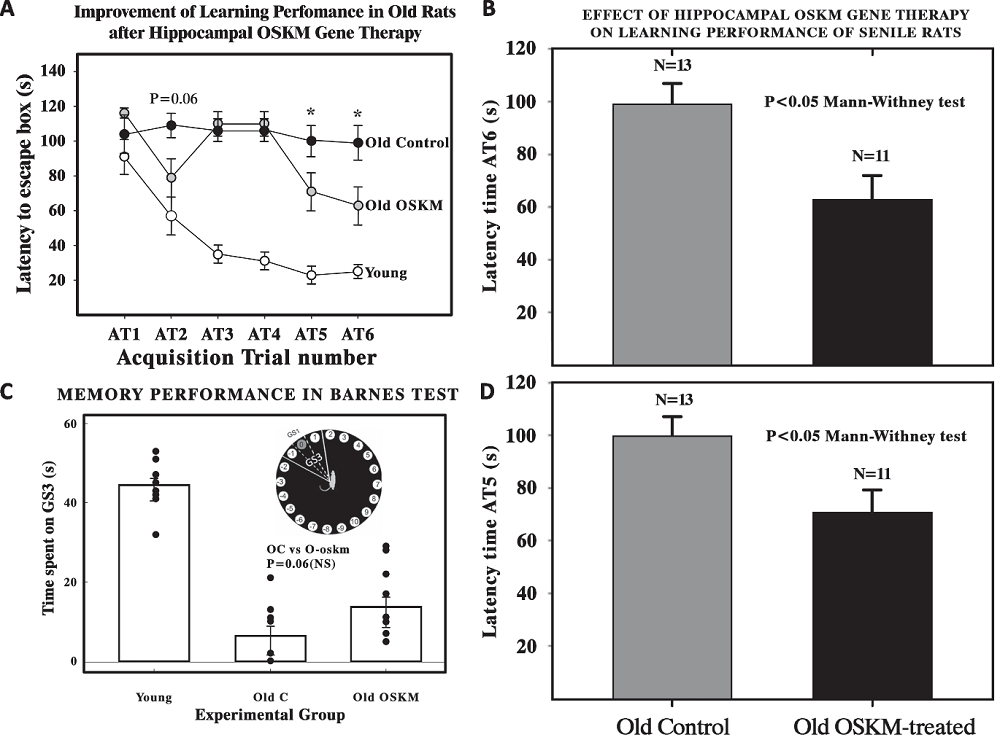
The researchers employed the Barnes memory test to assess learning performance and spatial memory. During six acquisition training (AT) sessions, the rats were tasked with locating an escape box within two minutes, which was concealed beneath one of 20 holes around the edge of the platform.

OSKM on Cognition

Old untreated rats showed marked cognitive decline compared to young animals. While young animals learned the location of the escape hole quickly, and their results plateaued after three to five trials, their aged counterparts seemed to have lost this learning ability almost completely.

The OSKM-treated rats were somewhere in the middle, demonstrating notable improvement on the fifth and the sixth attempts, although still not on par with the young animals. After an improvement on AT2, the results worsened on AT3 and AT4, which the researchers do not have a definitive explanation for yet.

Steve Horvath, a renowned geroscientist currently with UCLA and Altos Labs, and the corresponding author on the study, told lifespan.io that “there might have been a major stress response that initially negated the beneficial effects. Once the stress response subsided, the benefits became apparent. In other words, it could be a hormesis effect at the level of brain cells.”

The second lead author, Rodolfo Goya of the National University of La Plata in Argentina, suggested that the AT2 value might have been noisy and that the real statistically significant improvement in the study group occurred starting with AT5.

The expression of the OSKM genes in the dentate gyrus, a hippocampal region, was detectable for at least four weeks after the injection. According to the paper, “39 days of continuous OSKM expression induced no pathological alterations in the hippocampal parenchyma or other brain regions.”

Mild biological age decrease

The researchers then investigated whether the treatment had led to a decrease in biological age versus controls, as measured by three different epigenetic clocks. Such clocks, pioneered by Horvath himself, are based on DNA methylation patterns that are known to correlate with chronological age and mortality. According to the clocks, the treatment led to mild rejuvenation. The difference was statistically significant when a one-tailed p-value test was used – in other words, where only the possibility of the treatment lowering biological age, but not of increasing it, was considered.

“I find it very surprising that this gene therapy seems to rejuvenate both cognitive function and the methylation patterns of the hippocampus,” Horvath said. “This paper contributes to the growing body of literature suggesting that interrupted reprogramming could have beneficial effects on the brain.”

In our study, we specifically investigated the effects of OSKM gene delivery on hippocampal DNA methylation. We found suggestive evidence of epigenetic rejuvenation, corroborated by two separate epigenetic clocks designed specifically for rat and mouse brain samples. These findings align with numerous studies that have also reported signs of epigenetic rejuvenation in human and mouse cells and tissues following OSKM or OSK application. While our sample size was limited (n=8 old OSKM-treated samples versus n=6 old controls), these epigenetic clocks, trained using independent data, provide insights due to their accuracy.

We would like to ask you a small favor. We are a non-profit foundation, and unlike some other organizations, we have no shareholders and no products to sell you. All our news and educational content is free for everyone to read, but it does mean that we rely on the help of people like you. Every contribution, no matter if it’s big or small, supports independent journalism and sustains our future.
Literature

[1] Horvath, S., Lacunza, E., Mallat, M. C., Portiansky, E. L., Gallardo, M. D., Brooke, R. T., … & Goya, R. G. (2024). Cognitive rejuvenation in old rats by hippocampal oskm gene therapy. GeroScience, 1-15.

[2] Parras, A., Vílchez-Acosta, A., Desdín-Micó, G., Picó, S., Mrabti, C., Montenegro-Borbolla, E., … & Ocampo, A. (2023). In vivo reprogramming leads to premature death linked to hepatic and intestinal failure. Nature Aging, 3(12), 1509-1520.

[3] Lu, Y., Brommer, B., Tian, X., Krishnan, A., Meer, M., Wang, C., … & Sinclair, D. A. (2020). Reprogramming to recover youthful epigenetic information and restore vision. Nature, 588(7836), 124-129.

Inflamed joints

Exploring Senescence in Tendon Function

In Aging Cell, researchers have published new data on the relationship between senescence and the extracellular matrix in the tendons of older people.

Easy to injure, hard to heal

The researchers begin this paper by pointing out that injuries to the musculoskeletal system are responsible for over a quarter of the years that elderly people spend living with disability instead of good health [1]. A significant portion of these injuries are to the tendons; for example, over half of people over 80 have sustained injuries to the tendons of a shoulder’s rotator cuff [2]. Compounding the problem, older people have a much harder time healing from these injuries than younger people [3].

The tendons are largely composed of the extracellular matrix (ECM), which is primarily made of collagen, along with an interfascicular matrix composed of collagens and proteins [4]. Exactly how these tissues age is unclear, as data often depends on the exact age of the person and the specific tendon measured. Cross-linking of this collagen plays a significant role [5], as do age-related cellular changes: with aging, the cells in the tendons do not proliferate as well [4], which is likely to be a reason for the slower healing.

The cells responsible for tendon maintenance (tenocytes) engage in a balancing act, producing matrix metalloproteinases (MMPs) to destroy damaged matrix tissues [6] while also synthesizing proteins with which to rebuild these tissues [7]. Exercise and a lack of exercise can affect this process as well.

However, cellular senescence might put its thumb on the scale. Senescent cells secrete multiple compounds, and MMPs are among them [8]. These researchers note that because 2D models do not accurately replicate how cells interact with each other and with the matrices surrounding them, the effects of senescence on tendons have not been properly examined. For this purpose, they used a system of live tendon explants that they had used in a previous study [9].

Why young cells heal better

There were four groups of cells used in total: three of them were taken from young mice, with one group being exposed to radiation and another group being exposed to doxorubicin, both of which induce senescence. One group of young cells was not exposed to any senescence inducers, and the fourth group was from naturally aged mice.

After confirming that doxorubicin and radiation induce senescence both in tendons and in tenocytes, the researchers examined how these cells functioned by placing them in a cellular culture. This environment is devoid of stresses, so it replicates a mechanical-unloading injury. Interestingly, natural aging was less harmful in some respects than induced senescence: the cells exposed to both of these inducers lost the ability to produce common Type 1 collagen over time in this culture, and critical proteoglycans used for tissue creation were less present as well. The researchers hypothesized that this reflects senescent tendons’ inability to heal properly.

Similarly, amino acids that are part of the collagen formation process were significantly more present in the healthy young tendons than in the other three. The researchers also discovered metabolic changes in the cells, although that was outside the scope of this experiment.

Not all MMPs are the same

Some of the MMPs that the researchers measured had completely different trajectories than others. After 14 days in culture, MMP-1 was significantly less expressed in the three senescent groups and maintained in the young group. MMP-3, curiously, was increased the most in the induced-senescence groups, increasing nearly as much in the young group and only somewhat increasing in the aged roup. MMP-13, on the other hand, also increased in all groups, but by far increasing the most in the naturally aged group. These findings, in addition to findings showing that inflammatory chemicals were broadly increased in all groups, surprised the researchers, who had expected more evidence of tissue breakdown due to senescence.

These findings are explained by a lack of stress being interpreted as injury, which causes the cells to behave in a way that is similar to senescence. However, not all of these changes are the same; for example, cells responding to injury do not stop dividing as senescent cells do, and it is unclear whether or not these changes are permanent [10].

The researchers then performed a preliminary investigation with tissues under stress, comparing doxorubicin-treated young cells to untreated young cells. Amazingly, they found few differences in the performance of these tissues. Therefore, they had to conclude that the senescence-associated secretory phenotype (SASP) is either not a major part of failing tendon function under normal circumstances or affects it in a way that this study was unable to detect. While these are largely negative results, they clear an important space and encourage investigation into other areas.

We would like to ask you a small favor. We are a non-profit foundation, and unlike some other organizations, we have no shareholders and no products to sell you. All our news and educational content is free for everyone to read, but it does mean that we rely on the help of people like you. Every contribution, no matter if it’s big or small, supports independent journalism and sustains our future.

Literature

[1] Briggs, A. M., Cross, M. J., Hoy, D. G., Sànchez-Riera, L., Blyth, F. M., Woolf, A. D., & March, L. (2016). Musculoskeletal health conditions represent a global threat to healthy aging: a report for the 2015 World Health Organization world report on ageing and health. The Gerontologist, 56(suppl_2), S243-S255.

[2] Teunis, T., Lubberts, B., Reilly, B. T., & Ring, D. (2014). A systematic review and pooled analysis of the prevalence of rotator cuff disease with increasing age. Journal of shoulder and elbow surgery, 23(12), 1913-1921.

[3] Ackerman, J. E., Bah, I., Jonason, J. H., Buckley, M. R., & Loiselle, A. E. (2017). Aging does not alter tendon mechanical properties during homeostasis, but does impair flexor tendon healing. Journal of Orthopaedic Research, 35(12), 2716-2724.

[4] Siadat, S. M., Zamboulis, D. E., Thorpe, C. T., Ruberti, J. W., & Connizzo, B. K. (2021). Tendon extracellular matrix assembly, maintenance and dysregulation throughout life. Progress in Heritable Soft Connective Tissue Diseases, 45-103.

[5] Couppe, C., Hansen, P., Kongsgaard, M., Kovanen, V., Suetta, C., Aagaard, P., … & Magnusson, S. P. (2009). Mechanical properties and collagen cross-linking of the patellar tendon in old and young men. Journal of applied physiology, 107(3), 880-886.

[6] Sbardella, D., R Tundo, G., Francesco Fasciglione, G., Gioia, M., Bisicchia, S., Gasbarra, E., … & Marini, S. (2014). Role of metalloproteinases in tendon pathophysiology. Mini Reviews in Medicinal Chemistry, 14(12), 978-987.

[7] Aggouras, A. N., Stowe, E. J., Mlawer, S. J., & Connizzo, B. (2024). Aged Tendons Exhibit Altered Mechanisms of Strain-Dependent Extracellular Matrix Remodeling. Journal of Biomechanical Engineering, 1-41.

[8] Coppé, J. P., Desprez, P. Y., Krtolica, A., & Campisi, J. (2010). The senescence-associated secretory phenotype: the dark side of tumor suppression. Annual review of pathology: mechanisms of disease, 5(1), 99-118.

[9] Connizzo, B. K., Piet, J. M., Shefelbine, S. J., & Grodzinsky, A. J. (2020). Age-associated changes in the response of tendon explants to stress deprivation is sex-dependent. Connective tissue research, 61(1), 48-62.

[10] Chu, X., Wen, J., & Raju, R. P. (2020). Rapid senescence‐like response after acute injury. Aging Cell, 19(9), e13201.

Whole foods

A Switch to Whole Food Diets Benefits Elderly People

New research demonstrated how transitioning from a typical Western diet composed of processed foods to a whole-food diet improved cardiometabolic health and body composition and impacted gut microbiome metabolites in elderly people [1].

You are what you eat

While this study was conducted in Australia, the foods commonly consumed there are similar to common foods in the United States and many other parts of the world. As the authors noted, this Western diet is composed mostly of industrially processed foods, is high in refined sugar, salt, and saturated fat, and is low in protein and fiber. This diet is a well-known contributor to obesity, comorbidities, and increased all-cause mortality [2, 3].

On the other hand, whole-food diets and plant-derived foods have been found to positively impact health [4]. Those diets are rich in fiber, micronutrients, phytochemicals, complex carbohydrates, and plant proteins that are usually absent in Western diets.

The authors also pointed out that the quality and ratios of macronutrients are important for a healthy diet. There has also been substantial research into plant and animal protein sources and the ratios of fats, carbohydrates, and protein in various diets.

Dietary interventions in the elderly

The authors of this 4-week randomized controlled trial aimed to assess the effects of plant or animal protein sources, the fat-to-carbohydrate ratio, and the impact of transitioning from a standard Western diet to a whole-food diet, which has not been previously assessed in older individuals.

The study participants were 113 healthy individuals between the ages of 65 and 75. The participants were divided into four groups, each following a different diet: omnivorous (which includes plant and animal food) with high fat, omnivorous with high carbohydrates, semi-vegetarian with high fat, and semi-vegetarian with high carbohydrates. Access to food was not limited. Diets were carefully planned to match energy and protein concentration and followed the same menu. However, specific items were tailored to match a treatment group. Participants kept food records regarding the amount of food consumed.

Major health improvements

The authors noted “improvement across all measured health domains independent of diet treatments.” They hypothesize that transitioning from a Western diet to a whole-food diet is greatly responsible for the observed improvements.

The researchers observed that participants’ total energy intake and appetite didn’t change during the study. However, the levels of FGF-21, a marker of protein appetite, were significantly changed. Reducing protein consumption by 21% increased the FGF-21 levels by 25%.

Previous research observed that lowering protein intake usually results in increasing total food intake as a compensatory mechanism, and this seems to be particularly common in environments with plenty of unhealthy food options. This study seems to agree with those observations, as the researchers observed a 5% increase in food intake. Additionally, participants with high baseline FGF-21 levels exhibited high protein appetite during the study.

Despite not observing significant changes in energy consumption, the researchers observed changes in the participants’ body composition: a 3% reduction in body weight, a 5% reduction in fat mass, and a 0.7% reduction in lean mass (including muscle mass). This modest reduction in fat-free mass didn’t affect muscle strength; on the contrary, tests on muscle function showed improvement.

The authors also note that participants lost, on average, 1.7 kilograms (3.7 pounds) in the week preceding the study. During that week, the participants were tasked with recording their normal food intakes, which served as their baselines for this study. Just the act of recording food intake may lead to weight loss, as participants unintentionally improve their diets or reduce the amount of food they eat in order to lessen the burden of recording it. If this baseline is already improved compared to participants’ actual diets, then the outcomes of the dietary intervention might be underreported. This baseline weight loss might have resulted from reduced alcohol consumption during the study.

The researchers also investigated markers of cardiometabolic health. They observed that the participants who consumed more vegetarian diets had the greatest reductions in diastolic blood pressure. They also observed some positive changes in all study groups, including systolic blood pressure; total, LDL, and HDL cholesterol; insulin level: and insulin resistance. These observations agree with previous research that links plant-based diets with better cardiometabolic health.

Treats for the gut microbiota

Food in the gut also feeds the armies of various microbes that live in the intestines. Among other factors, the numbers of various species is dependent on what they are fed, so these researchers investigated how the gut flora changed. The omnivorous, high carbohydrate group experienced the biggest change in gut microbiome diversity. However, all dietary interventions led to increased production of bacterial metabolites from the fermentation of dietary fiber, which aligns with the reported increase in fiber consumption. Those metabolites “have been associated with better health outcomes, conferring protective effects in inflammation, cancer, diabetes and cardiovascular diseases.”

The authors note that the relatively short duration of this study and the limited number of fecal samples collected for the analysis might not be sufficient to observe major changes to the gut microbiome. Other major factors impacting this microbiome were also not accounted for in this study.

In conclusion, our observational results suggest that transitioning from a “standard Australian diet” to feasible alternatives-whether moderately higher or lower in F:C [fat to carbohydrate] and predominantly plant- or animal-based can improve several health markers relevant to older age. This demonstrates that a healthy diet rich in fruit, vegetables, fibre, moderate amounts of protein, regardless of their sources, while restricting alcohol and highly processed food, can be beneficial for various health domains in older adults. Furthermore, PBD [plant-based-diet] appears to offer additional benefits for cardiometabolic health.

We would like to ask you a small favor. We are a non-profit foundation, and unlike some other organizations, we have no shareholders and no products to sell you. All our news and educational content is free for everyone to read, but it does mean that we rely on the help of people like you. Every contribution, no matter if it’s big or small, supports independent journalism and sustains our future.
Literature

[1] Ribeiro, R. V., Senior, A. M., Simpson, S. J., Tan, J., Raubenheimer, D., Le Couteur, D., Macia, L., Holmes, A., Eberhard, J., O’Sullivan, J., Koay, Y. C., Kanjrawi, A., Yang, J., Kim, T., & Gosby, A. (2024). Rapid benefits in older age from transition to whole food diet regardless of protein source or fat to carbohydrate ratio: Arandomised control trial. Aging cell, e14276. Advance online publication.

[2] Ludwig, D. S., & Ebbeling, C. B. (2018). The Carbohydrate-Insulin Model of Obesity: Beyond “Calories In, Calories Out”. JAMA internal medicine, 178(8), 1098–1103.

[3] Schnabel, L., Kesse-Guyot, E., Allès, B., Touvier, M., Srour, B., Hercberg, S., Buscail, C., & Julia, C. (2019). Association Between Ultraprocessed Food Consumption and Risk of Mortality Among Middle-aged Adults in France. JAMA internal medicine, 179(4), 490–498.

[4] Song, M., Fung, T. T., Hu, F. B., Willett, W. C., Longo, V. D., Chan, A. T., & Giovannucci, E. L. (2016). Association of Animal and Plant Protein Intake With All-Cause and Cause-Specific Mortality. JAMA internal medicine, 176(10), 1453–1463.

Antibodies attacking tumors

Antinuclear Antibody Shows Promise Against Cancer

Scientists have developed a conjugate of a drug and a nucleus-targeting antibody that can attack multiple types of cancer cells without targeting a particular antigen [1].

The anti-nuclear missile

Antinuclear antibodies (ANA) are usually associated with autoimmune diseases, such as lupus, where those antibodies attack cellular nuclei, binding to nucleic acids and other local molecules. ANAs’ ability to penetrate cellular membranes has drawn oncologists’ attention because ANAs can be conjugated with drugs and deliver them into tumor cells.

Some ANAs have an interesting Trojan horse-like strategy for sneaking into cells. They bind to extracellular nucleic acids and short chunks of DNA (nucleosomes) and piggyback on salvage pathways that transport those useful molecules back into cells [2]. In this new study, scientists from Yale university used this mechanism to attack cancer.

In fast-growing tumors, some cells do not get enough oxygen and nutrients and die off. This process, called tumor necrosis, is indicative of the tumor’s aggressiveness.

Those dead cells emit a lot of nucleosides, which are precursor molecules to nucleotides, DNA’s building blocks. Living cancer cells employ transporter proteins to bring those nucleosides back in where they can be reused.

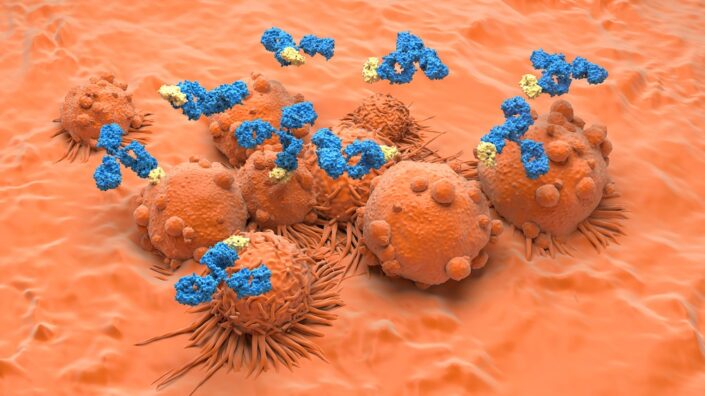
Exploiting this effect, the researchers developed an antinuclear antibody-drug conjugate (ANADC) that targets those tumor-specific “nucleoside junkyards” and hitches a ride into tumor cells with those same transporter proteins. Upon uptake by the cell, ANADCs are cleaved by the protein cathepsin B, and the drug (the division-preventing agent monomethyl auristatin E, or MMAE) is released into the cytoplasm. The researchers describe their invention as “an anti-nuclear missile.”

Tumor growth suppressed

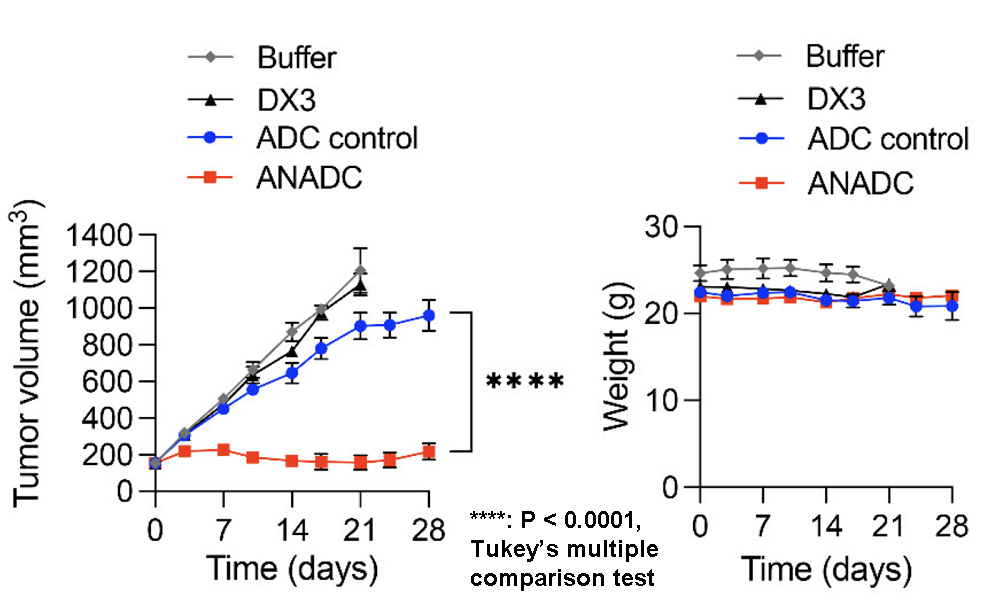
The researchers tested their invention on the U87 cell line, which is an established model of brain cancer. Treatment with ANADC caused a drastic decrease in the cells’ viability. Conversely, other approaches, such as an antibody-drug conjugate based on a non-antinuclear antibody, failed to achieve noticeable cytotoxicity.

In a mouse model of triple-negative breast cancer, the treatment completely suppressed tumor growth, while antibodies and non-antinuclear antibody-drug conjugates did not. The mice did not experience weight loss, which suggests a lack of off-target toxicity. ANADC was still effective, although not as drastically, in a model of colon cancer.

Anti-nuclear antibody effectiveness

Crossing the blood-brain barrier

The toughest test, however, was brain tumors. Those hide behind the blood-brain barrier (BBB), which is impervious to most antibodies and antibody-drug conjugates. Nucleoside transporters, however, know how to traverse it.

The researchers confirmed that in a mouse U87 model of glioma, ANADC were indeed able to cross the BBB using the nucleoside transporter ENT2 and to target tumors. The treatment significantly increased the length of survival, although it did not cure the cancer completely. Importantly, advanced brain cancers are among the deadliest and fastest growing. No significant off-target deposition of ANADC was detected, suggesting high anti-cancer specificity.

According to the researchers, their invention has important advantages over current treatments, the most obvious one being that it does not target tumor cells via a specific antigen. Identifying the antigen that can be targeted in oncology is a complex and multifaceted process due to tumors’ genetic heterogeneity and other factors [3]. Pending further improvements, ANADC can potentially become an effective and fast off-the-shelf option for treating multiple cancer types.

The ANADC developed here targets the nucleic acid exhaust released by necrotic tumor cells and exploits mechanisms of nucleoside salvage by live cancer cells in the area as a DNA-seeking “antinuclear missile”. Antibody localization to extracellular nucleic acid waste helps mitigate concerns over target antigen depletion during therapy as tumor cell turnover and death yield a continuously renewing source of nucleic acids to draw ANADC to tumor microenvironments.

We would like to ask you a small favor. We are a non-profit foundation, and unlike some other organizations, we have no shareholders and no products to sell you. All our news and educational content is free for everyone to read, but it does mean that we rely on the help of people like you. Every contribution, no matter if it’s big or small, supports independent journalism and sustains our future.
Literature

[1] Cao, F., Tang, C., Chen, X., Tu, Z., Jin, Y., Turk, O. M., … & Hansen, J. E. (2024). Cathepsin B Nuclear Flux in a DNA-Guided “Antinuclear Missile” Cancer Therapy. ACS Central Science.

[2] Weisbart, R. H., Chan, G., Jordaan, G., Noble, P. W., Liu, Y., Glazer, P. M., … & Hansen, J. E. (2015). DNA-dependent targeting of cell nuclei by a lupus autoantibody. Scientific Reports, 5(1), 1-6.

[3] Balibegloo, M., Keshavarz-Fathi, M., & Rezaei, N. (2021). Tumor Antigen Identification for Cancer Immunotherapy. Cancer Immunology: Bench to Bedside Immunotherapy of Cancers, 53-59.

Osteoarthritis

Exploring How Stiffness Promotes Osteoarthritis

In iScience, researchers have explained how physical mechanics can alter mitochondrial function in a way that leads to osteoarthritis.

When simple physics affects biology

Previous work has pinpointed abnormal mechanical loading, which occurs when joints are placed under excessive stresses in ways that they were not meant to handle, as a key driver of osteoarthritis [1]. This phenomenon can lead to the death or senescence of chondrocytes, the cells responsible for creating cartilage [2].

The microenvironment of the extracellular matrix (ECM) plays a strong role in the metabolism of chondrocytes [3]. This microenvironment can cause these cells’ mitochondria to uptake calcium [4], and in osteoarthritis, mineral particles begin to form on the joints, after which fibers and packed material are gradually pushed into the joints [5].

Mitochondrial dysfunction brought on by mechanical stresses has been found to be a core component of osteoarthritis [6], and these researchers have noted a downstream pathway: the stressed mitochondria communicate with the nucleus in a way that leads to the demethylation of H3K27me3, a key component of epigenetics [7].

The problems with stiffness

For their first experiment, the researchers used a gel substrate at three different stiffnesses and then grew an established line of chondrocytes in it. The stiffer the gel was, the more calcium was taken up by the chondrocytes. Genes related to stress in protein processing machinery (the endoplasmic reticulum) were upregulated as well.

The cells grown in stiffer conditions also had a decrease in Col2a1, a gene related to the formation of more complex molecules (anabolism), while Mmp13, a gene related to the breaking down of those molecules (catabolism), was increased. This implies that the same thing may be happening in vivo: that increased stress encourages chondrocytes to break down, rather than form, cartilage. Chondrocytes under stiffer conditions are also more prone to death by apoptosis.

The researchers also observed how mitochondria fail with increasing stiffness. At the lightest stiffness, mitochondria formed a normal network, doubling that stiffness broke up that network, and tripling it caused mitochondrial fragments and rings instead of a network of any kind. Mitochondrial division-related proteins increased, and fusion-related proteins decreased, with stiffness; additionally, the mitochondria were less efficient at producing energy.

Intracellular calcium was found to be key to this process. When intracellular calcium was removed, mitochondria under high-stiffness conditions functioned very closely to those under low-stiffness conditions, and they regained some of their energy production capacity.

Pinpointing the dysfunction

The increase in calcium released from the mitochondria increased their membranes’ permeability, which led to an increase in the expression of Phf8. This, the researchers found, was directly related to the demethylation of H3K27me3. Silencing Phf8 prevented this increase in demethylation brought on by stiffness.

These findings were confirmed in mice. An RNA silence of Phf8.was injected into the joints.of mouse model of osteoarthritis. The injected mice had more stable cartilage, more normal mitochondrial fusion and fission, and less demethylation of H3K27me3.

While there was no human testing of Phf8 involved, the researchers did confirm, through cartilage samples taken from human volunteers, that stiffness of the ECM was directly related to the progression of osteoarthritis.

This is an exploratory study, and there was no drug discovery involved; it may prove impractical to use Phf8 as a clinical target, and there may be side effects to this approach. However, in addition to approaches that focus on ECM stiffness itself, such as the well-known problem of cross-linked collagen, targeting how chondrocytes respond to this stiffness may be valuable in treating this crippling ailment.

We would like to ask you a small favor. We are a non-profit foundation, and unlike some other organizations, we have no shareholders and no products to sell you. All our news and educational content is free for everyone to read, but it does mean that we rely on the help of people like you. Every contribution, no matter if it’s big or small, supports independent journalism and sustains our future.

Literature

[1] Katz, J. N., Arant, K. R., & Loeser, R. F. (2021). Diagnosis and treatment of hip and knee osteoarthritis: a review. Jama, 325(6), 568-578.

[2] Chang, S. H., Mori, D., Kobayashi, H., Mori, Y., Nakamoto, H., Okada, K., … & Saito, T. (2019). Excessive mechanical loading promotes osteoarthritis through the gremlin-1–NF-κB pathway. Nature communications, 10(1), 1442.

[3] Peng, Z., Sun, H., Bunpetch, V., Koh, Y., Wen, Y., Wu, D., & Ouyang, H. (2021). The regulation of cartilage extracellular matrix homeostasis in joint cartilage degeneration and regeneration. Biomaterials, 268, 120555.

[4] Li, X., Kordsmeier, J., Nookaew, I., Kim, H. N., & Xiong, J. (2022). Piezo1 stimulates mitochondrial function via cAMP signaling. FASEB journal: official publication of the Federation of American Societies for Experimental Biology, 36(10), e22519.

[5] Jiang, W., Liu, H., Wan, R., Wu, Y., Shi, Z., & Huang, W. (2021). Mechanisms linking mitochondrial mechanotransduction and chondrocyte biology in the pathogenesis of osteoarthritis. Ageing research reviews, 67, 101315.

[6] Blanco, F. J., Rego, I., & Ruiz-Romero, C. (2011). The role of mitochondria in osteoarthritis. Nature Reviews Rheumatology, 7(3), 161-169.

[7] Peña-Oyarzun, D., Rodriguez-Peña, M., Burgos-Bravo, F., Vergara, A., Kretschmar, C., Sotomayor-Flores, C., … & Criollo, A. (2021). PKD2/polycystin-2 induces autophagy by forming a complex with BECN1. Autophagy, 17(7), 1714-1728.

Mouse knitting DNA

Late-Life Treatment Increases Mouse Lifespan by 25%

A new mouse study has found that both germline knockout and late-life inhibition of the pro-inflammatory cytokine IL-11 lead to comparable and powerful healthspan and lifespan extension [1].

The inflammatory message

As part of inflammaging, the pro-inflammatory cytokines that act as messengers, transferring and amplifying inflammatory signals, generally increase with age.

Despite its links to cellular senescence, IL-11 is not the most well-known of these cytokines. However, this close relative of the better-researched IL-6 has been shown to stimulate important age-related metabolic pathways, which include the mechanistic target or rapamycin (mTOR) [2]. Using rapamycin and other means to Inhibit mTOR potently increases healthspan and lifespan in various animal models [3].

Its various effects have made this obscure cytokine the subject of a new study by an international team of scientists, which was published in Nature.

Multiple health benefits

First, the researchers confirmed IL-11’s age-related upregulation in mice. Old mice had more IL-11 across many cell types and tissues, most notably in liver cells (hepatocytes), fat cells (adipocytes), and muscle cells (myocytes) in skeletal muscle.

To study the effects of IL-11, the researchers created genetically modified mice with the IL-11-producing gene knocked out (IL-11-KO). Despite missing the protein, the modified animals showed improved metabolism and lower levels of the senescent markers p16 and p21.

Two-year-old IL-11-KO mice had lower body weights, decreased fat mass, and increased lean mass. They also had attenuated serum triglyceride and cholesterol levels compared to controls.

Two markers of liver damage, ALT and AST, increased with age in wild-type mice but not in the genetically modified ones. Digging deeper into the molecular mechanisms behind those health benefits, the researchers found that mTOR was significantly downregulated in the study group, while AMPK, a kinase that mitigates mTOR, was upregulated.

IL-11 knockout also slowed down telomere attrition and the loss of mitochondrial DNA, which is a marker of mitochondrial health. Interestingly, average body temperature was slightly higher in the study group, hinting at differences in metabolism.

While genetic manipulations to the germ line are a neat way to investigate a protein’s function, they are hardly translatable into actual therapies. The researchers created a more realistic setting by treating 75-week-old mice (about equivalent to 55-year-old humans) with IL-11-blocking antibodies.

Despite the late start, the treated mice of both sexes quickly lost fat. Their frailty scores, full-body strength, and glucose metabolism improved significantly. Like the IL-11-KO mice, they had better glucose control and liver function, and slightly increased body temperature. Levels of phosphorylated mTOR plummeted, and of AMPK, a kinase that downregulates mTOR, increased.

Late start, mighty life extension

Most importantly, IL-11-deficient mice also received a lifespan boost. Genetic deletion of IL-11 increased median lifespan of both sexes by almost 25%, while late-life IL-11 inhibition increased median lifespan in males by 22.5% and in females by 25%.

IL-11 Removal Survival Rates

These results are impressive and on par with some of the best life-extending interventions in mice currently known to science. The fact that the late-life treatment was practically as impactful as lifelong genetic deletion is particularly stunning. Importantly, while many known geroprotectors increase lifespan mostly or solely in one sex, the difference was minuscule here.

However, mice are not like humans in terms of causes of death. Lab mice usually die from cancer. The researchers report a much lower incidence of cancer in treated mice, but this is unlikely to be the leading cause of the life extension since IL-11 inhibition also produced a wide array of lifelong health improvements.

Inhibition of IL-11 increased lifespan in both male and female mice. The magnitude of lifespan extension remains to be fully determined but current data suggest that anti-IL-11 therapy given in late life increases median lifespan by more than 20% in both sexes. In these experiments, anti-IL-11 was injected in mice from 75 weeks of age (human equivalent to approximately 55 years of age) and it remains to be seen whether administration to older mice has similar effects and/or if short term anti-IL-11 therapy is effective for lifespan extension, as seen for rapamycin.

We would like to ask you a small favor. We are a non-profit foundation, and unlike some other organizations, we have no shareholders and no products to sell you. All our news and educational content is free for everyone to read, but it does mean that we rely on the help of people like you. Every contribution, no matter if it’s big or small, supports independent journalism and sustains our future.

Literature

[1] Widjaja, A.A., Lim, WW., Viswanathan, S. et al. (2024). Inhibition of IL-11 signalling extends mammalian healthspan and lifespan. Nature.

[2] Widjaja, A. A., Viswanathan, S., Ting, J. G. W., Tan, J., Shekeran, S. G., Carling, D., … & Cook, S. A. (2022). IL11 stimulates ERK/P90RSK to inhibit LKB1/AMPK and activate mTOR initiating a mesenchymal program in stromal, epithelial, and cancer cells. IScience, 25(8).

[3] Harrison, D. E., Strong, R., Sharp, Z. D., Nelson, J. F., Astle, C. M., Flurkey, K., … & Miller, R. A. (2009). Rapamycin fed late in life extends lifespan in genetically heterogeneous mice. nature, 460(7253), 392-395.

Pituitary tumor

Discovering Why an Inflammatory Compound Inhibits Cancer

In Aging Cell, researchers have published their findings into why the inflammatory factor IL-6 inhibits cancerous tumors when generated inside the cell.

IL-6 affects both senescence and cancer proliferation

One of the core parts of the SASP is the inflammatory cytokine interleukin 6 (IL-6). While this factor is a key aspect of the age-related chronic inflammation known as inflammaging, it also fights against cancer: a phenomenon known as oncogene-induced senescence, in which cells become senescent before they can become cancerous [1], is characterized by an increased expression of IL-6 among other factors [2].

An unusual phenomenon is visible in the pituitary gland, however. There, IL-6 stimulates cell growth [3], and cancers of the pituitary gland are encouraged to proliferate in the presence of IL-6 outside the cell [4]; however, IL-6 from inside the cell encourages these cells to become senescent instead [5]. Similarly contradictory effects were seen in melanoma as well, with IL-6 signals from outside the cell promoting proliferation while internal IL-6 encourages senesence [6].

These perplexing facts led the researchers of this study to engage in a more in-depth biological study, carefully examining some of the pathways and networks involved in IL-6 to determine why this is the case.

Finding the pathway

In their first experiment, the researchers took cancerous pituitary gland cells from rats, then inhibited their ability to secrete factors into the outside environment with the compound BFA. This encouraged the buildup of internal IL-6 instead, and this buildup led to well-known factors associated with cellular senescence, such as SA-β-gal and p16. A second method of accomplishing this, blocking the Rab11 pathway, led to similar results. The researchers also confirmed that this had nothing to do with the process of bringing IL-6 into the cell: instead, IL-6 generated inside the cell was driving senescence.

Whether or not they had their secretion inhibited, pituitary tumor cells had problems with the nuclear lamina, which is associated with senescence. This lack of nuclear cohesion leads to DNA fragments floating around in the cell, and this type of damage is sensed by the STING pathway, which is also associated with senescence.

The BFA-treated tumor cells had the same amount of STING, but it was more diffused throughout the cell. Inhibiting STING decreased the senescence-related effects of BFA and decreased the senescence-related factor NFκB as well. The researchers found that the pathway between IL-6 and NFκB was responsible for the increase in cellular senesence.

Living animals and human cells

The researchers then performed a mouse experiment, injecting immunodeficient mice with either wild-type pituitary tumor cells, one of two modified pituitary tumor cell lines that produced no IL-6, or a pituitary tumor cell line that produced very little IL-6. The wild-type cells did not form tumors in these mice, but the cells without IL-6 proliferated rapidly, forming tumors in a week; the group that produced very little IL-6 took 20 days to do so.

Similar results were found for human cells. Human lung cancer cells were treated with doxocirubin that drove them senescent, causing the proliferation of IL-6 within these cells. The receptor for receiving IL-6 from outside the cells played no part in this senescence.

While the researchers did not discover why IL-6 from outside the cell can lead to tumor proliferation, they note that their research warrants caution in the development of senomorphic or other anti-senescence drugs that inhibit cellular production of IL-6. Reducing cellular senescence is normally a good thing, but not when it leads to cancer instead.

We would like to ask you a small favor. We are a non-profit foundation, and unlike some other organizations, we have no shareholders and no products to sell you. All our news and educational content is free for everyone to read, but it does mean that we rely on the help of people like you. Every contribution, no matter if it’s big or small, supports independent journalism and sustains our future.
Literature

[1] Collado, M., Gil, J., Efeyan, A., Guerra, C., Schuhmacher, A. J., Barradas, M., … & Serrano, M. (2005). Senescence in premalignant tumours. Nature, 436(7051), 642-642.

[2] Coppé, J. P., Desprez, P. Y., Krtolica, A., & Campisi, J. (2010). The senescence-associated secretory phenotype: the dark side of tumor suppression. Annual review of pathology: mechanisms of disease, 5(1), 99-118.

[3] Graciarena, M., Carbia-Nagashima, A., Onofri, C., Perez-Castro, C., Giacomini, D., Renner, U., … & Arzt, E. (2004). Involvement of the gp130 cytokine transducer in MtT/S pituitary somatotroph tumour development in an autocrine-paracrine model. European journal of endocrinology, 151(5), 595-604.

[4] Jones, T. H., Daniels, M., James, R. A., Justice, S. K., McCorkle, R., Price, A., … & Weetman, A. P. (1994). Production of bioactive and immunoreactive interleukin-6 (IL-6) and expression of IL-6 messenger ribonucleic acid by human pituitary adenomas. The Journal of Clinical Endocrinology & Metabolism, 78(1), 180-187.

[5] Sapochnik, M., Haedo, M. R., Fuertes, M., Ajler, P., Carrizo, G., Cervio, A., … & Arzt, E. (2017). Autocrine IL-6 mediates pituitary tumor senescence. Oncotarget, 8(3), 4690.

[6] Kuilman, T., Michaloglou, C., Vredeveld, L. C., Douma, S., van Doorn, R., Desmet, C. J., … & Peeper, D. S. (2008). Oncogene-induced senescence relayed by an interleukin-dependent inflammatory network. Cell, 133(6), 1019-1031.

Multiple types of gut bacteria

Probiotics Have Positive Cognitive Effects in Trial

A clinical trial has found that consuming a multi-species probiotic formulation positively impacts mental well-being and improves cognitive functions [1].

Gut-brain crosstalk

The gut microbiome is a gathering of microorganisms in the human gut that plays multiple essential functions, from nutrient absorption to immune system modulation [2, 3]. The gastrointestinal tract (with its microbes) also tremendously impacts the brain, and this gut-brain axis is currently intensely researched [4]. Alterations to the gut microbiome are emerging as a new strategy to treat cognitive and emotional decline, which develops with old age.

The well-established cross-talk between the gut and the brain prompted the researchers to hypothesize about a possible link between the gut and neurodegenerative diseases or mood disorders. Some hypotheses suggest that imbalances in specific gut bacteria might lead to a neuroinflammatory environment, mitochondrial dysfunction, or oxidative stress, processes that could contribute to neuronal impairment [5, 6].

Bringing back the balance

However, the gut-brain connection doesn’t have to be all bad. If the imbalance in microbes can negatively impact the brain, then bringing back the balance can possibly help treat some brain disorders. The researchers are already investigating such possibilities by investigating the consumption of probiotics and prebiotics and their impacts on dementia, cognitive impairment, anxiety, and depression.

Some previous studies have shown encouraging results. Consuming some specific bacteria species was associated with an improvement in cognitive functions [7-9] and a reduction in symptoms of anxiety and depression [10]. A few clinical studies have also observed improved cognitive function after consuming probiotics [11-13].

However, the authors point out that participants in the previous studies had multiple pathologies, and there is a lack of data on whether such an effect can be obtained in a healthy, elderly population.

Therefore, the authors of this study decided to test the efficacy of a multi-species probiotic formulation, specifically Lactobacillus rhamnosus and Bifidobacterium lactis, since previous studies using this formulation didn’t give conclusive results regarding emotional and cognitive states [14-17]. The authors tested this combination “as a therapeutic strategy to attenuate the emotional and cognitive decline associated with ageing in healthy adults.”

Better cognition and well-being

For this study, the researchers conducted a randomized, double-blind, placebo-controlled crossover trial. The trial was rather small, as it included only 33 participants who were 55 or older, with a mean age of 66 years. At the baseline, the majority of participants (85.2%) showed no cognitive impairment, with 14.8% showing mild cognitive impairment.

During the trial, for ten weeks, the participants consumed a capsule containing a multispecies probiotic (or were given a placebo). This was followed by a 4-week washout period when participants followed the same diet without interventions, followed by another 10 weeks of treatment. The group that previously received a placebo was now given probiotics and vice versa. The participants were assessed at baseline, post-10-week intervention (first condition), and at the end of the study.

At the end of the experiment, the researchers didn’t observe any side effects of the treatment, but they did observe the positive impact of the bacteria consumption.

The participants participated in multiple tests to assess their cognition and psychological well-being. As the authors summarize, the results of those tests showed “a positive impact on mental well-being, leading to improved cognitive function and enhanced emotional state, along with a notable decrease in depressive symptoms.”

Possible mechanisms and limitations

While the researchers didn’t investigate the mechanism behind the consumption of the probiotics and the cognitive and emotional changes they observed, based on previous research, they hypothesized in the paper’s discussion section about possible mechanisms and pathways involved.

They proposed that the beneficial role of the strains used in this research may result from their impact on multiple processes, such as neurotransmitter release, neurogenesis, neuropeptide expression, synaptic plasticity, and neuroinflammation. They believe that restoring gut microbiome balance can also help in such processes as strengthening the intestinal barrier, modulating the stress hormone cortisol’s synthesis, and improving sleep quality.

This study had some limitations. To get better support for the hypothesis of the gut-brain-axis impact on cognition, future research should measure neurological, endocrine, or immunological parameters, such as by including stool samples or markers of inflammation or oxidative stress.

Furthermore, researchers admit they didn’t properly control for different probiotic strains that could be ingested with the food eaten by the participants, which could potentially interfere with the results. Additionally, further research would benefit from a larger sample size and a longer study duration.

We would like to ask you a small favor. We are a non-profit foundation, and unlike some other organizations, we have no shareholders and no products to sell you. All our news and educational content is free for everyone to read, but it does mean that we rely on the help of people like you. Every contribution, no matter if it’s big or small, supports independent journalism and sustains our future.
Literature

[1] Ruiz-Gonzalez, C., Cardona, D., Rueda-Ruzafa, L., Rodriguez-Arrastia, M., Ropero-Padilla, C., & Roman, P. (2024). Cognitive and Emotional Effect of a Multi-species Probiotic Containing Lactobacillus rhamnosus and Bifidobacterium lactis in Healthy Older Adults: A Double-Blind Randomized Placebo-Controlled Crossover Trial. Probiotics and antimicrobial proteins, 10.1007/s12602-024-10315-2. Advance online publication.

[2] Adak, A., & Khan, M. R. (2019). An insight into gut microbiota and its functionalities. Cellular and molecular life sciences : CMLS, 76(3), 473–493.

[3] Gomaa E. Z. (2020). Human gut microbiota/microbiome in health and diseases: a review. Antonie van Leeuwenhoek, 113(12), 2019–2040.

[4] Cryan, J. F., O’Riordan, K. J., Cowan, C. S. M., Sandhu, K. V., Bastiaanssen, T. F. S., Boehme, M., Codagnone, M. G., Cussotto, S., Fulling, C., Golubeva, A. V., Guzzetta, K. E., Jaggar, M., Long-Smith, C. M., Lyte, J. M., Martin, J. A., Molinero-Perez, A., Moloney, G., Morelli, E., Morillas, E., O’Connor, R., … Dinan, T. G. (2019). The Microbiota-Gut-Brain Axis. Physiological reviews, 99(4), 1877–2013.

[5] Harach, T., Marungruang, N., Duthilleul, N., Cheatham, V., Mc Coy, K. D., Frisoni, G., Neher, J. J., Fåk, F., Jucker, M., Lasser, T., & Bolmont, T. (2017). Reduction of Abeta amyloid pathology in APPPS1 transgenic mice in the absence of gut microbiota. Scientific reports, 7, 41802.

[6] Huang, Y., Shi, X., Li, Z., Shen, Y., Shi, X., Wang, L., Li, G., Yuan, Y., Wang, J., Zhang, Y., Zhao, L., Zhang, M., Kang, Y., & Liang, Y. (2018). Possible association of Firmicutes in the gut microbiota of patients with major depressive disorder. Neuropsychiatric disease and treatment, 14, 3329–3337.

[7] Tamtaji, O. R., Heidari-Soureshjani, R., Mirhosseini, N., Kouchaki, E., Bahmani, F., Aghadavod, E., Tajabadi-Ebrahimi, M., & Asemi, Z. (2019). Probiotic and selenium co-supplementation, and the effects on clinical, metabolic and genetic status in Alzheimer’s disease: A randomized, double-blind, controlled trial. Clinical nutrition (Edinburgh, Scotland), 38(6), 2569–2575.

[8] Hsu, Y. C., Huang, Y. Y., Tsai, S. Y., Kuo, Y. W., Lin, J. H., Ho, H. H., Chen, J. F., Hsia, K. C., & Sun, Y. (2023). Efficacy of Probiotic Supplements on Brain-Derived Neurotrophic Factor, Inflammatory Biomarkers, Oxidative Stress and Cognitive Function in Patients with Alzheimer’s Dementia: A 12-Week Randomized, Double-Blind Active-Controlled Study. Nutrients, 16(1), 16.

[9] Xiao, J., Katsumata, N., Bernier, F., Ohno, K., Yamauchi, Y., Odamaki, T., Yoshikawa, K., Ito, K., & Kaneko, T. (2020). Probiotic Bifidobacterium breve in Improving Cognitive Functions of Older Adults with Suspected Mild Cognitive Impairment: A Randomized, Double-Blind, Placebo-Controlled Trial. Journal of Alzheimer’s disease : JAD, 77(1), 139–147.

[10] Messaoudi, M., Lalonde, R., Violle, N., Javelot, H., Desor, D., Nejdi, A., Bisson, J. F., Rougeot, C., Pichelin, M., Cazaubiel, M., & Cazaubiel, J. M. (2011). Assessment of psychotropic-like properties of a probiotic formulation (Lactobacillus helveticus R0052 and Bifidobacterium longum R0175) in rats and human subjects. The British journal of nutrition, 105(5), 755–764.

[11] Kim, C. S., Cha, L., Sim, M., Jung, S., Chun, W. Y., Baik, H. W., & Shin, D. M. (2021). Probiotic Supplementation Improves Cognitive Function and Mood with Changes in Gut Microbiota in Community-Dwelling Older Adults: A Randomized, Double-Blind, Placebo-Controlled, Multicenter Trial. The journals of gerontology. Series A, Biological sciences and medical sciences, 76(1), 32–40.

[12] Ohsawa, K., Nakamura, F., Uchida, N., Mizuno, S., & Yokogoshi, H. (2018). Lactobacillus helveticus-fermented milk containing lactononadecapeptide (NIPPLTQTPVVVPPFLQPE) improves cognitive function in healthy middle-aged adults: a randomised, double-blind, placebo-controlled trial. International journal of food sciences and nutrition, 69(3), 369–376.

[13] Chung, Y., Jin, H., Cui, Y., Kim, D. S., Jung, J. M., Park, J., Jung, E., Choi, E., & Chae, S. (2014). Fermented milk of Lactobacillus helveticus IDCC3801 improves cognitive functioning during cognitive fatigue tests in healthy older adults. Journal of Functional Foods, 10, 465–474.

[14] Haghighat, N., Mohammadshahi, M., Shayanpour, S., Haghighizadeh, M. H., Rahmdel, S., & Rajaei, M. (2021). The Effect of Synbiotic and Probiotic Supplementation on Mental Health Parameters in Patients Undergoing Hemodialysis: A Double-blind, Randomized, Placebo-controlled Trial. Indian journal of nephrology, 31(2), 149–156.

[15] Kelly, J. R., Allen, A. P., Temko, A., Hutch, W., Kennedy, P. J., Farid, N., Murphy, E., Boylan, G., Bienenstock, J., Cryan, J. F., Clarke, G., & Dinan, T. G. (2017). Lost in translation? The potential psychobiotic Lactobacillus rhamnosus (JB-1) fails to modulate stress or cognitive performance in healthy male subjects. Brain, behavior, and immunity, 61, 50–59.

[16] Czajeczny, D., Kabzińska, K., & Wójciak, R. W. (2023). Effects of Bifidobacterium Lactis BS01 and Lactobacillus Acidophilus LA02 on cognitive functioning in healthy women. Applied neuropsychology. Adult, 30(5), 552–560.

[17] Bharwani, A., Mian, M. F., Surette, M. G., Bienenstock, J., & Forsythe, P. (2017). Oral treatment with Lactobacillus rhamnosus attenuates behavioural deficits and immune changes in chronic social stress. BMC medicine, 15(1), 7.

LBF Interview

Longevity Biotech Fellowship: Road To A Post-Aging Society

The Longevity Biotech Fellowship is one of the most interesting longevity-related initiatives in the last couple of years. Co-founded by Mark Hamalainen and Nathan Cheng, both well-known figures in the longevity field, LBF has been everywhere: presenting at conferences, participating in co-living projects such as Zuzalu and Vitalia, and generally connecting longevity people.

The nonprofit’s main goal, however, is to recruit, educate, and orient a fresh cadre for the field, recruiting people who want to put their skills and talent into extending human lifespan but might lack things like sufficient knowledge of aging biology, connections, or a clear understanding of where to begin. Those people can apply to one of LBF’s boot camps, which take place all over the world, engaging in five days of intensive training in everything longevity. The group also offers a free online crash course and runs a podcast.

Importantly, LBF is quite outspoken ideologically. While many people in the field argue whether it’s more prudent to talk about healthspan or healthy aging (yuck!), LBF’s stated goal is to achieve a “post-aging society” by extending human lifespan indefinitely.

Nothing is impossible when you have a plan, right? LBF is working on one for the longevity community, integrating mainstream geroscience with such audacious (some would say outrageous or outlandish) ideas as whole-body replacement. With LBF, it’s either you’re all in, or you’re out.

We sat for this talk with Mark and Nathan in Vitalia, a longevity-oriented co-living project that took place earlier this year on the island of Roatan in Honduras. While the interview was in the making, the fourth LBF camp (“cohort”) took place in Valencia, Spain, and another one is coming up in California in August. Reach out if you’re eager to extend human lifespan but need a friendly push.

Guys, tell me how LBF started.

Mark: Prior to the LBF, we were both running programs to help people get involved in longevity biotech. I started a nonprofit called Less Death, and we ran a retreat called Longevity Summer Camp. Nathan had already started the ODLB (On-Deck Longevity Biotech Fellowship) at the time. I was introduced to him and got his advice for making my program a success, and he ended up coming to the camp.

Nathan: I started ODLB in 2021. We did two cohorts. It was an online program with about 200 alumni. It was a mix of different people who wanted to get involved in longevity.

We got through those two cohorts, and then, unfortunately, the program had to be shut down. At that time, we spun out the community as a nonprofit and teamed up with Mark to combine the best of both worlds under the name of Longevity Biotech Fellowship. Mark, when did we finally team up?

Mark: That would be the fall of 2022. After that, we merged the programs. We announced it in November 2022, and then we ran our first official LBF cohort in January. So, we didn’t waste time, got right into business.

The plan is to do four cohorts this year. We did two last year. By the law of geometric progression, we’ll do eight next year. In ten years, it will be a thousand.

You’ve obviously been busy, but how do you define your mission, what are you trying to achieve?

Mark: Longevity in a broader sense has been super growing and super trendy, but most of the activity is in lifestyle, healthspan, drugs: things that, as we already know, can only extend lifespan by five to ten years.

I wanted to focus on the technology development pathways that could cure aging entirely, because the number of people working on that is still very small. That niche hasn’t grown nearly as much as the sort of broader interest in longevity. It’s barely grown at all, it’s more linear than exponential. So, I wanted to get more people into it.

My interest was to focus on that specifically, and not necessarily from the entrepreneurial, startup angle because some of this stuff is still basic research. It’s still happening in academic labs, still government-funded. It’s too long-term for venture capitalists.

I wasn’t focused on entrepreneurship the way ODLB was, and that’s an advantage of combining our programs, of merging the entrepreneurial side and the more basic research side into one program.

Nathan: When I was running ODLB, it was more general – just anybody who’s interested in longevity, aging, and just getting them involved. It was a wide tent. But when I had the opportunity to spin out the ODLB community, I decided I wanted to be more explicit about our ultimate goal, that it’s not just to extend healthspan. Maybe that could be an interim goal, and that’s totally cool, but the fundamental goal of our community at LBF is to build a post-aging future, a better world for everyone, where people don’t have to get sick and old and die. We’re quite explicit about this in our admissions process.

It was considered heresy just a few years ago, but now it’s a legitimate opinion if not mainstream.

Mark: I’ve been in this field since the early 2000s, and back then, even saying that you worked on aging biology would make you ostracized. To say that you want to extend lifespan was even worse. That’s not something you do if you want to have a good career. Now you can openly say that you want to cure aging entirely.

It’s still pretty niche in terms of the amount of funding it gets though. The funding still goes to mostly conservative things.

LBF is talking about pathways to curing aging. What are they?

Nathan: From a high level, we’re trying to figure out what are the core, critical technologies that could plausibly get us to indefinite lifespan extension.

We’re working on this project called the Technical Roadmap to investigate and create a narrative of steps that one would take to develop these technologies. It’s a public document. It’s based on our current understanding, and it could change in 10-20 years as our knowledge of aging biology grows and new technologies are developed.

Caveats out of the way, we’ve identified three main strategies. I’m going to list them in order of importance, or maybe bang for your buck.

The first one is replacement. This includes whole body replacement and progressive brain replacement. Jean Hebert speaks a lot about the latter, but there’s another part where you could potentially replace the body.

Mark: It’s been shown that if you get an organ from someone younger than you, your outcomes are better. So, we do organs, sometimes people get multiple organs, and there’s no reason why you can’t imagine doing your whole body, right? Your identity is in your brain, the rest of the body is, in theory, replaceable.

Where do you get a young body?

People have been born without a functioning brain. So, if you replicate this, you can grow a body just like you grow an organ. It doesn’t have a functioning brain, so it’s not sentient. It’s no different than growing a kidney, an arm, or a leg.

This sounds like a public relations nightmare.

Mark: We’re fully aware of that.

Nathan: That’s one of the main risks of this strategy. Also, it sounds like sci-fi, I totally get it, but, as Mark said, this is a naturally occurring phenomenon, a congenital abnormality called hydranencephaly where the forebrain fails to develop, and there’s no consciousness, no neocortex, but there’s still the brain stem and so forth.

Those fetuses, when they’re born, are usually taken off life support, but sometimes they’re left on life support, maybe because parents can’t let go. They can then develop normally into fully grown adult bodies. There are documented cases of them growing for 20, 30 years on life support. And these are essentially non-sentient human bodies.

The second pathway is biostasis—either cryopreservation, chemical fixation, or hibernation. Finally, there’s this broader aspect of bioengineering, which Mark might want to explain.

Mark: All those are approaches that potentially can solve the problem completely. The idea is that with replacement, you just keep replacing parts indefinitely. Biostasis allows you to put subjective time for that person on pause until you solve their problem, whether through replacement or a different mechanism. The third method is bioengineering.

The advantage of replacement and cryopreservation is that you don’t have to understand aging to implement engineering solutions. However, with advanced bioengineering, as well as with traditional pharmaceuticals, you have to understand the biology of aging to some degree.

We didn’t include traditional pharmaceuticals in our Roadmap, because they fundamentally can’t completely solve aging. You don’t have some latent machinery in your body that can be activated by a drug and allow you to live indefinitely. Drugs can only modulate the activity of the machinery that we already have. You can get some life extension through that method, but it will be limited.

Advanced bioengineering is the idea that you can modify your biology, your existing genetic pathways, and build new ones. We can add new pathways, new enzymes, new biology. It doesn’t break any law of physics to create a non-aging organism. From the simplest perspective, as long as free energy is coming in, you can keep entropy at bay.

But that’s in theory. The problem with advanced bioengineering is that we still haven’t fully characterized aging. We don’t have complete models of biology. Aging itself is more complicated than our biology. Your genome can be compressed down to 20 megabytes of actual information. It’s a generative algorithm that produces a soma. Aging, on the other hand, is a byproduct. Every chemical reaction is not 100% efficient.

For instance, a lot of stochastic things are happening?

Yes, some of it is stochastic. People always debate between programmed and not programmed aging. Some parts might be programmed, arguably, but that doesn’t seem to be the case overall. It’s entropy, right? All these things are drifting away from homeostasis, and our homeostasis-maintaining mechanisms are only good enough within a certain time frame so that we can reproduce. But things eventually drift off.

And it’s not one thing. The problem with aging is that it’s thousands of things, all drifting away from homeostasis. Once certain things cross thresholds, it all goes exponential, because all those things affect each other. When one metabolic process stops functioning properly, all the other processes that depend on it stop functioning properly. That’s why mortality curves are exponential.

To try to fix that requires advanced understanding of biology and aging, and advanced tools too. Even if you understand, what do you do about it? Our current best genetic engineering tools are quite primitive compared to what would be required to do something significant about aging.

At the same time, we’ve been making good progress, and other industries are developing tools that can be relevant to our field. So, while the aging field as a whole suffers from chronic underinvestment, especially in harder problems, tools of synthetic biology and computational biology are being developed for purposes that have nothing to do with aging, but those tools can be applied to aging.

There are steps along the way. We can look at all the variants within humans that are associated with longevity and mix-and-match the best ones. We can look at the comparative biology of different species and see why they live longer versus shorter, and we can identify all the principles, tricks, and cool things that evolution has developed.

We can combine all that, apply to humans, and then start looking at the damage accumulation hypothesis – say, this or that thing accumulates with age, let’s see what it does. If you could get rid of all those things, you would effectively bring somebody back to a youthful state.

What is your contribution to these efforts?

Mark: We’re trying to build a coherent plan – like a white paper, so that we can go out there and say to people what they should work on. This roadmap will have a list of specific projects – what types of people are needed, how much funding is needed, what are the timelines involved? It’s going to be very specific and actionable.

People who go through our program, visit our website, or hear us talk can look at this roadmap and decide how they can get involved.

Nathan: Obviously, it’s a very valuable project for us, because, as we run these programs, invariably, the number one question that we get from newcomers is “What should I work on?” and this is supposed to help direct people to outstanding bottlenecks.

But the other sort of outcome we’re looking for is increasing funding. If you can articulate an actual sort of concrete narrative of how we might get to an indefinite lifespan, then you’re more likely to attract funding, because it’s no longer this endless black hole of research areas that you can throw tons of money on without knowing whether it will take decades or centuries or trillions of dollars to actually get a result.

One thing we can do with the roadmap is articulate timelines and budget estimates for some of these key objectives. For some of these strategies, like replacement, you can actually get a rough estimate; it’s easy to conceptualize. So, ideally, we want funders to fund these underinvested areas that potentially can have a high impact.

You’re building local chapters, too, correct?

Nathan: Yes, we have this model in mind of how we can scale these processes and ideas to get more people involved and working on the hard problems that could potentially get us to indefinite lifespan.

The model that we have in mind is that we’ve created this program, this machine that takes an unactivated talent. Then they go through the program, they get a sense of the community, and the context, and they connect with other people, who are talented and just as motivated with the same ultimate mission.

Then they go out and build companies, research and other organizations to tackle those problems, but some of these people will be inclined towards community building, and we’re already seeing this. They will go ahead and create a local chapter, a copy of what we’re trying to do. You can see how this self-replicates, like a von Neumann machine.

Mark: There’s another aspect of that, which we discovered initially. So, yes, it’s a bit like von Neumann’s machine, but there’s also a bit of a Borg analogy. For instance, one of our members runs the Swedish Longevity Cluster. He came to one of our cohorts and said, you guys need to run your next camp in Sweden. And we said, huh, Sweden in January? That sounds like a great idea.

It’s a good strategy for us, when we meet aligned people who are already running an organization, to jointly throw an event, and we’re happy to do the same thing with other organizations. Foresight Institute runs an annual Longevity Frontiers workshop, and we’re jointly running the event this year. Anyone who’s aligned with us on values, we’re super happy to not try to reinvent the wheel in a region or in an area and just work with people.

You conducted a large industry survey about bottlenecks in the longevity field and even published a paper about it. What were your findings?

Mark: Yes, we asked 400 people in the field what is specifically blocking them from making progress, and the answers were interesting. The number one thing people wanted was more large public datasets to do with aging or with biology that’s relevant to aging. There’s a lot of siloed data, a lot of piecemeal, small datasets that are produced, but if you look at something like AlphaFold, it only exists because of this giant protein databank that is publicly available for free and was funded by the government.

Funding was another big one. Specifically, people wanted larger, more ambitious grants for longer time periods, including for people from other fields. A lot of cool results are coming from people like Peter (Fedichev) from Gero, a physicist, from people with different perspectives. It’s very important, but it’s hard to get money to do something like that.

The lack of validated biomarkers was also in the top three. Importantly, people wanted a regulatory framework for aging, so that we could run aging trials, but that’s secondary to the question of how we measure aging. How can you run an aging trial if you don’t have validated biomarkers?

Nathan: It’s actually a very difficult problem to demonstrate lifespan extension, at least in humans. For the most part, all the longevity biotech startup playbooks involve some combination of a label expansion, or a multimorbidity trial like TAME, or a validated biomarker, a surrogate endpoint.

Those are the main approaches but none of them guarantees that you’ll have maximum lifespan extension. These are all proxies for lifespan extension. That’s something that must be addressed.

The first two obstacles seem solvable, but this one might prove much trickier, right?

Mark: Yes, it’s a science question. It’s indeterminable, and you can’t say ahead of time how long it will take to answer it. That’s just the nature of science. Science tends not to be a smooth curve but more of a step function, and the distance between the steps is often unknown.

We’re meeting in Vitalia, a first-of-a-kind longevity-related cohabitation project. What’s your impression of it?

Mark: I’ve been here since the beginning of February (and Nathan only for a couple of days). It’s nice to be in a community of people who are aligned along the same values.

Typically, as somebody who’s into solving aging entirely, you tend to be the odd one wherever you happen to be. If you plop yourself in on any random location on Earth and ask the 10 closest people to you, what they think about curing aging, eight of them will probably be like, what the hell are you talking about? One of them might be neutral or positive. But here, everyone’s on board, even if they have different ideas about what that means. Generally, people here seem to be open-minded, intelligent, and fun.

Do you think projects like Vitalia advance our goals?

Mark: I personally wouldn’t live here because it lacks the infrastructure to do the things that are important to me, but there’s a role for what Vitalia is trying to accomplish, such as medical tourism and running gene therapy trials with much lower costs and faster turnaround time. This is important because if we get some success that way, it will put pressure on those slower regulatory bodies in the developed world to change.

All such projects are trying to navigate this trade-off between stiffer regulation, but better infrastructure and other niceties in developed countries, and more lenient regulations, but numerous other problems in less developed ones. What’s the sweet spot? How do we solve this?

Nathan: The best thing to do is just to experiment, see what works, leverage each sort of jurisdiction’s strengths, deal with the weaknesses.

Vitalia is a really interesting experiment. Before coming here, I was more skeptical, because I don’t really know much about those attempts at deregulation. But when I think about it from a personal perspective, if I was 80 or 90 years old, and nothing had been approved yet, and there were some interesting therapies around that had some glimmers of efficacy, I would want at least an option to try something.

While I think this idea of informed consent is a tricky philosophical and ethical question, in my own personal situation or for my loved ones, if they got a terminal disease… I’ve had friends and past colleagues in this situation, and they dropped everything to try and find whatever experimental treatment, whatever clinical trial is out there.

Trying to make novel therapies more accessible is one aspect of Vitalia. Another one is just co-living. Do you find any value in that?

Mark and Nathan: Definitely! Yes! Absolutely!

Mark: I think it helps you be more productive, but also to hold each other accountable for taking care of yourselves. You can share resources, like the best food, and the best health practices. Those are not always the cheapest lifestyles, but when you do it together, you can share the cost of things, and I think it’s really valuable.

I want to add something about the regulatory side: the way regulations are set up in the developed world, is to protect against downsides, but they place zero weight on the cost of delaying therapies.

You mean, there’s more emphasis on the “do no harm” part?

Mark: Yes. Let’s say there’s a gene therapy that works really well in animal models, and it seems to be safe, and then it takes you years to get it to market, and many people die just because they didn’t receive your therapy in time. There are true stories like this. If those people were allowed to use it after Phase I, they wouldn’t have died. But the way current regulatory agencies are set up, this consideration has zero weight. I don’t think that makes sense.

I have been thinking for a while that, in a community of biology-savvy people, some of those defenses might not be required because people know what they’re doing.

Mark: It’s tricky. How do you know who’s ready and who’s not? It’s like the whole accredited investor thing, right? Or like people need a license to drive a car.

It’s basically a conditional right to try, which I think is a novel concept worth contemplating.

Mark: Yes, that may be a compromise that some developed nations might be willing to explore.

Any final words for our audience?

Mark: If you’re interested in working on these hard research and technology development problems, apply to the Longevity Biotech Fellowship. That’s our job to orient you, to help you with education, networking, investment, coworkers, cofounders – whatever. Our job is to fit all those pieces together and help you have an impactful career in longevity.

We would like to ask you a small favor. We are a non-profit foundation, and unlike some other organizations, we have no shareholders and no products to sell you. All our news and educational content is free for everyone to read, but it does mean that we rely on the help of people like you. Every contribution, no matter if it’s big or small, supports independent journalism and sustains our future.
Blue gut bacteria

Mixed Results in Probiotic Trial Against Inflammaging

Researchers publishing in Probiotics and Antimicrobial Proteins have published the results of a clinical trial on the effects of a probiotic on inflammaging in older people.

The gut and systemic inflammation

The researchers begin this paper discussing their target of inflammaging, as this condition has been linked to multiple other age-related disorders, including Alzheimer’s [1]. Inflammaging has been found to have multiple causes, one of them being a change in gut bacteria [2]. The intestinal bacteria’s gradual transition from a younger to an older phenotype has been well-documented [3], but strategies for re-colonizing the human gut with probiotics have only been somewhat explored, with one trial demonstrating effectiveness against the age-related muscle loss known as sarcopenia [4].

Therefore, these researchers decided to perform a clinical trial of probiotics against inflammaging, with the endpoints being biomarkers of inflammation such as C-reactive protein (CRP). Because some compounds naturally found in berries have been previously found to have antioxidant [5] and anti-inflammatory [6] properties, berries were also included to determine if their effects could be complementary to probiotics.

Largely inconclusive results with bright spots

An active version of Lactiplantibacillus plantarum HEAL9 (LpHEAL9) was chosen as the probiotic for this study. Out of 187 screened subjects, 66 people had enrolled into it, with 22 being allocated to each group: placebo control, LpHEAL9, and LpHEAL9 with berries. The participants were all in their seventies, with a mean age of 73.2.

Unfortunately, this study did not meet its CRP endpoint. While there was a trend towards decreasing CRP in the LpHEAL9-only group, this result did not meet statistical significance, and other results also trended similarly. However, the LpHEAL9-only group had less of the inflammatory biomarker calprotectin in their feces, and this result was statistically significant. This group also appeared to have less of the inflammatory factor TNF-alpha, although this result did not quite reach statistical significance, and there were no differences in other serum biomarkers.

Some positive trends were found in cognition. The LpHEAL9-only group had trends towards better performance on one of the cognitive trail-making tests compared to either of the other groups, and the berries-included group appeared to perform slightly better on the other test; these results, too, did not reach statistical significance.

When examining a variety of other metrics, the researchers found a beneficial, statistically significant result in body pain, which was decreased in the group that included berries. There was also a harmful result: while over the course of the study, the systolic blood pressure of the placebo group was significantly reduced, this occurred to neither of the LpHEAL9 groups. Many other metrics, including most gastrointestinal metrics, did not have any statistically significant results. The bowel function of the LpHEAL9-only group was disrupted for the first three weeks, with an increase in bowel movements, but this returned to normal over time.

While these results are largely disappointing and suggest a lack of efficacy for this probiotic treatment against inflammaging-related conditions, the calprotectin result suggests that there are potential uses for LpHEAL9. In a previous study, a different strain of this bacterium, CJLP243, was also found to reduce calprotectin, and this significantly reduced diarrhea in a population that had elevated levels of this biomarker [7]. Calprotectin is also a key biomarker in determining inflammatory from non-inflammatory bowel syndromes [8].

These largely mixed results suggest that berry supplementation, in addition to probiotics, may be useful in decreasing overall pain, although this result will have to be confirmed with a separate study. While this particular probiotic may not be effective against inflammaging in general, this or other probiotics may be useful in treating inflammatory gut conditions.

We would like to ask you a small favor. We are a non-profit foundation, and unlike some other organizations, we have no shareholders and no products to sell you. All our news and educational content is free for everyone to read, but it does mean that we rely on the help of people like you. Every contribution, no matter if it’s big or small, supports independent journalism and sustains our future.
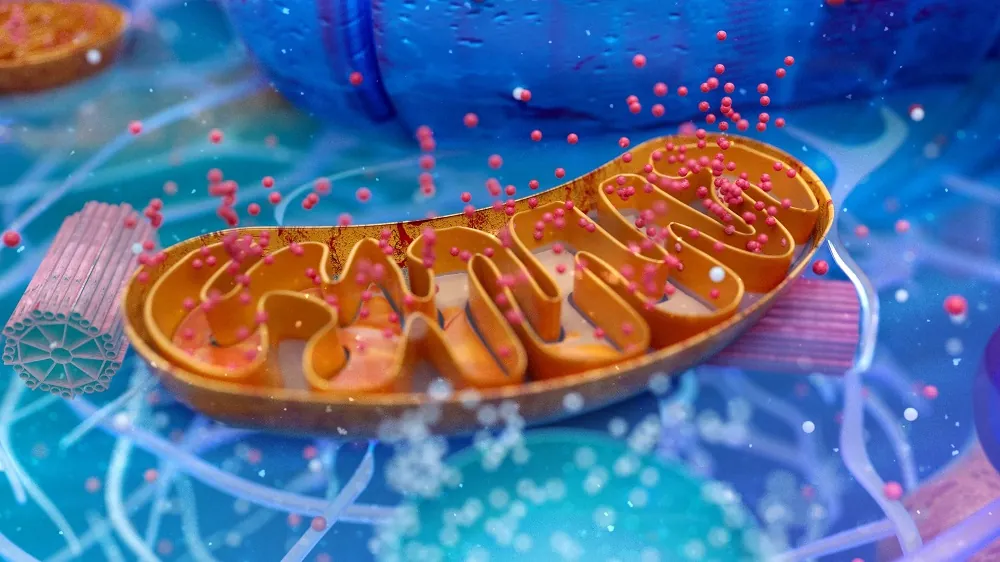
Literature

[1] Franceschi, C., Bonafè, M., Valensin, S., Olivieri, F., De Luca, M., Ottaviani, E., & De Benedictis, G. (2000). Inflamm‐aging: an evolutionary perspective on immunosenescence. Annals of the new York Academy of Sciences, 908(1), 244-254.

[2] Li, X., Li, C., Zhang, W., Wang, Y., Qian, P., & Huang, H. (2023). Inflammation and aging: signaling pathways and intervention therapies. Signal Transduction and Targeted Therapy, 8(1), 239.

[3] Mariat, D., Firmesse, O., Levenez, F., Guimarăes, V. D., Sokol, H., Doré, J., … & Furet, J. (2009). The Firmicutes/Bacteroidetes ratio of the human microbiota changes with age. BMC microbiology, 9, 1-6.

[4] Qaisar, R., Burki, A., Karim, A., Iqbal, M. S., & Ahmad, F. (2024). Probiotics supplements Improve the sarcopenia-related quality of life in older adults with age-related muscle decline. Calcified Tissue International, 114(6), 583-591.

[5] McGhie, T. K., Walton, M. C., Barnett, L. E., Vather, R., Martin, H., Au, J., … & Kruger, M. C. (2007). Boysenberry and blackcurrant drinks increased the plasma antioxidant capacity in an elderly population but had little effect on other markers of oxidative stress. Journal of the Science of Food and Agriculture, 87(13), 2519-2527.

[6] Landete, J. M. (2011). Ellagitannins, ellagic acid and their derived metabolites: A review about source, metabolism, functions and health. Food research international, 44(5), 1150-1160.

[7] Jung, M., Jung, S., Kim, N., Ahn, H., Yun, H., & Kim, K. N. (2022). A randomized, double-blind, placebo-controlled trial to assess the efficacy and safety of Lactiplantibacillus plantarum CJLP243 in patients with functional diarrhea and high fecal calprotectin levels. Nutrients, 14(2), 389.

[8] Menees, S. B., Powell, C., Kurlander, J., Goel, A., & Chey, W. D. (2015). A meta-analysis of the utility of C-reactive protein, erythrocyte sedimentation rate, fecal calprotectin, and fecal lactoferrin to exclude inflammatory bowel disease in adults with IBS. Official journal of the American College of Gastroenterology| ACG, 110(3), 444-454.

White blood cells

Modified Natural Killer Cells Effective Against Liver Cancer

By making NK cells insensitive to tumor-secreted TGF-β, scientists have improved their efficacy against this deadly hepatocellular carcinoma (HCC) [1].

Liver cancer and TGF-β

Cancer cells, which are supposed to be vulnerable to the immune system, develop various defensive mechanisms to avoid detection and decrease immune cells’ fitness and viability. In solid tumors, the dense tumor microenvironment (TME) has a particularly strong dampening effect on immune activity.

HCC is the most widespread form of liver cancer. It is also very deadly, with a 5-year survival rate of around 20%. Many therapies have been tried and failed against HCC.

HCC is also one of the cancers that is characterized by overexpression of transforming growth factor beta (TGF-β). As its name hints at, TGF-β drives tumor growth, but it also interferes with the activity of immune cells [2], such as natural killer (NK) cells, which are part of the innate immune system.

Natural born killers, improved

In this new study, scientists from the University of California – San Diego combined several cutting-edge techniques to try and overcome this problem. To begin with, they used cellular reprogramming to manufacture brand-new NK cells. This involves producing induced pluripotent stem cells (iPSCs) from differentiated cells and their further re-differentiating them into NK cells.

However, there was a twist: in those iPSCs, genetic changes were introduced to make them resistant to TGF-β, either by knocking out TGF-β receptor 2 (TGFBR2) or by expressing its double-negative version, which also blocks TGF-β signaling. The researchers assumed that such cells would be less susceptible to the inhibitory effect of TGF-β secreted by HCC cells.

Their gamble seemed to pay off: the resulting NK cells showed superior cytotoxicity in an in vitro model of HCC, compared to wild type NK cells. They also retained functional activity when pre-treated with TGF-β, unlike wild type NKs. The only problem was that iPSCs lacking functional TGF-β receptors reproduced slower (since TGF-β boosts growth).

The researchers tried to further improve the efficacy of their modified NK cells by arming them with chimeric antigen receptors (CARs) that are routinely used against HCC. CARs are usually associated with T cells, but they can be introduced to other types of immune cells to direct them towards antigen-expressing cancer cells.

NK cells with TGFB2R knocked out and without CAR expression killed HCC cells better than CAR-expressing wild type NK cells. There was some synergy between CARs and TGFB2R knockout, albeit not a strong one. Importantly, when stressed with TGF-β, only TGFB2R-knockout cells, with or without CARs, retained their cytotoxicity, while CAR-only cells experienced quick loss of function.

Longer survival in vivo

The researchers observed similar results in a mouse model of HCC: TGFB2R knockout seemed to contribute the most toward NK’s anti-cancer activity, with or without CARs, markedly improving survival. NKs that only carried CARs were much less effective.

“These studies demonstrate that it is crucial to block transforming growth factor beta — at least for NK cells, but I also think it’s true for CAR T cells,” said Dan Kaufman, the lead author of this study. “If you unleash NK cells by blocking this inhibitory pathway, they should kill cancer quite nicely. Anyone developing such therapies for solid tumors should be working to inhibit transforming growth factor beta activity to improve cancer-killing and attain effective anti-tumor activity.”

NK cells are generally easier to mass-produce from iPSCs than T cells because the latter require more intricate differentiation protocols and thymus-like conditions to mature. Genetic modifications are also easier to perform in NK cells. NK cells require less personalization and can be used in donor-derived (allogeneic) settings more readily than T cells. As part of the innate immune system, NK cells have a broad range of activity against tumor cells without requiring prior sensitization to specific antigens. This all adds to NK cells’ promise in future anti-cancer therapies [3].

These studies demonstrate that even with NK cells engineered to express tumor-specific CARs, the immunosuppressive activity of TGF-β prevented effective anti-tumor activity if TGF-β activity is not inhibited. To disrupt TGF-β signaling, we utilized 2 different strategies via either deletion of TGFBR2 or over expression of the DN form of TGFBR2 in iPSC-derived NK cells. Both TGFBR2-KO and TGFBR2-DN NK cells demonstrated effective anti-HCC activity even without CAR expression, while CAR-NK cells without inhibition of TGF-β activity had little anti-HCC activity.

We would like to ask you a small favor. We are a non-profit foundation, and unlike some other organizations, we have no shareholders and no products to sell you. All our news and educational content is free for everyone to read, but it does mean that we rely on the help of people like you. Every contribution, no matter if it’s big or small, supports independent journalism and sustains our future.

Literature

[1] Thangaraj, J. L., Coffey, M., Lopez, E., & Kaufman, D. S. (2024). Disruption of TGF-β signaling pathway is required to mediate effective killing of hepatocellular carcinoma by human iPSC-derived NK cells. Cell Stem Cell.

[2] Baba, A. B., Rah, B., Bhat, G. R., Mushtaq, I., Parveen, S., Hassan, R., … & Afroze, D. (2022). Transforming growth factor-beta (TGF-β) signaling in cancer-A betrayal within. Frontiers in pharmacology, 13, 791272.

[3] Goldenson, B. H., Hor, P., & Kaufman, D. S. (2022). iPSC-derived natural killer cell therapies-expansion and targeting. Frontiers in immunology, 13, 841107.

Older people with cognitive decline

Sex Differences in the Blood-Brain Barrier and Alzheimer’s

Researchers have found that men and women have significant differences in how their brains’ blood vessels change in Alzheimer’s disease.

The collapse of the blood-brain barrier

This research begins with a discussion of Alzheimer’s and its two principal symptoms: the well-known plaques that coat the brain, and the tau proteins that aggregate in neurons. However, targeting either of these proteins after they have already been formed has not been effective in preventing neurons from dying or stopping cognitive decline [1]. These researchers hypothesize that such interventions simply occur too late. Therefore, they chose to focus on something that occurs much earlier in the process: the decline of the blood-brain barrier (BBB) [2].

This decline is precipitated by vascular aging, which has been recently reported to be associated with Alzheimer’s disease [3]. Men and women do not experience vascular aging in precisely the same way [4, 5]. In older women, a decrease in estrogen causes vascular decline [6], making them more susceptible to Alzheimer’s [7].

Gene expressions in Alzheimer’s differ by sex

This research began with a gene expression analysis using samples from 428 people, looking for differentially experienced genes between Alzheimer’s patients and people who did not have the disease. There were no significant differences between the sexes in cellular numbers. In all Alzheimer’s patients, gene expressions in the prefrontal cortex that were related to the vascular system were altered, while in other regions, the gene expression differences were largely related to neuronal support.

These prefrontal cortex differences were much more pronounced in men. Further analysis found that they were largely found in endothelial cells, which line blood vessel walls and form the BBB. Many of these gene expression differences had already been noted as being risk factors for Alzheimer’s.

Men and women did share some similarities in how their genes changed expression with Alzheimer’s, most notably in the metabolism of lipids (fats) and in neuroprotective genes. However, many of the endothelial cells’ gene expression differences were not the same in men and women, and often, they were in opposite directions; some of the relevant genes that are commonly upregulated in men with Alzheimer’s were likely to be downregulated in women with the disease and vice versa.

The hypoxic response

One of the most critical gene sets involved the hypoxic response, which occurs when cells don’t get enough oxygen. The downstream pathways involved in hypoxia were activated in men but not women. The researchers were even able to confirm this in model mice; just like in people, male mice with Alzheimer’s activated the hypoxic response, while female mice did not.

One consequence of the hypoxic response is angiogenesis: the creation of new blood vessels. Genes related to the hypoxic response leading to angiogenesis were strongly upregulated in men with Alzheimer’s, but in women, they were not. However, in women, a different gene, PIK3C2A, was upregulated that leads to angiogenesis; the researchers suggest that this may be a druggable target for men, who do not normally upregulate it.

The researchers investigated a core pathway involved in angiogenesis in women. CREB1 affects vascular endothelial growth factor (VEGF), which affects angiogenesis and endothelial cells. They noted previous work showing that estrogen strongly affects this pathway [8] and that the protein CREB has been investigated as a druggable target in Alzheimer’s.

Estrogen also affects CREB1, and these researchers pinpointed the menopause-related decline in estrogen as being key to the onset of Alzheimer’s in women. An estrogen receptor and a receptor for a hypoxia-inducible factor both have many of the same downstream targets, and menopause is a significant risk factor for vascular disease [9]. Therefore, these researchers believe that men retain a key protection in the blood-brain barrier that post-menopausal women do not. Hormone replacement therapy for older women, therefore, may be found to be necessary to prevent late-life Alzheimer’s, or another method of activating the relevant angiogenesis pathways may be found.

We would like to ask you a small favor. We are a non-profit foundation, and unlike some other organizations, we have no shareholders and no products to sell you. All our news and educational content is free for everyone to read, but it does mean that we rely on the help of people like you. Every contribution, no matter if it’s big or small, supports independent journalism and sustains our future.
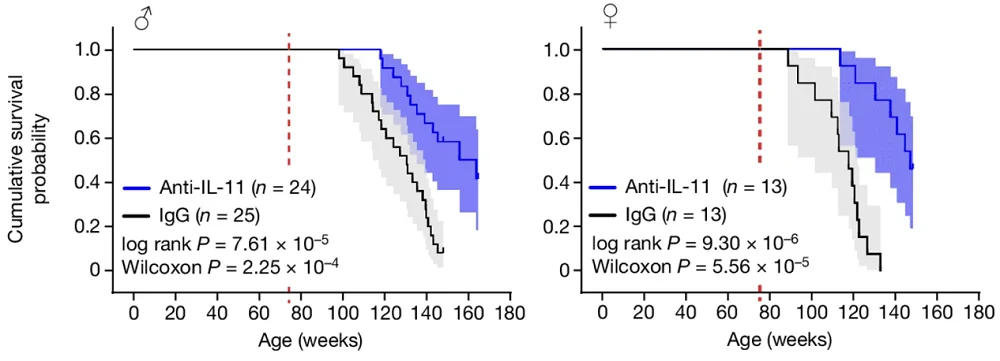
Literature

[1] Godyń, J., Jończyk, J., Panek, D., & Malawska, B. (2016). Therapeutic strategies for Alzheimer’s disease in clinical trials. Pharmacological Reports, 68(1), 127-138.

[2] Sweeney, M. D., Zhao, Z., Montagne, A., Nelson, A. R., & Zlokovic, B. V. (2018). Blood-brain barrier: from physiology to disease and back. Physiological reviews.

[3] Oh, H. S. H., Rutledge, J., Nachun, D., Pálovics, R., Abiose, O., Moran-Losada, P., … & Wyss-Coray, T. (2023). Organ aging signatures in the plasma proteome track health and disease. Nature, 624(7990), 164-172.

[4] Ji, H., Kwan, A. C., Chen, M. T., Ouyang, D., Ebinger, J. E., Bell, S. P., … & Cheng, S. (2022). Sex differences in myocardial and vascular aging. Circulation research, 130(4), 566-577.

[5] DuPont, J. J., Kim, S. K., Kenney, R. M., & Jaffe, I. Z. (2021). Sex differences in the time course and mechanisms of vascular and cardiac aging in mice: role of the smooth muscle cell mineralocorticoid receptor. American Journal of Physiology-Heart and Circulatory Physiology, 320(1), H169-H180.

[6] Moreau, K. L., Hildreth, K. L., Meditz, A. L., Deane, K. D., & Kohrt, W. M. (2012). Endothelial function is impaired across the stages of the menopause transition in healthy women. The Journal of Clinical Endocrinology & Metabolism, 97(12), 4692-4700.

[7] Arvanitakis, Z., Capuano, A. W., Leurgans, S. E., Bennett, D. A., & Schneider, J. A. (2016). Relation of cerebral vessel disease to Alzheimer’s disease dementia and cognitive function in elderly people: a cross-sectional study. The Lancet Neurology, 15(9), 934-943.

[8] Burtscher, J., Mallet, R. T., Burtscher, M., & Millet, G. P. (2021). Hypoxia and brain aging: Neurodegeneration or neuroprotection?. Ageing research reviews, 68, 101343.

[9] El Khoudary, S. R., Aggarwal, B., Beckie, T. M., Hodis, H. N., Johnson, A. E., Langer, R. D., … & American Heart Association Prevention Science Committee of the Council on Epidemiology and Prevention; and Council on Cardiovascular and Stroke Nursing. (2020). Menopause transition and cardiovascular disease risk: implications for timing of early prevention: a scientific statement from the American Heart Association. Circulation, 142(25), e506-e532.

Older person eating vegetables

Precision Nutrition Improves Life Quality for Older People

Researchers compared general nutritional advice to individualized nutritional advice in addition to an app that encourages its users to follow a diet. Elderly overweight and obese people benefited more from the individualized approach [1].

One size doesn’t fit all

Proper diets can help people stay healthy even into old age. However, nutrition advice is designed for the average person, and it does not consider the high variability among people’s nutritional needs and preferences. Personalized nutrition approaches address this need to optimize the diet for the individual. Such personalized nutrition can also be considered a therapeutic approach to preventing or managing chronic diseases.

However, sticking to a strict, individualized diet might be difficult for most people. The current study’s authors believe that digital tools can help support and motivate individuals to follow the recommended diet. Therefore, they created a trial that determined whether individualized dietary interventions alongside a digital tool can affect the health of overweight and obese older adults.

Usual-care vs. individualized diet

The study included 127 participants who were between the ages of 50 and 80 and had a BMI o at least 27. Participants had to have at least one risk factor, such as type 2 diabetes, hypertension, high cholesterol, or sedentary behavior. The trial lasted 12 weeks and had a 3-month follow-up.

The usual-care group followed Healthy Eating Plate (Harvard) and the Spanish Society of Community Nutrition’s dietary guidelines. These guidelines include recommendations regarding food groups, serving sizes, frequency of consumption, and practical tips for designing menus.

They also attended online sessions to learn about prescribed dietary patterns, food label use, seasonal shopping lists, meal plans and recipes, and sleep habits.

The precision diet group received guidelines to follow a Mediterranean and mixed diet that included foods based around personal preferences, such as smoothies, fruit compote, and wholemeal bread. These foods were designed specifically for this study, and their ingredients were chosen to prevent age-related diseases. Also, only the members of this group had their caloric intake needs assessed and attended visits to supervise diet adherence.

The precision diet group’s app was also specifically designed for this study with the needs of the elderly in mind, being easily accessible and easy to use. It contained information about the assigned diet, reminders about follow-up visits, and motivational messages.

At the end of the study, participants filled out a dietary intake questionnaire recalling their 7-day food intake, physical activity, and health status and took tests to assess cognitive functions.

Eating your way to better metabolic parameters

Analysis of the obtained data revealed that, after three months of diet, both groups experienced significant reductions in body weight, BMI, and diastolic blood pressure. Still, the changes in the precision diet group were significantly greater than those in the usual-care group.

There were also differences between groups. On average, the participants who followed the precision dietary intervention finished the study with reduced waist circumference, waist-to-hip ratio, fat mass, and systolic blood pressure compared to the usual-care group.

The researchers also measured biochemical parameters, with both groups showing significantly better triglyceride and uric acid concentrations that were not significantly different between the groups. Uric acid was used here as a marker of the anti-inflammatory effects of the nutritional strategies, suggesting that both dietary approaches impact the inflammatory aging environment (inflammaging). However, there is a need to assess more inflammatory biomarkers to gain a better understanding of the underlying mechanisms behind these diets.

The precision diet group also had significantly lower total cholesterol and HDL-c levels and hadd improved glycemic control and hepatic health markers, compared to both baseline and the usual-care group.

The researchers measured total energy intake but didn’t observe differences between the groups. However, the groups differed regarding specific food groups, with carbohydrates, proteins, and fiber content significantly higher and lipids lower in the precision group.

The precision group also consumed less sodium but more sugar than the usual-care group. The researchers point out that most of the sugars in the diet participants ate came from fruit, vegetables, and dairy products. While free sugars should be limited in the diet, there is no evidence regarding the adverse effects of consuming sugars that occur naturally in fruits, vegetables, or milk. The results of this study also support this, as the researchers didn’t observe any negative effects regarding glucose metabolism in precision group participants. They hypothesize that interaction with fiber and “other nutrients could positively influence the regulation of glucose homeostasis and metabolism” [2].

Better diet, better quality of life

Based on the questionnaires that the participants filled out upon completion of a 3-month study, the members of the precision diet group improved their quality of life. Specifically, the precision diet group reported improvements in the quality of life test’s vitality, body pain, and emotional role sections. Both groups reported improvements in the general health and physical function. Statistical analysis revealed many associations between improvements in well-being and the metabolic changes observed in the participants.

The authors believe that in the future, the use of big data and -omics technologies will allow for even more personalized nutritional approaches. Such a strategy holds the potential to better aid in developing nutritional approaches that will allow for avoiding diseases and reducing the effects of aging.

The researchers point to a few limitations of the study, such as baseline dietary intake not being assessed, potential biases from self-reporting, low sample size, the mobile app not being assessed alone (only in combination with the diet), and the inability to conduct a double-blind trial due to the nature of the intervention.

We would like to ask you a small favor. We are a non-profit foundation, and unlike some other organizations, we have no shareholders and no products to sell you. All our news and educational content is free for everyone to read, but it does mean that we rely on the help of people like you. Every contribution, no matter if it’s big or small, supports independent journalism and sustains our future.
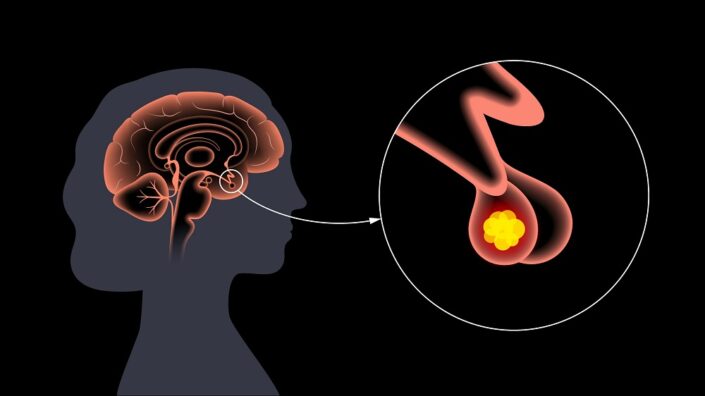
Literature

[1] Galarregui, C., Navas-Carretero, S., Zulet, M. A., González-Navarro, C. J., Martínez, J. A., de Cuevillas, B., … & Abete, I. (2024). Precision nutrition impact on metabolic health and quality of life in aging population after a 3-month intervention: A randomized intervention. The Journal of nutrition, health and aging, 28(7), 100289.

[2] Müller, M., Canfora, E. E., & Blaak, E. E. (2018). Gastrointestinal transit time, glucose homeostasis and metabolic health: modulation by dietary fibers. Nutrients, 10(3), 275.

Exploding cell

Scientists Eliminate Cancer Using Evolutionary Principles

A new study describes a method of genetically modifying a fraction of tumor cells, programming them to self-destruct and take therapy-resistant cells with them [1].

Resisting the resistance

Advanced solid tumors remain the main challenge for modern oncology. It’s hard to deliver a therapy to all of the cells in a tumor, and then the issue of resistance often pops up. Some cancer cells can be resistant to a specific therapy [2], and even if it wipes out most of the cells, the surviving ones multiply as fast as cancer cells can, leading to renewed tumor growth.

Resistance can be pre-existing or acquired. In the former case, due to the genetic heterogeneity of the tumor, some cancer cells within it will have developed mutations or characteristics that make them resistant to treatment even before it is applied. In the latter case, resistance develops after the initial exposure to the treatment.

Advances in science have produced mind-blowing therapies. For instance, a genetic “kill switch” can now be introduced to a cell via viral vectors [3]. However, there’s a major obstacle, especially in the dense tumor microenvironment: the rate of penetration is low. What good would it do to kill a fraction of the cells if the remaining ones will quickly reproduce to take their place?

Survive and outcompete

A new study by scientists from Pennsylvania State University offers an elegant solution to both those problems by making use of cancer’s natural evolutionary dynamics.

First, viral vectors carrying two “switches” are introduced, and they infect some of the cells in the tumor. The first switch makes those cells resistant to a therapy and provides a fitness advantage. When the therapy is applied, the sensitive cells get wiped out, leaving two major subpopulations: the cells that have acquired natural resistance and the genetically modified cells. The latter now outnumber and can potentially outcompete the former.

At some point, the second genetic switch is turned on, which triggers a “suicide with bystander effect”, killing not only the genetically modified cells but also any nearby cells. As a result, the tumor is eliminated completely with little harm to the surrounding tissue.

Reprogrammed cancer 1

Source: Nature

“It not only kills the engineered cells, but it also kills the surrounding cells, namely the native resistant population,” said Justin Pritchard, associate professor of biomedical engineering and senior author on the paper. “That’s critical. That’s the population you want to get rid of so that the tumor doesn’t grow back.”

The researchers extensively tested their invention in vitro across various switches, types of cancer, types of therapies, and mechanisms of cancer resistance. It was important to optimize the switch scheduling, activating switches at exactly the right time to ensure maximum efficacy. Finally, they proved that a small population of engineered cells can take out the naturally resistant cells across a wide range of challenging scenarios. According to Pritchard, this is “one of the biggest strengths of the paper, conceptually and experimentally.”

“The beauty is that we’re able to target the cancer cells without knowing what they are, without waiting for them to grow out or resistance to develop because at that point it’s too late,” said Scott Leighow, a postdoctoral scholar in biomedical engineering and lead author of the study.

Finally, the researchers ran a survival experiment in a murine model of human non-small cell lung cancer. The mice were inoculated with a mix of cancer cells containing a small population of resistant cells and 10% genetically modified cells. This reflects well both the usual prevalence of resistant cells and the clinical rate of viral vector penetration.

All 10 mice in the control group, which lacked genetically modified cells, initially responded well to a leading anti-cancer treatment (osimertinib) but soon developed resistance. Tumor volumes then skyrocketed, and all the animals succumbed to the disease. Conversely, in the study group, all but one of the 12 mice achieved complete tumor eradication.

Their tumor volume trajectories showed how the treatment worked: after the initial response to osimertinib, the genetically modified resistant cells multiplied, leading to renewed tumor growth. Then, the second switch was turned on, killing those cells and also any naturally resistant cells that happened to be nearby.

Reprogrammed cancer 2

The one mouse that didn’t make it was an outlier that had abnormal absolute tumor volume from the start. However, this case highlights the need to customize cancer therapies for each patient.

In this work, we posit that tumors can be re-engineered to be more responsive to therapeutic intervention. Our initial selection gene drive designs are feasible; they behave according to quantitative models and are robust in the face of dramatic genetic and spatial failure modes. While the gene drive approach has risks, the intractability of treatment of late-stage tumors and the dramatic genetic diversity present in tumors at baseline necessitates bold new approaches. By leveraging evolutionary models, we can design tumors that reliably and effectively target their own heterogeneity.

We would like to ask you a small favor. We are a non-profit foundation, and unlike some other organizations, we have no shareholders and no products to sell you. All our news and educational content is free for everyone to read, but it does mean that we rely on the help of people like you. Every contribution, no matter if it’s big or small, supports independent journalism and sustains our future.

Literature

[1] Leighow, S. M., Reynolds, J. A., Sokirniy, I., Yao, S., Yang, Z., Inam, H., … & Pritchard, J. R. (2024). Programming tumor evolution with selection gene drives to proactively combat drug resistance. Nature Biotechnology, 1-15.

[2] Vasan, N., Baselga, J., & Hyman, D. M. (2019). A view on drug resistance in cancer. Nature, 575(7782), 299-309.

[3] Nasu, Y., Saika, T., Ebara, S., Kusaka, N., Kaku, H., Abarzua, F., … & Kumon, H. (2007). Suicide gene therapy with adenoviral delivery of HSV-tK gene for patients with local recurrence of prostate cancer after hormonal therapy. Molecular therapy, 15(4), 834-840.