The Blog

Building a Future Free of Age-Related Disease

Rejuvenation Roundup May 2024

Rejuvenation Roundup May 2024

Bolstered by plenty of groundbreaking research, May marked a pivotal summit in Berlin for startups focusing on rejuvenation biotechnology. Here’s what happened last month.

LEAF News

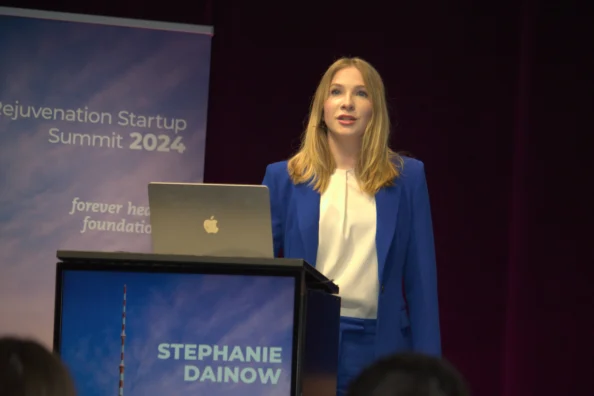
Stephanie Dainow at Rejuvenation Startup Summit 2024“Everything Happens in Berlin”: Highlights from the Summit: The Rejuvenation Startup Summit in Berlin might not be the biggest or the longest-running longevity conference, but it never disappoints. We present you with the highlights from this vibrant, biotech-oriented event. As always, our apologies go to those equally worthy speakers who did not make the cut.

Research Roundup

Intermittent Fasting Induces Changes in Multiple Biomarkers: A study published in Human Nutrition & Metabolism found that prolonged intermittent fasting causes the expression of genes involved in autophagy, the inflammasome, and senescence to change.

Elderly clinical trialStem Cells Alleviate Frailty in Clinical Trial: A placebo-controlled Phase 1/2 trial conducted in East Shanghai has found that administering umbilical cord-derived mesenchymal stem cells reduces frailty in older people.

Transplanting Mitochondria Improves Muscle Function: A recent study saw researchers associated with Cellvie demonstrate significant improvements to mitochondria and muscle function in aged mice by injecting additional mitochondria. Mitochondrial dysfunction is a reason we age.

KdineysA New Potential Path to Treating Kidney Fibrosis: Researchers have found a new protein target for senescence-related kidney diseases and published their findings in Aging Cell. Chronic kidney disease is all too common in older people, as a full third of people over 70 have moderate to severe forms of it.

Exploring How Caloric Restriction Impacts Telomere Length: A recent study from Penn State University may shed more light on the link between telomeres, aging, and why caloric restriction appears to influence them. Telomeres are small protective caps on the ends of our chromosomes that guard our DNA.

Mother and baby ratNMN and NR Reverse Ovarian Aging in Rats: In a recent Pharmaceutical Research paper, the researchers explored the molecular processes through which the NAD+ precursors NMN and NR reversed ovarian aging in middle-aged rats. Female fertility decreases rather quickly for people and animals.

Clearing Senescent Cells Can Be a Double-Edged Sword: Researchers have found that removing senescent cells makes it easier for mice to fight initial infections but harder for them to develop immune memory. This serves as strong evidence that senescent cells, and their effects, are heterogenous and cannot be treated as a single factor.

Cynomolgus MonkeyiPSC-derived Cardiomyocytes Rescue Heart Damage in Monkeys: Scientists have successfully used heart muscle cells created from induced pluripotent stem cells to counter the deleterious effects of heart attack in non-human primates. According to the researchers, cardiac spheroids “have several advantages and may be an ideal form of a cardiomyocyte product for cardiac regenerative therapy”.

Aged Bacteria Increase Gut Inflammation in Younger Animals: Researchers have discovered negative ways in which intestinal bacteria change over time, spurring gut inflammation, and introduced older bacteria into a population of younger mice to determine their effects.

Evening exerciseEvening Aerobic Exercise Associated with Least Mortality: A new study suggests that aerobic medium-to-vigorous physical activity benefits obese and diabetic people the most when conducted in the evening hours instead of the morning.

Stem Cell Transplants for Ovarian Aging: Experiments in mouse models show the efficacy and safety of mesenchymal stem cell transplantation in treating ovarian aging. Mesenchymal stem cells are stem cells derived from mesodermal tissue, such as the umbilical cord, umbilical cord blood, the placenta, fat tissue, and bone marrow.

Fast bicyclingExercise May Remove Senescent Cells Through Inflammation: Exercise may be able to remove senescent cells only if acute inflammation is allowed to occur, according to a new study published in Aging. Inflammation is known to be a critical part of aging, and its chronic accumulation has been labeled as a hallmark of aging: inflammaging.

Plant Virus Nanoparticles Prevent Metastatic Cancers: Scientists have demonstrated that viral particles from a harmless plant virus can be used as an adjuvant therapy to prevent recurrence of disease and metastasis formation in several cancer models.

Chronic painOne Reason Why Older People Have Chronic Pain: Researchers have discovered a compound and a brain region that may be related to chronic pain in older people and published their findings in Aging Cell. Unlike other senses, pain doesn’t often decrease with time.

Wide-Ranging Benefits for Plant-Based Diets: A vast new study connects plant-based diets with various health benefits, including in cardiovascular diseases and cancer. While some of the studies found no significant correlations between health benefits and plant-based diets, virtually none reported negative associations.

Healthy foodsEffect of Food Groups on Aging in Older Women: A paper published in Age and Ageing analyzed the intake of different food groups and whether they accelerate or decelerate biological age in post-menopausal women.

Investigating Why Brain Plasticity Decreases with Age: Publishing in Aging, a team of researchers has used a rat model to investigate a possible reason why old people are less able to learn new things. The compound in question affects multiple aspects of cognition, most notably neuroplasticity: the brain’s ability to learn new things.

Disc degenerationWhy One Antioxidant Might Alleviate Disc Degeneration: In Aging Cell, researchers have published detailed information on why the antioxidant pyrroloquinoline quinone (PQQ), which is known to be safe in humans, alleviates age-related disc degeneration in mice.

Interrupting the Chain of Disc Degeneration: In Aging Cell, researchers have published a potential method of ameliorating disc degeneration that focuses on the cells living in a low-oxygen environment within the discs.

Diet without carbsKetogenic Diets Cause Cellular Senescence in Mice: A new study tested two ketogenic diets and found increases in cellular senescence in multiple tissues. Ketogenic diets have been a matter of substantial debate.

Air Pollution Is Associated with Dementia Risk: A long-term female nurse study suggests a link between long-term exposure to certain air pollutants, but not road traffic noise, and the risk of developing dementia. Air pollution is a known risk factor for many other conditions, such as cardiovascular diseases, respiratory diseases, Type 2 diabetes, and lung cancer.

Naked mole-rat tunnelingAn Animal Without an Observed Mortality Increase: The researchers of a previous controversial paper on the naked mole-rat’s impressive longevity have returned, publishing data in GeroScience that bolsters their original findings. The naked mole-rat, an unusually long-lived rodent species that lives in large colonies, has long been a mystery of gerontology.

Study Suggests a Link Between Tattoos and Lymphoma: Scientists have reported a possible correlation between having tattoos and getting lymphoma later in life. However, multiple caveats apply, and the results in this study hovered close to statistical significance.

Mediterranean Diet Adherence and Risk of All-Cause Mortality in Women: In this study, higher adherence to the Mediterranean diet was associated with one-fifth lower relative risk of mortality, which could be partially explained by multiple cardiometabolic risk factors.

Physical activity and fiber intake beneficial for muscle mass and strength preservation during aging: In both men and women, the main factors associated with FFM and handgrip strength are physical activity and fiber intake, which may underlie a connection between gut and muscle health.

Synergistic impact of 25-hydroxyvitamin D concentrations and physical activity on delaying aging: A higher 25(OH)D level was associated with a lower risk of biological aging. Combining 25(OH)D and PA demonstrated enhanced protective effects, especially in middle or young adults.

Association of physical activity and vitamin D deficiency with cognitive impairment in older adults: a population based cross-sectional analysis: There was a multiplicative interaction between physical activity and vitamin D on cognitive function

Integrated transcriptome and metabolome study reveal the therapeutic effects of nicotinamide riboside and nicotinamide mononucleotide on nonalcoholic fatty liver disease: This study established a theoretical foundation for the potential use of NMN and NR in future clinical settings.

A cocktail of rapamycin, acarbose, and phenylbutyrate prevents age-related cognitive decline in mice by targeting multiple aging pathways: The molecular endpoint assessments indicated that treatment with the drug cocktail was overall more effective than any of the individual drugs for relieving cognitive impairment by targeting multiple aging pathways.

Lifespan effects in male UM-HET3 mice treated with sodium thiosulfate, 16-hydroxyestriol, and late-start canagliflozin: These data bring to 7 the list of Interventions Testing Program-tested drugs that induce at least a 10% lifespan increase in one or both sexes.

A randomized, controlled clinical trial demonstrates improved owner-assessed cognitive function in senior dogs receiving a senolytic and NAD+ precursor combination: The researchers conclude that LY-D6/2 improves owner-assessed cognitive function over a 3-month period and may have broader, but more subtle effects on frailty, activity and happiness as reported by owners.

Translatability of life-extending pharmacological treatments between different species: Bridging this gap is essential to assess the potential of such treatments in extending the human healthspan.

Targeting CK2 eliminates senescent cells and prolongs lifespan in Zmpste24-deficient mice: This study identified TBB as a senolytic compound that can reduce age-related symptoms and prolong lifespan in progeroid mice.

Safety and efficacy of autologous adipose tissue-derived stem cell transplantation in aging-related low-grade inflammation patients: Compared to baseline (D-44), the inflammatory cytokines IL-1α, IL-1β, IL-8, IL-6, and TNF-α were significantly reduced after 180 days (D180) of MSC infusion.

Anti-aging Effects of Tirbanibulin 1% Ointment: A Real-Life Experience: Tirbanibulin 1% ointment seems able to improve skin aging as a desirable side effect at the site of application for non-hyperkeratotic actinic keratosis on chronic photodamaged skin.

Psychogenic Aging: A Novel Prospect to Integrate Psychobiological Hallmarks of Aging: This perspective argues that psychogenic aging should be considered an integral component of the Hallmarks of Aging framework.

News Nuggets

John HancockAgeLab to Drive Longevity Innovation and Research: John Hancock, along with its Toronto-based parent company Manulife (NYSE:MFC), today announced a five-year, multimillion-dollar research collaboration with the Massachusetts Institute of Technology (MIT).

Two Leading Scientists Debate Human Lifespan: A debate titled “How to Defeat Aging” featured two distinguished scientists, Peter Fedichev and Aubrey de Grey, both proponents of radical life extension with biotechnology, with opposing views. Fedichev believes aging is irreversible but can be slowed or stopped, while de Grey argues for the potential of rejuvenation biotechnologies.

Ora BiomedicalOra Biomedical and Air Force Partner for Therapies: Ora Biomedical, Inc. announces it has been selected by AFWERX for a SBIR Phase I contract in the amount of $75,000 focused on developing novel therapeutics to address the most pressing challenges in the Department of the Air Force.

Turn Bio Signs Agreement with HanAll Biopharma: Turn Biotechnologies, a developer of novel mRNA medicines and enabling technologies, today announced an exclusive global licensing agreement with pharmaceutical manufacturer HanAll Biopharma to develop groundbreaking medicines for the treatment of age-related eye and ear conditions.

Coming Up

LongX LogoLongX Launches the Xplore Program for Students: LongX, an initiative dedicated to providing early-career avenues into longevity, announced a call for applications for its 2024 Xplore Program. The program lasts from June 2024 until September 2024 and features a one-month longevity primer course followed by the opportunity to gain educational experience with a company operating in the longevity biotechnology sector.

We would like to ask you a small favor. We are a non-profit foundation, and unlike some other organizations, we have no shareholders and no products to sell you. All our news and educational content is free for everyone to read, but it does mean that we rely on the help of people like you. Every contribution, no matter if it’s big or small, supports independent journalism and sustains our future.

Tattoo

Study Suggests a Link Between Tattoos and Lymphoma 

Scientists have reported a possible correlation between having tattoos and getting lymphoma later in life. However, multiple caveats apply [1].

Looks cool, but what about safety?

Tattoos are a popular form of self-expression, and in recent years, they are becoming more prevalent, probably due to the loosening of social taboos. Current, effective techniques of tattoo removal also encourage people to get one because they don’t feel it’s permanent. However, tattoos are, in essence, an invasive procedure that involves being injected with various chemicals of questionable regulation. Hence, questions about health effects of tattoos are quite valid, and they are indeed abundant online. Amazingly, there is very little actual research that looks into that.

In a new study, researchers from the Lund University in Sweden leveraged their country’s robust system of medical records to shed some light on the issue. Among the people who had completed a vast medical questionnaire in 2021, they picked out all the cases of lymphoma and added three age- and sex-matched controls to each one. This design is known as a “matched case-control study.”

The researchers then looked at how cases of lymphoma correlated with tattoos in people aged 20-60, when this disease is the most prevalent. Lymphoma is a cancer of the lymphatic system that, unlike many other types of cancer, affects many young people. However, it is also one of the least deadly cancers.

A possible connection

At the beginning of their paper, the authors offered a tentative explanation to the possible link between tattoos and lymphoma. Tattoos are made using a cocktail of inks that may contain compounds such as primary aromatic amines (PAA) and polycyclic aromatic hydrocarbons along with toxic metals, including arsenic, chromium, cobalt, lead, and nickel. “A significant and concerning number of them,” according to the paper, are classified as carcinogens [2].

“We already know that when the tattoo ink is injected into the skin, the body interprets this as something foreign that should not be there and the immune system is activated,” said Christel Nielsen, the lead investigator. “A large part of the ink is transported away from the skin, to the lymph nodes where it is deposited.”

21% increase in risk

After controlling for several confounding variables, including sex, age, educational attainment, smoking status, hazardous occupation, and taking immunosuppressive drugs, the scientists found that people with tattoos had 21% more risk of getting a lymphoma. However, there is a lot to unpack in this result.

Most glaringly, it did not quite reach statistical significance, with a p-value of 0.067 (the commonly used threshold is 0.05). In matched case-control studies, the two main types of analysis are matched and unmatched. In the former, the matching that is performed at the design stage, where each case was matched to one or more controls, is preserved at the analysis stage. This controls better for possible confounding variables, but it also weakens the statistical power and widens the confidence interval. Still, it is considered the golden standard in such studies.

Unmatched analysis ignores the design-stage matching, increasing the statistical power but weakening the control over possible confounders. In this study, the fully adjusted unmatched analysis showed a statistically significant (p=0.04) 18% increase in the risk of lymphoma for people with tattoos.

Is removing tattoos even less safe?

The study reports several other interesting results. Most importantly, no correlation between lymphoma incidence and the overall tattooed area size was found. This surprised the researchers, who offered a following possible explanation: since there were usually several years between the time of assessing the tattoo status and the time of the lymphoma diagnosis, it is possible that during that time, some respondents acquired more tattoos, which would lead to misclassification. However, another possible explanation, Nielsen said, is that “a tattoo, regardless of size, triggers a low-grade inflammation in the body, which in turn can trigger cancer.”

Alarmingly, laser removal of tattoos showed an even stronger positive correlation with lymphoma incidence. Speculating about possible causes, the researchers cite reports that certain compounds in tattoo inks can be transformed by laser irradiation into other, more carcinogenic, compounds [3].

This study is the most rigorous to date to analyze the possible link between tattoos and lymphoma, but its findings are far from definitive. In addition to the questionable statistical significance of the results, populational studies can only demonstrate correlation but not causation. As the authors themselves note, more rigorous studies are needed. However, it is also common sense that having tattoos is less safe than not having them.

We would like to ask you a small favor. We are a non-profit foundation, and unlike some other organizations, we have no shareholders and no products to sell you. All our news and educational content is free for everyone to read, but it does mean that we rely on the help of people like you. Every contribution, no matter if it’s big or small, supports independent journalism and sustains our future.

Literature

[1] Nielsen, C., Jerkeman, M., & Jöud, A. S. (2024). Tattoos as a risk factor for malignant lymphoma: a population-based case–control study. EClinicalMedicine, 72.

[2] IARC Working Group on the Evaluation of Carcinogenic Risks to Humans. (2010). Some non-heterocyclic polycyclic aromatic hydrocarbons and some related exposures. IARC Monographs on the evaluation of carcinogenic risks to humans, 92, 1.

[3] Hauri, U., & Hohl, C. (2015). Photostability and breakdown products of pigments currently used in tattoo inks. Curr Probl Dermatol, 48, 164-169.

Turn.bio logo

Turn Bio Signs Agreement with HanAll Biopharma

Turn Biotechnologies, a developer of novel mRNA medicines and enabling technologies, today announced an exclusive global licensing agreement with pharmaceutical manufacturer HanAll Biopharma to develop groundbreaking medicines for the treatment of age-related eye and ear conditions.

The agreement, potentially exceeding $300 million in value for the first of multiple planned products, significantly expands the relationship between the companies. HanAll originally invested in Turn Bio in 2022.

A New Frontier in Age-Related Therapies

Products resulting from this collaboration will utilize Turn Bio’s Epigenetic Reprogramming of Age (ERA™) technology and its novel eTurna™ delivery platform. These cutting-edge technologies aim to restore optimal gene expression, combatting the effects of aging at the cellular level to treat and potentially cure chronic conditions.

“This partnership is a milestone for Turn Bio,” said company CEO Anja Krammer. “With HanAll’s support, we are accelerating the development of transformative therapies for eye and ear indications, which can benefit patients around the world. The potential impact on patients’ lives is enormous, and this is just the beginning.”

HanAll has closely monitored Turn Bio’s progress since its initial investment, recognizing the revolutionary potential of its epigenetic reprogramming technology.

“Turn Bio’s innovative approach to epigenetic reprogramming aligns closely with HanAll’s mission to explore innovative medicines to expand our therapeutic area,” said Sean Jeong, M.D., MBA, CEO of HanAll Biopharma. “Together, we are poised to pioneer new treatments that address critical unmet needs, particularly in aging-related diseases.”

Expanding Horizons in Regenerative Medicine

The partnership expands Turn Bio’s development, which had primarily focused on dermatology and immunology, to two other organs most commonly affected by age-related conditions. This means Turn Bio is working on therapies to treat and potentially cure most diseases caused by aging.

“The power of ERA™ technology is that it can rejuvenate cells in virtually any organ in the body,” said Turn Bio Co-founder Vittorio Sebastiano, the company’s head of research. “This agreement enables us to accelerate our development on multiple fronts to reverse the damage caused by aging and improve the quality of life for older patients.”

About Turn Biotechnologies

Turn Bio is a pre-clinical-stage company focused on repairing tissue at the cellular level and developing transformative drug delivery systems. The company’s proprietary mRNA-based ERA™ reprogramming technology aims to restore optimal gene expression by combatting the effects of aging in the epigenome. This potentially restores cells’ ability to prevent or treat disease and heal or regenerate tissue and helps to fight incurable chronic diseases. Its eTurna™ delivery platform uses unique formulations to precisely deliver cargo to specific organs, tissues, and cell types.

The company is completing pre-clinical research on tailored therapies targeting indications in dermatology and immunology, and developing therapies for ophthalmology, osteo-arthritis, and the muscular system. For more information, see www.turn.bio.

About HanAll Biopharma

HanAll Biopharma (KRX: 009420.KS) is a global biopharmaceutical company with presence in Korea, the USA, Japan, and Indonesia with the mission of making meaningful contributions to patients’ lives by introducing innovative, impactful medicines to address severe unmet medical needs. HanAll has been operating a portfolio of pharmaceutical products in the therapeutic areas of endocrine, circulatory, and urologic diseases for over 50 years.

HanAll has also expanded its focus to immunology, oncology, neurology, and ophthalmology to discover and develop innovative medicines for patients with diseases for which there are no effective treatments. One of its lead pipeline asset, HL161 (INN: batoclimab), an anti-FcRn antibody, is being developed in Phase 3 and Phase 2 trials across the world for the treatment of autoimmune diseases including generalized myasthenia gravis (gMG), thyroid eye disease (TED), chronic inflammatory demyelinating polyneuropathy (CIDP), and Graves’ disease (GD). Another lead asset, HL036 (INN: tanfanercept), a TNF inhibitor protein, is being evaluated in Phase 3 clinical studies in the US and is also being evaluated in China for the treatment of dry eye disease. HL161ANS, an anti-FcRn antibody targeting multiple indications, and HL192 (ATH-399A), a Nurr1 activator currently targeting Parkinson’s Disease, are also being evaluated in Phase 1 clinical studies (healthy volunteers). For further information, visit our website and connect with us on LinkedIn. For any media inquiries, please contact HanAll PR/IR (pr@hanall.comir@hanall.com).

We would like to ask you a small favor. We are a non-profit foundation, and unlike some other organizations, we have no shareholders and no products to sell you. All our news and educational content is free for everyone to read, but it does mean that we rely on the help of people like you. Every contribution, no matter if it’s big or small, supports independent journalism and sustains our future.
Naked mole-rat tunneling

An Animal Without an Observed Mortality Increase

The researchers of a previous controversial paper on the naked mole-rat’s impressive longevity have returned, publishing data in GeroScience that bolsters their original findings.

A darling of longevity

The naked mole-rat, an unusually long-lived rodent species that lives in large colonies, has long been a mystery of gerontology, and investigations into its biology have yielded some surprising findings. Despite their small size, these hairless, wrinkled rodents are uniquely resistant to cardiac dysfunction [1] and cancer [2].

Five years ago, these three researchers published a paper detailing the naked mole-rat’s general resistance to all age-related causes of mortality, reporting that this animal’s risk of death does not increase with age [3]. However, as a previous comment [4] and these researchers note, most of the animals in that study were relatively young.

Missing death records, which originated prior to these researchers’ analysis, may have introduced bias into the study. The researchers responded by re-analyzing their data with left-censorship, a statistical technique that labels data gathered from before a certain point, which also occurs in this study and many other long-term survival studies [5]. Right-censorship, a statistical technique that labels data after a certain point (for example, if an animal is transferred away or is simply still alive), is also used in this study.

The same colonies, half a decade later

These researchers have continued the same animal husbandry practices among the same populations of animals as they did in their original 2018 paper [3]. Data from a total of 7,536 animals is included in this analysis, with complete birth and death (or right-censorship) information being available for 6,949. All of these animals were microchipped in order to verify individual identity. Much of the original data had to be updated in some way, but vital data for 3,222 of the previous paper’s animals was consistent between these studies.

One of the potential mortality-related factors that these researchers analyzed was colony size. Naked mole rats, like many insect species, are eusocial animals; in nature, they only leave to form new colonies of their own, and can never join other colonies because existing colonies act violently against intruders. Non-breeding animals in the smallest colonies had statistically greater mortality, particularly males, although this was not consistent from year to year. Larger animals also had a greater chance of survival. These differences are ascribed to social dynamics and violence rather than aging.

The researchers also analyzed mole rats from the Fukomys genus using the same statistical methods. These animals are somewhat similar to the naked mole-rat (Heterocephalus glaber), but they begin to die with age. Like with nearly other animal, their chances of death can be observed to increase over time. These species’ maximal lifespan is a bit over 20 years.

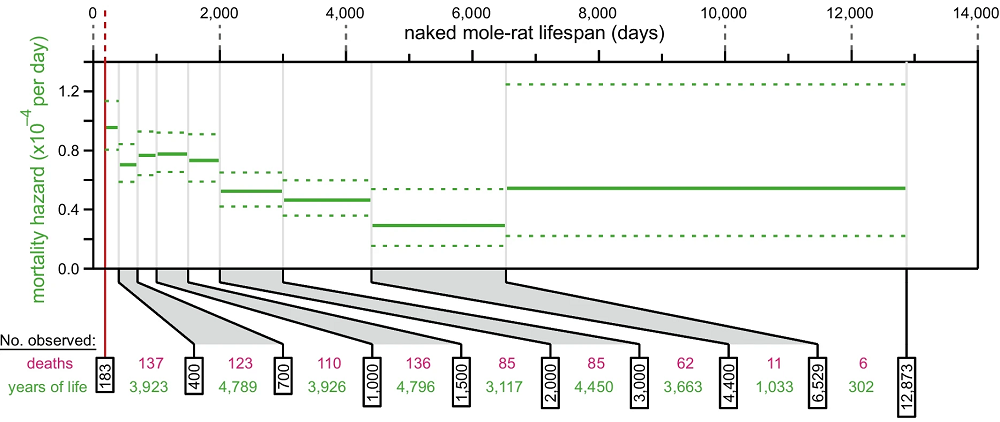
Naked mole rats, on the other hand, do not have this decreasing survival curve. While the animals do die over time, this rate seems to be unaffected by age. One animal died when it was nearly 31 years old, but the oldest animal that the researchers had at the time of data collection was just over 35 years old, and these researchers state that this is still not close to these animals’ median lifespan. These findings were confirmed whether or not they included data from the original 2018 paper.

Naked mole rat survival

We therefore maintain our original conclusion: that unlike every other species studied to date where mortality risk begins to increase long before median lifespan, naked mole-rat mortality hazard does not increase with age.

We still cannot know exactly how long a naked mole-rat lives on average under these researchers’ optimized animal husbandry practices. It may be that the naked mole rat does have a true median lifespan of 50, 60, or even beyond, when it dies of age-related diseases much later than other animals. Only time, or extremely advanced biological analysis, will tell. Meanwhile, researchers will continue to investigate this exceptionally long-lived animal and determine what of its abilities can be brought to human beings.

We would like to ask you a small favor. We are a non-profit foundation, and unlike some other organizations, we have no shareholders and no products to sell you. All our news and educational content is free for everyone to read, but it does mean that we rely on the help of people like you. Every contribution, no matter if it’s big or small, supports independent journalism and sustains our future.

Literature

[1] Can, E., Smith, M., Boukens, B. J., Coronel, R., Buffenstein, R., & Riegler, J. (2022). Naked mole-rats maintain cardiac function and body composition well into their fourth decade of life. Geroscience, 44(2), 731-746.

[2] Hadi, F., Smith, E. S. J., & Khaled, W. T. (2021). Naked mole-rats: Resistant to developing cancer or good at avoiding it?. The extraordinary biology of the naked mole-rat, 341-352.

[3] Ruby, J. G., Smith, M., & Buffenstein, R. (2018). Naked mole-rat mortality rates defy Gompertzian laws by not increasing with age. elife, 7, e31157.

[4] Dammann, P., Scherag, A., Zak, N., Szafranski, K., Holtze, S., Begall, S., … & Platzer, M. (2019). Comment on ‘Naked mole-rat mortality rates defy Gompertzian laws by not increasing with age’. Elife, 8, e45415.

[5] Ruby, J. G., Smith, M., & Buffenstein, R. (2019). Response to comment on ‘Naked mole-rat mortality rates defy Gompertzian laws by not increasing with age’. Elife, 8, e47047.

Car pollution

Air Pollution Is Associated with Dementia Risk

A long-term female nurse study suggests a link between long-term exposure to certain air pollutants, but not road traffic noise, and the risk of developing dementia [1].

Air pollution as a risk factor

Air pollution is a known risk factor for many conditions, such as cardiovascular diseases, respiratory diseases, Type 2 diabetes, and lung cancer, which we have discussed previously. Similarly, road traffic noise is associated with sleep disturbance and stress, leading to an increased risk of “cardiovascular disease and possibly psychiatric disorders” [2, 3]. Both risk factors share sources, such as road traffic, along with the biological pathways they impact, such as neuroinflammation and brain damage [4], which can lead to dementia.

Studies that examined air pollution (but not road traffic noise) have suggested a link between “long-term exposure to air pollution and the risk of developing dementia.” Specifically, the authors acknowledge the well-researched and established link between dementia and particulate matter with a diameter of ≤2.5 μm (PM2.5) [5]. However, the literature about other air pollutants and traffic noise is inconsistent.

Since previous research on the impact of the combination of air pollution and road traffic noise on dementia risk is limited, in this study, the authors analyzed the data from 25,233 female nurses in Denmark (Danish Nurse Cohort) to establish whether there is a connection “between long-term exposure to both air pollution and road traffic noise and dementia incidence.”

Air pollution and dementia

The data analysis indicated “strong associations between long-term exposure to major air pollutants and incidence of dementia.” The authors elaborate in more detail on which specific pollutants show the association.

The data show that PM2.5 and NO2 have a strong positive association with dementia incidence, while ozone has shown a negative association. Those results are consistent with several previous studies [5]. They also identified an association between black carbon and the incidence of dementia. They report that these associations are linear, meaning that they persist below European Union and World Health Organization standards set for PM2.5 and NO2 air pollution.

Regarding the observed negative association between ozone and the incidence of dementia, the authors hypothesize that it is most likely a result of ozone having lower concentrations near NO2 and black carbon sources. Therefore, the researchers explain, it is not that ozone has a protective effect but that it is more likely to be around where the more dangerous pollutants are not.

While the authors found an association between air pollution and the incidence of dementia, they didn’t identify such a strong association “between road traffic noise and incidence of dementia after adjustment for air pollution.” This observation also agrees with previous research.

Positive effects of exercise

Modifying air pollution exposure is not an easy task and would require major changes in life, such as moving from a big city to a small town or village, which is something not everyone can do. Therefore, the authors looked for something that could mitigate the risk of dementia despite the exposure to air pollution. According to their analysis, physical activity was the one identified factor that modified the association between air pollution and the incidence of dementia.

In this study, they observed that despite being exposed to the same level of PM2.5 pollutants, physically active nurses had a lower risk of developing dementia compared to those with low physical activity levels.

The authors believe that their observation needs to be further assessed and confirmed but that they provide a good starting point for the development of preventive measures against dementia.

Strengths and limitations

As with every study, this one has strong and weak points. One of the main strengths of this study is the cohort the researchers used. This cohort had information on risk factors and behavior, data from nationwide registers, and a 20-year follow-up period. The researchers also used high-quality data regarding air pollution and road traffic noise, to which they had access dating from 14 years before any given nurse was included in the study. Adding the follow-up period, they analyzed around 35 years of exposure.

The cohort they used had many strengths, but it included only females, who have higher risks of developing Alzheimer’s disease. Therefore, there is still a need to investigate whether sex differences play a role in air pollution and dementia association.

The authors believe that there is a need “to identify groups that are most susceptible to harmful air pollution effects on dementia, for which preventive strategies can be designed.”

We show that long-term exposure to air pollution can lead to the development of dementia, even after adjustment for road traffic noise. This brings strong new evidence that supports existing findings in the current literature, suggesting that air pollution is an important risk factor for dementia. Moreover, we present a novel finding that physical activity may help mitigate the adverse effects of air pollution on dementia.

We would like to ask you a small favor. We are a non-profit foundation, and unlike some other organizations, we have no shareholders and no products to sell you. All our news and educational content is free for everyone to read, but it does mean that we rely on the help of people like you. Every contribution, no matter if it’s big or small, supports independent journalism and sustains our future.

Literature

[1] Tuffier, S., Zhang, J., Bergmann, M., So, R., Napolitano, G. M., Cole-Hunter, T., Maric, M., Antic, S., Brandt, J., Ketzel, M., Loft, S., Lim, Y. H., & Andersen, Z. J. (2024). Long-term exposure to air pollution and road traffic noise and incidence of dementia in the Danish Nurse Cohort. Alzheimer’s & dementia : the journal of the Alzheimer’s Association, 10.1002/alz.13814. Advance online publication.

[2] Münzel, T., Molitor, M., Kuntic, M., Hahad, O., Röösli, M., Engelmann, N., Basner, M., Daiber, A., & Sørensen, M. (2024). Transportation Noise Pollution and Cardiovascular Health. Circulation research, 134(9), 1113–1135.

[3] Clark, C., Crumpler, C., & Notley, A. H. (2020). Evidence for Environmental noise Effects on Health for the United Kingdom Policy Context: A systematic review of the effects of environmental noise on mental health, wellbeing, quality of life, cancer, dementia, birth, reproductive outcomes, and cognition. International Journal of Environmental Research and Public Health/International Journal of Environmental Research and Public Health, 17(2), 393.

[4] Jafari, Z., Kolb, B. E., & Mohajerani, M. H. (2018). Chronic traffic noise stress accelerates brain impairment and cognitive decline in mice. Experimental neurology, 308, 1–12.

[5] Wilker, E. H., Osman, M., & Weisskopf, M. G. (2023). Ambient air pollution and clinical dementia: systematic review and meta-analysis. BMJ (Clinical research ed.), 381, e071620.

Ora Biomedical

Ora Biomedical and Air Force Partner for Therapies

Ora Biomedical, Inc. announces it has been selected by AFWERX for a SBIR Phase I contract in the amount of $75,000 focused on developing novel therapeutics to address the most pressing challenges in the Department of the Air Force (DAF).

The Air Force Research Laboratory and AFWERX have partnered to streamline the Small Business Innovation Research (SBIR) and Small Business Technology Transfer (STTR) process by accelerating the small business experience through faster proposal to award timelines, changing the pool of potential applicants by expanding opportunities to small business and eliminating bureaucratic overhead by continually implementing process improvement changes in contract execution. The DAF began offering the Open Topic SBIR/STTR program in 2018 which expanded the range of innovations the DAF funded and now on May 24th, Ora Biomedical will start its journey to create and provide innovative capabilities that will strengthen the national defense of the United States of America.

“Ora Biomedical was founded on the understanding that age-targeting longevity interventions have a myriad of uses that all go toward promoting the healthiest, longest lives we can live. High-altitude pilots and astronauts are subject to high levels of radiation and other physiological stressors that longevity interventions have shown to be protective against” says Ora Biomedical CTO, Dr. Ben Blue. “We are excited to work with AFWERX and stakeholders in the U.S. Air Force and Space Force to develop longevity interventions for important new uses in maintaining health and maximizing readiness of service-members. This is the first step forward in an innovative project to translate longevity research into real-world applications while meeting the needs of the next era of space exploration”.

Disclaimer: The views expressed are those of the author and do not necessarily reflect the official policy or position of the Department of the Air Force, the Department of Defense, or the U.S. government.

About Ora Biomedical, Inc.

Ora Biomedical, Inc. is a longevity biotechnology company headquartered in Tukwila, WA. Launched out of the University of Washington School of Medicine in 2022, Ora Biomedical develops interventions that maximize readiness and healthy lifespan by targeting the molecular mechanisms that drive aging itself. Ora uses best-in-class robotics and AI to perform high-throughput, high-precision phenotypic testing in live animals with lifespan, healthspan, and stress resistance as primary endpoints. www.orabiomedical.com.

About Air Force Research Laboratory (AFRL)

The Air Force Research Laboratory is the primary scientific research and development center for the Department of the Air Force. AFRL plays an integral role in leading the discovery, development, and integration of affordable warfighting technologies for our air, space and cyberspace force. With a workforce of more than 12,500 across nine technology areas and 40 other operations across the globe, AFRL provides a diverse portfolio of science and technology ranging from fundamental to advanced research and technology development. For more information, visit www.afresearchlab.com.

About AFWERX

As the innovation arm of the DAF and a directorate within the Air Force Research Laboratory, AFWERX brings cutting-edge American ingenuity from small businesses and start-ups to address the most pressing challenges of the DAF. AFWERX employs approximately 325 military, civilian and contractor personnel at six hubs and sites executing an annual $1.4 billion budget. Since 2019, AFWERX has executed 4,697 contracts worth more than $2.6 billion to strengthen the U.S. defense industrial base and drive faster technology transition to operational capability. For more information, visit: www.afwerx.com.

Company Press Contact:

Dr. Mitchell Lee

CEO & Co-Founder, Ora Biomedical, Inc.

mitchell@orabiomedical.com

We would like to ask you a small favor. We are a non-profit foundation, and unlike some other organizations, we have no shareholders and no products to sell you. All our news and educational content is free for everyone to read, but it does mean that we rely on the help of people like you. Every contribution, no matter if it’s big or small, supports independent journalism and sustains our future.

Diet without carbs

Ketogenic Diets Cause Cellular Senescence in Mice

A new study tested two ketogenic diets and found increases in cellular senescence in multiple tissues [1].

It’s complicated

Ketogenic diets have been a matter of substantial debate. On one hand, they are effective against childhood epilepsy [2], have shown some promise against neurodegeneration [3] and as an adjuvant anti-cancer therapy [4], and might help people lose weight. Anecdotally, people have reported increased energy levels and other positive effects from ketogenic diets, but rigorous studies in humans are still scarce.

On the other hand, ketogenic diets have been linked to increased levels of harmful LDL cholesterol [5], a major factor in cardiovascular disease. A ketogenic diet in epilepsy patients has been associated with increased prevalence of kidney stones and bone fractures [6]. In general, long-term effects of ketogenic diets are not well understood, which gives many experts pause.

In this new study published in Science Advances, researchers from the University of Texas investigated the effects of two ketogenic diets on cellular senescence in mice, reporting intriguing results.

A spike in senescence

The two ketogenic diets (KDs) had vastly different ratios of saturated versus unsaturated fats but produced largely similar results. In both diets, almost none of the calories came from carbohydrates: around 10% came from protein, and around 90% came from fat. Importantly, these are proper ketogenic diets, even if a bit extreme, and they differ from the high-fat diets used by scientists to cause weight gain and metabolic dysfunction in mice, in which only about 40-50% of calories come from fat.

The controls in this study received a balanced diet with most of the calories coming from carbohydrates, and some from protein and fat. Mice in all the groups consumed virtually the same number of calories, and no significant weight gain in any group was reported, although a slight increase in body weight was observed in mice on KDs after 21 days.

At the end of this period, the researchers saw sharp increases in the most popular marker of cellular senescence, senescence-associated beta-galactosidase (SA-β-gal), and in two other markers, histone protein macroH2A.1 (H2AY) and histone 3 lysine 9 trimethylation (H3K9me3), in liver and kidney tissue. Substantial increases in two additional markers, p21 and p16, were detected in four tissues: heart, kidney, liver, and brain.

The prevalence of senescence seemed to be high, with 15% to 20% of the cells in the heart and 10% to 15% of the cells in the kidney stained positive for SA-β-gal. The researchers note that similar levels of senescent cell burden have been reported in murine models of myocardial infarction, lung cell damage, and radiation exposure.

In line with previous research, mice on KDs showed signs of metabolic dysregulation, with some deficit in glucose uptake, but no changes in insulin sensitivity. Levels of triglycerides, LDL cholesterol, and HDL cholesterol were elevated after 21 days.

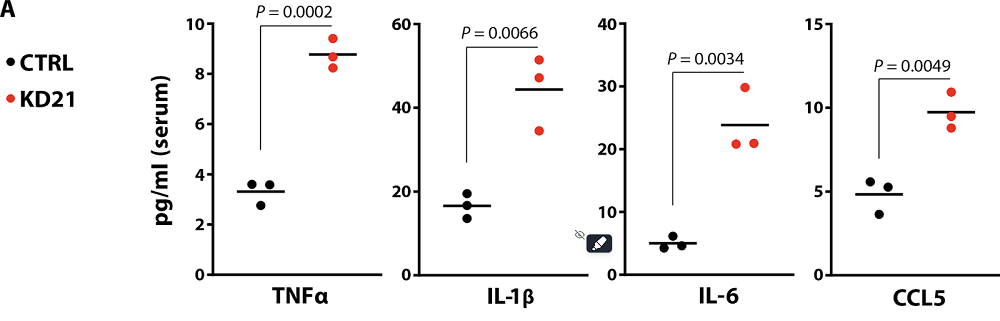
Senescent cells emit the senescence-associated secretory phenotype (SASP), a mix of various factors that have been reported to contribute to inflammation and induce senescence in nearby cells. The researchers analyzed several pro-inflammatory SASP molecules, TNFα, IL-1β, IL-6, and CCL5, and found significantly elevated levels of them in mice after 21 days of KD:

Ketogenic diets 1

Similar data from human plasma

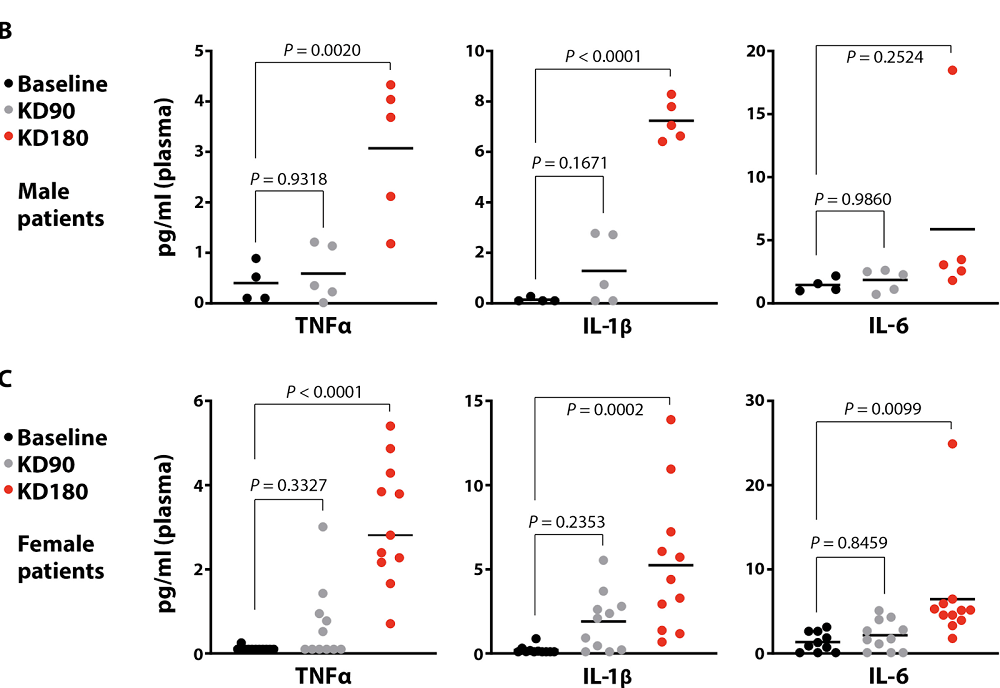
The group also analyzed data from two human KD trials at the University of Texas and received similar results. Large increases in two SASP factors (TNFα and IL-1β) in human plasma were detected in both males and females. Interestingly, the increases were slight and statistically insignificant after 90 days of a KD but much more pronounced after 180 days. These results might add to the uneasiness about the long-term effects of KDs. Many interventional studies of KDs in humans are of shorter duration and might have overlooked these effects.

Ketogenic diets 2

Putting the mice back on regular diets led to a gradual return of the senescence markers to their normal values. According to the researchers, this suggests that KD-related cellular senescence is reversible, at least up to a certain point, and senescent cells get cleared away once the senescence-inducing effects of a KD are no more. The group also found that the negative effects of KDs they had discovered are age-independent, occurring in both young and aged mice.

The results of our in vivo murine experiments in this study, as well as those from other laboratories, reinforce that the effects of KD are complex, with both potential benefits and side effects likely due to multiple factors, including the timing, composition of the diet and the genetics, endocrine factors, and health conditions of the individual. As such, it is proposed that the use of a KD should be considered within the overall scope of personalized medicine, in which the variables for each patient are taken into consideration to determine who will, and who will not, benefit from this dietary intervention or a specific regimen.

We would like to ask you a small favor. We are a non-profit foundation, and unlike some other organizations, we have no shareholders and no products to sell you. All our news and educational content is free for everyone to read, but it does mean that we rely on the help of people like you. Every contribution, no matter if it’s big or small, supports independent journalism and sustains our future.

Literature

[1] Wei, S. J., Schell, J. R., Chocron, E. S., Varmazyad, M., Xu, G., Chen, W. H., … & Gius, D. (2024). Ketogenic diet induces p53-dependent cellular senescence in multiple organs. Science Advances, 10(20), eado1463.

[2] Neal, E. G., Chaffe, H., Schwartz, R. H., Lawson, M. S., Edwards, N., Fitzsimmons, G., … & Cross, J. H. (2008). The ketogenic diet for the treatment of childhood epilepsy: a randomised controlled trial. The Lancet Neurology, 7(6), 500-506.

[3] Pinto, A., Bonucci, A., Maggi, E., Corsi, M., & Businaro, R. (2018). Anti-oxidant and anti-inflammatory activity of ketogenic diet: new perspectives for neuroprotection in Alzheimer’s disease. Antioxidants, 7(5), 63.

[4] Allen, B. G., Bhatia, S. K., Anderson, C. M., Eichenberger-Gilmore, J. M., Sibenaller, Z. A., Mapuskar, K. A., … & Fath, M. A. (2014). Ketogenic diets as an adjuvant cancer therapy: History and potential mechanism. Redox biology, 2, 963-970.

[5] Iatan, I., Huang, K., Vikulova, D., Ranjan, S., & Brunham, L. R. (2024). Association of a low-carbohydrate high-fat diet with plasma lipid levels and cardiovascular risk. JACC: Advances, 100924.

[6] Groesbeck, D. K., Bluml, R. M., & Kossoff, E. H. (2006). Long-term use of the ketogenic diet in the treatment of epilepsy. Developmental medicine and child neurology, 48(12), 978-981.

Disc hernia

Interrupting the Chain of Disc Degeneration

In Aging Cell, researchers have published a potential method of ameliorating disc degeneration that focuses on the cells living in a low-oxygen environment within the discs.

Living on low oxygen

Yesterday, we discussed how an antioxidant compound was found to alleviate intervertebral disk degeneration (IVDD). This related paper focuses on a tissue that is already naturally very low in oxygen: the nucleus pulposus. As these researchers explain, nucleus pulposus cells (NPCs) live in an environment with very few blood vessels. The nutrients these cells get are derived from capillaries in the extracellular matrix surrounding them.

In this uniquely hypoxic environment, hypoxia-inducible factor 1α (HIF-1α) plays a major role in metabolism. It governs glycolysis, a process of burning energy that doesn’t require oxygen, and without it, NPCs die off quickly [1]. It has been found to be related to ferroptosis [2], a cause of cellular death that occurs with an excess of iron [3].

HIF-1α has also been found to play a role in RNA regulation and metabolism, specifically N6-methyladenosine (m6A), which plays a major role in how RNA does its transcriptional job and is being investigated for its relationship to aging [4]. Specifically, HIF-1α regulates YTH N6-methyladenosine RNA-binding protein 1 (YTHDF1), which is a key part of m6A modification [5].

Building on that previous work, this particular study focuses on the relationship between HIF-1α, YTHDF1, and the survival or ferroptosis of NPCs.

Following the long trail

First, the researchers engaged in a cellular study, cultivating NPCs in a low-oxygen environment meant to mimic their natural habitat. Some cells were taken from people with severe spinal degeneration (the IVDD group), while a control group had cells derived from people with an unrelated disease. The IVDD group had far less GPX4, a compound that inhibits ferroptosis.

The researchers then administered erastin, which induces ferroptosis, to normal cells and to cells that overexpress HIF-1α. The overexpressing cells had less free radical iron in them, and they had lower levels of malondialdehyde (MDA), which represents the damage caused by this free radical iron. Reactive oxygen species behaved the same way in this experiment; HIF-1α, despite being induced by hypoxia, prevented oxidative damage in this case.

The study then turned to YTHDF1. Like with GPX4, the IVDD group had far less YTHDF1 than the control group. Further experimentation found that, as expected, more HIF-1α led to more YTHDF1 while inhibiting HIF-1α led to less of this RNA-binding compound. Like with HIF-1α, YTHDF1 was found to have positive effects against ferroptosis, and blocking YTHDF1 prevented HIF-1α from having its positive effects. This demonstrates that HIF-1α’s effects against this form of cellular death are due to its upregulation of YTHDF1.

Taking a closer look, the researchers mutated YTHDF1 so that it would not bind to RNA properly. This form of YTHDF1 was not found to affect ferroptosis. Specifically, unmodified YTHDF1 was found to affect SLC7A11, which these researchers found to affect GPX4, the ferroptosis-inhibiting compound that the IVDD cells had less of. These findings were confirmed in a rat model; rats that had their discs damaged through puncture wounds recovered better with upregulated YTHDF1, but not if SLC7A11 was knocked down.

This long chain of biological causation provides an interesting question for future researchers: where is it best to intervene? Future experiments may focus on restoring HIF-1α to aged cells, using RNA-based interventions may be best, or administering GPX4 might turn out to be the more practical approach.

We would like to ask you a small favor. We are a non-profit foundation, and unlike some other organizations, we have no shareholders and no products to sell you. All our news and educational content is free for everyone to read, but it does mean that we rely on the help of people like you. Every contribution, no matter if it’s big or small, supports independent journalism and sustains our future.

Literature

[1] Merceron, C., Mangiavini, L., Robling, A., Wilson, T. L., Giaccia, A. J., Shapiro, I. M., … & Risbud, M. V. (2014). Loss of HIF-1α in the notochord results in cell death and complete disappearance of the nucleus pulposus. PloS one, 9(10), e110768.

[2] Guan, Z., Jin, X., Guan, Z., Liu, S., Tao, K., & Luo, L. (2023). The gut microbiota metabolite capsiate regulate SLC2A1 expression by targeting HIF‐1α to inhibit knee osteoarthritis‐induced ferroptosis. Aging Cell, 22(6), e13807.

[3] Ru, Q., Li, Y., Xie, W., Ding, Y., Chen, L., Xu, G., … & Wang, F. (2023). Fighting age-related orthopedic diseases: focusing on ferroptosis. Bone research, 11(1), 12.

[4] Wu, Z., Ren, J., & Liu, G. H. (2023). Deciphering RNA m6A regulation in aging: Perspectives on current advances and future directions. Aging Cell, 22(10), e13972.

[5] Li, Q., Ni, Y., Zhang, L., Jiang, R., Xu, J., Yang, H., … & Wang, X. (2021). HIF-1α-induced expression of m6A reader YTHDF1 drives hypoxia-induced autophagy and malignancy of hepatocellular carcinoma by promoting ATG2A and ATG14 translation. Signal transduction and targeted therapy, 6(1), 76.

Disc degeneration

Why One Antioxidant Might Alleviate Disc Degeneration

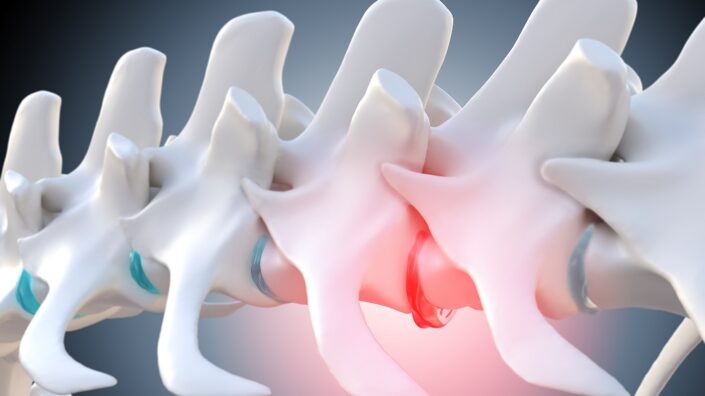
In Aging Cell, researchers have published detailed information on why the antioxidant pyrroloquinoline quinone (PQQ), which is known to be safe in humans, alleviates age-related disc degeneration in mice.

A return to antioxidants

Oxidative stress was once considered to be the core of aging, a concept that has since been supplanted by more detailed and accurate theories. However, oxidative stress still plays a role in aging and age-related diseases. Intervertebral disc degeneration (IVDD), for example, has oxidative stress [1] and cellular senescence [2] among its causes.

PQQ, a compound that the FDA recognizes as safe in humans, is a water-soluble, vitamin-like compound that naturally occurs in foods and has a strong affinity for the free radicals that lead to oxidative stress [3]. As these researchers have previously investigated its potential use in fighting osteoporosis [4], they moved on to determine whether or not it might be capable of mitigating IVDD.

Antioxidant and anti-senescent

This study was conducted in a population of 24-month-old male mice that were fed a diet containing extra PQQ for the latter half of their lives, comparing them to 12-month-old males and 24-month-old males that had received a normal diet. While this supplement did not entirely alleviate IVDD markers to the levels of the 12-month-old group, it had significant impacts in these animals: the treated mice had larger discs along with chemical biomarkers and cell numbers that were more like those of younger mice.

Biomarkers related to senescent cells and the degradation of the extracellular matrix (ECM) were also positively affected. Both senescent cell populations and the inflammatory chemicals they secrete were reduced, as were signs of overall oxidative damage. There were also signs that the treated mice had fewer cells dying of apoptosis than their age-matched counterparts.

A pathway explored

Looking deeper, the researchers found the biochemical pathways responsible for this difference. A molecular binding model found that PQQ interacts with the Keap-Nrf2 complex in a way that activates Nrf2, which cells naturally produce as an antioxidant [5]. Further analysis revealed that this was the cause of its anti-senescence effects.

This increase in Nrf2 was also found to upregulate Wnt5, a compound that was previously found to have positive effects against IVDD [6]. PQQ did not have this positive effect on cells that can’t express Nrf2, thus demonstrating that this is the actual pathway involved. Further experiments on mice that did not produce Nrf2 demonstrated that these animals suffered from IVDD and other age-related disorders early in life; as expected, PQQ had no effect on these animals.

These results were only conducted on a population of male mice who took it for half of their entire lives. Further experiments by other research teams on other animals are necessary to verify whether or not this sort of long-term exposure to PQQ might be beneficial against IVDD or other age-related diseases in human beings.

We would like to ask you a small favor. We are a non-profit foundation, and unlike some other organizations, we have no shareholders and no products to sell you. All our news and educational content is free for everyone to read, but it does mean that we rely on the help of people like you. Every contribution, no matter if it’s big or small, supports independent journalism and sustains our future.

Literature

[1] López-Otín, C., Blasco, M. A., Partridge, L., Serrano, M., & Kroemer, G. (2023). Hallmarks of aging: An expanding universe. Cell, 186(2), 243-278.

[2] Novais, E. J., Tran, V. A., Johnston, S. N., Darris, K. R., Roupas, A. J., Sessions, G. A., … & Risbud, M. V. (2021). Long-term treatment with senolytic drugs Dasatinib and Quercetin ameliorates age-dependent intervertebral disc degeneration in mice. Nature Communications, 12(1), 5213.

[3] Akagawa, M., Nakano, M., & Ikemoto, K. (2016). Recent progress in studies on the health benefits of pyrroloquinoline quinone. Bioscience, biotechnology, and biochemistry, 80(1), 13-22.

[4] Li, J., Zhang, J., Xue, Q., Liu, B., Qin, R., Li, Y., … & Yang, R. (2023). Pyrroloquinoline quinone alleviates natural aging‐related osteoporosis via a novel MCM3‐Keap1‐Nrf2 axis‐mediated stress response and Fbn1 upregulation. Aging Cell, 22(9), e13912.

[5] Niture, S. K., Khatri, R., & Jaiswal, A. K. (2014). Regulation of Nrf2—an update. Free Radical Biology and Medicine, 66, 36-44.

[6] Li, Z., Zhang, K., Li, X., Pan, H., Li, S., Chen, F., … & Liu, H. (2018). Wnt5a suppresses inflammation-driven intervertebral disc degeneration via a TNF-α/NF-κB–Wnt5a negative-feedback loop. Osteoarthritis and cartilage, 26(7), 966-977.

Stephanie Dainow at Rejuvenation Startup Summit 2024

“Everything Happens in Berlin”: Highlights From The Summit

The Rejuvenation Startup Summit in Berlin might not be the biggest or the longest-running longevity conference, but it never disappoints. We present you with the highlights from this vibrant, biotech-oriented event. As always, our apologies go to those equally worthy speakers who did not make the cut.

A longevity city in the making

The Rejuvenation Startup Summit in Berlin, hosted by Michael Greve’s Forever Healthy Foundation, is regarded as one of the most important longevity events of the year for a reason. Despite spanning “only” two days, the summit is always packed with action, with an important emphasis, as its name suggests, on longevity biotech rather than on academic research. Longevity biotech is a newborn field that is still small, frail, and full of risks and uncertainties, and it is crucial for people working in it to coordinate their efforts and support each other if we want to see rejuvenation therapies mature soon.

This time, however, the two conference days were just the crown jewel of the Longevity Week Berlin. The latter kicked off on May 6th with an opening event co-anchored by longevity advocate Andrew Steele and lifespan.io executive director Stephanie Dainow. The evening included a well-appointed panel on democratizing longevity and a talk by Dr. Ina Czyborra, Berlin senator for science, health, and care, who told the audience about the city’s vast plan to build a longevity-friendly infrastructure for the benefit of its entire population. Many speakers noted that Berlin is quickly becoming one of the most future-oriented and startup-friendly cities in Europe, or, to quote one speaker, “Everything happens in Berlin.”

Longevity Week’s other events were self-organized and at times quirky, with titles such as “Longevity meets Nightlife” and “Longevity x Psychedelics: how trauma impacts aging and psychedelics could heal.” Meetups and industry lunches were abundant, and Google’s Berlin office hosted a dedicated event on longevity startups.

The Hevolutionary advantage

All this, however, was only a lead-up to the main course. The Summit itself commenced on May 10th with a keynote talk by Mehmood Khan, CEO of Hevolution, the Saudi non-profit fund that has been pouring considerable money into longevity research. Khan brings to the longevity field decades of experience managing giant companies such as PepsiCo, and his presentation skills are always on full display at conferences. Khan is also an MD with a background in endocrinology.

Khan started with the overview of the challenges with which “population greying” is presenting the world. Even the wealthiest countries are beginning to feel the burden of caring for their elderly, most of whom spend their last decade in poor health, constantly requiring costly treatments. According to Khan, this problem might be even more severe in developing countries which also experience populational aging but lack the resources and the infrastructure for adequate care.

Hevolution wants to change this situation by working across the “longevity ecosystem.” According to Khan, all the links in this chain are crucial to success. Interestingly, several speakers at the conference suggested that approved longevity medicines are a prerequisite for igniting the public’s interest. However, there is an alternative point of view: that shifts in public opinion should come first, driving a subsequent dramatic increase in funding, as was the case with the War on Cancer in the last century.

RSS2024 1

Hevolution, it seems, subscribes to the first view: its activities are largely focused on funding research, with about 250 million dollars committed to date. As an advocacy group, lifespan.io leans towards the competing idea, which assigns vital importance to recruiting public opinion and influencing decision making in order to generate even more progress.

Going after “zombie cells”

Senolytics had a bumpy start in longevity. Several startups quickly moved into clinical trials, and then one of the industry’s first high-profile flops happened, when UNITY’s candidate drug failed Phase 2 trials. Still, many companies believe in senolytics, and they were abundantly represented at the conference.

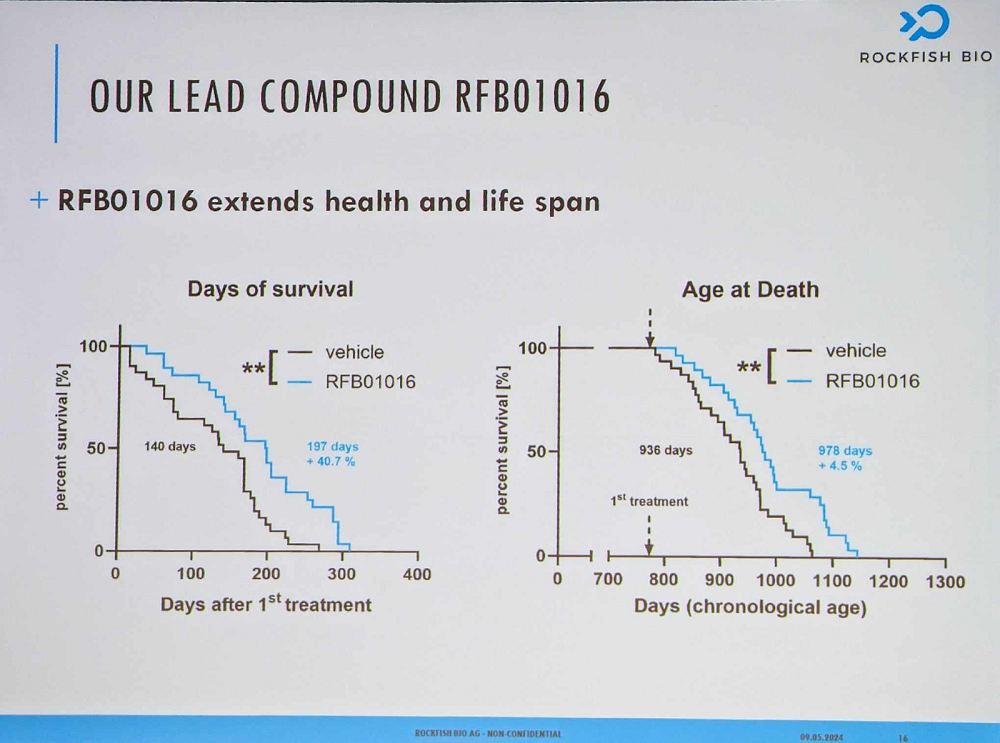
Otto Kanzler of Rockfish Bio recounted the drawbacks that plague the first generation of senolytics. Drugs based on anti-apoptotic pathways, he said, have low selectivity and, consequently, harsh side effects. On top of that, there is still a lack of non-invasive clinical biomarkers for senescent cell load and a problem of choice between dozens of possible indications. Hence, new approaches are needed to unleash senolytics’ full potential.

Kanzler’s company identified a novel pathway based on phospholipase A2 (PLA2), an enzyme that shows increased activity in senescent cells. PLA2 facilitates apoptosis, a type of cellular death that senescent cells are famous for evading. How do these two facts square with each other? Apparently, senescent cells actively convert PLA2 before it can trigger apoptosis. Rockfish Bio’s lead candidate drug targets this conversion, helping apoptosis go through in senescent cells without harming healthy cells.

Kanzler reported encouraging efficacy data from mouse trials. With diminished senescent cell burden, mice showed less frailty and extended lifespan even though the treatment had been administered late in life.
RSS2024 2

The company’s strategy is to gain accelerated approval against a rare disease – probably idiopathic pulmonary fibrosis (IPF), a deadly disease tightly linked to cellular senescence – and then promote off-label use for other indications. Rockfish Bio also boasts its own SenomiR diagnostic tool, which can quantify senescent cell burden. In the company’s vision, older people will be undergoing the test routinely, and, if found eligible, will receive a senolytic therapy.

Marco Quarta of Rubedo spoke next. Rubedo is a well-established senolytic startup that recently received generous funding from Hevolution. The company employs a proprietary drug discovery platform, Alembic, which uses single-cell multi-omics to selectively target the very cells that drive pathology in various age-related diseases. The company’s lead program tackles atopic dermatitis and psoriasis. These might not be the fanciest targets, but Rubedo, like many other companies, aims to gain approval for existing indications and then promote their drugs’ off-label use in a more anti-aging context.

Like Kanzler before him, Quarta lamented the lack of selectivity and safety of first generation senolytics. He hopes, however, that Alembic can overcome this problem by identifying molecules with a more targeted action. As usual, the problem lies in the high heterogeneity of senescent cells across cell types and tissues. Meanwhile, Rubedo’s lead candidate has shown efficacy and was well-tolerated in a mouse model of chronic atopic dermatitis, raising hopes that it can become one of the first approved senolytics.

Eric Verdin, head of the Buck Institute for Research on Aging and one of the few speakers not associated with a particular biotech company, gave an overview of the Buck’s research activities, focusing on cellular senescence. Given the heterogeneity of senescence, characterization of senescent cells is of utmost importance. Researchers at the Buck have been studying gene expression changes in immune cells positive for various senescence markers, mainly β-galactosidase. They also found that senescent cells can be especially abundant (up to 40%) in some immune cell populations. Since immune cells travel across the body, they probably induce secondary (paracrine) senescence in various tissues.

Verdin discussed two more novel markers of senescence. One is chromatin fragmentation. Apparently, during senescence, the chromatin in the nucleus gets excised and translocates to the cytoplasm. “These cells obviously have massive DNA damage, which is not reversible”, Verdin said, adding that this poses serious questions about the feasibility of the senomorphic approach, which seeks to “fix” senescent cells instead of eliminating them.

Verdin also talked about lipofuscin, a yellow-brown pigment composed of lipid-containing residues which accumulate due to lysosomal stress. Lipofuscin is obviously linked to aging, but Verdin sees it as a good marker of specifically cellular senescence, at least in immune cells. Solving cellular senescence in skin and immune cells, according to Verdin, will also go a long way in getting rid of lipofuscin.

Lorna Harries of SENISCA, a company spun out of Harries’ academic team, is trying to do specifically what Eric Verdin warns about: restore the function of senescent cells rather than get rid of them. By using oligonucleotides for precision alteration of gene expression, SENISCA goes after another novel marker of senescence, which they also consider a new hallmark of aging: dysregulated RNA splicing.

According to Lorna, dysregulated splicing affects numerous aspects of cellular function, such as telomere maintenance and mRNAs coding for senescence-associated secretary phenotype (SASP) proteins, the mix of molecules emitted by senescent cells. She calls fixing senescent cells with oligonucleotides “reprogramming”, which is “analogous to the sort of reprogramming you would see with the Yamanaka factors, but without the changes in cell identity.” Under this treatment, Lorna says, senescent cells not just stop being harmful but can regain their original function.

Similarly to Rockfish Bio, the top indication that SENISCA is working on is idiopathic pulmonary fibrosis. In vitro, in cells derived from patients, the treatment led to reductions in senescence, DNA damage, inflammation, and fibrosis markers. The company also has tested an intranasal mode of delivery in mice.

Did someone call blood cleaners?

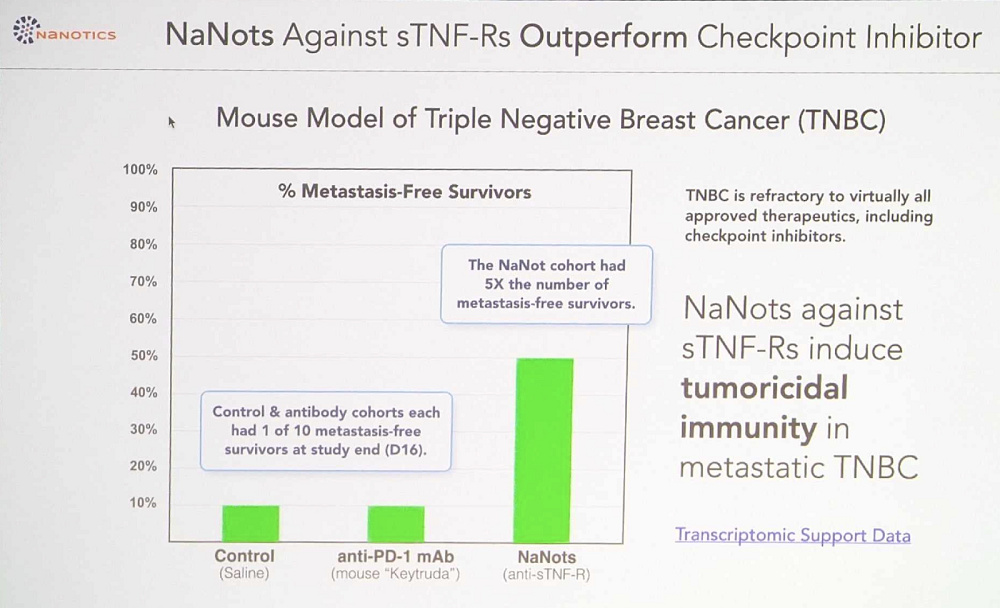
Lou Hawthorne of NaNotics reported on the progress that the company made since his last presentation in Berlin in 2022. NaNotics is working on a universal nanoparticle platform that can clear harmful molecules from the bloodstream. Its most important difference from free-floating antibodies is that NaNots, the company’s proprietary nanoparticles, bind the soluble form of receptors without affecting the membrane form. According to Lou, “soluble factors are often direct mediators of disease and thus more relevant targets.” Many targets have both the essential membrane form and the pathogenic soluble form, and current antibody-based drugs cannot distinguish between them.

Theoretically, NaNots can clear away almost any protein, but currently, the company is after several targets, starting with TNF-α, a cytokine that mediates inflammation and immune response. Immune cells emit soluble TNF molecules. When those molecules bump into transmembrane TNF receptors located on the surface of cancer cells, they transduce an inflammatory signal, essentially a call for reinforcements. Many cancer cells shed soluble TNF receptors to bind this compound in the bloodstream and thus evade discovery. Clearing out those soluble TNF receptors with NaNots should make the tumor visible to the immune system.

Excess amounts of TNF are also behind cytokine storms. TNF-binding nanots lowered mortality in a relevant mouse model. Another TNF-related indication that NaNotics is working on is multiple sclerosis, in which dysfunctional interplay between TNF and TNF receptors causes demyelination in neurons.

NaNots are so versatile that reengineering them for a new target takes just several months. Among the advances since 2022 that Hawthorne mentioned are new encouraging efficacy data in cancer in humanized mice and launching the heavily updated third generation of NaNots.
RSS2024 3

Dobri Kiprov of Circulate.inc takes a different approach to blood cleansing. His company works on translating experiments in heterochronic parabiosis, in which a young and an old animal’s vasculatures are connected, into actual treatments for humans. Heterochronic parabiosis, pioneered by Irina and Michael Conboy, has been shown to cause some rejuvenation of the old animal.

While we cannot use the same setup in humans, we can perform plasma exchange. However, plasma from a donor can cause compatibility issues, which is why Kiprov’s company basically does plasma dilution by removing the patient’s plasma and replacing it with 5% albumin (the most abundant protein in plasma) in saline solution.

Kiprov reported on a recent TPE (therapeutic plasma exchange) trial that included 40 people. The participants received albumin derived from the plasma of younger people with an average age of 25. The study group showed improvements in metrics of physical strength and SASP. Epigenetic clocks, according to Kiprov, “showed overall positive response to TPE”.

Albumin is known for its anti-inflammatory and antioxidant qualities, so one of the questions being investigated is how much of the positive effect is due to the clearance of harmful “old blood” factors, and how much is due to the introduction of albumin?

Kiprov’s company is already operating a network of clinics providing TPE to private clients.

Unclog ’em!

Two companies had back-to-back presentations on atherosclerosis prevention and reversal. A major cause behind heart attacks and strokes, atherosclerosis is a prolific killer. Incidentally, both Mathew O’Connor of Cyclarity and Reason of Repair Biotechnologies were recently interviewed by lifespan.io.

Cyclarity focuses on the role of 7-ketocholesterol (7KC) in atherosclerosis. 7KC is an altered form of cholesterol strongly associated with cardiovascular disease – even more so, according to O’Connor, than the infamous LDL cholesterol. 7KC transforms healthy macrophages into diseased foam cells that form the bulk of atherosclerotic plaques.

Cyclarity has been working with a class of molecules called cyclodextrins that can bind to other molecules. Cyclodextrins are widely used and have a favorable safety profile. The trick is to design a cyclodextrin with high affinity and specificity towards 7KC. Cyclarity did it through dimerization, and the resulting product has been shown to rejuvenate foam cells.

Now, Cyclarity is moving into Phase 1 safety trials in Australia. O’Connor hopes that their candidate drug will eventually be able to reduce plaques by 10-15%; a 1% reduction leads to 20% fewer heart attacks.

Repair Biotechnologies has chosen a different approach: removing local excess cholesterol. This is trickier than it might seem, since drugs that can bind to the toxic free cholesterol also bind to cholesterol molecules in cellular membranes, which are indispensable for life. Theoretically, excess cholesterol should be cleared away by the dedicated transport system, but like most other systems in our organisms, it becomes progressively dysfunctional with age.

Repair’s solution is to break down free cholesterol using RNA-loaded LNPs (lipid nanoparticles). After LNPs are taken up by a liver cell, the RNA cargo codes for a fusion protein that can bind free cholesterol. The therapy works by clearing excessive free cholesterol in the liver, which produces systemic benefits.

The treatment has been shown to decrease plaque burden by 17% in a mouse model of accelerated atherosclerosis. Repair is aiming at a clinical trial against homozygous familial hypercholesterolemia, a hereditary disease characterized by abnormally high cholesterol levels, in 2026.

Why repair when you can replace?

Jean Hebert of BE Therapeutics is one of a handful of geroscientists working on a problem that can become a huge roadblock on the way to meaningful life extension: brain aging. Even if we can replace every other organ in the body, we cannot replace the brain without losing the patient’s very self. Thankfully, the brain has a lot of plasticity, rerouting signals away from the damaged parts. Heber gave an example of a patient with brain cancer who had lost the language processing center but not the ability to speak or understand language. This means that, theoretically, we can gradually replace brain tissue “brick by brick”, using tiny patches of healthy tissue, without compromising the brain’s function.

Hebert, a lifelong academic, is new to the biotech scene with his startup, which is less than a year old. The company is in the early preclinical stages but is making good progress. Hebert reported that this company was able to create fully structured and vascularized cortex organoids. Vascularization was solved by including vascular endothelial cells in the graft. The prototype human tissue engrafted in mice developed neuronal connections. In particular, visual cortex neurons mature and become robustly responsive to light.

Our cognitive abilities inevitably decline with age, so gradually replacing our brain tissue seems like a good idea even in the absence of brain diseases. However, the technology will probably be first employed against stroke, traumatic brain injury (TBI), and various types of dementia. Despite its young age, BE Therapeutics, according to Hebert, “has unmatched know-how” since it can produce functional brain tissue rather than one cell type transplants which have numerous limitations.

Alexander Leutner of Cellbricks, a young startup based in Berlin, described the company’s attempts to build fully functional blocks of tissue. Cellbricks does it using laser-based multi-material 3D bioprinting, constructing tissue layer by layer, complete with cells of different types, extracellular matrix, and vasculature. The company already has several publications describing bioprinting such tissues as cartilage, liver, and pancreas.

One idea is to build tissue blocks for reconstructive surgery, such as after mastectomy. Another is to implant patches of healthy tissue into a flailing liver, improving its function. In addition to just replacing old or dysfunctional tissue, Cellbricks’ “tissue patches” can also serve as a cell therapy delivery system or as models for diseased tissue such as cancer.

RSS2024 4

Many other approaches

Alexander Schueller’s company CellVie is among the few in the field that work on mitochondria transplantation. Mitochondrial dysfunction probably contributes to many processes of aging, but, like many other companies, CellVie is focusing on an existing therapeutic indication: ischemia-reperfusion injury (IRI). IRI occurs when blood supply returns to the tissue after an extended lack of oxygen (ischemia). In heart attacks, IRI can lead to further myocardial damage and impaired cardiac function. In strokes, it can exacerbate brain damage, leading to neuronal death, inflammation, and blood-brain barrier disruption.

However, CellVie’s chosen indication is kidney transplantation. When a donor kidney is connected to the patients’ vascular system, IRI happens, damaging the organ and worsening the chances of success. Since mitochondrial damage is a hallmark of IRI, the idea is that injecting healthy mitochondria might help blunt the impact. CellVie has data that shows kidney damage reduced by more than 50% with mitochondria treatment in a pig model of acute kidney ischemia.

However, one of the hurdles, including in raising money, is that the mechanisms behind the benefits of mitochondrial transplantation are now well known. Schueller thinks his company might be close to answering that question: their research suggests that after arriving at the target cell via endocytosis, new mitochondria activate mitophagy and mitogenesis, rejuvenating the native mitochondrial population.

RSS2024 5

In other good news, CellVie is collaborating with Boston Children’s Hospital on using mitochondrial transplantation to help myocardial infarction in children. 15 children have been treated so far, with encouraging results.

Greg Fahy of Intervene Immune works on a very specific and important aspect of aging: thymic involution. Thymus is the small organ where T cells mature (hence the “T”). Despite being crucial to our immune system, thymus undergoes involution starting in adolescence, probably because producing new T cells is energetically costly and nature doesn’t really care what happens to us past our reproductive age. By the age of 50, virtually all thymic tissue gets replaced with fat, which leads to impaired immune function, likely contributing to immune-related diseases in older age.

Fahy gained prominence several years ago with his groundbreaking TRIIM trial, in which a combination of human growth hormone (HGH) and metformin was used to try and reverse thymic involution. The treatment led, among other things, to a significant decrease in epigenetic age, providing proof of concept.

Fahy reported on the results of the follow-up trial, TRIIM-XA. It was much bigger than the original TRIIM, with 26 participants, including 6 women (TRIIM had 9, all of them males), and it had both treatment and growth hormone controls. The participants were older and sicker than those in TRIIM, and this time, in addition to epigenetic clocks, functional health metrics were measured too.

TRIIM-XA showed reversal of biological age according to several clocks, including PhenoAge, GrimAge, and DunedinPACE. The treatments also led to improvements in inflammation/immunological profiles, strength, aerobic fitness, blood pressure, and body fat percentage.

Fahy touted a “completely novel agent” that improves epigenetic age reversal and is compatible with the existing TRIIM protocol. Despite Intervene Immune being a relatively new company, their leading candidate for thymus regeneration has been patented and is undergoing Phase 2 trials.

The talk by lifespan.io Executive Director and Board Member Stephanie Dainow was highly anticipated in light of the recent announcement of a merger between Lifespan Extension Advocacy Foundation (lifespan.io) and SENS Research Foundation (SRF), two of the longest-running and most prominent non-profits in the longevity field. Dainow presented the two organizations and outlined many synergies, highlighting the underlying shared mission of advancing humanity’s ability to reduce suffering and live longer, healthier lives.

SRF is a research organization with lab facilities in the Silicon Valley with various education programs and damage repair research initiatives. SRF boasts academic and scientific research partnerships as well as startup spinouts and investments. In addition to her role at lifespan.io, Dainow has assumed the position of Chief Business Officer at SRF and will co-lead the new organization once the merger is completed.

lifespan.io has become extremely well known for its advocacy efforts to popularize longevity research and accelerate industry progress through strategic media initiatives. While our organization has a respectable record of crowdfunding research, in recent years, lifespan.io has also become a centralized information and education hub, publishing industry news, creating educational content for our popular YouTube channels, including Life Noggin, and connecting startups with investors through the Longevity Investor Network service platform.

Accordingly, the merger will create a more well-rounded organization, optimally positioned to assume a leading role in the field. Dainow quoted a prominent longevity VC, who had characterized the value the two non-profits bring to the field as “absolutely massive,” adding that these non-profits “are the ones who put the field on the map.” She then encouraged the audience to stay tuned for “many exciting announcements in the coming months on how we plan to evolve, refine efforts and programming, and continue supporting the longevity industry with resources and information that enable accelerated progress.”

The rest of the talk was dedicated to a core advocacy strategy that is often overlooked by the industry and is something that many people at the conference agreed is absolutely essential for improved fundraising and political support. Drawing from lifespan.io’s decade-long expertise, Dainow shared practical advice on how to communicate longevity to investors who are unfamiliar with the field and outlined the risks of continued poor comms.

There is a general consensus that the main bottleneck for the field is lack of funding. Dainow challenged this assumption and argued that there is plenty of capital. She argued that the actual bottleneck is communication: a skill set that is too often de-prioritized by longevity scientists, researchers, and academic professionals. Dainow shared a recent experience with a group of high-net-worth individuals who had been given a lecture by a prominent scientist about new longevity biotech, only to become frustrated with their inability to understand its content. She emphasized the importance of “meeting people where they are,” that is, of identifying people’s level of scientific comprehension, understanding their mindset and beliefs about aging and never-before-seen-futures, and tailoring the narrative accordingly.

RSS2024 6

Janine Sengstack of Junevity is another academic-turned-entrepreneur. Her company stems from her PhD work on transcription factors: genes that regulate the expression of several other genes. Junevity analyzes transcription factors’ expression patterns in aging cells to push those cells back towards youthful phenotypes.

Junevity’s goal is to influence factors that are key nodes in the vast network of gene expression. The company uses short interfering RNA (siRNA) to downregulate the expression of the factors that get upregulated with age. This is different from “conventional” cellular reprogramming, in which certain factors are upregulated to push the cell towards de-differentiation. According to Sengstack, downregulation is safer because upregulated transcription factors can bind off-target. Importantly, unlike the full Yamanaka factor cocktail, Junevity’s candidates do not promote cancer-encouraging oncogenes.

The company is developing candidates against obesity and metabolic dysfunction in collaboration with NovoNordisk. A preclinical study showed improvements in liver metabolism in obese mice, with reductions in insulin and creatinine levels, collagen production, and inflammation, after targeting just one transcription factor. Mice on a high-fat diet did not gain weight due to higher metabolism. Junevity’s skin aesthetics program showed improved collagen production and restoration of youthful gene expression across thousands of genes – yet again, following the downregulation of a single transcription factor.

Nicolina Lauc, GlycanAge CEO, told the audience about glycans, complex carbohydrates that play many important roles, mostly by attaching to proteins and lipids and changing their function. Glycans are involved in cell recognition and communication, immune response, protein folding, and various development processes. They even define your blood group.

Glycans are also important in the context of aging: among more than 6,000 molecular traits, 9 of the 20 strongest associations with aging were observed for glycans. This link between glycans and aging enabled GlycanAge to develop its proprietary biological age clock which is available commercially as a blood test. Interestingly, the famous Horvath methylation clock and GlycanAge clock were published on exactly the same date: December 10, 2013.

However, accelerations in glycan and epigenetic clocks do not correlate, meaning thaat they reflect different aspects of aging. This makes glycans a biomarker of aging worth exploring in depth. Notably, the GlycanAge clock does not detect aging deceleration from metformin in healthy people, but it does so in diabetics, which is in line with some recent studies.

Lauc touted her company’s clock’s various advantages over other biomarkers of aging. According to her, it shows little variability between measurements, but is also sensitive to biological changes. Interestingly, while regular optimal physical activity has a very positive effect on the clock, professional athletes fare much worse, on par with people who are inactive and overweight, probably due to increased inflammation. These results support the idea that there is such thing as too much exercise.

Chris Bradley’s company MatterBio aims high: at repairing mutations. Somatic mutations accumulate in every cell in the body. While most of them are neither harmful nor beneficial, the burden always keeps growing. According to Bradley, a typical cell becomes dysfunctional after 1000-5000 mutations. Of course, mutations are also what cause cancer. Another hint at the connection between mutations and aging is the tight cross-species correlation between mutation rate and lifespan.

Novel tools give us the ability to identify and fix mutations – which is exactly what MatterBio is trying to do. The three stages of the process are Read, Reverse, and (if you can’t reverse) Remove. The company’s proprietary read tool that can identify single mutations is already available commercially. Another proprietary tool, for reversing mutations, is at a much earlier stage, while their bacteria-based tech for aberrant cell removal is somewhere in the middle, heading into clinical trials for metastatic pancreatic cancer. In pre-clinical studies, it caused a 40% increase in survival for pancreatic cancer and a 54% increase for ovarian cancer. A second treatment cycle doubled survival time in ovarian cancer.
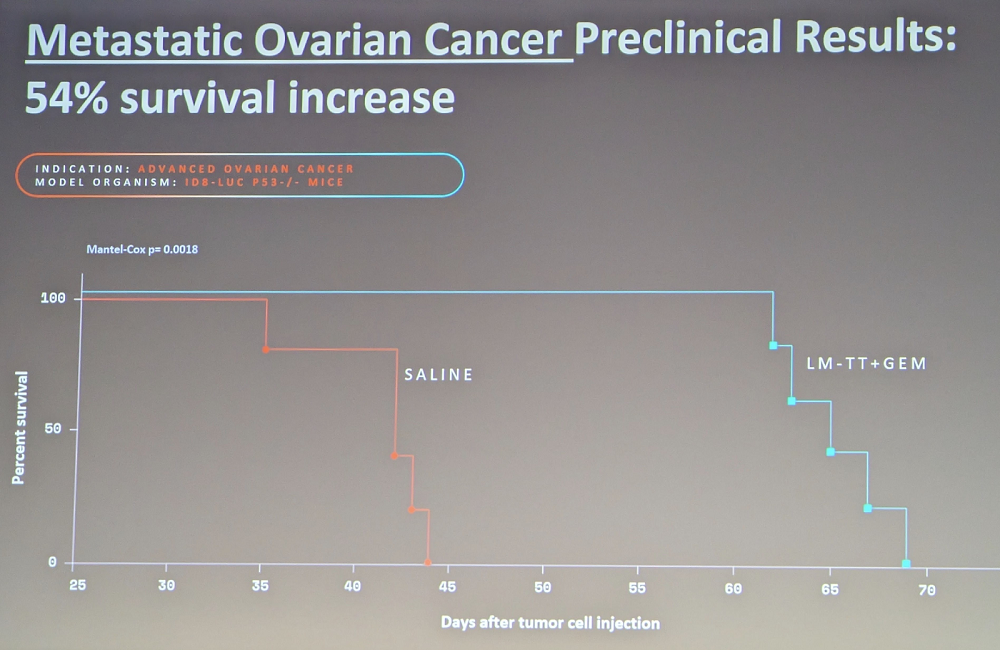
RSS2024 7
We would like to ask you a small favor. We are a non-profit foundation, and unlike some other organizations, we have no shareholders and no products to sell you. All our news and educational content is free for everyone to read, but it does mean that we rely on the help of people like you. Every contribution, no matter if it’s big or small, supports independent journalism and sustains our future.

Open Longevity Debate

Two Leading Scientists Debate Human Lifespan

A debate titled “How to Defeat Aging” will be held on May 27, 2024, featuring two distinguished scientists, Peter Fedichev and Aubrey de Grey, both proponents of radical life extension with biotechnology, with opposing views.

Fedichev believes aging is irreversible but can be slowed or stopped, while de Grey argues for the potential of rejuvenation to reverse aging. The debate will discuss the feasibility of these approaches in light of recent scientific advancements and growing clinical evidence, aiming to determine which method can deliver clinical therapeutics that can significantly extend human life within the next 10 years. The event, hosted by the Foresight Institute, Say Forever, and Open Longevity, will be accessible both offline and online. The winner, chosen by a jury, will receive a $10,000 prize to further their research.

The Jury

  • Prof. David Furman (Buck/Stanford)
  • Prof. Dorota Skowronska-Krawczyk (UCI)
  • Prof. Guo Huang (UCSF)
  • Prof. Thomas Stoeger (Northwestern)
  • Prof. Mattew Yosefzadeh (Columbia)

The quest for longevity has captured human imagination for centuries. In recent years, significant advancements in science and technology have brought us closer to potentially revolutionary breakthroughs in the field of aging research. However, the path forward is not clear-cut, with two distinct and scientifically grounded schools of thought emerging:

  1. Reversing Aging through Rejuvenation: Dr. Aubrey de Grey, a biomedical gerontologist with a PhD in Biology from Cambridge, is the leading proponent of the Strategies for Engineered Negligible Senescence (SENS). This comprehensive approach aims to repair and rejuvenate the human body at the cellular and molecular level by targeting seven categories of age-related damage: cell loss, division-obsessed cells, death-resistant cells, mitochondrial mutations, and the accumulation of intracellular, extracellular, and extracellular matrix waste products. De Grey’s premise is that aging is a disease that can be treated and potentially cured, just like any other ailment. He is President and Chief Science Officer of the LEV Foundation, a non-profit organization dedicated to advancing rejuvenation biotechnologies. A prolific speaker and author, he has co-founded multiple organizations, including the Methuselah Foundation and SENS Research Foundation, to accelerate research and development in this field. His work has garnered international recognition and sparked considerable debate, positioning him as a key figure in the longevity research landscape. .
  1. Halting Aging by Managing Irreversible Damage: On the other side, Peter Fedichev, a co-founder of longevity biotech Gero, a physicist and gerontologist with a PhD in Theoretical Physics from the University of Amsterdam, proposes a different paradigm. Fedichev’s research, rooted in complex systems physics, has led him to link aging in humans with the inevitable accumulation of irreversible damage, akin to an increase in entropy. This theory suggests that while we may not be able to completely reverse aging using near-term technologies, we can potentially develop interventions to slow down or even halt the accumulation of damage, thereby significantly extending healthy lifespan. Peter has made several discoveries on what limits our ultimate lifespan and how to break this limit, which have been published in top peer-reviewed journals and featured by numerous media outlets, including Scientific American and Popular Mechanics. Fedichev’s theory is now the basis of an AI drug-discovery platform, used by Gero.ai for in-house drug pipeline and collaborations with pharmaceutical companies, including Pfizer. Dr. Fedichev on X.

The co-organizer of the debate, Open Longevity, provides more details about the event, research, and the positions of the opponents. Visit https://openlongevity.org/debates for more information.

Investigating Why Brain Plasticity Decreases with Age

Publishing in Aging, a team of researchers has used a rat model to investigate a possible reason why old people are less able to learn new things.

A critical receptor

This paper begins with a discussion of receptors for N-methyl-D-aspartate (NMDA), a compound that affects multiple aspects of cognition, most notably neuroplasticity: the brain’s ability to learn new things [1]. NMDA function is well-known to decline with age, and a substantial amount of research has been conducted on the relationship to overall brain function [2].

To be activated, the NMDA receptor requires the binding of two separate compounds: the common amino acid glutamate and, principally, the more specific agonist D-serine [3]. D-serine is formed from the conversion of L-serine through serine racemase (SR) [4], a compound that is secreted by the neuroglia. Interestingly, this secretion can be heightened under stress conditions, such as injury [5] and the presence of amyloid precursors [6].

How SR production declines with age

These researchers used rat models to take a closer look at SR. First, they examined the brains of Fischer 344 rats, a standard breed of wild-type animals. 26-month-old rats, as expected, had significantly less SR than 5-month-old rats throughout the prefrontal cortex, a brain region critical for learning and cognition, as well as the hippocampus, which is responsible for memory. While the effects were significant in both male and female rats, the effects were exceptionally strong in the CA1, a specific part of the hippocampus, in male rats.

CA1 male rats

The researchers also discovered a potential measurement issue. β-actin is a common protein that is often used as a reference with which to measure other proteins. However, β-actin is also different between older males and older females in the prefrontal cortex.

As these researchers have previously used a viral vector to improve cognition in middle-aged rats by upregulating SR [7], these results shed more light on what age-related changes could potentially be reversed by such a treatment. As male and female rats express SR differently, it would be crucial to take sex differences into account if a clinical trial for increasing SR is performed on human beings.

We would like to ask you a small favor. We are a non-profit foundation, and unlike some other organizations, we have no shareholders and no products to sell you. All our news and educational content is free for everyone to read, but it does mean that we rely on the help of people like you. Every contribution, no matter if it’s big or small, supports independent journalism and sustains our future.


Literature

[1] Zorumski, C. F., & Izumi, Y. (2012). NMDA receptors and metaplasticity: mechanisms and possible roles in neuropsychiatric disorders. Neuroscience & Biobehavioral Reviews, 36(3), 989-1000.

[2] Foster, T. C. (2012). Dissecting the age-related decline on spatial learning and memory tasks in rodent models: N-methyl-D-aspartate receptors and voltage-dependent Ca2+ channels in senescent synaptic plasticity. Progress in neurobiology, 96(3), 283-303.

[3] Papouin, T., Ladépêche, L., Ruel, J., Sacchi, S., Labasque, M., Hanini, M., … & Oliet, S. H. (2012). Synaptic and extrasynaptic NMDA receptors are gated by different endogenous coagonists. Cell, 150(3), 633-646.

[4] Wolosker, H., Blackshaw, S., & Snyder, S. H. (1999). Serine racemase: a glial enzyme synthesizing D-serine to regulate glutamate-N-methyl-D-aspartate neurotransmission. Proceedings of the National Academy of Sciences, 96(23), 13409-13414.

[5] Perez, E. J., Tapanes, S. A., Loris, Z. B., Balu, D. T., Sick, T. J., Coyle, J. T., & Liebl, D. J. (2017). Enhanced astrocytic d-serine underlies synaptic damage after traumatic brain injury. The Journal of Clinical Investigation, 127(8), 3114-3125.

[6] Wu, S., Basile, A. S., & Barger, S. W. (2007). Induction of serine racemase expression and D-serine release from microglia by secreted amyloid precursor protein (sAPP). Current Alzheimer Research, 4(3), 243-251.

[7] Yegla, B., Rani, A., & Kumar, A. (2023). Viral vector-mediated upregulation of serine racemase expression in medial prefrontal cortex improves learning and synaptic function in middle age rats. Aging (Albany NY), 15(7), 2433.

Healthy foods

Effect of Food Groups on Aging in Older Women

A paper published in Age and Ageing analyzed the intake of different food groups and whether they accelerate or decelerate biological age in post-menopausal women [1].

Nutrition and biological age

Biological age is a better indicator of health and aging than chronological age [2]. Multiple measurements can be used to assess biological age; some of the most common include epigenetic clocks. Based on changes in age-related DNA methylation patterns, those clocks can estimate the difference between chronological and biological age, which indicates age acceleration or deceleration.

Since recent studies suggest a small role (10-16%) of heritability in longevity [3, 4], other factors, such as lifestyle and environment, must play significant roles in biological aging. One such factor is nutrition. However, the authors note that data linking dietary interventions and biological age changes is not always consistent, and studies on this topic have many caveats, such as small sample sizes, the use of different epigenetic clocks, or a focus on a single nutrient.

The authors of this study decided to take a different approach. They used a large database and focused on food groups that might affec biological aging. They also used a statistical method emphasizing “exploration and identification, as opposed to methods focused on magnitude and causality.”

The researchers used data on 3,990 women from the Women’s Health Initiative (WHI) cohort, which includes postmenopausal women of different ethnicities based in North America. The mean chronological age of the study participants was 63.3 years. The data included their dietary intake based on the WHI Food Frequency Questionnaire.

What to eat or not to eat

The analysis revealed an association between decelerated aging and the consumption of peaches/nectarines/plums, poultry, nuts, and discretionary fat (solid and oil). On the other hand, consumption of eggs, organ meat, sausages, cheese, legumes, starchy vegetables, added sugar, lunch meat, and fat added after cooking showed an association with accelerated biological aging.

Some of the observations were expected and didn’t surprise the authors; for example, the positive effect of poultry and nuts on aging was unsurprising, as it agrees with previous research [5, 6]. However, some were unexpected or quite complex.

The authors found it interesting that such foods as peaches, nectarines, and plums were associated with decreased age acceleration. While it makes sense that the intake of fruits, which are sources of many vitamins and phenolic compounds with antioxidant properties, would help slow aging, the authors think that there is more to this. Since fruits from this category are not the most commonly eaten, the authors hypothesize that people who consume them would also consume a high amount of other fruits and lead a healthy lifestyle, thus leading to biological age deceleration.

On the opposite side are potatoes and starchy vegetables, which were associated with age acceleration. The authors hypothesize that these vegetables might contribute to age acceleration due to a lack of fiber resulting in higher caloric intake due to less satiety feeling, a relatively high glycemic load leading to negative health outcomes, and reduced antioxidant activity as a result of processing.

The complex role of fat consumption

The authors discuss the negative impact of eggs and organ meat on biological age, which can be linked to their high cholesterol, protein, and fat content. They cited studies that link cholesterol and saturated fat to non-alcoholic fatty liver disease and cardiovascular disease [7, 8, 9]. Additionally, protein is known to activate mTOR, the master regulator of metabolism. Its activation negatively impacts longevity.

Fat added after cooking (such as butter, margarine, sour cream, or oils added to vegetables, beans, rice, and potatoes) was found to be associated with increased biological age. This observation, as researchers add, “aligns with the findings that excessive intake of high-fat foods may contribute to higher body weight and metabolic dysfunction” [10].

However, the longevity-fat consumption relationship seems to be quite complex and nuanced. The authors mention that the association between solid fats and decelerated aging “was rather unexpected.” That food group includes such items as butter and dairy-derived fats along with other foods rich in saturated fatty acids, which are commonly regarded as something that should be minimized. However, the authors discuss that recent research has put that recommendation into question. They cite studies that show no beneficial effects of saturated fatty acid consumption on cardiovascular disease and mortality [11], with some suggesting risk reduction [12].

This conundrum requires more in-depth investigation with a study that would differentiate different types of fats in the analysis; this study did not go that far.

Other variables, limitations, and next steps

The researchers also analyzed variables beyond food and found an association between decelerated aging and diastolic blood pressure, education, and osteoporosis. Accelerated ageing was associated with systolic blood pressure, BMI, waist-to-hip ratio, smoking pack-years, cardiovascular disease, and arthritis. These researchers also found that Native Americans and Asians in this cohort aged more rapidly on average.

While the mathematical model used by the researchers had many strengths, as with every model, it has its limitations. Those include the inability to assess the magnitude of relationships and “the inability to infer causality or direction of relationships.” However, as the authors discuss, while there is still a need to prove the causality between food intake and biological age, the possibility that changes in epigenetic age would cause changes to dietary intake is unlikely.

The authors also point out that other variables not considered during the analysis, such as food processing, eating rate, and income level, might impact the results. They advise that their findings should be investigated in other cohorts to see if these results are particular only to this group. They also advise further research into which food processes, such as additives or smoking meats, impact health.

We would like to ask you a small favor. We are a non-profit foundation, and unlike some other organizations, we have no shareholders and no products to sell you. All our news and educational content is free for everyone to read, but it does mean that we rely on the help of people like you. Every contribution, no matter if it’s big or small, supports independent journalism and sustains our future.

Literature

[1] Biemans, Y., Bach, D., Behrouzi, P., Horvath, S., Kramer, C. S., Liu, S., Manson, J. E., Shadyab, A. H., Stewart, J., Whitsel, E. A., Yang, B., de Groot, L., & Grootswagers, P. (2024). Identifying the relation between food groups and biological ageing: a data-driven approach. Age and ageing, 53(Supplement_2), ii20–ii29.

[2] Dodig, S., Čepelak, I., & Pavić, I. (2019). Hallmarks of senescence and aging. Biochemia medica, 29(3), 030501.

[3] Kaplanis, J., Gordon, A., Shor, T., Weissbrod, O., Geiger, D., Wahl, M., Gershovits, M., Markus, B., Sheikh, M., Gymrek, M., Bhatia, G., MacArthur, D. G., Price, A. L., & Erlich, Y. (2018). Quantitative analysis of population-scale family trees with millions of relatives. Science (New York, N.Y.), 360(6385), 171–175.

[4] Ruby, J. G., Wright, K. M., Rand, K. A., Kermany, A., Noto, K., Curtis, D., Varner, N., Garrigan, D., Slinkov, D., Dorfman, I., Granka, J. M., Byrnes, J., Myres, N., & Ball, C. (2018). Estimates of the Heritability of Human Longevity Are Substantially Inflated due to Assortative Mating. Genetics, 210(3), 1109–1124.

[5] Connolly, G., Clark, C. M., Campbell, R. E., Byers, A. W., Reed, J. B., & Campbell, W. W. (2022). Poultry Consumption and Human Health: How Much Is Really Known? A Systematically Searched Scoping Review and Research Perspective. Advances in nutrition (Bethesda, Md.), 13(6), 2115–2124.

[6] Zuelch, M. L., Radtke, M. D., Holt, R. R., Basu, A., Burton-Freeman, B., Ferruzzi, M. G., Li, Z., Shay, N. F., Shukitt-Hale, B., Keen, C. L., Steinberg, F. M., & Hackman, R. M. (2023). Perspective: Challenges and Future Directions in Clinical Research with Nuts and Berries. Advances in nutrition (Bethesda, Md.), 14(5), 1005–1028.

[7] Ioannou G. N. (2016). The Role of Cholesterol in the Pathogenesis of NASH. Trends in endocrinology and metabolism: TEM, 27(2), 84–95.

[8] Jung, E., Kong, S. Y., Ro, Y. S., Ryu, H. H., & Shin, S. D. (2022). Serum Cholesterol Levels and Risk of Cardiovascular Death: A Systematic Review and a Dose-Response Meta-Analysis of Prospective Cohort Studies. International journal of environmental research and public health, 19(14), 8272.

[9] Meex, R. C. R., & Blaak, E. E. (2021). Mitochondrial Dysfunction is a Key Pathway that Links Saturated Fat Intake to the Development and Progression of NAFLD. Molecular nutrition & food research, 65(1), e1900942.

[10] Julibert, A., Bibiloni, M. D. M., Mateos, D., Angullo, E., & Tur, J. A. (2019). Dietary Fat Intake and Metabolic Syndrome in Older Adults. Nutrients, 11(8), 1901.

[11] Astrup, A., Magkos, F., Bier, D. M., Brenna, J. T., de Oliveira Otto, M. C., Hill, J. O., King, J. C., Mente, A., Ordovas, J. M., Volek, J. S., Yusuf, S., & Krauss, R. M. (2020). Saturated Fats and Health: A Reassessment and Proposal for Food-Based Recommendations: JACC State-of-the-Art Review. Journal of the American College of Cardiology, 76(7), 844–857.

[12] de Oliveira Otto, M. C., Nettleton, J. A., Lemaitre, R. N., Steffen, L. M., Kromhout, D., Rich, S. S., Tsai, M. Y., Jacobs, D. R., & Mozaffarian, D. (2013). Biomarkers of dairy fatty acids and risk of cardiovascular disease in the Multi-ethnic Study of Atherosclerosis. Journal of the American Heart Association, 2(4), e000092.

Vegan bowl

Wide-Ranging Benefits for Plant-Based Diets

A vast new study connects plant-based diets with various health benefits, including in cardiovascular diseases and cancer [1].

What exactly is healthy eating?

Diet is one of the most powerful anti-aging interventions available today, but nutrition is also an extremely hard topic to analyze. Food we ingest contains tens of thousands of nutrients, and numerous confounding factors are at play. Most knowledge on this topic comes from populational studies, although many randomized controlled trials have been conducted as well. A new umbrella review seeks to add to our understanding of the effects of plant-based diets on cardiovascular diseases and cancer – two primary causes of death and disability worldwide.

At the beginning of their paper, the researchers note that the deleterious effects of “suboptimal diets”, which are rich in processed foods, salt, refined grains, and sugar, are well-known [2]. Avoiding those is a low bar, but then there is another choice: is it better to eat a plant-based diet, a well-balanced Mediterranean diet, or a ketogenic diet?

Numerous studies have suggested that plant-based diets may be superior to carnivorous or omnivorous ones [3]. On the other hand, concerns exist about nutrient and vitamin deficiencies. While this vast review does not give a definitive answer, it certainly brings together a lot of evidence.

Lipid profiles

This review starts with total cholesterol, an important metric of cardiovascular health. In general, the included studies and reviews found substantial decreases in total cholesterol in people on plant-based diets (both vegan and vegetarian) compared to a variety of other diets. One study found that the effect was even larger for people with high BMI.

Results for high-density lipoprotein cholesterol (HDL-C, which is usually considered beneficial) were less definitive. Several reviews found no difference between vegetarians and omnivores, both in normal weight and overweight people. However, another one, based on 51 studies, reported a slight advantage for plant-based diets.

Low-density lipoprotein cholesterol (LDL-C, which is usually considered harmful) is often considered more important for cardiovascular health than HDL-C. Seven out of ten relevant reviews found that vegetarian diets were associated with significantly lower levels of LDL-C, both in the general population and in diabetic patients. Four other reviews confirmed this for vegan diets compared to omnivores.

Most studies found that vegetarians had significantly reduced triglycerides compared to omnivores. However, one review did not find noticeable differences, and another one’s results were the opposite, that triglyceride levels in vegetarians were higher compared to meat eaters. One of the two reviews that dealt specifically with vegans reported a significant decrease in triglycerides versus omnivores, but the other one did not.

Three reviews among those analyzed had dealt with full lipid profiles rather than singular metrics such as triglycerides or LDL-C. This approach reduced the measurement and reporting differences between studies. All of them found significantly lower levels of total cholesterol, HDL-C, and LDL-C in subjects who followed plant-based diets.

Glucose metabolism and inflammation

Practically all relevant studies agreed on the benefits of plan-based diets for glucose metabolism. The researchers cited lower fasting blood glucose, lower glycated hemoglobin (HbA1c), which is a long-term metric of glucose control, and lower incidence of diabetes.

C-reactive protein (CRP) is the most popular marker of inflammation. Here, too, the results were almost unanimous, with all but one review showing significant CRP reductions in vegans and vegetarians compared to omnivores. Even in that remaining review, lower CRP was recorded for people who were on a vegetarian diet for more than two years.

Cardiovascular disease and cancer

In terms of blood pressure, vegans and vegetarians were again on top, with most studies reporting considerably less both systolic and diastolic blood pressure compared to the general population. One study also found a 33% decrease in the prevalence of hypertension. However, some studies failed to detect a significant difference.

Many studies considered the prevalence of cardiovascular and cerebrovascular events, with most finding diminished risks for plant-based diets. Generally, the effect was more pronounced for heart disease and less so for cerebrovascular outcomes. One study suggested that plant-based diets were advantageous for secondary prevention of cardiovascular diseases, and another one reported that the positive effects were greater in participants who had picked plant-based diets earlier in life.

The researchers also delved into cancer incidence. One review found an 8% reduction in overall cancer risk for vegetarians and 15% for vegans, compared to omnivores. Across all studies, the results were heterogeneous, with some reporting no significant associations, but overall, the risk of colorectal cancer seems to be the one most attenuated by plant-based diets.

Analyzing vast umbrella reviews can be difficult due to the heterogeneity in the design and quality of the included studies. However, this review did include many studies of relatively high quality. Importantly, while some of the studies found no significant correlations between health benefits and plant-based diets, virtually none reported negative associations.

We would like to ask you a small favor. We are a non-profit foundation, and unlike some other organizations, we have no shareholders and no products to sell you. All our news and educational content is free for everyone to read, but it does mean that we rely on the help of people like you. Every contribution, no matter if it’s big or small, supports independent journalism and sustains our future.

Literature

[1] Capodici, A., Mocciaro, G., Gori, D., Landry, M. J., Masini, A., Sanmarchi, F., … & Guaraldi, F. (2024). Cardiovascular health and cancer risk associated with plant based diets: An umbrella review. PloS one, 19(5), e0300711.

[2] Afshin, A., Sur, P. J., Fay, K. A., Cornaby, L., Ferrara, G., Salama, J. S., … & Murray, C. J. (2019). Health effects of dietary risks in 195 countries, 1990–2017: a systematic analysis for the Global Burden of Disease Study 2017. The lancet, 393(10184), 1958-1972.

[3] Babalola, F., Adesuyi, A., David, F., Kolajo, B. B. A., Urhi, A., Akinade, O., … & Anugwom, G. O. (2022). A comprehensive review on the effects of vegetarian diets on coronary heart disease. Cureus, 14(10).

Chronic pain

One Reason Why Older People Have Chronic Pain

Researchers have discovered a compound and a brain region that may be related to chronic pain in older people and published their findings in Aging Cell.

When one sense doesn’t decline

Aging destroys the senses over time, most notably sight and hearing [1]. Sensations related to touch are diminished as well, including cold, heat, movement, and vibration [2].

Pain, most notably, is not among the diminished senses. Instead, aging is largely associated with chronic pain, some of which can be attributed to chronic conditions such as arthritis [3]. Other research involving the primary somatosensory cortex (S1), a key brain region involved in the processing of pain signals [4], has found that pain inhibition pathways are reduced with aging [5].

Previous work has also found that PGC-1α, a compound involved in mitochondrial formation and function, also plays a role in the function of neurons, including the neurons involved in pain processing [6]. However, the relationship between PGC-1α, the S1, pain, and aging had not been fully explored.

Why younger animals recover more quickly from pain

The researchers examined populations of wild-type Black 6 mice, one at 4 weeks of age and another at 18 weeks of age, finding that the younger mice expressed nearly triple the amount of PGC-1α as the older mice did. These mice were then injured by constricting their sciatic nerves leading to their hind legs. The older mice took longer to recover from this injury, being more sensitive to touch stimuli and for a longer period of time. The researchers refer to this as ‘aging-associated pain chronification’.

To further examine this relationship, the researchers created a population of mice that had only one functional allele of PGC-1α, compared to normal mice that have two. (Mice with no copies of PGC-1α die very early of neurodegeneration.) At 4 weeks of age, both populations of mice sustained the same injury as in the previous experiment, and the mice with reduced PGC-1α fared even worse than the older mice, failing to fully recover within seven weeks. Male and female mice had similar results.

The brains of younger and older mice were also investigated after leg injury. At day 7, both younger and older mice had similar levels of activity in S1 excitation neurons; however, by day 35, this increased excitation had largely ceased in the younger animals but was still significantly more active in the older ones. Interneurons, which connect the S1 to the rest of the brain, had less activity at day 7 in both younger and older animals, but this was restored at day 35 only in the younger ones. Further experiments using highly specific drugs found that more interneuron activity resulted in behaviors suggesting less chronic pain.

Using an adeno-associated virus (AAV) to increase the production of PGC-1α in older animals reduced their chronic pain after injury approximately to the levels shown by younger animals. Also, just like in younger animals, the excitation neuron activity was decreased and the interneuron activity was increased at day 35 after injury.

These results demonstrate that the chronic pain associated with aging isn’t always attributable to a chronic condition such as arthritis. Rather, it can be attributed to an age-related decline in a crucial brain function, and future therapies that focus on restoring this function may become a key part of ameliorating this pain.

We would like to ask you a small favor. We are a non-profit foundation, and unlike some other organizations, we have no shareholders and no products to sell you. All our news and educational content is free for everyone to read, but it does mean that we rely on the help of people like you. Every contribution, no matter if it’s big or small, supports independent journalism and sustains our future.

Literature

[1] Cavazzana, A., Röhrborn, A., Garthus-Niegel, S., Larsson, M., Hummel, T., & Croy, I. (2018). Sensory-specific impairment among older people. An investigation using both sensory thresholds and subjective measures across the five senses. PloS one, 13(8), e0202969.

[2] Dunn, W., Griffith, J. W., Sabata, D., Morrison, M. T., MacDermid, J. C., Darragh, A., … & Tanquary, J. (2015). Measuring change in somatosensation across the lifespan. The American Journal of Occupational Therapy, 69(3), 6903290020p1-6903290020p9.

[3] Marks, R. (2018). Successful aging and chronic osteoarthritis. Medicines, 5(3), 105.

[4] Ding, W., Yang, L., Chen, Q., Hu, K., Liu, Y., Bao, E., … & Shen, S. (2023). Foramen Lacerum impingement of trigeminal nerve root as a rodent model for trigeminal neuralgia. JCI insight, 8(11).

[5] González-Roldán, A. M., Terrasa, J. L., Sitges, C., van der Meulen, M., Anton, F., & Montoya, P. (2020). Age-related changes in pain perception are associated with altered functional connectivity during resting state. Frontiers in Aging Neuroscience, 12, 116.

[6] Miao, Z. F., Adkins-Threats, M., Burclaff, J. R., Osaki, L. H., Sun, J. X., Kefalov, Y., … & Mills, J. C. (2020). A metformin-responsive metabolic pathway controls distinct steps in gastric progenitor fate decisions and maturation. Cell Stem Cell, 26(6), 910-925.