The Blog

Building a Future Free of Age-Related Disease

Ramadan meal

Intermittent Fasting Induces Changes in Multiple Biomarkers

A study published in Human Nutrition & Metabolism found that prolonged intermittent fasting causes the expression of genes involved in autophagy, the inflammasome, and senescence to change [1].

Fasting your way to better health and longevity?

Previous research has linked fasting to delaying the onset of age-related diseases and longevity along with positive outcomes in several diseases [2]. It has been documented to benefit patients with type 1 and 2 diabetes, cancer, cardiovascular disease, and major depressive disorder [2, 3, 4].

The authors of this paper were particularly interested in what fasting does to the human body on the molecular level, attempting to determine the impacts of prolonged intermittent fasting on health and longevity markers in humans. Therefore, they recruited 25 healthy young men who intended “to fast for the whole month of Ramadan from dawn to dusk.” They measured gene expression levels one week before Ramadan, in the middle of Ramadan, in the last days of Ramadan, and one week after Ramadan.

Fasting induces autophagy

Intermittent fasting activates autophagy, a cellular process through which cells break down their components. Studies have linked the activation of autophagy to longevity, and there are many proteins involved in this process. These researchers tested ULK1, a sensor of nutrient levels and autophagy signals [5]; ATG5, a gene encoding a protein that serves in autophagy induction [6]; and BECN1, a gene encoding a protein necessary in the early steps of autophagy for autophagosome formation [7].

The researchers observed an increase in ULK1 levels caused by fasting two weeks and one month after starting fasting. However, cessation of fasting caused ULK1 to return to its basal levels. Another autophagy protein, ATG5, has shown a similar pattern. The observed pattern is consistent with the function of ULK1 and ATG5 in nutrient sensing and autophagy induction.

BECN1 has shown a different pattern, which included an increase in BECN1 two weeks after starting the fast and a subsequent reduction in its expression levels. Since BECN1’s role in autophagy is more dynamic, this might influence more complex changes in its levels. Additionally, BECN1’s role in apoptosis suggests a hypothesis that “reduction of BECN1 expression level at later time points is to avoid unnecessary apoptosis in healthy individuals” while simultaneously keeping autophagy processes induced, as suggested by the expression of other autophagy genes.

Inflammation and senescence

As part of the immune system, the inflammasome, in response to stimuli, “regulates the activation of many pathways resulting in the secretion of cytokines” [8]. However, the inflammasome can also contribute to inflammaging, a process associated with aging and age-related diseases. The authors measured the expression of genes connected to the inflammasome: NLRP3, a core protein of the inflammasome complex [9]; ASC, a marker of an activated inflammasome complex [10]; and IL-1β, a proinflammatory cytokine [11].

The researchers didn’t find TNF-α levels to change in a statistically significant way, which is contrary to a previous study that found TNF-α upon intermittent fasting.

Other examined genes showed changes in expression. NLRP3 and IL-1β expression was increased two weeks and one month after the start of the intermittent fasting, and the levels decreased one week after the end of fasting. The authors point out that those results contradict other studies. However, they point out that autophagy promotes inflammation in a way that depends on Atg5 [12], connecting it to their results regarding autophagy genes.

On the other hand, they observed that expression of ASC was lower than basal levels one month after the start of intermittent fasting, suggesting that despite higher levels of NLRP3 and IL-1β, most likely caused by ATG5 induction, the inflammasome is not activated. They suggest that prolonged fasting might have activated some non-canonical pathways.

The authors also tested markers of senescence, a cellular process that is a hallmark of aging. Previous research suggests that fasting might reduce senescence by activating autophagy [13]. The senescence markers they used included the senescence mediator p16INK4a, which is essential in senescence initiation through p21 induction [14]. p21 can induce cell cycle arrest, and p53 activation can lead to senescence [15].

The researchers didn’t observe statistically significant changes in the p16INK4a expression levels until the end of their observation. Nevertheless, they observed that p16INK4A expression tends to increase after the start of fasting and then decrease.

The authors observed p21 levels decreasing during and after the fasting. However, those observations are not statistically significant and contradict what was previously reported in animal models. The authors also point out p21’s role as an injury marker required for proliferation and regeneration [16], leading to the hypothesis that p21 levels might be increased during acute fasting but reduced during longer fasting periods.

The final marker was p53 expression, which was increased during fasting. Its levels decreased after fasting cessation. These results align with previous research showing p53 responding to nutrient depletion [17]. p53 can also act as an autophagy activator, which aligns with ATG5 and ULK1 expression during fasting. The authors explain that since they saw an increase in p53 expression but not a significant increase in p16INK4a and p21, they hypothesized this increase to be related to p53’s role in DNA repair but not senescence.

Fasting results

More population variables are needed for future studies

This study has demonstrated that markers of autophagy, inflammasome, and senescence are related in complex ways. While the authors provided many hypothesized explanations, further research is necessary to confirm or refute them.

The authors point out some of this study’s limitations. One is that food intake, physical activity, and sleeping patterns were not recorded, and the authors believe that these variables could have an impact on gene expression patterns. Additionally, only young males were included in this study, making these results questionable for other demographic groups. While the authors recorded the levels of gene expression, the levels of actual proteins may differ, and future studies are needed to assess them.

We would like to ask you a small favor. We are a non-profit foundation, and unlike some other organizations, we have no shareholders and no products to sell you. All our news and educational content is free for everyone to read, but it does mean that we rely on the help of people like you. Every contribution, no matter if it’s big or small, supports independent journalism and sustains our future.

Literature

[1] Erlangga, Z., Ghashang, S. K., Hamdan, I., Melk, A., Gutenbrunner, C., & Nugraha, B. (2023). The effect of prolonged intermittent fasting on autophagy, inflammasome and senescence genes expressions: An exploratory study in healthy young males. Human Nutrition & Metabolism, 32, 200189.

[2] Longo, V. D., Di Tano, M., Mattson, M. P., & Guidi, N. (2021). Intermittent and periodic fasting, longevity and disease. Nature aging, 1(1), 47–59.

[3] Grajower, M. M., & Horne, B. D. (2019). Clinical Management of Intermittent Fasting in Patients with Diabetes Mellitus. Nutrients, 11(4), 873.

[4] Berthelot, E., Etchecopar-Etchart, D., Thellier, D., Lancon, C., Boyer, L., & Fond, G. (2021). Fasting Interventions for Stress, Anxiety and Depressive Symptoms: A Systematic Review and Meta-Analysis. Nutrients, 13(11), 3947.

[5] Ganley, I. G., Lam, duH., Wang, J., Ding, X., Chen, S., & Jiang, X. (2009). ULK1.ATG13.FIP200 complex mediates mTOR signaling and is essential for autophagy. The Journal of biological chemistry, 284(18), 12297–12305.

[6] Zheng, W., Xie, W., Yin, D., Luo, R., Liu, M., & Guo, F. (2019). ATG5 and ATG7 induced autophagy interplays with UPR via PERK signaling. Cell communication and signaling : CCS, 17(1), 42.

[7] Menon, M. B., & Dhamija, S. (2018). Beclin 1 Phosphorylation – at the Center of Autophagy Regulation. Frontiers in cell and developmental biology, 6, 137.

[8] Zheng, D., Liwinski, T., & Elinav, E. (2020). Inflammasome activation and regulation: toward a better understanding of complex mechanisms. Cell discovery, 6, 36.

[9] Swanson, K. V., Deng, M., & Ting, J. P. (2019). The NLRP3 inflammasome: molecular activation and regulation to therapeutics. Nature reviews. Immunology, 19(8), 477–489.

[10] Schroder, K., & Tschopp, J. (2010). The inflammasomes. Cell, 140(6), 821–832.

[11] Kaneko, N., Kurata, M., Yamamoto, T., Morikawa, S., & Masumoto, J. (2019). The role of interleukin-1 in general pathology. Inflammation and regeneration, 39, 12.

[12] Dupont, N., Jiang, S., Pilli, M., Ornatowski, W., Bhattacharya, D., & Deretic, V. (2011). Autophagy-based unconventional secretory pathway for extracellular delivery of IL-1β. The EMBO journal, 30(23), 4701–4711.

[13] Shetty, A. K., Kodali, M., Upadhya, R., & Madhu, L. N. (2018). Emerging Anti-Aging Strategies – Scientific Basis and Efficacy. Aging and disease, 9(6), 1165–1184.

[14] Song, S., Lam, E. W., Tchkonia, T., Kirkland, J. L., & Sun, Y. (2020). Senescent Cells: Emerging Targets for Human Aging and Age-Related Diseases. Trends in biochemical sciences, 45(7), 578–592.

[15] Mijit, M., Caracciolo, V., Melillo, A., Amicarelli, F., & Giordano, A. (2020). Role of p53 in the Regulation of Cellular Senescence. Biomolecules, 10(3), 420.

[16] Sturmlechner, I., Zhang, C., Sine, C. C., van Deursen, E. J., Jeganathan, K. B., Hamada, N., Grasic, J., Friedman, D., Stutchman, J. T., Can, I., Hamada, M., Lim, D. Y., Lee, J. H., Ordog, T., Laberge, R. M., Shapiro, V., Baker, D. J., Li, H., & van Deursen, J. M. (2021). p21 produces a bioactive secretome that places stressed cells under immunosurveillance. Science (New York, N.Y.), 374(6567), eabb3420.

[17] Schupp, M., Chen, F., Briggs, E. R., Rao, S., Pelzmann, H. J., Pessentheiner, A. R., Bogner-Strauss, J. G., Lazar, M. A., Baldwin, D., & Prokesch, A. (2013). Metabolite and transcriptome analysis during fasting suggest a role for the p53-Ddit4 axis in major metabolic tissues. BMC genomics, 14, 758.

Rejuvenation Roundup April 2024

Rejuvenation Roundup April 2024

Last month has brought forward a lot of exciting news in the longevity industry, including our own upcoming merger with SENS. Here’s what’s happened in April.

LEAF News

SENS lifespan.io Merge AnnouncementSENS Research Foundation and lifespan.io Announce Intent to Merge, Forming a Novel Longevity Entity: SENS Research Foundation and lifespan.io (Lifespan Extension Advocacy Foundation) have unveiled plans to merge, upon completion of regulatory approvals. This merger signifies a new chapter in the quest for extended human healthspan—a journey fueled by innovation, passion, and a shared commitment to bringing the diseases of aging under medical control. With their complementary strengths and shared vision, the newly formed nonprofit promises to lead the charge towards a future where aging is no longer a barrier to a life well lived.

Team and activities

Vitalia: Living the Longevity Dream: On the tropical island of Roatán, a bunch of people gathered in an unprecedented, longevity-themed pop-up city – and then some of them stayed, making the venture permanent. lifespan.io’s Arkadi Mazin was there to report.

Interviews

Reason InterviewNew Gene Therapy Reverses Atherosclerosis In Mice: Repair Biotechnologies, a company based in Syracuse, New York, has announced findings from early research suggesting that its technology can quickly stop the advancement of atherosclerosis. While these preclinical results are in mice, this approach has the potential for treating atherosclerosis in humans.

Advocacy and Analysis

Nicklas Brendborg on How Jellyfish Age Backwards: Brendborg’s exploration is broad and deep, venturing into the biology of aging with a critical eye on popular theories and interventions. He discusses the efficacy of antioxidants, the concept of hormesis, and the body’s nuanced response to stress.

A4LI SpeakerLongevity Gets Political at an Unprecedented DC Event: The longevity community has always been a niche one, but many of its members realize this is not how we defeat aging. This goal requires immense resources as well as political and regulatory changes that can only be obtained at a national level.

Research Roundup

E-cigarette and cigarettesThe Epigenetic Similarities Between E-Cigarettes and Smoking: The authors of a new paper in Cancer Research have published the surprising finding that cigarettes and e-cigarettes have some similar effects on DNA methylation that have been reported to lead to cancer. Harm reduction might not truly reduce harm.

More Social Connections Associated with Slower Aging: Recent research has contributed to the growing body of evidence regarding social isolation, loneliness, and biological aging. During doctor visits, patients are often screened for many conditions, but social isolation is not one of them.

Intestinal VilliSenolytic CAR T Cells Rescue Intestinal Aging in Mice: Scientists have demonstrated that CAR T cells can be employed against senescent intestinal stem cells, improving regeneration and ameliorating age-related symptoms such as leaky gut.

Small Molecules Reverse Many Age-Related Changes in Cells: A team of Harvard researchers has published a paper in eLife detailing the downstream effects of partial cellular reprogramming that is started by small molecules.

Obesity with ageScientists Discover a New Mechanism of Age-Related Obesity: A new study suggests that the reason why aging is associated with obesity lies in specific neurons found in the brain, which become resistant to a hormone that signals satiety.

Finding Senolytics to Stop Lung Disease: Researchers publishing in the Journal of Clinical Investigation have developed a new method of screening for compounds, and they found one that appears to directly attack senescent cells involved in lung fibrosis.

NeuronsReprogramming Helps Old Mice Produce More Neurons: Scientists have found that partial cellular reprogramming, both full-body and restricted to specific brain regions, rescues neurogenesis, the ability to create new neurons, in the brains of old mice.

Some Medications Associated with Improved Aging Biomarkers: The authors of a recent study published in Aging Cell tested 21 groups of medication used by the elderly and reported that some of them impact aging biomarkers. The search for drugs that slow aging includes finding new compounds and repurposing already-known drugs.

Epigenetic protectionVery Long-Lived People Have Protected Epigenetics: A team of researchers has reported in Aging Cell that longer-lived Chinese women have less epigenetic noise in crucial areas of the genome, corroborating previous research on this noise’s effects on age-related epigenetic alterations.

Mitochondria Injection Alleviates Parkinson’s in Mice: Scientists have tested a novel method of providing cells with healthy mitochondria to fight Parkinson’s disease. Parkinson’s disease is the second-most prevalent neurodegenerative disorder, and it affects 10 million people worldwide.

Obesity and inflammationAn Inflammatory Molecule May Also Encourage Obesity: A team of researchers has waded into a controversial and contradictory area of study, publishing information on the link between obesity and the interleukin IL-6, a key immune signaling molecule that causes inflammation and increases with aging. However, its role in biology is complicated.

Quercetin Delays Ovarian Aging in Middle-Aged Mice: A recent paper published in Nature Aging dives into the gene expression differences between young, middle-aged, and older human ovaries and tests possible interventions to slow down their aging processes. Female reproductive aging remains a relatively unexplored area of study.

Buff old manAutophagy Is Essential for Healthy Muscles: A study published in Aging Cell has reported that older people with better regulated autophagy in their skeletal muscles have less age-related frailty. These results suggest that inhibiting the effects of mTOR, which naturally inhibits autophagy and is itself inhibited by rapamycin and rapalogs, is a potential path to increased muscle performance in older people.

Young Extracellular Vesicles Extend Life in Old Mice: Tiny bubbles that cells use to communicate with each other prolonged lifespan and reversed numerous aging phenotypes when taken from young mice and injected into old ones, even though the treatment started late in life.

Day Night CycleAging Measurements Can Vary by Time of Day: Epigenetic aging measurements can vary by the time of day at which they are taken, according to a study published in Aging Cell. Living on Earth, organisms have evolved to adapt to our planet’s day/night cycle. This adaptation is known as the circadian rhythm, and it influences many aspects of biology, including cell counts and gene expression.

Taking a Look at Proteins in Exercise and Aging: With an in-depth examination tool in hand, researchers publishing in Aging have done a preliminary examination of the muscle protein differences between younger and older people and how older people’s proteins change with exercise.

Anti-drugCannabis Use Linked to Cardiovascular Problems: According to a new study, cannabis consumption is associated with increased risks of coronary heart disease, stroke, and heart attack. It is based on the 2016-2020 data from the Behavioral Risk Factor Surveillance Survey, which encompassed more than 400,000 participants in 27 American states and 2 territories.

A Re-Analysis Finds Potential Life-Prolonging Compounds: The authors of a recent paper published in GeroScience used an alternative statistical test to reanalyze data from the Interventions Testing Program and identified additional life‑extending compounds that had been originally missed.

Diabetes in agingLooking for Causality in Diabetes and Aging: Researchers have published the results of a study in Aging Cell, using a twin study to find some evidence that type 2 diabetes causes accelerated aging rather than the other way around.

Interrupting Sitting with Activity Lowers Glucose Levels: Scientists have discovered that frequently interrupting prolonged sitting with physical activity, such as short walks or squats, can help control glucose levels in overweight and obese males. This is unsurprising, as prolonged sitting has long been associated with health problems.

Cells with shrunken mitochondriaOlder and Younger Cells Handle Genes Differently: In Aging Cell, researchers have published evidence that downregulating a key aspect of lipid metabolism harms mitochondrial function, but only in cells taken from younger people.

A Protein Potently Suppresses Lung Cancer in Mice: Scientists have identified the proteins FOXF1 and its downstream target FZD4 as potential targets for treating lung cancer. Upregulating them helps to normalize vasculature in the tumor area and suppresses this lethal type of cancer.

Wild Blueberry Extract Intervention in Healthy Older Adults: A Multi-Study, Randomised, Controlled Investigation of Acute Cognitive and Cardiovascular Effects: It may have cardiovascular benefits and attenuate the natural cognitive decline observed over the course of the day, particularly when a decline is associated with a circadian rhythm-driven postprandial dip. The effects, however, were subtle.

Protein-enriched soup and weekly exercise improve muscle health in people with inadequate protein intake: Protein-enriched soup with weekly exercise over 12 weeks significantly improved physical performance, lipid profile, and DHEA-S levels among middle-aged and older adults with inadequate protein intake.

Timing of Moderate to Vigorous Physical Activity, Mortality, Cardiovascular Disease, and Microvascular Disease in Adults With Obesity: Aerobic MVPA bouts undertaken in the evening were associated with the lowest risk of mortality, CVD, and MVD. Timing of physical activity may play a role in the future of obesity and T2D management.

Combined Metabolic Activators with Different NAD+ Precursors Improve Metabolic Functions in the Animal Models of Neurodegenerative Diseases: These findings underscore the promise of CMA2 administration as an effective therapeutic strategy for enhancing metabolic parameters and cognitive function in AD and PD patients.

Nonlinear DNA methylation trajectories in aging male mice: The researchers demonstrate the universality of their clock in an independent mouse cohort and with publicly available datasets.

Young osteocyte-derived extracellular vesicles facilitate osteogenesis by transferring tropomyosin-1: These findings suggested that these vesicles played a crucial role in maintaining the balance between bone resorption and formation, and their pro-osteogenic activity declining with aging.

Low-Molecular Weight Compounds that Extend the Chronological Lifespan of Yeasts, Saccharomyces cerevisiae, and Schizosaccharomyces pombe: The researchers hold that compounds that have so far only been studied in yeast may soon extend lifespan in other organisms.

Identification of prospective aging drug targets via Mendelian randomization analysis: Circulating proteins play a pivotal role in influencing aging, making them promising candidates for therapeutic intervention. The implications warrant further investigation in future clinical research.

The coupling between healthspan and lifespan in Caenorhabditis depends on complex interactions between compound intervention and genetic background: These results demonstrate the importance of assessing health and lifespan across genetic backgrounds in the effort to identify reproducible anti-aging interventions.

Nicotinamide Mononucleotide and Nicotinamide Riboside Reverse Ovarian Aging in Rats Via Rebalancing Mitochondrial Fission and Fusion Mechanisms: This study reveals that NMN alone or NR alone can rebalance mitochondrial dynamics by decreasing excessive fission in middle-aged rat ovaries, thus alleviating mitochondrial stress and correcting aging-induced folliculogenesis abnormalities.

Efficacy and safety of mesenchymal stem cell therapy for ovarian ageing in a mouse model: Orthotopic transplantation of MSCs displays significant efficacy and high safety for the treatment of ovarian ageing in mice.

Safety and efficacy of umbilical cord tissue-derived mesenchymal stem cells in the treatment of patients with aging frailty: a phase I/II randomized, double-blind, placebo-controlled study: The positive outcomes observed in improving quality of life, physical performance, and reducing chronic inflammation suggest that HUC-MSC therapy may be a promising potential treatment option for aging frailty.

Exploring juventology: unlocking the secrets of youthspan and longevity programs: A “juventology”-based strategy can complement the traditional gerontology approach by focusing not on aging but on the longevity program affecting the life history period in which mortality is very low and organisms remain youthful, healthy, and fully functional.

News Nuggets

Gerosense logoGero Announces Activity-Based Longevity Studies Initiative: The longevity company Gero has presented its new nonprofit initiative: a series of studies using the company’s aging clock, which is based on stepping patterns obtained from phones and wearables.

Coming Up

Longevity Investors Announces 2024 Conference: Following the resounding success of the Longevity Investors Lunch held during the World Economic Forum in Davos in January, Longevity Investors is thrilled to unveil the upcoming Longevity Investors Conference 2024.

0 100 ConferencesVC Investors’ Agenda for Amsterdam Event: As the conference season kicks off, VC investors are gearing up for a cautiously optimistic 2024, where the normalization of valuations stands out as a positive trend. This will be discussed at the LP/GP ‘0100 Conference Europe,’ scheduled to unfold from April 16th to 18th in Amsterdam.

SynBioBeta Brings Together Leaders for Annual Conference: SynBioBeta, the leading community of entrepreneurs, investors, innovators, and biological engineers, today announced details for its flagship SynBioBeta 2024 conference. The premier annual event for the synthetic biology industry will be held May 6-9, 2024, in San Jose, gathering an estimated 2,000 attendees from around the world.

Berlin skylineLongevity Week: Consortium Held in Berlin: Berlin’s event landscape is growing: Longevity Week will take place in the German capital for the first time from May 6-12, 2024. The opening event will take place on May 6th at the Langenbeck-Virchow-Haus in Berlin Mitte near the Charité hospital.

We would like to ask you a small favor. We are a non-profit foundation, and unlike some other organizations, we have no shareholders and no products to sell you. All our news and educational content is free for everyone to read, but it does mean that we rely on the help of people like you. Every contribution, no matter if it’s big or small, supports independent journalism and sustains our future.

Lung cancer

A Protein Potently Suppresses Lung Cancer in Mice

Scientists have identified the proteins FOXF1 and its downstream target FZD4 as potential targets for treating lung cancer. Upregulating them helps to normalize vasculature in the tumor area and suppresses this lethal type of cancer [1].

Lung cancer and vasculature

Lung cancer remains one of the deadliest diseases in the world, accounting for 22% of all cancer deaths. Medicine’s successes against it have been limited, especially against non-small cell lung cancer, a particular type with a five-year survival rate of only 20%. All of this makes developing better treatment strategies imperative.

Lung cancer’s success hinges on the ability of cancer cells to reprogram healthy lung endothelial cells (EC) into tumor-associated endothelial cells (TECs). The latter form leaky, structurally and functionally abnormal blood vessels that promote tumor growth [2]. Cancer cells achieve this by secreting various factors such as vascular endothelial growth factor (VEGF). Normalizing tumor vasculature morphology improves the efficacy of anti-cancer therapies [3]. However, the exact mechanism of how tumor cells change vasculature is not fully understood.

Going down the pathway

In this study, the researchers identified a protein named FOXF1 as decreasing in human and murine endothelial cells associated with non-small cell lung cancer (NSCLC). FOXF1 was expressed by a majority of healthy endothelial cells but only by 5%-10% of tumor-associated ones. Analyzing the Cancer Genome Atlas showed that in a large sample of NSCLC patients, FOXF1 levels were significantly associated with survival.

Foxf1 Lung Cancer 1

In line with these results, deletion of the Foxf1 gene promoted tumor growth and metastasis in two mouse models of lung cancer and caused cancer-associated structural abnormalities in the lung vasculature.

Overexpression of FOXF1 specific to endothelial cells had the opposite effect. 28 days after mice were inoculated with lung cancer cells, tumors were much smaller in mice with FOXF1 overexpression, and they exhibited virtually no metastases.

Foxf1 Lung Cancer 2

The researchers were able to show that FOXF1 does its thing via the canonical Wnt/β-catenin signaling pathway, a mediator of endothelial cells’ proliferation and survival, eventually downregulating another protein, FZD4, by directly binding to the promoter of the gene coding for it. Just like with FOXF1, higher levels of FZD4 in lung cancer patients were associated with better chances of survival.

Nanoparticle administration effective in mice

Finally, the researchers administered FZD4 intravenously, with the help of nanoparticles carrying FZD4-coding DNA plasmids, to FOXF1-deficient mice with lung cancer. The treatment was found to be safe and did not change the histological appearance of endothelial cells in other organs. In lungs, on the other hand, nanoparticles were detected in 70% of cells.

In treated mice, tumor size was decreased to the levels observed in controls with normal FOXF1 expression. The researchers, however, did not investigate the effect of FZD4 administration on mice without a FOXF1 knockout, which would arguably be more clinically relevant. Still, this study is potentially very good news for lung cancer patients.

“We have identified the novel protein FOXF1 that stabilizes blood vessels inside the lung tumors, decreases intertumoral hypoxia and prevents lung cancer metastases,” explained Tanya Kalin, MD, PhD, professor of Child Health and Internal Medicine at the University of Arizona College of Medicine and the senior author of this study. “Since targeting the FOXF1/FZD4 signaling using gene therapy had efficiently decreased lung cancer progression and normalized tumor blood vessels, our next step will be to develop a pharmacological approach to activate this signaling pathway and to move this therapy into clinical trials.”

FOXF1 was highly expressed in normal lung vasculature but was decreased in TEC within non-small cell lung cancers (NSCLC). Low FOXF1 correlated with poor overall survival of NSCLC patients. In mice, endothelial-specific deletion of FOXF1 decreased pericyte coverage, increased vessel permeability and hypoxia, and promoted lung tumor growth and metastasis. Endothelial-specific overexpression of FOXF1 normalized tumor vessels and inhibited the progression of lung cancer. FOXF1 deficiency decreased Wnt/β-catenin signaling in TECs through direct transcriptional activation of Fzd4. Restoring FZD4 expression in FOXF1-deficient TECs through endothelial-specific nanoparticle delivery of Fzd4 cDNA rescued Wnt/β-catenin signaling in TECs, normalized tumor vessels and inhibited the progression of lung cancer. Altogether, FOXF1 increases tumor vessel stability, and inhibits lung cancer progression by stimulating FZD4/Wnt/β-catenin signaling in TECs. Nanoparticle delivery of FZD4 cDNA has promise for future therapies in NSCLC.

We would like to ask you a small favor. We are a non-profit foundation, and unlike some other organizations, we have no shareholders and no products to sell you. All our news and educational content is free for everyone to read, but it does mean that we rely on the help of people like you. Every contribution, no matter if it’s big or small, supports independent journalism and sustains our future.

Literature

[1] Bian, F., Goda, C., Wang, G., Lan, Y. W., Deng, Z., Gao, W., … & Kalin, T. V. (2024). FOXF1 promotes tumor vessel normalization and prevents lung cancer progression through FZD4. EMBO Molecular Medicine, 1-28.

[2] Dumanskiy, Y. V., Stoliarova, O. Y., Syniachenko, O. V., & Iegudina, E. D. (2015). Endothelial dysfunction of vessels at lung cancer. Experimental oncology, (37,№ 4), 277-280.

[3] Martin, J. D., Seano, G., & Jain, R. K. (2019). Normalizing function of tumor vessels: progress, opportunities, and challenges. Annual review of physiology, 81, 505-534.

Cells with shrunken mitochondria

Older and Younger Cells Handle Genes Differently

In Aging Cell, researchers have published evidence that downregulating a key aspect of lipid metabolism harms mitochondrial function, but only in cells taken from younger people.

Fat regulation at the cellular level

Perilipins (PLINs) are proteins that regulate the use of fats (lipids) within cells. This paper focuses on PLIN2, which has previously been investigated in the context of aging [1] and plays a significant role in lipid metabolism [2]. PLIN2 plays a role in diabetes [3] and has been investigated in cancer, although its role varies by the cancer type [4].

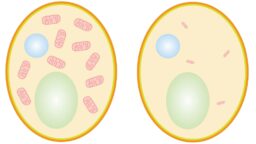
Most pertinent to this study, PLIN2 plays a role in the maintenance of mitochondria. Downregulating it in pancreatic beta cells, which produce insulin, has been shown to impair that critical function and harm mitochondria, particularly their ability to metabolize oxygen [5]. On the other hand, it also plays a role in mitochondrially mediated cellular senescence under stress conditions [6], and it increases with age in skeletal muscle and brain cells. These researchers have previously associated it with sarcopenia [7].

To determine its roles in mitochondrial dysfunction and cellular senescence, the researchers tested it on cells taken from older and younger cohorts, and their findings were surprising.

Same amount, different processing

Six people between the ages of 25 and 34 along with five people between 63 and 78 were recruited for this study. These participants had dermal fibroblasts extracted and cultivated, and then some of the cells were subjected to RNA that silenced most expression of PLIN2, PLIN3, or the related factor GDF15; this silencing did not affect the cells’ viability.

Interestingly, these cells, unlike brain cells, do not have significantly different amounts of PLIN2 or PLIN3 between older and younger people. Instead, the researchers found that fatty acid accumulation causes increased expression of PLIN2.

In fibroblasts that had their PLIN2 expression knocked down, multiple other gene expressions related to lipid handling were affected. However, PLIN3 did not seem to have a similar effect. Knocking down PLIN2 significantly decreased the accumulation of lipids within these cells.

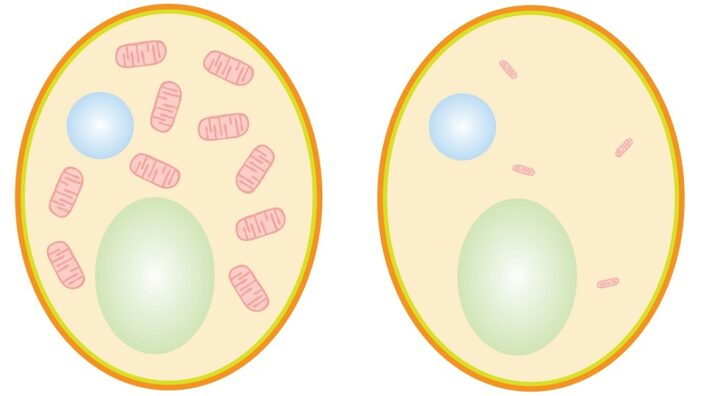
While this may seem beneficial, the researchers were able to confirm previous research demonstrating its negative mitochondrial effects [5], impairing respiration in general. This was only significant in cells taken from younger people; cells from older people trended towards worse respiration, but to a much lesser degree. Analyzing gene expression, the researchers found that younger and older cells had entirely different strategies for dealing with PLIN2 knockdown: the younger cells increased mitochondrial turnover, while the older ones increased mitochondrial fusion.

The role of GDF15

Both older and younger cells expressed markers of mitochondrial stress with PLIN2 knockdown, most notably of GDF15, which older cells expressed more of than younger cells did. GDF15 expression was also found to be associated with an increase in cellular senescence. Further experiments involving knocking down both PLIN2 and GDF15 found that cellular senescence was reduced to the level of cells without any RNA knockdowns at all, demonstrating that it is indeed the cause in this case.

Differences were also found between younger and older cells when GDF15 was knocked down. Similarly to PLIN2, genes that were significantly downregulated along with GDF15 knockdown in younger people’s cells were not significantly affected in those of older people.

The researchers note that many of their findings are limited and somewhat murky; while the effects of these knockdowns on younger cells are largely clear, the effects on older cells are less so. Further research will have to be conducted to determine what biochemical changes have occurred with age and what might be able to be done about them.

We would like to ask you a small favor. We are a non-profit foundation, and unlike some other organizations, we have no shareholders and no products to sell you. All our news and educational content is free for everyone to read, but it does mean that we rely on the help of people like you. Every contribution, no matter if it’s big or small, supports independent journalism and sustains our future.

Literature

[1] Conte, M., Franceschi, C., Sandri, M., & Salvioli, S. (2016). Perilipin 2 and age-related metabolic diseases: a new perspective. Trends in Endocrinology & Metabolism, 27(12), 893-903.

[2] Xu, S., Zou, F., Diao, Z., Zhang, S., Deng, Y., Zhu, X., … & Liu, P. (2019). Perilipin 2 and lipid droplets provide reciprocal stabilization. Biophysics Reports, 5, 145-160.

[3] Ji, J., Petropavlovskaia, M., Khatchadourian, A., Patapas, J., Makhlin, J., Rosenberg, L., & Maysinger, D. (2019). Type 2 diabetes is associated with suppression of autophagy and lipid accumulation in β‐cells. Journal of cellular and molecular medicine, 23(4), 2890-2900.

[4] Hayakawa, M., Taylor, J. N., Nakao, R., Mochizuki, K., Sawai, Y., Hashimoto, K., … & Harada, Y. (2023). Lipid droplet accumulation and adipophilin expression in follicular thyroid carcinoma. Biochemical and biophysical research communications, 640, 192-201.

[5] Mishra, A., Liu, S., Promes, J., Harata, M., Sivitz, W., Fink, B., … & Imai, Y. (2021). Perilipin 2 downregulation in β cells impairs insulin secretion under nutritional stress and damages mitochondria. JCI insight, 6(9).

[6] Che, L., Huang, J., Lin, J. X., Xu, C. Y., Wu, X. M., Du, Z. B., … & Lin, Y. C. (2023). Aflatoxin B1 exposure triggers hepatic lipotoxicity via p53 and perilipin 2 interaction-mediated mitochondria-lipid droplet contacts: An in vitro and in vivo assessment. Journal of Hazardous Materials, 445, 130584.

[7] Conte, M., Vasuri, F., Trisolino, G., Bellavista, E., Santoro, A., Degiovanni, A., … & Salvioli, S. (2013). Increased Plin2 expression in human skeletal muscle is associated with sarcopenia and muscle weakness. PLoS One, 8(8), e73709.

Berlin skyline

Longevity Week: Consortium Held in Berlin

Berlin’s event landscape is growing: Longevity Week will take place in the German capital for the first time from May 6-12, 2024. The opening event will take place on May 6th at the Langenbeck-Virchow-Haus in Berlin Mitte near the Charité hospital. A total of 15 events will be organised throughout the city. Speakers include, among others, Prof. Eric Verdin, CEO of the renowned Buck Institute; Michael Greve from Kizoo Technology Capital; and Dr. Ina Czyborram, Senator for Science, Health, and Care of the State of Berlin. Longevity Week is organised by a consortium of founders, doctors and longevity experts. The aim of Longevity Week is to broaden public understanding of the trend and its potentials, helping to establish Berlin as the capital of longevity in the medium term. Longevity Week Berlin sets new standards as a pioneering format that unites the different areas of the growing global trend. It aims to create an open platform that provides information in the areas of nutrition and lifestyle, research & medicine and technology and takes the dialogue between stakeholders from society, business and politics to a new level. With this in mind, Longevity Week aims to become the leading platform for the longevity scene. Longevity Week is the result of an initiative by doctor and entrepreneur Guido Axmann, healthtech investor Joachim Rautter (Peppermint Venture Partners) and the founder of cryogenics start-up Tomorrow Biosis, Dr. Emil Kendziorra. Other initiators include the physician and entrepreneur Dr. Andrea Gartenbach; Christina Hanck, founder of everlabs; as well as investor Judith Müller. “Berlin has the potential to become a pioneering city and an important centre for longevity worldwide. The city has one of the best medical facilities in the world and is characterised by an ecosystem that promotes and generates innovation. It is therefore time to create a specific theme week that not only facilitates an intensive dialogue between the players and covers a wide range of topics, but also looks beyond national borders,” says Guido Axmann, initiator of Longevity Week Berlin. Christina Hanck, co-initiator, adds: “Although humanity is getting older and older, more and more of us are struggling with chronic diseases in old age. With this event, we want to show that the pursuit of a healthy and longer life is not exclusive and merely an expensive hobby of tech billionaires from Silicon Valley. With Longevity Week Berlin, we are committed to making knowledge and innovations on this topic accessible to everyone and turning longevity into a lifestyle.” The entire program can be found on the Longevity Week here and on the website.

About the Longevity Week

Longevity Week was launched in 2024 and is an open platform that educates along the lines of nutrition and lifestyle, research & medicine and technology and takes the exchange between players from society, business and politics to a new level. With this in mind, the initiators of Longevity Week are striving to become the leading platform for the longevity scene and to establish Berlin as the centre of this development. It is the result of an initiative by the doctor and entrepreneur Guido Axmann, the health investor Joachim Rautter (Peppermint Venture Partners) and the founder of the cryogenics start-up Tomorrow Biosis, Dr Emil Kendziorra. The other initiators include the physician Dr Andrea Gartenbach, the founder Christina Hanck and the investor Judith Müller.

Press Contact

Stanij Wićaz Redgert Comms stanij.wicaz@redgertcomms.com
We would like to ask you a small favor. We are a non-profit foundation, and unlike some other organizations, we have no shareholders and no products to sell you. All our news and educational content is free for everyone to read, but it does mean that we rely on the help of people like you. Every contribution, no matter if it’s big or small, supports independent journalism and sustains our future.
Empty chair

Interrupting Sitting with Activity Lowers Glucose Levels

Scientists have discovered that frequently interrupting prolonged sitting with physical activity, such as short walks or squats, can help control glucose levels in overweight and obese males [1].

Don’t just sit there!

Prolonged sitting is the curse of modern times. It has been associated with various health problems, such as diabetes, poor heart health, weight gain, depression, dementia, and cancer. In overweight and obese people, sedentary lifestyle prevents calorie burning. It is a well-known recommendation to interrupt prolonged sitting with bouts of physical activity [2], but the actual effects of type, duration, and intensity of exercise remain an open question, especially in young individuals.

In this study by Finnish and Chinese scientists, the authors analyzed the effects of various kinds of sitting-interrupting activity in overweight and obese men. While various types of exercise can differ in energy expenditure, in this study, experiments were intentionally isocaloric – that is, involving similar caloric expenditure. The specific outcome the researchers monitored was the dynamic of glucose levels (glycemic control), which is something many obese people struggle with. Failing to maintain glycemic control can quickly lead to diabetes.

The study was relatively small, with 18 participants in total, but it had an interesting design. Each participant performed four different experiments with a seven-day washout period between them. Diets were standardized during the whole study.

SIT, ONE, WALK, SQUAT

The first experiment involved sitting for 8.5 hours. The participants were allowed to use their computers or read. The resulting average energy expenditure was 1,014.6 kcal. Standardized bathroom breaks were arranged and accounted for so that they did not contaminate the results. In their paper. The researchers dubbed this setting SIT.

In the second experiment, dubbed ONE, the sitting was only interrupted once after one hour by a 30-minute-long walk on a treadmill at 4 km (2.5 miles) per hour. In the third experiment, WALK, there were 10 interruptions, each one involving a short 3-minute walk. In both ONE and WALK, the average energy expenditure was measured at 1,123 kcal. Finally, the fourth setting was called SQUAT and, as you probably guessed, involved squatting: ten 3-minute-long interruptions in total, with the average energy expenditure of 1,120 kcal.

ONE resulted in a significant improvement in glucose control, reaching an AUC (area under curve) of 9.2 mmol/L/hour as opposed to 10.2 in SIT. More interestingly, the two other types of activity brought about an even more substantial improvement in glucose control (7.9 mmol/L/hour for both WALK and SQUAT).

Glucose and activity

Muscle activation matters

Why were WALK and SQUAT twice as effective in lowering glucose levels as ONE despite equaling it in energy expenditure? The researchers might have an answer. In addition to CGMs (continuous glucose monitors) and accelerometers, the participants wore special shorts laced with electrodes, enabling the scientists to perform EMG (electromyography) on various groups of muscles. WALK and SQUAT showed a much stronger signal of acute dynamic muscle activation, albeit in different muscles (quadriceps and glutes, respectively).

“Our data,” the authors conclude, “suggests that frequent interruptions to prolonged sitting, as opposed to a single bout of activity, are more effective in enhancing aEMG (average EMG amplitude) in the specific muscle groups engaged in the interruption activity, leading to a more favorable glycemic response.”

Further analyzing their data, the researchers found that activity duration was not associated with the efficacy of glycemic control. Previous studies suggest a possible explanation. When active, muscles uptake glucose, but only up to a certain threshold [3]. “Muscle cells,” the researchers write, “may reach their maximum capacity for glucose uptake within a defined timeframe, rendering additional muscle activity less effective in further lowering glucose response.”

To put things into perspective, the attenuation of glucose levels achieved during the experiments was not drastic, but it nevertheless might be helpful for trying to keep glucose in check. This research adds yet another good reason to frequently interrupt prolonged sitting with physical activity. Another recent study found that even 1- or 2-minute bouts of activity were associated with reduced mortality risk.

Sedentary behavior has become a significant global public health concern, with interrupting prolonged sitting being recognized as an effective strategy for promoting health. Recent research suggests that frequent, brief bouts of physical activity are more beneficial than longer, less frequent interruptions in improving glycemic control. By examining muscle activity patterns during interruptions, our study offers a promising physiological explanation for the effectiveness of frequent interruptions in managing glucose responses. Importantly, we found that increased intensity of lower limb muscle activation during multiple breaks leads to a more significant reduction in glucose response compared to a single break. This insight sheds light on the importance of elevated muscle activity, particularly during frequent sit-to-activity transitions, as a potential mechanism for improved glycemic control when interrupting prolonged sitting. It provides valuable guidance for designing intervention strategies aimed at promoting health through increased muscle activity.

We would like to ask you a small favor. We are a non-profit foundation, and unlike some other organizations, we have no shareholders and no products to sell you. All our news and educational content is free for everyone to read, but it does mean that we rely on the help of people like you. Every contribution, no matter if it’s big or small, supports independent journalism and sustains our future.

Literature

[1] Gao, Y., Li, Q. Y., Finni, T., & Pesola, A. J. (2024). Enhanced muscle activity during interrupted sitting improves glycemic control in overweight and obese men. Scandinavian Journal of Medicine & Science in Sports, 34(4), e14628.

[2] Hwang, C. L., Chen, S. H., Chou, C. H., Grigoriadis, G., Liao, T. C., Fancher, I. S., … & Phillips, S. A. (2022). The physiological benefits of sitting less and moving more: opportunities for future research. Progress in cardiovascular diseases, 73, 61-66.

[3] Brewer, P. D., Habtemichael, E. N., Romenskaia, I., Mastick, C. C., & Coster, A. C. (2014). Insulin-regulated Glut4 translocation: membrane protein trafficking with six distinctive steps. Journal of Biological Chemistry, 289(25), 17280-17298.

Diabetes in aging

Looking for Causality in Diabetes and Aging

Researchers have published the results of a study in Aging Cell, finding some evidence that type 2 diabetes causes accelerated aging.

Later-generation clocks only

This paper begins with explanations of Type 2 diabetes and epigenetic clocks, noting that principal component (PC) versions of clocks may give stronger results because they filter out noise. These researchers eschew first-generation clocks entirely, focusing on GrimAge and PhenoAge along with DunedinPACE, which solely measures age acceleration.

Previous studies have found associations between Type 2 diabetes and aging: One study found that DunedinPACE, which was trained on Western participants, has also found accelerated aging to be associated with diabetes in Taiwanese people [1]. An earlier study by the same researchers found connections between diabetes and aging as measured by other clocks as well [2]. Most importantly, a previous study has found evidence for a causal connection: that it’s diabetes that accelerates aging [3]. These researchers sought to more firmly prove this connection.

A robust cohort

This study used data from the Chinese National Twin Registry (CNTR). A total of 535 pairs of twins (380 pairs identical), including 157 pairs that had both baseline and 4- or 5-year follow-up data (95 pairs identical), were included. These participants were measured for such diabetes-related metrics as fasting glucose and HbA1c along with potential confounders, such as smoking, education, BMI, alcohol consumption, and exercise. This wealth of data allowed the researchers to conduct both cross-sectional and longitudinal analyses.

On average, the participants were 50 years old, and 10% of them had glycemic markers that categorized them as having type 2 diabetes. Among the participants that had follow-up data, almost 12% had type 2 diabetes at baseline and 17% had it at follow-up.

In the cross-sectional study, the researchers found that a couple of measurements related to diabetes, as expected, were strongly associated with age accleration as measured by all three clocks, most notably PhenoAge: people with excess HbA1c had an extra three years of aging on average, according to this clock. Fasting glucose also had a very strong association. Diabetes, itself, was less strongly associated, and did not reach statistical significance in any of the clocks.

A direct longitudinal study did not reveal much additional information. However, a cross-lagged study, which compared measurements at follow-up and at baseline, revealed that people with higher fasting glucose, higher HbA1c, or higher triglyceride and glucose (TyG) indices at baseline were likely to have higher age acceleration according to DunedinPACE at follow-up. The TyG index was associated with higher acceleration according to GrimAge at followup.

Limited, but relevant, evidence

When the analysis was broken down into individual strata, the associations were found to be significant only in men and in people with lower levels of education. This stratification, however, decreases the number of people in these subgroups, which therefore have less statistical power.

While the identical twin pairs eliminated the possibility of different genetic factors leading to different outcomes, the researchers note that their relatively small number, particularly in the group that had both baselines and follow-ups, also hampered this study’s statistical power. However, they were able to come to multiple conclusions, two of the most notable being that DunedinPACE is uniquely sensitive to glycemic metabolism and that these results are not affected by blood cell composition.

In total, while this study provides solid evidence that diabetes accelerates epigenetic aging regardless of confounders, it is still not fully proven, and further research should be conducted to verify this evidence. However, diabetes is still strongly related to early death through a variety of well-known morbidities, such as cardiovascular disease [4].

We would like to ask you a small favor. We are a non-profit foundation, and unlike some other organizations, we have no shareholders and no products to sell you. All our news and educational content is free for everyone to read, but it does mean that we rely on the help of people like you. Every contribution, no matter if it’s big or small, supports independent journalism and sustains our future.

Literature

[1] Lin, W. Y. (2023). Epigenetic clocks derived from western samples differentially reflect Taiwanese health outcomes. Frontiers in Genetics, 14, 1089819.

[2] Lo, Y. H., & Lin, W. Y. (2022). Cardiovascular health and four epigenetic clocks. Clinical Epigenetics, 14(1), 73.

[3] Kong, L., Ye, C., Wang, Y., Hou, T., Zheng, J., Zhao, Z., … & Wang, T. (2023). Genetic evidence for causal effects of socioeconomic, lifestyle, and cardiometabolic factors on epigenetic-age acceleration. The Journals of Gerontology: Series A, 78(7), 1083-1091.

[4] Palmer, A. K., Gustafson, B., Kirkland, J. L., & Smith, U. (2019). Cellular senescence: at the nexus between ageing and diabetes. Diabetologia, 62, 1835-1841.

Data analysis

A Re-Analysis Finds Potential Life-Prolonging Compounds

The authors of a recent paper published in GeroScience used an alternative statistical test to reanalyze data from the Interventions Testing Program and identified additional life‑extending compounds [1].

The crucial step of data analysis

A typical biological experiment can be divided into three stages: planning, executing, and results analysis. The last part can be done in multiple ways, such as by using different statistical methods to focus on different outcomes.

The authors of a recent paper decided to use the data from The National Institute on Aging’s Interventions Testing Program (ITP) and reanalyze it. This program, which we have covered previously, is “a multi-institutional study investigating diets and dietary supplements purported to extend lifespan and delay disease and dysfunction.”

For the third stage of their experiment, the analysis, the ITP scientist used the log-rank test combined with the Allison-Wang test. The log-rank test “assumes an effect on mortality hazard independent of age.” The Allison-Wang test tests for the “effects on maximum lifespan.” So far, the ITP has tested 48 drugs, and the log-rank test analysis identified 12 that appear to positively impact lifespan.

The way the log-rank test is constructed makes it “most sensitive to interventions with consistent effects on mortality through the lifespan.” However, if an intervention affects mortality only through a limited period, such as the early stages of life, this test might not be able to identify it.

To remedy this, the authors of this paper used the Gehan-Breslow-Wilcoxon (Gehan) test to reexamine ITP survival data. The Gehan test shows more sensitivity in cases where age-specific effects can be observed, especially if those effects are at early ages [2]. The authors also note that while ITP researchers have used the Gehan test several times, it hasn’t been used systematically. Using the Gehan test allowed the authors to find six additional interventions that affect lifespan in mice.

Sex-specific lifespan extension drugs

When ITP data was reanalyzed with the Gehan test, some of the compounds that hadn’t shown a statistically significant impact on mouse lifespan with the log-rank test now appeared to show statistical significance and vice versa. What’s more, the effect appeared to be sex-specific.

According to the Gehan test, female lifespan was significantly increased by caffeic acid phenethyl ester (CAPE), leading to a median lifespan extension of 5%, and green tea extract prolonged the female median lifespan by 7%. CAPE has anti-inflammatory, antioxidant, and anticancer properties [3], and green tea extract has potent antioxidant properties [4].

On the other hand, according to the Gehan test, different compounds significantly extended lifespan only in males. One of them was the diabetes drug metformin, which increased the median lifespan of males by 8%. Similarly, a median lifespan increase of 7% in males was seen for both enalapril and 17-DMAG, which was considered statistically significant using the Gehan test. 17-DMAG is a compound with an anti-tumor, anti-inflammatory, and neuroprotective function [5], and enalapril is a drug used for blood pressure management.

Another compound tested by ITP, 1,3‑butanediol (BD), has ketogenic effects, and one of its metabolites is suggested to be responsible for the beneficial effects of a ketogenic diet [6]. According to the new analysis, BD showed a statistically significant lifespan increase (9%) in males. This was not significant when the log-rank test was used, but when female lifespan was analyzed, the log-rank test showed statistical significance even though the median lifespan increase was only 2%. The Gehan test, in this case, didn’t show significance.

Minimizing false negatives

The authors are aware that this secondary analysis might lead to an increase in false positive rates. However, they believe this analysis was important since the survival plots of ITP experiments suggested that some of the compounds’ efficacy might vary with age, and the log-rank test used in the initial analysis might be insensitive to those changes and not identify those compounds. On the other hand, the Gehan test is a good statistical analysis that complements the log-rank test.

The authors also point out that not conducting a test like the Gehan test might lead to false negatives. This is especially important in programs such as the ITP, which aims to identify geroprotective interventions that should be followed up further. If ITP does not identify the compound as a promising candidate, it will most likely not be pursued. Therefore, it is essential to minimize false negative rates.

The researchers also point out that their study showed that some compounds might have a non-uniformly distributed effect on mortality reduction over a lifetime. Some of the identified compounds attenuate mortality during earlier stages of life and might not be geroprotective during later stages. However, they believe the action of these compounds during early life is still important, since this is when aging is already starting to take place. Those compounds can still positively impact pathways that cause aging in this particular period.

The mortality effects of the compounds that these researchers identified are rather small and diminished with age. They discuss the need for more research into the impact of age on pharmacokinetics and pharmacodynamics to understand whether aging leads to a loss in drug efficacy or whether the effect of drugs is limited to certain periods of life for other reasons.

We would like to ask you a small favor. We are a non-profit foundation, and unlike some other organizations, we have no shareholders and no products to sell you. All our news and educational content is free for everyone to read, but it does mean that we rely on the help of people like you. Every contribution, no matter if it’s big or small, supports independent journalism and sustains our future.

Literature

[1] Jiang, N., Gelfond, J., Liu, Q., Strong, R., & Nelson, J. F. (2024). The Gehan test identifies life-extending compounds overlooked by the log-rank test in the NIA Interventions Testing Program: Metformin, Enalapril, caffeic acid phenethyl ester, green tea extract, and 17-dimethylaminoethylamino-17-demethoxygeldanamycin hydrochloride. GeroScience, 10.1007/s11357-024-01161-9. Advance online publication.

[2] Harrington DP, Fleming TR. A class of rank test procedures for censored survival data. Biometrika. 1982;69(3):553–66.

[3] Taysi, S., Algburi, F. S., Taysi, M. E., & Caglayan, C. (2023). Caffeic acid phenethyl ester: A review on its pharmacological importance, and its association with free radicals, COVID-19, and radiotherapy. Phytotherapy research : PTR, 37(3), 1115–1135.

[4] Strong, R., Miller, R. A., Astle, C. M., Baur, J. A., de Cabo, R., Fernandez, E., Guo, W., Javors, M., Kirkland, J. L., Nelson, J. F., Sinclair, D. A., Teter, B., Williams, D., Zaveri, N., Nadon, N. L., & Harrison, D. E. (2013). Evaluation of resveratrol, green tea extract, curcumin, oxaloacetic acid, and medium-chain triglyceride oil on life span of genetically heterogeneous mice. The journals of gerontology. Series A, Biological sciences and medical sciences, 68(1), 6–16.

[5] Mellatyar, H., Talaei, S., Pilehvar-Soltanahmadi, Y., Barzegar, A., Akbarzadeh, A., Shahabi, A., Barekati-Mowahed, M., & Zarghami, N. (2018). Targeted cancer therapy through 17-DMAG as an Hsp90 inhibitor: Overview and current state of the art. Biomedicine & pharmacotherapy = Biomedecine & pharmacotherapie, 102, 608–617.

[6] Han, Y. M., Ramprasath, T., & Zou, M. H. (2020). β-hydroxybutyrate and its metabolic effects on age-associated pathology. Experimental & molecular medicine, 52(4), 548–555.

Vitalia

Vitalia: Living the Longevity Dream

On the tropical island of Roatán, a bunch of people gathered in an unprecedented, longevity-themed pop-up city – and then some of them stayed, making the venture permanent.

“You’re going where?”

A friend invited me over, but I declined, telling him I had to travel for work again. “Where to this time?” he asked with a hint of envy, us being stuck in the middle of Seattle’s infamously gloomy winter. “Honduras,” I said. He fell silent for a second and then asked cautiously: “What exactly does Honduras have to do with aging biology?”

A fair question. Last year, my work took me to another unlikely destination: Montenegro, a tiny Balkan country where the longevity, AI, and crypto-themed pop-up city of Zuzalu had briefly emerged. But Honduras? Let me tell you how all this is connected, and why Honduras is much more about longevity than you might think. “Zuzalu”, a weird AI-generated word that doesn’t mean anything in any language, will also be mentioned here a lot.

Stereotypes aside, there are sound reasons for incredulity. Honduras is the poorest country in Latin America. It sits high in crime statistics, surpassing Colombia and Venezuela. But this is also why, seeking to improve its fortunes, Honduras has established special economic zones, including the one called Próspera.

Most of it resides on the small island of Roatán, neatly tucked in the eastern corner of the Caribbean Sea just off the coast of mainland Honduras. Roatán is a different story from the rest of the country. It’s crawling with tourists who come there on huge cruise ships or fly in from several international destinations. With a population of about 50,000, the island is visited by more than a million tourists a year.

Where there are tourists, there are fancy hotels, timeshare villas, and expensive eateries, but most of the island is still visibly poor: something that always rubs me the wrong way about such places. On paper, Próspera wants to change this, if it doesn’t get kicked out of Honduras first.

Governance as a service

So, what is Próspera? Officially, it’s a ZEDE, the Spanish acronym for “Zone for Employment and Economic Development”, loosely modeled after bigger special economic zones such as Shenzhen and Dubai. There are two other, even smaller, ZEDEs in Honduras.

Próspera’s considerable independence stems from the ZEDE law passed by the previous government. The new, more left-leaning one repealed it in 2022. However, the law had strong protections built in, and for now, Próspera is surviving while fighting the new government in courts. Maybe eventually, under a future government, Honduras will fall in love with Próspera again, but its current precarious situation is something to think about.

Like many radically new initiatives, Próspera is surprisingly hard to describe. We just don’t have the vocabulary yet to slap a concise yet comprehensible label on it. Bloomberg called it “a private tech city,” while another media outlet went for “a private government.” If you want a full, if a bit dated, account of Próspera’s nuts and bolts, look no further than this fantastic (and extremely lengthy) blog post by Scott Alexander.

So, yes, it is private, run by HPI, a company established by the passionate Venezuelan Erick Brimen and financially backed by a bunch of investors. But Próspera also offers its services as a government. In fact, “governance as a service” is the name of the game, meaning that they sell you governance just like other companies sell you, say, entertainment.

Both private people and companies are welcome. You can settle or set up a business on the very limited (for now) territory controlled by Próspera and enjoy a lack of bureaucracy and a favorable regulatory climate. Crypto is built in, and businesses on the island have been educated on how to accept it. You can purchase land and build on it or buy/rent properties built by Próspera. To live there permanently, you need to obtain Honduran residency, which is not a big problem. You will be bound by some Honduran regulations (such as criminal laws) but not by all of them. Próspera doesn’t have its own police, not to mention an army, but it has hired private security firms.

Will you be able to participate in governance? That’s a tough question. There’s a council, but it’s basically controlled by HPI. Próspera plans to gradually expand its democracy as more people join in. Theoretically, with time, Próspera residents will be able to boot HPI out as a governing body altogether, but we’re not there yet. The question of how democratic charter cities are / can possibly be is too complicated to be discussed here.

Today, Próspera is tiny, with about 1300 residents (probably including e-residents) and 1000 acres of land. The real estate pool is limited, but the first high-rise complex, called DUNA, is nearing completion.

“V” for Vitalia

Thank you for your patience; we’re finally approaching the topic of life extension. Próspera has a lot to offer to biotech startups: not in facilities, manpower, or financing, but in streamlined regulations that help to drastically cut trial costs and accelerate research. Companies like Minicircle, a developer of gene therapies, can attest to that.

Still, that’s not why I came to Roatán. You see, Zuzalu provided a lot of inspiration and ideas for co-living projects that can be prologues to network societies and eventually states, but it lacked permanence and specialization. As per Balaji Srinivasan, probably the leading ideologist in this field, a viable network society starts with an overarching idea, a fundamental value to cement enthusiasm and participation, such as longevity.

The idea of a longevity network society was being discussed even before Zuzalu, with groups such as Vitalism exploring places like Rhode Island as possible beachheads, but Zuzalu certainly provided a good push. The search for options accelerated.

This is how the marriage between Próspera and Vitalia happened. Vitalia (not to be confused with Vitalism) is an ambitious project of a longevity city conceived by VitaDAO, the largest decentralized autonomous organization (DAO) in the longevity space, and Niklas Anzinger, who is a VC focused on regulated industries, holds many longevity investments, and is a Zuzalu veteran.

Próspera had the legal and physical infrastructure, and Vitalia had the content to pour into it. The idea was to establish, for the first time ever, a permanent presence of longevity enthusiasts in one place, where they would cohabitate, enjoy a healthy lifestyle, and accelerate the discovery and maturation of life-extending therapies.

Niklas had lived on the island with his wife for about 18 months, preparing the ground for Vitalia, before the invitations were sent out. As usual, taking such a project off the ground requires a lot of grinding, down-to-earth effort from its visionary founders, solving problems like accommodation, transportation, and internet access.

Vitalia 1

Las Verandas, Vitalia’s beating heart

Vitalia is centered around St. John’s Bay, Próspera’s main hub on the island, and St. John’s Bay’s heart is Las Verandas: a sprawling resort of two-story villas next to a golf course. So, if you wanted to go to Vitalia, you had to rent a room there via the organizers, starting at $1000 a month, or anywhere in the vicinity on your own. Early birds got there in late 2023.

Vitalia takes a lot from Zuzalu’s playbook, such as organizing a string of conferences to attract residents and keep them occupied. Those included a two-part longevity biotech conference (read our coverage of the second part), a conference on startup societies, and a couple more. The conferences saw a lot of star appearances, including Bryan Johnson, Balaji Srinivasan, and Aubrey de Grey.

Vitalia 2

Left to right: Laurence Ion of VitaDAO, Bryan Johnson, and Aubrey de Grey in Vitalia. Source: VitaDAO

When I flew in for my two-week stint in Vitalia, there wasn’t a lot to do there. It was a “slow week” – a major departure from Zuzalu’s idea of constant action. It felt unfamiliar at first but reflected Vitalia’s ethos of permanent presence. If people live here, they should be able to get some work done. Even in the absence of official events, there was a constant hum of activity, with inhabitants making themselves busy.

What do longevity people do when they gather in one place? They go to the gym. A lot. And they feel mild peer pressure to do so (I did). They take cold plunges (I didn’t). They do yoga on the beach at 7 AM (not a chance, when will the world leave us night owls alone?) Then, there are more classes for all kinds of healthy stuff. Then, a biohackers’ meeting. Then, a lecture on aging biology. Then, meditation on the pier in full view of the gorgeous Caribbean sunset. Then, a party at a villa where you welcome back all the calories you burned during the day.

Jokes aside, no one seems to know for sure how a semi-permanent longevity-oriented community should function. At times, Vitalia felt a bit chaotic and not entirely settled on itself.

I must confess that, at first, I had the feeling that, having traveled that far, I was somehow entitled to being taken care of, entertained. When I sat down to speak with Niklas Anzinger and another Vitalia cofounder, Laurence Ion of VitaDAO, this was one of the topics we discussed.

Laurence, who was a leading figure in Zuzalu, doing loads of insanely hard work there, said that after that, he “vowed that he’d allow people to self-organize” and that in Vitalia, he wanted to “encourage the community to own more aspects of Vitalia’s everyday functioning instead of the organizers picking up the mantle”.

“I think,” I mused in a bout of self-criticism, “that despite us wearing those cool bracelets that say ‘BUILDER’ on them, many people, including myself, feel more like guests. We expect to have certain things, and we complain about not getting them instead of rolling up our sleeves and rising to the challenge.”

To be fair to Vitalians, it was more nuanced than that. As I said, many activities were self-organized, and many problems were being solved collectively. I suspect that the spirit of self-organization will grow stronger as Vitalia transitions toward continuous occupancy.

Kia Winslow of BioAge, also a Zuzalu veteran who came to Vitalia for the second biotech conference, reminisced: “I arrived in Zuzalu during the first week, and I would say that in the very beginning, nobody had a clear understanding of what was going on. Everybody was excited, but nobody knew what to expect, and within the first couple of weeks, people started to self-organize and create events and spaces, and there was a schedule, maps, and everything. I was watching this pop-up city growing and building itself. I think Vitalia is basically a continuation of this process.”

Vitalia 3

Vitalians hanging out on the pier chugging on complimentary booze

The business of longevity

With all the cool stuff going on and with the innumerable distractions Roatán had to offer (snorkeling at the world’s second-largest reef, petting sloths, swimming with dolphins, and so on), it was not easy to pick up Vitalia’s business pulse. But it was there big time, producing new connections, collaborations, and even startups.

Bringing Vitalia to Próspera proved to be a fateful decision. “There’s an enormous number of projects coming out of this,” Niklas said. “We have a start-up investment program that 40 startups have signed up to. Some have existed before, but they want to benefit from collaboration with Vitalia. One of the big successes was the Augmentation Lab. They realized they had a lot to gain from partnering with Vitalia because, until now, they were very limited in what they could do, otherwise they’d have to face the FDA. But here, they can make progress much faster.”

Oh, the Augmentation Lab! On one of the first nights, at a party, I encountered a guy with his hand bandaged. He explained to me that he just had a programmable RFID implant placed under his skin. “I’m from Brooklyn,” he said. “I’m going to use it for subway rides.” “Do you realize,” I asked him, “how many conspiracy theories you’ll spawn going in and out of the subway with a wave of your hand?”

Presenting the lab in Vitalia, its founder, Jeffrey “Cassox” Tibbets, said that the idea was “to create the only place in the world offering bespoke implants and cutting-edge body art.” Cassox has been working with cybernetic implants in California for years, but in Vitalia, he saw the potential to do things on a bigger scale, quicker and safer. “We need to have physicians on board to do these things safely,” he said, “and Próspera is the only place in the world where this is possible.” Implants can do much more than open subway turnstiles; for instance, the lab wants to get into the CGM (continuous glucose monitoring) business.

Vitalia 4

Jeffrey Tibbets and Jason Hartgrave presenting in Vitalia. Now you know what “medical punk” is (read the top headline).

“There are examples beyond the lab that prove that we can successfully attract biotech companies that benefit from doing clinical studies here,” Niklas said. “We had Matter Bio here, Gero, Unlock Bio, Bootstrap Bio, Unlimited Bio. We’re great for companies that are at the stage of product development and thinking about where to launch their clinical trials. They’ve been learning from Minicircle.” A couple of days ago, Niklas published a blog post called “The Ultimate Guide To Biomedical Innovation in Próspera” – the name says it all, so check it out.

Gero, an innovative AI/longevity company, brought several of its people to Vitalia for some off-site fun and ended up seriously considering doing its clinical trials on the island. Gero co-founder Maxim Kholin said to me that Próspera “realized that effective governance creates a lot of value.” Proud of Gero’s “hacking mindset,” he was happy to meet many like-minded investors and entrepreneurs in VItalia: “We have a very similar outlook. If you find something important but done ineffectively, you want to hack it. Próspera has managed to hack regulation and governance. We’re trying to hack aging. I feel that our values resonate with a lot of people here. We’re actively exploring the opportunities that this jurisdiction offers to innovators like us.”

One company created from scratch in Vitalia is Unlimited Bio. Its founders, Ivan Morgunov and Anna Vakhrusheva, won a Vitalia hackathon (there was more than one) for “projects aiming to make death optional, directly or indirectly.” A lofty goal, but there’s a long road ahead. For now, Unlimited Bio plans to roll out a VEGF gene therapy for hair loss and skin aging and look for other prospective gene therapies they can quickly test and deploy, thanks to Próspera’s permissive regulations.

VEGF (vascular endothelial growth factor) does what its name suggests – promotes vasculature growth. Its levels, like those of many other proteins, dwindle with age, and some research shows that bringing them back up improves health and extends lifespan in mice. However, we don’t know if this is a good idea for humans in the long run. Currently, VEGF-blocking therapies are used to treat age-related macular degeneration and some types of cancer. Unlimited Bio says that its VEGF-boosting gene therapy was approved in 2011 in Russia for peripheral arterial disease and has since shown a good safety profile. If that’s enough to assuage your doubts, come to Roatán and give it a go!

This is a good example of how they do things in Próspera. Bryan Johnson, a famous biohacker, actually came to Vitalia to receive a follistatin-boosting therapy from Minicircle, Roatán’s gene therapy pioneer. Follistatin promotes muscle growth and density, which is something Bryan is obsessed with. Like VEGF, follistatin has shown benefits in mice, but human data is limited. In the US or Europe, it would take years to bring these therapies to market, but in Próspera, it’s enough to show some safety data and you can start flying in patients. This is agile and effective at getting medications to people, but I’m sure you will forgive me for retaining some healthy (pun intended) dose of skepticism.

Próspera’s physical hub for clinical trials and therapies is GARM clinic. Already long-running and offering stem-cell-based and other therapies, it has provided inspiration and infrastructure for many projects conceived in Vitalia. When I was invited on a tour, I expected to see a shining medical facility, but it turned out to be much smaller and crampier than I’d imagined. Don’t judge a book by its cover, though: GARM claims a good safety record and, due to growing demand, is set to expand and relocate to Las Verandas, becoming even more accessible to Vitalia residents and companies.

Vitalia 5

Heather Terry, CEO of GARM clinic, shows us around

Should I stay or should I go?

The second biotech conference was officially Vitalia’s last big event before a long recess. It was quirky and a bit all over the place in terms of topics, but it received high marks from some conference-savvy people, such as Martin O’Dea, Dublin Longevity Summit’s cofounder.

“In some ways, it’s the same as the conferences that are held around the US and Europe, the one we have in Dublin, and a few others,” he said. “But it’s definitely a different vibe, a different atmosphere because people have been here for two months. Every conference is a good opportunity for people to come together and collaborate and work, but here, you’re almost forced to collaborate.”

Martin said that Vitalia’s promise of permanent presence “where scientists and other people within the community can at least partially reside over the course of the year could be a game-changer, a paradigm-shifting type of event, but that’s to be seen. It’s very early days, and I guess this place is going to empty pretty much in the next few days.”

Vitalia 6

The nonchalant atmosphere of the second biotech conference in Vitalia, with Dr. Max Unfried presenting

Actually, Martin was only half-right. While a lot of people packed their suitcases and left on or around the same day I did, a surprising number remained: 40-50, according to Niklas.

“We want to keep doing things here,” he said. “The goal is to have two hundred permanent residents by year’s end. We’ll announce a schedule for what gives people good reasons to visit.” Some events have indeed been announced since then, and more are on the way.

The plans don’t stop there. Laurence envisions thousands of residents in the next couple of years and, eventually, up to a million. “Hong Kong island is over a million people, and it’s roughly the same size,” he said. Niklas added that they want to have three to five hubs around the world and “an online community that’s about ten times bigger.”

“Why would so many people move in here?” I asked. Laurence’s response was: “Because it’s an amazing life with a high density of like-minded people and one of our few chances to actually accelerate progress and get aging under medical control.” “San Francisco is successful because it has a very high density of aligned people,” Niklas chimed in. “And we were able to replicate that with Vitalia. That’s the reason that many people that came here are staying.”

Niklas and Laurence went as far as to claim that in terms of people, Vitalia was better than San Francisco. To that, I said with a chuckle: “Aubrey de Grey told me in Zuzalu that it would take a lot for him to leave his beloved Bay Area for some distant place.” Niklas smiled back: “Aubrey is a great example. Initially, he was skeptical of Vitalia, but then he liked it here so much that he decided to stay the entire time.”

“I went to Próspera for a few days in November”, Aubrey confirmed to me, “and became totally convinced that it is set to be central to the future of medical tourism, at least in respect of longevity, so I arranged to spend the whole of January and February in Roatán, but in fact had to leave abruptly in early February. Vitalia has thoroughly lived up to the challenge of being a massive step forward in the furthering of innovative longevity medicine. It has fully capitalized on its starting point of being located in Próspera, which has broad legal autonomy and, thus, the ability to eliminate the many obstacles to regulatory approval in established jurisdictions that, in fact, deliver no value in terms of safety or efficacy. Having seen up close what the people at Vitalia are creating, I’m completely convinced that Vitalia is set to become, within only a couple of years, the global hub for longevity pioneers.”

The bottlenecks and the vision

There must be bottlenecks, right? After all, we journalists are constantly looking for bad stuff to report. One problem, according to Niklas, is the perception of Honduras. “It hasn’t reached everyone yet that Roatán is a paradise island and that Honduras can also be very pleasant once you get to know people and you have a way to get around,” he said. What about crime? Laurence noted that “Roatán is unique (for Honduras), and it’s much safer than most US states.”

Still, let me whine just a bit more. Service on Roatán can be subpar. Niklas thinks this might be due to the “tourism economy,” which leads to complacency because “people come to such places anyway.”

“You don’t have Amazon delivery,” Laurence sighed, and I immediately sympathized. For me, it’s a major blow. As an immigrant, one of the things I’m really enjoying in the US is the ability to order virtually anything in the world and have it delivered in no time. Of course, Amazon Prime is just one of a whole lot of nice things to which travelers might be accustomed or addicted but are unavailable on Roatán.

The food options are still limited and not cheap, even the local supermarket (yes, there’s only one in Próspera’s vicinity). Getting healthy and vegan food can be especially challenging. More people means more and cheaper services, Niklas said, but it’s kind of a chicken and egg situation.

Vitalia 7

One of only two restaurants in Vitalia. At least they accept Bitcoin!

Accommodation is hard to come by and might be pricey. This will supposedly change with the launch of DUNA, where one would be able to lease an apartment for as little as 500 dollars per month.

Then, there’s Próspera’s image. Not everyone is enchanted by the promise of “governance as a service” and streamlined (too streamlined?) regulation. Many ask themselves, how legit is it? Is their investment of money and effort protected? What about their health? The FDA may be a drag, but it’s good to have its stamp of approval on the therapy you’re about to get.

Niklas, however, sees it as a different path to success: “This approach is not antagonistic to the FDA. We want to do many of the same things when it comes to safety that makes sense and other things differently and still get market approval and access in large jurisdictions or markets, including the US.” Credibility is vital for a nascent enterprise. Niklas and Laurence vow to do everything in their power to gradually build Vitalia’s.

The good news is that Vitalia is not alone. After Zuzalu, there’s been a flurry of activity in the field of network societies, with people collaborating and learning from each other. For instance, a whole software ecosystem is being built, covering such essentials as verification, scheduling, participation, and so on.

Can we safely say that Vitalia is currently the most advanced project in this field? “It certainly is a major evolution in the strategy for a new network society,” Niklas said. “Having land or a jurisdiction first was always challenging. To build an actual society, you need physical space because much of our lives are in the real world.”

He sees Balaji Srinivasan’s strategy of ‘virtual first, physical second’ as a shortcoming: “If you only get good at community, but not at land and governance, you’re really lacking something that you need to succeed. It’s very difficult to succeed as a startup if you don’t build your core strengths from the beginning. So, with Vitalia, we’re the first ones to build a strategy that has both things, land, and community, from day one. I think what we have achieved so far with Vitalia could well be the model for the future.”

According to Laurence, a longevity network society has an even more fundamental need for physical presence because you can develop software online, but you can’t develop treatments that have to pass the scrutiny of large regulatory bodies. Biotech’s very nature requires physical presence and legal autonomy.

A place to come back to

Like many of its participants, I fell in love with Zuzalu swiftly and hopelessly. Was it the same with Vitalia? The second time is probably never the same. I knew what to expect (that’s not to say Vitalia never pleasantly surprised me), so the wow effect was a bit blunted. This is how things mature along the arrow of time: something the longevity field is audacious enough to try to push against.

Why am I even telling you about my feelings? Why go beyond explaining how Vitalia and Próspera work? Because I believe that how people feel about such places is crucial to their success. The incomparable joy of daily interactions with smart, kind, curious, like-minded people was still there. The excitement of soaking in all those cheesy but lovely niceties of a tropical tourist destination – the sea, the sand, the sun, the palm trees, the pools – check!

There was also a new feeling I detected as my plane was climbing up in the skies above Roatán – that I don’t part with this place forever but can and probably will be coming back to a growing, buzzing Vitalia, like people come back to their favorite city or hotel. Not a home away from home, but close. And that’s worth a lot.

Vitalia 8

Vitalia, shot from the plane’s window by the author as he was contemplating his feelings towards the place

We would like to ask you a small favor. We are a non-profit foundation, and unlike some other organizations, we have no shareholders and no products to sell you. All our news and educational content is free for everyone to read, but it does mean that we rely on the help of people like you. Every contribution, no matter if it’s big or small, supports independent journalism and sustains our future.

Anti-drug

Cannabis Use Linked to Cardiovascular Problems

According to a new study, cannabis consumption is associated with increased risks of coronary heart disease, stroke, and heart attack [1].

It’s growing popular, but is it good for you?

After decades of being banned and demonized, marijuana is making a huge comeback, thanks to a wave of legalization or decriminalization. Currently, weed is legal in 24 US states, almost half of the nation, and in several countries around the world.

This is coinciding with an unprecedented decline in tobacco use, which is probably the best thing that has happened in public health in decades. However, there’s an easy-to-spot similarity between tobacco and marijuana consumption – that’s right, both products are mostly smoked. Inhaling smoke, which consists of particulate matter, is considered a major factor in tobacco-related health problems.

Regardless of smoking, active substances in marijuana have been linked to health problems [2]. However, research into the health effects of any type of marijuana consumption is still in its infancy. Meanwhile, the perception of the harmfulness of cannabis use is decreasing, which makes getting to the truth even more urgent [3].

A new mega-study

This new study, published in the Journal of the American Heart Association, adds some new insights. It is based on the 2016-2020 data from the Behavioral Risk Factor Surveillance Survey, which encompassed more than 400,000 participants in 27 American states and 2 territories.

The survey was done by phone, relying on self-reporting, and the study was cross-sectional rather than prospective – that is, it only considered data on every participant at one point in time, which makes analyzing chronological trends impossible. However, the sheer size of the study is an advantage.

The participants, aged 18 to 74, were asked about their patterns of marijuana use, various other habits such as tobacco smoking, and the history of cardiovascular health outcomes (coronary heart disease, myocardial infarction, and stroke). The researchers accounted for confounding variables such as age, sex, race, BMI, diabetes, alcohol use, educational attainment, and physical activity.

4.0% of the respondents reported using cannabis daily, and 7.1% reported nondaily use, with the median being 5 days per month. 73.8% of current cannabis users reported smoking as their primary form of consumption.

Big increases in risk

The researchers found that marijuana use increased the odds of developing a cardiovascular condition in a dose-dependent manner. Daily cannabis use was associated with 25% higher odds of heart attack compared to non-users. The increase in the odds of stroke for daily users vs non-users was even higher at 42%.

Cannabis ORs

A: coronary heart disease; B: myocardial infarction; C: stroke; D: composite outcome of CHD, MI, and stroke.

The research ran a separate analysis for younger adults: men younger than 55 years old and women younger than 65 years old. The rationale was that in a younger population, which is generally less prone to cardiovascular problems, the signal from cannabis use should be clearer. Indeed, in this group, the positive associations between cannabis use and cardiovascular problems grew even stronger.

In another important separate analysis, the researchers looked at never-smokers. Not being confounded by tobacco smoking, the associations grew stronger yet again. In men younger than 55 and women younger than 65 who never smoked tobacco, cannabis use increased odds of coronary heart disease by 2.36 times, of stroke by 2.4 times, and of any of the outcomes (CHD, MI, stroke) by 2.13 times.

“Our sample was large enough that we could investigate the association of cannabis use with cardiovascular outcomes among adults who had never used tobacco cigarettes or e-cigarettes,” said lead study author Dr. Abra Jeffers, a data analyst at Massachusetts General Hospital in Boston. “Cannabis smoke is not all that different from tobacco smoke, except for the psychoactive drug: THC vs. nicotine. Our study shows that smoking cannabis has significant cardiovascular risks, just like smoking tobacco. This is particularly important because cannabis use is increasing, and conventional tobacco use is decreasing.”

The researchers admit that their study has numerous limitations, starting with its cross-sectional design, and called for more rigorous, prospective cohort studies. Self-reporting is prone to incorrect recollection (recall bias). The large proportion of users being young is a potential confounding factor, given that atherosclerosis takes decades to evolve. Still, there is common sense behind this study: inhaling any products of combustion is probably not the best you can do for your health. It would be great to understand the health impact of edibles, but for that, they would need to become more popular.

Cannabis has strong, statistically significant associations with adverse cardiovascular outcomes independent of tobacco use and controlling for a range of demographic factors and outcomes. It remains positively associated with cardiovascular disease among the general population, and men <55 years old and women <65 years old, those who have never use tobacco cigarettes, and those who have never used tobacco cigarettes or e‐cigarettes. These data suggest that cannabis use may be a risk factor for cardiovascular disease and may be a risk factor for premature cardiovascular disease. Patients and policymakers need to be informed of these potential risks, especially given the declining perception of risk associated with cannabis use.

We would like to ask you a small favor. We are a non-profit foundation, and unlike some other organizations, we have no shareholders and no products to sell you. All our news and educational content is free for everyone to read, but it does mean that we rely on the help of people like you. Every contribution, no matter if it’s big or small, supports independent journalism and sustains our future.


Literature

[1] Jeffers, A. M., Glantz, S., Byers, A. L., & Keyhani, S. (2024). Association of Cannabis Use With Cardiovascular Outcomes Among US Adults. Journal of the American Heart Association, e030178.

[2] Pacher, P., Steffens, S., Haskó, G., Schindler, T. H., & Kunos, G. (2018). Cardiovascular effects of marijuana and synthetic cannabinoids: the good, the bad, and the ugly. Nature Reviews Cardiology, 15(3), 151-166.

[3] Center for Behavioral Health Statistics and Quality. (2020). Results from the 2019 National Survey on Drug Use and Health: Detailed tables. Rockville (MD): Substance Abuse and Mental Health Services Administration

Muscle fibers

Taking a Look at Proteins in Exercise and Aging

With an in-depth examination tool in hand, researchers publishing in Aging have done a preliminary examination of the muscle protein differences between younger and older people and how older people’s proteins change with exercise.

The power to take a close look

This paper begins with a discussion of proteomics, the science of analyzing what proteins a tissue expresses. These researchers hold that proteomics is naturally more representative of physical processes in tissues than other -omics approaches, such as genomics [1]. However, analyzing muscle tissue in this way is tricky, as common techniques that do not accurately capture poorly soluble proteins will not paint an accurate picture [2].

A method that uses magnetic nanoparticles to separate proteins has recently been developed [3]. This process yields considerably more information than previous processes, particularly about proteins that have very little expression. The researchers used this technique to investigate how proteins change with aging and with resistance exercise.

Looking for resistance training evidence

Five women with an average age of 22 and six people with an average age of 56 had their skeletal muscle proteins analyzed at the beginning of this study. The two groups did not have significant differences in body mass or body fat. The older group underwent an 8-week resistance training exercise, after which their proteins were analyzed again.

On average, the participants had 2,611 proteins that were specifically related to the part of muscle tissue that performs the basic contractile function (MyoF proteins) along with another 5,645 that did not (non-MyoF proteins). Before intervention, older people tended to have fewer detectable MyoF proteins and more non-MyoF proteins before resistance exercise, although these findings did not reach statistical significance. The researchers also analyzed existing databases and related the functions for which these proteins were responsible, including signaling, mitochondrial function, RNA handling, and the folding and maintenance of other proteins. The non-MyoF fraction had 2,091 proteins that were found nowhere in MyoF, while MyoF had 141 proteins exclusive to it.

The researchers then started looking for which proteins were most affected by resistance exercise and by aging. A protein called titin has been the subject of quite a bit of research interest [4], but this paper found no significant changes with exercise or aging. While there were some differences between the protein isoforms of younger and older people, these isoforms were unaffected by exercise. Instead, resistance training affected the levels of 13 MyoF proteins and 64 non-MyoF proteins in these participants, although this was not found to strongly affect any particular pathway.

Proteins that were related to maintenance (proteostasis) were far more abundant in the MyoF fractions of younger than older people, although this situation was reversed for the non-MyoF fraction. Resistance training slightly increased the abundance of some of these proteins in both types of tissues in older people. Three different heat shock proteins, which are related to muscle regulation, were reduced in older people, as were many proteins related to mitochondrial function.

More examination needed

Discouragingly, the researchers found few significant changes to the proteome with resistance exercise, and most of these changes did not seem to be directly related to aging. They did note, however, that resistance exercise promotes muscle-building proteins, perhaps explaining why it has modest effectiveness in staving off age-related muscle loss (sarcopenia).

This was a small pilot study with only 11 total participants. As these researchers note, considerably more in-depth studies will have to be conducted to determine the effectiveness of interventions that affect proteins with aging. While the new tool is very informative, each person’s protein quantities are different, and the only way to control for individual effects is through large-scale trials.

We would like to ask you a small favor. We are a non-profit foundation, and unlike some other organizations, we have no shareholders and no products to sell you. All our news and educational content is free for everyone to read, but it does mean that we rely on the help of people like you. Every contribution, no matter if it’s big or small, supports independent journalism and sustains our future.
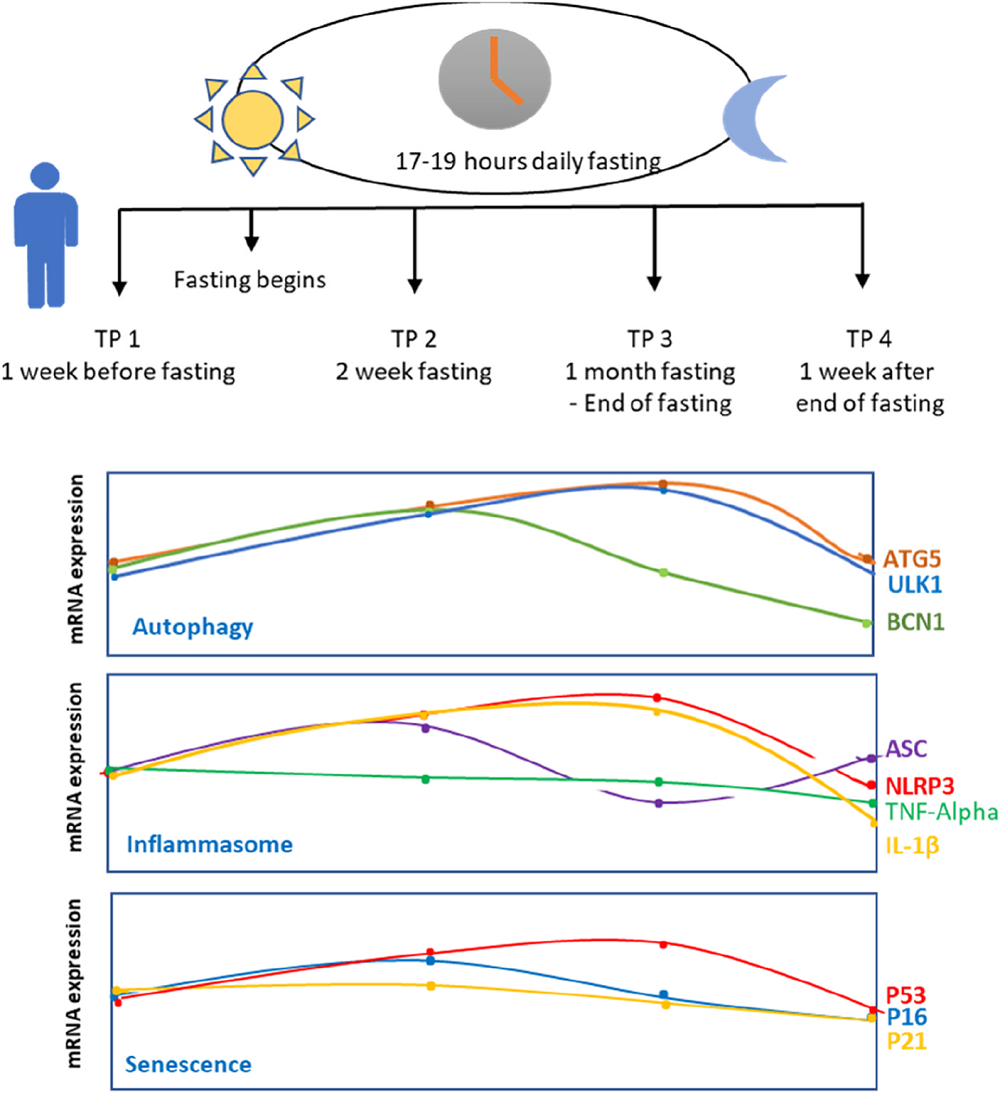
Literature

[1] Pan, C., Kumar, C., Bohl, S., Klingmueller, U., & Mann, M. (2009). Comparative proteomic phenotyping of cell lines and primary cells to assess preservation of cell type-specific functions. Molecular & Cellular Proteomics, 8(3), 443-450.

[2] Roberts, M. D., Young, K. C., Fox, C. D., Vann, C. G., Roberson, P. A., Osburn, S. C., … & Kavazis, A. N. (2020). An optimized procedure for isolation of rodent and human skeletal muscle sarcoplasmic and myofibrillar proteins. Journal of Biological Methods, 7(1).

[3] Blume, J. E., Manning, W. C., Troiano, G., Hornburg, D., Figa, M., Hesterberg, L., … & Farokhzad, O. C. (2020). Rapid, deep and precise profiling of the plasma proteome with multi-nanoparticle protein corona. Nature communications, 11(1), 3662.

[4] Nishikawa, K., Lindstedt, S. L., Hessel, A., & Mishra, D. (2020). N2A titin: signaling hub and mechanical switch in skeletal muscle. International Journal of Molecular Sciences, 21(11), 3974.

Day Night Cycle

Aging Measurements Can Vary by Time of Day

Epigenetic aging measurements can vary by the time of day at which they are taken, according to a study published in Aging Cell.

The circadian rhythm

Living on Earth, organisms have evolved to adapt to our planet’s day/night cycle. This adaptation is known as the circadian rhythm, and it influences many aspects of biology. As these researchers [1] and others have found, this even includes the number of white blood cells circulating in the bloodstream. Because different white blood cells often have different measured epigenetic ages, measuring the total epigenetic age of white blood cells can give different values over the course of a day.

Beginning with a one-person cohort

This research was done using white blood cells taken every three hours, over a period of 72 hours, from one 52-year-old man. Two sets of cells were measured: neutrophils and white blood cells that had been mostly depleted of neutrophils (WBC-Neu).

The researchers found 58,459 epigenetic sites in WBC-Neu that oscillated over 24 hours. These sites had significant overlap with the 2013 Horvath clock, which is touted to work on all tissues: that clock measured this person as being three years older at noon than at midnight. Similar oscillations were also found in the 2013 Hannum clock and the 2016 Lin clock: this particular clock had a variation of 5.5 years over the day.

In total, 8 of the 17 clocks were found to be significantly affected by the circadian rhythm when measuring WBC-Neu cells, and all of them followed the same pattern: older in the day and younger at night. Even GrimAge2, a 2022 clock, was significantly influenced in this way, as were clocks that are made with the principal components (PCs) of other epigenetic clocks.

To confirm their findings, then researchers then moved on to samples taken from a different group of people [2]. While that study had been originally geared to test stress rather than circadian rhythms, the researchers found the same thing: the participants were reported as having younger WBC-Neu values at 4:15 PM than at 12:45 PM.

Number and types of cells matter

Analyzing two other previously collected datasets [3, 4], the researchers found that natural killer (NK) cells were consistently found to be older than B cells and CD4+ T cells. Therefore, blood samples with more NK cells gave higher epigenetic ages. How much this affected the results varied by the particular clock.

While it is possible to partially offset these differences by adjusting for cell types, there are still variances within single cell types. Purified neutrophils taken from the 52-year-old man, along with another cohort of men aged 30 to 54, were reported as having statistically significant differences over the course of a day in 3 of the 17 clocks. Additionally, the number of different types of white blood cells is, itself, a biomarker of aging and disease.

Most critically, these oscillations may have confounded results from previous studies, as they can be stronger than the effect sizes found in those studies. For example, if researchers are testing lifestyle interventions and conclude that these interventions affect epigenetic age by roughly a year, this may be caused entirely by the time of day rather than the actual intervention. Significant work needs to be done to make sure that testing of interventions that affect epigenetic age are not being influenced by this or other confounders.

We would like to ask you a small favor. We are a non-profit foundation, and unlike some other organizations, we have no shareholders and no products to sell you. All our news and educational content is free for everyone to read, but it does mean that we rely on the help of people like you. Every contribution, no matter if it’s big or small, supports independent journalism and sustains our future.

Literature

[1] Oh, G., Koncevičius, K., Ebrahimi, S., Carlucci, M., Groot, D. E., Nair, A., … & Petronis, A. (2019). Circadian oscillations of cytosine modification in humans contribute to epigenetic variability, aging, and complex disease. Genome biology, 20, 1-14.

[2] Apsley, A. T., Ye, Q., Etzel, L., Wolf, S., Hastings, W. J., Mattern, B. C., … & Shalev, I. (2023). Biological stability of DNA methylation measurements over varying intervals of time and in the presence of acute stress. Epigenetics, 18(1), 2230686.

[3] Reinius, L. E., Acevedo, N., Joerink, M., Pershagen, G., Dahlén, S. E., Greco, D., … & Kere, J. (2012). Differential DNA methylation in purified human blood cells: implications for cell lineage and studies on disease susceptibility. PloS one, 7(7), e41361.

[4] Wang, X., Campbell, M. R., Cho, H. Y., Pittman, G. S., Martos, S. N., & Bell, D. A. (2023). Epigenomic profiling of isolated blood cell types reveals highly specific B cell smoking signatures and links to disease risk. Clinical Epigenetics, 15(1), 90.

Young mouse and old mouse

Young Extracellular Vesicles Extend Life in Old Mice

Tiny bubbles that cells use to communicate with each other prolonged lifespan and reversed numerous aging phenotypes when taken from young mice and injected into old ones, even though the treatment started late in life [1].

The tiny messengers

For millennia, humans credited young blood with rejuvenating qualities. This belief caused legendary and historic rulers to commit atrocities to get enough of this “elixir of youth”. While these ideas were delusional and barbaric, science has confirmed that there is some truth to them.

Research into heterochronic parabiosis, which involves connecting the vasculatures of a young and an old animal, has shown that it rejuvenates the old member of the pair and makes the young one age faster [2], but the mechanisms are still being elucidated. Recently, extracellular vesicles (EVs) carried by blood have been pinpointed as being responsible for many of these effects.

EVs are tiny bubbles made of a lipid bilayer, the same stuff cellular membranes are made of. Emitted by cells, they carry various molecular cargoes, such as proteins and microRNAs (miRNAs), and facilitate intercellular communication. EVs harvested from young blood have been shown to benefit old organisms [3], but since there are many molecules involved, the investigation into how exactly they do it is still very much ongoing.

Small size, big effect

EVs can be of various sizes, which might affect their qualities. In this new study published in Nature Aging by scientists from Nanjing University in China, the researchers focused on small EVs (sEVs) of less than 200 nanometers in diameter. They repeatedly injected old male mice with sEVs obtained from young mice or humans to explore their rejuvenation potential.

The old mice were injected with the sEV cocktail once a week starting from 20 months of age until death. Young and old controls were instead injected with the same dose of phosphate-buffered saline (PBS).

This led to an approximately 1/8th increase in median lifespan (34.4 vs 30.6 months), which is very significant given that the treatment only started when the mice were already quite old. It also improved various healthspan measures, such as frailty and hair retention.

EV Mice 1

The researchers analyzed various other aspects of age-related decline. For instance, just like humans, old male mice exhibit signs of reproductive aging, with lower levels of testosterone, low sperm count, and reduced sperm motility. However, the sEV treatment brought sperm concentration and motility, as well as litter size, back to levels comparable to those of young mice.

The good news didn’t end there. The treatment significantly improved the old mice’s fitness, as measured by heat production, oxygen consumption, and locomotor activity. It also increased cardiac performance, slowed bone loss, and partially rescued age-related loss of cortical and hippocampal volume.

All of this led to clear cognitive and physical improvements. In the Morris water maze test, which assesses learning and memory, non-treated aged mice performed much worse than young controls, but this deficiency was almost completely reversed by the sEV treatment. The same happened in the treadmill endurance test, in which non-treated aged mice clocked a much shorter time to exhaustion, but the treated old animals kept pace with young controls.

EV Mice 2

Notably, the researchers also tried injecting aged mice with sEVs taken from other aged mice, but this failed to ameliorate any age-related deficiencies. When young mice were injected with sEVs from old mice, they experienced physical and cognitive decline, which is in line with previous research on heterochronic parabiosis.

Human EVs work in mice, and maybe vice versa

Digging deeper into the effects of the treatment, the researchers found that, even when administered for only two weeks, it lowered senescent cell burden and brought down reactive oxygen species (ROS) in multiple tissues to levels comparable with young controls. Similar reductions were observed in the levels of advanced glycation end products (AGEs) and lipofuscin. Both are harmful compounds, the accumulation of which is associated with aging phenotypes.

Proteomic analysis of several tissues revealed that sEVs exerted a wide-ranging effect, most of which are related to mitochondrial dysfunction, epigenetic alterations, and genomic instability, all of which are known hallmarks of aging. The researchers found that in hippocampus and muscle, the treatment largely restored markers of mitochondrial health, including ATP production, DNA content, quantity, and morphology.

Since, according to the authors, “the biological activity of sEVs exhibits little to no species specificity”, they tried injecting old mice with sEVs derived from the blood of young humans, recapitulating many of the benefits observed in previous experiments. If the reverse is beneficial, this might solve the problem of EV supply for humans.

We would like to ask you a small favor. We are a non-profit foundation, and unlike some other organizations, we have no shareholders and no products to sell you. All our news and educational content is free for everyone to read, but it does mean that we rely on the help of people like you. Every contribution, no matter if it’s big or small, supports independent journalism and sustains our future.

Literature

[1] Chen, X., Luo, Y., Zhu, Q., Zhang, J., Huang, H., Kan, Y., … & Chen, X. (2024). Small extracellular vesicles from young plasma reverse age-related functional declines by improving mitochondrial energy metabolism. Nature Aging, 1-25.

[2] Ashapkin, V. V., Kutueva, L. I., & Vanyushin, B. F. (2020). The effects of parabiosis on aging and age-related diseases. Reviews on New Drug Targets in Age-Related Disorders, 107-122.

[3] Grigorian Shamagian, L., Rogers, R. G., Luther, K., Angert, D., Echavez, A., Liu, W., … & Marbán, E. (2023). Rejuvenating effects of young extracellular vesicles in aged rats and in cellular models of human senescence. Scientific Reports, 13(1), 12240.

Buff old man

Autophagy Is Essential for Healthy Muscles

A study published in Aging Cell has reported that older people with better regulated autophagy in their skeletal muscles have less age-related frailty.

Taking out the trash

The researchers begin this paper by discussing the various activities and effects of autophagy. Obviously, too much autophagy is not good, as it aggravates tissue degeneration [1], but a lack of it has also been found to lead to degeneration [2]. The energy-sensing AMPK pathway encourages autophagy, and the related nutrient-sensing mTOR pathway discourages it [3].

There are also multiple types of autophagy, depending on the particular organelle being consumed. Like many things in biology, the full biochemical pathways involved in autophagy have not been entirely mapped out. This work focuses principally on mitophagy, the removal of damaged mitochondria, which is chiefly regulated by PGC-1α [4].

Comparing physical abilities to RNA

After screening, a total of 575 participants, with an average age of 75.9 years, were inducted into this study. Most participants were of European descent, slightly over half were female. Over a third had only one chronic condition, while roughly a sixth had more than one.

A total of 260 genes were chosen for RNA sequencing analysis, based on their roles in autophagy, mitophagy, and/or the mTOR pathway. These genes were checked against key functional metrics, such as mitochondrial function as measured by oxidative phosphorylation (OXPHOS), oxygen consumption, and 400-meter walking speed.

The expression of genes that are central to autophagy machinery were uncorrelated with these outcomes. However, some regulatory genes, such as FoxO1, were found to be significantly negatively correlated, to the researchers’ surprise. Other metabolic regulators were found to have positive correlations, as were genes related to mitochondrial fusion and fission. Some genes related to the mTOR pathway were negatively associated, while others were positively associated.

Unsurprisingly, more OXPHOS was associated with more expression of the sirtuin genes SIRT5 and SIRT3. Multiple mitochondria-related genes were also associated with better oxygen consumption. mTOR and its pathways were associated with better walking speeds.

A potential explanation for contradictory results

Some of these findings are entirely expected. However, some of them, particularly the relationship of more FoxO1 to worse outcomes, goes against a consensus that suggests benefits from this autophagy regulator. These researchers suggest that its upregulation could be a consequence, rather than a cause, of autophagic dysregulation. Increased expression of regulatory genes suggests a need for more regulation, with the body engaging in more quality control in an attempt to compensate.

These results also suggest that inhibiting the effects of mTOR, which naturally inhibits autophagy and is itself inhibited by rapamycin and rapalogs, is a potential path to increased muscle performance in older people. Research in this area has been previously conducted [5], and this paper offers more insight into how such an approach might work.

We would like to ask you a small favor. We are a non-profit foundation, and unlike some other organizations, we have no shareholders and no products to sell you. All our news and educational content is free for everyone to read, but it does mean that we rely on the help of people like you. Every contribution, no matter if it’s big or small, supports independent journalism and sustains our future.
Literature

[1] Mammucari, C., Milan, G., Romanello, V., Masiero, E., Rudolf, R., Del Piccolo, P., … & Sandri, M. (2007). FoxO3 controls autophagy in skeletal muscle in vivo. Cell metabolism, 6(6), 458-471.

[2] Masiero, E., Agatea, L., Mammucari, C., Blaauw, B., Loro, E., Komatsu, M., … & Sandri, M. (2009). Autophagy is required to maintain muscle mass. Cell metabolism, 10(6), 507-515.

[3] Jung, C. H., Ro, S. H., Cao, J., Otto, N. M., & Kim, D. H. (2010). mTOR regulation of autophagy. FEBS letters, 584(7), 1287-1295.

[4] Vainshtein, A., Desjardins, E. M., Armani, A., Sandri, M., & Hood, D. A. (2015). PGC-1α modulates denervation-induced mitophagy in skeletal muscle. Skeletal muscle, 5, 1-17.

[5] Bodine, S. C. (2022). The role of mTORC1 in the regulation of skeletal muscle mass. Faculty Reviews, 11.

Ovary diagnostics

Quercetin Delays Ovarian Aging in Middle-Aged Mice

A recent paper published in Nature Aging dives into the gene expression differences between young, middle-aged, and older human ovaries and tests possible interventions to slow down their aging processes [1].

An underexplored area of human aging

Female reproductive aging remains a relatively unexplored area of study. With people living longer and females postponing childbearing, there is a need for research into slowing it down.

The ovaries are indispensable organs in female reproduction, essential in hormone production and fertility. [2] Compared to other organs, ovarian functioning ceases relatively early in life, at around 50 years. However, the decline in its function begins around 20 years earlier, when women reach around the age of 30 [3].

Age-dependent differences in ovaries

In this new study, the researcher focused on exploring human ovaries and the changes to their gene expression (the transcriptome) with age.

One of the biggest challenges to understanding changes in gene expression in human ovarian aging is obtaining tissues for studies. However, these researchers were able to obtain the ovaries of 15 volunteers who donated them following surgery. Those were divided into three groups based on age: young (18-28 years), middle-aged (36-39 years), and older (47-49 years).

Human ovaries are organs that are built from different types of cells [4]. Each cell type has different characteristics and expresses different genes. To understand the aging processes of these different cell types, the authors used techniques that measure gene expression at the single-cell level and compare the gene expression between different age groups and cell types [5].

While there were many differences between each cell type, the gene expression analysis generally revealed “significant differences between perimenopausal ovaries and those with reproductive function in young or middle-aged stage.” A more detailed analysis points to cellular senescence as an important player in ovarian aging. The authors also highlight features such as the senescence-associated secretory phenotype (SASP), increased cellular aging hallmarks in aged ovaries, such as SA-β-gal activity and lipofuscin accumulation, and oxidative protein damage.

The SASP molecules secreted by senescent cells are known to lead to inflammation [6]. Those previously observed connections were also observed in this research, as the researchers observed increased levels of inflammation-related molecules. An increase in inflammation and SASP molecules can lead to the spreading of the senescent phenotype and oocyte damage, which was supported by the observation that DNA damage systems were also activated in aged oocytes.

FOXP1, the crucial regulator

After analyzing the common molecular processes and gene expression in different types of ovarian cells, the researchers looked for the transcription factor regulating these processes. They identified “FOXP1 as a crucial TF regulating cellular senescence in the ovary” and observed that aging decreased FOXP1 levels.

They also tested FOXP1 in mice. The depletion of FOXP1 in granulosa cells led to expedited ovarian aging, senescence-associated changes in gene expression patterns, increased levels of senescent markers, and more granulosa cells dying by apoptosis. However, they noted this experiment’s limitations, as knocking down FOXP1 in mice cannot fully replicate human ovarian aging.

Quercetin’s anti-aging effect

The authors went a step further and tested potential anti-aging drugs and their effects on the ovarian reserve in middle-aged mice and human ovarian granulosa tumor cell lines. They tested fisetin, quercetin, and dasatinib, which are already known to have anti-aging properties [7]. First, testing in human cell lines showed that quercetin and fisetin “delayed FOXP1 gene silencing-induced cellular senescence,” improved cell proliferation, and decreased levels of a DNA damage marker. Quercetin also activated FOXP1 expression, suggesting that it can inhibit senescence.

Those promising results prompted researchers to test quercetin in reproductively aged (36-week-old and 48-week-old) mice. These ages correspond roughly to 38-40 and 48-50 in humans. Mice received one month of quercetin treatment without any side effects. Follow-up testing showed improvements in the ovarian reserves of 36-week-old, but not 48-week-old, mice.

Additionally, quercetin-treated 36-week-old mice were able to carry more successful pregnancies compared to the control group. The lack of improvement observed in the 48-week-old mice is probably due to the limited number of follicles, the sacs that contain immature eggs, in those old mice.

Overall, this study contributed to a better understanding of female aging processes. The comprehensive analysis conducted by the authors allowed them to create “single-cell and spatial transcriptomic maps of human ovaries across different age groups.” These maps allowed for examining gene expression changes and differences in eight types of human ovarian cells.

Our study deepens the understanding of human ovarian aging, providing a valuable resource for investigating potential therapeutic interventions. Moving forward, we aim to explore FOXP1 as a potential target for both the diagnosis and treatment of human ovarian aging.

FOXP1 ovaries

Literature

[1] Wu, M., Tang, W., Chen, Y., Xue, L., Dai, J., Li, Y., Zhu, X., Wu, C., Xiong, J., Zhang, J., Wu, T., Zhou, S., Chen, D., Sun, C., Yu, J., Li, H., Guo, Y., Huang, Y., Zhu, Q., Wei, S., … Wang, S. (2024). Spatiotemporal transcriptomic changes of human ovarian aging and the regulatory role of FOXP1. Nature aging, 10.1038/s43587-024-00607-1. Advance online publication.

[2] Baerwald, A. R., Adams, G. P., & Pierson, R. A. (2012). Ovarian antral folliculogenesis during the human menstrual cycle: a review. Human reproduction update, 18(1), 73–91.

[3] Broekmans, F. J., Knauff, E. A., te Velde, E. R., Macklon, N. S., & Fauser, B. C. (2007). Female reproductive ageing: current knowledge and future trends. Trends in endocrinology and metabolism: TEM, 18(2), 58–65.

[4] Hsueh, A. J., Kawamura, K., Cheng, Y., & Fauser, B. C. (2015). Intraovarian control of early folliculogenesis. Endocrine reviews, 36(1), 1–24.

[5] Tabula Muris Consortium (2020). A single-cell transcriptomic atlas characterizes ageing tissues in the mouse. Nature, 583(7817), 590–595.

[6] Muñoz-Espín, D., & Serrano, M. (2014). Cellular senescence: from physiology to pathology. Nature reviews. Molecular cell biology, 15(7), 482–496.

[7] Di Micco, R., Krizhanovsky, V., Baker, D., & d’Adda di Fagagna, F. (2021). Cellular senescence in ageing: from mechanisms to therapeutic opportunities. Nature reviews. Molecular cell biology, 22(2), 75–95.