The Blog

Building a Future Free of Age-Related Disease

Developing a Treatment for Arthritis from Stem Cell Signals

Resarchers publishing in Aging have found that extracellular vesicles (EVs) derived from human umbilical cord mesenchymal stem cells (MSCs) reduce inflammatory markers in chondrocytes, which are responsible for building and maintaining human cartilage.

An established approach

This is far from the first attempt at treating osteoarthritis using stem cells. We have previously reported on a study finding that injecting mesenchymal stem cells is effective for treating arthritis in guinea pigs, which naturally develop humanlike arthritis symptoms. However, transporting and storing these cells is not easy, and there is a risk of immune rejection [1].

However, previous research has also found that EVs, which are intercellular communication particles taken from these cells, are the driving factor behind their benefits. For example, EVs derived from MSCs have been reported to reduce senescence in mice. Their effects on chondrocytes have also been documented [2]. This research builds upon that work by focusing on the changes induced when these EVs are delivered.

Effective against inflammation

The interleukin IL-1ß is a known contributor to osteoarthritis, as it promotes inflammation in chondrocytes. Therefore, after deriving EVs from the human umbilical cord cells, the researchers administered them to chondrocytes exposed to IL-1ß.

They measured the RNA expression of two key genes: COL2A1, which is responsible for the extracellular matrix of cartilage, and MMP13, a matrix metalloproteinase that causes the extracellular matrix to degrade. They found that MSC-derived EVs almost perfectly counteracted the effects of IL-1ß.

EVs Against Inflammation

Next, the researchers introduced macrophages along with LPS, a compound that encourages them to exhibit the M1 inflammatory phenotype rather than the M2 phenotype that encourages long-term healing. M1 macrophages, as expected, upregulated inflammatory biomarkers in the chondrocytes, caused a decrease in COL2A1 and an increase in MMP13, and caused them to undergo the programmed death known as apoptosis. Adding MSC-derived EVs reversed this situation, similar to the chondrocytes exposed to IL-1ß.

EVs Against M1 Macrophages

The RNA in the EVs

The researchers then looked at the specific microRNA payloads that these EVs were carrying. They found high levels of miRNA-21-5p, which previous research has found to be responsible for many of the effects seen in this study [3]. They also found microRNAs that.were associated with inflammation along with the MAPK and PI3K-Akt signaling pathways, which have been implicated in osteoarthritis [4].

They were able to confirm that these EVs were having effects on these pathways in the chondrocytes themselves. RNA analysis showed that MAPK and PI3K-Akt pathways were indeed affected, as was the formation of cartilage, showing a direct relationship between EV exposure and potential benefits for osteoarthritis treatment.

However, despite these highly positive effects, this is a cellular study and was not conducted in a living animal model. It would be very informative to test if EVs derived from MSCs are effective in treating osteoarthritis in guinea pigs or other animals.

We would like to ask you a small favor. We are a non-profit foundation, and unlike some other organizations, we have no shareholders and no products to sell you. All our news and educational content is free for everyone to read, but it does mean that we rely on the help of people like you. Every contribution, no matter if it’s big or small, supports independent journalism and sustains our future.

Literature

[1] He, L., Chen, Y., Ke, Z., Pang, M., Yang, B., Feng, F., … & Shu, T. (2020). Exosomes derived from miRNA-210 overexpressing bone marrow mesenchymal stem cells protect lipopolysaccharide induced chondrocytes injury via the NF-?B pathway. Gene, 751, 144764.

[2] Liu, Y., Lin, L., Zou, R., Wen, C., Wang, Z., & Lin, F. (2018). MSC-derived exosomes promote proliferation and inhibit apoptosis of chondrocytes via lncRNA-KLF3-AS1/miR-206/GIT1 axis in osteoarthritis. Cell cycle, 17(21-22), 2411-2422.

[3] Zhu, H., Yan, X., Zhang, M., Ji, F., & Wang, S. (2019). miR-21-5p protects IL-1ß-induced human chondrocytes from degradation. Journal of Orthopaedic Surgery and Research, 14, 1-9.

[4] Shi, J., Zhang, C., Yi, Z., & Lan, C. (2016). Explore the variation of MMP3, JNK, p38 MAPKs, and autophagy at the early stage of osteoarthritis. IUBMB life68(4), 293-302.

Foreground Clock

Creating a Noise Clock to Measure Biological Age

Publishing in Aging, the Conboy research lab has outlined the problems with existing machine learning-based clocks and created a new clock based on epigenetic noise.

The problem with linear regression

This paper begins with a description of the elastic net, an artificial intelligence algorithm that powers the majority of biological clocks, including the Horvath biological clock [1], the Pace of Aging clock [2], and the mortality predictor GrimAge [3]. This algorithm is programmed to find the most likely linear result [4].

However, these researchers note that actual epigenetic aging is not necessarily linear and that these clocks do not, and cannot, understand the underlying biology. Instead, the current epigenetic clocks are based on the methylation of the cytosine nucleotide on specific parts of the genome, as measured by optical probes. Many of these locations are isolated and scattered throughout the genome.

Specific age-related biomarkers, such as senescent cells and inflammation, are impossible to directly measure using this method, and the researchers also note that elastic net outputs are not normalized against one another. Subtle differences between the ways that experiments are conducted mean that the output of an elastic net measurement is not necessarily replicable between experiments [5]. Similarly, data-skewing artifacts can be introduced both by technical problems and genomic instability in older people [6].

Therefore, these researchers took a closer examination of these clocks in order to determine their true value as predictors of biological aging.

A search for true accuracy

The first experiment was a straightforward evaluation of clock accuracy. While there were strong correlations at the 18-30 age range, which the authors ascribe to immune system maturity, and at the 80-100 age range at which most people rapidly deteriorate, the accuracy of methylation-based clocks is considerably reduced at other age ranges. The authors note that this is likely due to non-linear aging effects, with healthy plateaus and periods of sharp decline due to the disrepair of multiple tissues [7].

The researchers then evaluated the clocks’ relationship to various diseases. They found that there was significant overlap between diseased groups and healthy groups in the elastic net results, even in diseases such as inflammaging-increasing arthritis and Werner syndrome, along with Down syndrome, whose sufferers have pathologically juvenile blood phenotypes. Another clock showed Parkinson’s patients to be far younger than their healthy counterparts.

Chronology or biology?

In the Conboys’ view, such clocks are predicting chronology more than biology. To illustrate their point, they created a methylation clock based on the US population over time: a proxy for pure chronology. A similar clock also used 149 cytosines to accurately predict chronological age.

Population clock

The researchers found this to be more of a problem with the elastic net than the raw array data. Using a Uniform Manifold Approximation and Projection method, they found that they could accurately use the full array of measured cytosines to differentiate healthy people and sick people, while a clock based on the elastic net does not. This, the researchers contend, is due to the elastic net disregarding health and biological factors in favor of the chronological result it was told to create.

A more in-depth analysis found that elastic net-based clocks do not choose cytosines based on their actual change with biological age. When repeatedly removing unchosen cytosines from the clock’s training data, the researchers found that the chosen cytosines would also change.

Such behavior does not agree with a hypothesis that biomarkers should not change when non-biomarkers are deleted from a dataset and supports the null hypothesis that picked cytosines are not biomarkers.

Biological noise as a biomarker

With these problem in mind, the researchers decided to use 1,806 samples to make a better clock. They selected cytosines that, instead of reliably changing with age, normally don’t change at all. Many of the relevant genes were found to serve vital functions in the human body, encompassing such functions as cellular motility and cholesterol regulation. Any changes to these genes, therefore, is the result of biological noise.

The researchers found that their “noise barometer” was correlated strongly with disease. For example, unlike in linear clocks, arthritis patients were found to have significantly higher biological ages compared to their chronological ages. Furthermore, regardless of the tested cytosine, one fact was consistently found to be true: the genome becomes more noisy with age.

This work shifts the dominant paradigm of what is biological age, uncovers that it is not an evenly “ticking clock” or a straight line, and establishes how biological age and risk of disease can be accurately measured. The outcomes minimize the danger to people who might be mistakenly told that they are older or younger and encouraged to take drugs or supplements, based on potential random variation or a normal healthy range, after an assay on a droplet of their blood.

We would like to ask you a small favor. We are a non-profit foundation, and unlike some other organizations, we have no shareholders and no products to sell you. All our news and educational content is free for everyone to read, but it does mean that we rely on the help of people like you. Every contribution, no matter if it’s big or small, supports independent journalism and sustains our future.

Literature

[1] Horvath, S. (2013). DNA methylation age of human tissues and cell types. Genome biology, 14(10), 1-20.

[2] Belsky, D. W., Caspi, A., Corcoran, D. L., Sugden, K., Poulton, R., Arseneault, L., … & Moffitt, T. E. (2022). DunedinPACE, a DNA methylation biomarker of the pace of aging. Elife, 11, e73420.

[3] Lu, A. T., Quach, A., Wilson, J. G., Reiner, A. P., Aviv, A., Raj, K., … & Horvath, S. (2019). DNA methylation GrimAge strongly predicts lifespan and healthspan. Aging (albany NY), 11(2), 303.

[4] Zou, H., & Hastie, T. (2005). Regularization and variable selection via the elastic net. Journal of the Royal Statistical Society Series B: Statistical Methodology, 67(2), 301-320.

[5] Bell, C. G., Lowe, R., Adams, P. D., Baccarelli, A. A., Beck, S., Bell, J. T., … & Rakyan, V. K. (2019). DNA methylation aging clocks: challenges and recommendations. Genome biology, 20, 1-24.

[6] Hop, P. J., Zwamborn, R. A., Hannon, E. J., Dekker, A. M., van Eijk, K. R., Walker, E. M., … & Veldink, J. H. (2020). Cross-reactive probes on Illumina DNA methylation arrays: a large study on ALS shows that a cautionary approach is warranted in interpreting epigenome-wide association studies. NAR Genomics and Bioinformatics, 2(4), lqaa105.

[7] Lai, R. W., Lu, R., Danthi, P. S., Bravo, J. I., Goumba, A., Sampathkumar, N. K., & Benayoun, B. A. (2019). Multi-level remodeling of transcriptional landscapes in aging and longevity. BMB reports, 52(1), 86.

Lower back pain

Senolytics as a Potential Back Pain Treatment

In a recent paper, researchers from McGill University in Canada have investigated how a combination of two senolytics, RG-7112 and o-Vanillin, influences the intervertebral disc cells of back pain patients [1].

Back pain is a widespread issue

An overwhelming majority of people, a full 80%, have suffered from back pain at some point in their lives or will in the future. It is the main reason why people spend time living with a disability [2].

The pain is often the result of intervertebral disc degeneration. Intervertebral discs are structures in the spine that serve as cushions between the vertebrae of the spinal column. While this is a common problem, there is only limited understanding of its cellular and molecular mechanisms.

Researchers have found that the pain associated with intervertebral disc degeneration is associated with inflammation. One of the contributors to this inflammation and pain is the senescence-associated secretory phenotype (SASP), the collection of molecules that senescent cells are known to produce in excess.

Since previous research suggests that the accumulation of senescent cells plays a role in the onset and progression of intervertebral disc degeneration, some researchers are exploring whether targeting senescent cells can help in low back pain treatment.

In this paper, the researchers targeted senescent cells with senolytics, specifically RG-7112 and o-Vanillin, which have been previously described as having senotherapeutic activity in degenerated intervertebral disc cells [3, 4]. These senolytic compounds work on different cellular pathways.

This paper’s hypothesis is that targeting different cellular pathways and processes simultaneously will have a better effect on the senescent, degenerated intervertebral disc cells than a single drug. This might also allow for a lower dose of each drug, thus also limiting side effects.

RG-7112 and o-Vanillin combination therapy

This paper’s authors aimed to reproduce the environment in which degenerated intervertebral disc cells exist in the human body. They received cells from patients who suffer from degenerated intervertebral discs and lower back pain. They used a 3D culture model to grow these cells in the lab and stimulated them to enter senescence.

First, they established that both RG-7112 and o-Vanillin, when used separately, reduce the expression of SASP factors and other senescence-associated molecules. Subsequently, they tested whether their effect would be additive. They tested a few combinations of different RG-7112 and o-Vanillin concentrations and found a combined concentration that outperformed each molecule separately.

Their subsequent experiments showed that senolytic treatments reduced the number of senescent cells. Combined RG-7112 and o-Vanillin treatment resulted in the highest increase in programmed death of the senescent cells but were not toxic to the healthy, non-senescent cells. Additionally, this combination led to a reduction in the SASP.

Researchers also tackled the expression of factors responsible for disc innervation. Painful, degenerating intervertebral discs were observed to have increased levels of nerve growth factor (NGF) and brain-derived neurotrophic factor (BDNF), markers associated with the sprouting and growth of neurites, which project from the bodies of neurons. Such innervation is a feature of painful and degenerated discs, as healthy intervertebral discs mostly lack nervous tissue and blood vessels [5].

Researchers tested RG-7112 and o-Vanillin, combined and separately, on those factors and on neurites. They observed that the combination decreased NGF and BDNF as well as neurite growth.

Therefore, the authors suggest that removing senescent cells through senolytics results in reduced NGF and BDNF, thereby leading to decreased neurite sprouting and a subsequent reduction in back pain.

Senolytic therapies for disc degeneration

All in all, combining RG-7112 and o-Vanillin was better in reducing senescence and SASP when compared to a single treatment. Additionally, it resulted in an increased number of proliferating non-senescent cells and a higher number of senescent cells that underwent programmed cell death.

However, since this research is done in cells grown in the laboratory, it is essential to follow up with research in live, vertebrate animals that have discs that can be examined.

RG-7112 and o-Vanillin are not the only senolytics that are currently being tested for intervertebral disc degeneration. A combination of dasatinib and quercetin has been tested in mice. Elderly animals given multiple injections of this combination were found to have reduced SASP in their intervertebral discs [6].

Dasatinib and quercetin, in combination with fisetin, are also currently being tested in a human clinical trial that is targeting senescent cells with the aim of improving older adults’ skeletal health. If proven effective, these therapies could potentially help millions of people suffering from back pain.

We would like to ask you a small favor. We are a non-profit foundation, and unlike some other organizations, we have no shareholders and no products to sell you. All our news and educational content is free for everyone to read, but it does mean that we rely on the help of people like you. Every contribution, no matter if it’s big or small, supports independent journalism and sustains our future.

Literature

[1] Mannarino, M., Wu-Martinez, O., Sheng, K., Li, L., Navarro-Ramirez, R., Jarzem, P., Ouellet, J. A., Cherif, H., & Haglund, L. (2023). Senolytic Combination Treatment Is More Potent Than Single Drugs in Reducing Inflammatory and Senescence Burden in Cells from Painful Degenerating IVDs. Biomolecules, 13(8), 1257.

[2] Global Burden of Disease Study 2013 Collaborators (2015). Global, regional, and national incidence, prevalence, and years lived with disability for 301 acute and chronic diseases and injuries in 188 countries, 1990-2013: a systematic analysis for the Global Burden of Disease Study 2013. Lancet (London, England), 386(9995), 743–800.

[3] Mannarino, M., Cherif, H., Li, L., Sheng, K., Rabau, O., Jarzem, P., Weber, M. H., Ouellet, J. A., & Haglund, L. (2021). Toll-like receptor 2 induced senescence in intervertebral disc cells of patients with back pain can be attenuated by o-vanillin. Arthritis research & therapy, 23(1), 117.

[4] Cherif, H., Bisson, D. G., Jarzem, P., Weber, M., Ouellet, J. A., & Haglund, L. (2019). Curcumin and o-Vanillin Exhibit Evidence of Senolytic Activity in Human IVD Cells In Vitro. Journal of clinical medicine, 8(4), 433.

[5] Krock, E., Rosenzweig, D. H., Chabot-Doré, A. J., Jarzem, P., Weber, M. H., Ouellet, J. A., Stone, L. S., & Haglund, L. (2014). Painful, degenerating intervertebral discs up-regulate neurite sprouting and CGRP through nociceptive factors. Journal of cellular and molecular medicine, 18(6), 1213–1225.

[6] Novais, E. J., Tran, V. A., Johnston, S. N., Darris, K. R., Roupas, A. J., Sessions, G. A., Shapiro, I. M., Diekman, B. O., & Risbud, M. V. (2021). Long-term treatment with senolytic drugs Dasatinib and Quercetin ameliorates age-dependent intervertebral disc degeneration in mice. Nature communications, 12(1), 5213.

Mouse test

Exercise Mimetic Improves Memory In Old Mice

Researchers have identified a platelet-derived factor that improves cognition in mice and published their findings in Nature Communications.

Finding the right molecules

This paper begins with the same refrain common in discussions about the biological effects of exercise: the inability of some older people to conduct exercise in any real capacity and therefore the need for drugs that mimic its effects. This includes its effects on the brain, as previous research has found that exercise causes new neurons to form [1] and improves memory and learning [2].

These effects have been attributed to exerkines, molecules that are released into the bloodstream as a result of exercise. Blood transfers between mice have demonstrated their effects [3]. Some research has identified specific organs, such as the liver [3] and muscle tissue [4], as being sources of these exerkines.

These researchers have previously identified platelets as a previously undiscovered source of exerkines, specifically the platelet-derived factor PF4 [5]. This paper builds upon their previous work by showing that it is indeed possible to use PF4 as an exercise mimetic in mouse models.

Testing the effects

These researchers had previously found that administering PF4 directly to the brain has positive effects on neurogenesis [5]. To begin their experimentation, they chose to inject it into the tail veins of young adult mice, and their results were similarly positive. While it did not increase the number of neural precursor cells, it increased the number of immature neurons in the dentate gyrus, the part of the hippocampus responsible for memory formation. Therefore, the researchers reasoned that, instead of affecting stem cell proliferation, it may affect the survival of these cells and their differentiation into neurons.

PF4 Effectiveness

As expected, RNA sequencing demonstrated that PF4 upregulated the genes responsible for neuronal differentiation and development. It was also found to be responsible for elongating the dentrites of young neurons. On the other hand, while exercise is known to positively affect synaptic plasticity in mature neurons, PF4 had no effect in this respect.

The researchers also performed a reverse experiment, finding out what happens to transgenic mice that do not produce any PF4 at all. These mice were mostly normal, except that they had significantly fewer proliferating neural precursors and differentiated neurons in the hippocampus compared to their wild-type counterparts. Other brain regions were not significantly affected. As they were unable to produce PF4, exercise did not help these modified mice produce more neurons.

Further experiments involving platelets and their deprivation demonstrated that platelets are responsible for creating PF4 during exercise. 18-month-old mice given antiplatelet serum along with an exercise regime did not benefit in the same way as exercising mice without the serum. Importantly, while young mice benefited within days, older mice needed to regularly run for a month in order to see these benefits.

The important question

Finally, the researchers tested the most important question: Does administering PF4 to aged mice improve their neurogenesis and memory?

The answer appeared to be yes. Similarly to the young mice, direct injection of PF4 to the tail veins of 20-month-old mice improved the number of neurons in the hippocampus. Further experiments showed that this neurogenesis had practical effects: older mice given PF4 had increases in memory, an increased willingness to explore new locations, and a stronger fear response to areas where they had experienced negative stimuli. The treated mice were significantly more able to learn new things.

If these results can be replicated in human beings through clinical trials, PF4 may become a clinically approved treatment for the decline in memory and learning abilities with aging.

We would like to ask you a small favor. We are a non-profit foundation, and unlike some other organizations, we have no shareholders and no products to sell you. All our news and educational content is free for everyone to read, but it does mean that we rely on the help of people like you. Every contribution, no matter if it’s big or small, supports independent journalism and sustains our future.

Literature

[1] Van Praag, H., Kempermann, G., & Gage, F. H. (1999). Running increases cell proliferation and neurogenesis in the adult mouse dentate gyrus. Nature neuroscience, 2(3), 266-270.

[2] Van Praag, H., Christie, B. R., Sejnowski, T. J., & Gage, F. H. (1999). Running enhances neurogenesis, learning, and long-term potentiation in mice. Proceedings of the National Academy of Sciences, 96(23), 13427-13431.

[3] Horowitz, A. M., Fan, X., Bieri, G., Smith, L. K., Sanchez-Diaz, C. I., Schroer, A. B., … & Villeda, S. A. (2020). Blood factors transfer beneficial effects of exercise on neurogenesis and cognition to the aged brain. Science, 369(6500), 167-173.

[4] Moon, H. Y., Becke, A., Berron, D., Becker, B., Sah, N., Benoni, G., … & van Praag, H. (2016). Running-induced systemic cathepsin B secretion is associated with memory function. Cell metabolism, 24(2), 332-340.

[5] Leiter, O., Seidemann, S., Overall, R. W., Ramasz, B., Rund, N., Schallenberg, S., … & Walker, T. L. (2019). Exercise-induced activated platelets increase adult hippocampal precursor proliferation and promote neuronal differentiation. Stem cell reports, 12(4), 667-679.

Trying to find a single cause of aging is like blinedfolded people trying to work out something is an elephant.

Is There a Single Essence of Aging?

In the Proceedings of the National Academy of Science, Dr. Jesse Poganik and Prof. Vadim Gladyshev of Harvard Medical School have presented an opinion proposing a consensus understanding of aging.

A problem of focus and funding

The authors lament a lack of focus and funding in the field of gerontology, noting that a full 60% of funding for the National Institute on Aging is devoted to Alzheimer’s disease rather than aging as a whole. They note that there is no consensus on what is actually being studied, with “aging” lacking any generally accepted definition, and hold that this is a key reason behind why there is so little funding for interventions meant to tackle aging.

They also note the perennial problem of hucksters selling unproven products as “anti-aging” cures and treatments and note that the field must be unified in rejecting unproven claims. They hold that a broadly accepted definition of aging will help in pushing this sort of thing away from credible science.

Does an ‘essence of aging’ exist?

This argument includes statements that there is an “underlying, explanatory feature that leads to the others” and that there is a “single essence” that can be distilled. These authors present an analogy with cancer, with “mutations” being the central, defining aspect of cancer.

Cancer Analogy

While mutations are the driving force behind cancer, addressing mutations as a whole is not where oncologists have found success in finding treatments that are more effective than chemotherapy and radiotherapy. Instead, clinical success on that front has involved focusing on the specific biological mechanisms involved in different cancer types [1]. There are highly effective treatments for specific cancers; a broad cure for every type of cancer is not on the horizon.

Aging is even more complex. Mutations, for example, are included in genomic instability, which is just one of the hallmarks of aging. Researchers have consistently found that these hallmarks intertwine and act upon one another, but sometimes there are no direct links; for example, epigenetic clocks are not affected by all hallmarks of aging. The proportional effect of the components of aging also varies by the individual person [2]. Evidence for the existence of a single source of all of these various hallmarks has not been found – at least not a source that can be effectively targeted.

If a broad ‘essence of aging’ can be said to exist, it is likely to be something as generic as ‘damage over time’ or perhaps ‘entropy’ (and it is fortunate for us that the Second Law of Thermodynamics only applies to closed systems). However, things like ‘damage’ and ‘entropy’ are not useful as clinical targets. Programmatic causes of age-related diseases are likely to exist as well, whether these programs were activated as a response to damage or existed since conception. “Programmatic causes”, as a whole, are also not a valuable target unless each of them can be identified and dealt with.

To borrow Dr. Aubrey de Grey’s original analogy of fixing a car, the car’s various parts may have sustained damage over time, but they did not sustain the same kinds of damage, nor can they all be repaired in the same way. Similarly, while many of our various bodily tissues share ways in which they are sustaining damage, there are differences, and replacing our parts is considerably more difficult than replacing a car’s.

Implications for collaborative research

If an agreed-upon target to study is identified and understood, powerful collaborations, particularly those with experts in complementary fields, may be more readily established.

While the authors are wholly correct in identifying the need for collaboration, if we accept aging as a multifarious collection of intertwining, overlapping, and interacting processes that need not share a single source, there is not one broad target worthy of collaborative study. Instead, multiple targets, each of which may be specific to the field and subfield being collaborated with, would be pinpointed in order to engage in research that leads to clinical trials.

Ideally, in such a collaborative environment, “because they’re older” would be less of an acceptable answer when determining why older people have worse prognoses. “Exactly how and why are they older, and what can we do about it?” would be the thing to investigate in each case.

Questions of aging

Similarly, the answers to the questions presented here may all be the same: “That depends on which specific process of aging you are talking about.” For example, there is the question of when aging begins. While the genome is vulnerable to damage from conception, we begin life in the womb as embryonic, pluripotent stem cells and other aspects of aging do not become a factor until far later.

Even something as broad as a whole-body epigenetic intervention is unlikely to fix everything. We recently reported on Dr. David Sinclair’s work on accomplishing epigenetic age reversal with small molecules. Even if such a treatment were to reset the epigenetic clocks of every last one of our cells, which would be a game-changing and very welcome development with tremendous downstream benefits, there is no guarantee that such a treatment would remove artery-clogging 7-ketocholesterol, and it may or may not have any impact on the gradual amyloidosis of Alzheimer’s disease.

Difficult, but necessary

“How do you eat an elephant? One bite at a time.” Understanding specific biological processes is, of course, difficult, and every single one of these ‘bites’ is the result of painstakingly lengthy research. Even if there is a broadly agreed-upon definition of aging, this situation is unlikely to change, and there are few easy answers. However, to have results that pass clinical trials in human beings and ultimately make people live far longer lives, the complexity and difficulty of conquering aging, of slaying this particular Dragon-Tyrant, must be tackled head-on, in all its various forms.

Therefore, if we are to successfully combat the various processes that are killing us, substantial resources and funding must be devoted to each of the many, many tasks involved.

We would like to ask you a small favor. We are a non-profit foundation, and unlike some other organizations, we have no shareholders and no products to sell you. All our news and educational content is free for everyone to read, but it does mean that we rely on the help of people like you. Every contribution, no matter if it’s big or small, supports independent journalism and sustains our future.

Literature

[1] Kumar, M., Nagpal, R., Hemalatha, R., Verma, V., Kumar, A., Singh, S., … & Yadav, H. (2012). Targeted cancer therapies: the future of cancer treatment. Acta Biomed, 83(3), 220-233.

[2] Ahadi, S., Zhou, W., Schüssler-Fiorenza Rose, S. M., Sailani, M. R., Contrepois, K., Avina, M., … & Snyder, M. (2020). Personal aging markers and ageotypes revealed by deep longitudinal profiling. Nature Medicine, 26(1), 83-90.

The Journal Club is a monthly livestream hosted by Dr. Oliver Medvedik which covers the latest aging research papers.

Stem Cell Signals Improve Cardiac Health in Old Rats

The Journal Club returns with Dr. Oliver Medvedik on September 29th at 12:00 Eastern time on our Facebook page. We take a look at a recent study published in Nature, in which extracellular vesicles derived from neonatal cardiac progenitors produced significant rejuvenation in old rats and human cells.

Abstract

Rejuvenation of an old organism was achieved in heterochronic parabiosis experiments, implicating different soluble factors in this effect. Extracellular vesicles (EVs) are the secretory effectors of many cells, including cardiosphere-derived cells (CDCs) with demonstrated anti-senescent effect. 1. To determine the role of EVs (versus other blood fractions) on the rejuvenating effect of the young blood. 2. To evaluate the anti-aging properties of therapeutically administered EVs secreted by young-CDCs in an old organism. Neonatal blood fractioned in 4 components (whole blood, serum, EV-depleted serum and purified EVs) was used to treat old human cardiac stromal cells (CSPCs). CDCs were generated from neonatal rat hearts and the secreted CDC-EVs were purified. CDC-EVs were then tested in naturally-aged rats, using monthly injections over 4-months period.

For validation in human samples, pediatric CDC-EVs were tested in aged human CSPCs and progeric fibroblasts. While the purified EVs reproduced the rejuvenating effects of the whole blood, CSPCs treated with EV-depleted serum exhibited the highest degree of senescence. Treatment with young CDC-EVs induce structural and functional improvements in the heart, lungs, skeletal muscle, and kidneys of old rats, while favorably modulating glucose metabolism and anti-senescence pathways. Lifespan was prolonged. EVs secreted by young CDCs exert broad-ranging anti-aging effects in aged rodents and in cellular models of human senescence. Our work not only identifies CDC-EVs as possible therapeutic candidates for a wide range of age-related pathologies, but also raises the question of whether EVs function as endogenous modulators of senescence.

Literature

Grigorian Shamagian, L., Rogers, R. G., Luther, K., Angert, D., Echavez, A., Liu, W., … & Marbán, E. (2023). Rejuvenating effects of young extracellular vesicles in aged rats and in cellular models of human senescenceScientific Reports13(1), 12240.

The Journal Club is a monthly livestream hosted by Dr. Oliver Medvedik which covers the latest aging research papers.

Journal Club September 2023

The Journal Club returns with Dr. Oliver Medvedik on September 29th at 12:00 Eastern time on our Facebook page. We take a look at a recent study published in Nature, in which extracellular vesicles derived from neonatal cardiac progenitors produced significant rejuvenation in old rats and human cells.

Abstract

Rejuvenation of an old organism was achieved in heterochronic parabiosis experiments, implicating different soluble factors in this effect. Extracellular vesicles (EVs) are the secretory effectors of many cells, including cardiosphere-derived cells (CDCs) with demonstrated anti-senescent effect. 1. To determine the role of EVs (versus other blood fractions) on the rejuvenating effect of the young blood. 2. To evaluate the anti-aging properties of therapeutically administered EVs secreted by young-CDCs in an old organism. Neonatal blood fractioned in 4 components (whole blood, serum, EV-depleted serum and purified EVs) was used to treat old human cardiac stromal cells (CSPCs). CDCs were generated from neonatal rat hearts and the secreted CDC-EVs were purified. CDC-EVs were then tested in naturally-aged rats, using monthly injections over 4-months period.

For validation in human samples, pediatric CDC-EVs were tested in aged human CSPCs and progeric fibroblasts. While the purified EVs reproduced the rejuvenating effects of the whole blood, CSPCs treated with EV-depleted serum exhibited the highest degree of senescence. Treatment with young CDC-EVs induce structural and functional improvements in the heart, lungs, skeletal muscle, and kidneys of old rats, while favorably modulating glucose metabolism and anti-senescence pathways. Lifespan was prolonged. EVs secreted by young CDCs exert broad-ranging anti-aging effects in aged rodents and in cellular models of human senescence. Our work not only identifies CDC-EVs as possible therapeutic candidates for a wide range of age-related pathologies, but also raises the question of whether EVs function as endogenous modulators of senescence.

Join the Zoom call

https://lifespan-io.zoom.us/j/89295139475?pwd=YnlrOXdDdG5IamQ4WUp5N2JyWjdWQT09

Meeting ID: 892 9513 9475

Passcode: 898398

Literature

Grigorian Shamagian, L., Rogers, R. G., Luther, K., Angert, D., Echavez, A., Liu, W., … & Marbán, E. (2023). Rejuvenating effects of young extracellular vesicles in aged rats and in cellular models of human senescenceScientific Reports13(1), 12240.

City smog

How Pollution Makes Aging Worse

A review paper published in GeroScience has detailed a substantial amount of research into the ways that environmental pollutants accelerate aging.

A new model for an old problem

This paper begins with the well-known fact that age-related diseases, defined here as age-related non-communicable diseases (NCDs), are extremely prevalent throughout the Western world. These include such ailments as type 2 diabetes, heart disease, sarcopenia, and neurodegenerative disorders such as Alzheimer’s disease. A full nine-tenths of people over 65 have at least one NCD, with three-quarters of people having two or more.

The researchers then turn to the well-known biological causes of aging, listing the Hallmarks of Aging in detail. They present their own visual model of the relationship between the biological root causes of aging and symptoms, with the addition of environmental stressors that speed up the process.

The Tree of Aging

They refer to these environmental stressors as part of the exposome, the sum total of external factors that influence health [1]. Many of these stressors are pollutants that have been substantively linked to rapid aging in previous research [2]. This review collates that previous research

Cardiovascular diseases

Aging is a major contributor to heart and vascular diseases, and the researchers note that simply being older is a stronger risk factor for these diseases than other well-known contributors, such as leading a sedentary lifestyle. This includes such factors as oxidative stress and reactive oxygen species, which lead to arterial stiffness, mitochondrial dysfunction, and genomic damage [3].

Air pollution is a known contributor to these diseases. The Global Burden of Disease Study 2019 estimated that fine particulate matter contributed to 2.9 million deaths, half of which were related to heart attacks and strokes [4]. One specific chemical, acrolein, comes from the burning of a wide variety of organic substances (including fats), and the EPA has designated it as a high-priority issue due to its documented contributions to atherosclerosis [5].

Smoking is also well-known to cause significant cardiovascular issues, and this review cites research showing that it damages the lining of blood vessels, causes the formation of foam cells within the arterial lining, and accelerates oxidative stress along with the matrix metalloproteinases associated with senescent cells and aging [6]. Secondhand smoke is also known to cause increases in risk.

Water pollution is also a concern for cardiovascular health. Arsenic is a well-known poison, and even at the relatively low doses in pollution, it still contributes to cardiovascular diseases [7]. Mercury, another well-known water pollutant, is also associated with these diseases [8].

Brain, lung, and bone disorders

Many of the pollutants that are related to cardiovascular disorders affect the brain as well, and a substantial portion of this effect is due to damage to blood vessels. These researchers note that problems with the the microvasculature in the brain can make Alzheimer’s disease worse [9]. Lead is one of the most well-known contributors to brain damage, and solvents are reported to contribute to Alzheimer’s as well [10].

As expected, environmental pollutants can contribute to oxidative stress in the brain along with such hallmarks as mitochondrial dysfunction, which have been reported to lead to accelerated brain damage [11]. An increase in oxidative stress is also linked to microglial activation and inflammatory disorders [12].

Chronic obstructive pulmonary disorder (COPD), which contributed to 3.3 million deaths in 2019, is strongly associated with aging, and so the researchers focus on COPD when discussing the effects of air pollution. While this disease is strongly associated with lifelong smoking habits, it is also associated with poor air quality, and the World Health Organization notes that 18% of deaths related to air pollution occur through COPD.

Poor air quality also contributes to bone loss [13], and lead is an occupational hazard that contributes to osteoporosis as well [14]. Cadmium is a less well-known pollutant that also decreases bone density [15].

The damage repair perspective

The number of ways in which air pollutants contribute to age-related diseases is enormous; biology is extraordinarily complicated, and there are a great many environmental chemicals that are known to be toxic. This combinatorial interaction might mean that there are millions or even billions of specific biological ways in which pollutants accelerate aging.

From a perspective that views aging as damage over time, however, the goal is simple and easy to explain: sources of damage, including environmental damage, are to be minimized and avoided whenever possible, and it is critical to discover ways of repairing accumulated damage to cells and tissues.

We would like to ask you a small favor. We are a non-profit foundation, and unlike some other organizations, we have no shareholders and no products to sell you. All our news and educational content is free for everyone to read, but it does mean that we rely on the help of people like you. Every contribution, no matter if it’s big or small, supports independent journalism and sustains our future.

Literature

[1] Wild, C. P. (2005). Complementing the genome with an “exposome”: the outstanding challenge of environmental exposure measurement in molecular epidemiology. Cancer Epidemiology Biomarkers & Prevention, 14(8), 1847-1850.

[2] Kalia, V., Belsky, D. W., Baccarelli, A. A., & Miller, G. W. (2022). An exposomic framework to uncover environmental drivers of aging. Exposome, 2(1), osac002.

[3] Ungvari, Z., Tarantini, S., Donato, A. J., Galvan, V., & Csiszar, A. (2018). Mechanisms of vascular aging. Circulation research, 123(7), 849-867.

[4] Murray, C. J., Aravkin, A. Y., Zheng, P., Abbafati, C., Abbas, K. M., Abbasi-Kangevari, M., … & Borzouei, S. (2020). Global burden of 87 risk factors in 204 countries and territories, 1990–2019: a systematic analysis for the Global Burden of Disease Study 2019. The lancet, 396(10258), 1223-1249.

[5] Crowley, L. N., Le, B. L., Cicalo, C., Brown, J., Li, Y., Kim, Y. J., … & Kim, J. K. (2022). Acrolein, an environmental toxicant and its applications to in vivo and in vitro atherosclerosis models: An update. Environmental Toxicology and Pharmacology, 93, 103890.

[6] Messner, B., & Bernhard, D. (2014). Smoking and cardiovascular disease: mechanisms of endothelial dysfunction and early atherogenesis. Arteriosclerosis, thrombosis, and vascular biology, 34(3), 509-515.

[7] Xu, L., Mondal, D., & Polya, D. A. (2020). Positive association of cardiovascular disease (CVD) with chronic exposure to drinking water arsenic (As) at concentrations below the WHO provisional guideline value: a systematic review and meta-analysis. International Journal of Environmental Research and Public Health, 17(7), 2536.

[8] Downer, M. K., Martínez-González, M. A., Gea, A., Stampfer, M., Warnberg, J., Ruiz-Canela, M., … & PREDIMED Study Investigators. (2017). Mercury exposure and risk of cardiovascular disease: a nested case-control study in the PREDIMED (PREvention with MEDiterranean Diet) study. BMC Cardiovascular Disorders, 17, 1-11.

[9] Csiszar, A., Tarantini, S., Fülöp, G. A., Kiss, T., Valcarcel-Ares, M. N., Galvan, V., … & Yabluchanskiy, A. (2017). Hypertension impairs neurovascular coupling and promotes microvascular injury: role in exacerbation of Alzheimer’s disease. Geroscience, 39, 359-372.

[10] Kukull, W. A., Larson, E. B., Bowen, J. D., McCormick, W. C., Teri, L., Pfanschmidt, M. L., … & Van Belle, G. (1995). Solvent exposure as a risk factor for Alzheimer’s disease: a case-control study. American journal of epidemiology, 141(11), 1059-1071.

[11] Agnihotri, A., & Aruoma, O. I. (2020). Alzheimer’s disease and Parkinson’s disease: a nutritional toxicology perspective of the impact of oxidative stress, mitochondrial dysfunction, nutrigenomics and environmental chemicals. Journal of the American College of Nutrition, 39(1), 16-27.

[12] Furman, D., Campisi, J., Verdin, E., Carrera-Bastos, P., Targ, S., Franceschi, C., … & Slavich, G. M. (2019). Chronic inflammation in the etiology of disease across the life span. Nature medicine, 25(12), 1822-1832.

[13] Prada, D., Zhong, J., Colicino, E., Zanobetti, A., Schwartz, J., Dagincourt, N., … & Baccarelli, A. A. (2017). Association of air particulate pollution with bone loss over time and bone fracture risk: analysis of data from two independent studies. The Lancet planetary health, 1(8), e337-e347.

[14] Sun, Y., Sun, D., Zhou, Z., Zhu, G., Zhang, H., Chang, X., … & Jin, T. (2008). Osteoporosis in a Chinese population due to occupational exposure to lead. American journal of industrial medicine, 51(6), 436-442.

[15] Ciosek, Ż., Kot, K., & Rotter, I. (2023). Iron, Zinc, Copper, Cadmium, Mercury, and Bone Tissue. International Journal of Environmental Research and Public Health, 20(3), 2197.


Elderly hobbies

Having a Hobby Might Lead to a Healthier Life

A new publication in Nature Medicine has provided evidence from multiple countries supporting the idea that older people who have hobbies are healthier and less likely to have depression.

Loneliness, social isolation, and hobbies

This paper begins with an explanation of population aging and its downstream consequences. The authors point out United Nations data showing that the proportion of people at least 65 years of age is increasing and note that older people experience social disorders that are less frequent in young people, such as loneliness and isolation, which are associated with health problems and earlier mortality [1].

The researchers also bring up the idea of healthy life expectancy, noting that increases in lifespan are not always associated with good health and that this places a growing burden on healthcare systems around the world. Therefore, they point to social activity hobby programs that have been promoted by governmental institutions as a way to potentially alleviate some of this burden.

While there has been substantial previous research on this general topic, including multiple specific social interventions [2-5], previous studies normally only focused on one country and one intervention at a time despite these various interventions sharing the same mechanisms of action [6]. Therefore, in order to determine the value of hobby-related interventions across nationalities and cultures, these researchers have combined results from five longitudinal studies spanning 16 nations and 93,263 people.

Broad representation

This meta-analysis did not have the same number of representatives from each country; Japan was the highest, with 57,051 participants, and Germany was the lowest at 966. The United States had 6,204, China had 1,611, and there were a large number of European countries with a few thousand each. On average, the respondents weer in their early 70s.

Hobby participation varied widely by country. While some European countries along with Japan had participation rates of 9 out of 10 or better, Italy and Spain had slightly more than half and China had somewhat over a third, although the definition of ‘hobby’ might have been different in that survey. As expected from respondents in this age group, more than three-fifths of respondents had lasting health problems. Seven out of ten participants were retired except those in China, Japan, and Spain.

Expected results

The results supported previous research. As expected, hobby engagement was associated with positive health outcomes, and fewer hobbyist participants were depressed. However, that association could go either way; for example, hobbyists could be less likely to be depressed and depressed people might have fewer hobbies.

Therefore, the researchers looked into time as a factor, examining measurements taken earlier and later in these cohort studies. After controlling for known confounders, this analysis found that continuous hobby engagement between the time points was associated with fewer negative outcomes at the later time point; hobbyists were less likely to get depressed and more likely to be in better self-reported health. This suggests that having a hobby improves mental and physical health, and this finding was corroborated by multiple statistical analyses. The specific type of hobby did not seem to significantly affect the results.

On the national level, hobby engagement was correlated with happiness, wealth, and life expectancy and negatively associated with income inequality.

Potential value

Like other lifestyle interventions, this will obviously not solve age-related diseases. However, rejuvenation interventions are not yet clinically available, and hobbies and other lifestyle interventions are available now. This research suggests that people with elderly relatives may help them live healthier lives by encouraging them to participate in social activities, regardless of where they might live.

We would like to ask you a small favor. We are a non-profit foundation, and unlike some other organizations, we have no shareholders and no products to sell you. All our news and educational content is free for everyone to read, but it does mean that we rely on the help of people like you. Every contribution, no matter if it’s big or small, supports independent journalism and sustains our future.

Literature

[1] Holt-Lunstad, J. (2018). Why social relationships are important for physical health: A systems approach to understanding and modifying risk and protection. Annual review of psychology, 69, 437-458.

[2] Soga, M., Gaston, K. J., & Yamaura, Y. (2017). Gardening is beneficial for health: A meta-analysis. Preventive medicine reports, 5, 92-99.

[3] Clifford, A. M., Shanahan, J., McKee, J., Cleary, T., O’Neill, A., O’Gorman, M., … & Ní Bhriain, O. (2023). The effect of dance on physical health and cognition in community dwelling older adults: a systematic review and meta-analysis. Arts & Health, 15(2), 200-228.

[4] McCrary, J. M., Altenmüller, E., Kretschmer, C., & Scholz, D. S. (2022). Association of music interventions with health-related quality of life: a systematic review and meta-analysis. JAMA network open, 5(3), e223236-e223236.

[5] Daykin, N., Mansfield, L., Meads, C., Julier, G., Tomlinson, A., Payne, A., … & Victor, C. (2018). What works for wellbeing? A systematic review of wellbeing outcomes for music and singing in adults. Perspectives in public health, 138(1), 39-46.

[6] Fancourt, D., Aughterson, H., Finn, S., Walker, E., & Steptoe, A. (2021). How leisure activities affect health: a narrative review and multi-level theoretical framework of mechanisms of action. The Lancet Psychiatry, 8(4), 329-339.

Ending Aging Forum 2023

SENS Research Foundation Returns with Ending Aging Forum

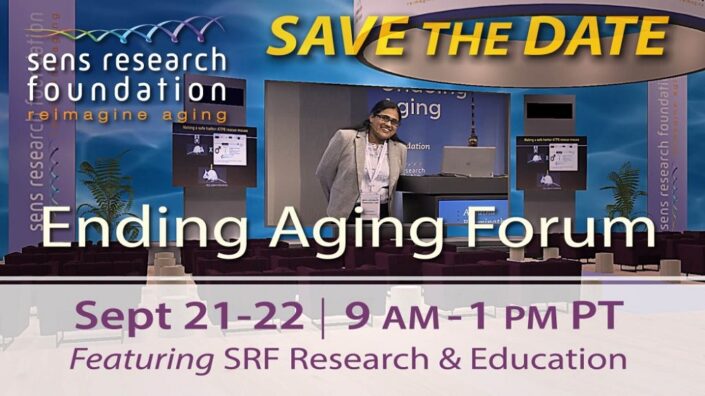
It is not long before the SENS Research Foundation (SRF) hosts its second Ending Aging Forum! It will be happening next week, September 21st and 22nd, at 9 AM to 1 PM Pacific Time.

The event is a great opportunity to catch up with SRF’s team and to hear the exciting things they have been working on this past year. It is also a great showcase not only for the senior researchers but also for the students currently working at the foundation.

SRF is a non-profit organization, just like us, and they are not only helping to drive progress in the field but are also helping to educate the next generation of aging researchers.

Education is central to our mission, and we are delighted to be official media partners for the event. If you want to find out the latest news from the field, we recommend attending. Here is what they have to say about the event:

Join the SENS Research Foundation for their second Ending Aging Forum!

This event will showcase the newest breakthroughs in rejuvenation biotechnologies happening at our Research Center in Mountain View, CA, as well as the research we fund at extramural labs.

The Forum will be hosted virtually through Meetaverse, a state-of-the-art Virtual Reality platform.

You won’t need to download any special software or wear a VR headset to walk around in your avatar, enjoy our scientific presentations and visit our student poster booths in the Conference Hall.

You will also be able to connect with our scientists, team members, and other guests, through one-on-one or group conversations, watch videos and animations placed in the Expo Room, and much more.

Join us September 21st and 22nd at 9 am -1 pm, Pacific Time for a fun and educational experience, and come ready to network and meet our donors, supporters, activists, and like-minded people who care about a future free of age-related disease.

To find out more, check out the full event agenda.

Feel free to email the SRF team with any questions you might have about the event.

Looking forward to seeing you!

– The SRF Team

We would like to ask you a small favor. We are a non-profit foundation, and unlike some other organizations, we have no shareholders and no products to sell you. All our news and educational content is free for everyone to read, but it does mean that we rely on the help of people like you. Every contribution, no matter if it’s big or small, supports independent journalism and sustains our future.
Lifespan io Editorial

Ending Age-Related Diseases 2023: Longevity/DeSci Success

The Ending Age-Related Diseases 2023 conference has ended, and it was a big success. Today, we are delighted to announce that the first of our conference videos is available: the opening talk from the event given by our President, Keith Comito.

But before we get into that, we would like to thank those of you who attended for being a part of this amazing event!

Meetings like this are invaluable for networking, generating relationships and energy, updating our knowledge with the latest research, and pushing the field forward. Your support makes this possible and helps to accelerate the entire longevity space, so from the entire team at lifespan.io, thank you!

lifespan.io Executive Director, Stephanie Dainow, had this to say about the event:

The event was a huge success for the field. For attendees interested in learning the latest in research and development around longevity biotech and rejuvenation science, the speakers delivered. The event was also an opportunity in person and online for audiences in different industries to meet and identify synergies that would enhance progress. Decentralized science, and ensuring therapies are available to everyone, requires lots of dynamic discussion and strategic planning, which the conference facilitated in spades. One of the keys to short-term success is finding new alliances with adjacent industries, to get more skin in the game.

DeSci is another way to speed up progress in aging research

Decentralized science (DeSci) is a movement that aims to increase scientific funding, free knowledge from silos, and cut out profit-motivated intermediaries, such as publisher conglomerates that lock scientific data behind paywalls.

Keith’s opening talk focuses on the intersection of rejuvenation research and DeSci and the various possibilities that the union of these two offers us as a community. A way to fund ambitious research free from the risk aversion and constraints of traditional funding channels could be a real shot in the arm for the field.

lifespan.io is interested in using the potential of the DeSci movement to accelerate progress in aging and rejuvenation research. Raising funds for research is a key focus of that strategy, and we will have more to announce on that front in the near future.

lifespan.io On Demand Replay

On-demand videos are available to ticket holders

Missed a presentation you wanted to see, or just want to relive the experience? Ticket holders can still sign into the event and watch the on-demand replays of all the talks and workshops.

The videos will be available to watch for a few more weeks, and after that, we will start releasing them publicly on the lifespan.io Youtube channel and on the EARD2023 conference webpage in the coming months.

Thank you to our sponsors for helping make the conference a success

We also want to thank our sponsors. They work every day to lay the groundwork for the longevity space, and we are able to bring cutting-edge presentations to you in large part because of their direct support.

Special thanks to Maxwell Biosciences and Gero (our Platinum sponsors), NOVOS and quadraScope (our Gold sponsors), and the rest of our sponsors:

EARD All Sponsors

Support lifespan.io and help us to speed up progress

As our nonprofit continues its mission to accelerate advancements in longevity research, your support is invaluable. There are several ways you can help.

Donate: Your donations directly fuel our high-impact programs and initiatives and help us bring life-changing breakthroughs closer to reality. Even a small contribution can make a big difference.

Be a Hero: Support our work each month, and join the ranks of the Lifespan Heroes! Regular support allows us to plan our operations optimally and to maximize our impact.

Lifespan Alliance: If you represent a company or organization, consider joining the Lifespan Alliance and becoming a corporate partner. These philanthropic partnerships foster mutual support with a shared goal of accelerating progress for longevity biotech and extending and improving human lives.

Thank you to the current members of the Lifespan Alliance for supporting our important work!

Longevity Investor Network: The Longevity Investor Network is an initiative that brings investors and promising rejuvenation biotech startups together. If you are an investor or startup and interested in getting involved, please get in touch.

Thank you to everyone who is currently supporting us; no matter how big or small, your contribution is greatly appreciated!

Chimeric DNA

Jumping Genes Influence the Speed of Aging in Worms

According to a newly published paper in Nature Communications, transposable elements impact aging in C.elegans [1].

Transposable elements and aging

Transposable elements are often referred to as mobile genetic elements or jumping genes, as these DNA pieces can change their position in the genome. Changing the position of transposable elements can potentially lead to mutations in the functional DNA regions. Such activity is associated with genomic instability, a hallmark of aging [2].

A large fraction of the genome is composed of transposable elements, and it can be protected from their mutagenic activity by a silencing mechanism. However, this protective mechanism is not active in all cells.

This silencing mechanism is active in cells that can multiply indefinitely, which includes the germline cells, cancer stem cells, and the stem-like cells of certain species, such as the freshwater hydra. However, somatic cells that accumulate cellular damage and die are not protected by this mechanism [3].

There is growing evidence that transposable elements’ activity increases with age [4]. However, it is unknown how much of this activity increases due to aging and how much of aging is due to this increasing activity. Therefore, these researchers used a small, widely studied worm, C. elegans, to address this question.

Transposable elements and lifespan

To test the influence of transposable elements on C. elegans’ lifespan, researchers used a few approaches.

First, they silenced families of transposable elements called Tc1, Tc3, and Tc14 in C. elegans starting in young adulthood. Silencing those families of transposable families, but not others, led to animals that lived longer than controls. Similarly, increasing the expression of the Tc3 family shortened the worms’ lifespan.

Second, they quantified whether transposable elements are expressed throughout life or in a specific period. They found that Tc1, Tc3, and Tc14 expression were expressed at higher levels in older worms than younger worms. They also observed transposable elements becoming mobile (being removed from their original place in the genome) during aging.

Lastly, researchers bolstered the expression of genes that degrade the transcription of transposable elements. This was similar to silencing in its effect, reducing levels of Tc1, Tc3, and Tc14 while increasing C. elegans‘ lifespan.

The impact of methylation

DNA can be altered through changes such as adding chemical components. One such alteration is adding the methyl group to adenine, one of the four nucleotides involved in DNA coding. This modification occurs preferentially at the parts of the DNA where transposable elements are located [5].

There are contradictions regarding the role that methylation plays in transposable element activity. Research in fruit flies suggests that adenine methylation leads to the activation of transposable elements. Research in mammals suggests that this mechanism leads to silencing of transposable elements [5, 6].

The authors of this paper learned that adenine methylation increases as worms age and that there is a 5- to 6-fold increase in DNA regions with transposable elements in aged worms. Therefore, adenine methylation plays a role in transposable element activation during aging.

To investigate this further, the researchers used worms with inactive genes responsible for methylation and demethylation of adenine on transposable elements DNA sites. They observed that, in general, the absence of a gene responsible for demethylation leads to increases in the expression of transposable elements and a shorter lifespan.

When researchers inactivated Tc1 and Tc3 in the worms with inactive genes responsible for the demethylation of adenine, their lifespan increased compared to the worms with inactive genes responsible for the demethylation of adenine alone.

On the other hand, the inactivation of a gene responsible for methylation leads to decreased expression of transposable elements and extended lifespan. These results suggest that adenine methylation impacts lifespan by promoting transposable element expression in worms.

The authors also observed that adenine methylation was also impacted by heart stress. Based on this and previously published research, the authors concluded that stress pathways impact transposable elements’ activity, impacting lifespan.

Extending lifespan or creating tumors?

This research was done in C. elegans, a unique model organism that doesn’t develop tumors. However, research in different organisms, such as mice, suggests that repressing transposable elements may lead to cancer and death instead of lifespan extension [7].

Whether transposable elements are involved in lifespan extension, or lifespan shortening, in humans remains an unanswered question.

We would like to ask you a small favor. We are a non-profit foundation, and unlike some other organizations, we have no shareholders and no products to sell you. All our news and educational content is free for everyone to read, but it does mean that we rely on the help of people like you. Every contribution, no matter if it’s big or small, supports independent journalism and sustains our future.

Literature

[1] Sturm, Á., Saskői, É., Hotzi, B., Tarnóci, A., Barna, J., Bodnár, F., Sharma, H., Kovács, T., Ari, E., Weinhardt, N., Kerepesi, C., Perczel, A., Ivics, Z., & Vellai, T. (2023). Downregulation of transposable elements extends lifespan in Caenorhabditis elegans. Nature communications, 14(1), 5278.

[2] Hedges, D. J., & Deininger, P. L. (2007). Inviting instability: Transposable elements, double-strand breaks, and the maintenance of genome integrity. Mutation research, 616(1-2), 46–59.

[3] Ross, R. J., Weiner, M. M., & Lin, H. (2014). PIWI proteins and PIWI-interacting RNAs in the soma. Nature, 505(7483), 353–359.

[4] Egilmez, N. K., & Shmookler Reis, R. J. (1994). Age-dependent somatic excision of transposable element Tc1 in Caenorhabditis elegans, Mutation research, 316(1), 17–24.

[5] Zhang, G., Huang, H., Liu, D., Cheng, Y., Liu, X., Zhang, W., Yin, R., Zhang, D., Zhang, P., Liu, J., Li, C., Liu, B., Luo, Y., Zhu, Y., Zhang, N., He, S., He, C., Wang, H., & Chen, D. (2015). N6-methyladenine DNA modification in Drosophila. Cell, 161(4), 893–906.

[6] Wu, T. P., Wang, T., Seetin, M. G., Lai, Y., Zhu, S., Lin, K., Liu, Y., Byrum, S. D., Mackintosh, S. G., Zhong, M., Tackett, A., Wang, G., Hon, L. S., Fang, G., Swenberg, J. A., & Xiao, A. Z. (2016). DNA methylation on N(6)-adenine in mammalian embryonic stem cells. Nature, 532(7599), 329–333.

[7] Siddiqi, S., Terry, M., & Matushansky, I. (2012). Hiwi mediated tumorigenesis is associated with DNA hypermethylation. PloS one, 7(3), e33711.

Elderly Situps

Taking Up Exercise Late in Life May Prevent Fitness Decline

According to a new study published in Aging Cell, previously sedentary old people who took up an exercise program were able to improve their fitness and maintain it for at least four years [1].

Better late than never

When is it too late to engage in physical activity? The answer might be “never”. Physical activity is one of the most potent anti-aging interventions currently available. When done properly, it can slow numerous aging processes and vastly increase life quality [2]. However, many older people behave as if it is too late for them to take up exercise and enjoy its benefits. While research suggests that this is not the case [3], there is a lack of studies with long-term follow-up.

A new study cleverly employs two different cohorts to fill this gap. One of the cohorts comes from Gerofit, a US study in which previously sedentary elderly people (mean age 72.5) were enrolled in a six-month age-appropriate exercise program. The new study included 318 people who stuck to the exercise program past the six-month mark and were followed up with once a year for four years.

The second cohort of 146 people (mean age 74.5) was taken from the Italian study Act on Aging (AOA). Those individuals had self-reported leading sedentary lives for the last five years prior to their enrollment in the study and remained sedentary for one year, when their fitness was measured again. The researchers essentially used the AOA cohort as a control group for the Gerofit cohort, due to the relative similarity of characteristics at baseline in both cohorts.

Long-term fitness retention

Fitness levels were measured using three popular metrics: the six-minute walk test, in which distance is measured; the 30-second chair stand, which measures the number of times a person can get up from a chair and sit back down; and, finally, the up-and-go test. The latter measures the time a person needs to stand up from a chair, walk three meters, turn around, walk back to the chair, and sit down.

Exercise Tests 1

During the first year, the Gerofit cohort showed noticeable improvement in all metrics, while the AOA cohort suffered an even more drastic decline. 

In the six-minute walk test, the Gerofit cohort improved distance by 44.1 yards (10.9%), while the AOA cohort’s average distance declined by 75.8 yards (−18.7%). In the 30-second chair stand, the Gerofit cohort showed an improvement of 3.1 (30.6%). The AOA cohort’s numbers declined by an average of 3.2 chair stands (−24.5%). In up-and-go tests, the Gerofit cohort improved their time by 9.2%, while the AOA cohort’s performance at year’s end plummeted by 19.4%.

While Gerofit cohort’s numbers did not improve after the first year, they did not decline either, showing strong resistance to age-related changes that sharply affected the AOA cohort’s performance. Since there was no follow-up for the latter cohort past the one-year mark, it is possible that the rate of decline attenuated during the following years. Lacking this information, the researchers simply extrapolated the first year’s results.

Survival of the oldest?

The researchers also divided the cohorts into three subgroups by age, 65-74, 75-85, and 85+, to analyze their respective trajectories.

Exercise Tests 2

In the AOA cohort, all subgroups suffered a similar decline in their physical abilities, but in the Gerofit cohort, the analysis produced some unexpected results. In the six-minute walk test, the three subgroups differed at baseline, but at the end of year 4, they showed almost identical results, with the 75-84 subgroup slightly outperforming their younger counterparts. In the chair stand test, the 75-84 subgroup’s surge was even more evident. However entertaining, those results should be taken with a grain of salt, since dividing into subgroups lowered the study’s statistical power.

The main upshot is deeply optimistic: despite being pretty much couch potatoes at baseline, the Gerofit participants were able to substantially increase their fitness during the first year, overpowering the deleterious effects of aging evident in the second cohort. Moreover, they managed to stay fit for a considerable period of time late in life. 

The study also suffered from several limitations. First, while the differences at baseline were moderate, some of them may still have affected the results. Importantly, both cohorts were overweight (mean BMI of 30.6 for Gerofit and 26.9 for AOA), which raises questions about the generalizability of the results. Second, using a completely different cohort as a control group is less than ideal. Finally, both cohorts were almost exclusively male, which can pose a problem due to the well-known gender differences in aging trajectories. Hopefully, we will see more robust studies with proper randomization, larger sample sizes, and an even gender distribution that confirm this one’s findings.

We would like to ask you a small favor. We are a non-profit foundation, and unlike some other organizations, we have no shareholders and no products to sell you. All our news and educational content is free for everyone to read, but it does mean that we rely on the help of people like you. Every contribution, no matter if it’s big or small, supports independent journalism and sustains our future.

Literature

[1] Manning, K. M., Hall, K. S., Sloane, R., Magistro, D., Rabaglietti, E., Lee, C. C., Castle, S., Kopp, T., Giffuni, J., Katzel, L., McDonald, M., Miyamoto, M., Pearson, M., Jennings, S. C., Bettger, J. P., & Morey, M. C. Longitudinal analysis of physical function in older adults: The effects of physical inactivity and exercise training. Aging Cell, e13987.

[2] Harridge, S. D., & Lazarus, N. R. (2017). Physical activity, aging, and physiological function. Physiology, 32(2), 152-161.

[3] Berk, D. R., Hubert, H. B., & Fries, J. F. (2006). Associations of changes in exercise level with subsequent disability among seniors: a 16-year longitudinal study. The Journals of Gerontology Series A: Biological Sciences and Medical Sciences, 61(1), 97-102.

An image of telomeres shortening which could lead to DNA damage.

Turning Back the Clock With mRNA Telomerase Therapy

Since its launch in 2016, Rejuvenation Technologies, located in Mountain View, California, has been developing a therapeutic to restore telomeres in humans. The company has been in stealth mode for a number of years, but there is finally some news!

Reversing a decade of telomere loss in one treatment

Rejuvenation Technologies has created a method of using synthetic mRNA to restore telomeres back to a healthy length. This mRNA works by triggering cells to produce telomerase, an important enzyme that maintains telomere length.

Though it has been widely recognized that telomerase elongates telomeres, the ability to quickly and safely extend telomeres using mRNA delivery has only been achieved recently.

Research into this approach began in 2015, when a team that included Rejuvenation’s founders published research showing that telomerase mRNA can reverse telomere shortening [1]. Since then, these researchers have been developing a way to deliver telomerase mRNA to stem cells. They suggest that this mRNA method may reverse around ten years of telomere shortening with just a single treatment.

After some promising results in preclinical studies for lung and liver diseases, the company is now preparing for its first human clinical trials.

Why is restoring telomere length important?

Telomeres are protective, cap-like structures that act as safeguards on our DNA, preventing the loss of genetic information during cell division. As our cells divide, the telomeres gradually diminish, and when they reach a critically short length, our cells either enter a state of senescence or perish.

Studies have demonstrated a strong correlation between telomere length and both lifespan and healthspan, with telomere shortening being widely acknowledged as a key characteristic of aging. lifespan.io has consolidated much of what we know about telomeres, telomerase, and aging here:

Telomere shortening is associated with various age-related diseases and a decline in overall health. However, the ability to restore telomeres to a healthy length could potentially reverse these effects and rejuvenate our cells.

The implications of telomere restoration go beyond simply reversing the effects of aging. It could potentially have far-reaching effects on age-related diseases such as cancer, cardiovascular disease, idiopathic pulmonary fibrosis, and neurodegenerative disorders.

The use of mRNA telomerase for the restoration of human telomeres could offer a new approach to treatment and prevention. By targeting a fundamental reason we age, it could be used to treat a whole slew of diseases related to telomere loss.

The cancer connection 

Back in the 1990s when telomerase first began to spark interest in the aging research community, the idea that it causes cancer arose.

The fact of the matter is that permanent telomerase activation in cells does support the development of cancer. Indeed, the ability of cells to turn on telomerase and divide indefinitely is one of the ways in which cells become cancerous.

However, healthy stem cells often turn on telomerase transiently during our lives to avoid the harmful effects of shortened telomeres. This is where the crucial term “transient” comes into play, and some researchers have suggested that transient activation of telomerase in stem cells could be the way to have our cake and eat it.

It may be possible to use a strictly controlled transient therapy to spur rejuvenation in stem cells without making them into cancer cells. That way, the stem cells could continue to function and produce more fresh somatic cells to populate our organs and tissues, potentially helping to solve another reason we age: stem cell exhaustion.

An influx of funding

Recently, Rejuvenation Technologies got a boost from a seed funding round of $10.6 million led by Khosla Ventures. According to the linked press release:

The funding will be used to advance its programs to IND approval in fibrotic disease, such as pulmonary fibrosis and liver cirrhosis, as well as early research targeting the immune system. Rejuvenation’s lead candidate targets a key aging mechanism, telomere shortening.

Seeing more and more funding coming into the field in the last few years is a positive sign that confidence in the rejuvenation field is growing. There are now many companies working on solutions to aging and it will likely only take a single major breakthrough to capture public attention.,perhaps this therapy will be the one to achieve that.

It’s still the early days

Based on its positive initial data, Rejuvenation Technologies is now gearing up for its first in-human trials. This crucial step will involve carefully selecting a group of participants to assess the safety and efficacy of the therapy. If successful, this could change the field of aging and rejuvenation research and potentially extend human lifespan.

However, it is important to approach these developments with cautious optimism. While the potential benefits are significant, further research and clinical trials are necessary to fully understand the long-term effects and safety of this therapy.

Additionally, the cost and accessibility of such a treatment will need to be addressed to ensure that it can benefit the widest range of individuals. Fortunately, mRNA vaccines have shown that such things, if proven viable, can be built at a massive scale, just like the recent COVID vaccines have been.

Nonetheless, the progress made by Rejuvenation Technologies is undeniably exciting. As the company moves forward with its first-in-human trials, we eagerly await the results. Here’s hoping for a breakthrough that could change the way we approach aging and age-related diseases.

We would like to ask you a small favor. We are a non-profit foundation, and unlike some other organizations, we have no shareholders and no products to sell you. All our news and educational content is free for everyone to read, but it does mean that we rely on the help of people like you. Every contribution, no matter if it’s big or small, supports independent journalism and sustains our future.

Literature

[1] Ramunas, J., Yakubov, E., Brady, J. J., Corbel, S. Y., Holbrook, C., Brandt, M., … & Blau, H. M. (2015). Transient delivery of modified mRNA encoding TERT rapidly extends telomeres in human cells. The FASEB Journal, 29(5), 1930.

Liar at table

Two Industries in One Field

We are at an interesting time for our field, and at long last, some rejuvenation therapies are entering clinical trials. The approach of directly targeting the processes of aging in humans can finally be put to the test.

While rejuvenation therapies that aim to prevent, stop, or even reverse aging and age-related diseases are gradually moving towards becoming a reality, the field has a problem. Our community has long had two distinctly different groups in its ranks.

Snake oil and charlatans

The first group consists of the snake oil salesmen peddling unproven supplements and therapies to whoever is foolish enough to buy and take things on faith without using the scientific method. These hucksters have long been a plague on our field, preying on the gullible and tainting legitimate science with their charlatanry and nonsense.

This includes some “biotech companies” that flee the FDA to hide out in countries with few or no medical or ethical controls in order to conduct experiments of dubious scientific merit. These outfits try to convince us that they are the good guys, all the while offering nothing more than data based on poorly designed experiments and tiny cohorts that are statistically irrelevant.

Such companies kick the can down the road year after year, taking money from the gullible but never producing anything of worth. This is a stark contrast to the credible biotech companies who do set up outside the USA, but behave in a credible way. Setting up offshore outside of FDA (and similar bodies such as the EMA) juristriction is not an immediate red flag, but one should be cautious.

This category also includes the so-called futurists who claim humans will be immortal in under a decade based on incorrect assumptions and flawed assessments of actual scientific progress.

These people are sometimes well-meaning but misguided, and sometimes they are interested in selling their latest book, regardless, they are causing harm to public perception. Overpromising and underdelivering is a significant problem for our field, and these people only add fuel to the fire of public skepticism.

The final example is the supplement peddler selling expensive supplement blends with flashy names, which, on inspection, turn out to be commonly available herbs and minerals mixed and sold at a high markup. These sorts of people have plagued our community and given the field a reputation of snake oil.

While a good diet, the right vitamins and minerals, exercise, and a healthy lifestyle can doubtlessly increase your potential to live a longer life, it is unlikely that any supplement is going to radically increase your lifespan. These hucksters prey on consumers’ lack of knowledge to sell them overpriced tat that will be almost if not completely ineffective.

There may be merit in some supplements, but the sector is unregulated and filled with dishonest marketing, and quality control is often dubious. There are some notable exceptions of course, and there are many credible researchers studying supplements in the context of aging, but there is a world of difference between what they do and the misleading marketing hucksters engage in.

The scientists are the true heroes

The second group are the credible scientists, researchers, and companies who have been working on therapies for years and sometimes more than a decade. You do not hear so much about these unsung heroes because they are busy doing the real scientific work to bring aging under medical control and not engaging in dishonesty.

Many of these therapies are following a damage repair approach towards aging. The basic idea is to take an engineering approach to the damage that aging does to the body and to periodically repair that damage in order to keep its level below that which causes pathology.

Some of these damage repair therapies are getting closer to potentially becoming a reality as we speak, with some already in human trials right now. This marks a milestone in our field: credible science has finally gotten near to outstripping the snake oil, and the focus can move from pseudoscience to real, evidence-based science.

How to spot snake oil

While it will be some years yet before therapies to end age-related diseases are here and available, and the hucksters are still peddling their wares, you can arm yourself with knowledge and protect yourself from these people.

Learn to evaluate science rather than taking things at face value, and avoid expensive scams and bad science. Here is a useful checklist to consider when reading an article, looking at claims made by supplement makers, or evaluating any science in general.

  • Was the claim first announced through mass media or through scientific channels? Legitimate claims will undergo peer review first.

Shady companies not backing up their claims with published data are a dime a dozen; do not be fooled by them. Also, pay attention to the source of the news; press releases, associated companies, and obscure websites are poor sources. The bottom line is that any company making claims about its product should be able to back those claims up with published research in a respected journal.

  • Are the claimants transparent about their testing, and is there sufficient published data for reproduction?

Credible research is generally published in credible, peer-reviewed journals with transparent and clear details of experiments so that others may attempt to replicate their results. When evaluating a claim, always see if it is published and if anyone else has successfully replicated the results themselves. Also check to ensure that these independent results are indeed independent and that there is no link between the original group and the study replicating the results.

  • A properly developed technology will take years of development to reach release. Therefore, there should be there a clear paper trail of studies and clinical trials supporting any marketed product.

Again, this is similar to the above; a company or research team worth its salt will have a trail of evidence that documents research and development efforts that likely go back for years or even decades. If a company appeared from nowhere and has no historical record of its research, this is a huge red flag.

  • How good is the quality of data supporting the claim, and is it of statistical significance?

Learn to evaluate how statistically significant results are. Did a test involve a single mouse or a person, or did it involve hundreds of even thousands of test subjects to reach its conclusion?

The smaller the study, the higher the statistical “noise” and the greater the effect that outliers can have on the average. Large test groups offer the most stable and accurate data, and small single-patient studies are, for the most part, not useful. Beware the company that tests on a single candidate and claims that a supplement or therapy works. A credible company may start with a small pilot study but, ultimately, would expand into larger-scale studies in order to prove safety and efficacy.

  • Are the claimants reputable, and are they published in credible journals?

Investigate and check their academic pedigrees. Having a Ph.D. is not required to conduct great science, but, in general, a researcher of any worth will have peer-reviewed publications with lots of citations and a good reputation in academia.

  • Where does the study funding come from?

Even when there is published data, make sure you find out where the funding comes from. Studies on a patented supplement that are funded by the patent holder are a serious red flag and should be viewed with extreme caution.

  • Do the claimants state that their claim is being suppressed by authorities? Big Pharma? The government?

Claims of being suppressed or somehow blocked by the government or other entities is a common tactic used by scammers. A scammer might claim to be a misunderstood researcher who just wants to help, or a supplement maker in trouble with the FDA for making false claims might say that it is simply being misinterpreted. This is base trickery; don’t fall for it.

  • Does the claim sound far-fetched?

If it sounds too good to be true, then the chances are that it probably is. Credible science is always appropriately cautious and never overly affirmative; if someone is way too positive, this is a red flag.

  • Is the claim said to be based on ancient knowledge?

The ‘appeal to the ancients’ logical fallacy is commonly used to convince and part people from their money. “The ancients used certain supplements, so they must work” is a common tactic used to sell things. The truth is that while our ancestors were indeed clever and creative in many ways, not all their ideas were wise; indeed, many of the things they believed were dead wrong and even dangerous. This is a commonly used tactic in the supplement and diet industries.

  • Is the claim said to be “natural” as a selling point?

This is the ‘appeal to nature’ fallacy, another common sales tactic that takes advantage of the biases we as humans have and our inclination to think that everything natural is good. A quick review shows us that what is natural is not always a good thing: tidal waves, earthquakes, venomous snakes, diseases, and aging are all natural, but they are most certainly not desirable.

This is, of course, only a short checklist of things to watch out for; if a claim raises these flags, then it’s a good idea to be highly dubious about its credibility.

Good science will win the day

The snake oilers will be with us for a few years yet, but by thinking critically about claims, you filter these people out in favor of legitimate scientists working on the real solutions to aging and healthy longevity.

Ultimately, as more legit therapies enter human clinical trials, it should become harder and harder for hucksters to survive in the field. As working therapies become available, why would anyone choose snake oil instead?

All it will take is for some of these therapies in trials to pan out and demonstrate that it is possible to rejuvenate people, repairing the damage that aging causes. Here’s hoping we start to see such therapies arriving in the near future.

If you want to keep track of progress, check out our curated research database: the Rejuvenation Roadmap. This database tracks the status of many of the therapies being developed and gives a good overview of how things are progressing.

We would like to ask you a small favor. We are a non-profit foundation, and unlike some other organizations, we have no shareholders and no products to sell you. All our news and educational content is free for everyone to read, but it does mean that we rely on the help of people like you. Every contribution, no matter if it’s big or small, supports independent journalism and sustains our future.