Creatine Shows Synergy With Exercise in Older Adults
- Agility and balance were strongly affected.

- Researchers compared aquatic training and elastic-band training with and without creatine.
- The group taking creatine with aquatic training seemed to have the greatest benefits.
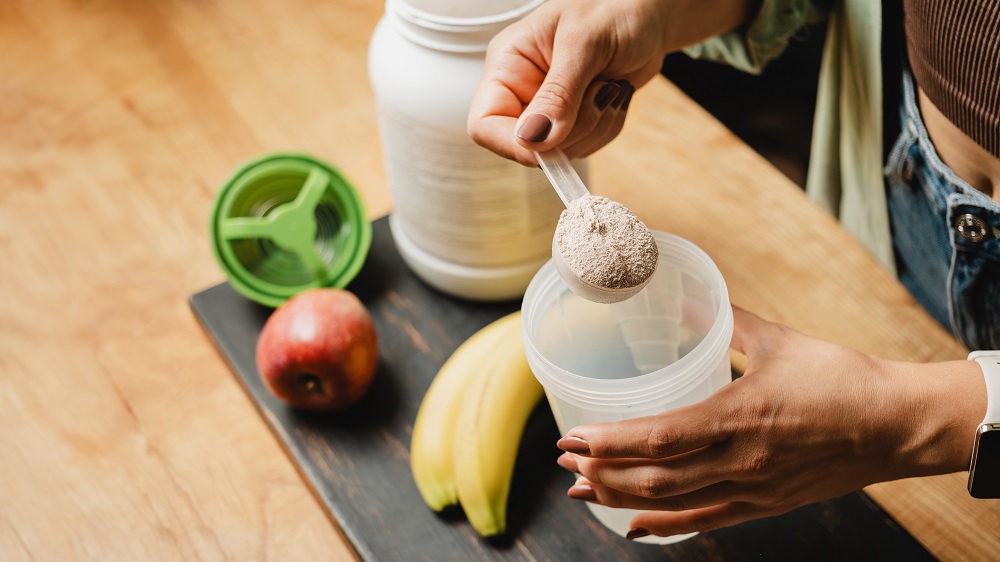
In a new study, the popular supplement creatine seemed to add to some of the beneficial effects of power training [1].
Trying the combination in older people
Exercise might be the most potent anti-aging intervention known to humans, but with age, building strength and muscle mass becomes harder. Also, not all types of exercise are equally effective. Creatine, a small molecule that enhances the production of ATP, the “energy currency” of the cell, is often touted as an exercise enhancer, even though actual research shows moderate effects at best [2]. It is also less studied in older people, who might actually benefit more from its muscle- and cognition-boosting effects, especially in combination with exercise.
In a new study published in Experimental Gerontology, a group of Spanish scientists combined creatine supplementation with a particular type of exercise: high-load, velocity-intentional resistance training (HL-VIRT), also called power training. HL-VIRT, where a person lifts moderate-to-heavy loads trying to move them as fast as possible during the lifting phase, has emerged as more effective than slow, traditional strength training for older adults [3], because aging selectively degrades fast-twitch muscle fibers and the ability to produce force quickly [4].
The authors chose two ways to deliver this kind of training. The first was elastic bands on land, as bands provide variable resistance: the harder you stretch, the more they push back. The second was aquatic resistance training, as water creates hydrodynamic drag proportional to the speed of movement, which naturally fits the “try to move fast” idea.
They divided 103 community-dwelling older adults (mean age 68) into six groups in total – one with and one without creatine for each type of exercise plus non-exercising controls – and recorded a wide variety of metrics encompassing physical function, neuroplasticity, oxidative stress, inflammation, and cognitive performance.
The training groups exercised over 16 weeks for 3 times a week in intervals of about an hour. Importantly, the aquatic and control groups had heavier pre-intervention attrition due to mostly logistical causes: the pool was in a different town, and controls lived farther from the assessment site. As a result, groups ended up unequally sized (n=13-24), which reduced the study’s statistical power and complicated some analyses.
Improvements in neuroplasticity and inflammation
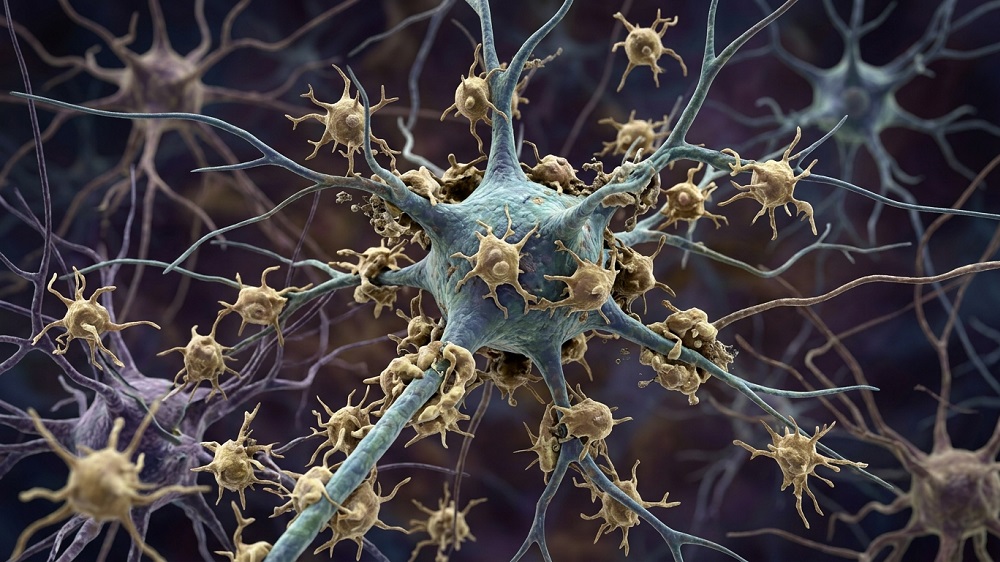
Neuroplasticity was measured by levels of brain-derived neurotrophic factor (BDNF), a protein crucial for neuronal survival and growth. In all four training groups, serum BDNF increased significantly (8-14%), while both control groups actually saw BDNF decline by 4-6%. Creatine amplified the BDNF response when combined with training.
Oxidative stress was measured by two markers: F2-isoprostanes (F2-iso), which indicate the damage that free radicals inflict on cell membranes, and glutathione peroxidase (GPx), a key antioxidant enzyme. All four training groups reduced F2-iso (23-52%) and raised GPx (7-20%), while both control groups moved in the wrong direction (F2-iso rose by 15–23%, while GPx fell by about 8%). Creatine amplified the antioxidant response when combined with training, and creatine alone reduced F2-iso even without exercise.
Inflammation was measured by the pro-inflammatory cytokine IL-6 and the transcription factor TNF-α, which activates inflammatory pathways, particularly in response to oxidative stress. All four training groups significantly reduced both IL-6 (14-33%) and TNF-α (5-20%), with the aquatic groups showing the largest TNF-α reductions. The creatine-only control group held steady, and creatine combined with training produced the largest reductions in inflammation.
Synergy in strength but not in cognition
All training groups significantly improved the isokinetic strength of knee and elbow flexion and extension, while controls showed no change or slight declines. Elastic band training produced larger upper-limb strength gains than aquatic training, and creatine added further benefits.
The authors’ post-hoc explanation is that elastic bands provide a more controlled and linear load, precisely targeting a muscle, while water resistance is more variable and direction-dependent. Creatine’s classic mechanism of action might be most useful when external load is precisely controlled and progressively overloaded.
All four training groups also improved on the Senior Fitness Test battery: the 30-second chair stand (lower-limb endurance), Timed Up and Go (agility/balance), six-minute walk (aerobic capacity), and handgrip strength. Here, aquatic training tended to produce slightly larger functional gains than elastic-band training. Creatine specifically improved TUG performance beyond what aquatic training alone produced, suggesting that agility and balance may be potential targets for creatine use.
The participants also underwent the Trail Making Test (TMT), a paper-and-pencil test in which consecutively marked circles must be connected as fast as possible. All training groups significantly improved, while controls were essentially unchanged. Creatine did not provide additional cognitive benefit on top of training, and the creatine-only group showed only modest gains. This fits the long-standing view that aerobic and resistance exercise improve cognition in older adults, possibly through a BDNF-mediated pathway, and the authors indeed note significant correlations between BDNF and TMT changes.
This study involved only two similar types of training and one age group. Add unequal sample sizes and a dose that might be too small (3 grams per day, compared to the 5 grams recommended by most supplement manufacturers), and questions about the results’ generalizability loom large. However, this study adds important data that generally confirms creatine’s beneficial effects, which are possibly synergistic with physical activity, at least in some settings.
Literature
[1] Fernandez-Garrido, J., Martin, E. G., Saez-Berlanga, A., Gargallo-Bayo, P., Gene-Morales, J., Alix-Fages, C., … & Colado, J. C. (2026). Effects of high-load, velocity-intentional variable resistance training combined with creatine supplementation on neuroplasticity, oxidative stress, inflammation, physical function, cognitive performance and quality of life in older adults: A randomized, double-blind, placebo-controlled trial. Experimental Gerontology, 113122.
[2] Wax, B., Kerksick, C. M., Jagim, A. R., Mayo, J. J., Lyons, B. C., & Kreider, R. B. (2021). Creatine for Exercise and Sports Performance, with Recovery Considerations for Healthy Populations. Nutrients, 13(6), 1915.
[3] Balachandran, A. T., Steele, J., Angielczyk, D., et al. (2022). Comparison of Power Training vs Traditional Strength Training on Physical Function in Older Adults: A Systematic Review and Meta-analysis. JAMA Network Open, 5(5), e2211623.
[4] Nilwik, R., Snijders, T., Leenders, M., et al. (2013). The decline in skeletal muscle mass with aging is mainly attributed to a reduction in type II muscle fiber size. Experimental Gerontology, 48(5), 492–498.
About the author

Arkadi Mazin