

Researchers are developing biomedical repair therapies to address multiple age-related diseases at once, yet they are forced to put them through regulatory pathways built for single-disease drugs. The result is delay, duplication, and unnecessary cost precisely when speed matters the most.
The single-disease-indication trap
Current regulation still treats age-related diseases as if they were a collection of isolated conditions. The research, however, shows they are deeply interconnected and driven by the same underlying processes, which have been outlined in the Hallmarks of Aging framework.
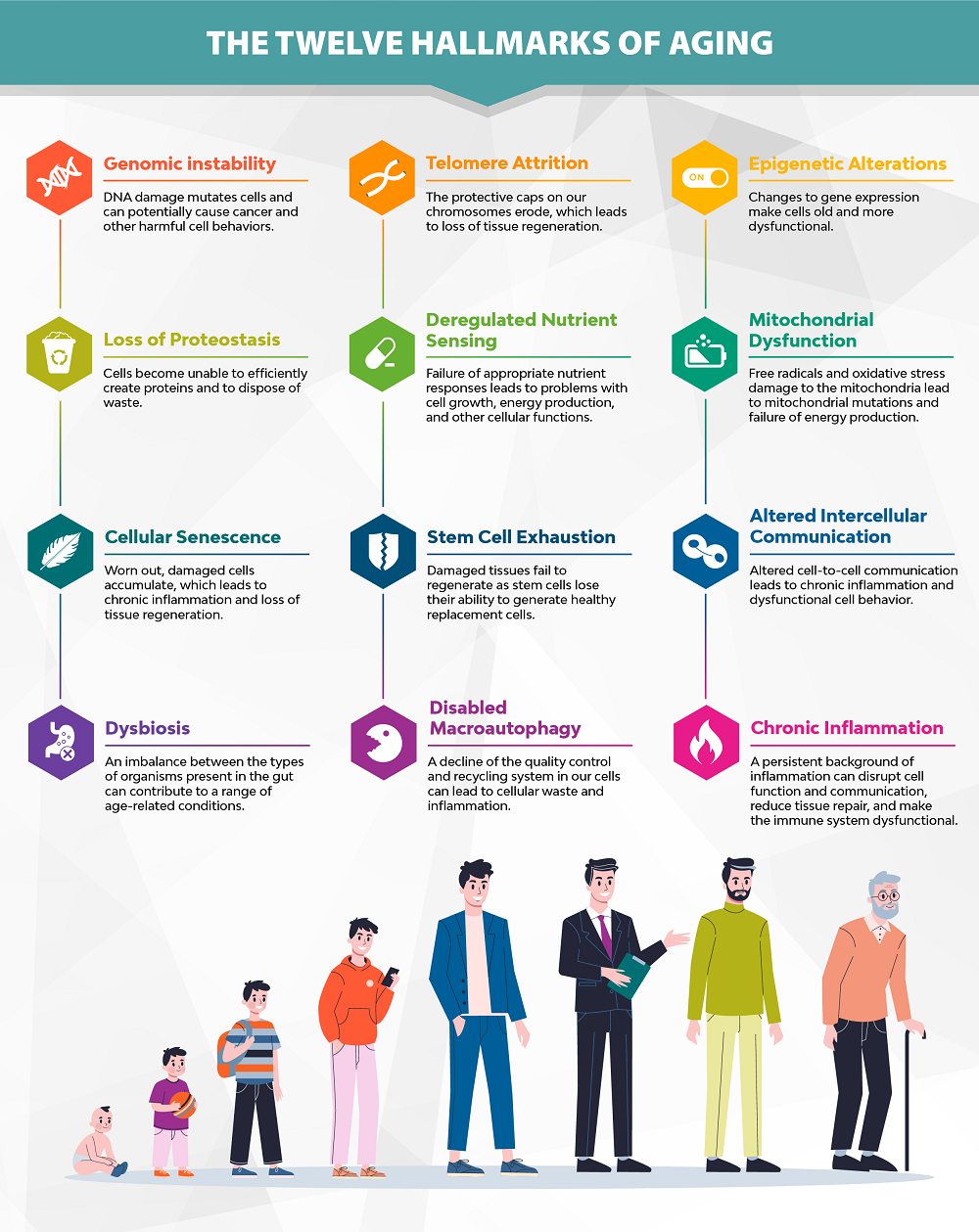
Biomedical repair technologies seek to rejuvenate aged organs and tissues by directly targeting these hallmarks. This means that they have the potential to address multiple age-related diseases at once, rather than treating one disease at a time.
From scientific theory to clinical reality
The biology of aging and the biomedical repair technologies designed to address it are increasingly being seen as an engineering challenge rather than a purely biological one. Advances in tools such as artificial intelligence are accelerating this shift.
Progress has now reached the point at which concepts developed over decades are entering the clinic. Several biomedical repair approaches are either in clinical trials or approaching them.
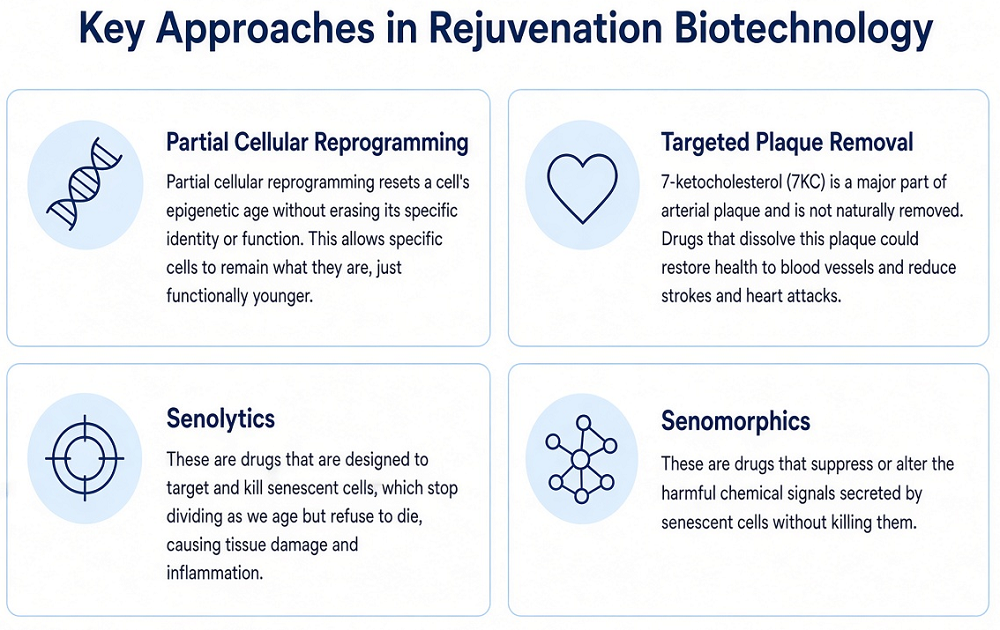
By their nature, biomedical repair approaches are inherently multi-disease therapies. Rather than treating the downstream diseases of aging in isolation, they target the upstream biological drivers that give rise to many of them at once.
Unfortunately, while the technology and tools have improved dramatically, the rules have not.
The regulatory model has not kept pace
Current regulation remains a significant barrier to progress. Legacy frameworks are optimized for single-pathway, single-disease-indication drugs. When applied to interventions that target multiple diseases or aging hallmarks, they create substantial friction.
Several specific bottlenecks currently block progress for multiple-disease or hallmark-based therapies. Each new indication still tends to require largely separate clinical packages. Safety data cannot easily travel across related uses of the same platform.
Surrogate and functional endpoints that reflect biological age or multi-organ improvement still remain poorly accepted. Regulators, including the FDA, have so far been cautious about accepting aging biomarkers and other proxies of organ rejuvenation as clinical endpoints.
Successive improvements to the same platform are slowed by rules that often treat each new version like a brand-new drug. Even modest refinements to delivery, safety switches, or manufacturing can trigger requirements that should not have to be repeated from scratch.
Differing requirements between the FDA and other regulators slow progress further and make cross-border cooperation more difficult and costly.
Today, organ-specific clinical programs are already advancing. However, how quickly those early successes can expand into multiple-organ applications and wider adoption will depend less on new biological insights and more on whether regulations permit platform data sharing, learning across indications, and suitable surrogate or functional endpoints.
The Longevity Dividend
Until that changes, technologies capable of addressing multiple conditions simultaneously will continue to be evaluated and reimbursed as if they were narrow specialty drugs. The cost of this mismatch will be measured in slower clinical gains and a delayed Longevity Dividend.
The Longevity Dividend is a term that describes the vast economic, social, and healthcare benefits that societies gain by extending the period of time people live in good health, rather than just extending life expectancy at all costs [1].
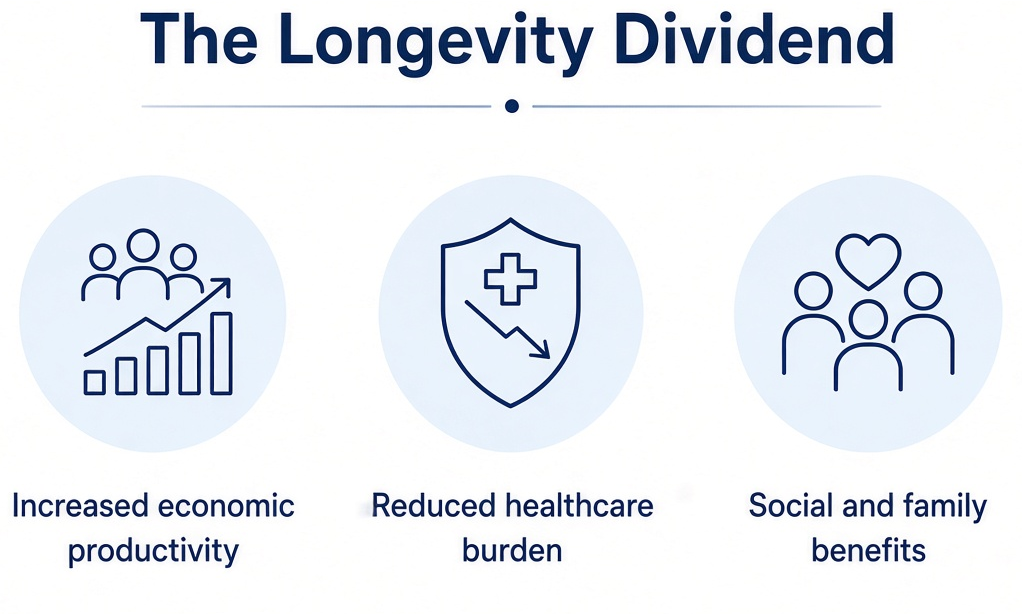
More recent economic analyses continue to support the scale of potential gains from healthier and longer lives [2, 3]. A broader look at the fiscal impact on national social security and healthcare systems can be found in our companion piece, Why Democratizing Rejuvenation Is an Economic Imperative.
Improving legacy frameworks and creating new ones that support the development of multiple-disease or hallmark-based therapies is a critical step in realizing that dividend.
Breaking the single-disease trap
These bottlenecks are not the unavoidable cost of rigorous regulation and safety standards. They are the result of frameworks built for single-disease drugs. Updating these frameworks now is essential if interventions that target multiple diseases or hallmarks are to progress from narrow, organ-specific uses into broader applications.
Partial cellular reprogramming is one example of such potential. Human clinical trials are already underway for glaucoma and nonarteritic anterior ischemic optic neuropathy (NAION). Under the current rules, expanding that same platform from these initial ocular indications to other organs and age-related conditions, such as sarcopenia, type 2 diabetes, fatty liver disease, or heart failure, would typically require largely separate clinical packages, repeated safety work, and new endpoint negotiations at each step.
Each of these extra cycles costs years of additional time and massive expenditure. For patients with progressive, age-related diseases, these years represent lost function, declining independence, and in many cases a preventable loss of life.
An effective platform-based regulatory pathway for multiple-disease or hallmark-based therapies would allow safety and manufacturing data to travel with the technology, enabling faster, more coherent expansion while still ensuring appropriate oversight.
Emerging and proposed solutions
Fortunately, several of the needed mechanisms already partially exist or have been formally proposed. These could reduce duplication, support iteration, and better align regulatory evaluation with the biology of aging.
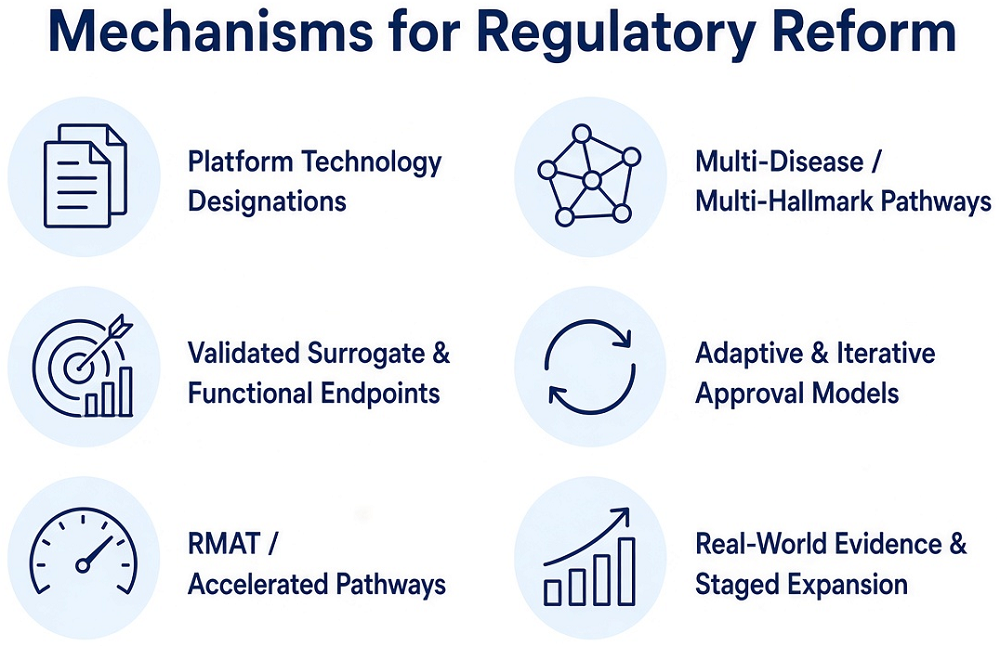
Platform technology designations: These would allow core safety, manufacturing, and quality data from one modality to be taken into account when the same platform is applied to other disease indications. This reduces duplicated work and allows drug developers to build on existing evidence instead of repeating the same regulatory steps for every new application of the platform.
Multi-disease/hallmark pathways: This would give explicit recognition that a single intervention may legitimately target shared upstream biology across several conditions. Rather than putting each disease into a separate silo, this approach would allow a more coherent development strategy for therapies whose primary targets are the hallmarks of aging.
Validated surrogate and functional endpoints: Greater acceptance of validated surrogate, multiomic, and functional endpoints, including epigenetic clocks, organ specific functional biomarkers, tissue imaging, and composite scores, would better capture the actual biological effects of these therapies. Current reliance on traditional single-disease clinical endpoints fails to reflect improvements in multiple systems. It also impedes the evaluation of interventions that act on upstream causes.
Adaptive and iterative approval models: These could support successive improvements to the same platform without treating each refinement as a new product. Changes in delivery, safety switches, manufacturing, or factor design could then be evaluated more efficiently, allowing beneficial iterations to reach patients faster while maintaining appropriate oversight.
RMAT and accelerated pathways: More consistent application of RMAT and other accelerated pathways for biomedical repair interventions that address serious unmet needs would provide a clearer route for promising multi-disease/hallmark therapies. Used appropriately, these pathways could reduce unnecessary delay without compromising safety standards.
Real-world evidence and staged expansion: A staged approach could begin with high-need organ-specific indications and then expand outwards, supported by real-world evidence, allowing regulators and developers to build confidence progressively. This staged expansion matches how biomedical repair technologies are actually advancing in the clinic and offers a practical bridge from early, focused approvals to broader multi-organ use.
Ultimately, these reforms are not regulatory leniency; they are the exact modernization required to match the biological interventions of which we are now capable, while still preserving rigorous safety standards.
The door is open for biomedical repair
Recent statements from the agency itself indicate that this shift is already beginning. At the 2026 ARDD conference, senior FDA officials described aging and longevity as a high-priority area of regulatory science and confirmed its inclusion in the forthcoming Focus Areas of Regulatory Science (FARS) document [4]. They also discussed practical pathways for evaluating therapies that target shared aging biology rather than single diseases.
Parallel efforts at ARPA-H, including the PROSPR programme focused on aging biomarkers and healthspan trials, further reinforce the institutional priority now being placed on measurement tools and surrogate endpoints [5].
This signals growing institutional willingness to engage with the core premise of developing multiple-disease or hallmark-based therapies: that interventions acting on upstream aging processes can legitimately be evaluated for effects that cut across traditional disease categories.
While significant work lies ahead for endpoints, evidence standards, and staged expansion, the agency’s public prioritization of aging and longevity is a positive development. It reduces the risk that these areas of focus will be treated as regulatory outliers. It also creates a more constructive environment for developing the tools, platform data, multi-domain measures, and iterative development that these therapies require.
Fortunately, useful precedents already exist in other jurisdictions, offering working examples of how these reforms might be implemented.
International landscape and coordination opportunities
On the global stage, the potential for collaboration could be a massive force multiplier when it comes to developing biomedical repair therapies. A number of international regulatory systems already have their own frameworks to support biomedical repair technologies. This makes for fertile ground when it comes to information sharing and collaborative development.
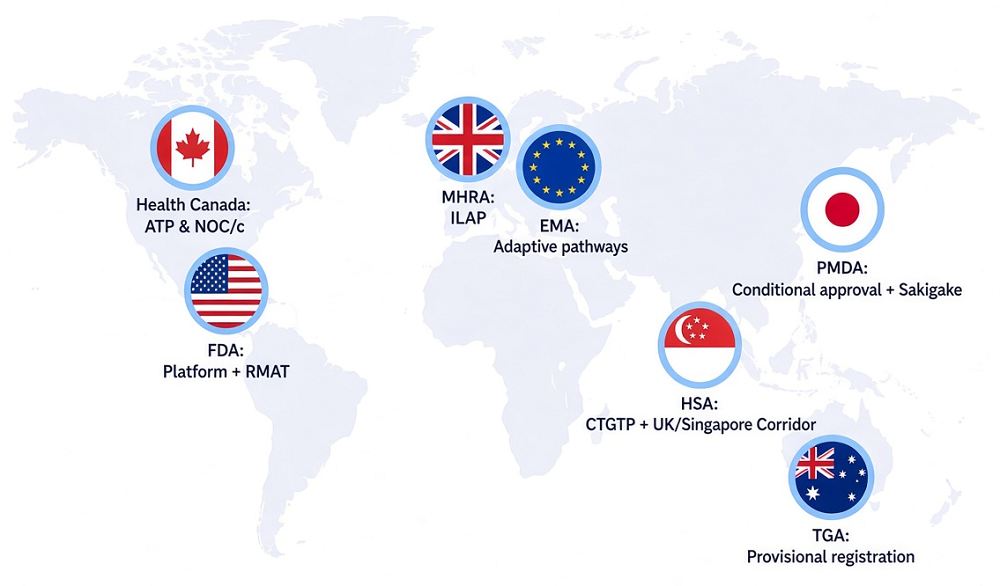
United States: FDA platform technology designations, Regenerative Medicine Advanced Therapy (RMAT) designation, and potential PDUFA-related or legislative updates that could support multi-disease/hallmark development programs. Specifically, our sister organization, the Alliance for Longevity Initiatives (A4LI), has proposed a policy solution for inclusion in the upcoming PDUFA VIII Reauthorization package. Its proposed Multi-Disease Therapeutic Designation (MDTD) framework provides the explicit statutory vehicle needed to execute cross-divisional FDA review teams, operationalize Master Protocols for multi-morbidity, and integrate emerging measurement frameworks like ARPA-H Intrinsic Capacity scores.
United Kingdom: MHRA Innovative Licensing and Access Pathway (ILAP) and related programs designed to accelerate promising innovative medicines, including enhanced regulatory support and coordinated advice.
European Union: EMA adaptive pathways and evolving guidance on advanced therapies, including opportunities for iterative development, real-world evidence, and more flexible evidence packages for complex products.
Japan: Conditional and time-limited approval pathway for regenerative medicine products under the PMD Act, allowing earlier market access when safety is established and efficacy can be reasonably predicted, combined with the Sakigake (pathfinder/pioneer) designation for innovative products.
Canada: Advanced Therapeutic Products (ATP) framework: flexible, risk-based, tailored requirements for complex products that do not fit standard drug/device rules, alongside the Notice of Compliance with Conditions (NOC/c) pathway.
Australia: Provisional registration pathway (and provisional determination for biologicals): time-limited approval based on preliminary clinical data for serious conditions, with confirmatory data required later.
Singapore: Dedicated Cell, Tissue and Gene Therapy Products (CTGTP) regulations with risk stratification (Class 1/2), conditional registration options, and the newer UK–Singapore Regulatory Innovation Corridor for coordinated advice and faster pathways.
Japan currently offers the most relevant existing model
Japan’s conditional and time-limited approval pathway for regenerative medicine products (under the PMD Act) is arguably the most relevant existing model for biomedical repair technologies. It allows earlier marketing authorization when safety is established and efficacy can be reasonably predicted. Additionally, it has a clear time limit (up to 7 years) and mandatory post-release data collection.
The Sakigake designation provides additional acceleration for innovative products. In 2026, Japan granted the first conditional approvals for iPS cell-based products (for severe heart failure and Parkinson’s). This is closer to the practical needs of partial reprogramming and related biomedical repair approaches than many Western regulatory pathways.
This demonstrates that earlier, conditional access with robust post-market obligations is already operationally feasible for complex regenerative products. Japan is essentially offering a blueprint for biomedical repair technology approval frameworks.
Regulatory convergence vs. fragmentation
The existence of these varied but complementary frameworks creates a real opportunity for regulatory convergence. If international agencies coordinate, this could transform the current patchwork of national rules into a unified global pipeline.
Achieving this requires standardisation across four key areas:
- Platform data packages: Allowing core safety, toxicity, and trial data validated by one agency to be mutually recognized by others could reduce duplication and speed development across borders.
- Manufacturing standards: Agreeing upon global standards for manufacturing biological therapies.
- Harmonised biomarkers: Establishing a shared, cross-border lexicon for validating multi-omic clocks, tissue imaging, and functional surrogate endpoints.
- Joint scientific advice: Expanding frameworks like the UK–Singapore Regulatory Innovation Corridor to allow developers to brief multiple agencies simultaneously, cutting out years of redundant consultation.
By aligning these mechanisms, a clinical win in Tokyo or London could rapidly provide a regulatory springboard in Washington, significantly reducing development costs and time to market.
However, there is a potential risk of fragmentation. If major jurisdictions are unable to come to regulatory agreements, the field will splinter. This fragmentation would act like a stealth tax on innovation, threatening progress in several predictable ways:
- Jurisdictional arbitrage: If Japan’s conditional PMD Act approval remains isolated, or if the FDA refuses to accept surrogate endpoints validated in Europe, biotech capital will flee to the path of least resistance.
- Inconsistent standards: If major jurisdictions move at significantly different speeds or apply inconsistent evidentiary standards, developers will face a patchwork of requirements that slows rather than accelerates progress.
- Trial duplication: Developers will be forced to run separate clinical trials to satisfy the varied procedural quirks of individual nations, inflating the price of final therapies and wasting precious time.
- Unequal access: Instead of global democratization, we risk creating a world where geographic lotteries dictate access to biomedical repair. In such a world, a patient in one nation could legally access tissue-rejuvenating therapies that remain tied up in administrative gridlock in another.
A coordinated path forward
The bottlenecks standing in the way are no longer challenges of pure biology; they are artifacts of legacy administrative architecture. The inclusion of aging and longevity in the FDA’s 2027 Focus Areas of Regulatory Science (FARS) document proves that institutional willingness exists.
However, goodwill within individual national agencies is not enough, and coordinated dialogue between international agencies is therefore critical. In particular, clear agreement as to what constitutes sufficient evidence for multiple-disease or hallmark-based therapies and platforms will be essential if the field is to make scientific advances an accessible reality for patients.
Without proactive international dialogue to bridge these frameworks, the organ-specific breakthroughs of the 2030s will likely remain trapped in regulatory silos. True modernization requires regulators to actively collaborate before the flood of multiple-disease or hallmark-based therapies arrives in the near future.
What success looks like in practice
If the following reforms are adopted, they would lead to a system capable of evaluating multiple-disease or hallmark-based interventions with the same efficiency it currently applies to single-disease drugs.
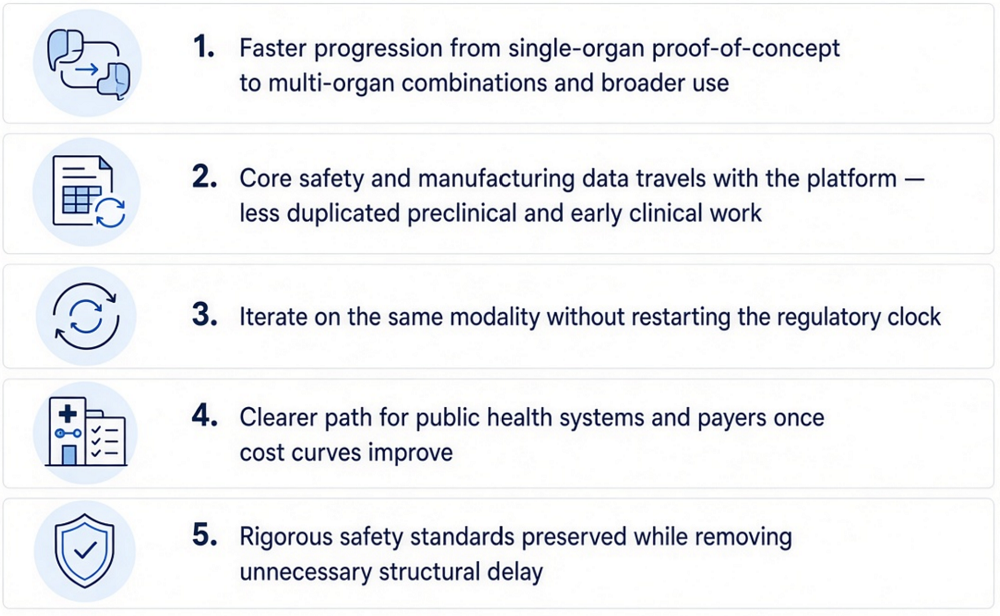
Therapies could move faster from single-organ, proof-of-concept studies into multi-organ combinations and eventually into broader label or reimbursed use. Under the current system, each new organ or indication usually needs a largely separate clinical package. This is the case even when the underlying modality, manufacturing process, and core safety data remain the same.
A platform-based regulatory pathway for multiple-disease or hallmark-based therapies would allow developers to expand from initial organ-specific evidence rather than starting from scratch. Because core safety, manufacturing, and quality data would travel with the platform rather than having to be repeated for every new indication, much of the duplicated preclinical and early clinical work that currently slows expansion would be avoided.
Developers would also be able to iterate on the same base modality. This would allow developers to adjust delivery systems, refine therapeutic factors, or improve manufacturing without repeating the regulatory process each time. Under the current system, even minor refinements are often treated as entirely new products, triggering fresh safety packages and endpoint negotiations.
An iterative pathway would allow successive improvements to be evaluated against the existing evidence for that platform, enabling faster optimization but ensuring changes do not introduce new risks.
For healthcare systems, the route from approval to actual patient access would become clearer and more practical once manufacturing costs fall. Regulators and payers would have better evidence on which to evaluate these new technologies, rather than a fragmented collection of narrow, disease-specific packages.
Throughout this process, rigorous safety standards would also remain in place. The pivotal change would be the removal of the structural delay that no longer serves a protective purpose. The result would be a reduction in long-term care burden and a gain of healthy, productive, and independent years. This is the very core of the Longevity Dividend.
In short, success would mean a regulatory system that finally matches the pioneering biology it is asked to govern. It would allow multiple-disease or hallmark-based therapies to advance in a staged, coherent way while fully preserving strict safety standards.
Policy recommendations and calls to action
These reforms will only matter if the right institutions and decision makers implement them. These recommendations are therefore directed at legislators, regulators, funders, health systems, and international bodies best placed to reduce that friction.
Legislators
Existing laws and guidance were mainly designed for single-disease therapies, which is a barrier. Adopting clear and enabling language that supports platform-driven and multi-disease/hallmark-based development routes will help to address this. Revising current statutes and guidance to recognize that one modality can target several related disorders through common upstream biology would streamline development without compromising safety standards.
Regulators
For regulators, issuing clear guidance in three operational areas is key: Acceptance and qualification of multiomic, functional, and composite endpoints that better capture the effects of interventions acting on aging biology; rules for cross-referencing core safety, manufacturing, and quality data across indications within the same platform; and the use of adaptive and iterative designs so that successive improvements to an established modality do not mean starting over.
The recent inclusion of aging and longevity in the FDA’s Focus Areas of Regulatory Science (FARS) document is a constructive signal. However, translating that priority into concrete guidance is the crucial next step.
Funders and healthcare systems
Support the pre-competitive work required to validate new endpoints and build a real-world evidence infrastructure that is capable of tracking multiple-system outcomes over time. Without reliable measurement tools and longitudinal data systems, even well-designed regulatory pathways will struggle to generate the evidence needed for broader adoption and reimbursement.
International bodies
Promote structured dialogue on convergence of approaches to platform technologies, adaptive pathways, and multi-domain endpoints. Differing national requirements increase development costs, hinder collaboration, and delay access. Greater alignment and building on existing initiatives such as ILAP, RMAT, conditional approval mechanisms, and reciprocal recognition arrangements would accelerate responsible progress while preserving rigorous oversight.
These steps are modest in regulatory terms yet could have a potentially high impact in their practical effect. They do not require new science, but they do require the frameworks that evaluate science to catch up with the biology now entering the clinic.
Aligning regulation with the biology of aging
Scientific progress in biomedical repair is accelerating. Partial reprogramming, targeted clearance of extracellular damage, senolytic and senomorphic approaches, and related multi-hallmark strategies are moving from laboratory concepts into clinical development. Our understanding of aging biology and the technology to address it are no longer the primary bottlenecks.
The binding constraint is now regulatory and institutional. Frameworks designed for single disease indication products still force unnecessary duplication of effort, slow iteration, and delay the translation of organ-level advances into broader patient benefit. This is not a failure of scientific ambition; it is a mismatch between the tools we now have and the rules used to evaluate them.
Modernizing these rules is the greatest leverage available to us. Platform designations, multiple-disease or hallmark-based regulatory pathways, better validated surrogate and functional endpoints, adaptive designs, and staged expansion supported by real-world evidence would allow the field to move at the pace that the science already supports. Done properly, this preserves rigorous safety standards while removing structural delay that no longer serves a protective purpose.
The result would be faster, more coherent progress from early clinical validation to a scalable, economically viable population benefit. This is the practical foundation for a serious attempt to partake of the Longevity Dividend. The science is ready, and now the remaining task is for the regulatory system to catch up.
Literature
[1] Olshansky, S. J., Perry, D., Miller, R. A., & Butler, R. N. (2007). Pursuing the longevity dividend: scientific goals for an aging world. Annals of the New York Academy of Sciences, 1114(1), 11–13.
[2] Scott, A. (2025). “The Longevity Dividend”. IMF Finance & Development, June 2025.
[3] 2026 World Economic Forum / Marsh report “The Longevity Dividend: The Business Case for Linking Health and Wealth”.
[4] Lifespan Research Institute (2026). “FDA Leaders Name Longevity a Priority at ARDD”.
[5] ARPA-H (2026). “Research teams to add more healthy years to Americans’ lives as they age”.