

A team of researchers has developed Pasta, a transcriptomic clock that accurately predicts the age-related effects of various compounds and gene expressions.
Epigenetics versus transcriptomics

The authors begin by discussing the strengths and limitations of conventional methylation-based epigenetic clocks. They note that while such clocks have good prediction abilities as a whole, they are technically demanding [1], and the CpG sites that they use are not always linked to gene expression in an interpretable way [2].
Instead, they favor transcriptomic clocks, which measure expressed genes (the transcriptome) rather than epigenetic methylation. They hold that such clocks are more understandably responsive to perturbations [3], and autonomous AI has already been employed to use transcriptomic data to discover potential interventions against aging [4].
We have recently published an article on how epigenetic clocks have been found to be sensitive to short-term influences, and transcriptomic clocks may be even more sensitive than that. Such clocks also have significant issues with availability; the authors note transcriptomic clocks that lack available software and cannot be simply used out of the box in the same way that many epigenetic clocks can.
A broadly effective model
To fill that gap, these researchers have developed a clock using three separate datasets. After comparing the performance of multiple potential models by leaving out one of the datasets, they concluded that a model built using a 40-year age shift was the most accurate in assessing biological aging when applied to RNA sequencing data. This model became Predicting Age-Shift from Transcriptomic Analysis (Pasta), a clock that they describe as “ready-to-use”, is applicable to multiple tissues, and can be used on multiple experimental platforms.
In the majority of the datasets that these researchers tested against, they found that Pasta outperformed multiple variants of two existing transcriptomic clocks, MultiTIMER [5] and tAge [6]. Even though it was built using human data, the researchers found that it was also fairly accurate in some mouse tissues as well. Many of the key gene expressions were found to be related to the tumor suppressor p53, which is related to genetic damage [7].
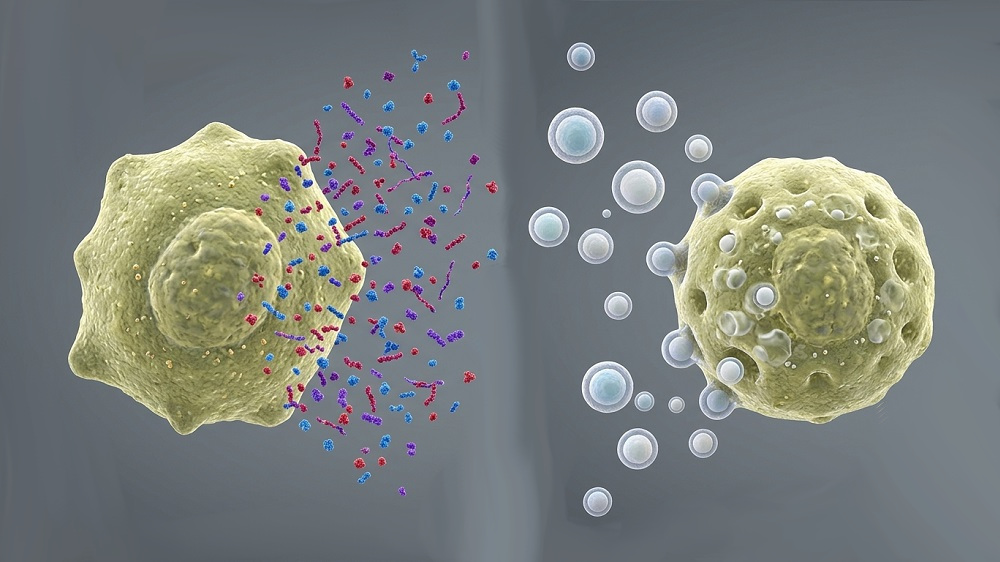
While its performance was not perfect across all datasets, in 19 out of 30 of them, Pasta was able to exactly determine which cells were senescent and which were proliferating. In four out of five other datasets, it was able to determine which cells were senescent and which were merely quiescent. It was also very good at determining which particular compounds induce senescence, and it was able to determine which cells had been induced into pluripotency and which had not.
“Together, these results show that Pasta reliably tracks not only tissue age but also cellular age across a continuum spanning pluripotent, differentiated, and senescent states.”
The researchers then applied Pasta to various types of cancerous tumors. Here, the results were inconsistent but potentially useful: in some cancers, an increased age score was associated with a poorer prognosis; in others, the more dangerous tumors appeared to be younger; in the remainder, there was no significant relationship.

Discovering what works
Using Pasta to determine which compounds support senescence and which support rejuvenation yielded some interesting results. 271 compounds were labeled as senescence-inducing, and many of them are well-known to do so, such as doxorubicin; other members of this category included chemotherapy drugs, which often induce senescence in cancer cells.
63 other compounds were listed as rejuvenating, and they included inducers of pluripotency. Interestingly, 27% of the rejuvenating group was found to promote both senescence and rejuvenation; these were histone deacetylase inhibitors, which are documented as doing both [8, 9]. Pasta’s analysis was found to yield more useful results in detecting both rejuvenating and senescence-inducing compounds than a conventional regression model.
An analysis of cancer cells supported Pasta’s effectiveness in judging which compounds are and are not likely to yield results. Pasta correctly predicted that pralatrexate would induce senescence in a line of melanoma cells and fail to induce senescence in a line of breast cancer cells. Similarly, it also correctly predicted that piperlongumine would increase pluripotency-related genes in a line of prostate cancer cells and fail to do so in another line of breast cancer cells.
Accurate but not perfect
Further work found that Pasta accurately discovered genetic perturbations that affect aging. Many of the identified genes are known inducers of senescence, such as when a cell reacts to potential cancer (oncogene-induced senescence). Genes related to stemness were, unsurprisingly, found to be rejuvenative in nature. The researchers also identified the propensity for cells to be involved in aging or rejuvenation; cells with the propensity for rejuvenation were enriched in certain proteins related to mRNA translation, while cells with the propensity for aging had certain enrichments relating to mitochondrial activity. Proteins that were negatively related to these propensities were discovered as well.
Pasta’s creators noted some of its limitations. One of its clearest downsides is that while this clock has been developed with data using a broad variety of tissues, it may not be applicable to every tissue and more specific clocks may be more appropriate in some cases. Similarly, although it was found to be somewhat predictive with mouse data, mouse-specific clocks may be more useful there as well. Pasta was also designed solely to predict aging; unlike mortality-related clocks, such as GrimAge, it was not designed to predict health.
Overall, these researchers describe their clock as being “biologically grounded and versatile”, and they claim that it can be used for translational research in cancer, neurodegeneration, regenerative medicine, and interventions against aging.
Literature
[1] Teschendorff, A. E., & Horvath, S. (2025). Epigenetic ageing clocks: statistical methods and emerging computational challenges. Nature Reviews Genetics, 26(5), 350-368.
[2] Horvath, S., & Raj, K. (2018). DNA methylation-based biomarkers and the epigenetic clock theory of ageing. Nature reviews genetics, 19(6), 371-384.
[3] Subramanian, A., Narayan, R., Corsello, S. M., Peck, D. D., Natoli, T. E., Lu, X., … & Golub, T. R. (2017). A next generation connectivity map: L1000 platform and the first 1,000,000 profiles. Cell, 171(6), 1437-1452.
[4] Ying, K., Tyshkovskiy, A., Moldakozhayev, A., Wang, H., De Magalhães, C. G., Iqbal, S., … & Gladyshev, V. N. (2025). Autonomous AI agents discover aging interventions from millions of molecular profiles. bioRxiv, 2023-02.
[5] Jung, S., Arcos Hodar, J., & Del Sol, A. (2023). Measuring biological age using a functionally interpretable multi‐tissue RNA clock. Aging cell, 22(5), e13799.
[6] Tyshkovskiy, A., Kholdina, D., Davitadze, M., Molière, A., Moldakozhayev, A., Tongu, Y., … & Gladyshev, V. N. (2026). Universal transcriptomic hallmarks of mammalian ageing and mortality. Nature, 1-16.
[7] Stewart-Ornstein, J., Iwamoto, Y., Miller, M. A., Prytyskach, M. A., Ferretti, S., Holzer, P., … & Lahav, G. (2021). p53 dynamics vary between tissues and are linked with radiation sensitivity. Nature communications, 12(1), 898.
[8] Huangfu, D., Maehr, R., Guo, W., Eijkelenboom, A., Snitow, M., Chen, A. E., & Melton, D. A. (2008). Induction of pluripotent stem cells by defined factors is greatly improved by small-molecule compounds. Nature biotechnology, 26(7), 795-797.
[9] Di Bernardo, G., Squillaro, T., Dell’Aversana, C., Miceli, M., Cipollaro, M., Cascino, A., … & Galderisi, U. (2009). Histone deacetylase inhibitors promote apoptosis and senescence in human mesenchymal stem cells. Stem cells and development, 18(4), 573-582.