Lung Fibrosis Drug Lowers Biological Age Estimates
- A split-dose regimen appears to be the most potent.


- Patients taking rentosertib have more youthful blood proteomics compared to a control group.
- These changes were not directly correlated with lung function.
Six different aging clocks detected younger blood protein profiles in patients taking the experimental lung-fibrosis drug rentosertib. This suggests possible anti-aging effects, but separating those from the narrower benefits of treating fibrosis remains a challenge [1].
The AI-developed drug
Many drugs developed for particular diseases act on aging-related biological processes. That creates an opportunity: a clinical trial could investigate both whether a drug treats its intended disease and whether it has broader effects on aging. Ordinary clinical measurements cannot establish those broader effects, but we now have biological age clocks that closely track chronological age or predict mortality risk [2]. These clocks have been used in numerous trials as proxies to estimate the intervention’s effect on aging.
In a new study published in Nature Biotechnology, the researchers analyzed blood samples from a Phase 2a trial whose results were published last year [3]. That 12-week, randomized, double-blind, placebo-controlled trial tested rentosertib, an inhibitor of the kinase TNIK, which has been implicated in several aging-related processes [4].
Rentosertib was developed by the longevity biotech company Insilico, using a proprietary AI-based drug discovery platform, to treat idiopathic pulmonary fibrosis (IPF), a progressive disease in which excessive scar tissue compromises lung function. IPF is age-related, with a mean age of onset around 65 years, and aging processes such as cellular senescence and inflammation are heavily involved.
The new analysis included 42 of the trial’s 71 participants. Alongside placebo, the trial tested three regimens: 30 milligrams once daily, 30 milligrams twice daily, and 60 milligrams once daily.
Lower biological age readings
The researchers used six different proteomic clocks, which analyze protein levels in blood. The proteomic clocks’ appeal is partly interpretability: researchers can identify which proteins affect the readings and connect them to known biological processes more directly than is often possible with methylation-based clocks. The clocks were developed by different teams, using data from UK Biobank, including one clock developed by Insilico itself. Four of the clocks were trained on chronological age, and two on mortality.
All six clocks detected lower predicted biological ages in patients taking rentosertib, although not at every dose or visit. After four weeks, the four chronological age-based clocks rated patients taking 60 milligrams once daily (the single-dose regimen) roughly three years younger, on average, than at the start of treatment. These changes were statistically significant compared with placebo. However, the two clocks trained to predict mortality risk did not show a significant change at that dose at week four.
Patients taking 30 milligrams twice daily (the split-dose regimen) showed the most consistent decreases across both types of clocks. The largest reductions in predicted biological age appeared by week four, with little additional change over the remaining eight weeks.
These results essentially mean that patients’ blood protein profiles became more similar to those associated with younger people. They do not, however, establish that the treated patients regained years of youth or would live longer.
Is there a broad anti-aging effect?
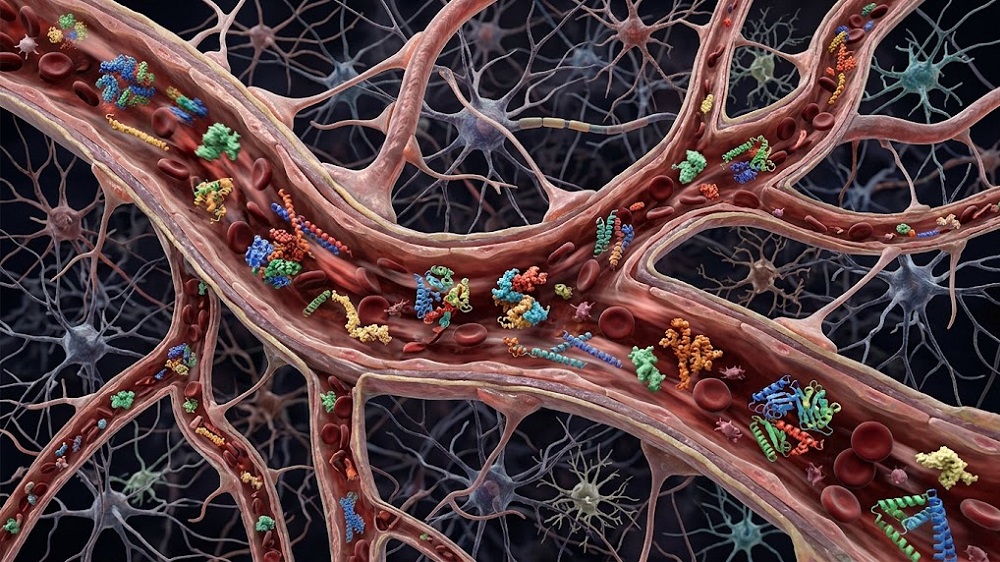
Looking beyond the clock readings, the researchers found that treatment changed the levels of 326 blood proteins, including proteins involved in fibrosis, metabolism, and cellular stress responses. Most changes in the two higher-dose groups persisted throughout the trial or appeared later in treatment, suggesting that the drug continued affecting patients’ biology even after predicted ages plateaued.
The researchers then examined which proteins contributed most to the younger age estimates. A fibrosis-associated protein, LTBP2, stood out as a major contributor. It was used by all six clocks, which raises the question of whether their agreement mainly reflects the drug’s effect on fibrosis, rather than broader slowing of aging.
To explore whether the lower age estimates reflected more than improvement in fibrosis, the researchers compared changes in predicted age with changes in lung function. The two did not closely track each other. This suggests that improved lung function alone might not explain the clock changes, although lung function does not capture every aspect of IPF.
The team then compared the treatment-induced protein changes with differences between younger and older participants in UK Biobank. With the split dose, proteins associated with aging tended to move in the opposite direction: those found at higher levels in older people tended to decrease, and vice versa. This pattern was not statistically significant with the single daily dose.
Finally, the researchers examined proteins associated with cellular senescence. These proteins tended to increase in the placebo group but decrease with treatment, suggesting that rentosertib might reduce senescence-associated activity, although the researchers did not directly measure senescent cells in tissues.
These findings strengthen the case for investigating rentosertib as a potential geroprotector. However, because fibrosis, metabolism, and senescence are closely connected, they still cannot definitively establish whether the drug affects aging beyond its benefits for IPF.
“This study illustrates how biomarkers of aging can be incorporated into conventional clinical trials,” Vadim Gladyshev, a professor of medicine at Harvard Medical School and a coauthor of the study, told Lifespan News. “If validated more broadly, such approaches could allow us to learn not only whether a treatment affects a particular disease, but also whether it influences some aspects of aging biology.”
Literature
[1] Zhavoronkov, A., Galkin, F., Chen, S., Ren, F., Aliper, A., Durymanov, M., … & Gladyshev, V. N. (2026). Integration of proteomic aging clocks in a phase 2a clinical trial supports simultaneous geroprotective assessment. Nature Biotechnology, 1-13.
[2] Argentieri, M. A., Xiao, S., Bennett, D., Winchester, L., Nevado-Holgado, A. J., Ghose, U., … & van Duijn, C. M. (2024). Proteomic aging clock predicts mortality and risk of common age-related diseases in diverse populations. Nature medicine, 30(9), 2450-2460.
[3] Xu, Z., Ren, F., Wang, P., Cao, J., Tan, C., Ma, D., … & Zhavoronkov, A. (2025). A generative AI-discovered TNIK inhibitor for idiopathic pulmonary fibrosis: a randomized phase 2a trial. Nature medicine, 31(8), 2602-2610.
[4] Ewald, C. Y., Pulous, F. E., Lok, S. W. Y., Pun, F. W., Aliper, A., Ren, F., & Zhavoronkov, A. (2024). TNIK’s emerging role in cancer, metabolism, and age-related diseases. Trends in pharmacological sciences, 45(6), 478-489.
About the author

Arkadi Mazin