The Blog

Building a Future Free of Age-Related Disease

SynBioBeta

SynBioBeta Brings Together Leaders for Annual Conference

SynBioBeta, the leading community of entrepreneurs, investors, innovators, and biological engineers, today announced details for its flagship SynBioBeta 2024 conference. The premier annual event for the synthetic biology industry will be held May 6-9, 2024, in San Jose, gathering an estimated 2,000 attendees from around the world.

“Synthetic biology is rapidly transforming nearly every sector of our economy and society in profound ways,” said John Cumbers, founder of SynBioBeta. “Our annual conference brings together the world’s preeminent minds and companies driving innovation in this space to tackle humanity’s greatest challenges in health, sustainability, materials, and our fundamental understanding of life itself.”

SynBioBeta 2024 will feature over 180 content sessions across 18 tracks focused on the most critical frontiers in synthetic biology, including engineered human therapies, longevity, psychedelics, AI and digital biology, climate solutions, food and agriculture, chemicals and materials, biosecurity and more. A renowned line-up of over 200 speakers will take the stage, headlined by keynotes from Stephen Wolfram of Wolfram Research, Stephen Quake of the Chan Zuckerberg Initiative, investor Vinod Khosla of Khosla Ventures, genomics pioneer Craig Venter, mushroom expert Paul Stamets, biotech entrepreneur Martine Rothblatt, and Valerie Sarisky-Reed from the US Government’s Department of Energy.

“Taking the SynBioBeta stage is an unmatched opportunity to share our work with the people who truly comprehend its enormity,” said Jodi Barrientos, Chief Executive Officer at Ribbon Biolabs.” The audience is highly engaged, fostering stimulating discussions that have the potential to influence various fields such as medicine, materials science, and climate solutions. It is the ultimate gathering for those at the forefront of the synthetic biology revolution.”

The global synthetic biology market was valued at $6.3 billion in 2021 and is projected to grow at a staggering CAGR of around 25% to reach $38.7 billion by 2030 (Markets&Markets).

Key drivers include increasing demand for synthetic biology products in healthcare, industrial applications, food and agriculture, and rising investments.

In addition to the extensive conference programming, SynBioBeta 2024 will host over 200 exhibitors and sponsors showcasing the latest synthetic biology tools, technologies and applications. Exhibitors range from industry leaders like Ginkgo Bioworks and DNA Script to cutting-edge startups such as Asimov, Molecular Assemblies, and Ansa Biotechnologies.

“SynBioBeta is a mind-expanding experience that renews your sense of awe about the transformative potential of synthetic biology,” said Richard Kitney, Professor of Biomedical Systems Engineering and Co-Director of the UK’s National Industrial Translation Centre for Synthetic Biology at Imperial College London. “The cross-pollination of ideas, the windows into cutting-edge research, the ability to connect with the pioneers reimagining what’s possible with biology – it all conveys a future vision that is incredibly inspiring. You leave reinvigorated about this field’s power to solve humanity’s greatest challenges.”

A major highlight will be the SynBioBeta Global Synthetic Biology Awards ceremony recognizing standout achievement and impact across categories like Lifetime Achievement, Pioneer Award, Industry Leader Award, and Rising Star Award.

To register or apply to exhibit, speak, or sponsor at SynBioBeta 2024, please visit SynBioBeta 2024.

Media Relations:

Katie Orrell, Director of Marketing

katie.orrell@synbiobeta.com

About SynBioBeta

SynBioBeta is the premier innovation network for biological engineers, investors, innovators, and entrepreneurs who share a passion for using biology to build a better, more sustainable world. We provide our community members with personal and professional development support, as well as valuable opportunities for partnership, collaboration, networking, and education. We host The Global Synthetic Biology Conference each year, which highlights the innovative developments in synthetic biology that are transforming how we fuel, heal, and feed the world. Our Weekly Newsletter provides opportunities to highlight our partners research, thoughts, and discoveries while telling the story of the bioeconomy.

We would like to ask you a small favor. We are a non-profit foundation, and unlike some other organizations, we have no shareholders and no products to sell you. All our news and educational content is free for everyone to read, but it does mean that we rely on the help of people like you. Every contribution, no matter if it’s big or small, supports independent journalism and sustains our future.
Gerosense logo

Gero Announces Activity-Based Longevity Studies Initiative

The longevity company Gero has presented its new nonprofit initiative: a series of studies using the company’s aging clock, which is based on stepping patterns obtained from phones and wearables.

One small step for man, one giant leap for aging research?

Gero, an AI longevity company, has announced a new non-profit initiative named GeroSense Studies. GeroSense is its division dedicated to developing digital biomarkers of aging using data from smartphones and wearable devices.

In a recent industry survey conducted by the Longevity Biotech Fellowship, dozens of experts named the lack of validated biomarkers of aging as the number one bottleneck in the field. While other researchers try to deduce biological age and the rate of aging from epigenetic alterations and blood metabolome, GeroSense chose an uncommon approach. Its model uses only step patterns and, optionally, heart rate. Trained on data from UK Biobank and the NHANES study, it is roughly as precise – at least, according to Gero – as the well-regarded second-generation epigenetic clock PhenoAge.

The model’s predictive power surprised even its creators. According to Gero CEO Peter Fedichev, it goes beyond a simple linear relationship between the average daily number of steps and aging. For instance, the model correctly adjusts the results by occupation: that is, it knows that people who have to do a lot of walking for work, such as waiters or construction workers, tend to age faster on average than middle-class managers who might clock fewer steps but, overall, lead healthier lifestyles.

In an X thread announcing GeroSense Studies, Aleksandr Sviridov, CTO of Gero, noted: “You can spot the difference between 20, 50, and 80-year-olds just by looking at how they walk because how we move encapsulates almost every aspect of our health.” Fedichev likens this to studying exploratory behavior in mice, which can tell a lot about their health and aging. You can’t put humans in cages to constantly monitor their activity, but step patterns might be a good enough proxy.

The importance of human data

GeroSense Studies has an app that anyone with an iPhone can download and start obsessively watching their daily fluctuations in biological age. The Android version is currently in the works, but you can join the waiting list.

GeroSense

A screenshot from the GeroSense app

The new initiative means that GeroSense will start using this platform for studies on how various factors and interventions move the hands of the step-based aging clock. The first proof-of-concept study will involve a lot of self-reporting: a monthly lifestyle survey in which participants will be asked about their dietary habits as well as about the supplements and medications they are taking. Additionally, they will complete two bi-weekly clinically verified assessments for anxiety and depression, both suspected to be important factors in aging.

“Hormesis and stress mimetics are tested in mice,” Peter said, “but mental health and social status is something you can’t measure in animal models, so their effect on aging is understudied.”

According to Aleksandr, with their pilot study, they hope to validate their model by detecting well-known signals, such as from smoking, and, ideally, identify some yet-unreported large-size effects. The data will be anonymized and made publicly available, although you can opt-out if you are not interested in advancing the science of longevity (please don’t). According to Gero, the new initiative is completely non-profit and represents the company’s attempt to benefit the entire field.

“We are not content with the situation where we haven’t found anything that prolongs lifespan more robustly than rapamycin,” Aleksandr explained. Peter, who has floated his own theory of aging (you can read all about it in our interview with him), maintains that mice age in a fundamentally different way than humans, which is why data from mouse studies isn’t very helpful in understanding human aging and how various interventions affect it.

Participation is crucial

Of course, studies like the ones that GeroSense plans to run have numerous limitations. For instance, there is no randomization, and self-reporting is notoriously unreliable. However, large sample sizes can mitigate some of the deficiencies, which is why GeroSense hopes to recruit many participants. With wearables still not widely popular, GeroSense’ obvious advantage is that it can gather basic data on steps from smartphones as long as participants remember to carry their phones.

Aleksandr is aware of those limitations but says that it’s quantity versus quality; GeroSense’s approach will potentially allow the testing of a variety of understudied factors and interventions. This is reminiscent of another initiative we recently covered: Ora Biomedical’s Million Molecule Challenge. While GeroSense insists on the importance of human data, MMC is about high-throughput testing in worms.

However, the unifying idea is that we must cast a wider net if we want to “unstick” the longevity field. In fact, Aleksandr says, GeroSense’s initiative was somewhat inspired by the self-reporting-based study of rapamycin co-authored by Ora’s co-founder Matt Kaeberlein. GeroSense plans to reproduce this study in the future.

GeroSense’s approach can prove especially valuable for investigating the anti-aging effects of supplements that do not get tested in high-quality studies a lot. Other targets that the company’s currently eyeing include fasting, antidepressants, microdosed psychedelics, and GLP-1 agonists such as Ozempic. However, it all hinges on participation.

We would like to ask you a small favor. We are a non-profit foundation, and unlike some other organizations, we have no shareholders and no products to sell you. All our news and educational content is free for everyone to read, but it does mean that we rely on the help of people like you. Every contribution, no matter if it’s big or small, supports independent journalism and sustains our future.
Obesity and inflammation

An Inflammatory Molecule May Also Encourage Obesity

A team of researchers has waded into a controversial and contradictory area of study, publishing information on the link between obesity and an inflammatory molecule that increases with aging.

A context-dependent molecule

The authors point out previous research that singled out the interleukin IL-6, a key immune signaling molecule, as a major contributor to inflammaging [1]. However, its role in biology is complicated, and much of the relevant research is contradictory: it has been reported to have both pro- and anti-inflammatory functions, depending on context [2], and it plays multiple roles in metabolism [3].

Adding to this confusion, some research has found that it enhances insulin secretion in muscle tisssue [4], while other research has found that it increases insulin resistance in the liver [5]. Most importantly for this study, previous work has found that it stimulates fat burning [6]. These researchers, however, have come to the opposite conclusion: that IL-6 inhibits fat burning and promotes obesity instead.

Beginning with humans, moving on to mice

This work began by studying 77 hospitalized patients who had type 2 diabetes and were at least 65 years old. The third of this group that had the most IL-6 also had significantly more fat on their organs than the other two thirds. This was found to be true even when adjusting for many known confounders, such as age, disease length, other metabolic and diabetes biomarkers, and vascular issues.

However, those human results are only a correlation. In an attempt to prove causation, they moved to an animal model. Older wild-type mice naturally express more IL-6 than younger wild-type mice, but compared to a genetically modified model that does not express IL-6 at all, they found no significant differences in lifespan, liver function, insulin use, or glucose.

With aging, older wild-type mice also naturally gain more weight, but this weight gain was significantly blunted in mice that did not express IL-6. These modified mice also had somewhat less skin fat and far less fat around their organs, along with less cholesterol and fewer triglycerides. Wild-type mice expend less energy with age; this change, too, was significantly blunted in the IL-6-deficient mice. Gene expression analysis found that a deficiency in IL-6 meant that pathways related to fat burning were upregulated compared to the wild-type group.

A closer look discovered that, in older wild-type mice, fat cells near organs can become significantly larger than normal. This was found to be the reason why IL-6 deficiency resulted in so much less organ fat: the IL-6-deficient mice accumulated far fewer of these large fat cells.

Smaller fat cells

Age-related effects in mice, but questionable for people

Most importantly, all of these differences were only found between the aged mice in each group. There were no significant differences between young mice in either group. However, as IL-6 is a core signaling molecule with well-documented effects, attempting to completely suppress IL-6 in people would be likely to do more harm than good.

These researchers suggest that the effects of IL-6 are largely cell-dependent and that these particular detrimental effects are specific to fat tissue. Biology is not fully mapped, but in this case, it is likely that a far more complete map of the true cause-and-effect biochemical relationship between interleukins and fat tissue would need to be created before this line of research could result in drug development.

We would like to ask you a small favor. We are a non-profit foundation, and unlike some other organizations, we have no shareholders and no products to sell you. All our news and educational content is free for everyone to read, but it does mean that we rely on the help of people like you. Every contribution, no matter if it’s big or small, supports independent journalism and sustains our future.

Literature

[1] Gabay, C. (2006). Interleukin-6 and chronic inflammation. Arthritis research & therapy, 8, 1-6.

[2] Scheller, J., Chalaris, A., Schmidt-Arras, D., & Rose-John, S. (2011). The pro-and anti-inflammatory properties of the cytokine interleukin-6. Biochimica et Biophysica Acta (BBA)-Molecular Cell Research, 1813(5), 878-888.

[3] Giraldez, M. D., Carneros, D., Garbers, C., Rose-John, S., & Bustos, M. (2021). New insights into IL-6 family cytokines in metabolism, hepatology and gastroenterology. Nature reviews Gastroenterology & hepatology, 18(11), 787-803.

[4] Ellingsgaard, H., Hauselmann, I., Schuler, B., Habib, A. M., Baggio, L. L., Meier, D. T., … & Donath, M. Y. (2011). Interleukin-6 enhances insulin secretion by increasing glucagon-like peptide-1 secretion from L cells and alpha cells. Nature medicine, 17(11), 1481-1489.

[5] Sabio, G., Das, M., Mora, A., Zhang, Z., Jun, J. Y., Ko, H. J., … & Davis, R. J. (2008). A stress signaling pathway in adipose tissue regulates hepatic insulin resistance. Science, 322(5907), 1539-1543.

[6] Van Hall, G., Steensberg, A., Sacchetti, M., Fischer, C., Keller, C., Schjerling, P., … & Pedersen, B. K. (2003). Interleukin-6 stimulates lipolysis and fat oxidation in humans. The Journal of Clinical Endocrinology & Metabolism, 88(7), 3005-3010.

Parkinson's

Mitochondria Injection Alleviates Parkinson’s in Mice

Scientists have tested a novel method of providing cells with healthy mitochondria to fight Parkinson’s disease [1].

Replacing damaged mitochondria

Parkinson’s disease is the second-most prevalent neurodegenerative disorder, and it affects 10 million people worldwide. The disease is age-related, as its prevalence rises rapidly in people older than 65, although some people are diagnosed much earlier. Parkinson’s disease is characterized by both motor and mental problems: tremor, rigidity (stiffness), and slowness of movement along with memory and thinking deficits.

Parkinson’s disease is caused by the loss of dopamine-producing (dopaminergic) neurons in a brain region called the substantia nigra. Therapeutic options are limited, and some of the existing ones cause nasty side effects.

Since Parkinson’s disease involves the dying of cells, it’s unsurprising that one of its hallmarks is mitochondrial dysfunction. It has been observed in Parkinson’s disease models in which neuronal damage is generated by toxins or genetics [2].

While some therapeutics exist that target damaged mitochondria, another approach has recently arisen: “transplanting” healthy mitochondria into the affected cells. Scientists have demonstrated that if you isolate mitochondria from various types of cells and inject them into the body, they will preferentially travel to cells and tissues with damaged mitochondria [3].

One candidate drug, PN-101, which is based on mitochondria from human umbilical cord mesenchymal stem cells (UC-MSCs), is already in advanced clinical trials for a number of indications. In this new study, the researchers investigated its therapeutic potential against Parkinson’s disease.

Healthy mitochondria for healthy neurons

First, the researchers co-incubated mitochondria from UC-MSCs with dopaminergic neuron-like cells derived from a line of precursors. It is known that cells can uptake extracellular mitochondria, and sure enough, the researchers detected the transfer of fluorescence-labeled mitochondria into the cells.

Next, the researchers tried the same trick on cells treated by various neurotoxins. The damaged cells, which resembled PD-affected neurons, showed morphological abnormalities, such as neurite degeneration. Treating them with PN-101 significantly improved the cells’ viability.

Neuroinflammation is a hallmark of Parkinson’s disease and other neurodegenerative disorders. Activated microglia, the resident immune cells of the brain, secrete various pro-inflammatory molecules, driving the disease. The researchers tested their mitochondria cocktail on a line of murine microglia treated with lipopolysaccharide, a bacteria-associated molecule that triggers inflammation. PN-101 robustly reduced the mRNA expression and/or secretion of several inflammatory markers such as IL-6 and TNF-alpha.

Bringing down motor deficits and inflammation

When the researchers administered fluorescence-labeled mitochondria to mice intravenously, they found that the mitochondria were taken up mostly by astrocytes, the main type of “maintenance” cells in the brain, rather than by dopaminergic neurons or microglia. This was surprising and at odds with the in vitro results. Despite that, PN-101 was successful in alleviating motor deficits in mice, on par with the positive control, L-DOPA (levodopa), which can cause side effects such as involuntary movements [4].

Mitochondria vs L-DOPA

However, PN-101 was better than L-DOPA in reversing neuronal loss in a mouse toxin-induced model of Parkinson’s disease. It also alleviated microglia activation to the level of healthy controls.

Injections of mitochondria is an exciting approach that can be used far beyond Parkinson’s disease. Mitochondrial dysfunction is one of the central hallmarks of aging and affects numerous organs and tissues, probably exacerbating many other hallmarks. Replacing defective organelles might be a game changer in longevity therapies.

In this study, we demonstrated that mitochondrial transplantation ameliorated dopaminergic cell damage and neuroinflammation in vitro and in vivo. We demonstrated that exogenous fluorescence-labeled mitochondria were successfully transferred into dopaminergic neurons in vitro and astrocytes in vivo. Moreover, the results showed that isolated PN-101 mitochondria were successfully transferred into dopaminergic cells and reversed neurotoxins-induced cytotoxicity. In addition, PN-101 reduced mRNA expression and secretion of pro-inflammatory cytokines in microglial cells. Furthermore, intravenous PN-101 administration improved MPTP-induced motor declines observed in the mice model. Lastly, PN-101 treatment ameliorated dopaminergic neuronal loss and suppressed microglial activation in the brain. These results suggest that PN-101 can be a potential therapeutic treatment against PD by mediating both the neuroprotective and anti-inflammatory effects.

We would like to ask you a small favor. We are a non-profit foundation, and unlike some other organizations, we have no shareholders and no products to sell you. All our news and educational content is free for everyone to read, but it does mean that we rely on the help of people like you. Every contribution, no matter if it’s big or small, supports independent journalism and sustains our future.

Literature

[1] Eo, H., Yu, S. H., Choi, Y., Kim, Y., Kang, Y. C., Lee, H., Kim, J. H., Han, K., Lee, H. K., Chang, M. Y., Oh, M. S., & Kim, C. H. (2024). Mitochondrial transplantation exhibits neuroprotective effects and improves behavioral deficits in an animal model of Parkinson’s disease. Neurotherapeutics: the journal of the American Society for Experimental NeuroTherapeutics, e00355.

[2] Bose, A., & Beal, M. F. (2016). Mitochondrial dysfunction in Parkinson’s disease. Journal of neurochemistry, 139, 216-231.

[3] Lee, S. E., Kang, Y. C., Kim, Y., Kim, S., Yu, S. H., Park, J. H., … & Kim, C. H. (2022). Preferred migration of mitochondria toward cells and tissues with mitochondrial damage. International Journal of Molecular Sciences, 23(24), 15734.

[4] Alberico, S. L., Kim, Y. C., Lence, T., & Narayanan, N. S. (2017). Axial levodopa-induced dyskinesias and neuronal activity in the dorsal striatum. Neuroscience, 343, 240-249.

Epigenetic protection

Very Long-Lived People Have Protected Epigenetics

A team of researchers has reported in Aging Cell that longer-lived Chinese women have less epigenetic noise in crucial areas of the genome.

Order and disorder

We have previously reported that the accumulation of epigenetic noise appears to be the main cause of epigenetic alterations. Multiple studies have reported that this noise is correlated with age-related diseases, including Alzheimer’s [1] and vascular disorders [2].

Previous work has studied this entropy in centenarians, although these studies were across the whole genome [3]. The authors of this paper decided to look closer, concluding that these longer-lived people protect certain critical gene areas against noise accumulation.

Less noise, both overall and in crucial places

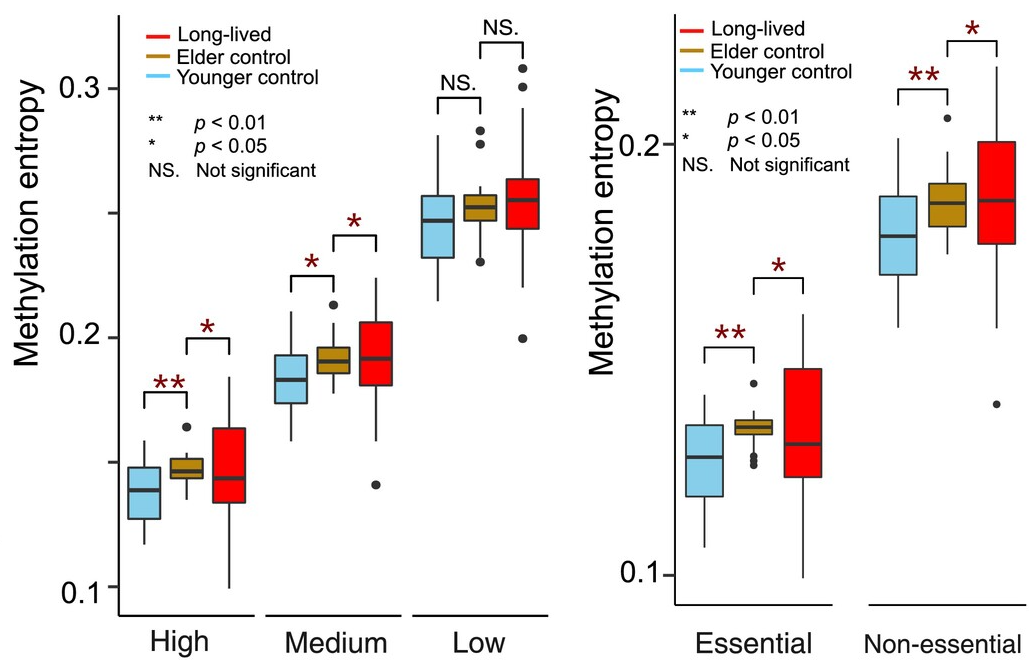
These researchers used samples from a younger group of 34 people aged 45-70, an elder group of 20 people at least 70 years old, and 79 long-lived individuals (LLIs) who were, at the least, nonagenerians: people at least 90 years old. While the overall methylation entropy increased with age in the first two groups, the long-lived individuals had entropy that was generally more like the younger group: people 40 years younger than themselves. The detailed results suggested that this was broadly true across the genes in general.

Among 1842 genes deemed to be essential, the results were even more striking. The LLIs actually had more methylation entropy in nonessential genes than the “elder” group but significantly less entropy among essential genes, although there was a substantial variance within the LLIs.

Methylation entropy

Further work noted that the better-protected genes are disproportionately gene promoters, which are primarily responsible for RNA transcription. In total, 32.1% of areas were found to have less methylation entropy in LLIs than in the “elder” group. These genes were strongly associated with age-related disorders, including stroke and chronic obstructive pulmonary disorder (COPD). Cancer-related and DNA repair pathways were also represented.

Is there something special about neutrophils?

Neutrophils are the most common kind of blood cell and are responsible for defending against infection. A full 43.1% of the protected regions applied to specific cell types, and neutrophil-related genes were 97.3% of ths group, even though LLIs did not have a significant difference in the number of neutrophils compared to the “elder” group. They did, however, have significantly fewer B cells and CD4+ T cells. The genes that were specific to neutrophils were found to be related to Parkinson’s disease, diabetic cardiomyopathy, and core aspects of proteostasis.

Previous research has suggested that age-related neutrophil changes may make strokes more dangerous [4], and a research team including Steve Horvath has found that neutrophil epigenetic age is particularly connected with Parkinson’s [5]. These researchers hypothesize that the epigenetic protection of these cells in particular is protecting LLIs from age-related diseases, although the details are not yet known.

The researchers note that these results may be only applicable to women. Very long-lived men are considerably rarer than very long-lived women, and they were not available to be part of this cohort. Further studies will need to be conducted to determine if these results are sex-specific.

We would like to ask you a small favor. We are a non-profit foundation, and unlike some other organizations, we have no shareholders and no products to sell you. All our news and educational content is free for everyone to read, but it does mean that we rely on the help of people like you. Every contribution, no matter if it’s big or small, supports independent journalism and sustains our future.

Literature

[1] Levy, O., Amit, G., Vaknin, D., Snir, T., Efroni, S., Castaldi, P., … & Bashan, A. (2020). Age-related loss of gene-to-gene transcriptional coordination among single cells. Nature metabolism, 2(11), 1305-1315.

[2] Zhang, W., Zhang, S., Yan, P., Ren, J., Song, M., Li, J., … & Qu, J. (2020). A single-cell transcriptomic landscape of primate arterial aging. Nature communications, 11(1), 2202.

[3] Heyn, H., Li, N., Ferreira, H. J., Moran, S., Pisano, D. G., Gomez, A., … & Esteller, M. (2012). Distinct DNA methylomes of newborns and centenarians. Proceedings of the National Academy of Sciences, 109(26), 10522-10527.

[4] Gullotta, G. S., De Feo, D., Friebel, E., Semerano, A., Scotti, G. M., Bergamaschi, A., … & Bacigaluppi, M. (2023). Age-induced alterations of granulopoiesis generate atypical neutrophils that aggravate stroke pathology. Nature Immunology, 24(6), 925-940.

[5] Horvath, S., & Ritz, B. R. (2015). Increased epigenetic age and granulocyte counts in the blood of Parkinson’s disease patients. Aging (Albany NY), 7(12), 1130.

Reason Interview

New Gene Therapy Reverses Atherosclerosis In Mice

Repair Biotechnologies, a company based in Syracuse, New York, has announced findings from early research suggesting that its technology can quickly stop the advancement of atherosclerosis. While these preclinical results are in mice, this approach has the potential for treating atherosclerosis in humans.

In March, the company announced that it had received positive feedback from the FDA regarding its pre-IND application. The company is now preparing for additional discussions as it moves forward with its plans for clinical trials.

A possible solution for atherosclerosis and familial hypercholesterolemia

Atherosclerosis occurs when plaque builds up in arteries, causing blockages that can result in heart attacks or strokes. It is the underlying cause of about 50% of all deaths in western society. Therefore, Repair Biotechnologies is using new technology to safely remove excess cholesterol in cells. This provides a different way to treat atherosclerosis, heart disease, and other conditions.

The company is developing lipid nanoparticles (LNPs) and messenger RNA (mRNA) to address various diseases. Its therapy focuses on reducing harmful cholesterol inside cells, not just in the blood. This can help prevent health issues caused by high cholesterol levels.

The company’s approach also shows promise in treating familial hypercholesterolemia, a genetic disorder in which the liver is less effective in removing excess LDL cholesterol. This results in elevated LDL levels in the bloodstream, posing health risks.

Preclinical results show promise

Researchers tested the LNP-mRNA treatment on mouse models of atherosclerosis and familial hypercholesterolemia for six weeks. Both test groups of mice showed a significant reduction in plaque formation. The company reported the following exciting results:

  • Atherosclerotic mice saw a 19% reduction in plaque lipids and a 23% increase in plaque collagen. This is suggestive of artery plaque having stabilized.
  • Familial hypercholesterolemia model mice saw a 17% reduction in plaque obstruction in the aortic root. Cardiovascular performance improved as well, with increased treadmill capacity.

We had the opportunity to talk to Reason, the CEO of Repair Biotechnologies, about these exciting results. He has long been an advocate for aging and rejuvenation research, which he has done for a long time on the blog Fight Aging.

Could you explain how your LNP and mRNA system works and how it degrades harmful cholesterol and reduces plaques?

Lipid nanoparticles (LNPs) are what they sound like, a tiny assembly of lipid molecules. Most LNPs used in therapy are in the 50 to 300 nanometer range. There are an infinite number of lipid combinations one could create. Only a few of these are useful, but those few are good at encapsulating materials such as small molecules, proteins, and nucleic acids and then introducing those materials into the cytosol of the cell.

The main thrust of LNP development in recent decades has been the production of safer LNPs, allowing higher and repeated dosing, and LNPs that have a greater ability to selectively reach specific tissues in the body.

If one is going to be introducing material into the cell cytoplasm, messenger RNA (mRNA) is a good candidate, as that is where mRNA needs to be in order for translation to proteins to take place in the ribosome. In the translation process, proteins are produced from the mRNA, and one mRNA molecule leads to the manufacture of many proteins before it is broken down.

Following COVID-19, the manufacture of mRNA has grown to become a sizable concern, and an entire industry is now tasked with figuring out how to make synthesized mRNA ever safer, more efficient, and non-immunogenic.

We presently use this system of LNP-delivered synthetic mRNA to generate our proprietary Cholesterol Degrading Platform (CDP) fusion protein inside cells in the liver. The liver is an easy target for all forms of drug that are injected intravenously, and many of the existing, better-known LNPs were developed specifically to target the liver. CDP consists of a number of proteins that are not normally expressed in conjunction, but when acting together, they target only excess free cholesterol molecules for degradation.

It is important to remember that cholesterol is usually modified in the body. It is either stashed in a cell membrane, esterified in droplets for storage inside cells, or attached to some form of lipoprotein particle for transport. Free cholesterol, the unmodified form, is toxic to cells. The presence of free cholesterol and consequent cell dysfunction and cell death contributes meaningfully to atherosclerosis, metabolic dysfunction-associated steatohepatitis (MASH), and a wide range of other conditions.

The options for free cholesterol clearance are limited by the points that (a) cholesterol is everywhere in cells and tissues and (b) our cells have no ability to break down excess cholesterol. There is no preexisting “break down excess cholesterol” process with a regulatory system that can be influenced by suitably designed small molecule drugs. The alternative possibility of small molecules that are designed to bind to and sequester cholesterol would kill cells by pulling the cholesterol from their membranes long before reaching a dose that is able to remove enough free cholesterol from inside cells to matter. The only path forward is to craft a sophisticated and selective assembly of protein machinery and deliver that assembly as a gene therapy, as we have done.

You had some really interesting results from the preclinical testing. Can you talk us through the findings and their implications?

To date, we have demonstrated rapid and profound reversal of disease in mouse models of (a) MASH, a progression of fatty liver towards liver failure that is characterized by fibrosis and loss of liver function, (b) atherosclerosis, the buildup of fatty plaques in blood vessel walls, leading to cardiovascular disease and stroke, and (c) homozygous familial hypercholesterolemia (HoFH), an inherited condition involving loss-of-function mutations in low-density lipoprotein receptors (LDLR) that causes high blood cholesterol and greatly accelerated atherosclerosis.

These three conditions are characterized by being largely irreversible under the present standards of care. While slowing the progression of disease is sometimes possible, few patients have been shown to achieve any meaningful reversal of established liver fibrosis or arterial atherosclerotic plaque, and the methods used to treat those patients are not consistently effective in other patients.

In each case, 6 to 8 weeks of once-weekly injections of CDP therapy produced sizable improvements in blood chemistry, including reductions in alanine aminotransferase (ALT), a measure of liver cell death and stress, and in histological assessments of disease. In MASH model mice, a 52% reduction in liver fibrosis was observed versus untreated controls.

In the ApoE-knockout mouse model of atherosclerosis, plaque lipids were reduced by 19% while plaque collagen increased by 23% versus controls, a dramatic stabilization of unstable plaques at risk of rupture. In the LDLR-knockout mouse model of HoFH, plaque cross-sectional area decreased by 17% and mouse treadmill performance improved by 60% versus controls, a considerable improvement in cardiovascular function.

To compare this with other present efforts, the drug, resmetirom (Madrigal Pharmaceuticals), recently approved by the FDA for the treatment of MASH, has no effect on fibrosis in mice over 8 weeks of treatment. In the MAESTRO human trial in patients with comparatively mild MASH, the treated groups saw only 25% reduction in fibrosis compared to 14% in the placebo group after 52 weeks of treatment.

In the case of atherosclerosis, large clinical trials have shown that long-term treatment with statins or other low-density lipoprotein (LDL)-lowering technologies such as PCSK9 inhibitors fails to produce a reduction in atherosclerotic plaque volume of more than a few percentage points. Our CDP therapy far outperforms these approaches to treatment.

Perhaps the most interesting outcome is that we have demonstrated that a localized excess of free cholesterol is indeed a major factor in many conditions, age-related and obesity-related. It had been theorized that this was the case for liver diseases such as MASH, but lacking a technology that selectively cleared only free cholesterol, this had to remain only a compelling theory. Armed with that selective clearance technology, our results have now convincingly demonstrated that free cholesterol is a major, important target for many conditions.

Let’s touch upon the scalability of this technology. A concern for many people interested in our field is access and affordability. Can you speak about if or how your technology is or is not scalable to address these concerns?

LNPs are very cheap to manufacture at scale. Still, LNP-mRNA is presently a comparatively expensive technology for development purposes because of the cost of producing synthetic mRNA. But synthetic mRNA has now had its fifteen minutes of fame in the context of COVID-19 vaccines, and there exist other therapies that use a great deal more mRNA per dose than a vaccine requires.

The incentive to reduce manufacturing costs is there, and work progresses on that front. If one looks at what has happened to the techniques and price of manufacture of adeno-associated virus (AAV) in recent decades, there have been improvements even in the absence of a mass-market AAV drug. Given a mRNA drug, such as ours, that can in principle be of use to most older people, the incentive to find ways to reduce manufacturing costs will be sizable.

Given the success of mRNA vaccines for COVID and how rapidly they were developed and distributed, what do you think our field can learn from that?

That regulatory caution depends on contexts other than utilitarian cost-benefit calculations. One can certainly look at the unmet need of atherosclerosis (larger) versus the unmet need of COVID-19 (smaller) and ask why regulators treat these two problems with the opposite degree of enthusiasm for the approval of therapies. But this misses the point about the way in which people think about the status quo versus new problems.

Your LNP/mRNA approach could have broader applications. I know some companies for example are exploring using mRNAs for senolytics and partial reprogramming. What other directions are you considering at Repair?

LNP-mRNA therapies are the most small-molecule-like of the gene therapies. They are delivered, have an effect for a few days, and then are no longer present in the patient. That makes it easy for conservative organizations, whether regulators or inventors, to fit them into their understanding of the world of medical development.

In terms of what comes next for Repair, there are so very many potential uses for CDP that it is hard to say which will rise to the top of the list after atherosclerosis and MASH. Recall that a number of common neurodegenerative conditions are characterized by dysregulated lipid metabolism and lipid droplets in misbehaving cells, for example. The use of CDP to treat any one of those, and the development of an appropriate LNP vector, could be a company-sized endeavor in and of itself.

What are the next steps for Repair Bio and moving towards clinical trials?

Raising and spending a great deal of funding! Once past our present point of conducting pre-IND meetings with the FDA, the heavily regulated path to a Biologic License Application (BLA) is an expensive proposition: good laboratory practice (GLP) studies in mice and non-human primates; setting up a good manufacturing practice (GMP) process for drug manufacture with a contract development and manufacturing organization (CDMO); manufacturing the GMP-grade drug for animal and human studies; organizing a clinical trial and engaging a specialist contract research organization (CRO) to run it; and all of the other necessary high-cost parts of the puzzle.

Switching tack for a moment: only a decade ago, the biggest problem for our field was funding for early-stage research, which seems to have improved in recent years. What would you say is now the greatest bottleneck in our field to getting rejuvenation biotechnologies to the masses?

I would say that there are two biggest problems. The first is that there remains too little funding for optimal progress, both for research and later development. Once a program makes the leap from academia to a biotech startup, these companies are largely finding seed-stage funding, at least when the overall financial markets are in decent shape.

Once a company is at the Series A or pre-IND stage, between proof of concept and first clinical trial, it becomes much harder to find funding. It is too far along for the early stage investors, and not far enough along for the institutional biotech investors with deep pockets.

The second biggest problem is there there is no infrastructure to bring generic drugs that we believe are likely useful (e.g. rapamycin or the senolytic dasatinib and quercetin combination) or non-drug procedures that we believe are likely useful (e.g. fecal microbiota transplantation or many forms of stem cell transplantation still only accessible via medical tourism) into widespread use.

There is no panoply of philanthropic organizations set up to run the necessary clinical trials to convince physicians that these interventions are in fact great. Those trials could run at a much lower cost than the sort of trial required by the FDA, lacking most of the expensive frills, but still aiming at responsible, robust creation of human data.

It has been nearly a decade since the first mouse data on dasatinib and quercetin was published, and five years since a human trial confirmed this treatment to reduce the burden of senescent cells in patients. Yet only a small number of other clinical trials are underway, and other than a few self-experimenters, and the patients of a few anti-aging physicians, older people are not using this general, off-label drug combination.

There is no energetic effort to assess efficacy in clinical trials for more than just a few of the large number of age-related conditions that clearance of senescent cells has been shown to improve in mice. It seems madness for this situation of little data, little usage, and few attempts to produce that data to continue. Yet here we are.

As a long-standing advocate for our field, how do you think things have changed in the last decade and are you more optimistic or pessimistic about the future?

Pessimistic in the short term (timescales of a decade), optimistic in the long term (timescales of two decades and longer). There is a great deal of promising work underway now in academia and industry, far more than was the case a decade past, and tackling many more of the different aspects of aging.

That said, it is taking far too long for existing low-cost, generic approaches to incremental, piecemeal rejuvenation, such as the aforementioned fecal microbiota transplantation and dasatinib and quercetin combination, to be validated in a way that grasps the attention of our society at large and thereby enables widespread use.

Anything else you would like to share with our readers?

That you can make a difference. Twenty years ago, a small number of people, a few hundred at most, started the avalanche that led to today’s longevity industry. Some were scientists, some advocates, some ordinary folk who made a small donation to help the non-profits and research programs that started the ball rolling. Find a cause: every incremental act to help will produce an ever greater payoff over time.

We would like to ask you a small favor. We are a non-profit foundation, and unlike some other organizations, we have no shareholders and no products to sell you. All our news and educational content is free for everyone to read, but it does mean that we rely on the help of people like you. Every contribution, no matter if it’s big or small, supports independent journalism and sustains our future.
Medications

Some Medications Associated with Improved Aging Biomarkers

The authors of a recent study published in Aging Cell tested 21 groups of medication used by the elderly and reported that some of them impact aging biomarkers [1].

Repurposing existing drugs to fight aging

The search for drugs that slow aging includes finding new compounds and repurposing already-known drugs. Animal studies have suggested that drugs used for cardiovascular problems, diabetes, and urinary disorders can be potentially repurposed for anti-aging purposes [2]. However, studies in humans have been inconclusive [3, 4, 5].

Biomarkers of aging

The authors of a new study used data from three Swedish longitudinal studies to address the effects of the 21 most commonly used groups of medications on the speed of aging. The data was collected between 1986 and 2014 and included people who were 65.5 to 82.8 years old at the first in-person assessment. Participants were followed up for around nine years.

The authors believe that combining data from three studies strengthened their statistical analysis. Additionally, there were many individuals over 80 years old, a group that is commonly underrepresented in smaller studies.

To measure the speed of aging, the authors used known biomarkers of physical decline with age: the functional aging index (FAI), an index of cognitive function (COG), and the frailty index (FI). The FAI quantified functioning, specifically sensory functioning, lung function, gait, and grip strength, with a higher score indicating worse performance. The COG is comprised of various cognitive tests to reflect general cognitive abilities. The FI is “the sum of the number of deficits a person has divided by the total number of deficits present in the index” [6]. Examples of such deficits are diseases or disabilities.

Common medications and aging biomarkers

As expected, as the age of study participants increased, the FAI and FI also increased while the COG declined.

Following modeling and statistical analysis, the researchers found a few significant associations. First, two specific groups, adrenergics and lipid-modifying agents, were associated with improved cognitive functions. Second, drugs that belong to selective calcium channel blockers with mainly vascular effects (dihydropyridines) were associated with an improved functional aging index. However, in the initial analysis, the researchers didn’t observe any benefits regarding the frailty index.

The authors compared their results to previous research on the topic. They elaborate that mixed results came from previous research on an association between selective calcium channel blockers, which are mainly used to treat hypertension, and improved FAI values. Some of those studies lacked proper control groups, which made interpreting the results difficult [7, 8, 9, 10].

The current scientific literature also lacks clarity regarding statins [11]. However, the authors observed that their conclusions are in line with the observational studies linking statin use to decreasing cognitive impairment or dementia risk. This was not the case for all the drugs tested [5, 12].

The authors hypothesize a possible mechanism through which lipid metabolism is linked to cognitive functions in the elderly. They stress the importance of lipids for brain function and the dysregulation of lipid metabolism observed in diseases such as Alzheimer’s, which results in cognitive decline. They hypothesize that statins might have anti-inflammatory and antioxidant effects and aid in regulating lipid metabolism.

There is less clarity and data regarding the connection between adrenergics and cognitive function. This drug group includes drugs dedicated to asthma, chronic obstructive pulmonary disease, or other respiratory conditions. The scientific literature suggests lactate metabolism [13] and mitochondrial dysfunction improvements [14] as possible mechanisms of action. However, it needs to be explored in more depth.

Sex-dependent differences

The initial analysis concluded that none of the medications affected frailty. However, the secondary analysis pointed to sex-dependent differences. Angiotensin receptor blockers contributed to improvement in FI in men. The authors point out that they cannot offer much explanation regarding the mechanism of action, as frailty is not well described in the scientific literature.

Instead, the authors elaborate on the importance of taking into account sex-specific effects when performing aging research. This is crucial due to the differences observed in aging patterns in men and women such as telomere lengths, epigenetic age, and immunosenescence. Men and women also differ regarding such biomarkers as physical strength [15].

Women also have “different pharmacokinetics (e.g., lower pH gastric fluid and lower basal metabolic rates), pharmacodynamics (e.g., lower renal clearance), adverse drug reactions compared to men, and different prescribing patterns” [16, 17, 18].

Our results contribute to previous discussions on aging as a potential target for drug discovery in addition to disease-based drug development. Adrenergics/inhalants, lipid-modifying agents/plain, and CCB may have an effect outside of their original indication, preserving an individual’s functional independence through improvements in FAI and COG. However, it is yet to be discovered their effects on individuals without the diseases the drugs are prescribed for, proper dosage, and duration of treatment. Investments in aging as a pharmacological intervention target could prevent adverse aging outcomes, e.g., neurodegenerative diseases, and reduce future high healthcare costs.

We would like to ask you a small favor. We are a non-profit foundation, and unlike some other organizations, we have no shareholders and no products to sell you. All our news and educational content is free for everyone to read, but it does mean that we rely on the help of people like you. Every contribution, no matter if it’s big or small, supports independent journalism and sustains our future.

Literature

[1] Lopes De Oliveira, T., Tang, B., Bai, G., Sjölander, A., Jylhävä, J., Finkel, D., Pedersen, N. L., Hassing, L. B., Reynolds, C. A., Karlsson, I. K., & Hägg, S. (2024). Effects from medications on functional biomarkers of aging in three longitudinal studies of aging in Sweden. Aging cell, e14132. Advance online publication.

[2] Barardo, D., Thornton, D., Thoppil, H., Walsh, M., Sharifi, S., Ferreira, S., Anžič, A., Fernandes, M., Monteiro, P., Grum, T., Cordeiro, R., De-Souza, E. A., Budovsky, A., Araujo, N., Gruber, J., Petrascheck, M., Fraifeld, V. E., Zhavoronkov, A., Moskalev, A., & de Magalhães, J. P. (2017). The DrugAge database of aging-related drugs. Aging cell, 16(3), 594–597.

[3] DeLoach, T., & Beall, J. (2018). Diuretics: A possible keystone in upholding cognitive health. The mental health clinician, 8(1), 33–40.

[4] Espinoza, S. E., Jiwani, R., Wang, J., & Wang, C. P. (2019). Review of Interventions for the Frailty Syndrome and the Role of Metformin as a Potential Pharmacologic Agent for Frailty Prevention. Clinical therapeutics, 41(3), 376–386.

[5] Zhu, X. C., Dai, W. Z., & Ma, T. (2018). Overview the effect of statin therapy on dementia risk, cognitive changes and its pathologic change: a systematic review and meta-analysis. Annals of translational medicine, 6(22), 435.

[6] Rockwood, K., & Mitnitski, A. (2007). Frailty in relation to the accumulation of deficits. The journals of gerontology. Series A, Biological sciences and medical sciences, 62(7), 722–727.

[7] Agostini, J. V., Tinetti, M. E., Han, L., Peduzzi, P., Foody, J. M., & Concato, J. (2007). Association between antihypertensive medication use and non-cardiovascular outcomes in older men. Journal of general internal medicine, 22(12), 1661–1667.

[8] Baptista, L. C., Amorim, A. P., Valente-Dos-Santos, J., Machado-Rodrigues, A. M., Veríssimo, M. T., & Martins, R. A. (2018). Functional status improves in hypertensive older adults: the long-term effects of antihypertensive therapy combined with multicomponent exercise intervention. Aging clinical and experimental research, 30(12), 1483–1495.

[9] Vaz Fragoso, C. A., & McAvay, G. J. (2020). Antihypertensive medications and physical function in older persons. Experimental gerontology, 138, 111009.

[10] Simon, C. B., Lee-McMullen, B., Phelan, D., Gilkes, J., Carter, C. S., & Buford, T. W. (2015). The renin-angiotensin system and prevention of age-related functional decline: where are we now?Age (Dordrecht, Netherlands), 37(1), 9753.

[11] Alsubaie, N., Al-Kuraishy, H. M., Al-Gareeb, A. I., Alharbi, B., De Waard, M., Sabatier, J. M., Saad, H. M., & Batiha, G. E. (2022). Statins Use in Alzheimer Disease: Bane or Boon from Frantic Search and Narrative Review. Brain sciences, 12(10), 1290.

[12] Adhikari, A., Tripathy, S., Chuzi, S., Peterson, J., & Stone, N. J. (2021). Association between statin use and cognitive function: A systematic review of randomized clinical trials and observational studies. Journal of clinical lipidology, 15(1), 22–32.e12.

[13] Dong, J. H., Wang, Y. J., Cui, M., Wang, X. J., Zheng, W. S., Ma, M. L., Yang, F., He, D. F., Hu, Q. X., Zhang, D. L., Ning, S. L., Liu, C. H., Wang, C., Wang, Y., Li, X. Y., Yi, F., Lin, A., Kahsai, A. W., Cahill, T. J., 3rd, Chen, Z. Y., … Sun, J. P. (2017). Adaptive Activation of a Stress Response Pathway Improves Learning and Memory Through Gs and β-Arrestin-1-Regulated Lactate Metabolism. Biological psychiatry, 81(8), 654–670.

[14] Chai, G. S., Wu, J. J., Gong, J., Zhou, J. L., Jiang, Z. Q., Yi, H. Y., Gu, Y., Huang, H. H., Yao, Z. Y., Zhang, Y. Q., Zhao, P., & Nie, Y. J. (2022). Activation of β2-adrenergic Receptor Ameliorates Amyloid-β-induced Mitophagy Defects and Tau Pathology in Mice. Neuroscience, 505, 34–50.

[15] Hägg, S., & Jylhävä, J. (2021). Sex differences in biological aging with a focus on human studies. eLife, 10, e63425.

[16] Skoog, J., Midlöv, P., Borgquist, L., Sundquist, J., & Halling, A. (2014). Can gender difference in prescription drug use be explained by gender-related morbidity?: a study on a Swedish population during 2006. BMC public health, 14, 329.

[17] Soldin, O. P., & Mattison, D. R. (2009). Sex differences in pharmacokinetics and pharmacodynamics. Clinical pharmacokinetics, 48(3), 143–157.

[18] Zucker, I., & Prendergast, B. J. (2020). Sex differences in pharmacokinetics predict adverse drug reactions in women. Biology of sex differences, 11(1), 32.

Neurons

Reprogramming Helps Old Mice Produce More Neurons

Scientists have found that partial cellular reprogramming, both full-body and restricted to specific brain regions, rescues neurogenesis in the brains of old mice [1].

Cells going back in time

Partial reprogramming improves various health metrics and increases lifespan in animal models [2]. For instance, Dr. David Sinclair’s group has demonstrated optic nerve regeneration following injury in rodents and non-human primates. Partial reprogramming was also found to improve the functions of several other tissues, including pancreas and muscle [3].

However, the effects of partial reprogramming, specifically on the brain, have not been thoroughly investigated. In this new study published in Nature, scientists report on its impact on neurogenesis, the creation of new neurons.

Increased neuroblast production

Long gone are the days when a common misconception was that adult brains do not produce new neurons. Since then, scientists have found that some brain areas, such as the hippocampus and the subventricular zone (SVZ), contain neurogenic niches that give rise to new neurons even in adulthood. However, this process slows down considerably with age.

In their experiments, the researchers used the classic OSKM Yamanaka cocktail. Many researchers have tinkered with the recipe to boost reprogramming effectiveness and lower the risks of tumorigenesis, which are associated mainly with c-Myc, but this was not the case in this study.

First, the scientists went for whole-body reprogramming by creating genetically modified mice that express OSKM when treated with a molecular trigger: in this case, doxycycline. Using single-cell RNA sequencing, the researchers found that with age, the proportion of neuroblasts, the immediate precursors of neurons, among the progeny of neuronal stem cells (NSCs) decreases, indicating impaired neurogenesis. The treatment reversed this trend, bringing the proportion of neuroblasts back to youthful levels.

Then, the researchers employed an even more sophisticated mouse model in which OSKM expression was spatially restricted to SVZ. Interestingly, this restriction allowed them to increase the time of OSKM expression to what would be lethal in the whole-body model. The effect on the abundance of NSCs and neuroblasts was even more impressive than with the whole-body reprogramming.

Reprogrammed neuron metrics

More mature neurons

To exclude niche-wide effects, the researchers also experimented with cultured NSCs in vitro. Just like in vivo, NSCs harvested from old mice produced a lower proportion of neuroblasts than those taken from younger mice. Treating old but not young NSCs with OSKM increased the proportion of neuroblasts in their progeny, suggesting a rejuvenation-like effect “rolling things back to normal”.

However, it’s neurons, not the neuroblast precursors, that we are ultimately interested in. Did the treatment result in more neurons being born? Apparently, yes. In mice, neuroblasts originating from SVZ migrate to the olfactory bulb, where they become mature neurons (this shows how important the sense of smell is for these animals). With age, this process slows down dramatically. OSKM treatment increased the number of newborn neurons in the olfactory bulb, although not to youthful levels.

Using single-cell transcriptomics and immunostaining validation, we find that whole-body partial reprogramming in old mice partly reverses the age-associated defect in neuroblast proportion in the SVZ neurogenic niche. This ‘rejuvenation’ effect can be recapitulated by targeting the SVZ itself for partial reprogramming, indicating a niche-intrinsic phenomenon. Furthermore, partial reprogramming in old NSCs in culture cell autonomously improves their differentiation into neuronal precursors. Our study uncovers the impact of partial reprogramming in old brains by systematically probing its effect on multiple different cell types.

We would like to ask you a small favor. We are a non-profit foundation, and unlike some other organizations, we have no shareholders and no products to sell you. All our news and educational content is free for everyone to read, but it does mean that we rely on the help of people like you. Every contribution, no matter if it’s big or small, supports independent journalism and sustains our future.

Literature

[1] Xu, L., Ramirez-Matias, J., Hauptschein, M., Sun, E. D., Lunger, J. C., Buckley, M. T., & Brunet, A. (2024). Restoration of neuronal progenitors by partial reprogramming in the aged neurogenic niche. Nature aging, 10.1038/s43587-024-00594-3.

[2] Macip, C. C., Hasan, R., Hoznek, V., Kim, J., Lu, Y. R., Metzger IV, L. E., … & Davidsohn, N. (2024). Gene Therapy-Mediated Partial Reprogramming Extends Lifespan and Reverses Age-Related Changes in Aged Mice. Cellular Reprogramming, 26(1), 24-32.

[3] Wang, C., Rabadan Ros, R., Martinez-Redondo, P., Ma, Z., Shi, L., Xue, Y., … & Izpisua Belmonte, J. C. (2021). In vivo partial reprogramming of myofibers promotes muscle regeneration by remodeling the stem cell niche. Nature Communications, 12(1), 3094.

0 100 Conferences

VC Investors’ Agenda for Amsterdam Event

As the conference season kicks off, VC investors are gearing up for a cautiously optimistic 2024, where the normalization of valuations stands out as a positive trend. However, a growing concern shows over the potential impact of geopolitical conflicts and climate change pressures on this year’s performance. These critical topics are poised to take center stage, shaping discussions during VC panels at the LP/GP ‘0100 Conference Europe,’ scheduled to unfold from April 16th to 18th in Amsterdam.

“I believe we will see a growing stability in the financial markets with relatively predictable interest rates in 2024. However, the dark cloud looming over us is the rising geopolitical tensions in several regions. This tension risks stifling innovation, the exchange of ideas, and cross-border investments. As investors, we need to navigate these challenges with resilience and adaptability”, says John Elvesjö, CEO of The Incredible Machine, a single-family office backing 18 venture GPs. A similar concern was expressed by France-based VC firm Alven’s Partner, Thomas Cuvelier. “Geopolitics will be the main macro factor impacting the timing of a potential recovery in 2024. This includes the US election results and existing or new conflicts in what is a very volatile global environment”.

“As geopolitical factors increasingly shape the industry landscape, forums like Zero One Hundred Conferences play a pivotal role. Here, decision-makers from investment firms across Europe and the globe convene, fostering fluent relationships and nurturing an environment of continuous innovation,” highlights Pavol Fuchs, CEO of Zero One Hundred Conferences.

Opportunities on the horizon

There are several positive indicators as we enter 2024. “First, the “reckoning” of 2023, with its emphasis on unit economics and sustainable growth, is expected to continue in 2024”, says Courtney Powell Chief Operating Officer, Managing Partner 500 Global. “This shift prioritizes healthy business models over-inflated valuations, creating a more stable environment for long-term investment and exits”. When it comes to opportunities, she highlights some emerging markets. “We’re seeing continued growth in emerging markets, particularly in regions like the Middle East, Africa, and even Southeast Asia. There’s booming potential for alpha generation in these regions with growing populations – especially younger ones – as well as great internet and mobile connectivity. The shift in focus towards these developing startup ecosystems offers new opportunities for investors and entrepreneurs”.

LPs take on VC investing this year

Giuseppe De Filippo, Managing Director at Julius Baer, notes a potential shift in private market dynamics, specifically within VC. “With the period of easy money gone, companies have been forced to pivot from growth to profitability. However, achieving positive cash flow takes patience. GPs had been willing to support their portfolio companies through re-investment during this transition, but the laggards are now being left to perform or perish. I suspect this will translate into broad underperformance among GPs. But more importantly, what we need to think about is whether or not this will have a lasting impact on demand from LPs whose enthusiasm has been integral in driving the industry, and ultimately, innovation forward”.

According to the Investment Principal of family office Dara5, James Heath, 2024 will be the year of the hyper-specialist VC. “Where a conviction is hard to come by, and FOMO isn’t driving investment decisions, specialists who know how to pick in this market will shine”.

Climate change and ESG efforts

“The escalating pace of climate change”, is Carolina de Azevedo, Head of Impact & ESG, Emerald Technology Ventures’ major concern this 2024, this can be overcome by significant technological advancement in renewable energy storage, green hydrogen production, and carbon capture and utilization, expected to happen this year. “These technologies will be key to reducing carbon emissions and building more sustainable infrastructure. Secondly, I see this as a year where we finally get more robust and ambitious policies, due to increased public awareness and the pressure that international cooperation is putting on governments. This should foster a more resilient global response to the challenges posed by climate change”, says.

When it comes to ESG, Silva Deželan, Head of Impact & ESG at Forbion, a robust strategy in the short term, which combines ESG integration in their investment process by strengthening the ESG due diligence process, data collection automation, start using the Life Sciences VC ESG & reporting template which was developed jointly by 13 life sciences focused VC investors in 2023, and implement the new impact and ESG framework in Forbion’s new strategy, which will focus on Bioeconomy. “Our existing venture and growth funds focus on life sciences companies that develop new drugs for rare diseases. The new fund will invest in companies that apply biotechnology to clean and feed the planet”, explains.

The 2nd edition of 0100 Conference Europe will gather over +1000 senior private equity/ venture capital executives, fund investors, fund managers, and industry experts. Hear firsthand from the most influential voices across Europe on April 16th, 17th, and 18th 2024 at Leonardo Royal Hotel Amsterdam, Paul van Vlissingenstraat 24, 1096 BK Amsterdam, Netherlands. For media registration please contact laura@0100conferences.com.

About Zero One Hundred Conferences

Zero One Hundred Conferences is a leading provider of offline and online events for PE & VC players in various regions in Europe with a global outreach. In the last 8 years, we organized 47 events with 1500+ speakers, 6000+ investors, and 11500+ attendees. The locations of these events were Amsterdam, Berlin, Luxembourg, Dublin, Copenhagen, Rome, Vienna, Tallinn, Limassol, Prague and Bratislava.

We would like to ask you a small favor. We are a non-profit foundation, and unlike some other organizations, we have no shareholders and no products to sell you. All our news and educational content is free for everyone to read, but it does mean that we rely on the help of people like you. Every contribution, no matter if it’s big or small, supports independent journalism and sustains our future.
.

Cell targeting

Finding Senolytics to Stop Lung Disease

Researchers publishing in the Journal of Clinical Investigation have developed a new method of screening for compounds, and they found one that appears to directly attack senescent cells involved in lung fibrosis.

A disease of senescence

Senescent cells are a major part of an age-related lung disease known as idiopathic pulmonary fibrosis (IPF) [1]. Specifically, cells positive for the senescent marker p16INK4a have been implicated, and a previous paper had suggested that targeting them could be effective [2].

As these researchers note, developing a senolytic that works in living animals is not as easy as developing one that works in cellular cultures, as a living organism has a far greater range of environments. Even in cultures, cell types and what drives them into senescence can have significant effects on what they are and how they react [3].

Therefore, these researchers previously developed INKBRITE, a genetic reporter that directly correlates fluorescence with p16INK4a in a mouse model. With this, they showed that the levels of this compound correspond to various senescent cell types in the lungs [4]. For this newest experiment, they wanted to screen for a senolytic compound that targets senescent cells that are directly taken from diseased tissues, then test that compound in living animals.

Making the target glow

Two weels after using bleomycin to induce senescence-causing injury in INKBRITE mice, the researchers extracted cells from the animals and found six subtypes that had been previously documented in fibrotic mouse lungs [5]. The researchers also found specific pathological subtypes that they did not find in their own previous study because that study had used napthalene rather than bleomycin to injure the lungs.

The researchers also conducted an experiment in which they injured the lungs of animals that did not express p16INK4a. Compared to animals that did, these model mice experienced less lung fibrosis after injury. However, before injury, the lungs of the animals were largely the same.

Therefore, they then began their next experiment: testing a library of nearly two thousand small molecules to determine which is the most effective at killing p16INK4a-positive cells while leaving cells without it alive. The fluorescent reporter of the INKBRITE mice was instrumental in determining this. Previous senolytics, most notably dasatinib, quercetin, and fisetin, did not meet the strong threshold of three standard deviations that the researchers used to screen for the best compounds.

Further experimentation with the doses of these compounds revealed three strong candidates that continued to work even at low concentrations. Testing these three against precision-cut lung slices revealed that one of them was likely to be ineffective in living organisms. In total, XSP888, an inhibitor of heat shock protein 90, was found to be the strongest candidate.

Living animals and human cells

The researchers tested XSP888 along with four other promising candidates in the lungs of bleomycin-treated INKBRITE mice. XSP888 was the only one that was found to reduce the percentage of p16INK4a cells in these animals. Fibrosis in total was also reduced, even when the senolytic combination of dasatinib and quercetin did not have any effect in this regard.

Importantly, these findings were replicated in human cells taken from people with IPF. The same senescence markers are found in people as in mice. The researchers found that XSP888 preferentially targets p16INK4a-positive human cells, reducing this marker of pathology.

However, there is no data as to whether or not XSP888 is safe and effective for treating lung fibrosis in people. Further testing, along with a clinical trial, would need to be conducted to determine if this is a drug that might one day make it to the clinic. Hopefully, this and other drugs discovered through these high-throughput screening techniques will eradicate each of the many harmful subsets of senescent cells that drive age-related diseases.

We would like to ask you a small favor. We are a non-profit foundation, and unlike some other organizations, we have no shareholders and no products to sell you. All our news and educational content is free for everyone to read, but it does mean that we rely on the help of people like you. Every contribution, no matter if it’s big or small, supports independent journalism and sustains our future.

Literature

[1] Barnes, P. J., Baker, J., & Donnelly, L. E. (2019). Cellular senescence as a mechanism and target in chronic lung diseases. American journal of respiratory and critical care medicine, 200(5), 556-564.

[2] Schafer, M. J., White, T. A., Iijima, K., Haak, A. J., Ligresti, G., Atkinson, E. J., … & LeBrasseur, N. K. (2017). Cellular senescence mediates fibrotic pulmonary disease. Nature communications, 8(1), 14532.

[3] Hernandez-Segura, A., de Jong, T. V., Melov, S., Guryev, V., Campisi, J., & Demaria, M. (2017). Unmasking transcriptional heterogeneity in senescent cells. Current Biology, 27(17), 2652-2660.

[4] Reyes, N. S., Krasilnikov, M., Allen, N. C., Lee, J. Y., Hyams, B., Zhou, M., … & Peng, T. (2022). Sentinel p16 INK4a+ cells in the basement membrane form a reparative niche in the lung. Science, 378(6616), 192-201.

[5] Tsukui, T., Sun, K. H., Wetter, J. B., Wilson-Kanamori, J. R., Hazelwood, L. A., Henderson, N. C., … & Sheppard, D. (2020). Collagen-producing lung cell atlas identifies multiple subsets with distinct localization and relevance to fibrosis. Nature communications, 11(1), 1920.

Obesity with age

Scientists Discover a New Mechanism of Age-Related Obesity

A new study suggests that the reason why aging is associated with obesity lies in specific neurons found in the brain [1].

Tell that to the brain

It is often hard to lose weight, and it becomes harder with age. While it seems simple enough to eat less, signals in the brain are telling people to eat more. Modern science is starting to understand that it is, in fact, all in the head, but in a very particular way.

In a new study published in Cell Metabolism, researchers from Nagoya University in Japan investigated an important player in anti-obesity signaling in the brain: melanocortin-4 receptor (MC4R). This protein is expressed in a subset of hypothalamic neurons, and genetic deficiencies in the gene that codes for it result in overeating and obesity in rodents and humans [2].

Shorter cilia equal fat

The scientists discovered that MC4R resides in primary cilia, the tiny hairlike protrusions from neuronal bodies. These are not to be confused with axons, which are much bigger and longer and are mainly involved in conducting electrical impulses. Primary cilia, which can also be found on other cell types, are sensory organelles that detect and respond to chemical and mechanical stimuli. In neurons, primary cilia regulate various processes related to the cells’ development and function. MC4R-positive primary cilia were almost exclusively found in two specific hypothalamic regions, DMH and PVH.

The researchers found that MC4R in primary cilia transfers signals that increase energy expenditure via thermogenesis in brown adipose tissue (BAT). More importantly, MC4R-positive primary cilia seemed to shorten with age, almost disappearing in old obese rats. Primary cilia that did not contain MC4R were spared from this fate. MC4R molecules were evenly distributed along cilia length, meaning that cilia shortening results in a proportional decline in MC4R signaling.

Putting rats on a high-fat diet seemed to accelerate MC4R-positive cilia shortening, while 40% caloric restriction strongly inhibited it. MC4R-positive cilia were the longest soon after weaning, when young rats have the fastest metabolism to help them generate enough heat. As the animals grow, their surface-to-mass ratio decreases, along with their energy demands per gram of weight; the same thing happens to humans. Cilia length was negatively correlated with body fat content in all animals.

The researchers then knocked down MC4R expression specifically in those two hypothalamic regions via RNA interference. This did not have cytotoxic effects and affected only MC4R-positive neurons. As a result, MC4R-positive primary cilia were significantly shortened even in young rats. This led to both lower oxygen consumption (indicative of lower energy expenditure) and to higher food intake. Unsurprisingly, the treated rats had increased body weight and fat content.

The leptin connection

Leptin is a hormone primarily produced by adipose tissue (fat cells) that plays a crucial role in regulating energy balance, body weight, and metabolism. Leptin is upstream from melanocortin, and it helps maintain energy balance by communicating the body’s energy status to the brain. When leptin levels are high, it acts on melanocortin, promoting satiety.

Excessive adiposity can trigger leptin resistance when leptin levels are “stuck” high, making the body insensitive to the hormone. Leptin resistance, increased adiposity, and weight gain are all associated with aging [3]. The researchers wanted to know how the mechanism of cilia shortening that they had discovered relates to leptin resistance. Leptin injections suppressed appetite in wild-type rats but not in MC4R-deficient rats, suggesting that shortening of MC4R-positive cilia can be a cause of leptin resistance.

There is also a silver lining: the researchers found that dietary restriction robustly regenerates short MC4R-positive cilia in aged rats, possibly due to reduced leptin-melanocortin signaling. This suggests that the age-related predisposition to obesity is not permanent and can be reversed by lifestyle interventions.

DMH and PVH

“We believe that a similar mechanism exists in humans as well,” said Professor Kazuhiro Nakamura, the lead author of the study. “We hope our finding will lead to a fundamental treatment for obesity.” But even before the pill is developed, according to Nakamura, “moderate eating habits could maintain MC4R-positive cilia long enough to keep the brain’s anti-obesity system in good shape even as we age.”

We would like to ask you a small favor. We are a non-profit foundation, and unlike some other organizations, we have no shareholders and no products to sell you. All our news and educational content is free for everyone to read, but it does mean that we rely on the help of people like you. Every contribution, no matter if it’s big or small, supports independent journalism and sustains our future.

Literature

[1] Oya, M., Miyasaka, Y., Nakamura, Y., Tanaka, M., Suganami, T., Mashimo, T., & Nakamura, K. (2024). Age-related ciliopathy: Obesogenic shortening of melanocortin-4 receptor-bearing neuronal primary cilia. Cell Metabolism.

[2] Yeo, G. S., Farooqi, I. S., Aminian, S., Halsall, D. J., Stanhope, R. G., & O’Rahilly, S. (1998). A frameshift mutation in MC4R associated with dominantly inherited human obesity. Nature genetics, 20(2), 111-112.

[3] Sasaki, T. (2015). Age-associated weight gain, leptin, and SIRT1: a possible role for hypothalamic SIRT1 in the prevention of weight gain and aging through modulation of leptin sensitivity. Frontiers in endocrinology, 6, 153289.

Seven compounds

Small Molecules Reverse Many Age-Related Changes in Cells

A team of Harvard researchers has published a paper in eLife detailing the downstream effects of small molecule partial cellular reprogramming.

Rejuvenating cells from the ground up

We have recently reported on a review of partial cellular reprogramming that used a cocktail of small molecules named 7c. One of its authors, Prof. Vadim Gladyshev, is also an author of this paper, which uses both 7c and a two-factor cocktail called 2c, which does not have the negative effects on cellular proliferation that 7c has [1].

Thorough cellular testing

For the first part of this experiment, the researchers took fibroblasts from the tails and ears of 4-month-old and 20-month-old male Black 6 mice and exposed them to both 7c and 2c. While none of the cells had any visible changes, the 2c-exposed cells had more alkaline phosphatase, which is a marker of pluripotency; this suggests the possibility that these cells were being reprogrammed too far.

Cells exposed to 7c had far more mitochondrial oxygen consumption under stress and considerably higher spare respiratory capacity, whether they were taken from young or old mice. The basal oxygen consumption was, interestingly, decreased instead of increased in the 2c-exposed group.

The researchers then took a look at gene expression. Principal component analysis discovered that 2c and 7c each did considerably different things to gene expression, far more than aging did, and these changes were largely the same between cells taken from each age group.

Most critically, 2c reprogramming had many gene expression similarities with OSKM reprogramming, while 7c reprogramming appeared to be doing something different. For example, the expression of Myc, one of the OSKM factors, was upregulated in 2c treatment but downregulated with 7c. However, both treatments, particularly 7c, reversed aging according to both an RNA transcription clock. 7c also consistently reversed aging according to the DNAmAge epigenetic methylation clock.

More anti-aging effects, but some surprising findings

With aging, genes that correspond to inflammation, death by apoptosis, and p53 senescence-related signaling are upregulated. OSKM, 2c, and 7c all reverse this tendency in most cases, although 7c surprisingly upregulated both p53 and the mTORC1 complex that is downregulated by rapamycin. However, it also appeared to downregulate a related pathway, PI3K/Akt.

Additionally, mRNA splicing is downregulated both by aging and by all current forms of partiaal reprogramming, although 2c and, especially, 7c upregulated proteins that are required for its methylation. All in all, the researchers note that, despite the mixed effects, both cocktails, particularly 7c, have powerful effects on mitochondrial function and that the vast majority of their induced changes directly counteracted the changes induced by aging.

Age-related metabolites were also downregulated by this treatment. Just like with gene expresion, 7c appeared to be having considerably different effects on the cells than 2c. Its effects on metabolism are “much more profound” and the researchers suggest that it appears to be driving the cells into a “different metabolic state” rather than directly reverting the changes brought by aging.

The researchers do note, however, that these experiments were conducted exclusively on fibroblasts taken from males of the inbred Black 6 strain of mice. Considerably more experiments on different cell types and living animals would need to be conducted to see if any small molecule cocktail is effective as a treatment for any age-related disease.

We would like to ask you a small favor. We are a non-profit foundation, and unlike some other organizations, we have no shareholders and no products to sell you. All our news and educational content is free for everyone to read, but it does mean that we rely on the help of people like you. Every contribution, no matter if it’s big or small, supports independent journalism and sustains our future.

Literature

[1] Schoenfeldt, L., Paine, P. T., Kamaludeen M, N. H., Phelps, G. B., Mrabti, C., Perez, K., & Ocampo, A. (2022). Chemical reprogramming ameliorates cellular hallmarks of aging and extends lifespan. bioRxiv, 2022-08.

Longevity Investors 2024

Longevity Investors Announces 2024 Conference

Following the resounding success of the Longevity Investors Lunch held during the World Economic Forum in Davos in January, Longevity Investors is thrilled to unveil the upcoming Longevity Investors Conference 2024. Set against the picturesque backdrop of Gstaad, Switzerland, the conference is scheduled to take place from September 24th to 27th at the esteemed 5-star hotel Le Grand Bellevue.

Building upon the momentum generated at the Longevity Investors Lunch, the Longevity Investors Conference 2024 promises an extended format, offering attendees 2.5 days brimming with enriching content and insightful discussions. This unique format not only facilitates knowledge exchange but will also provide numerous opportunities for networking and recharging during lunches, evening receptions, dinners, and curated longevity experiences.

The conference will commence with breakout sessions covering diverse topics in longevity, fostering informal knowledge sharing and business networking. The following two full days of the conference will hold the focus on four pivotal pillars in the longevity sector: Investments, personal longevity, science and infrastructure, featuring keynote speeches, fireside chats, and panel discussions.

Attendees will have the opportunity to rejuvenate and engage with longevity experts, longevity investors, and enthusiasts in an inspiring environment conducive to fruitful discussions and collaborations. Amidst the breathtaking backdrop of Gstaad’s natural beauty, the attendees can sign up to partake in outdoor networking activities, enhancing the overall experience.

One of the highlights of the conference will be the Startup Showcase, providing a platform for selected longevity start-ups to present their innovations to an audience of influential investors. With no more than 10 companies given the opportunity to pitch their ideas, values, and progress, this showcase promises to unveil exceptional ventures shaping the path to a healthier and extended lifespan. We invite innovative startups in the longevity, rejuvenation and wellness fields to apply for the Startup Showcase, presenting an unparalleled opportunity to present their ventures.

LIC 1

The Longevity Investors Conference 2024 already boasts an impressive lineup of speakers, including renowned experts and pioneers in the field such as Dr. Nir Barzilai, MD (Director, Institute for Aging Research, Albert Einstein College of Medicine), Dr. Aubrey de Grey (Founder, President, and Chief Science Officer of LEV Foundation), Bryan Johnson (Founder/CEO of Blueprint and Kernel & OS Fund. Previously founder/CEO of Braintree Venmo), Dr. Emil Kendziorra (Founder and CEO of Tomorrow Bio and President of the Board at the European Biostasis Foundation), Dr. Alex Colville (Cofounder & General Partner, age1), Laura Deming (Cofounder & Venture Partner, age1 and Founder of Longevity Fund), Julie Pelcener (Investment Director, Bold Ventures), Jamie Justice, Ph.D. (Executive Director, XPRIZE Healthspan), Yuta Lee (Founder and CEO, Accelerated Biosciences Corp.), Nika Pintar (CEO, AniBiome) and Dr. Kati Ernst (Co-Founder and CEO of ooia) with many more to come.

LIC 2

Marc P. Bernegger, Co-Founder of Longevity Investors, expressed excitement about the conference’s unique setup, stating, “There are more and more investors joining the longevity space which creates massive investment opportunities. The special setup of our conference enables not only knowledge exchange but also effective community building and networking between investors”. His business partner and Longevity Investors Co-Founder, Tobias Reichmuth, highlighted the immense potential of the longevity industry, stating, “The longevity industry will be one of the biggest investment opportunities over the next decade, expected to be worth at least $600 billion by 2025. It is experiencing great momentum, and this is the ideal time to use it in favour of educating and spreading information to investors.”

For more information and to apply for the Longevity Investors Conference 2024, please visit our website.

Email us at info@longevityinvestors.ch

Follow us on Linkedin

Follow us on Twitter

Follow us on Instagram

Longevity Investors Ltd. Bahnhofplatz CH-6300 Zug Switzerland

We would like to ask you a small favor. We are a non-profit foundation, and unlike some other organizations, we have no shareholders and no products to sell you. All our news and educational content is free for everyone to read, but it does mean that we rely on the help of people like you. Every contribution, no matter if it’s big or small, supports independent journalism and sustains our future.
SENS lifespan.io Merge Announcement

SENS Research Foundation and lifespan.io Announce Merge

NEW YORK, April 3, 2024 – In a groundbreaking announcement set to impact the future of longevity research and outreach, two historic longevity nonprofits – SENS Research Foundation and lifespan.io (Lifespan Extension Advocacy Foundation) – have unveiled plans to merge, upon completion of regulatory approvals.

lifespan.io, renowned for its unwavering advocacy for longevity and responsible journalism, is joining hands with SENS Research Foundation, a trailblazer in longevity-focused research and a pioneer of the damage-repair approach to combating aging. Together, these organizations bring a formidable quarter-century of combined expertise to the table. Their collaborative efforts have propelled the field forward and been instrumental in garnering recognition for longevity research as a vital and transformative industry.

This merger signifies a new chapter in the quest for extended human healthspan—a journey fueled by innovation, passion, and a shared commitment to bringing the diseases of aging under medical control. With their complementary strengths and shared vision, the newly formed nonprofit promises to lead the charge towards a future where aging is no longer a barrier to a life well lived.

We are incredibly excited to announce this merger. Both lifespan.io and SENS Research Foundation are respected nonprofits that were founded well before longevity biotechnology was a mainstream topic, and both were created to catalyze scientific breakthroughs. Since that time, technological innovation, dedicated advocacy, and political support have driven the significant evolution of the industry’s landscape. We will move forward into an exciting future as a united front, leveraging our strengths and resources to accelerate progress towards extending healthy human lifespan for everyone.

Stephanie Dainow, Board Director & Executive Director, lifespan.io

A New Approach

This merger represents a deliberate alignment of research and advocacy efforts, uniting them toward the immediate goal of expediting advancements in extending healthy human lifespan instead of waiting for the distant future. With an aim of bolstering the industry at large, they will offer a platform for information creation and dissemination to foster global impact. By pooling together resources, expertise, and networks, the newly formed entity is positioned to significantly influence the progress of rejuvenation biotechnologies while enhancing public awareness and involvement.

This marks an exhilarating new chapter for SRF and the longevity industry as a whole. Throughout the years, we’ve collaborated closely with lifespan.io to promote our research, benefiting from their unparalleled expertise in distributing information to drive awareness and engagement in longevity research. By combining our scientific prowess with their outreach capabilities, we will drive the advent of new technologies and therapies for the extension of healthspan. These types of connections are what will propel our industry forward.

Lisa Fabiny-Kiser, CEO, SENS Research Foundation

Looking Ahead

Upon completion of the regulatory process, the merger is slated to be finalized by the end of 2024. Lisa Fabiny-Kiser as Chief Executive Officer and Stephanie Dainow as Chief Business Officer are poised to be Co-Founders of this new entity, joined by an equally representative Board of Directors. By leveraging their combined strengths and a redoubled focus on impactful and translatable research, the merged organization will serve a key sense-making and unifying role for the longevity industry, accelerating the development, translation, and equitable distribution of therapies to increase healthy human lifespan.

For media inquiries or further information, please contact:

Christie Sacco

christie.sacco@lifespan.io

christie.sacco@sens.org

About SENS Research Foundation

Founded in 2009, SENS Research Foundation, a leading non-profit organization located in Mountain View, CA, is renowned for its cutting-edge research into the science of aging and regenerative medicine. Through its innovative research program, the SENS Research Foundation is revolutionizing the approach to preventing and treating age-related decline, aiming to address the root causes of aging to extend the healthy years of life.

About lifespan.io

Founded in 2014, lifespan.io is a dynamic hub for advancing the frontier of longevity research. The non-profit organization is dedicated to fostering collaboration between scientists, researchers, and the broader community to accelerate progress in extending healthy human lifespan. Their website serves as a nexus for disseminating information about ongoing research initiatives, sharing updates on funded projects, and providing educational resources to raise awareness about the potential of longevity science. lifespan.io’s mission is not only to support scientific endeavors but also to inspire a collective effort towards achieving longer, healthier lives for all.

Intestinal Villi

Senolytic CAR T Cells Rescue Intestinal Aging in Mice

Scientists have demonstrated that CAR T cells can be employed against senescent intestinal stem cells, improving regeneration and ameliorating age-related symptoms such as “leaky gut” [1].

Cell-on-cell warfare

Cellular senescence is a heterogeneous phenomenon in which cells stop dividing and malfunction, driving up inflammation. While senescent cells play a positive role in certain contexts, such as wound healing [2] and embryonic development, their excessive accumulation with age is widely viewed as detrimental [3]. It happens in multiple, if not all, organs and tissues, including the gut. However, intestinal cellular senescence has not been studied enough.

The gut in itself is important in aging. The intestinal epithelium has one of the highest renewal rates in the body. To maintain gut function, intestinal stem cells (ISCs) actively proliferate, churning out a lot of short-lived epithelial cells that do the hard work of absorbing nutrients. Aging affects ISCs, probably more than many other types of stem cells, diminishing their regenerative capacity and harming gut performance.

The authors of this new study, currently published as a preprint, wanted to see what will happen to ISCs in response to a treatment that eliminates senescent cells (a senolytic). Previously, this group developed an unusual weapon against senescent cells: CAR T cells [4]. CAR stands for “chimeric antigen receptor” and basically means that cytotoxic T cells were genetically modified to express receptors that recognize a specific cell type. When injected into the body, the modified T cells go after the target cells.

CAR T cells are most associated with modern anti-cancer immunotherapies, but this is just one possible use. T cells are a universal weapon that can be deployed against any misbehaving cell subset for people who know how to target it.

Finding the target

First, the researchers characterized cellular senescence in the gut. They found that the most popular senescence marker, senescence-associated beta-galactosidase (SA-β-gal), was greatly elevated in the small intestines of 20-month-old mice compared to 3-month-old mice.

The scientists then found several more markers that correlated with senescence, including the surface protein uPAR. Most of the cells expressing uPAR were of epithelial origin and also expressed SA-β-gal. By performing single-cell RNA sequencing on thousands of cells, the researchers showed that uPAR-expressing cells were comprised mostly of stem cells, enterocytes, and macrophages and significantly overlapped the senescent cell population.

Analysis of human samples from young and old individuals produced a similar picture: age-related elevation in uPAR that was correlated with an increase in senescence signatures. The number of cells co-expressing uPAR and other senescence markers also increased with age. Going back to mice, the researchers found that senescent cell burden was correlated with diminished intestinal function, increased intestinal permeability, and altered microbiome composition.

Unleash the CAR T cells!

Next, the scientists prepared uPAR-targeting CAR T cells and administered them to young and old mice at a dose that was previously found to be optimal in terms of senolytic potential and safety. The CAR T cells promptly got activated, showing that they can recognize uPAR-expressing cells. The treatment led to a significant reduction in SA-β-gal-positive cells and, more importantly, to phenotypic improvements. In particular, it rescued age-related gut permeability (“leaky gut”), which is thought to be a major cause of inflammation. The number of proliferating epithelial cells increased.

CAR T cell treatment also significantly reduced damage in two different mouse models of intestinal injury. “Taken together,” the researchers wrote, “these results show that the accumulation of uPAR positive senescent cells in aged and injured intestines contributes to decreased epithelial integrity and reduced regenerative capacity.”

To elucidate the mechanisms behind this effect, the researchers again employed single-cell RNA sequencing. Aged mouse intestines contained much fewer ISCs, and even those stem cells were more exhausted than in young animals. The CAR T cell treatment reversed both those trends, increasing the abundance of ISCs as well as their fitness according to their RNA profiles. ISCs from the treated intestines were better at forming organoids, showing improved regenerative capacity. Interestingly, differentiated epithelial cells in the treated intestines also performed better.

Herein we identify for the first time the accumulation of intestinal senescent cells during physiological aging and validate uPAR as a reliable marker of senescence in this setting. Harnessing uPAR-targeting CAR T cells we show that in vivo elimination of senescent cells in aged animals significantly improves epithelial integrity and overall intestinal homeostasis. These results suggest that in the context of the aging intestinal stem cell niche and epithelium, senescent cells significantly impair regenerative capacity. Indeed, we identify uPAR expression as a marker of dysfunctional ISCs whose in vitro elimination is sufficient to rejuvenate the regenerative potential of aged intestinal crypts.

We would like to ask you a small favor. We are a non-profit foundation, and unlike some other organizations, we have no shareholders and no products to sell you. All our news and educational content is free for everyone to read, but it does mean that we rely on the help of people like you. Every contribution, no matter if it’s big or small, supports independent journalism and sustains our future.

Literature

[1] Eskiocak, O., Chowdhury, S., Shah, V., Nnuji-John, E., Chung, C., Boyer, J. A., … & Amor, C. (2024). Senolytic CAR T cells reverse aging-associated defects in intestinal regeneration and fitness. bioRxiv, 2024-03.

[2] Andrade, A. M., Sun, M., Gasek, N. S., Hargis, G. R., Sharafieh, R., & Xu, M. (2022). Role of senescent cells in cutaneous wound healing. Biology, 11(12), 1731.

[3] Di Micco, R., Krizhanovsky, V., Baker, D., & d’Adda di Fagagna, F. (2021). Cellular senescence in ageing: from mechanisms to therapeutic opportunities. Nature reviews Molecular cell biology, 22(2), 75-95.

[4] Amor, C., Feucht, J., Leibold, J., Ho, Y. J., Zhu, C., Alonso-Curbelo, D., … & Lowe, S. W. (2020). Senolytic CAR T cells reverse senescence-associated pathologies. Nature, 583(7814), 127-132.