The Blog

Building a Future Free of Age-Related Disease

Lab mice

Intermittent Rapamycin Lessens Negative Effects in Mice

A recent Molecular Metabolism paper dives into the differences between intermittent and chronic rapamycin treatment and its differential impact on male and female mice [1].

The dark side of rapamycin

Rapamycin doesn’t need much introduction in the lifespan extension community. This mTOR inhibitor has been shown multiple times to extend lifespan in animal studies. Because of those promising results, rapamycin and rapalogs (rapamycin-based compounds) are viewed as promising geroprotective agents.

Despite the promise of these compounds, rapamycin treatment has a dark side. Mouse studies that used chronic rapamycin treatment show that such treatment can lead to “increased incidence of cataracts, testicular degeneration [2], glucose intolerance [3] and reduced blood T regulatory cells [4].”

A solution that avoids these side effects and still provides benefits might be intermittent rapamycin treatment. Studies that embarked on intermittent dosing regiments reported a partial reduction of some adverse effects of rapamycin, such as glucose intolerance [4], while still effectively extending the lifespan of female mice [5].

Lifespan and health outcomes

In this newly published study, the authors investigated the impact of intermittent rapamycin feeding on male and female mice, using the highest rapamycin dose previously reported in the literature to extend lifespan in both sexes from 10 months of age (42 mg/kg). Rapamycin was given with food every other week for the intermittent dosage group.

The researchers measured the rapamycin levels and reported that serum rapamycin levels in mice that were treated with rapamycin every other week were increased while the mice were receiving the drug. However, those levels were lower than in the mice that were treated continuously. When the animals stopped rapamycin treatments, rapamycin levels quickly fell to the levels of control animals. The authors also measured rapamycin levels in different tissues and noticed sex- and tissue-specific differences.

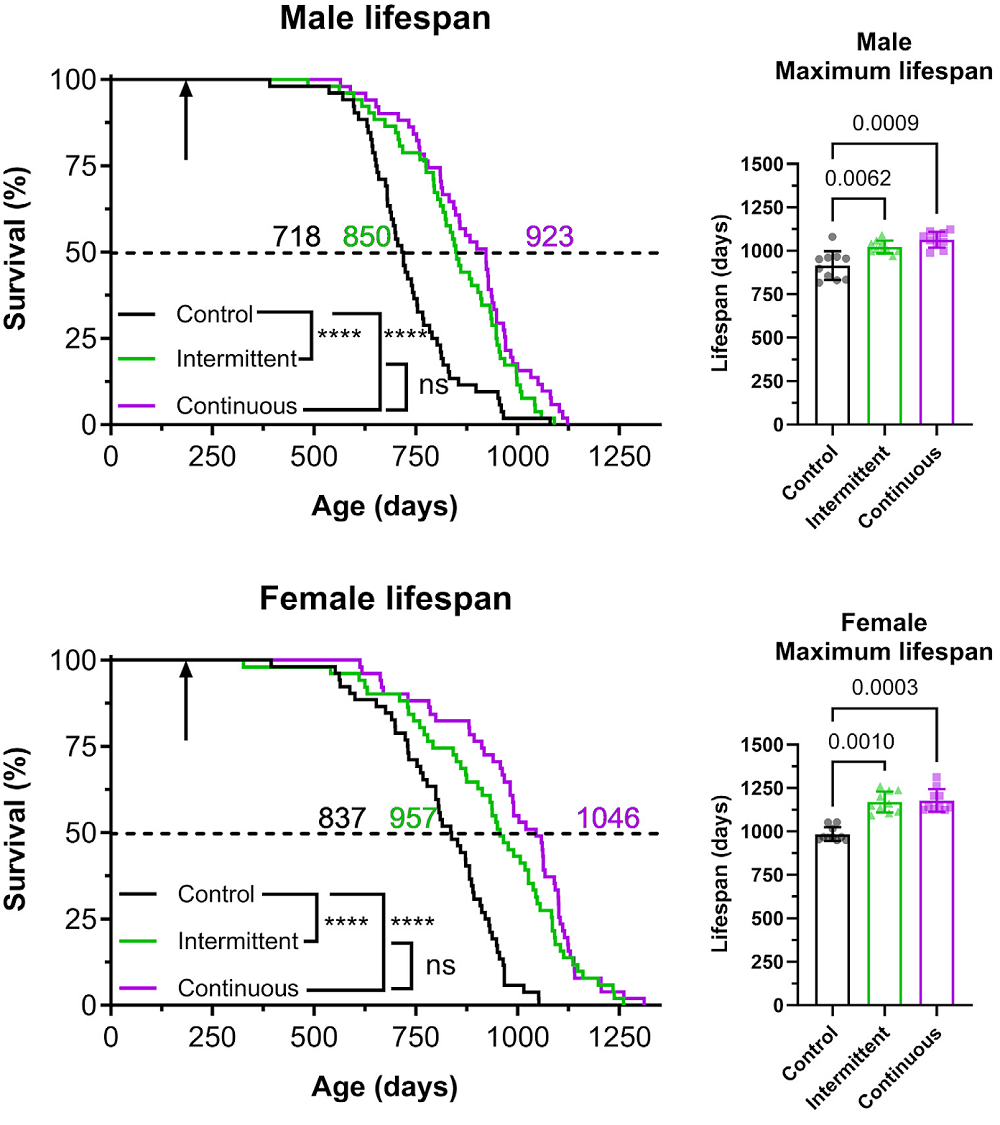
The authors tested different characteristics of mice under the treatment. As would be expected based on the previously well-established role of rapamycin in lifespan extension, intermittent and continuous rapamycin treatments led to an increase in median and maximum lifespan.
Rapamycin 1

The authors also tested many aspects of the mice’s metabolic health, motor skills, physical health, and heart function. Overall, they noticed that some side effects of the chronic treatment were reduced when rapamycin was administered non-continuously, but some of the beneficial aspects of rapamycin treatment were also reduced. Additionally, sex-specific differences were also observed by the researchers.

Intermittent rapamycin treatment didn’t remedy all the side effects of the continuous rapamycin treatment. The researchers observed that intermittent treatment didn’t rescue “the effect of the drug on testicular pathology.” Similarly, heart fibrosis in males and liver lipidosis in both males and females were increased following both treatments.

On the other hand, the appearance of tumors in the liver was reduced following intermittent rapamycin treatment, but continuous treatment was more effective in reducing liver tumors.

Chronic rapamycin treatment led to lower glucose tolerance compared to controls. The intermittent treatments led to increased glucose tolerance in female mice. The effect was particularly noticeable for females during the break from treatment. At that time, the researchers observed glucose tolerance similar to the controls. In males, the effect was ameliorated only during the week when they didn’t receive rapamycin.

Rapamycin also impacted the motor coordination of studied animals. The researchers observed improvements in motor coordination in middle age in males and in old age in both sexes when rapamycin was continuously administered. The same was true for male mice on intermittent rapamycin regimes but not females.

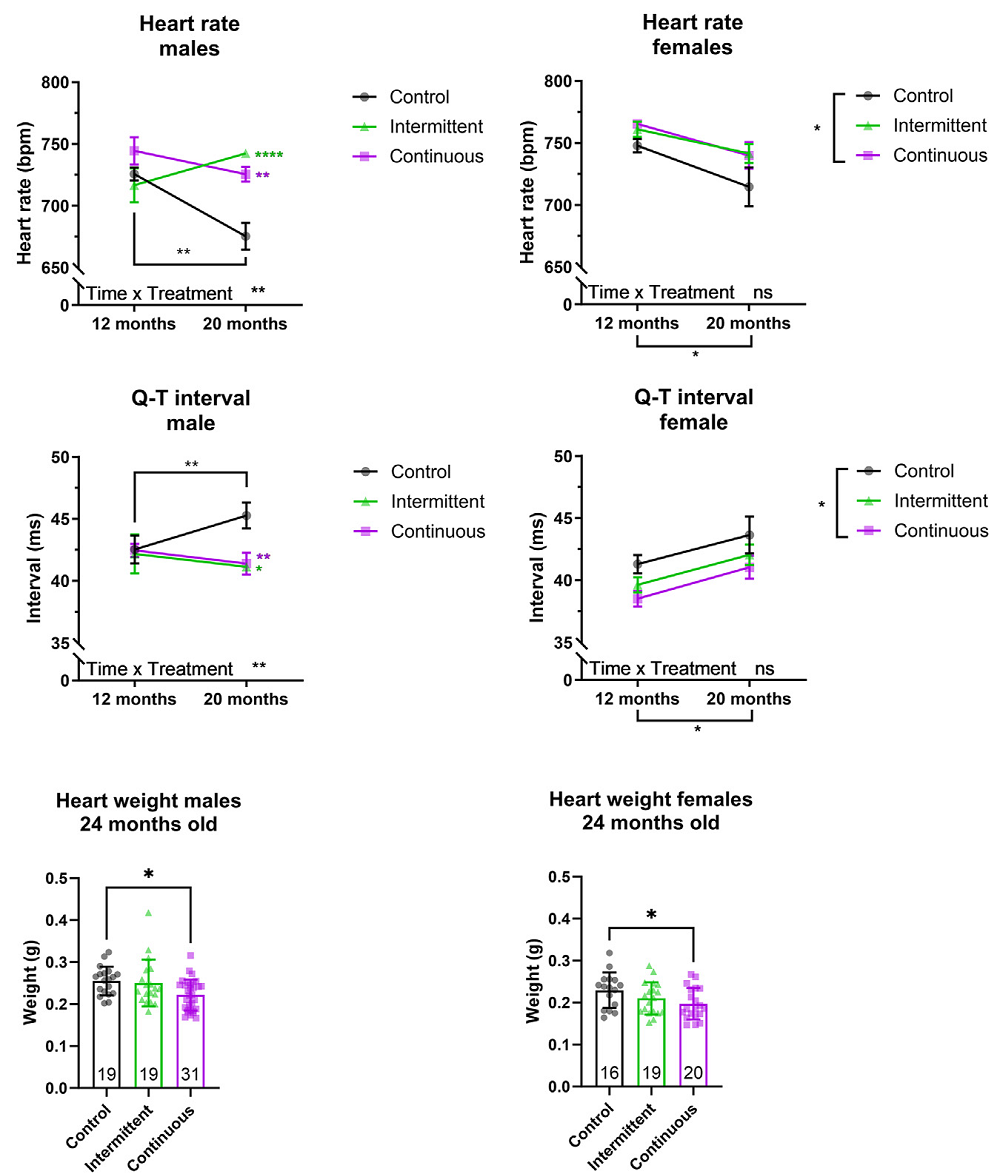
Cardiac functions were also impacted. The authors analyzed the mice’s QT interval, a measurement representing the time it takes the heart’s ventricles to contract and relax. Age is associated with the increase in QT interval, but continuous and intermittent rapamycin treatment was able to rescue that increase in males and significantly decrease it in females.

Additionally, the authors observed “a reduction in age-associated heart rate decrease” in older mice continuously or intermittently treated with rapamycin.

However, there were also some differences. While the authors observed reduced heart weight in male and female mice continuously treated with rapamycin, they didn’t observe it in intermittently fed animals.
Rapamycin 2

Impact on the immune system

Inflammation is known to be associated with aging. The senescence-associated secretory phenotype, or SASP, is a term that describes a mix of pro-inflammatory molecules secreted by senescent cells. Previous research has shown that rapamycin reduces the expression of SASP cytokines. In this study, the researchers also found that rapamycin downregulates several SASP-associated proteins. The treatment was more effective in mice receiving continuous doses of rapamycin compared to intermittent rapamycin treatment. The researchers also noted stronger SASP-related effects in female mice.

They also compared age-associated inflammation in multiple mice tissues. They observed that continuous rapamycin treatment was more effective in reducing inflammation than intermittent treatment.

The spleen plays an important role in the workings of the immune system, as it is the primary site of immune cell production. In advanced age, multiple conditions can lead to the enlargement of the spleen. The authors observed that both continuous and intermittent rapamycin feeding in male and female mice led to a reduction in spleen weight.

The authors also observed that intermittent and continuous rapamycin treatment in males led to a reduction in spleen pathology. The same effect was observed in continuously fed females. Intermittent feeding in females showed a trend in the same direction, but it was not statistically significant.

Contributors to lifespan extension

Based on these results, the authors suggest that traits that are impacted by both intermittent and chronic treatments can be seen as rapamycin’s potential contributors to lifespan extension. Those traits are sex-specific. For males, they are increased motor coordination, spleen weight reduction, heart rate, and QT interval maintenance. For females, they are reduced brown adipose tissue inflammation and spleen weight and the maintenance of heart rate and the QT interval.

We would like to ask you a small favor. We are a non-profit foundation, and unlike some other organizations, we have no shareholders and no products to sell you. All our news and educational content is free for everyone to read, but it does mean that we rely on the help of people like you. Every contribution, no matter if it’s big or small, supports independent journalism and sustains our future.

Literature

[1] Baghdadi, M., Nespital, T., Monzó, C., Deelen, J., Grönke, S., & Partridge, L. (2024). Intermittent rapamycin feeding recapitulates some effects of continuous treatment while maintaining lifespan extension. Molecular metabolism, 81, 101902. Advance online publication.

[2] Wilkinson, J. E., Burmeister, L., Brooks, S. V., Chan, C. C., Friedline, S., Harrison, D. E., Hejtmancik, J. F., Nadon, N., Strong, R., Wood, L. K., Woodward, M. A., & Miller, R. A. (2012). Rapamycin slows aging in mice. Aging cell, 11(4), 675–682.

[3] Miller, R. A., Harrison, D. E., Astle, C. M., Fernandez, E., Flurkey, K., Han, M., Javors, M. A., Li, X., Nadon, N. L., Nelson, J. F., Pletcher, S., Salmon, A. B., Sharp, Z. D., Van Roekel, S., Winkleman, L., & Strong, R. (2014). Rapamycin-mediated lifespan increase in mice is dose and sex dependent and metabolically distinct from dietary restriction. Aging cell, 13(3), 468–477.

[4] Arriola Apelo, S. I., Neuman, J. C., Baar, E. L., Syed, F. A., Cummings, N. E., Brar, H. K., Pumper, C. P., Kimple, M. E., & Lamming, D. W. (2016). Alternative rapamycin treatment regimens mitigate the impact of rapamycin on glucose homeostasis and the immune system. Aging cell, 15(1), 28–38.

[5] Arriola Apelo, S. I., Pumper, C. P., Baar, E. L., Cummings, N. E., & Lamming, D. W. (2016). Intermittent Administration of Rapamycin Extends the Life Span of Female C57BL/6J Mice. The journals of gerontology. Series A, Biological sciences and medical sciences, 71(7), 876–881.

Egg cell

Decreasing Autophagy Might Reverse Ovarian Aging

Experimenting in vitro and in mice, scientists have found that ovarian aging is linked to increased autophagy and apoptosis in granulosa cells and that it can be reversed by an estrogen receptor inhibitor [1].

When ovaries get tired

Female reproductive aging is an intriguing phenomenon that remains understudied, although things have been changing recently. In the female body, this is the first system to give out due to aging, decades before the others. Menopause is largely non-existent in the animal kingdom, apart from a handful of species, and its evolutionary origins remain unclear.

In this new paper published in Aging and Disease, the researchers investigated the phenomenon of diminished ovarian reserves (DOR), a decrease in the number and/or quality of egg cells (oocytes), which reduces fertility and increases the risk of adverse pregnancy outcomes. With age, DOR becomes the leading cause of infertility, found in up to 64% of cases.

A “longevity protein” is to blame

Oocytes are ‘nurtured’ by the surrounding granulosa cells (GC), and many factors of poor oocyte growth are thought to originate in those cells. The researchers found that in women with DOR, GCs showed signs of increased autophagy, a process that disposes of accumulated intracellular junk. Autophagy usually decreases with age, and this is something that geroscientists are working on, but apparently, there can be too much autophagy. Recent studies have implicated increased autophagy in GCs dying by apoptosis [2].

Autophagy markers in GCs are correlated with the level of estrogen receptor beta (ERβ). Estrogen sensing is important for oocyte development, but ERβ has also been linked to increased autophagy and apoptosis in some cell types.

The researchers then experimented with ERβ expression in GCs. ERβ knockdown led to a decrease in the expression of several autophagy genes, and vice versa. Electron microscopy then revealed that this coincided with higher or lower counts of autophagy-facilitating organelles (autophagosomes).

Previous research has suggested that ERβ affects autophagy via another protein called FOXO3a, a member of the FOXO family that has been touted as longevity-promoting. FOXO3a acts as a tumor suppressor [3] and is often inactivated by oncogenic mutations. In fact, ERβ was found to upregulate FOXO3a in prostate cancer, probably as a defense mechanism [4]. The researchers found a potential binding site for ERβ on the FOXO3a promoter and determined that FOXO3a depletion abrogated ERβ’s effect on autophagy.

Silencing ERβ improved GC function and proliferation, while overexpressing it had the opposite effect, increasing apoptosis. Rapamycin, a potent autophagy inducer, reversed the effects of ERβ silencing.

DOR reversal in vivo

To see if ovarian aging can be reversed by tinkering with ERβ, the researchers created a mouse model of DOR. As expected, these mice had significantly elevated levels of ERβ. The mice were then treated with an ERβ antagonist for 14 days. The treatment partially restored the estrous cycle (the analog to the menstrual cycle, observed in most mammals) and significantly alleviated DOR-related ovarian damage, including low follicle count. The mature/immature oocytes ratio in the treated DOR mice was higher than in non-treated animals and on par with healthy controls.

The treatment markedly restored the mice’s fertility. The treated animals had lower levels of reactive oxygen species (ROS) in oocytes, improved oocyte morphology, higher embryo formation rate following IVF, and, ultimately, bigger litters. The treatment inhibited the increase in autophagy and apoptosis that was observed in the DOR mice.

This intriguing study suggests that increased autophagy has a dark side when it comes to ovarian health. While the researchers list several limitations to their study, such as the possibly less-than-perfect quality of the DOR model that they had used, they hypothesize that this mechanism of DOR development is relevant to humans. If it is confirmed by further studies, this could be the breakthrough that the field of human reproductive aging has been waiting for.

Here, we elucidated the molecular mechanism by which ERβ induces ovarian GC apoptosis through the FOXO3a/autophagy pathway and confirmed the protective effect of the ERβ antagonist PHTPP on ovarian reserve and fertility in vivo. These results suggest that PHTPP may be a promising medication for treating DOR in a clinical setting. In the future, an ovary-specific ERβ gene knockout mouse model needs to be constructed to obtain more direct and reliable evidence.

We would like to ask you a small favor. We are a non-profit foundation, and unlike some other organizations, we have no shareholders and no products to sell you. All our news and educational content is free for everyone to read, but it does mean that we rely on the help of people like you. Every contribution, no matter if it’s big or small, supports independent journalism and sustains our future.

Literature

[1] Li, F., Zhu, J., Liu, J., Hu, Y., Wu, P., Zeng, C., … & Xue, Q. (2024). Targeting Estrogen Receptor Beta Ameliorates Diminished Ovarian Reserve via Suppression of the FOXO3a/Autophagy Pathway. Aging and Disease.

[2] Choi, J., Jo, M., Lee, E., & Choi, D. (2011). Induction of apoptotic cell death via accumulation of autophagosomes in rat granulosa cells. Fertility and sterility, 95(4), 1482-1486.

[3] Liu, Y., Ao, X., Ding, W., Ponnusamy, M., Wu, W., Hao, X., … & Wang, J. (2018). Critical role of FOXO3a in carcinogenesis. Molecular cancer, 17(1), 1-12.

[4] Dey, P., Ström, A., & Gustafsson, J. Å. (2014). Estrogen receptor β upregulates FOXO3a and causes induction of apoptosis through PUMA in prostate cancer. Oncogene, 33(33), 4213-4225.

Human heart

Using Ultrasound to Assist Gene Therapy

A new publication in iScience has described a novel way in which heart tissue can be encouraged to accept a gene therapy by using ultrasound to create cavitation bubbles.

A little-known target and a new delivery vector

This paper begins with a discussion of S-adenosylhomocysteine (SAH), a compound that, in excess, is associated with an increase in cardiovascular risk [1]. This compound is converted to other molecules by SAH hydrolase (SAHH), and inhibiting SAHH has been found to increase oxidative stress, inflammation, and diabetes risk in a mouse model [2].

Therefore, these researchers decided that upregulating SAHH may be a viable approach for reducing cardiovascular risk. However, getting the right cells to produce SAHH was previously impossible, which is why this team has chosen a novel approach: ultrasound-targeted microbubble destruction (UTMD). This technology uses low-intensity ultrasound to allow microbubbles containing the desired genes to enter heart tissue, where they rupture and release their payloads [3].

UTMD

Beneficial effects in rats

Through the combination of a specifically poor diet and a known toxin, these researchers induced diabetic cardiomyopathy (DCM) in rats. Compared to a control group, these rats expressed significantly less SAHH, as confirmed by standard Western blots and by gene expression analysis. As expected, oxidative stress in the DCM rats was also increased.

After confirming that their SAHH-based treatment worked in a cellular culture, making sure that id was not dangerous to cells and that it did indeed increase SAHH in the targeted cells, the researchers then administered it to the DCM rats. They first made sure that the treatment was actually targeted towards only cardiac tissue; analyzing other tissues, such as the spleen, the lung, and the kidney, they found no evidence of increased SAHH.

Instead, they found that their treatment was reaching the targeted cells. The effect of the treatment was moderate but statistically significant. SAHH expression in the treatment group  was restored about halfway to the level of the non-DCM control group. Cellular death by apoptosis was slightly reduced in the treatment group compared to the DCM control group, but not close to the level of the non-DCM control group; this was confirmed by a gene expression analysis, which found that the related apoptotic signals were significantly diminished in the treatment group.

Benefits to oxidative stress and to heart tissue

Oxidative stress was also found to be significantly decreased in the treatment group. The AMPK pathway responsible for protecting cells against this stress was upregulated, and reactive oxygen species were decreased by the treatment.

An examination of the rats’ hearts one month after the treatment found that there were far fewer broken fibers in the treatment group. Collagen deposition, another marker of damage, was moderately diminished.

If these positive results can be replicated in human beings, an entirely new method of treating diabetes-related heart failure may be at hand. However, further experiments along with clinical trials will need to be conducted to determine if this approach can be translated to medical practice.

We would like to ask you a small favor. We are a non-profit foundation, and unlike some other organizations, we have no shareholders and no products to sell you. All our news and educational content is free for everyone to read, but it does mean that we rely on the help of people like you. Every contribution, no matter if it’s big or small, supports independent journalism and sustains our future.

Literature

[1] Kerins, D. M., Koury, M. J., Capdevila, A., Rana, S., & Wagner, C. (2001). Plasma S-adenosylhomocysteine is a more sensitive indicator of cardiovascular disease than plasma homocysteine. The American journal of clinical nutrition, 74(6), 723-729.

[2] Dai, X., Liao, R., Liu, C., Liu, S., Huang, H., Liu, J., … & Xiao, Y. (2021). Epigenetic regulation of TXNIP-mediated oxidative stress and NLRP3 inflammasome activation contributes to SAHH inhibition-aggravated diabetic nephropathy. Redox Biology, 45, 102033.

[3] Qin, X., Cai, P., Liu, C., Chen, K., Jiang, X., Chen, W., … & Tian, H. (2023). Cardioprotective effect of ultrasound‐targeted destruction of Sirt3‐loaded cationic microbubbles in a large animal model of pathological cardiac hypertrophy. Acta Biomaterialia, 164, 604-625.

Longevity DeSci Feb 2024

Longevity and DeSci Recap – February 2024

Last month has been a hive of activity in the longevity finance sphere, with a number of significant fundings taking place that are set to generate new lifespan solutions for the future. Highlights include Yuva Biosciences’ $7.5 million for anti-hair loss tech, Tagomics’ £6.7 million for cutting-edge disease diagnostics, and GlycanAge’s $4.2 million to fine-tune biological age metrics.

However, this month’s longevity and DeSci recap isn’t just about the money that’s financing the future. New clinical trials are underway for novel ALS drugs, man’s best friends are getting their own longevity solution, and a new AI approach has been validated in an important journal.

Upcoming conferences and events

Vitalia extended to April

The pop-up city event, Vitalia, is well underway in Honduras, with each week packed with longevity-centered events, talks, networking opportunities, town halls, co-working and a focus on working together to strengthen the longevity community. In February, the event has already delved into longevity and human improvement, startup societies, AI and technological processes, and pathways to life extension. This event is now set to be extended to April, with the final month dedicated to fostering innovation and collaboration through an exciting startup acceleration program.

Supplements for longevity conference

Between 29th February and March 1st, the lifespan.io team was at the Centre for Healthy Longevity Conference 2024. This year’s event focused on discussions surrounding key longevity supplements, including NAD+ precursors, fisetin, and urolithin A. Also in attendance were big names in the longevity-industry, such as David Sinclair and Nir Barzilai.

Longevity and biohacking conference

Last weekend, Cancun, Mexico played host to a fast-paced longevity and biohacking event. During these 48-hours, participants had the opportunity to listen to a variety of keynote speeches, visited over 60 longevity-focused exhibitors showcasing longevity and anti-aging technologies, participated in workshops, networked with like-minded individuals, and enjoyed a variety of social events.

Turn Around Aging

On March 8, 2024, this unique longevity conference, hosted in the German language in Munich, will bring together professionals interested in healthy longevity, extending the human health- and life-span and various novel solutions. More info on the conference is available here.

Fly-in for longevity

Finishing March 2024 in style, the Longevity Science D.C. Fly-in event will be a longevity-focused networking conference that brings together prominent figures, such as Newt Gingrich and rejuvenation technology experts, to bridge the gap between government and longevity researchers. Set at a luxury hotel near the White House, registration to this exclusive event starts at $2,000.

Refresh with the Rejuvenation Startup Summit 2024

This May 10th and 11th will see the Rejuvenation Startup Summit hosted in Berlin, Germany. This is the second such event, following on from the success of the 2022 summit which brought together over 400 participants including founders, investors, researchers, and those interested in the growth of the longevity industry. One of this year’s keynote speakers is the CEO of the Hevolution Foundation, Dr. Mehmood Khan, who has combined his clinical career, knowledge, and professional experience to lead research and development at global companies.

Longevity investment and development news

Yuva Biosciences combats hair loss with $7.5 million in seed funding

Affecting up to 50% of men and women, hair loss can impact quality of life and mental health in the long term. With this in mind, Yuva Biosciences has partnered with BosleyMD and raised $7.5 million in seed funding to advance a novel ‘densifying foam’ product that targets hair loss by restoring mitochondrial function.

Mitochondrial dysfunction is a key hallmark of aging and linked to numerous symptoms, such as wrinkles, hair loss and a decline in energy. Yuva Biosciences’ solution is backed by its proprietary Y100 technology, which is designed to upregulate genes crucial in mitochondrial health, and it leverages AI to sift through data on thousands of molecules to uncover the ones most effective at boosting mitochondrial levels in skin and hair cells. This latest investment, which is supported by companies such as VentureSouth, will further advance Yuva Biosciences’ work along with its partnership.

£6.7 million raised for innovative disease and diagnosis

Innovative disease diagnostics company Tagomics has just announced the close of a successful funding round to accelerate its multiomic platform for disease insight and diagnosis. Totalling £6.7 million, this funding builds on the company’s £1.6 million pre-seed round with investors including Calculus Capital, Illumina Ventures, and IQ Capital and grant funding from Innovate UK. Backed by the latest funding, Tagomics will further develop its research and development into improved cancer and other disease diagnosis and treatments using “omics” technologies, including genomics and fragmentomics.

GlycanAge announces $4.2 million in seed funding

UK-based start-up GlycanAge has announced the success of a $4.2 million funding round led by LAUNCHub. The latest funding will go toward scaling the company’s business and research into measuring biological age and diversify into the diagnostics market with disease-specific tests for early detection with later plans to diversify its longevity offering.

Additional $21 million in funding for New-York based biotech start-up Ezra

In its latest funding round, AI-backed medical imaging biotech Ezra has garnered an additional $21 million in financing, bringing its total funding to $41 million. The recent boost to funds will go toward the company’s innovative technology that makes MRI body scans for cancer more accessible and affordable, and able to detect the disease earlier.

$2 million in funding for preventative longevity healthcare

Mito Health is a digital longevity clinic that leverages technology to deliver a prophylactic approach to healthcare. This $2 million funding will support novel approaches to care, including personalized health plans, risk assessments, and comprehensive biomarker testing aiming to extend healthspan and lifespan.

Tech breakthroughs & new research

Man’s best friend benefits from longevity

Rejuvenate Bio has just announced a new partnership with a global animal health company to develop a gene therapy for canine osteoarthritis. This condition is prevalent among dogs, with almost 25% affected during their lifespan. The partnership seeks to capitalize on Rejuvenate Bio’s technology to find a long-term solution while seeking out similar treatments that could be utilized to solve other challenges in canines.

PandaOmics AI validated by Journal of Chemical Information and Modeling

The AI-driven platform PandaOmics, designed by Insilico Medicine, has recently been validated in a paper in the Journal of Chemical Information and Modeling. This innovative technology is an AI-driven platform for therapeutic targeting and biomarker discovery. It draws upon datasets while analyzing genes, pathways, and targets to highlight potential longevity-related solutions. Already being used in Phase 2 clinical trials, this technology could prove effective in future drug discovery and targeting.

DAOs and communities

VitaDAO noted as one of the top DAO startups in Q1 2024

Tracxn, a technology platform designed to help investors discover prospective startups, recognized VitaDAO, the longevity biotechnology DAO, as the second best investment DAO after OrangeDAO, a protocol DAO. VitaDAO’s recognition marks confidence in alternative ways to fund longevity and biotechnology science.

Starting a longevity city

With the innovative pop-up city event Vitalia currently ongoing, lifespan.io went behind the scenes to find out the details of the event from Niklas Anzinger and Laurence Ion. Here is the latest video on the pop-up city and how it came about.

Dr. Steve Horvath of Altos Labs speaks on novel anti-aging interventions

Catch up with the latest in artificial intelligence in research, its challenges, and potentials with the principal investigator of longevity start-up, Altos Labs. Dr. Horvath talks about epigenetic clocks to identify novel anti-aging interventions, research, and how molecular biomarkers of aging can be used.

World Longevity News

New AI-backed ALS drug clinical trials soon underway

4B Technologies and Insilico Medicine have just announced the completion of patient enrollment for a new clinical trial for a novel amyotrophic lateral sclerosis (ALS) drug. This solution, currently known as FB1006, was discovered and developed using AI technology. With a double-blind dosing study in August 2024 and a one-year clinical observation planned, the companies are hopeful that the power of AI will continue to advance their work and shed light on potential novel solutions for disease.

Social media pages to follow this month

Rejuvenate Bio — the company’s X (Twitter) account covers the latest news and innovations, including new trials and project funding.

DeSci World — follow for wider insights into decentralized science technology.

Jellyfish DAO — combining film and longevity. Jellyfish DAO’s X account seeks to promote the creation of healthspan-related media.

We would like to ask you a small favor. We are a non-profit foundation, and unlike some other organizations, we have no shareholders and no products to sell you. All our news and educational content is free for everyone to read, but it does mean that we rely on the help of people like you. Every contribution, no matter if it’s big or small, supports independent journalism and sustains our future.
Pink slime

Ultra-Processed Food Linked to Numerous Health Risks

A new massive umbrella review of epidemiological meta-analyses reinforces the idea that ultra-processed food is bad for most aspects of human health [1].

Is it even food?

Many words have been uttered about the dangers of ultra-processed food, so can another study add anything new? The authors of this new paper published in the prestigious journal BMJ note that “no comprehensive umbrella review has offered a broad overview and assessment of the existing meta-analytic evidence” on the health effects of ultra-processed food – a gap they attempted to bridge by digging into 45 existing meta-analyses with a total coverage of almost 10 million participants.

As the attached editorial clarifies, ultra-processed foods are not just modified foods, but, according to the established NOVA model, “formulations of often chemically manipulated cheap ingredients such as modified starches, sugars, oils, fats, and protein isolates, with little if any whole food added, made palatable and attractive by using combinations of flavors, colors, emulsifiers, thickeners, and other additives.”

Basically, heavy processing completely rearranges food, creating a product that does not exist in nature and is not compatible with a gastrointestinal system molded by millions of years of evolution. Ultra-processed foods are often stripped of important nutrients such as flavanols and pumped with fat, salt, and sugar to make them irresistible to us.

71% of outcomes affected

The study has yielded some expected and some surprising results. It found that higher intake of ultra-processed foods increases the chances of all-cause mortality by as much as 21% and cardiovascular disease-related mortality by 50%.

It has been shown, including by clinical trials [2], that consuming ultra-processed foods increases the risk of obesity and adverse metabolic outcomes. This was confirmed by this study: gorging on ultra-processed foods increased the chances of obesity by 55%, metabolic syndrome by 25%, and Type 2 diabetes by 40%. Even a slight 10% increase in ultra-processed food consumption was associated with deleterious health effects, such as a 12% increase in chances of diabetes. In total, direct associations were found with 71% of the analyzed health outcomes.

One of the strongest associations observed was with various aspects of mental health, such as sleep quality, anxiety, and common mental disorders. However, this might be due to reverse causation, as depression and other mental illnesses can cause people to consume large quantities of unhealthy foods.

On the other hand, the study showed only limited association between ultra-processed foods and such outcomes as asthma, non-alcoholic fatty liver disease, and hypertension.

No evidence for cancer risk

Another surprise was little to no association between ultra-processed foods and cancer mortality or incidence. This is intriguing, since numerous earlier studies have shown this link [3]. Evidence regarding specifically ultra-processed meat is considered so strong that it became one of the very few food categories to be designated as a known carcinogen by the World Health Organization. Obesity is a major risk factor for cancer [4], so ultra-processed foods should affect cancer outcomes at least via obesity.

This does not mean that the link between ultra-processed food and cancer does not exist. One possible explanation is that in this study, no distinction was made between the types of ultra-processed food, which might have blunted the effect of some of these types (such as processed meat).

Populational studies can be highly heterogeneous and hard to interpret, and they can only show correlation and not causation. Even if there is no cancer connection, there are still plenty of reasons to avoid ultra-processed foods altogether. Read our 2022 interview with Prof. Albert-László Barabási for his exciting take on ultra-processed foods.

Our umbrella review provides a comprehensive overview and evaluation of the evidence for associations between dietary exposure to ultra-processed foods and various adverse health outcomes. Our review included 45 distinct pooled analyses, encompassing a total population of 9,888,373 participants and spanning seven health parameters related to mortality, cancer, and mental, respiratory, cardiovascular, gastrointestinal, and metabolic health outcomes. Across the pooled analyses, greater exposure to ultra-processed foods, whether measured as higher versus lower consumption, additional servings per day, or a 10% increment, was consistently associated with a higher risk of adverse health outcomes (71% of outcomes).

We would like to ask you a small favor. We are a non-profit foundation, and unlike some other organizations, we have no shareholders and no products to sell you. All our news and educational content is free for everyone to read, but it does mean that we rely on the help of people like you. Every contribution, no matter if it’s big or small, supports independent journalism and sustains our future.

Literature

[1] Lane MM, Gamage E, Du S, et al. (2024) Ultra-processed food exposure and adverse health outcomes: umbrella review of epidemiological meta-analyses. BMJ; 384:e077210.

[2] Hall, K. D., Ayuketah, A., Brychta, R., Cai, H., Cassimatis, T., Chen, K. Y., … & Zhou, M. (2019). Ultra-processed diets cause excess calorie intake and weight gain: an inpatient randomized controlled trial of ad libitum food intake. Cell metabolism, 30(1), 67-77.

[3] Wang, L., Du, M., Wang, K., Khandpur, N., Rossato, S. L., Drouin-Chartier, J. P., … & Zhang, F. F. (2022). Association of ultra-processed food consumption with colorectal cancer risk among men and women: results from three prospective US cohort studies. bmj, 378.

[4] Pati, S., Irfan, W., Jameel, A., Ahmed, S., & Shahid, R. K. (2023). Obesity and cancer: A current overview of epidemiology, pathogenesis, outcomes, and management. Cancers, 15(2), 485.

Rejuvenation Roundup February 2024

Rejuvenation Roundup February 2024

The leap year is here, so we’ve had an extra day to showcase interviews and report on all-new ways to combat cancer. Here’s everything that we’ve published in February.

LEAF News

Interviews

Linden InterviewPatrick Linden’s Case Against Death: People come to the longevity field from all walks of life, bringing their unique expertise along. An activist engages in advocacy and fundraising. A physicist applies theories from a specific domain of knowledge. What happens when a philosopher joins in? Naturally, that person writes a book.

Solving Atherosclerosis: The Small but Mighty Molecule: Cyclarity Therapeutics is developing an affordable, plaque-busting small molecule that may be the cure for the world’s number one killer: cardiovascular disease. With human trials planned for this year, we decided that it was time to catch up with Cyclarity and its CEO of Scientific Affairs, Dr. Matthew O’Connor, to see how things were going.

Journal Club

We discussed a new paper that includes Dr. David Sinclair among its authors. This theory explains aging as a loss of information that leads to old age, ill health, and ultimately death. There are researchers working on solutions to this loss of information, and we reviewed this paper and discussed how it stacks up against other popular theories.

Advocacy and Analysis

Writing down resultsThe Latest in Rapamycin Research on Humans: Reviewers have gone through the latest updates on studies featuring rapamycin and its derivatives in The Lancet Healthy Longevity. Not many compounds actually extend life in healthy animals, but rapamycin is indeed one of them.

Research Roundup

How Cardiovascular Mortality Goes Down with Exercise: In the International Journal of Cardiology, researchers have described five styles of exercise and compared them to mortality risk. It is well known that physical activity is associated with a significantly diminished risk of death by cardiovascular disease, the leading cause of death around the world.

Hair restorationRapamycin Rescues Hair Growth in Mice: A new study has found that autophagy plays an important role in activating hair follicle stem cells and keeping the hair growth cycle going. By boosting autophagy, rapamycin improved hair growth in mice and in a human hair organ culture.

Stress Impairs Gut Health via the Microbiome: A new study done in mice sheds light on how mental stress contributes to intestinal problems by altering microbiome composition. Some experiences are not called “gut-wrenching” just metaphorically, as the brain can indeed influence gastrointestinal function in a myriad of ways.

Food clockWhat Time-Restricted Eating Does and Doesn’t Affect: In Cell Reports Medicine, researchers have published a study demonstrating that, while it has no impact on many aspects of intestinal function, time-restricted eating (TRE) reduces markers of blood glucose.

New Combination Therapy Eradicates Cancer in Mice: Scientists have discovered a mechanism that lets senescent tumor cells undermine chemotherapy. With this mechanism blocked, standard chemotherapy led to complete regression of mammary tumors in mice.

ChitosanChitosan Treatment Reduces Ovarian Senescence in Mice: Recent research published in Immunity and Ageing suggests that chitosan can be used as a potential treatment to alleviate some of the aging processes in ovaries. Right now, Mother Nature has imposed some tough challenges on human females. They need to make the decision about motherhood sooner rather than later.

Caloric Restriction Extends Reproductive Lifespan in Hens: According to a new study, prolonged severe caloric restriction in hens, known as “molting”, restores their egg-laying capacity, slows aging, and increases survival. The domestic hen is not the go-to animal model in aging studies, but perhaps it could offer new insights. A hen’s lifespan is about 6-8 years.

Brain modelExhausted Microglia Accumulate in Alzheimer’s: A recent paper published in Immunity has described the accumulation of exhausted microglia in the brains of people who are vulnerable to Alzheimer’s, potentially spurring and worsening the disease.

Reversing Senescence in Cells Using Ultrasound: A new study claims that low-frequency ultrasound can reverse aspects of replicative and chemically induced senescence in vitro. This is in contrast to the current widespread strategy of senolytics, drugs that eliminate senescent cells.

PredictionPredicting Dementia a Decade in Advance: In Nature Aging, researchers have published a method of predicting dementia over a decade before it actually occurs. It was possible to do this previously, but this is meant to be done accurately in a clinical setting.

Mutation-Carrying CAR T Cells Eradicate Cancer in Mice: Scientists have found that giving CAR T cells a particular oncogenic mutation greatly improves their efficiency against blood and solid cancers. One reason why cancer is so dangerous is that oncogenic mutations boost cancer cells’ survivability, just like a genetically modified monster in a sci-fi movie. CAR T cells may be able to gain some of the same power.

Epigenetic reprogrammingRejuvenating Cells with Epigenetic Reprogramming: The authors of a recent review published in Ageing Research Reviews summarize the research on epigenetic reprogramming and its potential as a rejuvenation therapy.

How Aging Leads to a Gene Transcription Problem: In Nature Genetics, researchers have described how a defect in RNA transcription constitutes a previously undiscovered mechanism of aging. Gene expression begins when a cell transcribes RNA from DNA protein codes.

GlioblastomaNew Drug Shows Promise Against Glioblastoma: Scientists have discovered a small molecule that effectively kills glioblastoma, a highly aggressive and untreatable brain cancer, in cellular cultures while having no effects on healthy cells.

Connecting Gut Metabolism to Grip Strength: In Aging, a team of researchers has outlined a possible relationship between low grip strength and compounds in the gut microbiome. Metabolism is related to age-related muscle dysfunction, including inflammation, oxidative stress, and accumulation of advanced glycation end-products.

Running soldiersHow Individual Lifestyle Factors Affect Lifespan: A new study has reported that adopting more healthy lifestyle habits continuously lowers mortality risk, resulting in many years of added life expectancy.

Educational Attainment Linked to Lower Mortality Risk: A systematic review and meta-analysis published in The Lancet suggests that more years of education is linked to reduced all-cause mortality in adults. Educational attainment is associated with better health and improvements in some measurements of mortality.

NeuronsA Nanoparticle Reduces Brain Inflammation in Mice: A recent preprint paper from researchers at Sachi Bio has described how this company’s technology can be used to alleviate brain inflammation in a mouse model. Along with the infamous amyloid beta, tau is well-known as a pathological factor in both Alzheimer’s and regular aging.

Fasting-Mimicking Diet Might Extend Lifespan in Humans: A new study into Valter Longo’s fasting-mimicking diet shows metabolic and immune benefits that, according to a simulation, might translate into years of additional lifespan.

Clock in handEpigenetic Clocks Help Predict Health Outcomes: Researchers publishing in PNAS have found that well-known epigenetic clocks are valuable in predicting health outcomes, including mortality, in human beings. An epigenetic clock is a biochemical test that uses DNA methylation levels and accumulation of methyl groups on DNA to determine biological age.

Physically Fit Older People Have Better Visual Processing: Publishing a study in GeroScience featuring people over 80 years old, researchers have described a link between physical fitness and maintenance of executive functions, the basic abilities involved in performing the fundamental goal-oriented behaviors necessary for everyday life.

Abdominal fatHigher Abdominal Fat Associated with Cognitive Decline: A group of Japanese researchers has published a paper reporting an association between higher abdominal fat levels and cognitive decline. Developing drugs to treat this condition is challenging, so lifestyle interventions may be more immediately feasible.

Niacin May Increase Heart Disease Risk: Niacin, a popular food fortifier, supplement, and NAD precursor, might increase the risk of major adverse cardiovascular events by as much as twofold.

Short-term periodic restricted feeding elicits metabolome-microbiome signatures with sex dimorphic persistence in primate intervention: As many calorie restriction interventions are difficult to sustain, the authors propose that this short-term diet may be easier to adhere to and have benefits directly relevant to human aging.

Dietary protein intake in midlife in relation to healthy aging – results from the prospective Nurses’ Health Study cohort: Dietary protein intake, especially plant protein, in midlife, is associated with higher odds of healthy aging and with several domains of positive health status in a large cohort of female nurses.

β-Nicotinamide Mononucleotide Promotes Cell Proliferation and Hair Growth by Reducing Oxidative Stress: The results indicated that NMN can reverse hair follicle atrophy, hair thinning, and hair sparsity induced by dihydrotestosterone (DHT).

Intermittent rapamycin feeding recapitulates some effects of continuous treatment while maintaining lifespan extension: Chronic and intermittent rapamycin treatments increased lifespan equally in male mice, while in females, chronic treatment resulted in slightly higher survival.

Alterations of the gut microbiome are associated with epigenetic age acceleration and physical fitness: Overall, these data suggest that alterations in the microbiome can be associated with epigenetic age acceleration and physical fitness.

Exploring the effects of Dasatinib, Quercetin, and Fisetin on DNA methylation clocks: a longitudinal study on senolytic interventions: The addition of fisetin to the treatment resulted in non-significant increases in epigenetic age acceleration, suggesting a potential mitigating effect of fisetin on the impact of dasatinib and quercetin on epigenetic aging.

A unified framework for evolutionary genetic and physiological theories of aging: This new framework will help to generate testable hypotheses of how the hallmarks of aging are shaped by natural selection.

Which predicts longevity better: Satisfaction with life or purpose in life?: Purpose in life is a robust predictor of mortality, and thus a key dimension of well-being to attend to as people age, while the predictive power of life satisfaction is more dependent on the choice of covariates.

News Nuggets

Old dogRejuvenate Bio Develops Gene Therapy for Dog Arthritis: Rejuvenate Bio has announced a partnership with a leading animal health company to develop a gene therapy for canine osteoarthritis. The identity of the partnering global company is as yet unknown.

Meaningful Improvements in Human Trial For Sarcopenia: Rejuvenate Biomed has recently concluded a clinical trial for sarcopenia. The results have shown “meaningful improvements in muscle strength, function and fatigue resistance”. Sarcopenia is an age-related progressive loss of muscle mass and strength that affects many older adults.

We would like to ask you a small favor. We are a non-profit foundation, and unlike some other organizations, we have no shareholders and no products to sell you. All our news and educational content is free for everyone to read, but it does mean that we rely on the help of people like you. Every contribution, no matter if it’s big or small, supports independent journalism and sustains our future.

Niacin (Vitamin B3) Linked to Cardiovascular Risk

A new study shows that niacin, a popular food fortifier, supplement, and NAD precursor, might increase the risk of major adverse cardiovascular events by as much as twofold [1].

The dark side of niacin?

Vitamins are good for you, but caveats apply. Too much of some vitamins, such as vitamin A, are toxic [2]. Vitamin B3, also known as niacin, on the other hand, has always been considered relatively safe. Now, a new Cleveland clinic-led study published in Nature Medicine suggests that overdoing niacin may be a serious risk factor for cardiovascular disease (CVD).

People get large amounts of niacin by taking supplements or via processed foods fortified with niacin, such as cereals. In the US, niacin fortification is mandated by law, as a niacin deficiency causes pellagra, a dangerous disease that was rampant during the Great Depression. Today, however, this niacin deficit is a thing of the past.

Niacin has also been tried against CVD since it is known to improve lipid profile. Despite that, it was discovered that niacin supplementation doesn’t lower CVD risk in what became known as “the niacin paradox”. Niacin is also a precursor of NAD, a molecule crucial for energy production and DNA repair in cells. Levels of NAD decline with age, making it a popular target for geroscientists and biohackers.

Twofold increase in cardiovascular risk

Despite CVD being the world’s leading cause of death, all of its risk factors have not yet been explored. The study’s authors analyzed metabolites in the blood plasma of more than a thousand stable cardiac patients to see if they could find any new ones. They discovered a footprint of a previously unknown metabolite, with an elemental composition of C7H9O2N2, that was profoundly associated with major adverse cardiovascular events (MACE) independently of all known risk factors.

The researchers were then able to determine that it was actually not a single molecule but a mix of two known isomers (differently structured molecules with an identical molecular formula): 2PY and 4PY. Previous research has found that these two metabolites are products of the niacin/NAD pathway, but other than that, little was known about their role in the body.

These results were then validated in two independent cohorts of more than 3,000 patients in total, showing that people with the highest circulating 2PY and 4PY levels had much higher risks of MACE, even after adjusting for known risk factors. The hazard ratio was more pronounced in the European compared to the US cohort, reaching an almost twofold increase in the former: that is, people with the highest levels of the two metabolites were at twice the risk of experiencing MACE than those with the lowest levels (4th quartile vs 1st quartile).

Inflammation as a possible link

2PY and 4PY levels were also positively correlated with the levels of C-reactive protein (CRP), which is the most common marker of inflammation (a risk factor for CVD), and with VCAM-1, a protein known to play a role in vascular inflammation and atherogenesis by increasing the adhesion of leukocytes to arterial walls [3]. Injections of 4PY indeed increased the number of adherent leukocytes in mice.

“What’s exciting is that this pathway appears to be a previously unrecognized yet significant contributor to the development of cardiovascular disease,” said Dr. Stanley Hazen of Cleveland Clinic’s Lerner Research Institute, the study’s leading author. “What’s more, we can measure it, meaning there is potential for diagnostic testing. These insights set the stage for developing new approaches to counteract the effects of this pathway.”

Apart from offering a possible solution to “the niacin paradox”, the results of this study might also be relevant in the context of NAD supplementation [4], a popular anti-aging intervention. Hopefully, this will be elucidated by future research.

Niacin CVD

In summary, the present studies, combined with recent randomized clinical trials with niacin in the modern era of high-potency statins, suggest a possible explanation for the ‘niacin paradox’—the observation that the LDL lowering induced by niacin fails to achieve the expected reduction in CVD risks. The present studies also raise the question of whether a continued mandate of flour and cereal fortification with niacin is warranted. Although such a mandate no doubt saved lives when first implemented more than 80 years ago, its long-term safety, particularly in more vulnerable populations, merits discussion (for example, should easing of the mandate to allow ‘organic’ or ‘non-fortified’ flour and cereal options be available, particularly given that the highest quartile of 4PY levels is associated with an approximately two-fold increased incident MACE risk compared to those harboring lowest quartile levels).

We would like to ask you a small favor. We are a non-profit foundation, and unlike some other organizations, we have no shareholders and no products to sell you. All our news and educational content is free for everyone to read, but it does mean that we rely on the help of people like you. Every contribution, no matter if it’s big or small, supports independent journalism and sustains our future.

Literature

[1] Ferrell, M., Wang, Z., Anderson, J. T., Li, X. S., Witkowski, M., DiDonato, J. A., … & Hazen, S. L. (2024). A terminal metabolite of niacin promotes vascular inflammation and contributes to cardiovascular disease risk. Nature Medicine, 1-11.

[2] Olson, J. M., Ameer, M. A., & Goyal, A. (2022). Vitamin A toxicity. In StatPearls [Internet]. StatPearls Publishing.

[3] Galkina, E., & Ley, K. (2007). Vascular adhesion molecules in atherosclerosis. Arteriosclerosis, thrombosis, and vascular biology, 27(11), 2292-2301.

[4] Pirinen, E., Auranen, M., Khan, N. A., Brilhante, V., Urho, N., Pessia, A., … & Suomalainen, A. (2020). Niacin cures systemic NAD+ deficiency and improves muscle performance in adult-onset mitochondrial myopathy. Cell metabolism, 31(6), 1078-1090.

Abdominal fat

Higher Abdominal Fat Associated with Cognitive Decline

A group of Japanese researchers has published a paper reporting an association between higher abdominal fat levels and cognitive decline [1].

Abdominal fat and brain connection

Aging is often linked to many comorbidities, one of which is dementia, and developing drugs to treat this condition is challenging. An alternative, more immediately feasible approach is to identify modifiable factors that can lower the likelihood of this disease. One such factor is obesity, which has been previously identified [2]. However, there is a twist: the relationship between weight and dementia is not so straightforward. Previous studies have found that while midlife obesity is a dementia risk factor, higher BMI later in life is associated with less dementia [3].

It may, therefore, be possible that BMI is not the best indicator of nutritional status in later life, as the elderly often experience changes in body composition, specifically an increase in fat mass and a decrease in fat-free mass, which does not result in significant change to BMI [4].

To reflect those changes, recent studies have associated different health metrics, such as waist circumference and waist-hip ratio, with dementia [5, 6], suggesting an adverse role of abdominal fat on the brain. However, the roles of specific measurements and the impact of types of fat on cognitive decline is still a subject of debate.

Men’s and women’s visceral fat impact differs

The researchers in the recent study used data from the National Institute for Longevity Sciences’ Longitudinal Study of Aging. This study included community-based older individuals living in Japan. 873 participants were followed up every 2 years for a median follow-up period of 9.67 years. The participants were 60 years and older and didn’t have cognitive impairment at the start of the study.

Each participant’s waist circumference, subcutaneous fat area, and visceral fat area were measured, and the Mini-Mental State Examination (MMSE) was conducted to assess their cognitive abilities. Each of these metrics was divided into three groups: lowest, middle, and highest.

With this data in hand, the researchers performed modeling that indicated that for men, the biggest decline in the MMSE is among men with the highest levels of waist circumference, subcutaneous fat area, and visceral fat area when compared to the groups with the lowest levels. In the case of women, the group with the highest waist circumference and subcutaneous fat area also had the biggest declines in MMSE compared to the lowest waist circumference and subcutaneous fat area groups, just like men. However, that was not the case for the visceral fat area groups.

Adipose MMSE

The hormone hypothesis

In their discussion, the authors try to interpret their results and provide possible explanations based on current knowledge. They propose that the association between visceral and subcutaneous fat and cognitive decline might be due to the role that adipose tissue plays as an endocrine organ that secretes adipokines. They believe that “excessive abdominal obesity may increase the secretion of inflammatory cytokines, which may contribute to cognitive decline.” For example, higher levels of one adipokine, the inflammatory cytokine IL-6, were previously reported to be associated with increased dementia risk [7].

Adipose tissue also secretes adipokines, such as leptin and adiponectin, that have neuroprotective and anti-inflammatory functions. Excessive abdominal fat levels are linked to the reduced production of adiponectin. On the other hand, leptin production is increased in such a condition, but its permeability through blood–the blood-brain barrier is decreased [8,9]. Therefore, excessive abdominal fat can lead to weakening of leptin and adiponectin’s protective effects.

The authors also tried to understand the interesting observation that visceral fat area was associated with cognitive decline in men but not women. The authors speculate that estrogen, a female sex hormone that has been demonstrated to have a protective effect against cognitive decline, plays a role in this process [10]. Adipose tissue plays a role in estrogen metabolism [11], and “peripheral adipose tissue may be a source of estrogen in postmenopausal women” [12]. All these studies taken together suggest that visceral fat accumulation in older women increases estrogen levels, which can have a protective effect against cognitive decline. However, his hypothesis, like the previous ones, requires direct testing.

Higher WC, SFA, and VFA in men and higher WC and SFA in women were associated with greater cognitive decline over the subsequent 10 years. However, no association was observed between visceral fat accumulation and cognitive decline in women. These findings suggest that the accumulation of abdominal adiposity is a risk factor for cognitive decline among older adults. Furthermore, the abdominal adiposity involved in cognitive decline may differ between men and women, and further studies are required to understand the mechanisms of this difference between the sexes.

We would like to ask you a small favor. We are a non-profit foundation, and unlike some other organizations, we have no shareholders and no products to sell you. All our news and educational content is free for everyone to read, but it does mean that we rely on the help of people like you. Every contribution, no matter if it’s big or small, supports independent journalism and sustains our future.

Literature

[1] Uchida, K., Sugimoto, T., Tange, C., Nishita, Y., Shimokata, H., Saji, N., Kuroda, Y., Matsumoto, N., Kishino, Y., Ono, R., Akisue, T., Otsuka, R., & Sakurai, T. (2024). Association between abdominal adiposity and cognitive decline in older adults: a 10-year community-based study. The journal of nutrition, health & aging, 28(3), 100175. Advance online publication.

[2] Livingston, G., Huntley, J., Sommerlad, A., Ames, D., Ballard, C., Banerjee, S., Brayne, C., Burns, A., Cohen-Mansfield, J., Cooper, C., Costafreda, S. G., Dias, A., Fox, N., Gitlin, L. N., Howard, R., Kales, H. C., Kivimäki, M., Larson, E. B., Ogunniyi, A., Orgeta, V., … Mukadam, N. (2020). Dementia prevention, intervention, and care: 2020 report of the Lancet Commission. Lancet (London, England), 396(10248), 413–446.

[3] Pedditzi, E., Peters, R., & Beckett, N. (2016). The risk of overweight/obesity in mid-life and late life for the development of dementia: a systematic review and meta-analysis of longitudinal studies. Age and ageing, 45(1), 14–21.

[4] Jackson, A. S., Janssen, I., Sui, X., Church, T. S., & Blair, S. N. (2012). Longitudinal changes in body composition associated with healthy ageing: men, aged 20-96 years. The British journal of nutrition, 107(7), 1085–1091.

[5] Tang, X., Zhao, W., Lu, M., Zhang, X., Zhang, P., Xin, Z., Sun, R., Tian, W., Cardoso, M. A., Yang, J., Simó, R., Zhou, J. B., & Stehouwer, C. D. A. (2021). Relationship between Central Obesity and the incidence of Cognitive Impairment and Dementia from Cohort Studies Involving 5,060,687 Participants. Neuroscience and biobehavioral reviews, 130, 301–313.

[6] Arnoldussen, I. A. C., Gustafson, D. R., Leijsen, E. M. C., de Leeuw, F. E., & Kiliaan, A. J. (2019). Adiposity is related to cerebrovascular and brain volumetry outcomes in the RUN DMC study. Neurology, 93(9), e864–e878.

[7] Darweesh, S. K. L., Wolters, F. J., Ikram, M. A., de Wolf, F., Bos, D., & Hofman, A. (2018). Inflammatory markers and the risk of dementia and Alzheimer’s disease: A meta-analysis. Alzheimer’s & dementia : the journal of the Alzheimer’s Association, 14(11), 1450–1459.

[8] Forny-Germano, L., De Felice, F. G., & Vieira, M. N. D. N. (2019). The Role of Leptin and Adiponectin in Obesity-Associated Cognitive Decline and Alzheimer’s Disease. Frontiers in neuroscience, 12, 1027.

[9] Kim, J. Y., Barua, S., Jeong, Y. J., & Lee, J. E. (2020). Adiponectin: The Potential Regulator and Therapeutic Target of Obesity and Alzheimer’s Disease. International journal of molecular sciences, 21(17), 6419.

[10] Engler-Chiurazzi, E. B., Brown, C. M., Povroznik, J. M., & Simpkins, J. W. (2017). Estrogens as neuroprotectants: Estrogenic actions in the context of cognitive aging and brain injury. Progress in neurobiology, 157, 188–211.

[11] Mahabir, S., Baer, D. J., Johnson, L. L., Hartman, T. J., Dorgan, J. F., Campbell, W. S., Clevidence, B. A., & Taylor, P. R. (2006). Usefulness of body mass index as a sufficient adiposity measurement for sex hormone concentration associations in postmenopausal women. Cancer epidemiology, biomarkers & prevention : a publication of the American Association for Cancer Research, cosponsored by the American Society of Preventive Oncology, 15(12), 2502–2507.

[12] Gruzdeva, O., Borodkina, D., Uchasova, E., Dyleva, Y., & Barbarash, O. (2019). Leptin resistance: underlying mechanisms and diagnosis. Diabetes, metabolic syndrome and obesity : targets and therapy, 12, 191–198.

Old man jogging

Physically Fit Older People Have Better Visual Processing

Publishing a study in GeroScience featuring people over 80 years old, researchers have described a link between physical fitness and maintenance of specific brain functions.

Executive functions

This paper begins with a description of executive functions, the basic abilities involved in performing the fundamental goal-oriented behaviors necessary for everyday life. It is obvious how this can strongly affect independence in later life, including among older people with mild cognitive impairment [1]. Previous work has linked physical fitness to improved cognition in older people [2], particularly in executive functions [3]. However, these researchers note that most of these studies were performed among comparatively younger people rather than the very old.

Therefore, they sought to understand how two essential parts of executive function, attentional control and response inhibition, were affected by physical function in aging. These are the abilities to focus the attention on only relevant things and to stop automatic responses from occurring. Both of these abilities are challenged by the flanker task, iin which participants are instructed to react only to a disc of a central color while discs of different colors surround it.

A simple test with detailed data

After screening for the ability to perform this task and for disqualifying conditions, a total of 115 participants with an average age of 82.4 years had been included in this study. To test cardiorespiratory fitness, they engaged in a step test in which they lifted their knees to a specific height as rapidly as they could for two minutes. These participants also had electroencephalogram (EEG) measurements taken, and those were compared to their performance during the study.

The flanker test was performed in three different ways: congruently, in which the colors of the flanking discs were the same as the central disc, neutrally, in which they were an entirely different color, and incongruently, in which they were the opposite color. As expected, there were slight differences in the participants’ EEG results in each of these three variants.

In a mediation analysis, physical fitness was found to improve results in all three of the tests. Examining the EEG results, the researchers found that this improvement had occurred due to an improvement in early visual processing capability. The fitter people had better immediate reaction times. They were also found to have stronger motor-related potentials in the cortex, but this did not seem to be connected with improved task performance.

Interestingly, these researchers report a lack of results in later cognitive processing, noting that their results go against previous work showing that such correlations exist [4]. They suggest that their use of a fitness task, rather than relying on self-reported fitness, may account for the different results. Additionally, this study recruited people who were considerably older.

Use it or lose it?

The researchers speculate that their results demonstrate that continued performance in the “oldest old” requires regular use of the specific brain regions involved. In other words, the reason that more physically fit older people have better motor-related and immediate visual processing functions is likely to be that they are using them regularly. Other brain regions responsible for more detailed cognition, the researchers surmise, should be maintained through activities that exercise the mind.

We would like to ask you a small favor. We are a non-profit foundation, and unlike some other organizations, we have no shareholders and no products to sell you. All our news and educational content is free for everyone to read, but it does mean that we rely on the help of people like you. Every contribution, no matter if it’s big or small, supports independent journalism and sustains our future.

Literature

[1] Mansbach, W. E., & Mace, R. A. (2019). Predicting functional dependence in mild cognitive impairment: Differential contributions of memory and executive functions. The Gerontologist, 59(5), 925-935.

[2] Bherer, L., Erickson, K. I., & Liu-Ambrose, T. (2013). A review of the effects of physical activity and exercise on cognitive and brain functions in older adults. Journal of aging research, 2013.

[3] Colcombe, S., & Kramer, A. F. (2003). Fitness effects on the cognitive function of older adults: a meta-analytic study. Psychological science, 14(2), 125-130.

[4] Winneke, A. H., Godde, B., Reuter, E. M., Vieluf, S., & Voelcker-Rehage, C. (2012). The association between physical activity and attentional control in younger and older middle-aged adults. GeroPsych.

Clock in hand

Epigenetic Clocks Help Predict Health Outcomes

Researchers publishing in PNAS have found that well-known epigenetic clocks are valuable in predicting health outcomes, including mortality, in human beings.

The usefulness of clocks

This paper begins with a discussion of epigenetic clocks, most notably the later-generation clocks, such as PhenoAge, DunedinPACE, and the strong mortality predictor GrimAge. While these clocks have measurement errors that are difficult to control for [1], and epigenetic noise is a strong part of what these clocks are actually measuring, principal component (PC) measurements have been developed to focus on the key factors [2].

However, because these clocks have not been in existence for very long, it had been previously impossible to conduct a true longitudinal experiment: to use modern epigenetic clocks to assess the biological age of a group of humans, then wait the years that it takes for those humans to die or suffer from adverse health outcomes – or to avoid those fates.

Looking for accuracy

Using data from 3,581 participants in the Health Retirement Study, these researchers compared several clocks to one another and to known socioeconomic factors that are correlated with health and mortality.

The first measurement was to use four of the clocks as they were originally intended: to gauge the participants’ biological age. While the two first-generation clocks (Horvath and Hannum) yielded lower numbers, PhenoAge yielded an average of 56.46, while GrimAge reported 66.97. Using PC analysis drove PhenoAge up to 65.53 and GrimAge to 77.02. The participants were, chronologically, an average of 68.25 years old.

Additionally, the age acceleration clock DunedinPACE stated that the participants were aging, on average, 1.02 years per year of chronological age.

Education was not significantly correlated with accelerated aging according to the first-generation clocks included in this study, nor was it correlated with non-PC PhenoAge. However, the PC version of PhenoAge, both versions of GrimAge, and DunedinPACE all agreed that higher educational attainment is statistically correlated with slower epigenetic aging. As expected, obesity is associated with more aging across every single one of the clocks tested.

Other health behaviors, along with childhood hardships and socioeconomic status, also had strong correlations with epigenetic aging as measured by these clocks. Interestingly, in first-generation clocks and the non-PC PhenoAge measurement, childhood financial hardship was associated with slower aging. GrimAge was particularly well-tuned for measuring the impact of health behaviors, such as smoking.

Clock Variations

Predicting mortality and morbidity

After the participants’ ages were measured, this study included two follow-ups: two years afterwards to detect adverse health outcomes, and four years afterwards to determine who had died. Age acceleration as measured by all of the clocks, including the first-generation clocks, was associated with increased adverse health outcomes. More rapid age acceleration, according to PhenoAge and GrimAge, is associated with a decreased ability to carry out the activities involved in daily living as well as with cognitive dysfunction.

Critically, even after controlling for known demographic factors and health behaviors that are associated with faster epigenetic aging, the clocks were still strong predictors of mortality and morbidity. After adjusting for these factors, the clocks were found to explain between 15% and 18.6% of multimorbidity and between 22% and 26% of mortality.

GrimAge was singled out to be compared to other measurements, and while it did not seem to be very strong, comparatively, in predicting whether or not someone would have cognitive issues or be unable to carry out the daily activities of living, it was valuable in predicting both multimorbidity and mortality.

GrimAge Strength

However, the researchers also note that these clocks were trained on demographic cohorts that had variabilities in known health-related factors. Therefore, they must also be geared towards estimating these factors, which have clear impacts on biological age. This study makes it even more clear that epigenetic aging is tightly linked to these external factors, suggesting that it can be, and is, amenable to behavioral and lifestyle interventions that lengthen people’s lives.

We would like to ask you a small favor. We are a non-profit foundation, and unlike some other organizations, we have no shareholders and no products to sell you. All our news and educational content is free for everyone to read, but it does mean that we rely on the help of people like you. Every contribution, no matter if it’s big or small, supports independent journalism and sustains our future.

Literature

[1] Lehne, B., Drong, A. W., Loh, M., Zhang, W., Scott, W. R., Tan, S. T., … & Chambers, J. C. (2015). A coherent approach for analysis of the Illumina HumanMethylation450 BeadChip improves data quality and performance in epigenome-wide association studies. Genome biology, 16(1), 1-12.

[2] Higgins-Chen, A. T., Thrush, K. L., Wang, Y., Minteer, C. J., Kuo, P. L., Wang, M., … & Levine, M. E. (2022). A computational solution for bolstering reliability of epigenetic clocks: Implications for clinical trials and longitudinal tracking. Nature aging, 2(7), 644-661.

Low calorie meal

Fasting-Mimicking Diet Might Extend Lifespan in Humans

A new study into Valter Longo’s fasting-mimicking diet shows metabolic and immune benefits that, according to a simulation, might translate into years of additional lifespan [1].

Fasting in disguise

Caloric restriction is among the most powerful life-extending interventions in mice [2]. However, there is a lack of experimental data on its effect on human lifespan. Continuous caloric restriction is also very hard to maintain in humans in real life. Several substitutes have been proposed, such as time-restricted eating (intermittent fasting) and periodic long-term fasting.

USC Leonard Davis School Professor Valter Longo, a renowned geroscientist, has long been advocating for a particular type of caloric restriction, a fasting-mimicking diet (FMD). FMD has shown promising results in mice [3], including lifespan extension, and it has already been tested in humans.

FMD consists of cycles of normal eating interspersed with five days of plant-based, low-calorie, and low-protein meals. According to Longo, this type of caloric restriction is easier to maintain than an actual water fast, while still recapitulating many of the latter’s beneficial effects.

FMD against fatty liver and immunosenescence

In this new study published in Nature Communications, Longo and his team analyzed additional data from two previous studies, focusing on body composition, liver adiposity, metabolic metrics, and biological age. Those studies, which included three FMD cycles, already showed reductions in body weight, trunk and total body fat, and blood pressure without any adverse effects.

Abdominal obesity is strongly associated with non-alcoholic fatty liver disease (NAFLD), which is a known risk factor in several diseases. According to this study’s analysis, the hepatic fat fraction was substantially reduced by FMD, especially in the participants who had already crossed the NAFLD threshold, showing that FMD has a considerable therapeutic potential against fatty liver.

FMD also reduced body mass index (BMI) and total body fat. In participants who were obese at baseline (BMI>25), the diet decreased both subcutaneous fat and the more detrimental visceral fat. The researchers also analyzed insulin resistance using HOMA-IR, a commonly used composite metric, and found that insulin resistance was significantly reduced by FMD in pre-diabetic participants.

Interestingly, FMD also seemed to partially reverse a collection of age-related changes in the immune system known as immunosenescence. One of its hallmarks is the shift in the lymphoid-to-myeloid ratio, which refers to two major categories of immune cells. Lymphopoiesis produces B, T, and natural killer cells, which are central to immune defenses. With age, this process dwindles, leading to a skewed lymphoid-to-myeloid ratio. Consistent with previous studies in mice, FMD significantly reversed that decline.

Reduction in biological age

Humans’ long lifespan has caused scientists to seek proxy metrics of biological age for clinical studies. The researchers used a composite biological age score previously tested in the large-scale NHANES and CALERIE studies. According to this score, three FMD cycles reduced median biological age by 2.6 years.FMD Curve Interestingly, no significant association was found between reductions in BMI and in biological age, showing that weight loss was not a major factor. Rather, four other metrics were significantly associated with the change in biological age: the hepatic function marker albumin, inflammatory C-reactive protein (CRP), the long-term glucose marker Hba1c, and systolic blood pressure. Participants who had obesity, elevated CRP, elevated fasting glucose, or systolic hypertension showed an even greater decrease in biological age of 2.9 years after undergoing FMD.



A reduction in biological age is associated with but not equal to an increase in predicted life expectancy. When the researchers tried to estimate the latter, they found that FMD increased median predicted life expectancy from 82.2 to 83.5 years.

However, those results only captured the effects of three FMD cycles. The researchers tried to predict what the effect on life expectancy would be if people continued to practice periodic FMD. In their model, the effect of each three FMD cycles became less and less dramatic, which is to be expected; a health-promoting intervention is most effective when first applied to a relatively unhealthy organism. Reductions in biological age were eventually replaced by a slower-than-chronological-age increase.

According to that model, if someone were to undergo three FMD cycles annually, that person would only be gaining 0.85 years of biological age for every one-year increase in your chronological age. Accordingly, if this regimen of three annual cycles started at the age of 50, life expectancy at 70 would be about five years higher than without FMD: 88.3 years vs 83.2 years. Of course, this is only a model, and the authors admit that “there are major limitations that need to be acknowledged in regards to our simulation.”

Despite those limitations, these results are intriguing. “This study shows for the first time evidence for biological age reduction from two different clinical trials, accompanied by evidence of rejuvenation of metabolic and immune function,” Longo said in a press release.

We would like to ask you a small favor. We are a non-profit foundation, and unlike some other organizations, we have no shareholders and no products to sell you. All our news and educational content is free for everyone to read, but it does mean that we rely on the help of people like you. Every contribution, no matter if it’s big or small, supports independent journalism and sustains our future.

Literature

[1] Brandhorst, S., Levine, M.E., Wei, M. et al. (2024) Fasting-mimicking diet causes hepatic and blood markers changes indicating reduced biological age and disease risk. Nat Commun 15, 1309

[2] Swindell, W. R. (2012). Dietary restriction in rats and mice: a meta-analysis and review of the evidence for genotype-dependent effects on lifespan. Ageing research reviews, 11(2), 254-270.

[3] Longo, V. (2022). PERIODIC FASTING MIMICKING DIET, LONGEVITY, AND DISEASE. Innovation in Aging, 6(Suppl 1), 91.

Rejuvenate Biomed

Meaningful Improvements in Human Trial For Sarcopenia

Rejuvenate Biomed has recently concluded a clinical trial for sarcopenia. The results have shown “meaningful improvements in muscle strength, function and fatigue resistance”.

What is sarcopenia?

Sarcopenia is an age-related progressive loss of muscle mass and strength that affects many older adults. This decline in muscle mass and strength can greatly impact quality of life and independence, especially in older people.

This can lead to an increased risk of falls, which can be dangerous and even result in injury, disability, or death. This is because older people are often frail and have osteoporosis. Around half of these falls lead to injuries, such as fractures and head injuries. The fractures, especially in the hip and spine, can be severe and may need surgery.

It is thought that up to 22% of 65-year-olds and 50% of 80-year-olds suffer from this debilitating condition. This makes sarcopenia a leading cause of age-related frailty worldwide and a major unmet medical need.

RJx-01 may combat sarcopenia

This Belgium-based company has been developing RJx-01, a combination of metformin and galantamine, to address the unmet need of sarcopenia sufferers.

This Phase 1b trial builds on the previous Phase 1 results, which confirmed safety, tolerability, and pharmacokinetics. The trial involved 42 healthy male participants aged 65 to 75 with disuse-induced sarcopenia.

The Phase 1b trial key results:

  • Participants suffering from sarcopenia caused by a lack of muscle use saw improved strength. Those given RJx-01 had better muscle strength improvement compared to those who took a placebo.
  • Treatment with RJx-01 improved leg acceleration, which is important for movement and reducing fall risks in sarcopenia patients.
  • Participants who took RJx-01 had less tired muscles, suggesting it may help with activities like walking.

RJx-01 was discovered using Rejuvenate Biomed’s in-house drug discovery tools that search for potential treatments for aging. The company wants to share these tools with others through partnerships or licensing agreements.

For more details, check out the full RJx-01 press release from Rejuvenate Biomed.

The next steps for Rejuvenate Biomed

Rejuvenate Biomed is getting ready to start a Phase 2 study to see how RJx-01 affects sarcopenia and osteoporosis. These two conditions commonly occur together, so much so that the term ‘osteosarcopenia’ was recently coined to describe this.

The company also wants to test RJx-01 alongside GLP-1 drugs, which are often used for obesity and type 2 diabetes treatment. This is because both of these conditions are also linked to muscle loss.

GLP-1 drugs help with type 2 diabetes by acting like a hormone that the stomach releases upon eating. They mimic the effects of GLP-1 to regulate blood sugar levels and do the following:

  • Help the body to make more insulin when needed.
  • Reduce the amount of sugar (glucose) produced by the liver.
  • Slow down the digestion of food, so that it takes longer for the body to absorb the sugar from meals.
  • Reduce appetite to avoid overeating.

Because of how GLP-1 drugs work, there could be synergy with RJx-01, and it will be interesting to see if this is the case. We also look forward to seeing the results of the upcoming Phase 2 and wish Rejuvenate Biomed the best of luck. Sarcopenia causes a lot of suffering; a solution would be transformative for older adults who have it.

We would like to ask you a small favor. We are a non-profit foundation, and unlike some other organizations, we have no shareholders and no products to sell you. All our news and educational content is free for everyone to read, but it does mean that we rely on the help of people like you. Every contribution, no matter if it’s big or small, supports independent journalism and sustains our future.
Neurons

A Nanoparticle Reduces Brain Inflammation in Mice

A recent preprint paper from researchers at Sachi Bio has described how this company’s technology can be used to alleviate brain inflammation in a mouse model.

The problem of tau

Along with the infamous amyloid beta, tau is well-known as a pathological factor in both Alzheimer’s and regular aging [1]. The accumulation of tau with aging causes the chronic overactivation of the brain’s immune system on multiple levels [2], leading to neuroinflammation and making the problem worse [3].

To combat this problem, previous research has focused on targeting the key pathways associated with neuroinflammation, an approach that has seen some success in previous models [4]. However, this sort of approach may also have off-target effects in the brain, inhibiting other enzymes [5]. Additionally, these researchers note that many prospective treatments cannot cross the blood-brain barrier.

These researchers, some of which include Sachi Bio’s founders and employees, believe that this company’s Nanoligomer technology might be able to solve this problem. This is a form of nanotechnology that binds specialized RNA into a gold nanoparticle [6], crosssing the blood-brain barrier, entering cells, and suppressing both the DNA and RNA of the inflammatory factors NF-κB and NLRP3.

Short-term and long-term experiments

In their first experiment, the researchers administered their Nanoligomer to 19-month-old wild-type Black 6 mice, at 150 milligrams per kilogram of body weight. These mice showed reductions in both NF-κB and NLRP3 within 16 hours after administration, and their levels of activated NF-κB were more like those of young mice.

Those results encouraged the researchers to test long-term effects. The researchers administered their nanoparticle at the same dose to both old wild-type mice and to a mouse model of tauopathy. The treatment did not have adverse effects on any of the mice.

Both older wild-type and tauopathic mice performed better on a measurement of novel object recognition, which reflects mental flexibility in mice. An elevated maze test did not yield any statistically significant results, but the trend was towards better performance. Forelimb grip strength was also better in older treated mice. The researchers did not test other metrics of physical performance, such as the rotarod test.

A principal component analysis revealed that a wide variety of inflammatory molecules, which are increased with aging and tauopathy, were reduced by this Nanoligomer treatment in both old mice and the tauopathy model. The overactivation of glial immune cells was also diminished, and an analysis of gene transcription confirmed that immune activity was being reduced. There were also beneficial reductions in inflammation throughout the mice’s bodies, particularly in the liver.

Previous work has found that tauopathy and inflammation are causative of each other [7]; rather than reducing tau, the resulting inflammation makes the condition worse. In the tauopathic mice, treatment with this Nanoligomer drove down the amounts of tau, suggesting that the reduction of neuroinflammation also diminished its cause.

While these researchers report positive results, they note that this is only a limited study, and they wish to undertake a more complex multi-omics analysis in order to better gauge its total effects. Additionally, mouse results may or may not be applicable to human beings. Clinical trials will have to be conducted to determine whether or not this approach reduces inflammatory factors in people and whether or not that translates into clinical benefit.

We would like to ask you a small favor. We are a non-profit foundation, and unlike some other organizations, we have no shareholders and no products to sell you. All our news and educational content is free for everyone to read, but it does mean that we rely on the help of people like you. Every contribution, no matter if it’s big or small, supports independent journalism and sustains our future.

Literature

[1] Xia, X., Jiang, Q., McDermott, J., & Han, J. D. J. (2018). Aging and Alzheimer’s disease: comparison and associations from molecular to system level. Aging cell, 17(5), e12802.

[2] Heneka, M. T., Kummer, M. P., & Latz, E. (2014). Innate immune activation in neurodegenerative disease. Nature Reviews Immunology, 14(7), 463-477.

[3] Metcalfe, M. J., & Figueiredo‐Pereira, M. E. (2010). Relationship between tau pathology and neuroinflammation in Alzheimer’s disease. Mount Sinai Journal of Medicine: A Journal of Translational and Personalized Medicine, 77(1), 50-58.

[4] Dempsey, C., Araiz, A. R., Bryson, K. J., Finucane, O., Larkin, C., Mills, E. L., … & Lynch, M. A. (2017). Inhibiting the NLRP3 inflammasome with MCC950 promotes non-phlogistic clearance of amyloid-β and cognitive function in APP/PS1 mice. Brain, behavior, and immunity, 61, 306-316.

[5] Kennedy, C. R., Goya Grocin, A., Kovačič, T., Singh, R., Ward, J. A., Shenoy, A. R., & Tate, E. W. (2021). A probe for NLRP3 inflammasome inhibitor MCC950 identifies carbonic anhydrase 2 as a novel target. ACS chemical biology, 16(6), 982-990.

[6] Sharma, S., Borski, C., Hanson, J., Garcia, M. A., Link, C. D., Hoeffer, C., … & Nagpal, P. (2022). Identifying an Optimal Neuroinflammation Treatment Using a Nanoligomer Discovery Engine. ACS Chemical Neuroscience, 13(23), 3247-3256.

[7] Wang, C., Fan, L., Khawaja, R. R., Liu, B., Zhan, L., Kodama, L., … & Gan, L. (2022). Microglial NF-κB drives tau spreading and toxicity in a mouse model of tauopathy. Nature communications, 13(1), 1969.

Diploma

Educational Attainment Linked to Lower Mortality Risk

A systematic review and meta-analysis published in the Lancet suggests that more years of education is linked to reduced all-cause mortality in adults [1].

Benefits of education

Educational attainment is associated with better health and improvements in some measurements of mortality. One example is parental education. Research has found that each year of paternal education reduces the mortality risk of a child under five years of age by 1.6%. For maternal education, the benefit is almost twice as high, as each year of maternal education reduces such risk by 3% [2].

However, while educational attainment is a well-known confounder in mortality studies, the authors note that there is no study that has systematically quantified its impact on mortality among adults.

Study long, live long

The authors searched seven databases to identify scientific papers published between January 1, 1980, and June 16, 2023. To be included in the analysis, publications had to report individual-level data of years of schooling and all-cause mortality.

The search found 17,094 unique records. However, after excluding the studies that didn’t meet the inclusion criteria, only 603 were eligible for analysis. The dataset created based on those studies had 10,355 observations.

The authors put no restrictions on where these studies were located, aiming for this to be a global analysis. They identified studies from 70 locations in 59 countries. However, they also noted that over 85% of these studies were from high-income regions, while no studies were from North Africa nor the Middle East. In this analysis, the authors controlled for variables like age, sex, and marital status and compared people with various educational attainment levels.

The analyzed data showed that obtaining education is good for longevity. When the authors compared people with no education to those who completed 6 years of education, they observed a 13.1% reduction in mortality risk. Completing an additional 6 years of school (12 years total) resulted in a 24.5% lower mortality risk compared to people with no education at all.

For the most highly educated people in this analysis, those who completed 18 years of school, the mortality risk was the lowest. When they were compared to people with no education, their mortality risk was 34.4% lower.

The authors note that this can be translated to “an average reduction in mortality risk of 1.9%” per each year of schooling; however, that differs by the age group. For people between 18 and 49 years old, each year of schooling reduced the mortality risk by 2.9%, but for people aged 70 and older, the benefit of each year of schooling meant a mortality risk reduction of 0.8%. There were no differences between males and females.

A smaller impact of educational attainment on mortality risk in older life can be explained by the higher impact of other factors, like genetic disposition or daily habits, on mortality risk at that age.

Lack of education is as bad as smoking or lack of exercise

To put those numbers into context, the authors compared education to different health-related behaviors that impact mortality. For example, the relative mortality risk between people who have 18 years of education and those with no education is comparable to the relative risk of ischaemic heart disease between people who have optimal vegetable consumption and people who don’t eat vegetables [3] and to the relative mortality risk of adults who meet physical activity guidelines for aerobics and strengthening and those who don’t [4].

Lacking education can also be compared to smoking or drinking alcohol. The mortality risk of a person with no education compared to a person with 18 years of schooling is comparable to “that of lung cancer incidence or mortality for a person who currently smokes (5 pack-years) compared with a person who has never smoked” [5] or the mortality risk difference between a high-volume alcohol drinker and an occasional drinker [6].

Better education, better opportunities

The authors note that the effect of education on mortality risk is due to the different opportunities and behaviors of educated people.

Educated people have “access to better employment, higher earnings, quality health care, and increased health knowledge” [7]. They also “tend to develop a larger set of social and psychological resources that shape the health and duration of their life” [8,9].

In summary:

We found that years of schooling had a significant and consistent effect on all-cause mortality risk and the protective effect of education persisted for female and male individuals, across all age groups, and all levels of Socio-demographic Index of the country where the data were collected. These findings are similar to the protective effects of a good diet and physical activity and the harms of risk factors such as smoking and alcohol.

We would like to ask you a small favor. We are a non-profit foundation, and unlike some other organizations, we have no shareholders and no products to sell you. All our news and educational content is free for everyone to read, but it does mean that we rely on the help of people like you. Every contribution, no matter if it’s big or small, supports independent journalism and sustains our future.

Literature

[1] IHME-CHAIN Collaborators (2024). Effects of education on adult mortality: a global systematic review and meta-analysis. The Lancet. Public health, S2468-2667(23)00306-7. Advance online publication.

[2] Balaj, M., York, H. W., Sripada, K., Besnier, E., Vonen, H. D., Aravkin, A., Friedman, J., Griswold, M., Jensen, M. R., Mohammad, T., Mullany, E. C., Solhaug, S., Sorensen, R., Stonkute, D., Tallaksen, A., Whisnant, J., Zheng, P., Gakidou, E., & Eikemo, T. A. (2021). Parental education and inequalities in child mortality: a global systematic review and meta-analysis. Lancet (London, England), 398(10300), 608–620.

[3] Stanaway, J. D., Afshin, A., Ashbaugh, C., Bisignano, C., Brauer, M., Ferrara, G., Garcia, V., Haile, D., Hay, S. I., He, J., Iannucci, V., Lescinsky, H., Mullany, E. C., Parent, M. C., Serfes, A. L., Sorensen, R. J. D., Aravkin, A. Y., Zheng, P., & Murray, C. J. L. (2022). Health effects associated with vegetable consumption: a Burden of Proof study. Nature medicine, 28(10), 2066–2074.

[4] Zhao, M., Veeranki, S. P., Magnussen, C. G., & Xi, B. (2020). Recommended physical activity and all cause and cause specific mortality in US adults: prospective cohort study. BMJ (Clinical research ed.), 370, m2031.

[5] Dai, X., Gil, G. F., Reitsma, M. B., Ahmad, N. S., Anderson, J. A., Bisignano, C., Carr, S., Feldman, R., Hay, S. I., He, J., Iannucci, V., Lawlor, H. R., Malloy, M. J., Marczak, L. B., McLaughlin, S. A., Morikawa, L., Mullany, E. C., Nicholson, S. I., O’Connell, E. M., Okereke, C., … Gakidou, E. (2022). Health effects associated with smoking: a Burden of Proof study. Nature medicine, 28(10), 2045–2055.

[6] Zhao, J., Stockwell, T., Naimi, T., Churchill, S., Clay, J., & Sherk, A. (2023). Association Between Daily Alcohol Intake and Risk of All-Cause Mortality: A Systematic Review and Meta-analyses. JAMA network open, 6(3), e236185.

[7] Baker, D. P., Smith, W. C., Muñoz, I. G., Jeon, H., Fu, T., Leon, J., Salinas, D., & Horvatek, R. (2017). The Population Education Transition Curve: Education Gradients Across Population Exposure to New Health Risks. Demography, 54(5), 1873–1895.

[8] Phelan, J. C., Link, B. G., & Tehranifar, P. (2010). Social conditions as fundamental causes of health inequalities: theory, evidence, and policy implications. Journal of health and social behavior, 51 Suppl, S28–S40.

[9] Thoits P. A. (2010). Stress and health: major findings and policy implications. Journal of health and social behavior, 51 Suppl, S41–S53.

Old dog

Rejuvenate Bio Develops Gene Therapy for Dog Arthritis

Rejuvenate Bio has announced a partnership with a leading animal health company to develop a gene therapy for canine osteoarthritis. The identity of the partnering global company is as yet unknown.

This San Diego-based biotech was co-founded in 2017 by Professor George Church of Harvard Medical School. It is focused on dog longevity research and helping our furry friends to live longer and healthier lives. In 2017, this company launched a study on dogs with Mitral Valve Disease, and now they have set their sights on canine osteoarthritis.

Canine osteoarthritis is common, but solutions remain elusive

Canine osteoarthritis is the most common form of arthritis in dogs, affecting approximately 25% of animals. It’s a chronic disease, with loss of joint cartilage, thickening of the joint capsule, and new bone formation at the joint being typical.

Osteoarthritis happens when the cushioning cartilage in the joints wears away. Cartilage is a smooth tissue that helps joints to move easily. If cartilage wears down completely, bones will rub against each other. This ultimately leads to pain, discomfort, and limb dysfunction.

Aside from aging, other contributing factors include body weight, obesity, gender, exercise, and diet. Dog breed is also a risk factor. Labradors, Springer Spaniels, Newfoundlands, and German Shepherds are known to be more prone to developing the condition.

Dogs with osteoarthritis suffer from pain and often struggle to remain mobile and enjoy a good quality of life. It is also a common reason for pet dogs to be put down when their suffering becomes too great.

Unfortunately, despite how common osteoarthritis is in dogs, there are few options open to owners. Historically, reducing inflammation has been the typical approach to treat animals with osteoarthritis, though this typically has limited impact.

While monoclonal antibodies have recently improved things for animals suffering from the condition, Rejuvenate Bio is determined to develop better solutions.

The goal is to offer a single-dose gene therapy injection that will directly address osteoarthritis. The aim is not to simply manage inflammation and pain but to provide long-term relief by modifying the disease. If successful, it could improve overall joint health and provide a better quality of life for senior dogs.

“The ramifications of osteoarthritis extend beyond physical discomfort, as osteoarthritis is a leading cause of euthanasia in dogs,” said Dan Oliver, CEO & Co-Founder, Rejuvenate Bio. “This partnership with a leading animal health company validates our technology and approach of utilizing gene therapy to treat chronic age-related diseases and ensures that this therapy will reach the dogs that need it. Additionally, it validates a manufacturing approach that supports yields and price points that are acceptable even in highly prevalent chronic diseases in animal health.”

The gene therapy in question is likely RJB-02, which, according to the company’s development pipeline, is currently in safety testing. RJB-02 targets FGF21 and αKlotho.

Dog Osteoarthritis Pipeline

We are hopeful that details of the upcoming pilot study will be announced in the near future.

Old dogs can teach us new tricks

The company also has a human aging research program. The hope is that what is learned from canine studies may potentially be translated to people.

We have discussed the idea that companion animals are a good step for translational research in the past, and this could mean humans are next. Here’s hoping that this partnership will drive progress and a solution for canine and human osteoarthritis is found.

The Rejuvenation Roadmap has more information on when therapies are projected to reach us.

We would like to ask you a small favor. We are a non-profit foundation, and unlike some other organizations, we have no shareholders and no products to sell you. All our news and educational content is free for everyone to read, but it does mean that we rely on the help of people like you. Every contribution, no matter if it’s big or small, supports independent journalism and sustains our future.