

September 22, 2026
According to a new study using a mouse model of a rare disease, transplanted immune cells donate their mitochondria to neighboring donor cells, improving energy production and rescuing function [1]. Here, have some mitochondria Friedreich’s ataxia is a rare genetic disease in which deficiency in the protein frataxin impairs mitochondrial energy production, especially in energy-hungry...

September 21, 2026
In a pilot study, patients engaging in intermittent fasting demonstrated improvements in Huntington's disease, a neurodegenerative condition currently considered untreatable. However, the study’s size and limitations call for more research [1]. Fast to survive Huntington’s disease is an inherited, progressive neurodegenerative disorder caused by an expansion of a repeated DNA sequence in the HTT gene,...

June 05, 2026
According to a new study, a special protein disposal system, currently found only in neurons, is linked to central hallmarks of Alzheimer’s disease [1]. The membranal proteasome Loss of ProteostasisThe loss of proteostasis is the failure of the protein-building machinery of the cell and the accumulation of misfolded proteins, which is one of the root...
March 19, 2026
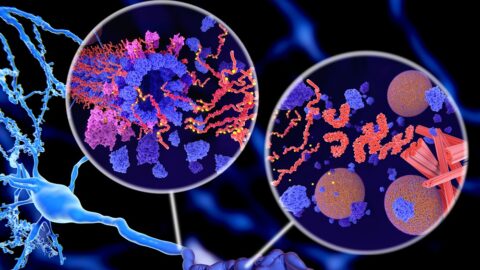
Researchers publishing in Cell Reports Medicine have described the development of a lipid nanoparticle (LNP) that delivers mRNA to neurons in order to stop the formation of tau aggregates and fight Alzheimer's disease. Tau and amyloids Amyloid beta deposition between neurons and tau aggregation within neurons are both hallmarks of Alzheimer's disease, and evidence suggests...

February 23, 2026
In Aging Cell, researchers have explained how the sirtuin SIRT6 protects against proteostasis-related brain disorders by maintaining the function of nucleoli and limiting protein production. The nucleus and nucleoli Loss of ProteostasisThe loss of proteostasis is the failure of the protein-building machinery of the cell and the accumulation of misfolded proteins, which is one of...

October 17, 2025
Scientists have found that a gene on the X chromosome, which escapes silencing, promotes inflammation and neurodegeneration in a mouse model of multiple sclerosis, but the effects can be reversed with metformin. Human RNA sequencing data supports these findings [1]. Why are women more vulnerable? Multiple sclerosis (MS) is an autoimmune and neurodegenerative disease that...