
One of the oldest and biggest longevity conferences moved this year across the Atlantic, from Copenhagen to Boston. The new location brought ARDD close to several important longevity hubs and might have contributed to this edition’s practical, entrepreneurial, and forward-oriented spirit. We have already reported on the unprecedented panel where FDA named longevity a priority. Now, we bring you a curated selection of talks spanning areas from calorie restriction to creating “digital twins” for human patients and achieving longevity escape velocity in the foreseeable future. We apologize for not being able to include many other equally exciting and informative talks.
Vishwa Deep Dixit on Metabolic Checkpoints in Inflammaging
Vishwa Deep Dixit of Yale presented cysteine and taurine metabolism as two checkpoints that link nutrient availability to the aging-related inflammation known as inflammaging.
The NLRP3 inflammasome is a protein complex that drives inflammatory responses in tissue-resident macrophages. According to Dixit, increased inflammasome activity is associated with biological age and mortality, while animals with lower NLRP3 activity are protected from multiple degenerative changes.
To understand what regulates this complex, Dixit’s team started by analyzing results from the CALERIE calorie restriction trial in humans. Interestingly, the target was 25% calorie restriction, but participants achieved only about 14%. Dixit suggested this might be closer to what people can sustain long-term in real-life conditions.
Longitudinal adipose-tissue metabolomics showed lower cysteine and glutathione but higher taurine. Dixit interpreted this as a shift in sulfur-amino-acid metabolism toward taurine production. The transsulfuration pathway connects methionine to cysteine, which, in turn, supplies both glutathione synthesis and the taurine pathway.
To test cysteine’s role, Dixit’s team combined deletion of a cysteine-producing enzyme with dietary restriction in mice. The animals lost about 30% of their weight within six days. This was accompanied by the conversion of white fat into thermogenic brown/beige fat. The effect was so severe that the mice had to be euthanized.
Dixit reminded the audience that restricting methionine, another amino acid, has extended lifespan in multiple animal studies. However, historical methionine-restricted diets also lacked cystine, cysteine’s oxidized dimer. Dixit suggested that cysteine depletion is what actually drives the benefits attributed to methionine restriction.
In C. elegans experiments reported in a preprint, Dixit’s team recorded longer lifespans and improved survival after heat stress with cysteine restriction. Methionine restriction did not produce those benefits. Adding back cysteine reversed the heat-stress survival advantage.
According to Dixit, humans in calorie-restricted states prioritize making taurine, of which cysteine is a precursor. Giving taurine to old mice reduced inflammatory cytokine levels. Conversely, experiments showed that less taurine in the system led to stronger inflammasome activation.
In activated macrophages, intracellular taurine levels decline as taurine leaves the cell. Restoring taurine suppresses NLRP3 inflammasome activity and rescues inflammatory cell death.

But which comes first? Taurine loss persisted when NLRP3, ASC, or gasdermin D was knocked out. Dixit therefore places taurine efflux upstream of inflammasome assembly. His overarching idea is that taurine acts as a metabolic damage sensor: its efflux from the cell triggers inflammasome activation. During a Q&A period, he said that his team had not identified the exact export mechanism yet.
Dixit closed by asking whether NLRP3 inhibitors could be useful against inflammaging. His findings also suggest another way to approach the problem: keeping taurine inside macrophages. In these experiments, restoring it helped shut down the inflammatory response.
Kevin Duffin on How Tirzepatide Changes Biological Aging Clocks
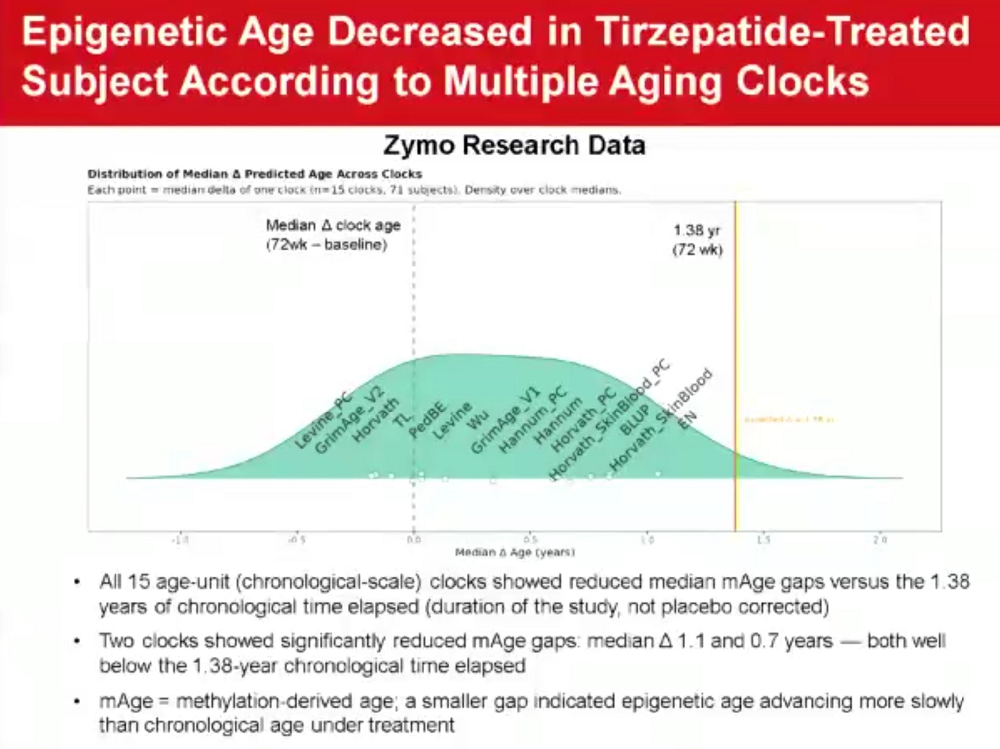
The conference saw a significant presence of Big Pharma representatives. Kevin Duffin from Eli Lilly reported on a recent trial of the effect of tirzepatide on a battery of biological age clocks. Tirzepatide is a dual agonist against GLP-1 and GIP. It is the active ingredient in Mounjaro, which is branded for type 2 diabetes, and in Zepbound, which is branded for overweight and obesity.
Duffin first reminded that his company has run tens of clinical trials on tirzepatide and other GLP-1-based drugs and has seen significant improvements in weight loss, obesity, and other parameters, such as liver, kidney, and cardiovascular disease. He mentioned significant reductions in hospitalization in heart failure as well as in all-cause mortality.
“Yesterday, we talked about what is a good aging drug,” Duffin said. “One of the definitions was a drug that shows improvements in multiple organ diseases. Well, I think we checked the box there.”
Finally, the company decided to look at biological age clocks, including organ-specific clocks. Duffin presented data specifically about epigenetic (methylation-based) clocks. An impetus to do the study, he noted, came in part from Novo Nordisk, Lilly’s competitor in the GLP-1 field, presenting data on a small cohort at the last-year ARDD.
The trial, named SURMOUNT-5, is one in a group of trials in patients with obesity. It was done on a relatively young population, overweight but not diabetic. However, for the clocks study, older patients, aged from 50 to about 80, were picked out.
The trial, according to Duffin, produced good outcomes. It looked at tirzepatide versus semaglutide, with both drugs producing significant weight loss, reductions in blood pressure, fasting insulin, triglycerides, and LDL cholesterol. However, in his talk, Duffin only gave details on the tirzepatide results.
Since it was a 72-week study, the participants’ chronological age increased by 1.38 years. Some of the clocks showed a slight increase versus baseline but smaller than the chronological age increase. A minority of the clocks showed decreases even compared to baseline – in other words, rejuvenation rather than slower aging.
Duffin mentioned that, as a rule, second-generation clocks showed stronger age decreases. Pace-of-aging clocks were also used (DunedinPACE and FraminghamPACE), showing a reduction in the pace of aging with the drug.
The team sent blood samples to two companies: Zymo and TruDiagnostic. The latter also measured organ-specific aging, recording biological age decreases in multiple organs and systems, including the heart, immune system, kidney, and liver.
“I point those out specifically because we saw good clinical endpoints in those disease areas in our clinical trials,” Duffin said. He noted that this consistency between clinical endpoint data and biomarker data is exactly what we want to see in longevity trials. Epigenetics were also used to predict multiple protein biomarker changes. Many, but not all, changed concordantly.
Can the effect be separated from weight loss? When asked this during a Q&A period, Duffin said that the benefits probably come mostly from weight loss and improved glucose regulation.
Alex Zhavoronkov on AI-driven Drug Discovery for Longevity
One of the conference’s founders, Alex Zhavoronkov, CEO of Insilico, presented results from a 12-week Phase 2a trial of rentosertib (an AI-discovered inhibitor of TNIK developed in-house by Insilico for idiopathic pulmonary fibrosis) and a subsequent proteomic analysis published last month in Nature Biotechnology. However, before diving into the data, he discussed at length the wider topic of drug discovery for longevity.
Although today, no drugs or therapies exist that significantly prolong human lifespan, adding even three years of life to everyone on the planet “is more lifetimes than we ever lost in all wars ever fought,” Zhavoronkov said. This makes increasing longevity one of humanity’s most important goals.
Unfortunately, most current strategies for identifying longevity therapeutics work slowly. Insilico claims to offer a sustainable business model of making money and reinvesting it back into science with the use of AI, which profoundly speeds up preclinical discovery.
As much as the company and its founder are passionate about longevity, aging research is currently more of a byproduct, according to Zhavoronkov. The idea is to find therapeutic targets that are present in aging and disease at the same time, approve candidates for a specific indication, expand the number of indications, and then try to go after aging. About 70% of Insilico’s pipeline consists of dual-purpose approaches.
“The reason we chose IPF as the first indication is that, if you are developing a longevity therapeutic, you need to outperform the standard of care,” explained Zhavoronkov. “In some diseases, it’s almost impossible with a longevity therapeutic, because it is likely to work very mildly. In our case, we wanted to show it in an indication where nothing works.”
Zhavoronkov then moved to the results, which he called very early and preliminary. Rentosertib showed a 98 ml increase in the amount of air a person can forcibly exhale (forced vital capacity) with the higher once-daily dose, which he described as “a very promising trend.”
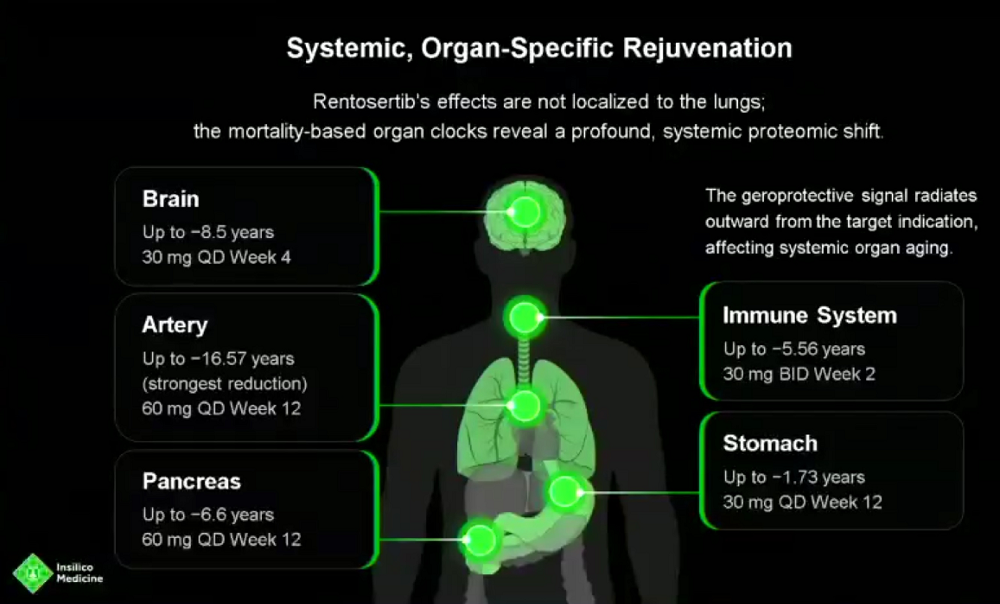
Switching to the newest analysis, Zhavoronkov reported using six proteomic biological age clocks on 42 participants, including models trained to predict chronological age or mortality risk. The clocks indicated reductions in estimated biological age of roughly three to six years after four weeks. The estimates then partly rebounded, with the extent varying between clocks.
Organ-specific estimates also shifted. The most striking was a reported 16.57-year reduction in an arterial clock. To understand whether the drug only affects the disease itself or aging in general, the team compared its protein effects with age-associated patterns in UK Biobank. The drug reversed the trajectories of some of the proteins identified in UK Biobank as responsible for aging. According to Zhavoronkov, the effect had a strong senomorphic component (IPF is thought to be driven in large part by cellular senescence).
Interesting dose-dependent effects emerged. “If you administer it at high dose once a day, it looks more disease-relevant,” he noted. “If you give it twice a day in smaller doses, you see more of an anti-aging effect.”
Vadim Gladyshev on Measuring Aging to Understand and Target It
In a sprawling talk, Harvard professor Vadim Gladyshev shared his vision on measuring, targeting and understanding aging, along with some exciting results from his prolific team.
This team, he said, is interested in how function is built with age, from early development to late life. Gladyshev was one of the first scientists to investigate “embryonic reset” – the mysterious disappearance of the signs of aging that occurs in early embryonic development and allows young organisms to be born from old organisms, permitting the continuation of life. The damage levels – what Gladyshev calls the “deleteriome” – begin to increase from this point on all the way until the end of life, even though function follows a different path; we are at our best when we are young adults.
Gladyshev’s team is also interested in organ- and system-specific aging. Not everything in our body fails at once: rather, certain organs and systems age faster in different people, which opens the door to early interventions.
Targeting these “weak links” is one of three major ways of controlling lifespan, he said. Remodeling physiology is another one, including interventions like calorie restriction and rapamycin. This is the most direct and immediate approach, but the expected gains in lifespan are modest.
In this view, achieving radical lifespan extension requires overcoming species-level constraints: increasing maximum human lifespan by drastically slowing down aging. In the future, this can potentially be done with approaches like rejuvenation, replacement, and complex coordinated intervention combinations.
“As you realize, our main goal is to understand aging,” Gladyshev said. “Everything else is an application of that.”
Long-lived species can provide many useful insights. Gladyshev noted the immense differences in lifespan between closely related animals, which proves that tweaking biology can affect aging way stronger than currently known interventions. A similar phenomenon occurs across cell types: despite having the same genome, some cells live only a few days, while others can survive for decades. Gladyshev called their research into these topics “discovering the rules of aging.”
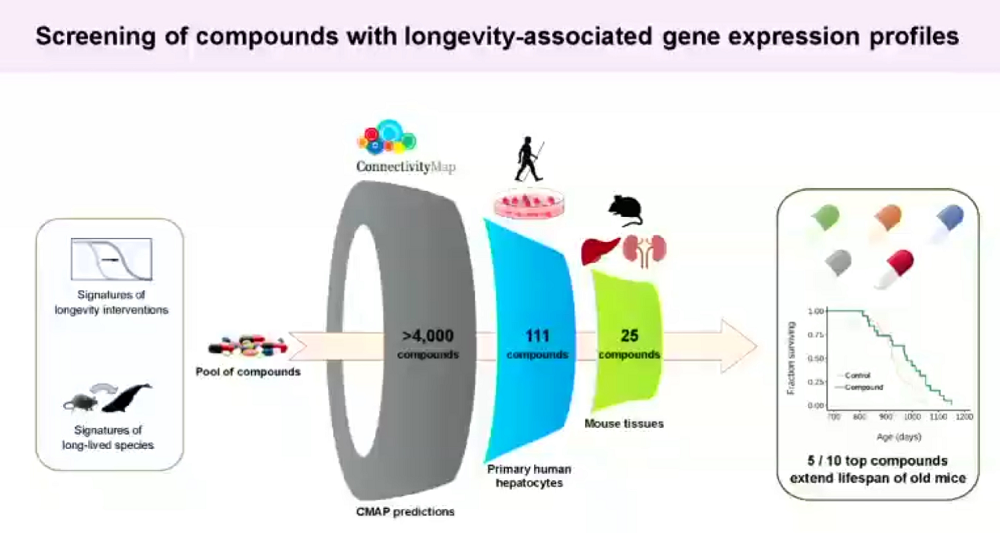
One approach involves longevity-associated expression patterns. The team computationally screened more than 4,000 compounds, then narrowed the list of candidates through tests in human liver cells and mouse tissues. Of ten compounds selected for lifespan experiments, five extended survival in old mice.
Gladyshev explained that while epigenetic clocks are more widely used, transcriptomic data is more widely available, so the researchers built transcriptomics-based aging clocks that strongly correlate with mouse chronological age and mortality. These clocks can be used to pre-screen compounds before committing to lifespan experiments. According to these clocks, Gladyshev said, “diseased tissue is always older,” suggesting a profound connection between aging and disease. The team built a free online tool called Transcriptomic Age Calculator Online (TACO), which allows scientists to analyze their RNA-sequencing data in the context of aging.
Gladyshev touted the team’s recent work on heterochronic heart transplantation. It showed that young hearts in old mice aged rapidly, while old hearts in young mice were rejuvenated. Gladyshev suggested that older donor hearts might therefore be more useful than assumed. However, there were no significant effects on the ages of the transplant recipients’ native organs.
Finally, Gladyshev’s broader proposal was to combine molecular data, imaging, physiology, and longitudinal observations to track biological states. Measuring how the therapy’s molecular target changes is not enough, he argued.
James Peyer on Reversing Metabolic Decline Through AMPK Activation
Cambrian Bio has been around for a while, and its founder James Peyer has presented at many conferences. This time, he had exciting new study results to talk about, but not before describing the company’s philosophy: “Cambrian has developed a reputation in this aging biology space for doing the obvious thing, which is to take… pathways that come up again and again in our study of aging biology, but we haven’t been able to drug successfully.”
Two concrete pathways Cambrian is working on are MTOR and AMPK, and this talk was focused on the latter. AMPK is a major regulator of metabolism. It mobilizes energy from the liver and fat tissue, delivers it into the cell, and coordinates it use in the mitochondria to increase energy reserves. As such, it also mediates response to exercise.
Peyer first mentioned metformin as an imperfect AMPK activator. Metformin, he said, gets AMPK activated by inhibiting mitochondrial complex I. Essentially, AMPK activation is paid for by stifling mitochondrial energy production, which might explain metformin’s interference with exercise. Cambrian has been looking for an AMPK activator that escapes such trade-offs.
Peyer noted that some of the previous attempts to develop AMPK activators, such as by Merck with their MK-8722 candidate, led to increased glucose and fatty acid uptake by muscles with concomitant upregulation of mitochondrial function, which caused glycogen accumulation, specifically in cardiac muscle. The opposite approach – stimulating mitochondrial energy production without bringing in extra fuel – turned out to be cytotoxic.
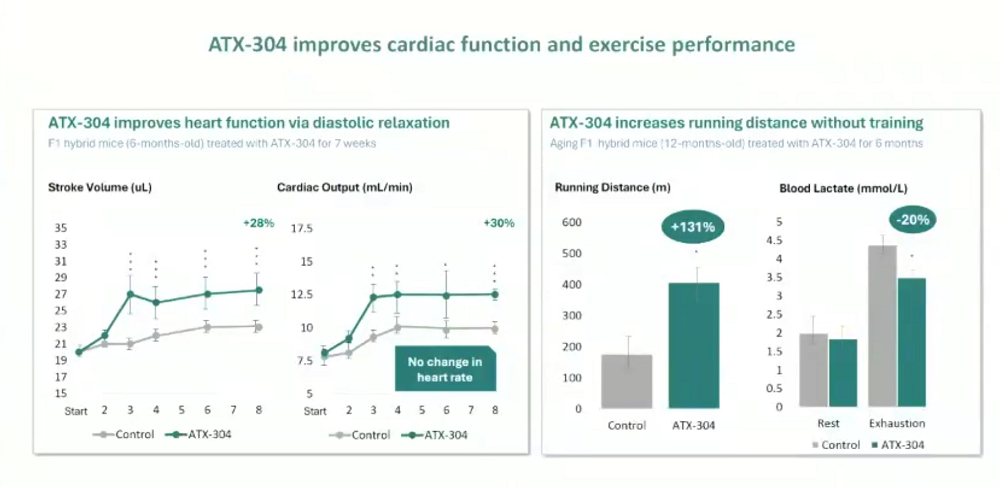
According to Peyer, Cambrian’s candidate ATX-304 successfully activates both sides of the pathway; oxidative phosphorylation “increases in a dose-dependent way in the same concentration ranges that you’re increasing glucose uptake,” leading to an actual decrease in muscle glycogen. This increase in metabolic rate changes cells’ composition, driving up the levels of all five mitochondrial complexes, which suggests large-scale mitochondrial biogenesis.
The next question is: can it mimic exercise effects? Indeed, a seven-week trial in mice led to increased stroke volume and cardiac output without affecting heart rate, an effect seen in athletes. Despite a 131% increase in running distance, blood lactate levels in treated mice were actually lower, hinting at superior mitochondrial function.
Cambrian found its indication in obesity. Weight loss in obese mice was comparable with semaglutide, but, importantly, there was no change in food consumption or loss of lean mass, which is a major concern in GLP-1-based therapies. Combination therapy with semaglutide increased weight loss, still without lean mass loss.
Weight gain after stopping GLP-1-based therapy is a known problem. However, mice that had lost weight on semaglutide did not regain it when ATX-304 was used as a maintenance drug.
The next big test would be translating these results into humans. Peyer reported on a small Phase I trial with 23 obese, pre-diabetic participants. The slides were marked confidential, but the company has previously released some data. According to these press materials, ATX-304 produced statistically significant, time-dependent improvements in lipid metabolism and body composition.
ATX-304 increased resting metabolic rate by 8%, consistent with the drug’s mechanism of action. Importantly, no mitochondrial failure or increase in body temperature and 24-hour heart rate were observed. More robust human studies that could prove significant weight loss and muscle preservation are on the way.
David Sinclair on NAD Metabolism and Epigenetic Restoration
Harvard professor David Sinclair, one of the most recognizable names in the longevity field, reported on the various directions that his lab has been pursuing. One of the less flashy ones involves boosting the levels of NAD, a molecule that facilitates numerous crucial cellular processes, including DNA repair. “My lab and others have shown that NAD boosting and sirtuin activation as a downstream target are beneficial in mammals,” he said.
The results Sinclair presented come from a ten-year-long project and have not been previously disclosed. His team, he said, discovered “a new type of biology and a new structure in mammalian cells that forms with aging.” They call these structures “inflammules.”
The research was done in yeast cells, a traditional aging model. Inflammules, Sinclair said, are a major reason that NAD is consumed increasingly fast in senescent cells and in older tissues. Even though some research suggests that NAD blood levels don’t decline with age, in many tissues, such as in the brain, they do.
Inflammules consume NAD through PARP14 and promote inflammatory signaling through TRAF6 and NF-κB, contributing to the senescence-associated secretory phenotype (SASP). Disrupting inflammules increased NAD levels in aged fibroblasts. The idea is to address a source of NAD consumption, rather than simply increase its supply.
Sinclair then moved to his Information Theory of Aging, which postulates that much of aging stems from gradual loss of information on how cells should behave (exdifferentiation, or dedifferentiation). A crucial element of the theory is the existence of a hypothetical back-up copy of this epigenetic information in every cell. Sinclair’s lab is currently trying to understand the structure of this information repository. Sinclair signaled that some results might be coming.
The lab does a lot of work on the phenomenon that this theory attempts to explain: epigenetic restoration. From the beginning, Sinclair’s team decided to forgo the classic Yamanaka reprogramming factor, because the full cocktail (OSKM) had already been known to be toxic. Eventually, the researchers discovered that taking out one factor (c-Myc, a known oncogene) reduces the risk while preserving the reprogramming effect. Even lifelong treatment in mice proved to be safe. The team was able to restore vision in mice and non-human primates. Today, Life Biosciences, co-founded by Sinclair, is running the first ever human reprogramming trial aimed at glaucoma and NAION (“the stroke of the eye”).
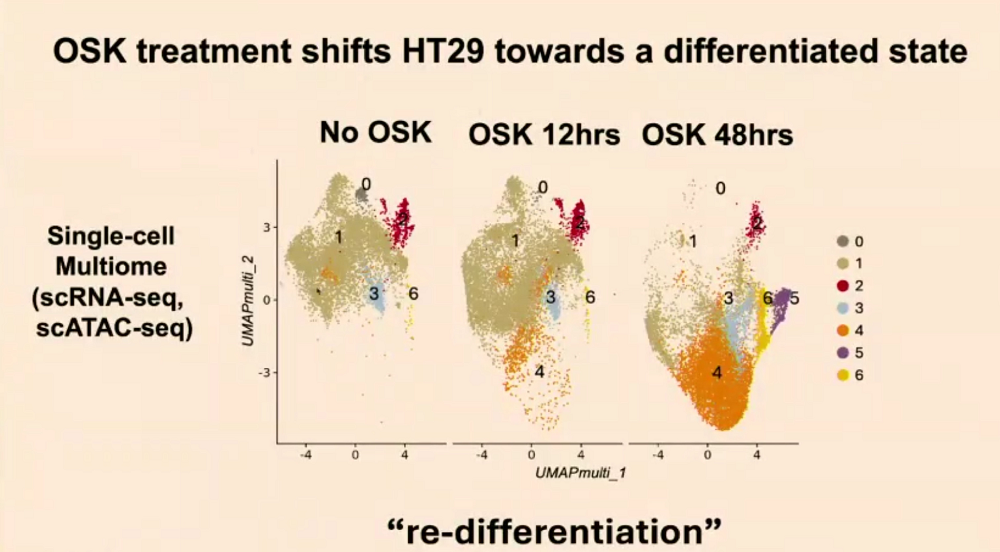
Sinclair then shared more previously undisclosed data. His team tried putting OSK into cancer cells and tumors in mice, expecting it to either reinforce lineage programs (the cell reacquires its identity), cause further epigenome destabilization, or not have any effect. They found that OSK-treated cancer cells slow down and die. Single-cell multi-omics confirmed that many of the cancer cells regained their cell type identity.
Another project is creating a “chemical reprogramming pill” that could treat the whole body, unlike the viral vectors that are used in Life Bio’s trial. The team screened a total of 80 billion molecules using AI to get down to a small number of possible epigenetic restorers.
The one they are focused on the most is SL-100. In vitro, SL-100 protects ALS motor neurons from stress, preserving neurite length. The treatment benefits even healthy neurons. Molecular assays showed signs of rejuvenation in the treated cells. The scientists ran a pilot lifespan and frailty trial in progeroid mice (LAKI) and detected strong effects on frailty and lifespan, with a 25% mean and a 33% maximum lifespan increase.
Morgan Levine on Why Virtual Cells Alone Won’t Solve Aging
Morgan Levine, former Yale professor and principal investigator at Altos Labs, revealed that she left the company about two months ago to lead a stealth startup, granting the audience a rare glance into what that startup might be up to.
Her talk, like several others at the conference, revolved around virtual cells – computer models that can simulate various aspects of living cells. Levine started with a cold shower, stating that these models “are probably not enough to solve aging.”
The problem, she said, is biology being extremely complex and multidimensional. Innumerable events happen in a cell simultaneously, creating a dynamic and constantly changing state.
The number of experiments needed to understand a cell is immense. Testing whether each of roughly 20,000 protein-coding genes should be turned down or up already requires about 40,000 conditions. Add different cell types, environments, genetic backgrounds, time points, and measurements, and the number reaches billions. Combinations of targets make the problem worse, and there are about 1060 possible drug-like small molecules. “You can imagine, as we start to get up to this multidimensional complexity, this is really infeasible to do experimentally,” Levine said.
This complexity problem can theoretically be solved by in silico experimentation. Morgan, however, is interested in more than just doing a screen. The question virtual cells should be able to answer, through reasoning or other mechanisms, is how to move a cell from the starting state to the desired end state.
Most current virtual cells are built around single-cell RNA-sequencing data. However, RNA is not a cell’s state, but just one of its many dimensions. Capturing the complete data on every such dimension is an immense task, but much of that data also might be redundant. How do we know what we actually need to capture?
We need good benchmarks, said Levin, bringing up the Virtual Cell Challenge by Arc Institute. Its benchmarks test whether models can predict changes in gene expression and distinguish one perturbation from another. However, one metric was sensitive to the scale of predictions, which created opportunities for competing teams to increase their scores without actual biological improvement. For Levine, this illustrated the importance of benchmark design and correct incentives.
“Perturbation-response prediction, particularly RNA-seq, is not the right benchmark for virtual cells, in my opinion,” she noted. “I don’t think it’s that useful for us to be generating raw data, because you’re still lacking interpretability.” Biological data is often very noisy, and when models generate raw data, that includes the noise. Therefore, generative AI may not be the best choice for virtual-cell models.
“The way I think about every type of modality is just an incomplete reflection of this latent state that we’re actually trying to learn,” Levine said. “That’s the thing we care about: how do you actually perceive the latent state and make interpretations of what that means, not how do you perfectly generate the data?”
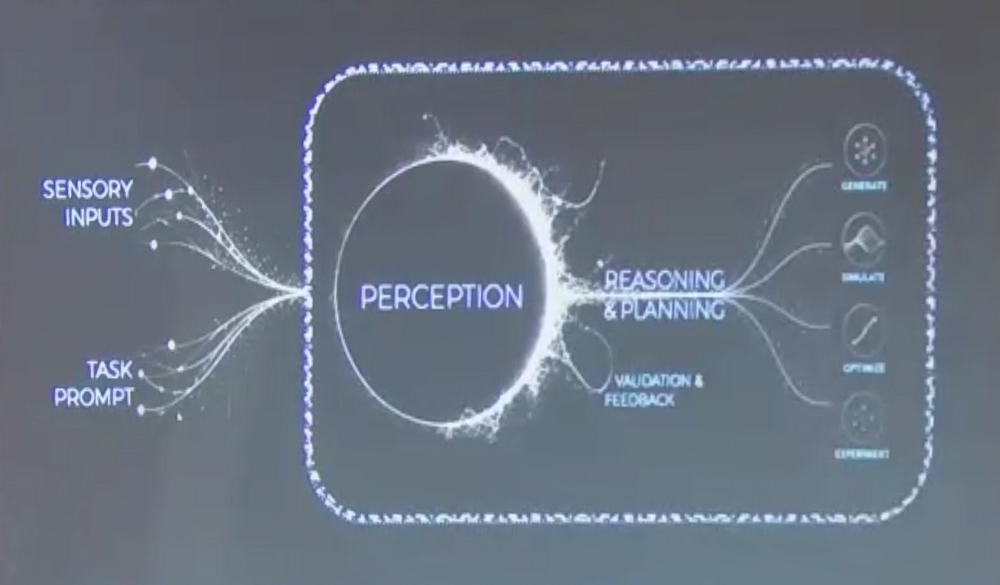
She argued that we need to build more general models of biology, not just cell models, that capture all the different states of biology and modalities. She likened those different modalities to senses that supply raw data to the brain, which in turn produces perception and reasoning.
“My new endeavor is trying to build this perception layer of biology,” Levine said. She envisions world models of biology that are fed those “sensory inputs” and task prompts and are capable of reasoning their way to solutions.
Derya Unutmaz on How AI Could Help Defeat Aging
In contrast with more technical and detail-laden talks, Derya Unutmaz, professor at the Jackson Laboratory, unfurled an optimistic general vision of AI helping humanity defeat aging. The groundwork for this breakthrough has been laid by the new tools that have appeared in recent years and contributed to accelerated data generation, such as high-throughput single cell sequencing and CRISPR. Where there is a lot of data, AI can really show its strength.
However, the important part is to use AI, in particular AI-controlled robotic labs, to scale data generation up. Unutmaz expects this virtuous circle to transform biological science and healthcare. Biomedical AI, he said, is already making a tremendous impact in at least three different areas: data representation, prediction, and generation.
Unutmaz told the audience about last year’s collaboration between his lab and OpenAI. A while ago, his team hit a snag with an experiment involving glucose uptake by T cells, which influences their differentiation into subsets. Something in the results did not make sense, and the team did not know how to proceed to figuring out the mechanism.
They then fed the data and the experiment design to ChatGPT Pro when it came out last year. After deliberating for 18 minutes, it proposed an idea that immediately explained the data and an experimental way to validate it. AI scientists that are able to reason over the data, suggest hypotheses and experiments, will soon be developed and paired with smart robotic labs, Unutmaz predicted.
The ultimate goal would be to create the “probabilistic digital twin” – a computer simulation of a particular body’s biology. This would allow early diagnostics, prediction of future conditions, meaningful N-of-1 trials, and development of personalized therapies. A set of such “digital twins” encompassing most common human phenotypes may drastically reduce the need for large-scale clinical trials.
“That’s continuous data generation,” Unutmaz said. “You have this discovery flywheel. You have AI generating the hypothesis, analyzing the data, and coming up with the mechanisms. Then you have screening in silico, which generates more data, determines toxicity, and so on. Then you have the robotic labs, which try the experiments and try to optimize whatever molecule has been designed. Then you also have some clinical feedback from real-life data that feeds into that. It just keeps going, and it gets better and better. The more data it generates, the better it’s going to get.”
This future revolution would be highly relevant to aging because aging is both individual (everyone ages somewhat differently) and begins much earlier than conventionally assumed, as Vadim Gladyshev also pointed in his talk. “We have the resilience to fix those things until a certain time point, because if you didn’t, you would start aging right away,” Unutmaz said.
What prevents most people from aging early – unlike progeria patients – is the mechanisms that are fixing various types of damage fast enough. AI-driven personalized medicine would allow us to keep these mechanisms in good shape for much longer. In fact, Unutmaz predicted that today’s 30-40-year-olds will never age, essentially hitting longevity escape velocity (LEV).