
July 22, 2026
A recent review discusses the development of biological aging clocks, their capabilities and limitations, the discoveries they enabled, and possible future developments in this area [1]. How do we measure aging? Developments in science and technology have allowed researchers to move beyond speculation and philosophical debates about aging to study its molecular underpinnings and the...

June 30, 2026
A new study suggests a way to predict whether existing drugs can extend human lifespan. This method uses a network approach that detects longevity signals in protein interactions [1]. Slowing aging with existing drugs? Finding drugs that can slow aging, a multifactorial process involving thousands of genes, is hard. Directly measuring the effect of a...
June 26, 2026
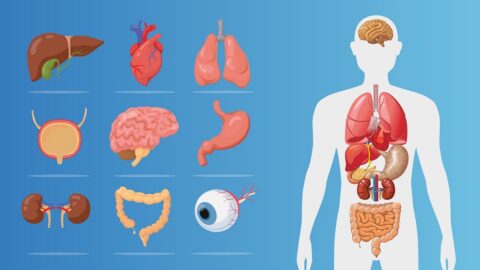
A new study has used aging trajectories of various cell types to predict diseases such as Alzheimer’s and lung cancer [1]. This expands on previous research into organ-specific aging. Age is more than one number Gone are the days when aging was assumed to be happening uniformly across every tissue at once. Today, we know...

May 08, 2026
Dr. Junyue Cao is a professor at the Rockefeller University, and his lab develops ultra-high-throughput single-cell technologies and applies them to the biology of aging. In a recent paper published in Science, his team used a technique called EasySci-ATAC to profile chromatin accessibility in about seven million cells from 21 mouse tissues across three ages,...
August 04, 2025
Researchers have developed a transcription-based clock that estimates brain age and used it to identify potential interventions against age-related neurodegeneration. Deciding which -omic to use While neurodegeneration and brain aging are not precisely the same [1], the two are tightly linked [2]. Substantial previous work has found that directly addressing brain aging in multiple forms,...

July 07, 2025
The longevity field hasn’t been very good at naming things, but one notable exception is “inflammaging”: the low-grade chronic inflammation that correlates with aging. Recognition has been growing that inflammation, the ubiquitous reaction of the immune system to various stressors, is a major driver of many age-related diseases and possibly one of the limiting factors...