James Peyer on Turning Aging Biology Into Medicine
- Bringing drugs from longevity-focused labs into the clinic is a unique challenge.

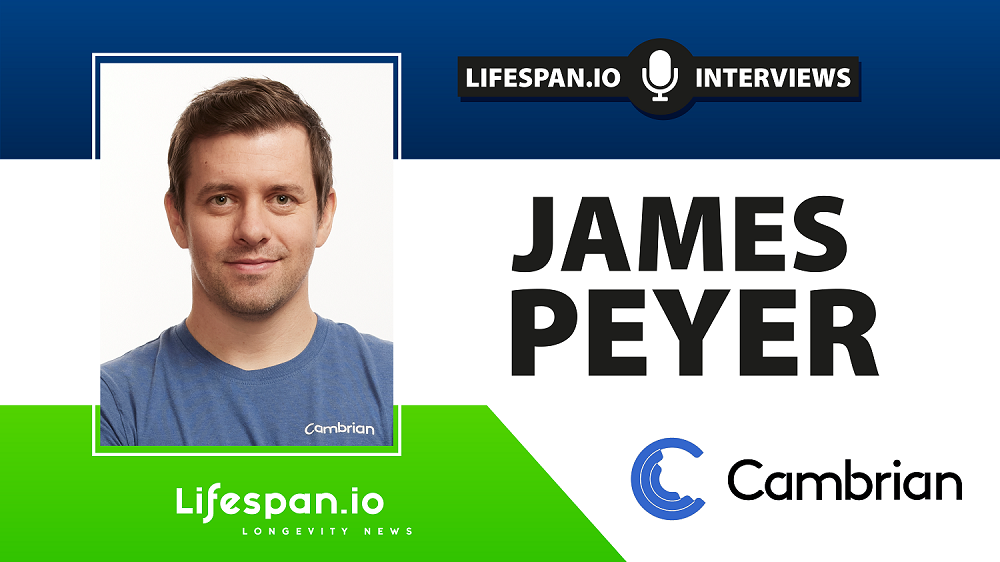
James Peyer, co-founder and CEO of Cambrian Bio, is passionate about longevity but clear-eyed about what it would actually take to extend human lifespan. Cambrian works on the basics of aging biology – nutrient-sensing pathways that have been known for decades but are notoriously hard to drug – and says that it has now cleared an important hurdle: an AMPK activator that drives weight loss without lean mass loss and more than doubles endurance in mice. In humans, the drug is at an earlier stage, but Peyer shared the results of Cambrian’s first small trials with us.
Our traditional first question: how did you get into longevity, and to what extent is this personal to you?
I’ve been in the field for about 25 years. In the early 2000s, I was in high school, and my grandfather was diagnosed with cancer. Watching him get sicker and ultimately pass away made me think two related things. The first was that he had lived a wonderful life. He was in his 80s, and despite all his pain and suffering, that was the best-case scenario for most people living today: you live a really good life up to a point, then you get some horrible disease, you suffer, you diminish, and you die. That this is the best we can aspire to for our loved ones, for ourselves, for our species, is almost a type of barbarism. I thought: if anything is worth doing in the world, it’s fighting back against this horrible end that happens to everyone we know.
The second came from watching the physicians care for him. The only treatments available for his cancer at the time were chemotherapy options, and they’re horrible drugs. Not in that they don’t work – chemotherapy is, of course, very effective – but they are last-resort treatments for a disease that was already so advanced that it was going to kill him. It left me with a strong impression: why can’t we intervene earlier? Cancer has to start decades before it appears as a late-stage disease. Same for Alzheimer’s, same for heart attacks.
That led me to the very early work on the biology of aging. At the time, a lot of people were trying to create unified theories about the one cause of aging. Thankfully, the field has moved away from that and embraced more of a constellation of complexity. I’ve been fascinated with it ever since.
When I was finishing my PhD, I saw so many big discoveries being made. Mouse lifespan extension was happening robustly for the first time, over and over, with different drugs and different genes, but almost none of those discoveries were being moved into drug development for preventative medicines. My joke is that scientists would go to a pharma company or a venture capitalist and hear back again and again: “Aging is not a disease, so go back to your lab and keep playing with your mice.”
I decided to try to unclog that bottleneck. The biggest idea that I think I helped push forward is systematizing the notion that any drug that could be used for aging, a gerotherapeutic, would first be approved for a specific indication, whether a rare disease, a type of cancer, or a metabolic disease. I call that a stepping-stone indication on the way to a broad approval for a preventative purpose. I started Apollo Health Ventures, the first VC to really build companies around aging biology. For the last seven years, I’ve been running Cambrian, which started a number of drug development programs and has now focused on a few that have started flying. The furthest along is our AMPK network activator, which is moving into Phase 2.
Moving from particular indications to aging itself has become the default thinking. But, a new paradigm seems to be developing, with XPRIZE Healthspan and similar efforts, where we might see drugs approved for improving function in generally healthy people.
Yes, particularly this idea of intrinsic capacity. XPRIZE looks at multiple functions, which matches what ARPA-H is doing with intrinsic capacity in its PROSPR program. Those are amazing explorations, but they are not investable theses yet. This is why PROSPR and XPRIZE need to exist, to open up this new frontier, but a sophisticated investor wants the drug to be approved. If it can then expand into some new white space, like improving intrinsic capacity in healthy elderly people, that’s excellent; that’s how we get to the bigger market.
But, at least in the beginning, it’s not going to be never-approved drugs that get their first approval for intrinsic capacity. It’s going to be drugs that are on the market for something else and get a secondary approval, maybe very shortly after the first.
Once we have drugs that work for intrinsic capacity, that could create a marketplace for developing drugs directly for it. The same is happening with obesity: a diabetes drug was repurposed for obesity, and now a whole slew of new drugs, including ours, are going for obesity first.
I think this can be not only a launch pad, but also a bottleneck. Like you said, we’re starting to have great drugs for obesity. But this also means that a geroprotector tested for obesity might simply not be as good as these drugs and get discarded.
Totally right. This is why one of my big refrains is that the first geroprotectors, the ones that will open up this field and allow other things to walk behind them, need to be able to walk and chew bubble gum at the same time. They need to be a great drug for whatever the first disease is and also have the multi-disease prevention effect that we associate with gerotherapeutics. That does exclude some potential drugs, but the hope is that once a pathway has been established, whether through XPRIZE and PROSPR or through other mechanisms, you can have a second or third wave of drugs that say: “We might not be the best heart failure drug ever, but we can prevent cancer, lower the risk of heart failure, and improve cognition, all a little bit and all at the same time,” and those can go straight through the intrinsic capacity route.
I think your view is realistic and clear-eyed. I just hope things change soon.
I really want that world too, where we can go straight to prevention. The way to get there is by pushing the tip of the spear: the first candidates that can do all of these things. We have to get those recognized on the market so that the fast followers that maybe can’t do the other indication can come after them.
That brings us to the encouraging results with your candidate ATX-304. You described it as working on both sides of the equation: increasing fuel uptake and helping mitochondria use that fuel, increasing OXPHOS. How does it work?
At the big-picture level, AMPK has been a holy grail target in pharma for 30 years. Activating it extends lifespan in lower organisms. In animal models, it produces an exercise-mimetic effect: increased metabolic rate, endurance, and muscle function. And in humans, the ability to activate AMPK goes down almost linearly with age. So, the idea has been floating around for a long time that by activating AMPK, we could restore metabolism from an old state to a young state.
A bunch of drugs have tried. In my talk, I highlighted three that approached it from different sides. Metformin does activate AMPK, but none of the predictions you would make about an AMPK activator hold for metformin. It doesn’t increase exercise capacity; it actually blunts it. Metformin has very positive effects, but they come from causing energy stress, not from increased energetic activity.
Merck and Pfizer made direct AMPK activators, but those drive only half of what AMPK needs to do within the cell. If I’m exercising, my ATP levels go down, and I need to do two things: bring energy into the cell and spend it in the mitochondria to make new ATP. Those drugs did only the first part. None of them made it to human trials because they led to accumulation of extra sugars in skeletal muscle and heart tissue. It became dogma in drug development that you can’t make an AMPK activator.
The third approach is driving mitochondrial activation with what are called mitochondrial uncouplers. It turns out that if you just tell the mitochondria to spin and spin, you can run the cell out of materials, which causes ATP levels to drop and will kill the cell. These drugs were discovered about a hundred years ago and were actually the first blockbuster obesity drugs, before the FDA existed, but they were so dangerous that an overdose would kill you. The most famous one is dinitrophenol.
So, we had to come up with a drug that got in between all of these complexities and kept the cell in balance: at any level of the drug, it would bring in sugar and spend it in the mitochondria at the same rate, staying in homeostasis and never pushing respiration beyond what the cell can keep up with physiologically. Luckily, our physiological range is really flexible. When we exercise, we can ramp up energy production dramatically.
What we found with ATX-304 is that at any concentration, you get this increase in AMPK activity, cellular glucose uptake, and mitochondrial respiration, and it never kills the cell until there’s so much drug that it’s precipitating out of solution. It’s the same with animals. Our only major adverse event, even after treating dogs for nine months before we started human trials, was exaggerated weight loss, and it came along with an increase in food intake: the dogs would eat more but lose a lot of weight. That was the main thing that limited us, and only at super-high concentrations.
I think you also tried pairing it with GLP-1-based drugs and got a synergistic effect – a pretty scary weight loss.
Yes, in mice; we haven’t done it in other animals. ATX-304 alone leads to about the same weight loss as semaglutide (Ozempic): about 20% in obese mice over a month. When we combined it with the GLP-1, the mice ate less and had a higher metabolic rate, and the weight dropped dramatically: after 15 days on the GLP-1, 11 of them on GLP-1 plus ATX-304, the mice had already lost almost 30% of their body weight.
That was way too fast. We ran this with a lab that does only obesity experiments, and their animal protocols were not written to handle weight loss at that speed. We had to stop the experiment, take away the GLP-1, and keep the mice on ATX-304 alone. So, the synergistic effects seem very powerful.
Weight loss comparable to semaglutide is a big thing in itself, but it also came with lean mass preserved and without appetite suppression, correct?
That’s right. Those are the three big things that make this really different. First, the animals eat the same or even a little more, because all the weight loss comes from increased energy expenditure, not from reduced caloric intake. Second, there are no signs of the things that make appetite go down: the nausea, the reduced stomach motility, the mild gastrointestinal distress.
Third, because the muscle is very metabolically active, it’s similar to how, with exercise, you send your body a signal: “I’m using my muscle. Even though I’m at a caloric deficit, you’re not allowed to take the protein from my muscle and burn it elsewhere. Pull deeper from the fat.” In monotherapy, all of the weight loss comes from fat mass reduction. Even in the combination, we saw no reduction in lean mass, because the AMPK activator sends this protective signal to the muscle.
How do you see the future of your drug? Will it replace GLP-1-based drugs or work alongside them? I think you also said it could act as a maintenance drug.
We don’t think of this as a replacement for the GLP-1s. The new-generation GLP-1 drugs with 30% weight loss are going to be the fastest way to lose weight, and that will remain attractive for a lot of people.
For our drug, I see three possibilities. First, it will present a different path for people who don’t want to take a GLP-1, can’t deal with the nausea, or are very worried about muscle loss. I expect our weight loss in humans to be slower than with strong GLP-1s. We might get to the same place, but it will be more of a linear decline, which is what you see in people who take up a lot of exercise, as opposed to the steep drop when people stop eating.
Second, a lot of people are not maximal responders on their GLP-1. Either they can’t go up in dose because the nausea is too bad, or their appetite is reduced but not enough, and they start eating more again. You could add our drug to help them get to their target weight.
Third, as you alluded to, is maintenance. About half of the people who start a GLP-1 stop taking it within a year. There are a bunch of reasons, but the one I think about the most is the weekly injection. At the beginning, the numbers on the bathroom scale go down every single week. Then, around six months, they plateau. People aren’t losing any more weight, but they still have to inject themselves every week and pay for the drug, so they stop. And when they stop, they regain weight really quickly. An oral pill that at least maintains your weight, and might even continue your weight loss trajectory, while letting you eat more again and avoid the nausea – I think that’s going to be very compelling.
All three are commercial opportunities once we get into treating people with obesity and overweight, and that doesn’t even get to the thing I know you and I are both interested in, which is what happens after that: can we treat broader metabolic decline?
We’ll get to that, but first: your drug seems to mimic exercise, another holy grail of geroscience. The results in mice are very impressive: running distance more than doubled, and cardiac function improved. Is this the exercise mimetic we’ve all been waiting for?
We hope so. If you had to pick one gene to target for that dreamed-about exercise-mimetic effect, it would be AMPK. It has demonstrated increases in endurance again and again. It’s the sensor that coordinates our muscles’ response when we go out for a run. That’s particularly true for cardiovascular exercise; resistance exercise can work a little differently. AMPK is a catabolic mechanism that has more to do with burning energy and creating new ATP, as opposed to stacking on new muscle, which is more about myostatin-type mechanisms.
As you said, this works beautifully in animals: without training, mice double their exercise endurance. Next year, we’re planning to run a study looking at whether the drug improves exercise capacity in humans. It’s a very exploratory study, but it will give us a first sign of whether those effects translate. Of course, that’s not something we can get a drug approval for. It would be yet another reason to take this drug rather than a GLP-1 or something else if you want to lose weight or keep your metabolism up.
You’ve also run human trials recently, and some of the findings you presented were marked confidential. What can you share?
We can share quite a bit. We’ve tested two different doses of the drug in humans – not all the way up to the level that causes dramatic weight loss in mice, but enough to see activity and safety.
First, on safety, which is the most important thing: we saw a safety and tolerability profile comparable to placebo at every dose we’ve tested so far. Second, at about half the drug level that leads to weight loss in rodents and canines, we already see a significant increase in resting metabolic rate, about 8%, and huge increases in the observed metabolic activity of fat. Adiponectin, an adipokine produced by metabolically active fat tissue, doubles, which is far more than you get even at the weight-loss doses of the GLP-1s.
We also saw big decreases in triglycerides: the free fatty acids floating around all seem to be getting sucked into the muscle and turned into energy. Liver fat went way down, and we even started to see visceral fat go down. All of this was statistically significant in a four-month exploratory trial with 23 patients.
That’s really impressive. Now, the flip side. Increasing energy expenditure sounds good, but I worry about long-term trade-offs. What happens, in terms of damage accumulation, when you keep the engine running faster for years?
As a scientist, you never want to answer that too definitively, but I can tell you what we know so far. The level of AMPK activation we’re producing seems to be not dissimilar from what a young animal or a young human has. We’re not pushing the pathway to what I would call a supraphysiological level; you want to keep it within the normal range. The overall effect – increased caloric expenditure and muscle activity – should be about the equivalent of going for a three-mile run each day.
In humans, that level of activity has been associated with a five-to-ten-year increase in healthy life expectancy. If we can keep the metabolic level in that range and the effects are similar to exercise, we feel pretty confident that it’s going to be robust.
On the preclinical side, we haven’t done mouse lifespan or healthspan studies yet, but we have done disease model studies in older mice, treating them for a year or longer, and we see no signs of rapid disease progression. In fact, all the signs point to the opposite: metabolic decline is slower, the mice are healthier, kidney function is improved, and so on.
In fruit flies and C. elegans, you get increased lifespan with this AMPK activator. So, everything points in the direction that moderate activation of metabolic activity in the muscle is probably going to be helpful long-term, but we’ll need to run those studies to see if that hypothesis is correct.
Interestingly, even though mitochondrial activity is increased, it’s all very functional, and we never see an increase in reactive oxygen species or a buildup of mitochondrial damage. In fact, the mitochondria look healthier, and ROS is about the same or even a little down.
Maybe that’s because all mechanisms are working faster, like in a younger person, including the protective, damage-clearing ones.
Could be. We do see this continuing to work better in old animals, so the question is whether all of those factors are re-engaged.
This cuts to the core of how much what we work on depends on our understanding of the biology. Whether you think aging is caused by evolutionary neglect, as in the disposable soma theory, where our systems simply did not evolve to stay at full capacity as we age, or you think aging is some kind of program that gets activated to limit lifespan, matters a lot here.
I’m firmly in the first camp. We get worse and worse at activating metabolism, so if we improve it, we’ve fixed one of the things that evolution failed to prioritize. But, if you think that the drop in AMPK levels and in metabolism has some kind of purpose, that it protects the organism or the species, then you might reach very different conclusions.
Let’s talk about the rest of Cambrian’s pipeline. ATX-304 is obviously the star now, but what else do you have in your quiver?
The second big program is our work on cracking safer versions of rapamycin. Years ago, we partnered with Novartis, one of the pioneers in making novel mTOR inhibitors. After taking over from where they stopped, we found out how to make a whole set of mTOR complex 1-selective inhibitors. These are variants of rapamycin that we’ve now shown can be dosed 50 or 100 times higher than the level where rapamycin starts causing immunosuppression, which is the main thing that prevents us from looking for all its gerotherapeutic effects in humans. We see no immunosuppression at any level with these very selective drugs.
We’re taking that forward for a regular disease indication, which we’ll announce when we get started. But, going back to the beginning of our conversation, we also think these drugs are the best candidates for hitting that composite milestone of improved intrinsic capacity, because mTOR inhibition is the best-performing pharmaceutical approach for extending healthy lifespan in mice, preventing everything from neurodegenerative disease to cancer to metabolic disease.
So, we have a collaboration with the PROSPR program at ARPA-H to run one of the first clinical trials for improving intrinsic capacity in healthy elderly people. It will be one of the drugs explored as part of this broader ARPA-H PROSPR plus XPRIZE universe. We’re hopeful that the overall effort will bear fruit and that we can be part of it.
In your talk, you described Cambrian’s philosophy as doing the obvious thing: targeting the pathways that keep coming up in aging research. But, some geroscientists don’t like that everything seems to converge on those pathways. It’s always mTOR, it’s always AMPK, rapamycin is still the top dog, and maybe that’s limiting the field. What do you think?
I think that’s correct. Many pathways that are currently unexplored will turn out to be important and give rise to great drugs. The reason the field has not moved much further than mTOR and AMPK in 20 years is that we’ve had only two compounds. Every time you try to take something forward, whether you’re an academic running a rapamycin trial or Pfizer taking an AMPK activator into the clinic, you get a failure, or it’s not quite as good as you wanted, and you say: “We have to change the therapeutic window, or get a different chemistry, and then we can test it.” And, because it’s the top-performing drug target, all the academic interest goes to how to crack that target.
Once you find a drug that solves it – you see this in cancer, you see it in obesity with the GLP-1s – the pharmas come in and build a bunch of me-too or me-better drugs for that target. Great. But academics and innovative biotechs can now say: “That target is solved, so we can focus on these next targets that have been sitting on the periphery.”
I’m talking my own book here a little, but this is why we come back to doing the hard but obvious thing: we just had to spend 10 years to create the right drugs for these core pathways, and now we can finally take them forward. If they’re successful, I really do think a lot of other candidates will come up.
Cambrian has played around with some of these as well. Our third program is a drug built around agrin, an ECM glycoprotein present in the heart that causes the heart to regenerate. Another one improves protein folding in cells, which get worse at it as they age. I find those areas super interesting, but they’re coming behind the need to solve the AMPK and mTOR chemistry.
Let me philosophize a bit. There are two competing approaches in the field. One says that we have to prove our worth: come up with successes, which will open up possibilities and show that geroscience is a real field. The other, which I gravitate towards, starts from saying that healthspan and lifespan extension is one of the noblest goals we have, and, as with the war on cancer, we should be shouting on every street corner that the world should give us the money to solve aging. Where are you on this? The success of GLP-1 drugs seems to validate the first model, because it made people talk about their longevity effects.
Sometimes to the consternation of our colleagues in the field, I am very much one of the strong voices in that first camp. The way geroscience makes an impact on the broader development of medicines is by building a gerotherapeutic and showing that it works.
You take some investors or pharma companies who look at this field mostly with derision – “nothing serious comes out of there” – and you produce a great drug that makes people’s lives better and makes them money. Then, you go from outsider to insider very fast. That’s been the direction of travel for the companies I’ve helped start throughout my career, and I feel strongly that that’s where the first breakthrough is going to happen.
But, I don’t want to discount the second piece. The more people we have shouting on street corners that this is the most important thing anyone could be doing, the more the traditional players start paying attention to the revolution going on in our understanding of human biology. Even though Cambrian is developing an obesity drug, and we don’t talk about longevity or healthspan on our website, I start every meeting, even with the most traditional pharma and biotech VCs, by saying that there is a revolution going on in our understanding of what makes us get sick and what makes us age at the cellular and tissue level. That’s what enabled everything we’ve done.
Apart from your own programs, what approaches in geroscience and longevity biotech do you find particularly promising or exciting, in the short or long term?
Honestly, the thing I’m most excited about in the short term is Loyal, the dog longevity company. I like the way they’ve built momentum on the broader coalition side. In some ways, their viewpoint is similar to mine: go build something real and make it happen.
But, instead of the stepping stone, their thinking is: “We can’t build a longevity drug for humans right away, but we can build a healthspan drug for dogs.” They’ve already met their efficacy and safety milestones, and they’re finishing their manufacturing work. So, there’s going to be a dog longevity drug on the market in the next year or so.
Within the geroscience community, the epigenetic partial reprogramming story remains interesting. The best example of doing it right is Life Biosciences. They’ve found a really good stepping stone in people with optic nerve dysfunction, and they’re going in to try to repair that and then figure out how, and if, they can expand beyond it. Even just delivering a success in that first case would be a massive triumph: something that came from longevity moving into a very complex, nuanced, but very interesting treatment for a specific indication.
The third one is when and how senescent cell clearance is going to make its way back. Unity’s drug didn’t quite get there. They tried a couple of different ways, but it wasn’t quite the perfect chemistry either. We’ve now learned so much more about the complexity of cellular senescence that I’m interested to see how it comes back. A few companies are knocking at the door in late preclinical studies.
With all your pragmatism, do you allow yourself to dream about solving aging, about longevity escape velocity, about our generation living for a very long time?
I actually don’t like “escape velocity” as a term. I have a more technical, grounded term for something close to it: progressive prevention. I do think there’s a possibility that we can get there, but it requires so much work, not only on the biology but on the regulatory and clinical trial level. I’m going to get technical, but this is what I dream about.
I like to think about the story of Magic Johnson, the basketball player. He was diagnosed with HIV in 1991, right as the first generation of HIV drugs came on the market. On their own, those early antiretrovirals bought someone with HIV only a few extra years. He started on them and lived long enough to move to the second generation, then the third, and the fourth. Today’s treatments are the fourth or fifth generation, given together as a cocktail, and someone diagnosed with HIV now can expect a near-normal life span.
The challenge, as we try to get better and better at preventing – in that case, AIDS, but think of the other conditions that come with the damage of aging – is that you need really good ways of approving drugs quickly to fold them into these combination cocktails. With HIV, you can just measure the level of the virus, and that allowed progressive prevention to happen. If we can find one such thing, or even a combination of things, we might be able to get into that scenario rapidly.
Otherwise, the first drug is going to take so long. You have to go through Phases 1, 2, and 3 in obesity. Then you have to prove that it’s useful in something else, and something else again, and eventually it gets approved for prevention. That takes 10 or 15 years, and a single drug is very unlikely to extend lifespan by 15 or 20 years. So, we need to figure out how to fold more things in quickly.
That’s why the work of ARPA-H and XPRIZE matters, along with policy changes that would let us adopt preventative medicines faster through an accelerated approval mechanism, rather than waiting for five-to-seven-year outcomes trials before drugs come onto the market. Those are the things that could get us into the progressive prevention world. I do dream about that, but I like to limit my dreaming to things we can take realistic steps towards, because just saying “Wouldn’t it be nice if…” doesn’t get us there.
About the author
Arkadi Mazin