Using mRNA to Fight Tau Aggregation in Alzheimer’s
- These nanoparticles use neurotransmitter junctions as entry points.

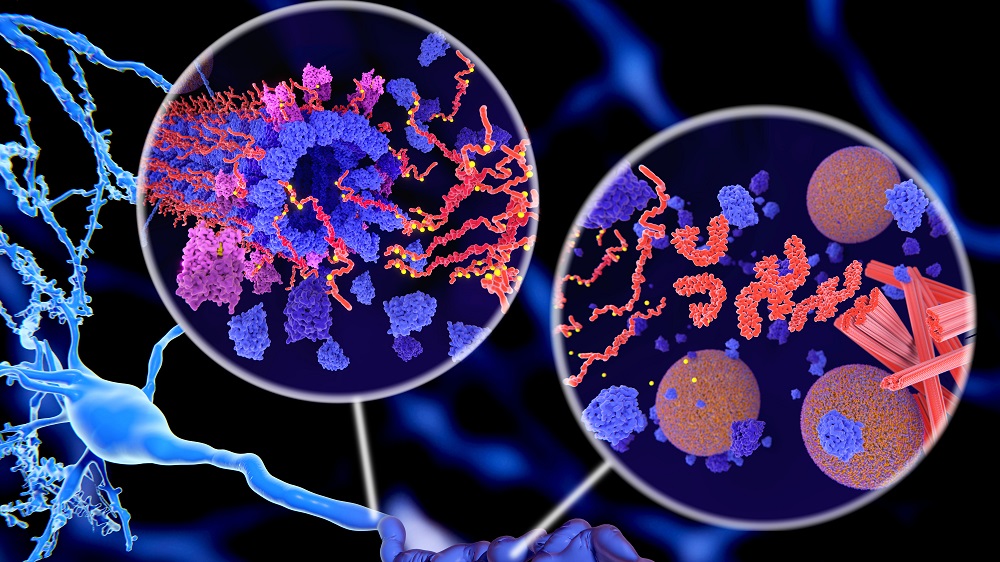
- This nanoparticle penetrates the blood-brain barrier by going through a natural neurotransmitter pathway.
- The mRNA that it delivers, TRIM11, encodes for a ligand that dissolves tau aggregates.
- TRIM11 mRNA-containing nanoparticles have substantial effects in a mouse model of Alzheimer’s.
Researchers publishing in Cell Reports Medicine have described the development of a lipid nanoparticle (LNP) that delivers mRNA to neurons in order to stop the formation of tau aggregates and fight Alzheimer’s disease.
Tau and amyloids
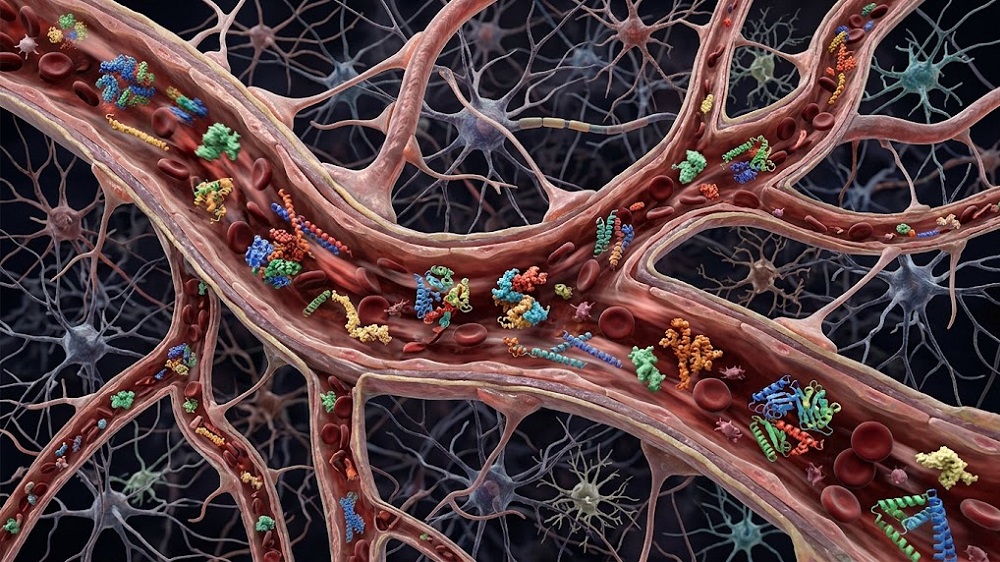
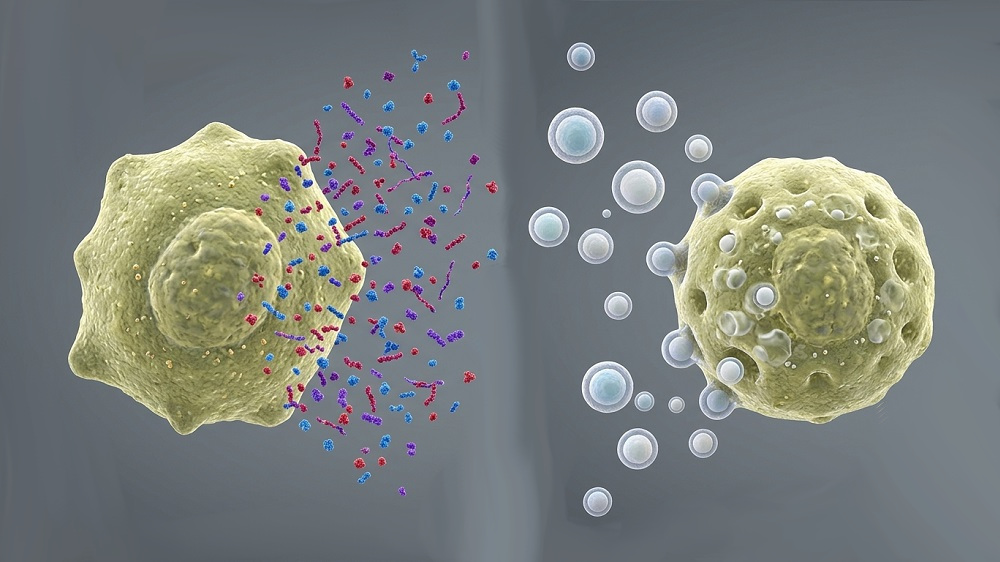
Amyloid beta deposition between neurons and tau aggregation within neurons are both hallmarks of Alzheimer’s disease, and evidence suggests that the latter is potentially more significant than the former [1]. While some potential therapies have been discovered that may disaggregate these tau tangles after they have formed [2], no therapy has yet been approved by the FDA to do this.
This paper zeroes in on a specific ligase that can naturally do this: TRIM11, which does not depend on ATP to do its work. While this ligase is overexpressed in brain cancers [3], neurons that overexpress TRIM11 have been found to fight back against tau aggregates and this protein is downregulated in Alzheimer’s disease [4]. While developing therapeutics that cross the blood-brain barrier (BBB) is difficult, certain LNPs that contain mRNA-based treatments have been found to do exactly this [5].
Sneaking the mRNA in
These researchers developed an LNP, PLNP, that mimicks acetylcholine, a neurotransmitter, in order to gain access to target cells past the BBB. When the researchers exposed neuron and microglial cell lines to PLNP, this approach yielded significant results compared to naked mRNA, which was hardly uptaken at all. The PLNP-delivered mRNA was found in the cells’ cytosol, evading degradation by lysosomes. Exposing these cells to a choline inhibitor significantly limited mRNA uptake, demonstrating that the PLNP particles were going through the expected pathway.
The researchers then tested their PLNP on wild-type Black 6 mice. Compared to other, less targeted, LNPs, their approach yielded nearly 17 times as much delivered mRNA, as measured by the fluorescent reporters they used to test it. This mRNA was found throughout all regions of the rodents’ brains.
The next experiment was done with actual TRIM11 attached to a fluorescent reporter. Just like with the previous experiments, regular LNPs were found to be much less effective than PLNP when tested in vitro.
Most importantly, the TRIM11 mRNA appeared to be doing its work; when it was administered alongside okadaic acid, which causes tau pathology, there were substantially fewer tau tangles. The TRIM11 generated by the cells was co-localized with the tau tangles that did exist, demonstrating its direct effect. “These results confirm that PLNP-delivered TRIM11 localizes to and interacts with intracellular Tau aggregates in SH-SY5Y and Neuro2A cells.”
Effective against Alzheimer’s in a mouse model
The researchers then administered their PLNP to male mice that have three key mutations that make them susceptible to Alzheimer’s disease. At around 7 and a half months of age, these mice develop significant tau tangles in their brains. Three times over two weeks, these mice were given PLNP injections and then examined for behavior and brain changes.
The results were substantial; there was no statistically significant difference between the PLNP-treated tau-prone mice and wild-type mice. The treated mice showed a strong preference for novel objects, better performance on the Morris water maze test, behavior nearly identical to wild-type mice when placed in an open field, and nesting behavior that was also nearly identical. These results persisted even three months after treatment. Similar results were also found when this treatment was given to 5.5-month-old mice, which had not yet developed signs of tau pathology.
Markers of tau pathology, which are normally widely abundant in this mouse strain, were practically absent in the treated mice. These also included inflammatory biomarkers such as IL-6 and TNF-α; microglial overactivation, which is usually prevalent in this mouse strain, was suppressed by the treatment. These effects were found across the brain, including both the hippocampus and the cerebral cortex. “Together, these results demonstrate that systemically administered PLNP-mTRIM11 effectively reduces insoluble Tau aggregates and suppresses neuroinflammatory responses in the AD brain.”
Overall, this appears to be a highly promising treatment that “offers a disease-modifying strategy for preclinical intervention in AD.” However, the researchers note key limitations. The main experiments were exclusively done on male mice that were genetically engineered to be prone to Alzheimer’s. There may also be potential off-target effects; tau protein has a nautral function, and the researchers are concerned that untargeted TRIM11 may affect more than just harmful aggregates. They intend to use older animals, other models, and more biomarkers in order to validate their findings.
Literature
[1] Brier, M. R., Gordon, B., Friedrichsen, K., McCarthy, J., Stern, A., Christensen, J., … & Ances, B. M. (2016). Tau and Aβ imaging, CSF measures, and cognition in Alzheimer’s disease. Science translational medicine, 8(338), 338ra66-338ra66.
[2] Seidler, P. M., Murray, K. A., Boyer, D. R., Ge, P., Sawaya, M. R., Hu, C. J., … & Eisenberg, D. S. (2022). Structure-based discovery of small molecules that disaggregate Alzheimer’s disease tissue derived tau fibrils in vitro. Nature communications, 13(1), 5451.
[3] Di, K., Linskey, M. E., & Bota, D. A. (2013). TRIM11 is overexpressed in high-grade gliomas and promotes proliferation, invasion, migration and glial tumor growth. Oncogene, 32(42), 5038-5047.
[4] Perez-Nievas, B. G. (2023). TRIMming Tau away. Nature Neuroscience, 26(9), 1481-1481.
[5] Wang, C., Xue, Y., Markovic, T., Li, H., Wang, S., Zhong, Y., … & Dong, Y. (2025). Blood–brain-barrier-crossing lipid nanoparticles for mRNA delivery to the central nervous system. Nature materials, 24(10), 1653-1663.
About the author

Josh Conway