Mitochondrial Aging Linked to Losing Crucial Membrane Lipid
- A gene that is harmful in early life becomes beneficial later on.

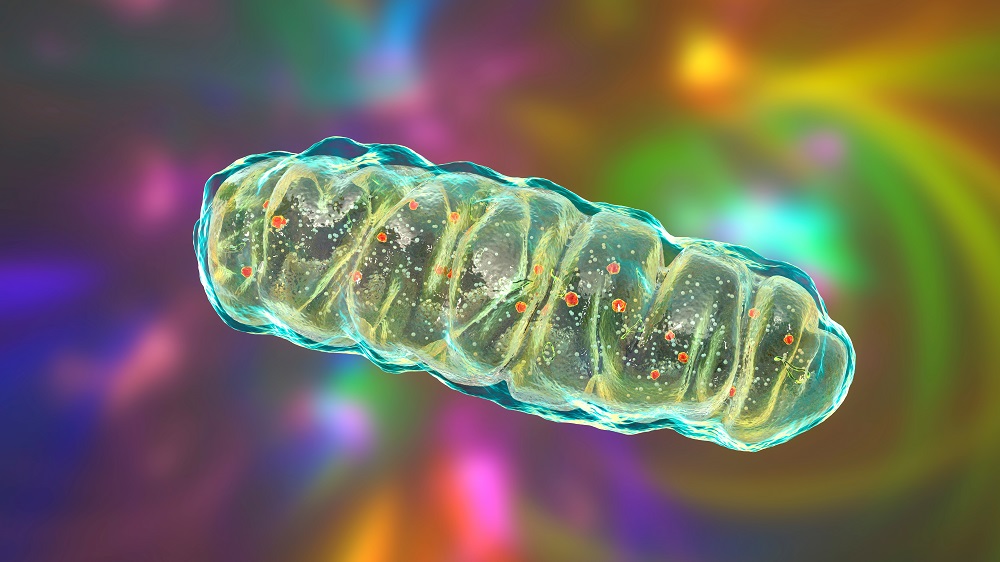
- Young mitochondria are harmed by SAMS-1, while older and mutated mitochondria benefit from it.
- This is due to its effects on enzymes that modulate a crucial mitochondrial membrane lipid.
Scientists have found that the levels of phosphatidylcholine, the most abundant lipid in mitochondrial membranes, decline with age, driving mitochondrial aging in worms and possibly humans. Supplementing the lipid helped in an in vitro experiment [1].
What drives mitochondrial aging?
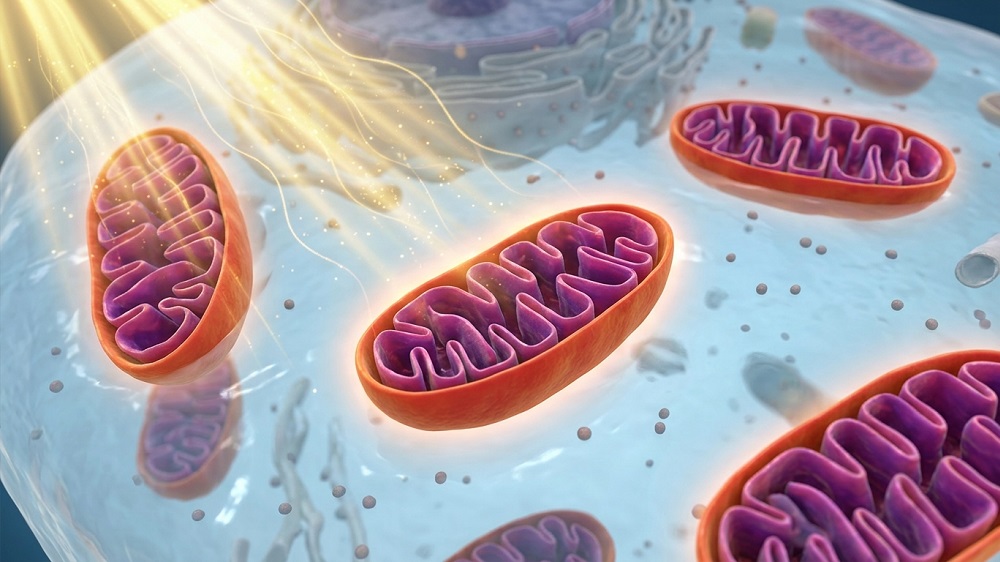
Mitochondria are the cell’s energy-generating organelles, and their decline is a hallmark of aging [2]. While scientists know a lot about mitochondrial conditions caused by genetics, what is far less understood is what drives mitochondrial deterioration during “ordinary” aging, in the absence of any inherited defect. The authors of a new study from Leibniz Institute on Aging, published in Nature Communications, set out to find the “natural” drivers of mitochondrial aging that would be realistic intervention points, especially in later life.
Instead of studying animals whose mitochondria fail and contribute to aging, the researchers went in the opposite direction and decided to study two exceptions to the rule: long-lived mutant strains of the nematode worm C. elegans (clk-1 and isp-1) that have permanently impaired mitochondria yet live longer than normal worms. If these animals thrive despite lifelong mitochondrial dysfunction, they must have built-in protections.
The worms that live longer with bad mitochondria
First, the team ran longitudinal proteomics on normal worms and the two long-lived mutants. Two findings came out. First, in normal aging, mitochondrial protein changes appear relatively late in life, which hints at a possibility of late-stage interference. Second, longer-lived strains had fewer proteins altered by aging, and the protective adaptations shared by the two mutants were mostly rooted in non-mitochondrial genes.
The authors looked for individual proteins that drop sharply during normal aging but stay stable in the protected mutants. The top hit was S-adenosylmethionine synthetase (SAMS-1). It was strongly and progressively downregulated with age in WT worms but maintained in both long-lived mutants.
Knocking down sams-1 actually extended lifespan in normal worms while shortening the lifespan of both long-lived mutants, as if its effect on longevity flipped depending on mitochondrial health. When mitochondria are young and functional, losing sams-1 seems to be beneficial, which is consistent with prior literature [3]. However, when mitochondria are already compromised (in mutants or aged worms), sams-1 becomes crucial, and its loss is harmful.
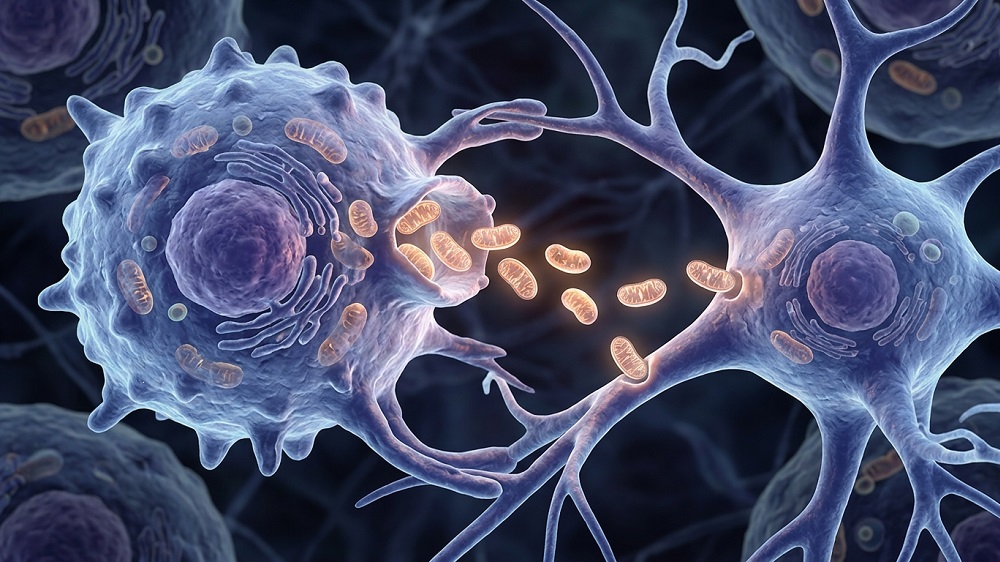
Mitochondria in healthy, vigorous cells tend to form networks, which are good at generating and distributing energy across the cell, allowing the cell to adapt to changing energy demands. “You can imagine the whole system as a finely branched power grid that becomes increasingly damaged with age: connections break down and currents stall,” explained Dr. Ermolaeva, the study’s lead author. “Although energy production continues, it becomes less efficient and sustainable, and energy can no longer be distributed flexibly.”
sams-1 knockdown severely fragmented the mitochondrial network and triggered mitochondrial stress. “We were surprised ourselves by how strongly this molecule influences the structure, connectivity, and function of mitochondria,” says Dr. Tetiana Poliezhaieva, the study’s first author.
The most abundant mitochondrial membrane lipid is the key
S-adenosylmethionine is involved in multiple processes, including the synthesis of phosphatidylcholine (PC), the dominant lipid in mitochondrial membranes. PC is important for the membrane fluidity that fusion requires.
PMT-1 and PMT-2 are two central enzymes in PC production. Knocking down pmt-1 reproduced the mitochondrial fragmentation seen with sams-1 knockdown. Knockdown of either pmt-1 or pmt-2 resembled the sams-1 longevity pattern (extending WT lifespan but shortening the mutants’ lifespan), suggesting that all three genes share a role here via PC production.
Dietary PC supplementation reversed the mitochondrial fragmentation and the reduced body size in both pmt-1 and sams-1 knockdowns. Since PC’s instability requires dissolving it in a mildly toxic solvent, the researchers also tried supplementing PC’s precursor, choline. This rescued the morphology and body-size defects of sams-1, pmt-1, and pmt-2 knockdowns and restored PC synthesis.
Human data offers support
To see if their findings are generalizable, the team turned to existing human data. In the GTEx human transcriptomics database, PEMT, the human functional analog of PMT-1/2, trended downward with age across several tissues, especially in high-lipid tissues like fat and ovary. In UK Biobank data, total PC in plasma declined with age in older men, and relative PC (normalized to total fatty acids) dropped sharply in women after roughly menopausal age – this is notable because menopause is linked to declining mitochondrial function in women [4]. PC levels also correlated favorably with markers of healthy aging, such as lower comorbidity index, faster walking pace, and better memory.
The researchers also performed an in vitro rescue experiment. Skin fibroblasts exposed to metformin, which inhibits mitochondrial complex I, were protected by choline. “Our work shows that both mitochondrial aging and broader systemic aging are, at least in part, modifiable,” summarizes Dr. Ermolaeva. “If we understand the underlying processes, we may be able to take targeted countermeasures.”
Literature
[1] Poliezhaieva, T., Li, Y., Chaudhari, P. S., Isildak, U., Alonso-Pernas, P., Valentim, I. S., … & Ermolaeva, M. A. (2026). Aging-associated decline of phosphatidylcholine synthesis is a malleable trigger of natural mitochondrial aging. Nature Communications, 17(1), 3589.
[2] Amorim, J. A., Coppotelli, G., Rolo, A. P., Palmeira, C. M., Ross, J. M., & Sinclair, D. A. (2022). Mitochondrial and metabolic dysfunction in ageing and age-related diseases. Nature Reviews Endocrinology, 18(4), 243–258.
[3] Lim, C. Y., Lin, S., Kennon-McGill, P., … (2023). SAMS-1 coordinates HLH-30/TFEB and PHA-4/FOXA activities through histone methylation to mediate dietary restriction-induced autophagy and longevity. Autophagy, 19(1), 224–240.
[4] Velarde, M. C. (2013). Pleiotropic actions of estrogen: A mitochondrial matter. Physiological Genomics, 45(3), 106–109.
About the author

Arkadi Mazin