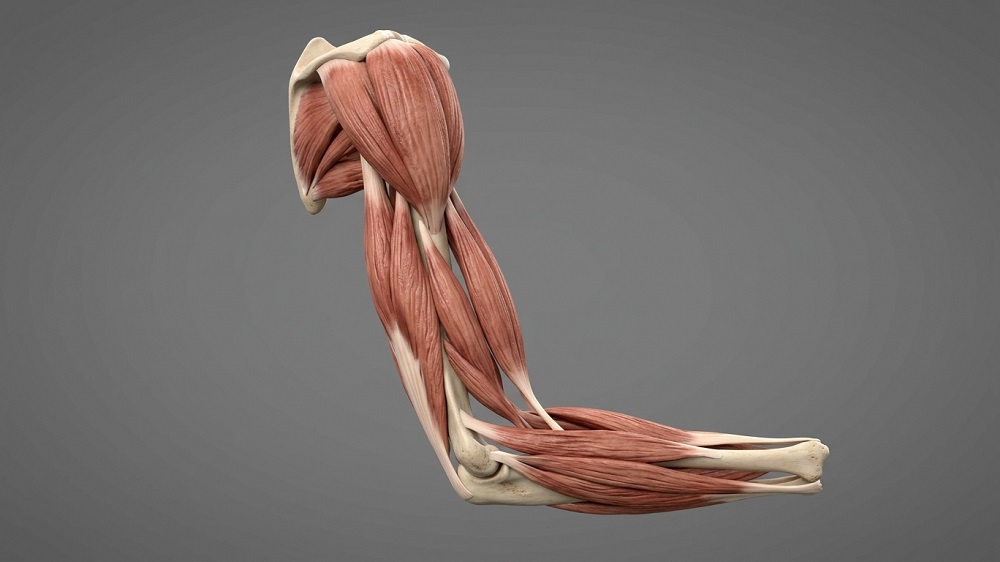
Researchers have discovered that the osteoarthritis-inducing effects of excessive mechanical stress can be mitigated by increasing miR-330, a key regulator in cartilage and bone cells.
Backbreaking labor is exactly that
It has been long-held conventional wisdom that a lifetime of heavy physical labor leads to the early development of arthritis. This has been backed up by scientific studies; even back in 1980, it was documented that heavy industry workers, on average, got lumbar arthritis a full decade earlier than other blue-collar workers [1].
Recent research has confirmed this in more detail. Abnormal mechanical loading, which is inevitable in such workplaces, causes oxidative stress, inflammation, senescence, and degeneration of cartilage and bone [2]. Some of the specific proteins involved in this progression have been identified, such as PIEZO1 [3] and TRPV4 [4], which are sensitive to environmental conditions. This team has found that even temporomandibular joint osteoarthritis (TMJOA), which affects the jaw, can be caused by abnormal mechanical loading [5].
A target implicated in other disorders
These researchers have chosen to go a step further by focusing on noncoding miRNAs, which do not directly serve functions but act on functional proteins. Previous work has found that miRNAs can be affected by mechanical stresses, including in bone [6]. While other research has identified individual miRNAs that regulate intravertebral disc degeneration [7] and bone building ability [8], the landscape is far from complete. This work focuses on a different miRNA, miR-330, which has been identified as causing muscle wasting during cancer [9] among other disorders.
The researchers singled out miR-330-3p and miR-330-5p as their most promising candidates after investigating 65 differentially expressed miRNAs from 96 TMJOA patients and 102 miRNAs derived from rat models of TMJOA. In an in vitro study, miR-330-3p was indeed found to be highly receptive to mechanical stimuli, and both miR-330-3p and miR-330-5p were significantly downregulated in TMJOA patients compared to controls. miR-330-3p was also downregulated in rat models of TMJOA and knee osteoarthritis.
Collectively, these findings demonstrate that mechanical stress significantly downregulates miR-330-3p expression, with progressive reduction occurring during OA advancement across patients and animal models.
Required for resilience
In a further experiment, the researchers created mice that did not produce miR-330. Compared to wild-type mice, these mice had significantly fewer stem cells that successfully differentiated into cartilage-generating cells (chondrocytes), and their chondrocytes were more likely to die by apoptosis. Their bones were smaller and weaker, and this was found to be due to an increase in bone destruction by osteoclasts; osteoblasts, the cells that build bone, were found to be unaffected by miR-330.
Mechanical load made things worse. Compared to wild-type controls, miR-330-deficient mice were far more prone to osteoarthritis under induced stress, including more rapid cartilage and bone degeneration, spurred by an increase in osteoclast activity along with apoptosis of chrondrocytes.
A gene expression analysis identified miR-330’s target genes. CTGF, FGFR1, and EPOR are all upregulated when miR-330 is downregulated under mechanical stress, and these researchers had previously found that this upregulates the inflammatory factors TNF-α and IL-1β as well. CTGF and FGFR1 were found to affect how chondrocytes behave, while EPOR, TNF-α, and IL-1β were found to be the reasons for the increased osteoclast activity.
Upregulation mitigates damage
Finally, the researchers attempted to determine if upregulating miR-330 can fight against stress-induced osteoarthritis. Injecting a rat model with an adeno-associated virus (AAV) that upregulates this miRNA found that it indeed could; the treated rats had less osteoclast activity, less inflammation, and more chondrocyte activity than the control group. miR-330’s downstream genes were all successfully downregulated, as were inflammatory pathways. While it did not completely remove the effects of mechanically induced osteoarthritis, there were significant benefits in this model.
While other experiments have identified other miRNAs as targets in this context, these researchers are the first to point to this specific miRNA as a key factor in osteoarthritis. They hold that miR-330 can serve as both as a diagnostic marker and a therapeutic target. Future work will be needed to determine if and how this research could possibly be translated to the clinic.

Literature
[1] Fiorini, G. T. (1980). Degenerative Arthritis Of The Lumbar Spine In Laborers. Canadian Family Physician, 26, 243.
[2] Jiang, W., Chen, H., Lin, Y., Cheng, K., Zhou, D., Chen, R., … & Yu, H. (2023). Mechanical stress abnormalities promote chondrocyte senescence-The pathogenesis of knee osteoarthritis. Biomedicine & Pharmacotherapy, 167, 115552.
[3] Wang, S., Li, W., Zhang, P., Wang, Z., Ma, X., Liu, C., … & Zhao, Y. (2022). Mechanical overloading induces GPX4-regulated chondrocyte ferroptosis in osteoarthritis via Piezo1 channel facilitated calcium influx. Journal of advanced research, 41, 63-75.
[4] Agarwal, P., Lee, H. P., Smeriglio, P., Grandi, F., Goodman, S., Chaudhuri, O., & Bhutani, N. (2021). A dysfunctional TRPV4–GSK3β pathway prevents osteoarthritic chondrocytes from sensing changes in extracellular matrix viscoelasticity. Nature biomedical engineering, 5(12), 1472-1484.
[5] Zou, L., Yang, K., Yu, Y., Wang, C., Zhao, J., Lu, C., & He, D. (2024). Analysis of joint protein expression profile in anterior disc displacement of TMJ with or without OA. Oral Diseases, 30(7), 4463-4482.
[6] Yuan, Y., Zhang, L., Tong, X., Zhang, M., Zhao, Y., Guo, J., … & Zou, J. (2017). Mechanical stress regulates bone metabolism through micrornas. Journal of cellular physiology, 232(6), 1239-1245.
[7] Cazzanelli, P., Lamoca, M., Hasler, J., Hausmann, O. N., Mesfin, A., Puvanesarajah, V., … & Wuertz-Kozak, K. (2024). The role of miR-155-5p in inflammation and mechanical loading during intervertebral disc degeneration. Cell Communication and Signaling, 22(1), 419.
[8] Chen, Z., Zhao, F., Liang, C., Hu, L., Li, D., Zhang, Y., … & Qian, A. (2020). Silencing of miR-138-5p sensitizes bone anabolic action to mechanical stimuli. Theranostics, 10(26), 12263.
[9] Mubaid, S., Ma, J. F., Omer, A., Ashour, K., Lian, X. J., Sanchez, B. J., … & Gallouzi, I. E. (2019). HuR counteracts miR-330 to promote STAT3 translation during inflammation-induced muscle wasting. Proceedings of the National Academy of Sciences, 116(35), 17261-17270.