Activating a Key Receptor Fights Thymic Involution in Mice
- Activating this receptor ameliorates senescence in crucial cells.

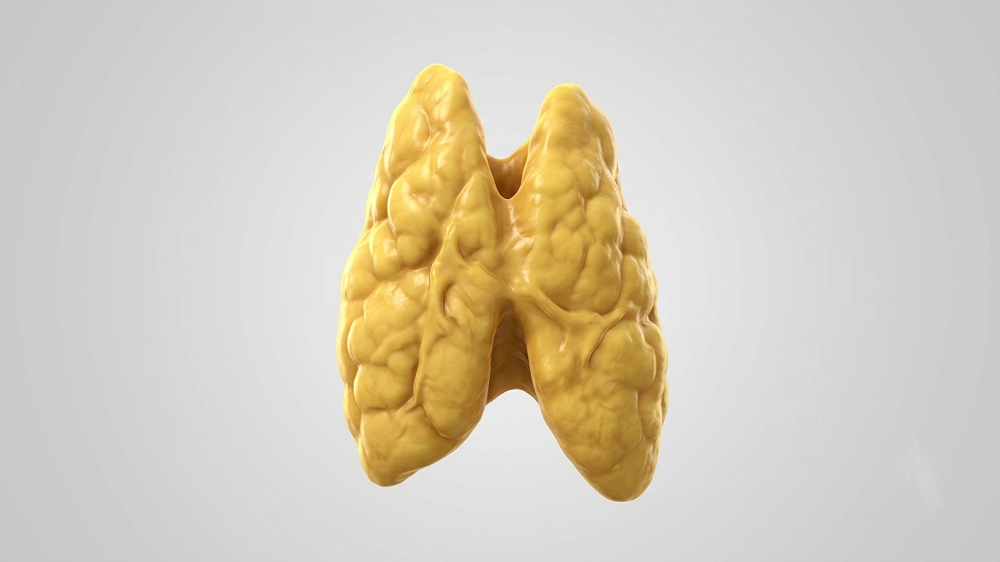
- Using GW9508 to activate the receptor GPR40 in thymic epithelial cells ameliorated thymic involution in middle-aged female mice.
- This treatment shielded these cells from senescence in vitro and improved immune cell counts in vivo.
Publishing in Aging Cell, researchers have devised a way to delay the aging of the thymus by targeting GPR40, a key receptor in its epithelial cells.
The organ that involutes
The thymus trains a certain subset of immune cells, which are named T cells due to their relationship with it. As the thymus ages, its functional cells are gradually replaced with fatty tissue, weakening the immune system overall. This process is called involution, and stopping or reversing it has been a long-standing goal of research into aging.
Thymic involution has been linked to the aging of thymic epithelial cells (TECs), which maintain this organ’s form and ability to function [1]. Previous research has found that restoring these cells may be a viable path towards treating thymic involution and restoring immune function [2].
This paper’s focus is on GW9508, a compound that selectively activates GPR40, which has been previously investigated in its roles in metabolic disease [3] and aging [4]. While its anti-inflammatory effects have been previously documented [5], its potential role in the thymus has not.
A question of dosage
In their first experiment, the researchers utilized five groups of 17-month-old, naturally aged female Black 6 mice: a control group, a 12.5 mg/kg GW9508 group, a 25 mg/kg GW9508 group, a 50 mg/kg GW9508 group, and a group that received 50 mg/kg of GW9508 along with 2.5 mg/kg of GW1100, which deactivates the GPR40 receptor and neutralizes the canonical effect of GW9508. These treatments occurred every other day for a month.
Interestingly, the lower doses seemed to have more substantial effects above the control group, with the lowest dose appearing to have the greatest effect; the average thymus of these animals was roughly 50% heavier than that of the control group. As expected, the group that received the GW1100 along with GW9508 had the smallest average thymus weight. The spleen was not significantly affected by this treatment, and all of the treatment groups had markedly lower creatinine levels; the researchers interpret these results as suggesting a lack of liver and kidney toxicity and potentially improving kidney function.
Broad cellular effects
A closer look at the thymus demonstrated how GW9508 fights its involution in these animals. Multiple subsets of thymocytes were increased in number, including all four differentiation stages of a crucial double-negative subset. A very wide variety of specialized TECs were also increased as well. As expected, GW1100 reversed these beneficial effects, demonstrating that the GPR40 receptor is the cause.
The treatment had beneficial downstream effects, increasing the populations of CD3+ and CD4+ T cells along with multiple subsets of these cells. While CD8+ T cells were not affected to the level of statistical significance, many subsets of these cells were. Some of these subsets were naïve T cells, which have been previously linked to enhanced healthspan [6].
GW9508 also reduces senescence in TECs. Doxorubicin, a compound commonly used to induce senescence in cells, was administered in a sufficient quantity to cause senescence in 85% of the TECs in a control group. However, in the GW9508 treatment group, this proportion was reduced to only 20%. Genes related to the proliferation of these cells were upregulated, and cells that did become senescent appeared to die off more easily by apoptosis instead of staying around. Further experiments with GW1100 confirmed that these effects were indeed due to the GPR40 receptor.
The receptor is the cause
The researchers then further confirmed their results by using RNA that directly affects GPR40. Silencing GPR40 drove even young TECs towards senescence, as confirmed by multiple aspects of function and metabolism, while directly upregulating GPR40 caused the same effects as GW9508 administration.
This study was limited in key ways. Only 17-month-old female Black 6 mice were utilized in this study without a younger control group, and the thymic examination involved sacrificing the mice; no lifespan study was performed. There was also no pathogenic test of immune capabilities. The cellular study exclusively used doxorubicin and did not include replicative senescence. However, these findings are intriguing and suggest that GW9508 and GPR40 may be potential targets in the treatment of thymic involution.
Literature
[1] Zhu, X., Gui, J., Dohkan, J., Cheng, L., Barnes, P. F., & Su, D. M. (2007). Lymphohematopoietic progenitors do not have a synchronized defect with age‐related thymic involution. Aging cell, 6(5), 663-672.
[2] Goronzy, J. J., & Weyand, C. M. (2019). Mechanisms underlying T cell ageing. Nature Reviews Immunology, 19(9), 573-583.
[3] Li, Y., Yu, H., Lopes-Virella, M. F., & Huang, Y. (2024). GPR40/GPR120 agonist GW9508 improves metabolic syndrome-exacerbated periodontitis in mice. International Journal of Molecular Sciences, 25(17), 9622.
[4] Xiao, J., Cai, T., Fang, Y., Liu, R., Flores, J. J., Wang, W., … & Tang, J. (2021). Activation of GPR40 attenuates neuroinflammation and improves neurological function via PAK4/CREB/KDM6B pathway in an experimental GMH rat model. Journal of Neuroinflammation, 18(1), 160.
[5] Fujita, T., Matsuoka, T., Honda, T., Kabashima, K., Hirata, T., & Narumiya, S. (2011). A GPR40 agonist GW9508 suppresses CCL5, CCL17, and CXCL10 induction in keratinocytes and attenuates cutaneous immune inflammation. Journal of Investigative Dermatology, 131(8), 1660-1667.
[6] Youm, Y. H., Gliniak, C., Zhang, Y., Dlugos, T., Scherer, P. E., & Dixit, V. D. (2025). Enhanced paracrine action of FGF21 in stromal cells delays thymic aging. Nature Aging, 5(4), 576-587.
About the author

Josh Conway