Scientists have targeted the thin fat layer around blood vessels with a transcription inhibitor, reducing symptoms of cardiometabolic disease [1].
When vessels can’t “just relax”
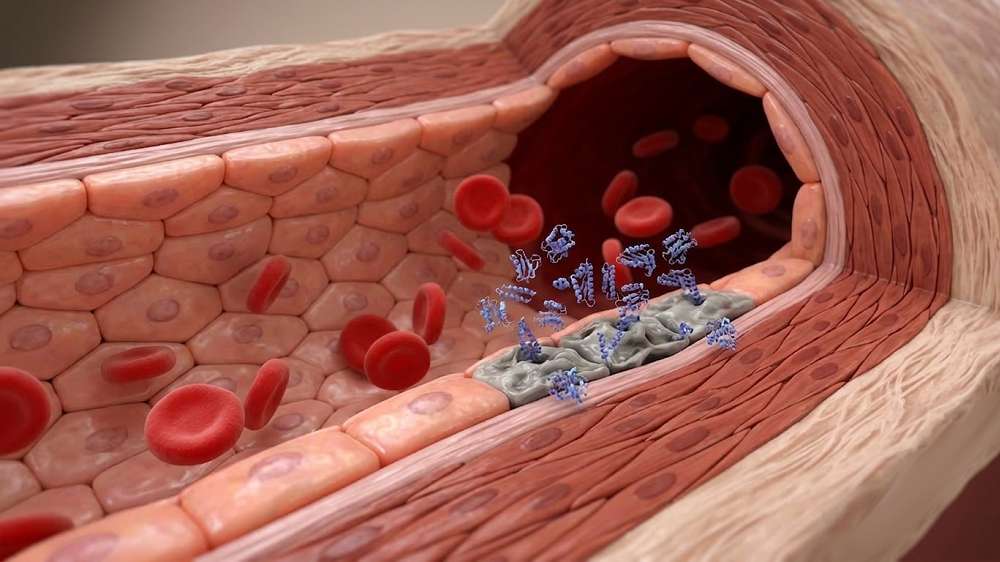
Cardiometabolic disease (CMD) – characterized, among other things, by obesity combined with high blood pressure – is one of the largest drivers of cardiovascular death [2]. It does its damage partly through continuous low-grade inflammation that injures blood vessels, including the endothelium, every vessel’s single-cell lining. Healthy endothelial tissue releases nitric oxide (NO), a gas that signals the surrounding muscle to relax. When the endothelium is damaged, vessels lose this ability to dilate on demand (“endothelial dysfunction”), which is an early step on the road to heart attacks and certain kinds of heart failure [3].
A new paper from the University of Zurich, published in Cell Reports, focuses on an underappreciated player: perivascular adipose tissue (PVAT), a layer of fat that most small arteries are wrapped in. This fat and the vessel exchange signals via what the researchers call “the vascular-fat interface.” In healthy people, these signals actually help the vessel relax, but in obesity and hypertension, the interface flips to a pro-inflammatory, constriction-inducing state and begins harming the vessel [4].
Targeting transcription of stress-related factors
The authors took small arteries from fat biopsies in 27 obese, hypertensive patients and studied how these arteries dilate. Compared with arteries taken from lean normotensive controls, the patients’ vessels were structurally remodeled and functionally impaired, showing blunted relaxation. This came with more reactive oxygen species (ROS), less available NO, and more activity of genes that produce inflammatory factors, including IL-1β, IL-6 and TNF-α. Incubating the vessels with antibodies against these inflammatory cytokines partially improved function, confirming that inflammation is a real contributor.
The team then treated the vessels with the small molecule RVX-208, a BET inhibitor. BET proteins recognize acetyl tags on the spool-like proteins that DNA wraps around (histones) and facilitate switching the tagged genes’ transcription. They also disproportionately amplify stress- and disease-driven programs rather than ordinary housekeeping genes, which makes their inhibition relatively safe. The researchers reasoned that inhibiting BET proteins would calm down those upstream stress-related signals. RVX-208 indeed improved relaxation, cut ROS, restored NO, and suppressed inflammatory genes more strongly than any of the single-cytokine antibodies.
“Instead of targeting one downstream molecule at a time, we aimed to retune the fat’s entire gene activity program,” said UZH cardiologist and study head Francesco Paneni.
To localize the effect, the team then compared paired vessels with PVAT left intact versus surgically removed (“naked”). In accordance with PVAT’s dual nature, leaving it intact improved function (compared to the “naked” vessels) in healthy controls but markedly worsened it in patients. RVX-208 had no effect on healthy PVAT-intact vessels but completely rescued patient PVAT-intact vessels. Its benefit was roughly doubled when PVAT was present, and it even converted pro-constriction PVAT back to the healthy, relaxation-promoting state. These results suggest that the BET-driven injury is coming from the fat, not the vessel wall.
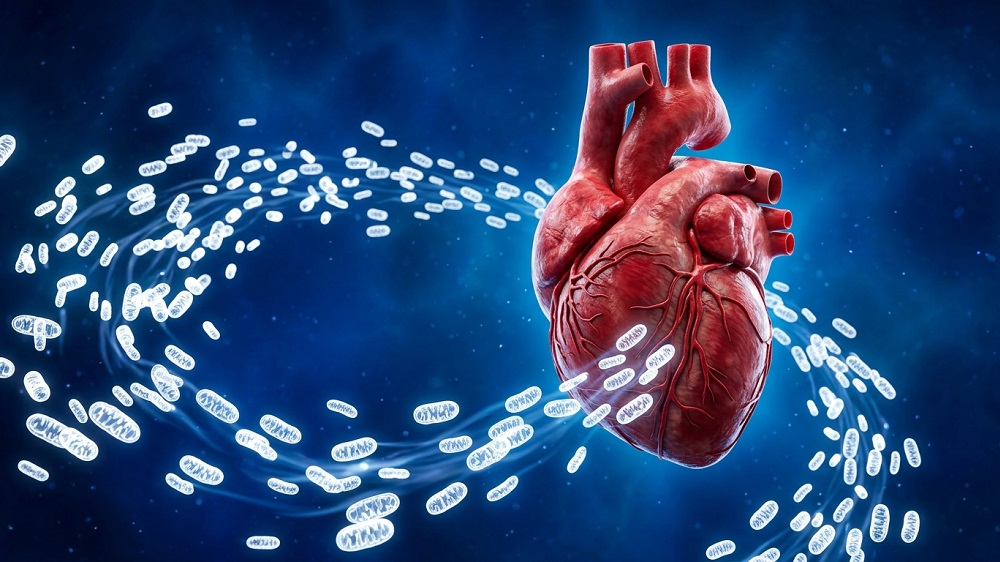
In a mouse CMD model, RVX-208 rescued arterial stiffness and endothelial function (again more so with PVAT intact) and blunted the inflammatory signature in both vessels and PVAT. Diseased PVAT also showed signs of mitochondrial dysfunction, which was rescued by RVX-208.
The downstream enzyme
Among the 84 cardiometabolic genes in mouse PVAT that the researchers analyzed, RVX-208 downregulated 22. The standout hit was HK2 (hexokinase-2), the enzyme that facilitates glycolysis, and its change was confined to PVAT. The treatment essentially reduced glucose burning, which was contributing to mitochondrial dysfunction and inflammation, and increased fat burning.
The team then tested causation directly in primary human fat cells. Overexpressing HK2 in healthy adipocytes made them pro-inflammatory, while silencing it calmed the inflammation. Conditioned media from HK2-overexpressing adipocytes induced inflammation in human aortic endothelial cells, demonstrating that the fat-to-vessel signals are conveyed by secreted factors. Finally, a selective HK2 inhibitor applied to vessels from human patients improved endothelial function (again, more so in the presence of PVAT), showing that hitting HK2 directly reproduces the benefits of BET inhibition.

“Lowering the enzyme’s activity, either indirectly by altering the epigenetic readers that control its gene or directly on the enzyme itself, blunted the fat’s inflammatory behavior and restored normal vessel function in the samples we studied,” said Paneni.
BET inhibitors have already been tested in cardiovascular trials, but according to the authors, those trials enrolled end-stage patients, where so much damage has accumulated that any benefit may be blunted. “Instead of solely treating downstream risk factors such as high blood pressure, cholesterol or blood sugar after damage has already begun, epigenetic therapies aim to reprogram the tissue processes that contribute to vascular damage,” said Paneni.
Literature
[1] Mengozzi, A., Costantino, S., Mongelli, A., Duranti, E., Mohammed, S. A., Gorica, E., … & Paneni, F. (2026). BET-induced metabolic reprogramming fuels inflammation at the vascular-fat interface in mice and patients with cardiometabolic disease. Cell Reports, 45(6).
[2] Ndumele, C. E., Rangaswami, J., Chow, S. L., Neeland, I. J., Tuttle, K. R., Khan, S. S., … & American Heart Association. (2023). Cardiovascular-kidney-metabolic health: a presidential advisory from the American Heart Association Circulation, 148(20), 1606-1635.
[3] Widmer, R. J., & Lerman, A. (2014). Endothelial dysfunction and cardiovascular disease. Global Cardiology Science and Practice, 2014(3).
[4] Agabiti-Rosei, C., Saxton, S. N., De Ciuceis, C., Lorenza Muiesan, M., Rizzoni, D., Agabiti Rosei, E., & Heagerty, A. M. (2024). Influence of perivascular adipose tissue on microcirculation: a link between hypertension and obesity. Hypertension, 81(1), 24-33.