Clearing Damaged Mitochondria to Fight Skin Photoaging
- Mitochondrial dysfunction and systemic inflammation are closely related.

- Treating sun-damaged mouse skin with the secretome of umbilical cord stem cells reduces the negative effects of sun exposure.
- Similar results were found in a human skin cell line.
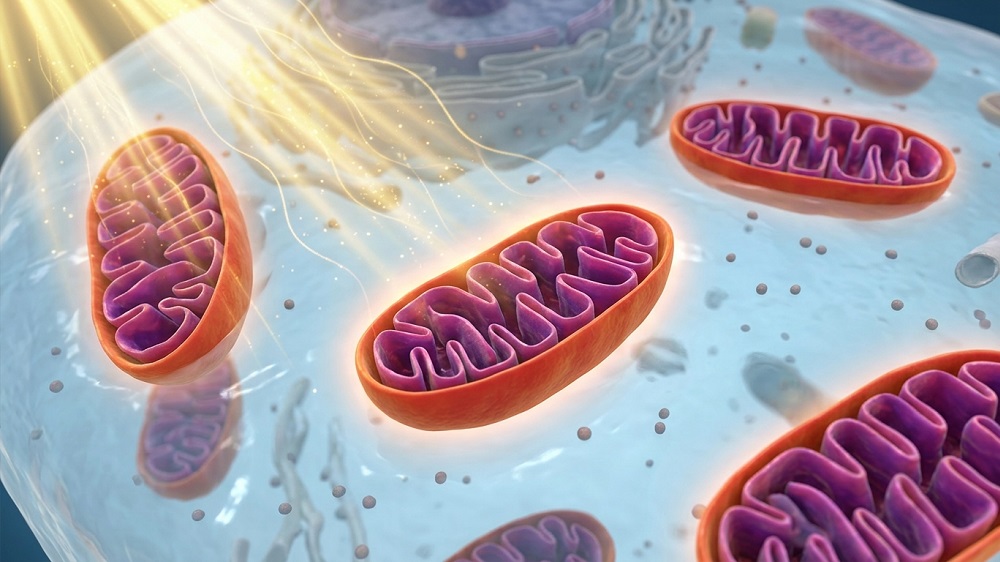
- This was found to be due to the improved clearance of damaged mitochondria.
Researchers publishing in Aging Cell have found that a cocktail of molecules released by human umbilical cord mesenchymal stem cells (hUC-MSCs) can mitigate sun-induced skin aging (photoaging) in mice by restoring their cells’ ability to get rid of their own damaged mitochondria (mitophagy).
Wrinkles are only a small part of the problem
Chronic exposure to ultraviolet light is the main driver of photoaging, which is characterized by the accumulation of senescent cells in the skin along with the depletion of DNA-protecting lamins [1]. It causes skin to become thickened, wrinkled, and rough while accumulating visible veins [2]. This damage is more than cosmetic; photoaging can lead to precancerous lesions along with cancer itself [3]. Retinoids and other antioxidants have been found to have some effects but cannot completely reverse this damage [4], and laser-based treatments may be expensive and painful while causing other symptoms [5].
This work focuses on the relationship between the accumulation of damaged mitochondria (mitochondrial dysfunction) and age-related inflammation in the absence of pathogens (inflammaging). Mitochondrial dysfunction leads to the activation of the inflammatory cGAS-STING pathway [6], which increases the production of cytokines such as IL-6 and IL-8 and is known to drive inflammaging in other tissues [7].
The compounds secreted by hUC-MSCs, including proteins and exosomes, are collectively referred to as the secretome, which has been found to treat diabetic skin lesions in a mouse model [8]. Previous work had involved some of these components, and we have reported extensively on the use of exosomes. However, this team utilized the secretome as a whole, attempting to determine the extent of its effects against mitochondrial dysfunction and inflammaging in the context of skin photoaging.
Broad and significant effects
The researchers initially ran a mouse experiment in which they shaved patches of skin and exposed the animals to 40 days of UVA and UVB light calibrated to mimic chronic sun exposure, then treated some of the irradiated skin with a topical hUC-MSC-derived secretome. Compared to the control group, the treated mice showed less epidermal thickening, better hydration, improved elasticity, and less water loss through the skin barrier. Skin collagen, which typically fragments and depletes with ultraviolet exposure, was largely preserved as well. Two markers of cellular senescence, p16 and p21, were also reduced in these animals.
The team also irradiated human skin cells (HaCaT keratinocytes) with UVB and cultured some of them in the presence of an MSC-derived secretome. The results were similar to those seen in mice: compared to the control group, the treated cells were less likely to become senescent as measured by the well-known biomarker SA-β-gal, and they had less UV-induced reduction of Lamin B1.
As expected, compared to mice that were never exposed to ultraviolet radiation at all, exposed mice had more dysfunctional mitochondria and a significant reduction in mitophagy; this was evidenced by increases in mitochondrial proteins, a decrease in the mitophagy biomarker LC3B-II, and similar decreases in the related factors PINK1 and Parkin. These researchers found that treatment with the MSC secretome mitigated this dysfunction completely, as markers of functional mitophagy were indistinguishable from those of the UV-unexposed control group, and these findings were also replicated in vitro with HaCaT cells. Similarly, treatment with this secretome reduced activation of cGAS/STING and diminished the production of downstream inflammatory cytokines, both in mouse skin and in cultured cells.
A clear causal chain
Mitophagy was confirmed to be the key driver of the hUC-MSC secretome’s effects. Alongside administration of Mdivi-1, which blocks mitophagy, this secretome was found to be ineffective. Directly blocking STING through the H151 inhibitor, or forcing mitophagy through the compound CCCP, had similar effects as secretome administration in vitro. A series of in vivo experiments utilizing combinations of these compounds confirmed this hierarchical relationship: the hUC-MSC secretome induces mitophagy, which fights cGAS/STING-related inflammation, which is responsible for many of the downstream negative effects of photoaging.
Of course, these experiments were conducted with mice and a single immortalized human skin cell line; as human skin is thicker than mouse skin and has likely suffered different long-term damage over a longer lifespan, the results of a clinical trial may be different. These researchers also chose to use the MSC secretome as a whole rather than specific proteins or exosomes, which obfuscates the contributions of its various components.
However, this study confirms that the skin, just like the heart and brain, experiences inflammaging driven by mitochondrial dysfunction. If the particular factors involved in the hUC-MSC secretome’s effects against this dysfunction can be identified, clinically tested, and produced, such a product may be more effective than current treatment methods.
Literature
[1] Zhang, H., Xiao, X., Wang, L., Shi, X., Fu, N., Wang, S., & Zhao, R. C. (2024). Human adipose and umbilical cord mesenchymal stem cell-derived extracellular vesicles mitigate photoaging via TIMP1/Notch1. Signal transduction and targeted therapy, 9(1), 294.
[2] Dorf, N., & Maciejczyk, M. (2024). Skin senescence—from basic research to clinical practice. Frontiers in medicine, 11, 1484345.
[3] Sun, Z., Zheng, Y., Wang, T., Zhang, J., Li, J., Wu, Z., … & Tan, Y. (2025). Aloe vera gel and rind-derived nanoparticles mitigate skin photoaging via activation of Nrf2/ARE pathway. International journal of nanomedicine, 4051-4067.
[4] Zhang, H., Xiao, X., Wang, L., Shi, X., Fu, N., Wang, S., & Zhao, R. C. (2024). Zhang, J., Li, Z., Song, X., Cai, P., & Liu, Q. (2025). Ginsenoside CK and retinol on UVA-induced photoaging exert the synergistic effect through antioxidant and antiapoptotic mechanisms. Scientific Reports, 15(1), 16664.
[5] Zhu, J., Chang, R., Han, Y., Xi, Q., Jiang, S., Shang, Y., … & Lin, X. (2025). Comparison of Intense Pulsed Light With Nonablative Fractional Laser and Picosecond Alexandrite Laser With Diffractive Lens Array for Noninvasive Facial Rejuvenation. Lasers in Surgery and Medicine, 57(2), 195-203.
[6] Meng, S., Duan, J., Zhao, J., Zhou, Z., Sun, B., Xu, Y., … & Wang, H. (2026). Impairment of mitochondrial quality control exacerbates diabetes-related atrial fibrillation by cGAS-STING signaling pathway and cardiomyocyte-macrophage crosstalk. Theranostics, 16(4), 1701.
[7] Li, H., Cai, R., Zhou, Y., Jiang, Y., & Tan, S. (2025). cGAS-STING signaling in brain aging and neurodegeneration: molecular links and therapeutic perspectives. Journal of neuroinflammation, 22(1), 235.
[8] Chen, W. H., Lai, W. Y., Le, D. C., Hsing, J. C., Ngo, M. H. T., Kao, C. X., … & Huang, Y. H. (2025). Secretome from human placenta-derived mesenchymal stem cells repairs mechanically induced meniscus injury in mice by activating the proliferation and suppressing the apoptosis of endogenous meniscus progenitor cells. Stem Cell Research & Therapy, 16(1), 565.
About the author
Josh Conway