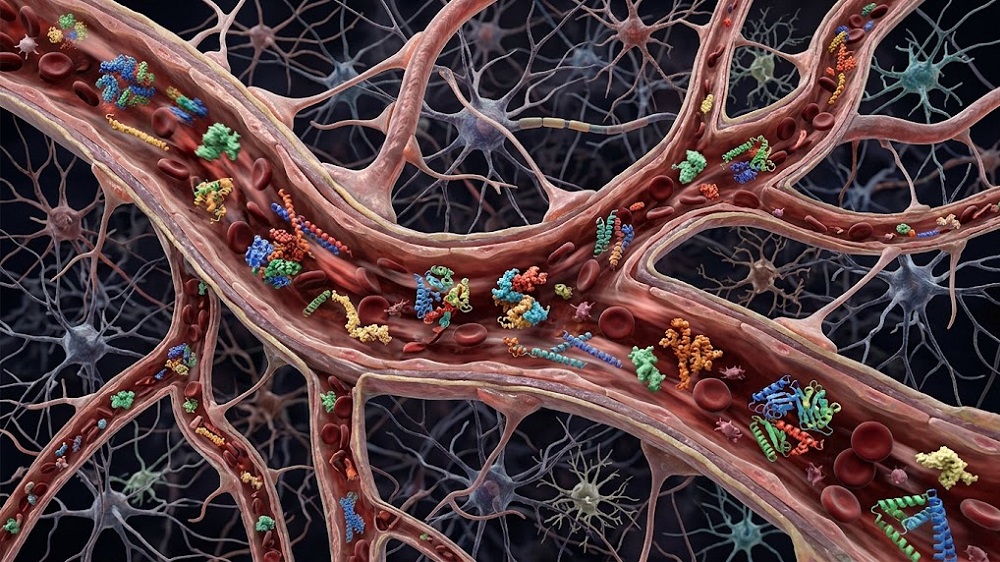
A recent study identified the thymus hormone thymulin as a molecule with the potential to reduce inflammation in an age-dependent manner. Treating cancer-bearing mice with this molecule made other cancer treatments more effective [1].
The aging immune system
Aging has a profound impact on the immune system. It leads to a progressive decline in immune function [2] and to a chronic, systemic inflammatory state known as inflammaging. Chronic inflammation is a contributor to cancer progression and its resistance to therapies, but the connection between those two processes is still not well understood. The researchers of this study focused on identifying circulating factors with the potential to reduce inflammaging and cancer progression.
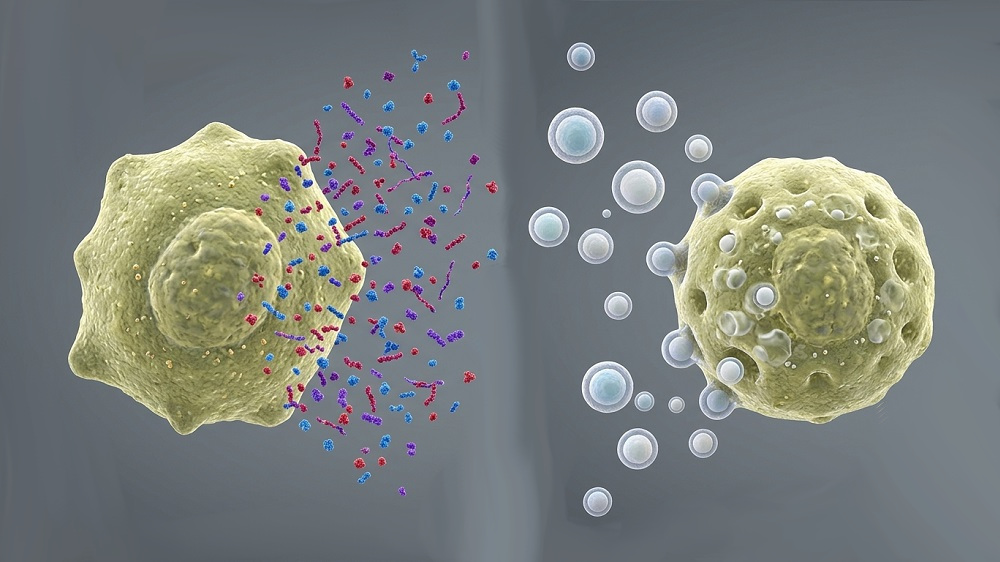
They started by identifying cell populations that produce pro-inflammatory factors. They observed increased levels of those cells, along with elevated levels of pro-inflammatory factors, in aged mice and humans as well as in tumors from aged patients. A similar pattern was observed in breast cancer and melanoma mouse models. In those mouse models, they also observed faster tumor progression and reduced survival in aged mice. This was accompanied by slightly elevated levels of pro-inflammatory cells in mice with tumors (both young and old) compared to healthy mice. While tumor presence contributed to inflammation, its impact was much lower than that of age, suggesting that aging is the main driver of systemic inflammation.
Exchanging blood
Some of the identified pro-inflammatory molecules were previously described as characteristic of inflammaging and were elevated in some cancers. Moreover, they have been associated with tumor progression, metastasis, and resistance to therapies, while inhibiting them was shown to improve the efficacy of antitumor therapies [3-5].
This suggests that a dysregulated immune system and inflammation prevent effective cancer immunotherapy. Restoring proper immune function can enhance the effectiveness of cancer therapy in older people. However, full rejuvenation of the immune system is currently out of reach; therefore, this study’s authors turned to heterochronic parabiosis, a process in which the circulatory systems of young and aged animals are surgically connected. Previous experiments that used heterochronic parabiosis showed a reduction in inflammatory markers in aged animals who underwent such a procedure [6].
When the circulatory systems of aged and young mice were connected, the levels of circulating cytokine-producing cells were reduced to levels similar to those in the young control animals. Connecting aged and young tumor-bearing mice resulted in benefits for the aged mice, including reduced circulating pro-inflammatory cells, delayed tumor progression, and improved survival, but young mice in this pair suffered from increased tumor progression and worse survival than their age-matched controls.
Narrowing down the search
In the next step, the authors aimed to identify circulating factors from young mice that reduce the activation of cells that produce pro-inflammatory factors. Their initial experiments using mice with transplanted bone marrow showed that non-bone marrow-derived circulating factors are important for pro-inflammatory cytokine production levels and the speed of tumor progression.
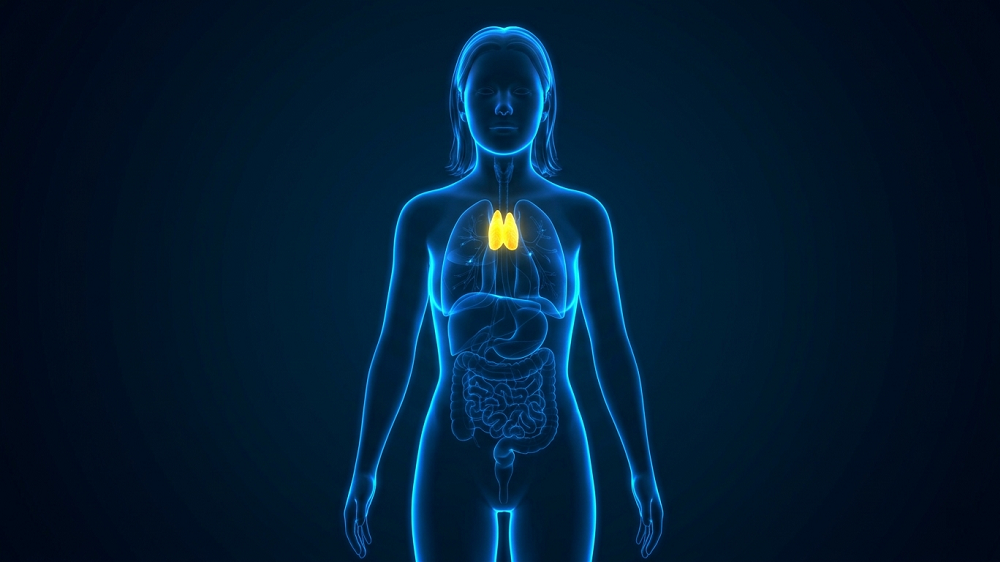
What were these factors? Using their experimental data combined with bioinformatics analysis, the researchers narrowed their search to three candidates. There was a common theme among those candidates: inactivating each one leads to thymic atrophy [7-9], suggesting that the thymus might play a role in regulating age-associated inflammation. Among the thymus-related candidates, thymulin, a thymus-produced hormone, showed the highest potential since previous studies reported thymulin’s role in suppressing pro-inflammatory cytokine production in vitro [10]. Additionally, thymulin activity decreases with age [11] and in cancer patients [12]. The researchers, therefore, performed more testing on thymulin as a regulator of inflammatory cytokines.
In their experiments, thymulin reduced the expression of pro-inflammatory cytokines in human peripheral blood cells grown in the lab and in mice. However, this reduction only occurred in older cells and older animals, not in young ones.
“The thymus is best known for producing T-cells that allow the immune system to fight infections and cancer, but our findings show it also helps keep age-related inflammation in check,” said Fumito Ito, MD, PhD, professor of surgery and immunology and immune therapeutics at the Keck School of Medicine and lead author of the study.

“This is the first evidence of a substance that is naturally produced in the thymus, declines with age, and has the power to reverse age-related inflammation,” Ito added.
Beyond suppressing pro-inflammatory cytokines, the researchers showed that thymulin delayed the growth of various tumors, improved survival in aged mice with tumors, and lowered the number of pro-inflammatory cytokines in aged mice, but there was almost no effect in young mice. What’s more, while aged mice do not respond well to cancer immunotherapy, thymulin treatment made tumors in aged mice responsive to this type of therapy, leading to increased survival and better tumor control.
These age-dependent effects suggest that thymulin treatment does not enhance the immune system but restores age-associated immune dysfunction. If these results could be replicated in humans, they could have a clinical application for older people undergoing cancer immunotherapy.
Linking the thymus and systemic inflammation
“Together, these findings uncover a pathway linking aging, inflammation and cancer immunity, and suggest thymulin as a potential strategy to improve cancer immunotherapy in older individuals,” said Ito.
The link between the thymus, cancer, and systemic inflammation was also reported in previous studies. For example, removing the thymus in adults leads to an increase in pro-inflammatory cytokines, increased cancer risk, and higher mortality [13]. All in all, these results “support a model in which age-related thymic decline contributes to inflammaging and shapes cancer susceptibility and therapeutic response.”
The authors also point out one important consideration that their results suggest: since an animal’s immune system undergoes changes with age, using young mice to study cancer might not fully reflect the impact of inflammation on potential treatments, and older mice may be a better choice. “When using young mice, we may be underestimating the impact of age-related chronic inflammation,” Ito said. “Studying older animals may be critical for understanding diseases of aging.”
Literature
[1] Kanemaru, H., Luong, S., Yamamoto, Y., Mizukami, Y., & Ito, F. (2026). Thymulin restrains age-associated myeloid inflammation and enhances cancer immunotherapy. Nature communications, 17(1), 6534.
[2] Dolan, M., Libby, K. A., Ringel, A. E., van Galen, P., & McAllister, S. S. (2025). Ageing, immune fitness and cancer. Nature reviews. Cancer, 25(11), 848–872.
[3] Garner, H., Martinovic, M., Liu, N. Q., Bakker, N. A. M., Velilla, I. Q., Hau, C. S., Vrijland, K., Kaldenbach, D., Kok, M., de Wit, E., & de Visser, K. E. (2025). Understanding and reversing mammary tumor-driven reprogramming of myelopoiesis to reduce metastatic spread. Cancer cell, 43(7), 1279–1295.e9.
[4] Harris, M. A., Savas, P., Virassamy, B., O’Malley, M. M. R., Kay, J., Mueller, S. N., Mackay, L. K., Salgado, R., & Loi, S. (2024). Towards targeting the breast cancer immune microenvironment. Nature reviews. Cancer, 24(8), 554–577.
[5] Hailemichael, Y., Johnson, D. H., Abdel-Wahab, N., Foo, W. C., Bentebibel, S. E., Daher, M., Haymaker, C., Wani, K., Saberian, C., Ogata, D., Kim, S. T., Nurieva, R., Lazar, A. J., Abu-Sbeih, H., Fa’ak, F., Mathew, A., Wang, Y., Falohun, A., Trinh, V., Zobniw, C., … Diab, A. (2022). Interleukin-6 blockade abrogates immunotherapy toxicity and promotes tumor immunity. Cancer cell, 40(5), 509–523.e6.
[6] Lagunas-Rangel F. A. (2024). Aging insights from heterochronic parabiosis models. npj aging, 10(1), 38.
[7] Ribeiro, C., Ferreirinha, P., Landry, J. J. M., Macedo, F., Sousa, L. G., Pinto, R., Benes, V., & Alves, N. L. (2024). Foxo3 regulates cortical and medullary thymic epithelial cell homeostasis with implications in T cell development. Cell death & disease, 15(5), 352.
[8] Hale, J. S., Frock, R. L., Mamman, S. A., Fink, P. J., & Kennedy, B. K. (2010). Cell-extrinsic defective lymphocyte development in Lmna(-/-) mice. PloS one, 5(4), e10127.
[9] Zhang, Q., Liang, Z., Zhang, J., Lei, T., Dong, X., Su, H., Chen, Y., Zhang, Z., Tan, L., & Zhao, Y. (2021). Sirt6 Regulates the Development of Medullary Thymic Epithelial Cells and Contributes to the Establishment of Central Immune Tolerance. Frontiers in cell and developmental biology, 9, 655552.
[10] Safieh-Garabedian, B., Ahmed, K., Khamashta, M. A., Taub, N. A., & Hughes, G. R. (1993). Thymulin modulates cytokine release by peripheral blood mononuclear cells: a comparison between healthy volunteers and patients with systemic lupus erythematosus. International archives of allergy and immunology, 101(2), 126–131.
[11] Bach, J. F., Dardenne, M., Pleau, J. M., & Bach, M. A. (1975). Isolation, biochemical characteristics, and biological activity of a circulating thymic hormone in the mouse and in the human. Annals of the New York Academy of Sciences, 249, 186–210.
[12] Consolini, R., Cei, B., Cini, P., Bottone, E., & Casarosa, L. (1986). Circulating thymic hormone activity in young cancer patients. Clinical and experimental immunology, 66(1), 173–180.
[13] Kooshesh, K. A., Foy, B. H., Sykes, D. B., Gustafsson, K., & Scadden, D. T. (2023). Health Consequences of Thymus Removal in Adults. The New England journal of medicine, 389(5), 406–417.