Calcium Mishandling Contributes to Muscle Loss

Researchers have discovered and explained how calcium mishandling in muscle cells leads to long-term muscle weakness in older people.
Calcium is not just for bones
Skeletal muscle cells use calcium ions to control how and when they contract. This activity is modulated by CaMKII, a protein kinase that also regulates muscle adaptations in response to exercise [1] and serves a great many unrelated functions throughout multiple other tissues.
In young tissues, this system works well, with exercise producing reactive oxygen species (ROS) that are used to stimulate muscle growth [1]. However, with aging, this falls apart in multiple ways: calcium ions leak out of where they are supposed to be [2], mitochondria and calcium become uncoupled [3], and, as has been well-known for decades, ROS and oxidative damage are no longer properly mitigated [4]. The authors hypothesized that CaMKII signaling is involved in this dysregulation.
Constant expression weakens muscles
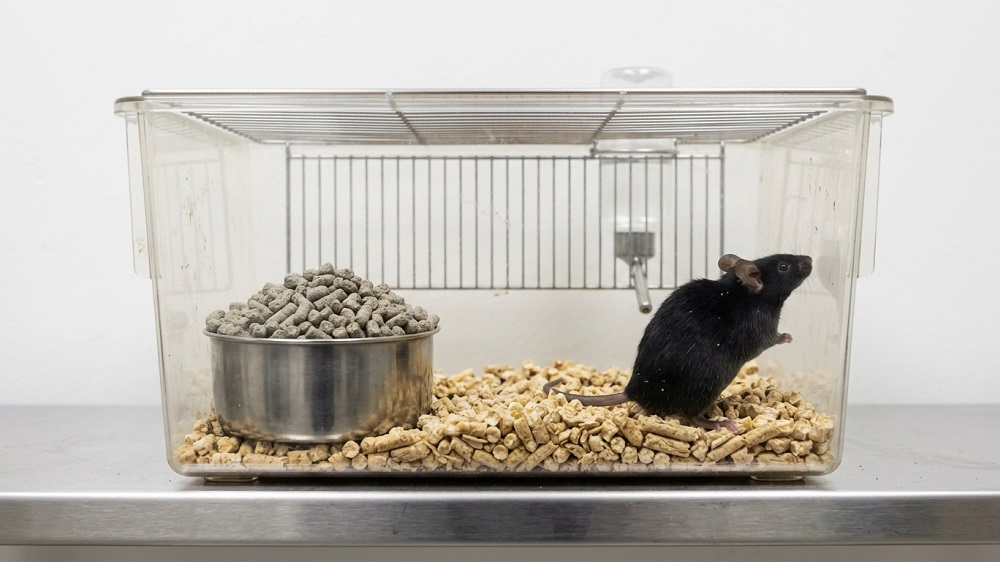
In their first experiment, the researchers examined the muscles of 3.7-month-old mice and compared them to those of 33-month-old mice; 33 months is exceptionally old for a mouse, and mice of that age were provided by the gerontologist Dr. Rafael deCabo. These elderly mice had significantly smaller muscles than the younger group, substantially more CaMKII in muscle tissue, and more evidence of CaMKII activity while at rest. However, the researchers noted that the biomarker they used to detect activity, pT287-CaMKII, is not entirely consistent in various muscle tissues and CaMKII can be modified in many other ways [5].
To determine the effects of constant CAMKII activity in muscle, this team developed a adeno-associated virus (AAV) that caused it to become active only in that tissue. This AAV had local effects, meaning that the researchers were able to inject it onto only one tibialis anterior muscle of each individual mouse; the identical muscle on the other side was injected with a simple fluorescent reporter protein with no significant effects. Interestingly, feedback mechanisms caused natural CAMKII to be suppressed in the muscles that were given this artificial CAMKII increase.
Within less than two months, this increase in constant CaMKII caused the targeted muscles to shrink and become pound-for-pound weaker than the unmodified muscles in the same mice; direct stimulation at multiple frequencies found that the targeted muscles were unable to exert nearly as much force. While it did not impact total mitochondrial number, it had significant negative effects on mitochondrial organization. A similar experiment with a different cohort of mice found that, after nine months, the loss of muscle mass became even more significant.
Some of this muscle loss was found to be driven by inflammation. Blocking the inflammatory signal NF-κB while activating CaMKII blunted some of the effects; the muscles in this group did not become pound-for-pound weaker, but they still lost mass.
Age-related gene expression changes
Gene expression was also significantly impacted. While there were some differences, the impact of constant CaMKII expression was broadly similar to that of natural aging in muscle, and the researchers identified many biochemical pathways that are increased both by natural aging and by increased CaMKII. Most notably, iron-handling pathways were significantly disrupted by CaMKII.
The researchers also injected naturally aged mice with CN19o, which inhibits CaMKII; while individual genes were not significantly affected, the sum total of gene expression was found to move towards a more youthful phenotype. While it did not increase muscle size in 21-month-old mice, suppressing CaMKII in these mice increased their ability to contract.
The researchers hold that age-related constant CaMKII signaling is a significant contributor to sarcopenia. In youth, this signaling is beneficial, but in an aged environment, it is apparently doing more harm than good. However, the researchers did not experimentally validate why constant CaMKII activation has the mitochondrial effects it does, nor did they fully elucidate the connection between calcium and iron signaling. Further work will need to be done to determine if CaMKII is a useful target in people.
Literature
[1] Wang, Q., Hernández-Ochoa, E. O., Viswanathan, M. C., Blum, I. D., Do, D. C., Granger, J. M., … & Anderson, M. E. (2021). CaMKII oxidation is a critical performance/disease trade-off acquired at the dawn of vertebrate evolution. Nature communications, 12(1), 3175.
[2] Lamboley, C. R., Wyckelsma, V. L., McKenna, M. J., Murphy, R. M., & Lamb, G. D. (2016). Ca2+ leakage out of the sarcoplasmic reticulum is increased in type I skeletal muscle fibres in aged humans. The Journal of physiology, 594(2), 469-481.
[3] Pietrangelo, L., D’Incecco, A., Ainbinder, A., Michelucci, A., Kern, H., Dirksen, R. T., … & Protasi, F. (2015). Age-dependent uncoupling of mitochondria from Ca2+ release units in skeletal muscle. Oncotarget, 6(34), 35358.
[4] Mecocci, P., Fano, G., Fulle, S., MacGarvey, U., Shinobu, L., Polidori, M. C., … & Beal, M. F. (1999). Age-dependent increases in oxidative damage to DNA, lipids, and proteins in human skeletal muscle. Free Radical Biology and Medicine, 26(3-4), 303-308.
[5] Brown, C. N., & Bayer, K. U. (2024). Studying CaMKII: tools and standards. Cell reports, 43(4).
About the author

Josh Conway