
Filmmaker Tim Maupin has spent a number of years developing The Last Generation to Die, a near-future film about what happens when the first true rejuvenation technologies arrive and who gets left behind. The project has now reached the top 65 of the Future Vision XPrize, a global contest seeking optimistic visions of humanity’s future. We talked to him about the personal stakes behind the story, the challenge of creating future positive stories, and why the film’s central dilemma feels increasingly urgent.
Thanks for joining us, Tim. So, the exciting news is that one of your films was nominated for the Future Vision XPrize. The brief for the contest is to create a 3-minute sci-fi trailer depicting an optimistic, abundant future for humanity. The grand prize winner gets $2.6M+ to turn their vision into a feature film, plus over $1M in prizes for runners-up. Can you tell us a little bit about that, Tim?
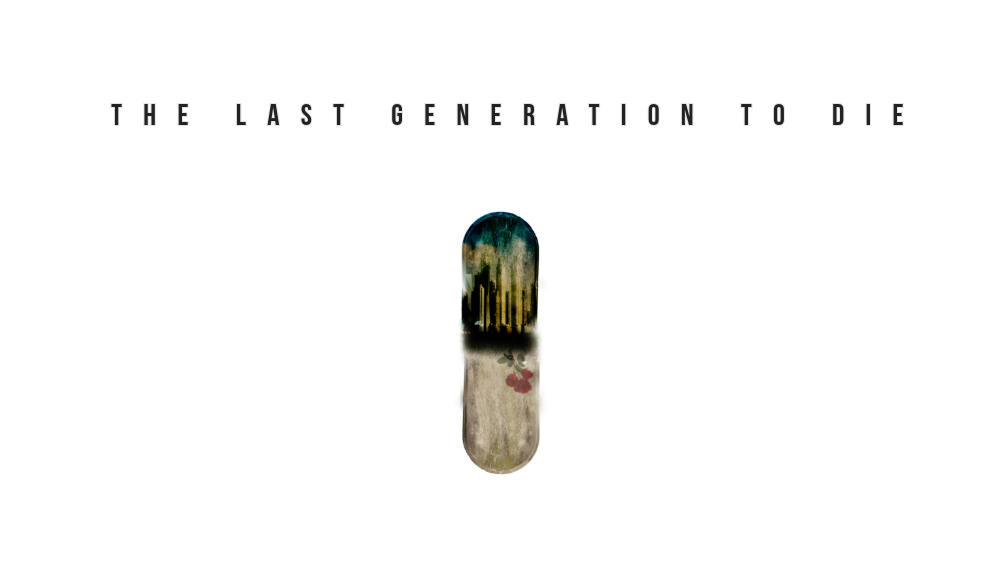
Yes, it’s a longevity-focused film that I’ve been working on for quite a while called The Last Generation to Die. It is in the top 65 of over 2500 entries in the X Prize Future Vision contest, which is definitely exciting news.
That’s great, I remember watching the preview some years ago, and I always thought it was a really interesting idea, so I’m really glad to see that it has been nominated. Making it into the top 65 films is a real achievement, so what happens next?
The next step is they choose the top ten, and then that goes down to the top five. The top five get to go to the moonshots event, which is a pretty big deal. The judges are Neil deGrasse Tyson, Mira Lane, Neil Stevenson, and Rod Roddenberry. So, there are some important names involved with this. From there you pitch live, and they show the trailers, and then they actually choose the winner live that night in the room.
It’s a really important event, so fingers crossed, and we’ll see where it goes from there. I think the top ten also get invited to the event too, so even getting into the top ten would be pretty great as well.
Sounds good, so can you tell us a little more about the film itself?
I made it as a short film a few years ago that was played at some film festivals. I’d always envisioned it as a feature, but I really got back into that process after my father passed away in 2019. That was when I went back to the script, and, in some ways, I became a lot more able to write it, because I was living the material in a way that I hadn’t before. After that, it became a lot more real and still is. My mom is also aging, and I’m seeing that very directly, so it’s a very personal and real film.
It’s set in the near future where a female scientist named Lily is at the forefront of a new technology that’s going to slow and even reverse aging. Her father Oliver has a major heart issue, and she’s able to get him on the trial for this technology as a last-ditch effort to save him. And it works and I mean it works really well, he actually starts de-aging and gets much healthier at the same time.
During the film, Lily’s mother falls ill with a rare neurodegenerative disease. But, she doesn’t fit the inclusion criteria of the trial, and they are too afraid to risk trying the technology on her, so her mother’s health ends up failing while her father’s health actually improves because his age is reversing.
So, you have this interesting dynamic between her parents as the film goes on. From a longevity standpoint, I think it is a great thought experiment to consider what would happen in terms of our current form of aging and what could happen with some kind of new rejuvenation technology. I hope that it pulls on the heartstrings of folks in a very direct way as events play out like that.
Then, there’s a whole extra plot that covers how some people in the company are trying to maximize profits with this technology, and she’s fighting that as well. Ultimately, I’d say it’s a bittersweet film, it’s very positive in one way but also very real and nuanced in another.
From my perspective, I think setting a film at the gulf between these two worlds, situations like this will happen. There’ll be a point where some people unfortunately don’t make it and some people get age-reversal technologies. I just think that’s a great point to set the film because it’s got inherent conflict from that standpoint, and you get to see those two dynamics in one spot in time.

That’s basically what the film’s about. I hope by seeing that it encourages people to want to bring this technology on faster and do what they can to support it.
That’s a good synopsis. I saw the original trailer, and I always thought it was an intriguing idea. So glad to see it’s reached this stage, and, obviously, I’ve got my fingers crossed that it makes the top five because it’s exploring some very important near-future possibilities.
The dynamic in the film between the parent who qualifies for the trial and the one who doesn’t feels especially timely. With the first biomedical repair therapies now entering human trials, questions about access and how we regulate multi-disease approaches are becoming real rather than theoretical.
So, let’s talk about how the film originally got started. I understand that it has roots with our organization, Lifespan.io, as it was called back then when the film started. Can you tell us a little bit about how that came about and how it helped to get the film underway?
Yes, absolutely. I started working for Lifespan.io around the same time that I got back into the film, which was great timing because I was surrounded by folks who are working on the same goal and seeing the actual reporting on the research helped to inform the film. So, being involved with Lifespan.io at the time was informative for the film but also energizing on a personal level.
Not only that, but Keith Comito and Oliver Medvedik from Lifespan.io actually served as advisors for the film too. Lifespan.io also helped get the film off the ground by acting as a fiscal sponsor in those early days.
Talking about actually keeping the film going and getting it to where it is, specifically, let’s talk about the jellyfish connection. Can you tell us a little bit about jellyfish and how it has helped you to get the film to where it is?
Jellyfish is a related organization to Lifespan in some ways and includes Keith Comito. The idea behind it was to build a community of filmmakers and artists focused on longevity-related film and media. Films that were a little bit more of the positive future side of things. The goal for the past couple of years has been to try to support that community and find ways to help fund these projects. Funding for films, especially independent films, is always challenging, and so the Jellyfish DAO was started as a crypto model.
But, we are looking at ways to expand that beyond just crypto funding and looking for unique and innovative funding models that might help to grow and support longevity-related films. It’s also a good test case for decentralized science to do things that public funding probably wouldn’t support.
To speak more broadly about the concept of the prize itself, all the films in the competition appear to have a future-positive focus, this is the opposite of what a lot of films set in the future have, which instead often have dystopian storylines. What are your thoughts on that?
The dystopian versus positive storytelling is always an interesting thing to consider, and I agree that dystopian tales do have their place. I think it’s a good simulation, as it were, to imagine how things could go.
But, I strongly agree with the premise of the contest. We do have a lot of dystopian tales, arguably too many, and I think it’s time to balance things in the other direction a bit. Because some might argue that we are living in a bit of a dark time right now and I think we do need to be projecting positive visions to counter that. It’s also very clear that movies and culture do actually shape how things happen to a certain degree in the future.
So, I think by continuing to project positive things, we’re continuing to push forward towards a better future. Even if it may seem like it’s just a movie, I honestly believe that it filters through people’s psyche and does actually change how things can go. I’m honestly very grateful that they’ve put this contest out because I think it’s a much needed counterbalance.
But, I will admit it’s not easy to make future positive films. Dystopian films are easier to write and make because there’s a clear villain and there’s more obvious conflict. It is a challenge to come up with something that still has conflict, still engages people, but ultimately ends in a positive place. It’s been really interesting to see the other creators in the contest try to figure that out as well.
I definitely think it’s a worthy challenge and something worth pushing for. Future positive framing is also important for the biomedical repair field too, because the field does have a tendency to overpromise and underdeliver, which has given it a somewhat tarnished image. There’s a lot of misinformation, hype, and also misunderstanding about what the field is really doing – treating age-related diseases by treating the reasons we age and get sick in the first place. Do you think films like this can probably help with that image?
I think so, and I would say that my film takes a fairly nuanced approach that isn’t as grandiose as immortality or anything like that. It’s taking a more realistic look at some of the more commonly overlooked things about the field. Concepts that make a ton of sense, like if you target aging, you’re simultaneously combating many diseases at once. A film like this can put that in a way that makes sense in a story fashion where it’s not just didactic information that you’re sort of preaching to people.
So yes, I would agree, and there’s also other narratives like the concern that only the billionaires are going to get this tech, which I’m not saying isn’t worth thinking about as a potential risk, but it’s also pushing towards the idea that this really should be for everyone as a counterpoint and that’s actually possible if we decide to make it so. So, I think having the vision to move in a positive direction is important, especially in a movie form.
What sort of impact do you think the film might have if it gets nominated in the top five?
Great question! If it reaches that point, from what I’ve heard, being in the top five gives you more exposure, because you’re on the stage and Range Media Partners and others are right there. So I think it would stand a good chance of getting a lot more attention and potentially some funding.
The other thing to mention is that we have an amazing cast. We have Ed Harris, Lily Rabe and Mamoudou Athie on board now. That’s quite something for an independent film, it’s an achievement to have such great actors interested and I think they could also help to potentially speed that up.
Ideally, we’d be moving a lot closer to getting it into production if we got into the top five. The ideal production window would be next year in spring or summer. So, being in the top five in the contest would absolutely help speed that up.
Wow, that’s quite an upgrade from the original trailer I watched a few years ago, then. Where can people watch the contest version?
People can watch The Last Generation to Die contest video over at the FutureVision XPrize and also vote for it and any of the other films in the contest. They have a pretty cool voting platform where it’s not just a social media-based contest. They give you two trailers, and you vote for one and you cycle through. It’s a little cooler than what you usually see for these things, so I would encourage people to go check those out and vote.
Jellyfish has another film in there called Senti. I would encourage everyone to go take a look at the films there and support this prize because I think we need more of it, and it sounds like they’re gonna continue to do it.
That sounds great. Do we know exactly when they’ll announce the finalists?
I think next week, we will find out the top 10, so it’s very soon. Then I think the top five may come the week after that. So within the next two weeks, we’ll probably find out the top five.
Thank you for taking the time to speak with us today, Tim, and we wish you the best of luck with your film.
As The Last Generation to Die makes clear, the arrival of the first biomedical repair therapies in human trials brings questions of access and equity into sharp focus. Ensuring these technologies benefit society broadly, rather than becoming another driver of inequality, is not only a moral issue but an economic one, something we explore in more detail in our recent white paper – Why Democratizing Rejuvenation Is an Economic Imperative.