An RNA Regulator Mitigates Senescence in Blood Vessels

Researchers publishing in Aging Cell have found that the regulatory protein MTR4 fights DNA damage in the blood vessel lining but decreases with aging.
Vulnerable by nature
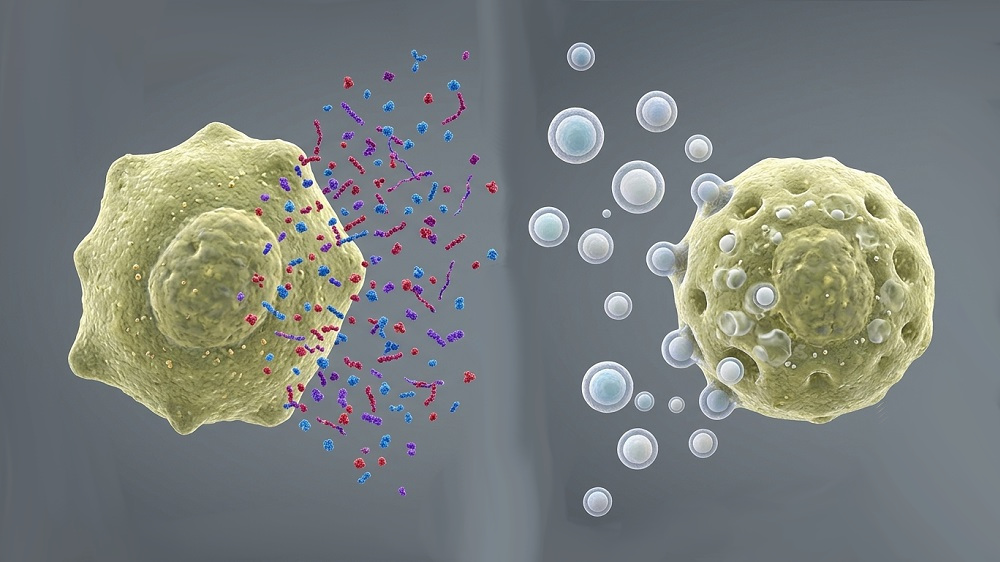
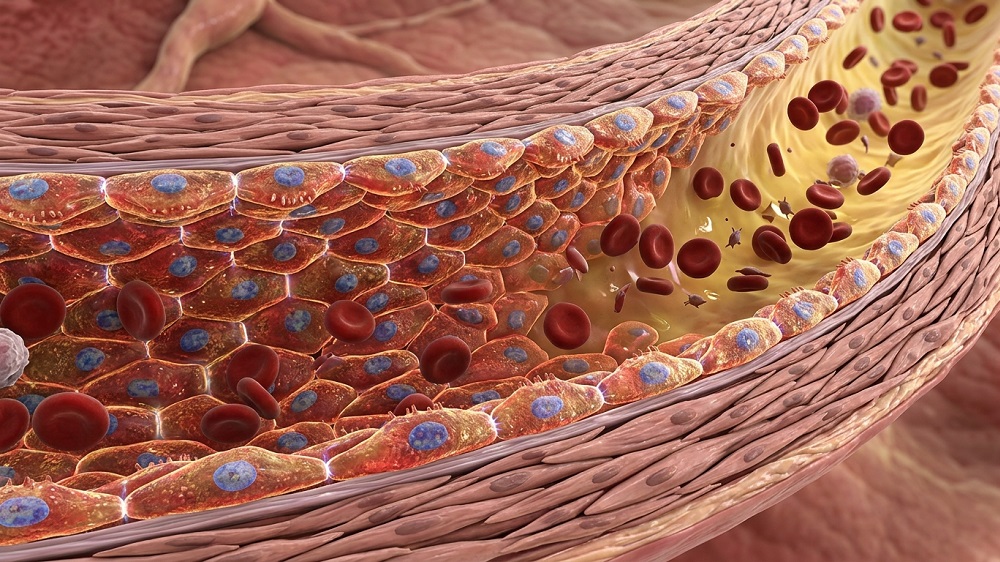
This paper begins by noting the properties, and aging, of vascular endothelial cells (VECs), which line the blood vessels and govern their permeability [1]. As these cells are directly exposed to inflammatory factors and other blood-based stresses, they are some of the most rapidly aging cells in the human body [2]. When these cells become senescent, they excrete harmful senescence-related compounds (the SASP) directly into the bloodstream, and senescent VECs are connected to a wide variety of cardiovascular and other diseases, including hypertension and diabetes [3].
Their connection to multiple diseases, and bloodstream availability, make them an “attractive target” for interventions. However, killing senescent VECs off en masse through senolytics may be a bad idea, as one experiment found that this practice can promote fibrosis and shorten lifespan in mice [4] while another found that it can make hypertension worse [5].
Therefore, these researchers focus on methods to bolster these cells’ resilience, which was found to be a sound approach in previous experiments [6, 7]. Most previous work has focused on well-known factors such as Klotho and sirtuins, but these researchers chose a different target: MTR4, an RNA helicase that plays crucial roles in RNA maintenance [8] and the cell cycle [9]. While impeding part of its function has been found to lead to senescence [10], its true impact as a senescence regulator was not previously examined.
Expected changes with age
These researchers first used VECs derived from the human umbilical cord (HUVECs) and drove them senescent through genotoxins, oxidative stress, or replication. In all of these cells, MTR4 significantly declined. Quiescent stem cells, which had no stimulus to divide but were not senescent, did not exhibit a similar decline in MTR4. Similar results were found in mice; 3-month-old mice exhibited significantly higher levels of MTR4 than 20-month-old mice in multiple organs, including the heart, liver, and aorta.
The study then sought to ascertain a cause-and-effect relationship by using silencing RNA to turn off MTR4 in proliferating HUVECs. Markers of cellular senescence in these cells substantially increased, including SA-β-gal, while SASP factor expression increased as well. The inverse experiment also yielded results: replicatively senescent HUVECs that overexpressed MTR4 partially reversed such senescent phenotypes, including broad reductions in SASP expression.
The first link in a chain
An RNA sequencing analysis confirmed these results, although most of these results were ascertained to be downstream of its true effects. The authors identified 92 potentially interacting proteins, used the GenAge database to discover five particularly notable ones, and found that it physically interacts with BUB3 in a way that suppresses cellular senescence; directly overexpressing BUB3 had similar effects to directly overexpressing MTR4. Generating a mutant version of MTR4 that could not interact with BUB3 had no beneficial effects, and MTR4 was found to physically stabilize BUB3.
The researchers found another link in the chain: BUBR1, which itself is stabilized by BUB3. BUBR1 is a core spindle assembly checkpoint kinase that protects DNA during division. The researchers hold that this protection is the core reason behind the antisenescence effects of MTR4.
However, interestingly, RNA expression of MTR4 is increased rather than decreased in senescent cells. The reason that its protein levels decrease, therefore, is accelerated decomposition. The researchers found that this was being done through the ubiquitin-proteasome system rather than autophagic processes. This ubiquitination was found to be caused by an increase in another protein, SYVN1. The researchers even identified the particular lysine on this protein, K638, that allows for this ubiquitination.
Strong effects on blood vessels
The researchers then turned to mice and found significant results on their physiology and behavior after exposure to adeno-associated viruses (AAVs) that influence Mtr4. Aged mice that overexpressed Mtr4 had increased exploratory behavior and better vascular function, while young mice that underexpressed it had reduced exploratory behavior along with vascular dysfunction. Similar results were even found in C. elegans worms; worms that overexpressed mtr-4 lived considerably longer than wild-type worms, approaching the lifespans of well-known longevity mutants in the species, while underexpressing worms had significantly reduced lifespan.
The authors of this paper hold that MTR4 is “a conserved antiaging factor in the vascular endothelium.” While these results are strong, finding treatments that effectively target MTR4 in people will be its own challenge.
Literature
[1] Augustin, H. G., & Koh, G. Y. (2024). A systems view of the vascular endothelium in health and disease. Cell, 187(18), 4833-4858.
[2] Bloom, S. I., Islam, M. T., Lesniewski, L. A., & Donato, A. J. (2023). Mechanisms and consequences of endothelial cell senescence. Nature Reviews Cardiology, 20(1), 38-51.
[3] Han, Y., & Kim, S. Y. (2023). Endothelial senescence in vascular diseases: current understanding and future opportunities in senotherapeutics. Experimental & Molecular Medicine, 55(1), 1-12.
[4] Grosse, L., Wagner, N., Emelyanov, A., Molina, C., Lacas-Gervais, S., Wagner, K. D., & Bulavin, D. V. (2020). Defined p16High senescent cell types are indispensable for mouse healthspan. Cell metabolism, 32(1), 87-99.
[5] Born, E., Lipskaia, L., Breau, M., Houssaini, A., Beaulieu, D., Marcos, E., … & Abid, S. (2023). Eliminating senescent cells can promote pulmonary hypertension development and progression. Circulation, 147(8), 650-666.
[6] Chivite, I., Monelli, E., Munar-Gelabert, M., Gómez-Valadés, A. G., Alvarado-Diaz, A., Pozo, M., … & Claret, M. (2026). Deletion of Mfn2 in endothelial cells triggers a mitohormetic response that improves systemic metabolism and healthspan in mice. Cell Metabolism, 38(3), 546-564.
[7] Pang, J., Pan, L., Shen, W., Yi, G., Kong, X., Zhang, H., … & Zhang, Y. (2025). Endothelial LRRC8A delays vascular ageing in natural and accelerated ageing mouse models. Cardiovascular Research, 121(16), 2549-2564.
[8] Olsen, K. J., & Johnson, S. J. (2021). Mtr4 RNA helicase structures and interactions. Biological chemistry, 402(5), 605-616.
[9] Zhang, L., Wang, J., Tang, Z., Lin, Z., Su, R., Hu, N., … & Cheng, H. (2025). The nuclear exosome co-factor MTR4 shapes the transcriptome for meiotic initiation. Nature Communications, 16(1), 2605.
[10] Han, X., Xing, L., Hong, Y., Zhang, X., Hao, B., Lu, J. Y., … & Shen, X. (2024). Nuclear RNA homeostasis promotes systems-level coordination of cell fate and senescence. Cell Stem Cell, 31(5), 694-716.
About the author

Josh Conway