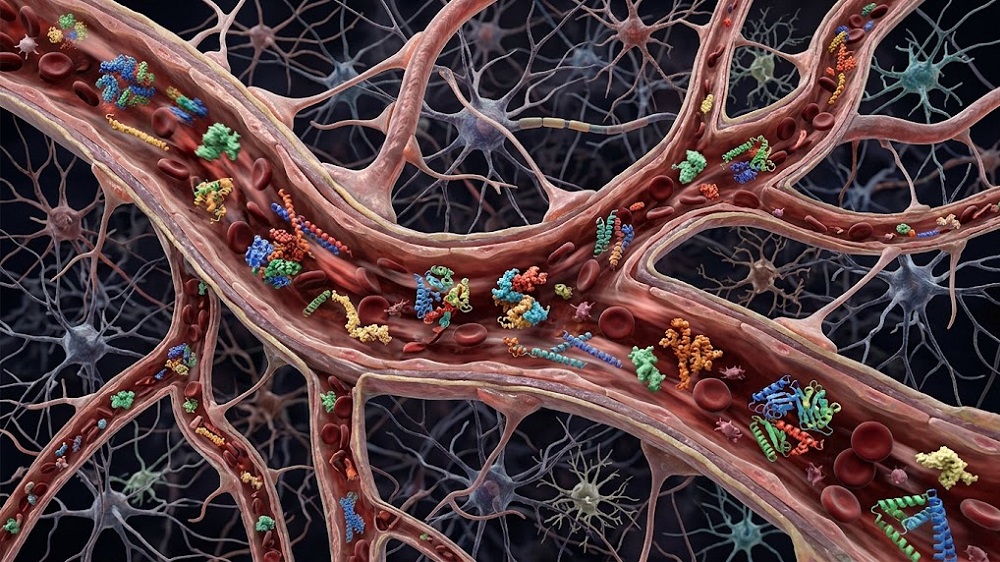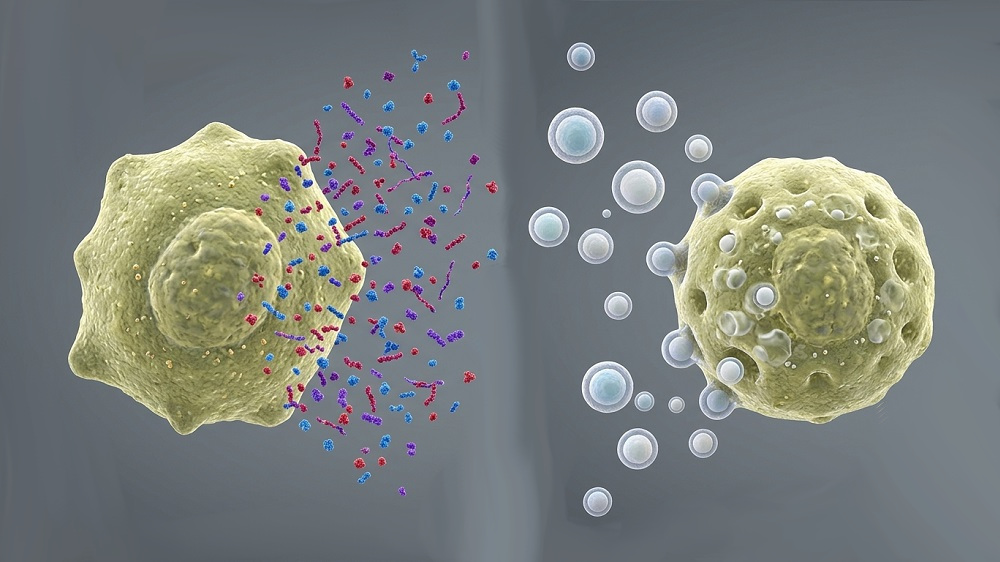
In Aging, the Conboys and their team have described how a combination treatment kills both senescent and cancer cells and lengthens the lives of old mice.
Of senescence and cancer

Just as it does in mice, the incidence of cancer rises with age in people [1]. Among other things, senescence is an evolved defense against cancer, and the activation of cancer-related genes (oncogenes) can cause cells to stop dividing instead. On the other hand, SASP factors can encourage tumors to form [2] and remodel the extracellular matrix in a cancer-promoting way [3]. This can make chemotherapies and radiotherapies counterproductive over the long term; many such therapies work by inducing senescence, preventing cancer cells from proliferating, but the senescent cells then contribute to cancer [4].
In experiments, senolytics, which are usually meant to exclusively kill senescent cells, are the go-to approach. Some such drugs, including ABT-263 (navitoclax), also kill cancer cells. However, this is a BCL-2 family inhibitor that depletes the BCL-XL needed for platelets to function; at its normally effective doses, this leads to thrombocytopenia, a condition that leads to uncontrolled bleeding. Despite some progress in clinical trials, navitoclax currently remains unapproved by the FDA for human use. Additionally, depleting BCL-2 does not work against all cancers and can stabilize some cancer cells instead [5].
Interestingly, both senescent cells and cancer cells have altered mitochondrial energy generation. They do not produce as much ATP as healthy cells [6], have problems with ion leakage [7], and are more likely to engage in glycolysis for energy [8]. Targeting the mitochondria, then, is a logical approach and has been attempted in previous work [9]; however, no one has yet managed to refine this method into something appropriate for the clinic.
These researchers’ attempt to do so involves dichloroacetate and metformin, two drugs that have been previously reported to have antisenescence and anticancer properties [10, 11]. Combining the two has already been investigated as a method of fighting cancer [12]. However, this paper’s combination also includes navitoclax, albeit at a much lower dose than normal; the researchers termed this combination DMA.
More than the sum of its parts
To create their target, the researchers drove cells senescent using the toxin etoposide, creating damage-induced senescent (DIS) cells. These cells were used to determine the effective doses used in the final DMA cocktail: 5 mM of DCA, 5 mM of metformin, and 1μM of navitoclax, which comes out to roughly one-tenth of the 50 mg/kg normally used in mouse studies. Using these drugs at these doses separately was found to have little effect; the combination is only effective when used as a whole, killing roughly 60% of DIS cells while leaving control, non-senescent cells unscathed. Using this combination on cells kept at a much lower oxygen concentration, which mimics natural physiology, slightly decreased normal cell viability but killed 90% of the DIS cells.
Further cellular work confirmed the synergistic effects. A combination of DCA, metformin, and the BCL-2 inhibitor ABT-737 was more effective against senescent cells than ABT-737 alone. Additionally, DMA was found to significantly, but not completely, reduce the amount of SASP secreted by surviving senescent cells, even at very low doses.
While there appeared to be a slight downward trend, DMA did not have a significant effect on platelet count; meanwhile, navitoclax at its usual dose was confirmed to have a stark and significant effect in this area.
Effectiveness against cancer
The researchers first confirmed previous work on navitoclax’s relationship to cancer cells, using three distinct lines. Navitoclax killed the vast majority of SW480 cancer cells and only a quarter of HeLa cancer cells, and it did nothing against MCF-7, a line of cancer that is unaffected by this BCL-2 inhibitor as it uses a different version, MCL-1, to survive.

DMA, on the other hand, was significantly effective against all three. After a week of exposure and using DMSO for the control group, the researchers had found that it had killed roughly three-fourths of HeLa cells, four-fifths of SW480 cells, and practically all the MCL-7 cells: 0% detected viability. Similarly to the senescence experiments, individual components of this cocktail were ineffective against cancer. In the MCF-7 cells, proliferation was substantially diminished, and death by apoptosis was substantially increased.
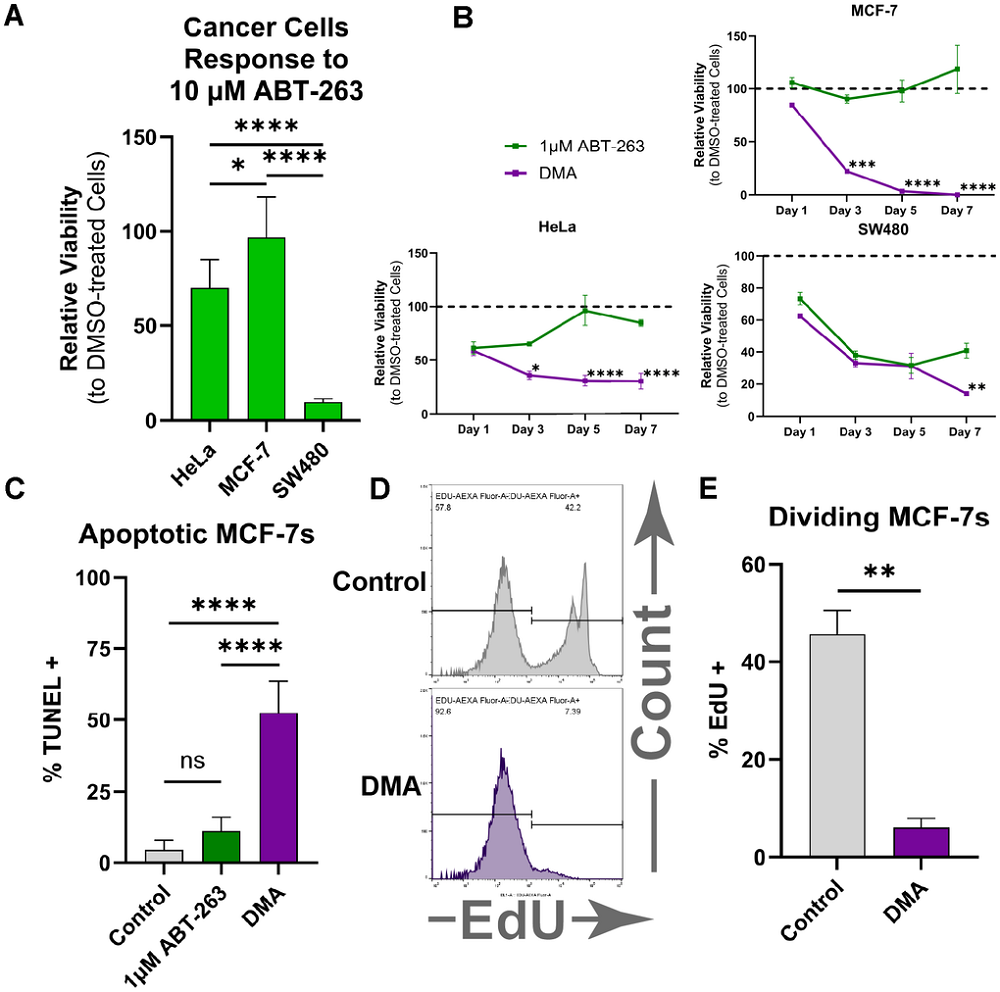
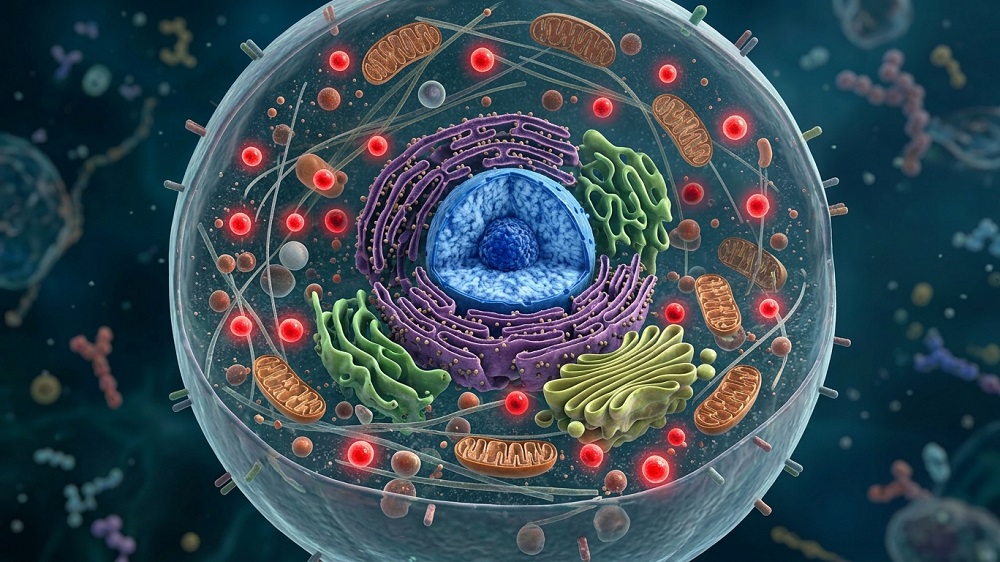
This effectiveness against MCF-7 cells had nothing to do with MCL-1. Instead, it was due to DMA’s effects against ATP within the cells, in senescence and cancer. Both DCA and metformin are known to deplete ATP, particularly in already damaged cells, and navitoclax adds to this effect. The net effect of DMA was to starve DIS cells, replicatively senescent cells, and MCF-7 cells of energy, while normal cells were robust enough to survive. This was particularly evident under stress induced by FCCP, which causes cells to undergo maximal respiration. Normal cells treated with DMA were still able to respond to FCCP, but senescent and cancer cells were not, demonstrating their failure to produce sufficient ATP.
Increases in mouse lifespan
The researchers then applied DMA for two weeks, five days a week, to 18- to 24-month-old male and female mice. The injected mice performed better on treadmill tests than their uninjected counterparts, although hanging tests and overall frailty were unaffected. SASP molecules were broadly reduced, although not every molecule’s reduction reached the threshold of statistical significance.
A different experiment involved injecting 18-month-old mice with DMA for two weeks, five days a week, with eight-week breaks between administrations, until the mice died of age-related diseases. The effects on lifespan were substantial:
Interestingly, despite being treated with a combination of chemotherapeutic drugs, the average lifespan was not shortened but was instead extended by an average of 102.6 days, or a 41.7% increase post-injection.
The researchers describe their treatment as exploiting the vulnerability of senescent and cancer cells’ poor metabolic health, creating an environment that healthy cells tolerate but which such diseased cells cannot survive. They hint that this treatment may improve the long-term effectiveness of chemotherapy. They note that both DCA and metformin are already approved by the FDA, and clinical trials have already been conducted with navitoclax — which, in DMA, is not being used at a dose that should cause significant bleeding problems. However, only a proper clinical trial of DMA could determine if it is effective against senescence or any kind of cancer in human beings.
Literature
[1] Li, L., Shan, T., Zhang, D., & Ma, F. (2024). Nowcasting and forecasting global aging and cancer burden: analysis of data from the GLOBOCAN and Global Burden of Disease Study. Journal of the National Cancer Center, 4(3), 223-232.
[2] Kumari, N., Dwarakanath, B. S., Das, A., & Bhatt, A. N. (2016). Role of interleukin-6 in cancer progression and therapeutic resistance. Tumor Biology, 37(9), 11553-11572.
[3] Chidambaram, D., Subashini, V., Nanthanalaxmi, M., Saranya, I., & Selvamurugan, N. (2025). Regulation of matrix metalloproteinase-13 in cancer: Signaling pathways and non-coding RNAs in tumor progression and therapeutic targeting. World Journal of Clinical Oncology, 16(6), 105996.
[4] Wyld, L., Bellantuono, I., Tchkonia, T., Morgan, J., Turner, O., Foss, F., … & Kirkland, J. L. (2020). Senescence and cancer: a review of clinical implications of senescence and senotherapies. Cancers, 12(8), 2134.
[5] Wang, B., Ni, Z., Dai, X., Qin, L., Li, X., Xu, L., … & He, F. (2014). The Bcl-2/xL inhibitor ABT-263 increases the stability of Mcl-1 mRNA and protein in hepatocellular carcinoma cells. Molecular cancer, 13(1), 98.
[6] Miwa, S., Kashyap, S., Chini, E., & von Zglinicki, T. (2022). Mitochondrial dysfunction in cell senescence and aging. The Journal of clinical investigation, 132(13).
[7] Hutter, E., Renner, K., Pfister, G., Stöckl, P., Jansen-Duerr, P., & Gnaiger, E. (2004). Senescence-associated changes in respiration and oxidative phosphorylation in primary human fibroblasts. Biochemical Journal, 380(3), 919-928.
[8] Korolchuk, V. I., Miwa, S., Carroll, B., & Von Zglinicki, T. (2017). Mitochondria in cell senescence: is mitophagy the weakest link?. EBioMedicine, 21, 7-13.
[9] Hubackova, S., Davidova, E., Rohlenova, K., Stursa, J., Werner, L., Andera, L., … & Neuzil, J. (2019). Selective elimination of senescent cells by mitochondrial targeting is regulated by ANT2. Cell Death & Differentiation, 26(2), 276-290.
[10] Michelakis, E. D., Webster, L., & Mackey, J. (2008). Dichloroacetate (DCA) as a potential metabolic-targeting therapy for cancer. British journal of cancer, 99(7), 989-994.
[11] Blandino, G., Valerio, M., Cioce, M., Mori, F., Casadei, L., Pulito, C., … & Strano, S. (2012). Metformin elicits anticancer effects through the sequential modulation of DICER and c-MYC. Nature communications, 3(1), 865.
[12] Voltan, R., Rimondi, E., Melloni, E., Gilli, P., Bertolasi, V., Casciano, F., … & Secchiero, P. (2016). Metformin combined with sodium dichloroacetate promotes B leukemic cell death by suppressing anti-apoptotic protein Mcl-1. Oncotarget, 7(14), 18965.